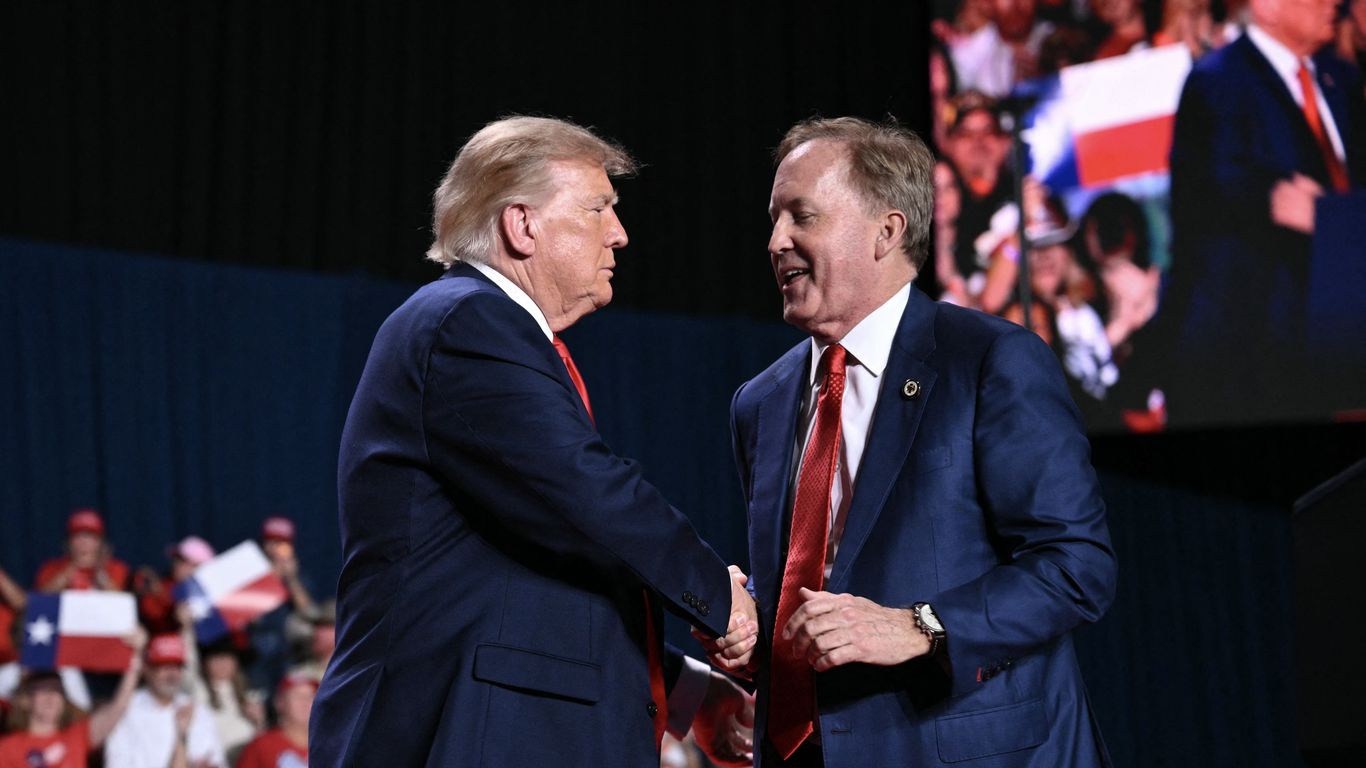
The post Ken Paxton Says He’s Tough on Crime. His Trust Invested $600,000 in a Convicted Fraudster’s Company. appeared first on ProPublica .
U.S.
National news
U.S. · page 18
On a recent evening near a secure U.S. facility, three federal agents saw a flying object they couldn't identify: a large "matte black triangle" that moved as fast as a fighter jet, made no sound and then disappeared, according to FBI and Defense Department reports. Why it matters: The 15-foot flying triangle is classified as a UFO-like "Unidentified Anomalous Phenomena" because the U.S. doesn't have the technology to make such a craft — and neither do its adversaries. The reports of the drone-like aircraft is of growing interest and concern to intelligence and military officials. Driving the news: The two reports about the mysterious triangle were included in a batch of 10 documents released Friday by U.S. officials under President Trump's order this year to disclose UAP records from all government sources as soon as possible. Friday's disclosure marks the seventh release of a tranche of documents under the order. Some of the documents found in the National Archives are from the 1940s. Zoom in: The flying triangle reports are the most intriguing because the incident — from this year — is so recent. The month and day are redacted. The FBI document is labeled an "Unidentified Aerial Object Observation Report" and the Defense Department 's report on it is classified as a "Unidentified Anomalous Phenomena" report. The observers were federal agents, including two with "extensive operational experience" and familiarity with drones. One had a "thermal monocular" for infrared tracking and yet couldn't detect "discrete heat sources associated with propulsion" from an engine on the mysterious craft. The agents reported seeing the drone-like triangle, with a wingspan of about 15 feet, rise vertically for as many as 300 feet above a mountain ridgeline without tilting or swaying. It stopped, hovered for about 20 seconds, and then flew horizontally as fast as a fighter jet for about 1.5 miles in three seconds without making a sound before it vanished. The intrigue: One of the do
America's largest banks are working to prevent AI worst-case scenarios. But they're also preparing for the "day after" a catastrophe, Axios has learned. Why it matters: America's financial institutions have joined the largest AI companies in scenario-planning for disaster, a prudent but worrisome signal about the extent of the risk that major corporations see on the horizon. State of play: Banks are experiencing unvetted AI agent activity, primarily driven by customers providing login credentials to agents, which in some cases appear to have taken actions independent of user prompts, Axios reported Thursday . The activity is distinct from the rogue behavior involved in a summer attack on a startup called Hugging Face , where an AI agent swarm hacked its platform in an episode that kicked off an industry security crisis. Instead, banks fear the ripple effects and risks that extend from users allowing agents to log in to their accounts and take action, especially since agents could take steps users haven't sanctioned. Concerns about frontier AI systems, not AI agents, have led banks to invest in prevention and to plan for the worst. Zoom in: The Axios report came amid growing concerns about a burgeoning cybersecurity crisis. Salesforce CEO Marc Benioff posted "code red" on X, quoting an Anthropic security employee who said "as bad as things have gotten in the past 4 days, they are going to get a lot worse before they get better." The Anthropic employee was referring to security researchers finding major vulnerabilities in a programming language used to run millions of websites, marking one of the most consequential cybersecurity discoveries yet made with AI . The Axios report on banks, which referred to agentic AI, not frontier AI systems, sparked calls for regulation from across the political spectrum, including Sen. Bernie Sanders (I-Vt.), Florida Gov. Ron DeSantis and Sen. Mark Warner (D-Va.). Former White House AI czar David Sacks said banks should support user-di
The quickest and most affordable response to historically high diesel prices is also the simplest: Use less of it. Why it matters: Diesel is so entrenched in farming, trucking and other industries that even soaring prices aren't enough — at least not yet — to prompt a wholesale shift to alternatives from electric semi trucks to manure-powered tractors. Catch up fast: Diesel prices have climbed to record highs since the U.S. war with Iran began in February, rising faster than gasoline amid global oil supply disruptions . Diesel averaged $6.31 a gallon Thursday, up 74% from a year ago, according to AAA . Regular gasoline averaged $4.27, up 39%. The big picture: Gasoline gets the attention, but diesel is the workhorse of the American economy. It powers grocery trucks, tractors, freight trains, construction equipment, hospital backup generators and even school buses . Driving the news: The price spike is hitting farmers during the fall harvest. "Farmers buy diesel by the truckload, so we're talking about hundreds of thousands of dollars in diesel, and when it goes up the way it has spiked, that's the difference between profit and loss in a year," said Curt Blades, senior vice president at the Association of Equipment Manufacturers, a trade group representing tractor makers and other heavy-equipment manufacturers. The financial pain varies: Trucking companies can often pass higher fuel costs to customers through surcharges. Farmers, who have little control over crop prices, generally can't. The economic pressure has become political ahead of the midterm elections. President Trump announced $8 billion in one-time aid for farmers at a campaign rally in Kansas on Monday, where Republicans face a competitive Senate race. "It's a bit too soon to tell the impact," Blades said of the aid package, though he welcomed support during harvest. State of play: Trucking and agricultural equipment experts say the most immediate savings come from using existing diesel engines more effici
The post Bird Flu Is Raging on a Mink Farm. It Could Spark a Human Pandemic, Experts Say, but Officials Won’t Act. appeared first on ProPublica .
Democrats in a pair of deep-red states are testing the religious right's dominance by putting their Christian faith at the center of their campaigns — potentially creating a template for the party to compete in similarly forbidding terrain. Why it matters: Upsets by Texas' James Talarico and Kansas' Adam Hamilton would all but ensure that Democrats take the Senate. A recent poll from Pew shows both an opening and an obstacle: White evangelicals still strongly favor Republicans, while many other Christian groups lean Democratic or are more narrowly split. The big picture: Talarico , a Presbyterian seminary student, and Hamilton, a United Methodist pastor, are challenging conservatives' claim to speak for faith. Their bids come after Democrat Raphael Warnock, senior pastor of Ebenezer Baptist Church, was elected to the Senate in 2021. President Trump won both Texas and Kansas by double digits in 2024. Neither state has sent a Democrat to the Senate in the 21st century — the last time Kansas did was in 1932. Both races this year are considered toss-ups . Zoom in: Talarico's "religiosity is a way to soften his liberalism" and potentially win over Christians turned off by his scandal-plagued opponent , says Brandon Rottinghaus, who co-hosts Houston Public Media's "Party Politics." Talarico has also made several visits to Black Baptist churches . Trump made inroads with minority communities in Texas, and Talarico looks to do the same after besting Rep. Jasmine Crockett (D-Texas), who is Black, in a brutal primary. He's harnessed scripture in his pitch against Christian nationalism and for protecting the vulnerable, invoking the biblical campaign slogan, "It's time to start flipping tables." "We're in a populist political moment, and many of the teachings of the social gospel give him an opportunity to link the politics and his faith together," Rottinghaus adds. By the numbers: A September Marist survey of 1,139 Texas registered voters showed Paxton with a 75% to 22% lead
Senate Majority Leader John Thune (R-S.D.) and Minority Leader Chuck Schumer (D-N.Y.) are living out their midterm nightmares — with nominees they didn't want and former colleagues they no longer control. Why it matters: Together, Schumer and Thune are stuck with five Senate races in which their party establishments thought they had a better chance of winning with someone else. 🤠 Texas: Thune's efforts to stop Texas Attorney General Ken Paxton from winning the party's Senate nomination failed. Now Republicans are spending more than $329 million to defeat state Rep. James Talarico— and it's still a nail-biter. 🍑 Georgia: GOP leaders couldn't convince Gov. Brian Kemp to run. The eventual nominee, Rep. Mike Collins, has struggled to keep pace with fundraising juggernaut Sen. Jon Ossoff (D). GOP money is in retreat. 🦞 Maine: Schumer endorsed Gov. Janet Mills, but Graham Platner's implosion left Democrats with backup Troy Jackson against Sen. Susan Collins. ⛴️ Michigan: Abdul El-Sayed defeated Rep. Haley Stevens and made a name for himself nationally. But he won by just one point even though primary polls showed him up by double digits. He's now polling within the margin of error against the GOP nominee, former Rep. Mike Rogers. 🏈 Minnesota: Peggy Flanagan ran as a progressive, said she would not support Schumer as leader and bested establishment-backed Rep. Angie Craig. But Cook Political Report moved her race against former NFL sideline reporter Michele Tafoya toward Republicans even as it shifted other races toward Democrats. To make matters worse, Thune's and Schumer's former colleagues are creating fresh headaches by boosting candidates across the aisle. Former Sen. Joe Manchin, who flipped to independent in 2024 after being elected as a Senate Democrat, is campaigning for Sen. Susan Collins (R-Maine), as Semafor reported. Former Sen. Kyrsten Sinema , who also flipped from Democrat to independent before leaving office, is boosting Republican Jay Feely in her hom
A small group of Rep. Brandon Gill's fellow House Freedom Caucus members are privately questioning whether he still belongs in the hardline group, Axios has learned. Why it matters: The 32-year-old Texas freshman's rapid rise through House Republican ranks has transformed him into one of the party's most prominent young stars — and earned him a growing list of critics. Driving the news: Multiple House Republicans told Axios that Gill is the future of their party, but several Freedom Caucus members told Axios that his engagement with the group has faded as his national profile has grown. The lawmakers spoke on condition of anonymity to offer candid assessments of a colleague. "He's not really in the Freedom Caucus. He's just using it for conservative bonafides," one HFC member told Axios. The Freedom Caucus is "livid" at Gill, another member told Axios. The intrigue : Four sources familiar with the conversations said members have privately discussed kicking Gill out, though the conversations have been informal and the issue has not been raised at a HFC meeting. It's unclear if there would be enough support within the group to boot Gill if there ever was a formal vote. The other side: "Congressman Gill is laser-focused on getting out the vote and ensuring Republicans hold the majority this November," a spokesperson for Gill told Axios in a statement. State of play: Gill has become a favorite in President Trump's orbit, has won praise from GOP leadership and has launched an ambitious bid to head one of the House's most powerful committees. Asked about the criticism from Gill's colleagues, Majority Whip Tom Emmer (R-Minn.) flatly told Axios in an interview earlier this month that Gill "needs to be out front. I don't care where it is," adding, "Brandon is the future of our party, and his communication skills are phenomenal." But his ascent has fueled resentment, with colleagues accusing him of burning bridges and treating fellow Republicans as stepping stones to greater
That wince you just made while researching travel options? Get used to it. Why it matters: Soaring jet fuel prices are accelerating changes across the airline industry, seen in higher fares, premium-heavy cabins and fewer flight options for travelers. Airfares rose 22% year over year in September, marking a 10th straight monthly increase in the government's airfare price index , which hit an all-time high. State of play: All the major airlines are feeling the pain: American Airlines reported Thursday that its fuel bill jumped nearly 70% in the third quarter from a year ago, adding $1.9 billion in costs and undercutting its revenue growth. Southwest and United Airlines both slashed their profit forecasts this week on higher fuel costs. And Delta Air Lines expects its fuel bill this year to come in $6 billion above last year's. The impact: To protect their bottom lines, airlines are raising fares and turning to more premium seats to squeeze more revenue out of their flights. At Southwest, the average passenger fare rose 26.9% to $231.69 in the third quarter, compared with a year earlier — and that doesn't include fees. Delta's premium seating revenue jumped 18% in the third quarter, even though the number of premium seats rose only 6%. What they're saying: The airlines have few options to make up for extra fuel costs other than fare increases, said Scott Keyes, founder of flight-deal service Going.com. "None of them are hedging fuel the way they used to, in large part because they had a pretty terrible experience with it," Keyes said in an interview. The big picture: Airline executives, however, see these changes — many of which were already underway — as a necessary new normal. This year's fuel spike has only "accelerated" change, Delta CEO Ed Bastian said on the company's earnings call on Oct. 9. "Regardless of the next move in fuel prices, the forces reshaping the U.S. airline industry will continue with many carriers struggling to earn their cost of capital well b
A federal judge restricted Department of Homeland Security investigations into suspected noncitizen voting in nine states, citing concerns that the agency's tactics could intimidate eligible voters. Why it matters: With the midterms less than two weeks away, the ruling curtails a central part of the Trump administration's efforts to investigate suspected noncitizen voting. Driving the news: The ruling, issued late Wednesday, blocks election-related field operations and interviews under the government's Unlawful Voter Initiative that involve or are likely to involve U.S. citizens. California-based U.S. District Judge Araceli Martínez-Olguín also blocked the administration from conducting operations against likely citizens in states relying on records generated by its voter-matching policy. Zoom in: Martínez-Olguín wrote in her order that the groups that sued provided "substantial evidence" that the government's "intimidating conduct" was "directly interfering with their members' right to encourage voters to participate in the 2026 midterm elections." Her order stated that DHS had compiled a "target list" of individuals from a variety of sources, including state voter rolls and commercial data. But Martínez-Olguín cast doubt on the accuracy of the administration's data, warning of a "high likelihood of error in review because there is no federal database containing citizenship status of U.S. residents." Court filings indicated that officers were ordered to prioritize probes in California, Connecticut, Georgia, Missouri, Nevada, New York, Pennsylvania, Washington and Wisconsin. Catch up quick: Democratic Sens. Chuck Schumer (N.Y.) and Alex Padilla (Calif.) released a whistleblower report last month alleging that officials had diverted fraud and national security personnel to the Unlawful Voter Initiative using "highly questionable data" and methods. The whistleblower disclosure alleged that officers were directed, in violation of state law, to access sensitive voter in
A federal judge on Thursday ordered President Trump to sit for a deposition by Dec. 11 in his $10 billion defamation lawsuit against the BBC over an edit of one of his speeches that the president's lawyers say was misleading. Why it matters: The order will likely force Trump to answer questions under oath in a legal battle he started. Driving the news: Judge Enjoliqué Lett ordered Trump to appear by Dec. 11, after lawyers for the BBC argued that Trump is improperly delaying his appearance. In a filing published Wednesday, Trump's counsel said the president could appear between Jan. 11 and Jan. 22, 2027, and argued that his presidential duties prevent him from sitting for the deposition before then. They also allege the BBC is "wrong to claim that President Trump is avoiding his deposition in this action." The president was originally scheduled to appear for the deposition on Oct. 16. However, his lawyers said, that appearance was canceled because Trump had to attend to "matters that have significantly impacted the United States' national security and economy," including the wars in Iran and Ukraine and the White House Accord on Super Intelligence. The other side: BBC attorneys say the president was campaigning in Georgia on Oct. 16, as reflected in a White House press pool report that includes his travel plans. The BBC argues the president chose political activity over appearing for the original deposition date. According to Trump's daily schedule, he attended an intelligence briefing and had executive time before departing for a rally in Georgia and then attended an RNC event in Palm Beach, Florida, that evening. The White House referred Axios to Trump's personal counsel. A spokesperson for Trump's legal team told Axios in an emailed statement that the BBC "defamed President Trump by intentionally, maliciously, and deceptively doctoring his speech in a brazen attempt to interfere in the 2024 Presidential Election." The BBC's legal team did not immediately respond t
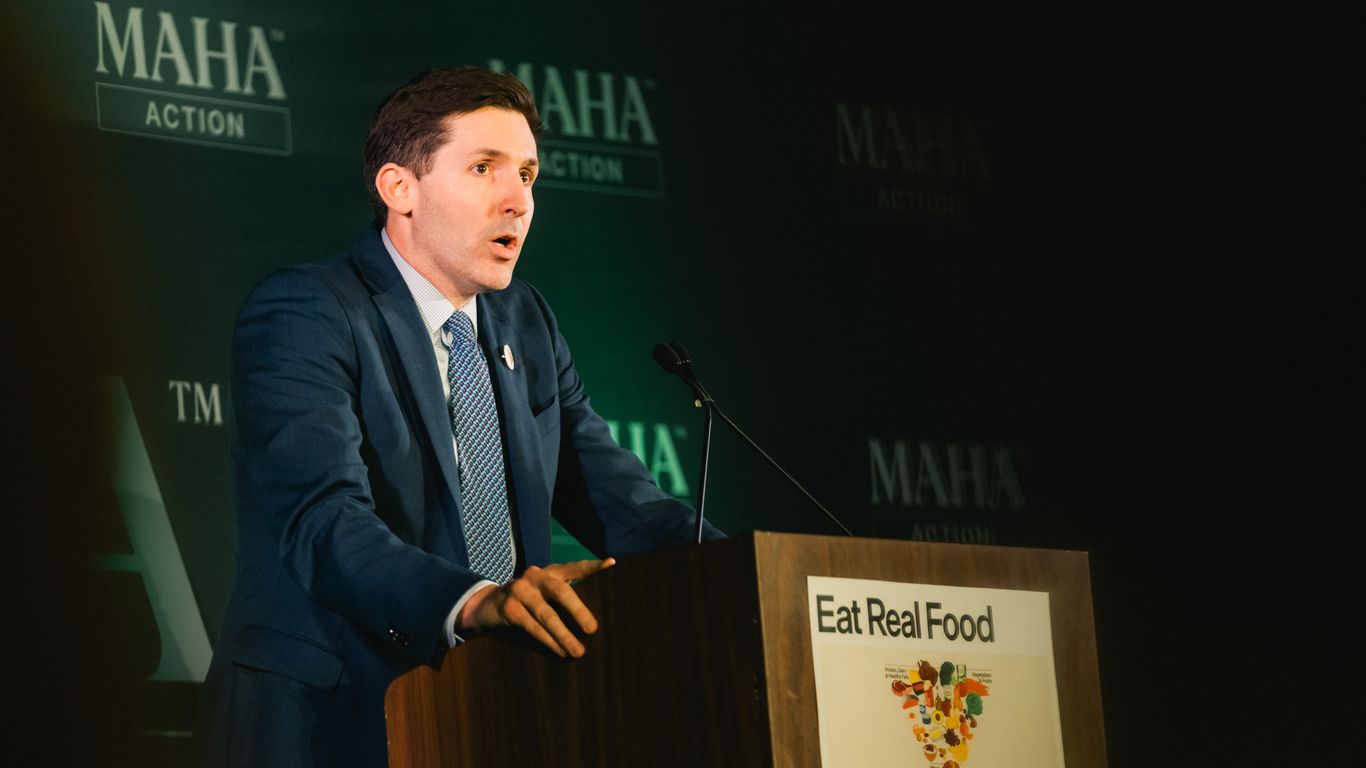
Calley Means , the health entrepreneur who became the Trump administration's most vocal advocate of the MAHA agenda, resigned from his senior adviser post on Thursday. Why it matters: Means' departure two weeks before the midterm elections underscores the MAHA base's discontent with the pace of change on food policy and the administration's stances on issues like pesticide use . Driving the news: Means expressed "tremendous respect" for President Trump and Health Secretary Robert F. Kennedy Jr. in a statement on X , praising their efforts to take on "entrenched, dark forces in DC" and advance the MAHA agenda. He cited the administration's work to overhaul dietary guidelines , advance psychedelic therapies , ban the use of Supplemental Nutrition Assistance Program (SNAP) benefits for sugary drinks, and get food companies to voluntarily remove artificial dyes and other additives from products. The Department of Health and Human Services didn't immediately respond to a request for comment. Between the lines: Tensions between the MAHA faithful and the administration peaked in February, after Trump issued an executive order to increase domestic production of glyphosate, a common weed killer. Kennedy and others close to the movement had argued pesticides are making Americans sick. But agriculture interests said restricting their use would raise food prices and cost farmers billions. Trump had tapped Means' sister, Casey , a nutrition influencer, for surgeon general last year but withdrew the nomination in April after her confirmation process stalled in the Senate.
The websites you use every day may have been vulnerable to hackers for years because of hidden flaws in their code that AI only recently discovered. Why it matters: The code, called PHP, powers millions of websites, and the vulnerabilities could allow hackers to steal sensitive data like your passwords or take control of affected servers. Driving the news: A potential attack exploiting flaws in PHP emerged on Wednesday, which prompted governments and companies to temporarily take their websites offline while they installed security patches. Dozens of websites in the U.S., U.K., and around the world were briefly taken offline to make the fix. The disruption put the National Security Agency and Europe's cybersecurity agency on alert. State of play: Security patches were released to fix the issues on Oct. 21, 2026. Cybersecurity firms urged anyone using PHP to install the security updates immediately. What they're saying: OpenAI's technology helped find the bugs, and the company called the discovery "one of the most impactful security issues in recent memory." "To our knowledge, frontier AI found these vulnerabilities before attackers did," OpenAI said. The cybersecurity firm Wiz wrote in a blog post : "These findings rank among the most severe vulnerabilities discovered in PHP, and arguably in software history." Read more below. What is PHP? You've probably never heard of PHP, even though you've interacted with it for decades. PHP, which stands for Hypertext Preprocessor , is a programming language used by roughly 70% of websites whose server-side language is known. It has been around since the 1990s to help build websites, taking data and generating content sent to a browser. It's still used today for a variety of websites, including Wikipedia, WordPress blogs and shopping websites. How it works: HTML determines what a website displays. PHP works behind the scenes to collect information and generate content. What was the PHP vulnerability, exactly? AI researchers dis
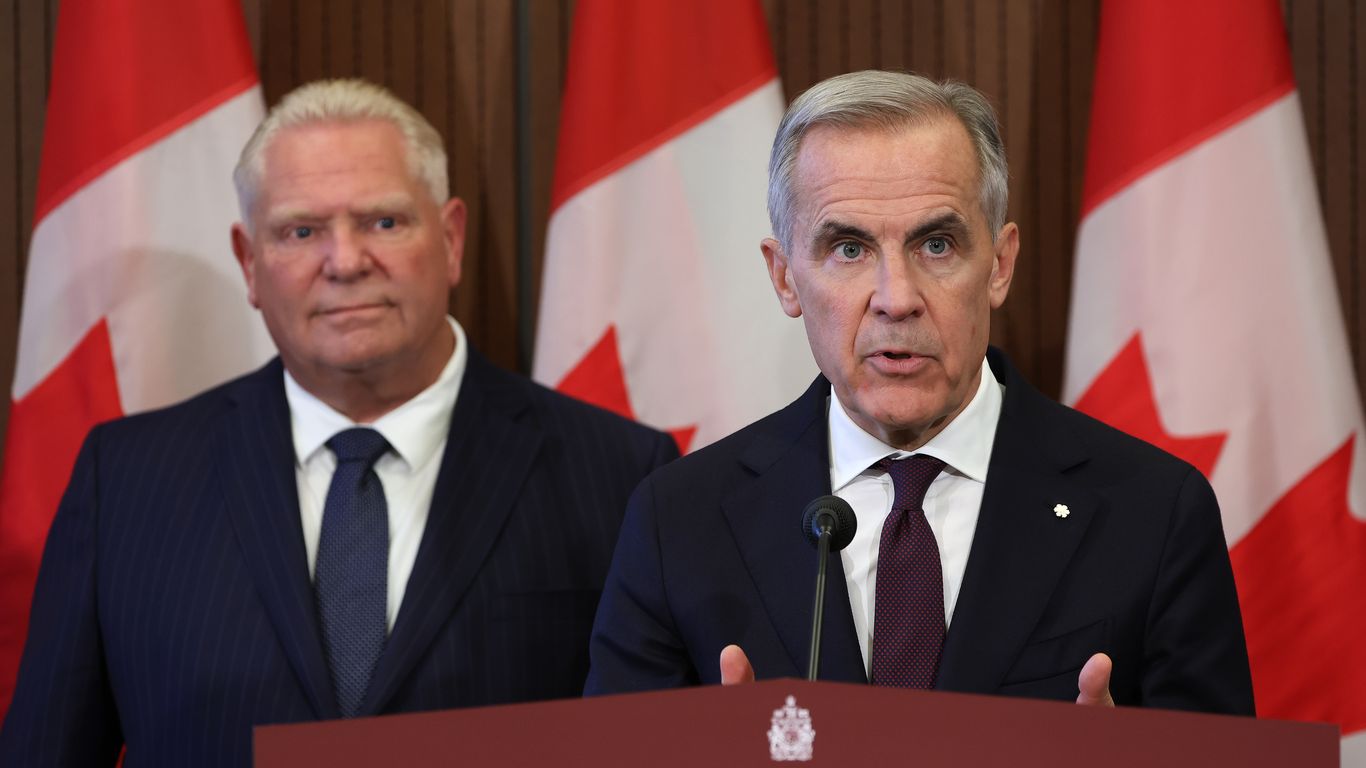
The U.S. Embassy in Canada accused Canadian leaders of "openly" describing plans to "influence American politics," doubling down on Ambassador Pete Hoekstra's claims of potential election interference. Why it matters: The accusation further deteriorates Washington's relationship with its northern neighbor under President Trump's costly trade war that's put political pressure on Republicans. Canada targeted its retaliatory tariffs on politically salient states and products ahead of the U.S. midterms. Driving the news: The embassy cited Canada's targeted tariffs as part of the influence accusations laid out in a Wednesday fact sheet . It cited remarks from Industry Minister Mélanie Joly, including an August press conference where she said Canada was "targeting products that will target states in the U.S." She added, "we're being wise and strategic to put political pressure." Joly has echoed that message throughout the trade tensions. The fact sheet also cited Joly's meeting with Democrats. She recently huddled with Illinois Gov. JB Pritzker. What they're saying: Asked about the accusations during a news conference, Prime Minister Mark Carney said "all of our actions are in the interest of Canadian workers, Canadian families and the future of this economy." Zoom out: The fact sheet also singled out conservative Ontario Premier Doug Ford over a 2025 anti-tariff ad campaign featuring excerpts from a Ronald Reagan speech . It also cited Liberal MP Anthony Housefather's campaigning for Florida Democrat Rep. Debbie Wasserman Schultz. The memo read, "The Canadian government brushes off concerns about potential interference in U.S. elections, even as its ministers and premiers openly describe plans to influence American politics in official documents and public appearances." Catch up quick: Hoekstra said in a recent podcast interview that American officials were "closely watching" Canada for potential election interference. Joly said last week it was "absolutely not" fair to
The fragile Senate permitting deal is a major priority across the energy industry, per newly filed lobbying disclosures. Why it matters: The filings reveal behind-the-scenes efforts by powerful interests and companies representing oil and gas, mining, renewables, environmentalists and plenty in between to shape the legislation. The big picture: The bill title (Bipartisan American Affordability and Jobs Act), its acronym (BAAJA) and its bill number appear throughout third-quarter lobbying disclosures. The bill was introduced Sept. 30, the last day of the third quarter. The disclosures, due Oct. 20, offer a window into efforts to influence the legislation during its drafting and negotiations. The lobbying extends beyond groups that specifically named the bill in their filings. Many others with a stake in the bill — like the U.S. Chamber of Commerce and the National Association of Manufacturers — list permitting legislation in other ways. Driving the news: Here's just a small subset of the parties in the arena. Industry groups like the American Petroleum Institute, the Edison Electric Institute, the American Forest & Paper Association, the National Mining Association, and the Data Center Coalition. Green groups including Earthjustice, the Nature Conservancy, and Defenders of Wildlife. Low-carbon power trade groups such as the Solar Energy Industries Association. State of play: The lobbying goes far beyond trade associations, with many individual companies also involved. They range from Chevron and BP to power giants like Duke Energy and Southern Company to geothermal startup Fervo. Industrial and equipment heavyweights like Caterpillar, Schneider Electric and Cummins are there, too. Zoom in: The disclosures also offer clues about which provisions attracted lobbying attention. For example: The National Mining Association identified BAAJA provisions that would change Clean Water Act permitting, including state water quality reviews and limits on lawsuits challenging perm
The post Nuclear Weapons Waste Made Workers Sick. Despite a Law Meant to Help, the DOE Keeps Fighting Their Claims. appeared first on ProPublica .
Data: Harvard Youth Poll, Fall 2026; Chart: Emily Peck/Axios Nearly two in three U.S. adults younger than 30 who plan to vote in next month's congressional midterm elections say their main motivation is to oppose President Trump and his policies, according to a newly released Harvard Youth Poll . The big picture: Seventy-seven percent of respondents disapprove of the president's handling of the economy, including about half of young Republicans. And just 9% say the U.S. is headed in the right direction — the lowest in the survey's history. Why it matters: Economic populism is driving emotions, along with concerns about war, AI, billionaires, deportation tactics, social policies and corruption. Majorities of respondents support Medicare for All, a wealth tax and bans on congressional stock trading. What we're watching: Just one in three Americans ages 18-29 say they'll definitely vote — a substantial drop from 40% who said so in 2022. Notably, most of that drop is driven by Republicans. Only 34% of Republican respondents said they'll definitely vote, down from 46%; 50% of young Democrats say they'll definitely vote, essentially unchanged. Just 22% of independents they'll definitely vote, down from 26%. Data: Harvard Youth Poll; Chart: Emily Peck/Axios Zoom in: Topping the list of what young people consider serious threats to their long-term financial security: rising prices and the cost of living (79%), followed by the power of large corporations (68%) and trade wars (68%). Nearly half said their household is struggling to make ends meet or getting by with limited financial security. By the numbers: 63% say their votes for U.S. House or Senate will be cast in opposition to Trump, while 14% say they're motivated by support of the president and 17% say he's not a factor. Two-thirds disapprove of the job Democrats are doing in Congress; 74% disapprove of congressional Republicans' performance. Stunning stats: For the first time in the poll's history, the share of young
Hackers are finding new ways to infect iPhones with spyware — even when victims never click a malicious link — according to new research shared with Axios. Why it matters: Software once used to spy on politicians, journalists and other high-value targets is becoming a tool for everyday cybercriminals looking to steal cryptocurrency and login credentials. Driving the news: Researchers at iVerify and Report URI said Thursday they've uncovered two campaigns in which criminal groups with suspected ties to China exploited online advertising infrastructure and legitimate websites to deliver iPhone spyware. In one case, iVerify found that a financial institution employee's iPhone was infected after they scrolled past a professional soccer advertisement on Instagram. The ad automatically triggered an attack that stole the person's login credentials and searched their cryptocurrency wallets. In another, Report URI uncovered a campaign affecting nearly 8,000 legitimate websites after hackers purchased roughly 630 expired domains that those sites still relied on. The attackers used those domains to redirect vulnerable iPhone visitors toward spyware designed to steal their credentials and cryptocurrency. How it works: Both campaigns exploited tools that load automatically as people browse the internet, eliminating the need to trick victims into clicking malicious links. In the iVerify case, malicious code began running as soon as the Instagram advertisement appeared on the victim's screen. The attack checked the iPhone's operating system before deploying a compatible exploit. In the Report URI campaign, attackers purchased expired domains once used to host legitimate website features, such as chatbots and analytics tools. Thousands of websites were still loading code from those domains, allowing criminals to quietly redirect visitors toward malicious software. Threat level: The findings show how cybercriminals are building an infrastructure for delivering spyware through everyd
The post Ballot Rejections Soared in Rural Counties After USPS Reduced Mail Service appeared first on ProPublica .