

All the latest news and deals before the today’s deadline Jaguars add Davis to help defense; Simmons boosts Bears Follow the buildup to the 4pm ET cutoff and fallout Hello and welcome to our live coverage of the 2026 NFL trade deadline. After weeks of splashy moves, swirling rumors and increasingly frantic speculation, we’re finally approaching the moment of truth. The clock is ticking and all 32 teams have until 4pm ET (9pm GMT) to get their affairs in order. It’s already been an eventful trading season. The Chicago Bears made the biggest splash by acquiring All-Pro defensive tackle Jeffery Simmons from the Tennessee Titans for a package including two first-round draft picks. The Jacksonville Jaguars made a trio of moves to bolster their defense, headlined by a trade with Philadelphia to land defensive tackle Jordan Davis. The Indianapolis Colts have been busy dismantling their roster, shipping eight-time Pro Bowl guard Quenton Nelson to Seattle and defensive tackle DeForest Buckner to San Francisco. Meanwhile, Marvin Harrison Jr has landed in Houston, Joey Porter Jr has joined Dallas and the injury-ravaged Baltimore Ravens have brought in veteran quarterback Jacoby Brissett. Continue reading...
Results for “davis trade”
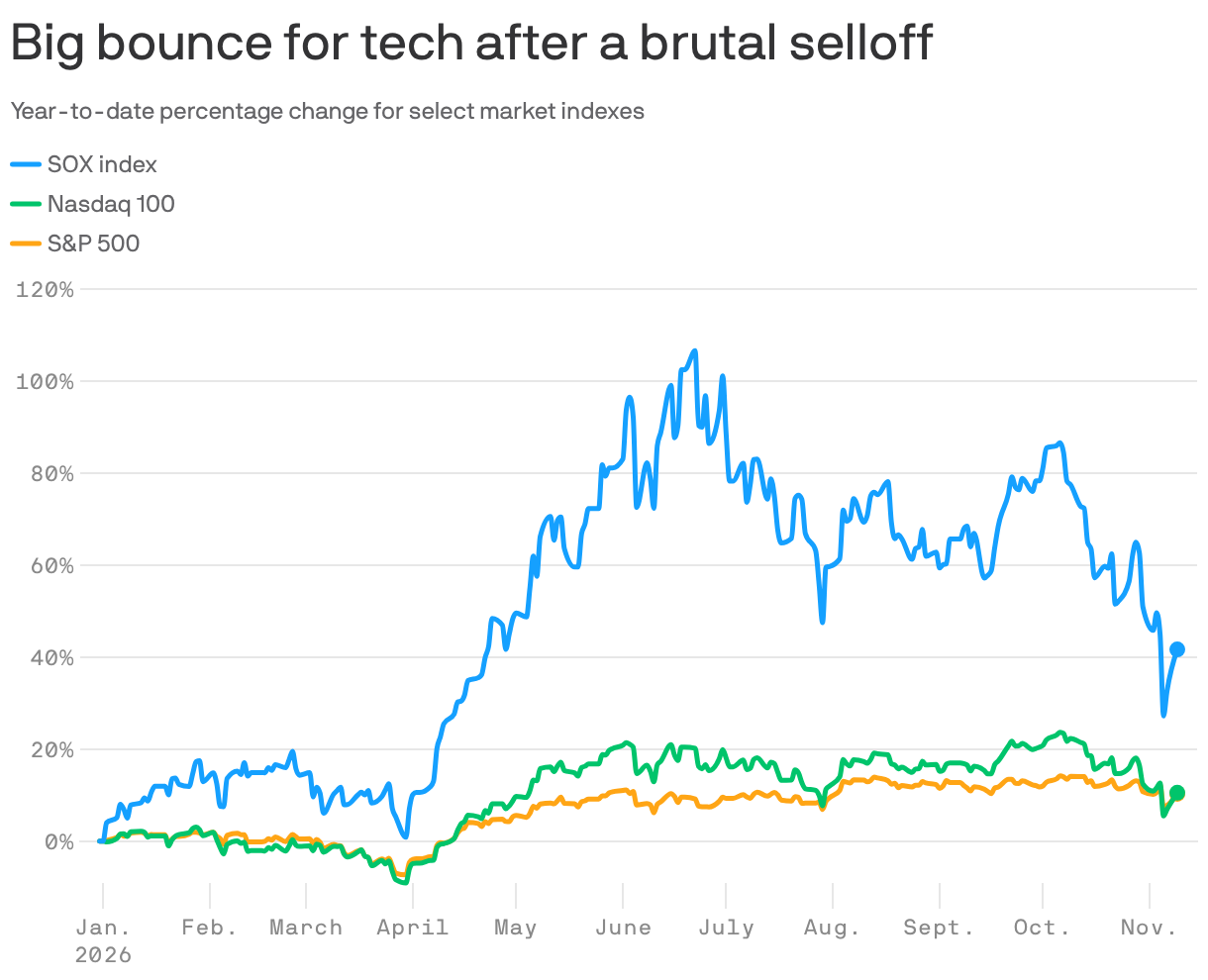
Data: FactSet; Chart: Matt Phillips/Axios The AI trade has regained momentum despite — or maybe because of — Nvidia's struggles following the weekend revelations from CEO Jensen Huang. The big picture: Monday's sudden burst of exuberance for AI was the latest wide swing for a market upended by last week's "blue tsunami" in the midterm elections and the threat they could pose to the data center boom. By the numbers: The Nasdaq 100 index of large-cap technology shares soared 3.4%, its biggest daily jump since late March and its second-best showing of the year. Zoom in: Stocks romped across the AI ecosystem — well, with one important exception. Pick-and-shovel plays such as engineering and construction companies, and makers of data center inputs like fiberoptic cables, servers and data storage devices soared. The companies that build and lease out data center computing power, known as neoclouds, also jumped. (Those companies had been at the epicenter of recent jitters about financing for the AI boom.) Hyperscalers rose, paced by Meta, which notched a gain of 5.1%. Semiconductors roared, with the SOX index posting its best gain — 6.9% — since late July. Yes, but: The glaring exception to the AI-palooza was its best-known player, Nvidia. Weekend revelations from CEO Jensen Huang — who acknowledged having an affair with a woman suspected of connections to Chinese intelligence — left investors grappling with uncertainty about the CEO's future. The intrigue: Some investors may see Nvidia's pain as potential gain for rivals. Broadcom jumped 8.8%, its best day in nearly a year. Advanced Micro Devices soared 13.3%, benefiting also from an upgrade to "Outperform" — effectively, a "buy" recommendation — from Oppenheimer analysts on Sunday. Context: Bullish commentary from Wall Street established the background music for Monday's big bounce, as analysts urged investors to buy into the market's recent soft patch. "We believe stocks are now clearly in oversold territory," Goldman S

China says its trade surplus exceeded $1 trillion for a 2nd straight year, as exports in October surged 35%
Current and former House Democrats, flush with victory following their landslide midterm wins , are already looking at potential opportunities to run for Senate in 2028, Axios has learned. Why it matters: Democrats' 2026 romp — with wins in Texas, South Carolina, Kansas and possibly even Mississippi — has some party members reevaluating what were once considered impossible targets. A source close to Rep. Sharice Davids (D-Kan.) — who was reelected by 21 percentage points in a district former Vice President Harris carried by four points in 2024 — did not rule out her running against Sen. Jerry Moran (R-Kan.). "All options are on the table," the source said, adding that Davids' "focus right now is on delivering actual results and overcoming the chaos from these extreme policies we're seeing." Sen. Roger Marshall (R-Kan.) was defeated by Democrat Adam Hamilton last week, marking the first time in nearly a century a Democrat has been elected to the U.S. Senate from Kansas. North Carolina: Rep. Don Davis is "taking a look at" a run against Republican Sen. Ted Budd, a source familiar with his thinking told Axios. Davis won a third term on Tuesday after defeating his GOP opponent in a district President Trump carried by 12 points in 2024. Republicans redrew the district with the express goal of ensuring Davis' loss. Former Rep. Wiley Nickel, who was elected Wake County district attorney on Tuesday, would consider a Senate run if state Attorney General Jeff Jackson doesn't, a source close to him told Axios. The two served together in the House. Democratic former Gov. Roy Cooper won North Carolina's other U.S. Senate seat last week in a nearly 20-percentage-point landslide over Republican Michael Whatley. Pennsylvania: A huge field of Democrats is gearing up to potentially run for the seat held by Democratic Sen. John Fetterman. Fetterman, who has morphed from a populist firebrand to an arch-centrist, has angered much of the party by siding with Republicans on key votes. Rep

American activist and trade unionist who fought for the rights of farm workers Although she was never the president of the United Farm Workers union, Dolores Huerta , who has died aged 96, was one of the most significant American trade union leaders of the 20th century. Her battle cry, “ Sí, se puede! ”, coined in the midst of tensions with police in Arizona in the 1970s, was adapted to the English “Yes, we can” and became Barack Obama’s slogan during his successful campaign for the US presidency in 2008. While the UFW leader Cesar Chavez was the public face of the union as its president, Huerta was the organiser who helped break the resistance of California’s grape growers by building bridges to secondary boycotts by unions packing and transporting grapes, and by organising boycotts of national supermarket chains such as A&P and Finast, who sold them. “To take on agriculture, which to this day is still a powerhouse, that took a lot of guts,” her son Emilio said. Continue reading...

There is no Nvidia — nor an AI boom as we know it — without Jensen Huang. He has reassured jittery markets with his words, bankrolled a trillion-dollar buildout and put economies on his shoulders. Now, the world is wondering if he can save himself . Why it matters: Global markets must confront a terrifying reality: The AI ecosystem's first "too big to fail" executive is suddenly vulnerable, and there is no backup plan if he is forced to step down. Catch up quick : Huang apologized Sunday and Nvidia's board launched an independent probe after he admitted to having a relationship with a woman named Alice Huang, an alleged Chinese operative. Nvidia's board expressed confidence in his leadership and said it had no reason to believe national security or company secrets were compromised. President Trump stood by Huang, calling him "an honorable guy." The big picture: Keeping his job is one thing. Maintaining the ability to steady markets, finance customers and shape government policy is another. These are the five questions that now loom over the AI boom : 1. What happens to Nvidia? Forged 33 years ago (initially using a Denny's as an impromptu office), Nvidia is a uniquely founder-driven company, making any potential leadership transition incredibly perilous. Investors have little precedent for valuing the company without him. "It's very hard to envision Nvidia run by anybody else," said Dan Gallagher, an analyst with Washington Post Intelligence and long a keen observer of the chip titan. Huang has more than 60 direct reports, eschews traditional corporate layers and hasn't been publicly grooming a successor. "I don't know if anyone's going to know how to value Nvidia" without him, Gallagher told Axios. 2. What happens to the market? Huang has repeatedly rescued the AI trade from bearish sentiment. On multiple occasions, he has offered backstops to shore up growth plans for companies across the AI landscape, from CoreWeave to OpenAI. In July, he argued that cheaper open

Efforts to fight climate change, conserve nature and build clean energy have long unfolded on competing tracks. Now, they're colliding — and exposing tough trade-offs for environmentalists. Why it matters: Congress' sweeping permitting debate is forcing those competing priorities into the same conversation, with major consequences for climate action and conservation. Driving the news: The Senate is set to hold an initial procedural vote Monday on a sprawling bipartisan bill that would make it easier to build power lines and energy projects of all kinds, including clean energy and fossil fuels. At the heart of the debate is how much public scrutiny projects should face before they're approved — and how much protection those approvals should receive afterward. Supporters say the current system takes too long, delaying clean energy and other infrastructure. Opponents warn that speeding things up could come at the expense of wildlife, public lands and tribal rights. Between the lines: The dilemma reflects a fundamental tension within the environmental movement: Building the infrastructure needed to combat climate change can threaten nature, while protecting nature can complicate efforts to build that infrastructure. Wind and solar farms, for example, can require large expanses of land, potentially disrupting wildlife habitats even as they help reduce greenhouse gas emissions. "The part of my organization that cares about climate sees great opportunity and the part that cares about nature sees some dangers," said a leader of one organization that focuses on both causes, speaking anonymously to discuss the proposal candidly. The big picture: Both parties broadly agree Washington needs to overhaul federal permitting, a perennial goal that has eluded Congress for years. The question is what reforms can attract enough support to pass both chambers. The bill's bipartisan sponsors and the White House want action before year's end. But some Democrats, emboldened by their midter

President Trump defended Nvidia CEO Jensen Huang on Sunday night, even as the company's board launched an investigation into his affair with a suspected Chinese spy. Why it matters: The blowback to Huang's relationship is only getting more intense by the hour, with multiple members of Congress calling for probes and investors saying the news could put a cloud over the entire AI trade. What they're saying: Trump was asked Sunday night if he's taking Huang with him on an Asia trip next week. "I don't know, but I'd certainly take him," the president told reporters. "I haven't heard that he's done anything wrong," Trump added. "He dealt with somebody but, you know, so does everybody else." The intrigue: The New York Times reported in late October that Trump was briefed earlier this year about Huang's relationship with the potential spy but chose not to act. Huang has been one of Trump's favorite corporate executives since his return to office, frequently appearing at White House events. He also traveled with Trump to China earlier this year, even after the reported memo warning the president of Huang's relationship. What's next: A group of House Republican committee chairs have asked Huang to agree by Nov. 11 to a date for a briefing on his relationship and Nvidia's national security controls.
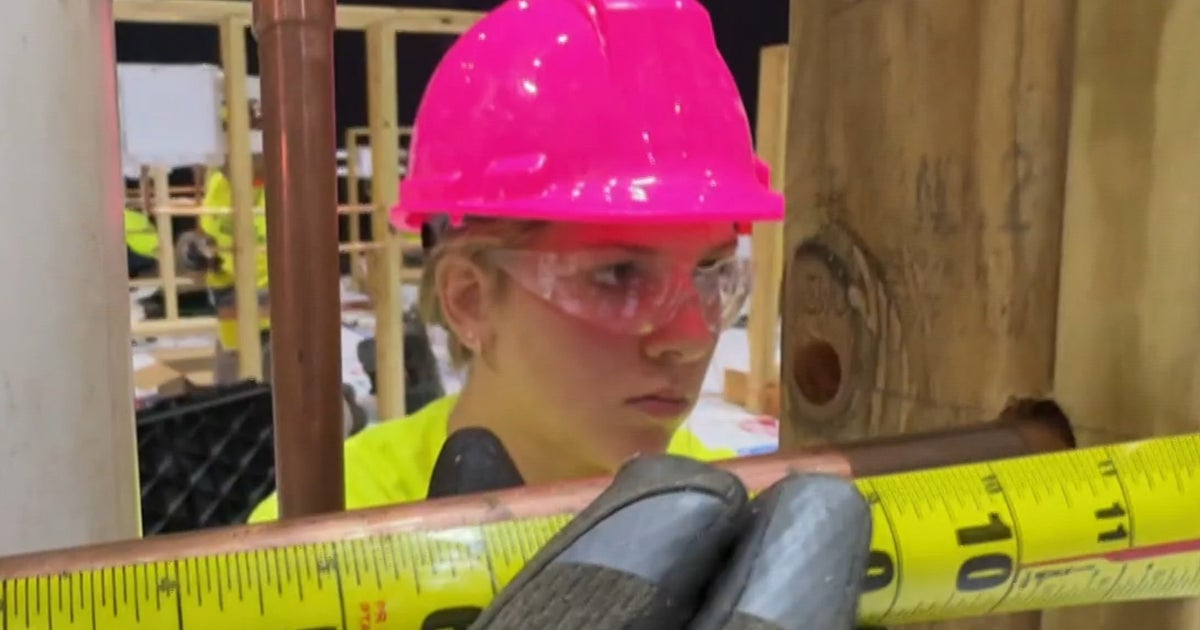
The Georgia Skills Challenge, an annual series of competitions, brings together the state's best young tradespeople. There is glory at stake, but also money from real jobs. Tony Dokoupil has more.

Lamar Jackson is out indefinitely with injured thumb Backup Huntley to miss rest of season with turf toe Rookie Fagnano will start for Baltimore on Thursday Veteran quarterback Jacoby Brissett is heading from the Arizona Cardinals to the Baltimore Ravens, a person with knowledge of the trade told the Associated Press on Wednesday. The person spoke to the AP on condition of anonymity because the deal hasn’t been completed. Continue reading...

Data: The Downballot , Ballotpedia , AP ; Chart: Erin Davis/Axios Republican mapmakers thought they were drawing at least a dozen comfortably red districts to protect their House majority. Why it matters: They weren't red enough . In the seven states where Republicans redrew congressional boundaries, the GOP is on track to lose as many as eight seats — rather than gain the 15 it had hoped to pick up. With two exceptions — TX-32 and TN-09 — the pickups Republicans penciled in never materialized. Then there was a bloodbath in North Carolina. Zoom in: At the heart of the GOP's miscalculation was a bet that the 2026 electorate would look like 2024's. Instead, voters behaved more like they had in 2020 — or even 2018. TX-34: Republicans made an already Trump-leaning district significantly redder, shifting it from Trump +4 to Trump +10. Democratic Rep. Vicente Gonzalez still won by nearly 16 percentage points. TX-23: Republicans made an already red district slightly less Republican, shifting it from Trump +16 to Trump +15. Democrat Katy Padilla Stout won by eight points. TX-15: Rep. Monica De La Cruz's district remained essentially unchanged at Trump +18. She lost by 25 points. Between the lines: The GOP's heaviest losses came in Ohio and North Carolina districts that Republican mapmakers barely touched. Rather than shore up districts Trump had won by double digits, Republicans concentrated on making two Democratic-held seats in Ohio and one in North Carolina redder, betting they would flip in a normal election year. But 2026 was anything but normal. The bottom line: Perhaps the clearest example of a dummymander — when mapmakers spread their own voters too thin in pursuit of additional seats — came in Tennessee's 4th District . Republicans redrew TN-04 from Trump +44 to Trump +24, sacrificing much of its enormous GOP cushion. Democrat Victoria Broderick appears to have won by just 280 votes.
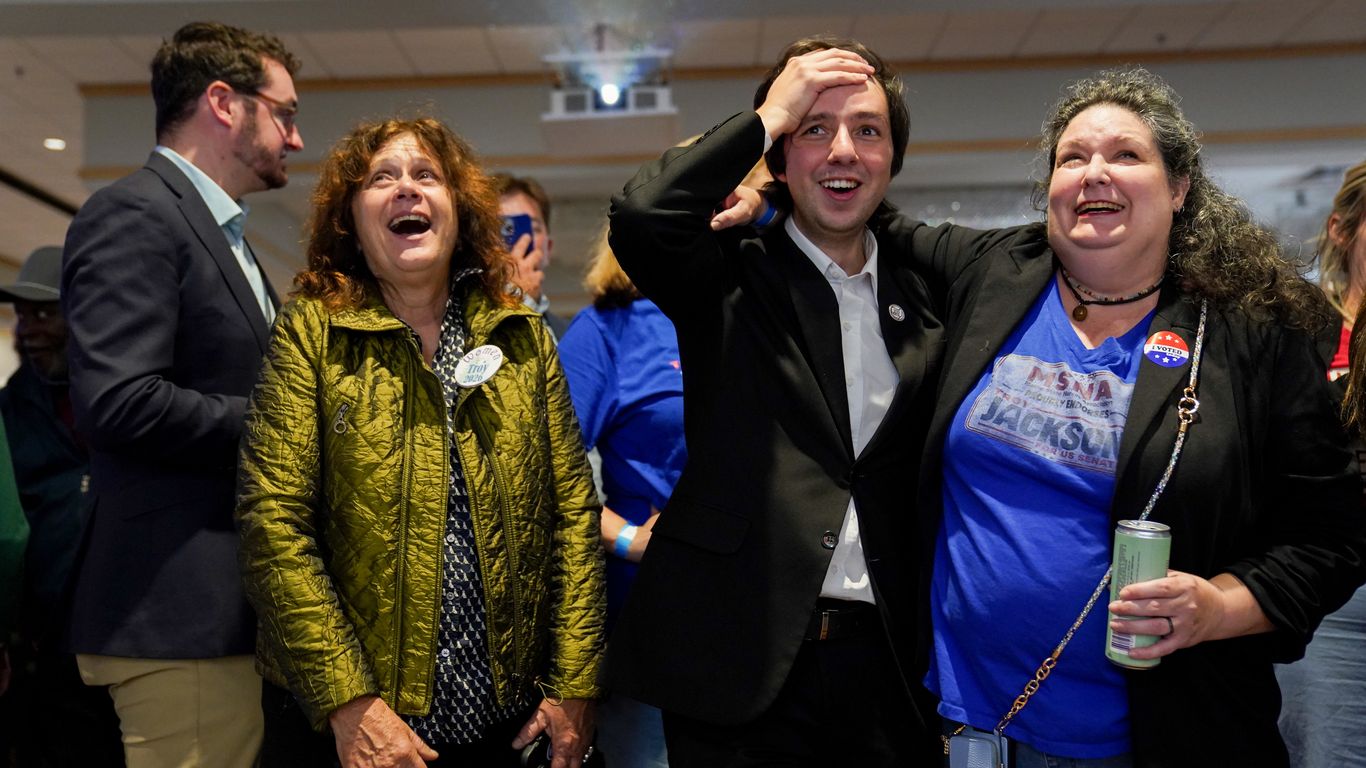
World leaders are reacting to Democrats' comprehensive midterm wins, which saw them retake the Senate and flip the House on Tuesday night. Why it matters: The results could reshape President Trump's final two years in office, with major implications for U.S. relations with allies and adversaries alike. Zoom in: As Trump faces competing calls over whether to resume military action in Iran, Iranian officials supported the Democratic victories as a sign of opposition to the war. Iran's Parliament Speaker Mohammad Bagher Ghalibaf wrote on X , "Conscience or the cost of living, Americans said NO TO WAR, and we endorse this message." Prior to the election, regional mediators led by Qatar were trying to reach a diplomatic deal to restart negotiations between the U.S. and Iran to avoid reentering the war, three U.S., Israeli and regional sources said, but renewed fighting remains on the table. But while Israeli Prime Minister Benjamin Netanyahu wants to resume fighting in Iran, his political future remains uncertain, with neither bloc securing the 61-seat majority needed to form a government in Israel's recent election. Zoom out: Trump's second-term decisions have significantly strained relationships with U.S. allies and partners, leading countries to increasingly view Washington as unreliable, self-interested and less committed to global cooperation , according to Pew Research Center data. But Tuesday's election results appear to have infused renewed hope about relations from international leaders. Spanish Prime Minister Pedro Sánchez applauded Americans for voting "against policies that only make people poorer," and against "hate," "sexism," "climate denial" and "elite privilege," in a post on X ." South African President Cyril Ramaphosa told reporters he believes Democratic control of Congress will "introduce a new era in world relations," adding that he hopes for improved collaboration on geopolitics, trade and investment, Bloomberg reported. Trump, who has repeatedly c

Winnipeg had been on nine-game losing streak Comeback on Tuesday night breaks NHL record The Winnipeg Jets had every reason to stop believing. They were down four goals in the third period, less than three minutes from a 10th straight defeat, in their fifth game in eight nights. Their coach was on the hot seat. Their season had been rocked from the start when former MVP goalie Connor Hellebuyck asked for a trade. The Bell Centre was roaring and a Montreal Canadiens win looked certain, but Kyle Connor still had faith. Continue reading...

This election represents a wholesale rejection of Trump and the Republican party, by every single segment of American society In a few years, there’s a good chance we look at Tuesday night as the death knell of Trumpism and the Maga movement. He has indelibly changed the face of American politics, and the basic structure of American institutions. And people are sick of it. Fundamentally, nearly everyone’s lives are worse than they were a decade ago. People were willing to tolerate, or even welcome the coarseness, the attacks on American democratic norms, and the global foreign policy order. Ben Davis works in political data in Washington DC. He worked on the data team for the Bernie Sanders 2020 campaign Continue reading...
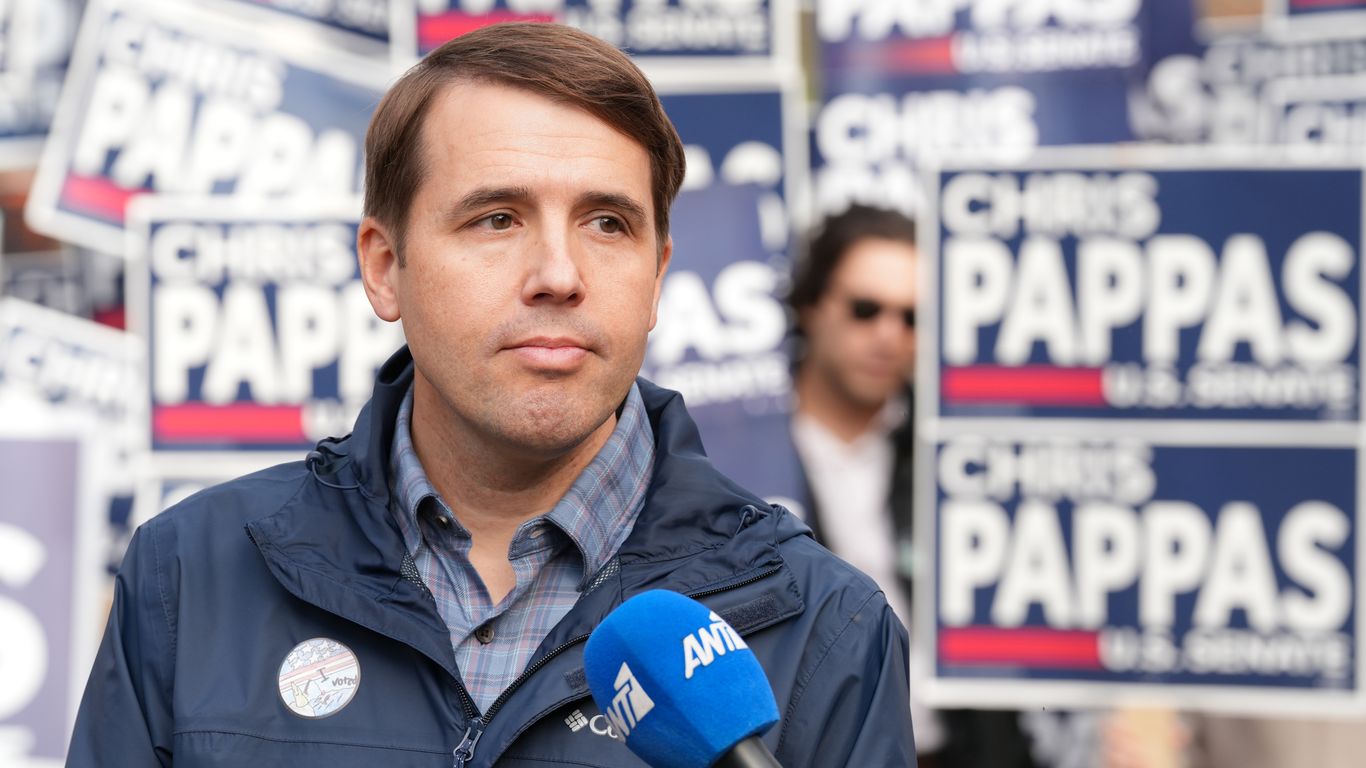
Democratic Rep. Chris Pappas defeated former GOP Sen. John Sununu in the New Hampshire Senate race, AP projects. Why it matters: Pappas' victory keeps the seat in Democratic hands and could boost the party's chances of taking control of the Senate. Driving the news: Pappas led Sununu 61% to 38% with 20% of the votes counted. He'll replace retiring Sen. Jeanne Shaheen (D-N.H.) in January. Catch up quick: Republicans saw New Hampshire as a top pickup opportunity, with Senate Majority Leader John Thune campaigning for Sununu in the competitive race, despite polls showing Pappas ahead. Most polls compiled by the New York Times in the weeks before Election Day showed the Democratic Pappas leading Sununu by 5 to 8 percentage points. Zoom in: Although President Trump endorsed him, Sununu has shown daylight with the president, criticizing his trade war with Canada and his so-called anti-weaponization fund — and he backed Trump's primary opponents in 2016 and 2024. Still, prominent New Hampshire Republicans — including Don Bolduc , the Trump -endorsed 2022 Senate nominee — endorsed Pappas in mid-October, accusing Sununu of being too beholden to the president. Between the lines: Republicans welcomed Sununu's entry into the race because of his family's long ties to New Hampshire politics. Sununu served in the Senate from 2003 to 2009 before losing to Shaheen in 2008. His brother Chris served as governor for eight years. Senate GOP Whip John Barrasso (R-Wyo.) posted on X in October 2025 that Sununu's decision to run catapulted New Hampshire to "a top-tier U.S. Senate race." The bottom line: Pappas' win reflects a preference New Hampshire voters expressed in pre-election polling : They wanted a check on Trump's power. Go deeper: Trump's former Senate pick backs Democrat in New Hampshire

Data: AdImpact; Chart: Erin Davis/Axios Republicans on the ballot this cycle have all but stopped mentioning President Trump in their campaign ads , according to an Axios analysis of broadcast advertising data from AdImpact. Why it matters: Trump has tried to make the 2026 midterms a referendum on his presidency. His party has run the other way. The big picture: Ads from both parties in Senate, House and gubernatorial races have shifted from a heavy focus on Trump during the primaries to a much greater emphasis on the economy in the general election. Both parties have also leaned much more heavily into health care, with a noticeable increase among House Republicans. By the numbers: The drop-off is steepest among Republicans, and especially in House races. Trump appeared in 66% of House Republicans' primary ads but shows up in just 3% of their general election ads. In Senate races, Republican ads mentioning him fell from 77% to 22%. Governor's races saw the same shift: Republican ads mentioning Trump fell 34 percentage points. Democrats have also pulled back from Trump, though less dramatically. Trump appeared in 45% of Democratic primary ads, but just 18% of their general election ads. Zoom in: Republican candidates are mentioning some of Trump's signature issues less than during the primaries. The share of Republican ads mentioning immigration has dropped 20 percentage points in Senate races and 14 points in House races. Ads referencing law enforcement fell from 11% of Republican Senate primary ads to 6% in the general election, even as their mentions of crime increased. Data: AdImpact; Chart: Erin Davis/Axios Between the lines: Candidates often lean on the country's most prominent political figure in primaries, then pivot to policy issues in the general election. But this year's drop-off stands out given how hard Trump has pushed to tie himself to the midterms. He has urged voters to pretend he's on the ballot and essentially demanded ads running during the Republ

Republicans don't know if they'll lose big or small on Tuesday, but they're already bracing for an epic blame game. Why it matters: Privately, Republicans acknowledge it's not a complicated version of Clue. The leading suspect: Mr. President, in the Oval Office, with an assortment of weapons — and one war. Returning Republican senators are unlikely to blame President Trump publicly. There's a price for that. And don't expect Trump to shoulder the responsibility. But do expect departing GOP lawmakers to take shots at Trump or his team, and Trump to fire back at Senate Republicans, whom he's never been shy about torching. The irony of Trump's second midterm: With Republicans privately resigned to losing the House, Trump can still credibly claim victory if they hold the Senate. "It's Donald Trump's midterms. He gets all the credit if we win. He gets all the credit if we lose," one national GOP strategist told Axios. The Iran war: From Alaska to Maine, Trump's decision to go to war with Iran — and the resulting spike in gas and diesel prices — has become a major political liability for Republican Senate nominees. "It's not tariffs … it's the war, it's gas prices, it's diesel," Texas Attorney General Ken Paxton said at a closed-door fundraiser in September, Axios reported last month . Tariffs: Trump's trade policies have compounded Republicans' affordability problems, particularly in farm country, where producers have faced higher costs and uncertainty over export markets. "We need to end this tariff war now," former Rep. Mike Rogers (R-Mich.) , the GOP Senate nominee, said in an October campaign ad, breaking with Trump over his tariffs on Canada. Bad candidates: Trump's preferred nominees are also drawing blame, GOP strategists tell Axios. Paxton in Texas and Sen. Darline Graham in South Carolina have forced Republicans to spend heavily defending races that should have been easier — and where the party had other options. Complacent incumbents: Sens. Roger Marshall (R-Ka

The Texan could pull off a historic victory in the Lone Star state, which hasn’t elected a Democratic senator since 1988 When a young, untested former school teacher stood up to address a modest gathering of local donors in Austin, the state capital of Texas, Wendy Davis felt sorry for him. “Poor kid,” she remembers thinking. Then James Talarico began speaking. “He was like five or six sentences in and I knew that something was different about him,” recalls Davis, a former Democratic state senator. “He was as articulate and unique then as he is now. From that day, I started calling him ‘Baby Obama’.” Continue reading...

Despite the US president’s ratings being at rock bottom, undoing his legacy will be difficult, not least because the Democrats are in disarray The stats and polling all suggest one thing: the Republicans are set for a hammering in the midterms. Donald Trump has the lowest approval rating of any US president going into a midterm election since Harry Truman. And it’s still dropping. The Democrats are projected to win by a margin of 11 percentage points , the largest swing by any party in almost 20 years. It is possible that the Democrats flip the Senate and secure a large majority in Congress. Those majorities would make a material difference, perhaps finally establishing oversight of the policies Trump has brought in during his second term: immigration enforcement, trade disputes, gutting the federal workforce, the Iran war, to say nothing of his own family’s corruption. The tide seems to be turning, and one question is on everyone’s mind: is the Trump era really ending? “Nobody wants to jinx it,” wrote David Wallace-Wells of the New York Times, but: “All the signs we have suggest that, historic or not, these midterms are likely to mark the end of a political era.” What that gives way to is a much more complicated picture in which the US will be delivered from Trump himself, but remains a country riven and undermined by what he has unleashed. By the time he is gone, Trump will have been president for eight years, and a toxic force for more than 12. That is a long time even for a normal politician. Under one who shatters norms and forces himself into the centre of everything, Trump’s effect is as if he were president for decades. Continue reading...

Data: U.S. Census Bureau, 2025 American Community Survey 1-year estimates; Table: Russell Contreras/Axios Homeowners were nearly twice as likely as renters to have an electric vehicle in 2025, new Census data show, revealing a striking divide in America's shift to electric cars. Why it matters : Homeownership is just one factor in EV adoption, but reliable access to charging is critical — giving homeowners with private driveways or garages an advantage over renters, particularly those in multifamily buildings. By the numbers: About 7.3 million U.S. households — 5.5% of the nation's 134 million — reported having at least one EV, according to the 2025 American Community Survey released Thursday. Homeowners reported EVs at a rate of 6.4%, compared with 3.6% of renters. California led the nation at 13.8% overall, more than twice the national rate. North Dakota (1.3%), Wyoming (1.6%) and Louisiana (1.6%) ranked among the lowest. State of play: For the first time, the Census Bureau asked households with vehicles kept at home whether they owned or leased an EV, offering a nationwide snapshot of who has gone electric. The figures cover fully electric vehicles and plug-in hybrids. Our thought bubble: Many factors, including local government policies, can influence EV adoption rates, but ultimately, it comes down to affordability and access to charging, says Axios Transportation Correspondent Joann Muller . Homeowners with higher incomes are more likely to afford EVs, sometimes as a second car. The intrigue: A 2026 study by researchers at the University of Vermont and University of California, Davis, found higher home-charger installation costs at rental properties in Burlington, Vermont. Renters were also less likely to adopt fully electric vehicles, even after researchers accounted for home values and vehicle preferences. Zoom in: Even California, the nation's EV leader, has a sharp homeowner-renter divide, new Census data show. About 17.7% of homeowners reported an EV, com

The latest wave of hyperscaler earnings is spooking Wall Street. Bulls and bears alike have evidence to validate their wildest dreams — or their worst nightmares. Why it matters : The market's AI obsession has entered its Jekyll and Hyde era, with the latest earnings from tech giants offering contrary signals about the AI boom. Driving the news : The tech-heavy Nasdaq briefly sank into correction territory, falling 10% from its prior peak, losing $1.2 trillion in value for the month of October, after a slew of earnings reports pointed to AI's big risks. But it wasn't all horror: within the earnings statements, some investors found proof that the AI bet is going exactly as it should. Here are three examples of the AI trade's deepest contradictions — the good and the scary — from the earnings releases and calls of the Big Tech hyperscalers. Google: The scary: AI overviews are cannibalizing Google's core business: ad revenue from search. Yes, search queries are up, but results in AI mode have lower margins. The company has lost more than $500 billion in market value post-earnings, bringing the broader tech sector along with it. The good: Google Cloud is closing in on Microsoft's Azure cloud revenue, a stunning development given that Google was an also-ran in the cloud game only a few years ago. Much of Google's success is tied to demand for its TPU chips, which analysts expect to see massive growth in coming quarters. The takeaway: Google's predicament mirrors the problems of many tech giants, where AI represents a true threat to the golden goose but presents new opportunities if they can move fast enough. Microsoft and Amazon: The good: Both companies had explosive cloud growth, though the market was disappointed Amazon's wasn't higher. Microsoft touted its OpenAI investment and Amazon its Anthropic holdings. The iffy: Those private AI investments can help or hurt: Amazon's net income fell despite soaring operating profits, as it didn't repeat the pretax gain from its

Disappointing earnings reports from Alphabet, Amazon and Intel renewed fears on Friday that the AI trade could unravel.
Top diplomats from the G20, the group of the world's largest economies, are meeting in Atlanta as they face deep rifts over global crises that threaten international security and trade
President Trump applauded Quebec's new separatist premier Tuesday, continuing to jab at Ottawa despite fragile trade talks that seemed to be gaining momentum. The big picture: Even as Trump's top economic adviser suggested a deal to ease the ongoing trade war is possible, the president has continue to antagonize Canada. The U.S. recently accused Canada of trying to influence American elections through retaliatory tariffs, which Canadian officials have denied. Meanwhile, Trump's continued to antagonize Canada from the campaign trail, saying at a Mississippi stop Monday that it was "charging us massive tariffs" and has "treated us badly." Driving the news: In a brief shoutout Tuesday, the president congratulated Paul St-Pierre Plamondon for his win some three weeks ago. While a recent vote stymied an Albertan separatist push , St-Pierre Plamondon has vowed to hold Quebec's third referendum on independence, though he's said it wouldn't happen until after Trump leaves office. St-Pierre Plamondon's center-left Parti Québécois won 60 of 127 seats, leaving it four short of a majority. It would likely need support from a fellow separatist party to advance a referendum. Prime Minister Mark Carney has emphasized the importance of Canadian unity as the nation faces unprecedented hostility from the American president. Trump shared an Irish Times article that framed the Quebec vote as a "blow to Mark Carney" that could "hamper" his "efforts to maintain national unity against Trump." Zoom out: Trump on Tuesday also congratulated British Columbia's premier-designate, Lorne Doerkson, after his Conservatives swung the province rightward. "Conservatives are moving strong in Canada!" the president wrote . Doerkson, however, has rejected suggestions that he's aligned with the president, similar to St-Pierre Plamondon. Friction point: The U.S. Embassy in Canada last week accused Canadian leaders of trying to influence American politics with reciprocal tariffs on politically important pr

Harvard economist Jason Furman told Axios that if he were to return to his old job as chairman of the White House Council of Economic Advisers today, he would rely on AI tools over staff economists for much of the council's day-to-day analytical work. The big picture: Unsurprisingly, this made some waves in the online discourse, particularly the loose-knit community formerly known as Econ Twitter. Many veterans of the economic policy trenches see real risks in future policymakers becoming overly reliant on AI — or at a minimum think that Furman is underestimating the importance of human economists in advising the nation's leaders. What they're saying: "CEA work, at least in my experience, is highly bespoke as you're explaining the data flow (and much else) to very busy people who don't want only market-shop analysis," Jared Bernstein, the CEA chair under President Biden, wrote on Substack . "Yes, they want and need that — what will the markets make of this CPI, jobs, GDP, etc. report — but more so they want to know how this report fits into our narrative, our agenda, the president's trip today to Iowa." He adds that within a White House, "the human skill of reading-the-room is paramount. I'm far from an AI expert, but my sense is it sucks at that and probably always will, a conclusion that derives in no small part from listening to its creators!" Zoom in: Claudia Sahm, a former Federal Reserve economist, raised an issue that we've often heard from senior people in fields like consulting and investment banking: If you get rid of junior positions, where will future senior leaders come from? Furman's staff "went on to found the Yale Budget Lab, run Treasury economic policy and a Fed institute, serve in later [administrations], and publish research on trade, environment, and taxes. That's what '20 staff' become," she wrote on X . "No model does that." Bloomberg chief U.S. economist Anna Wong argues that the "ability to now not depend on anyone, as a senior person, is ve
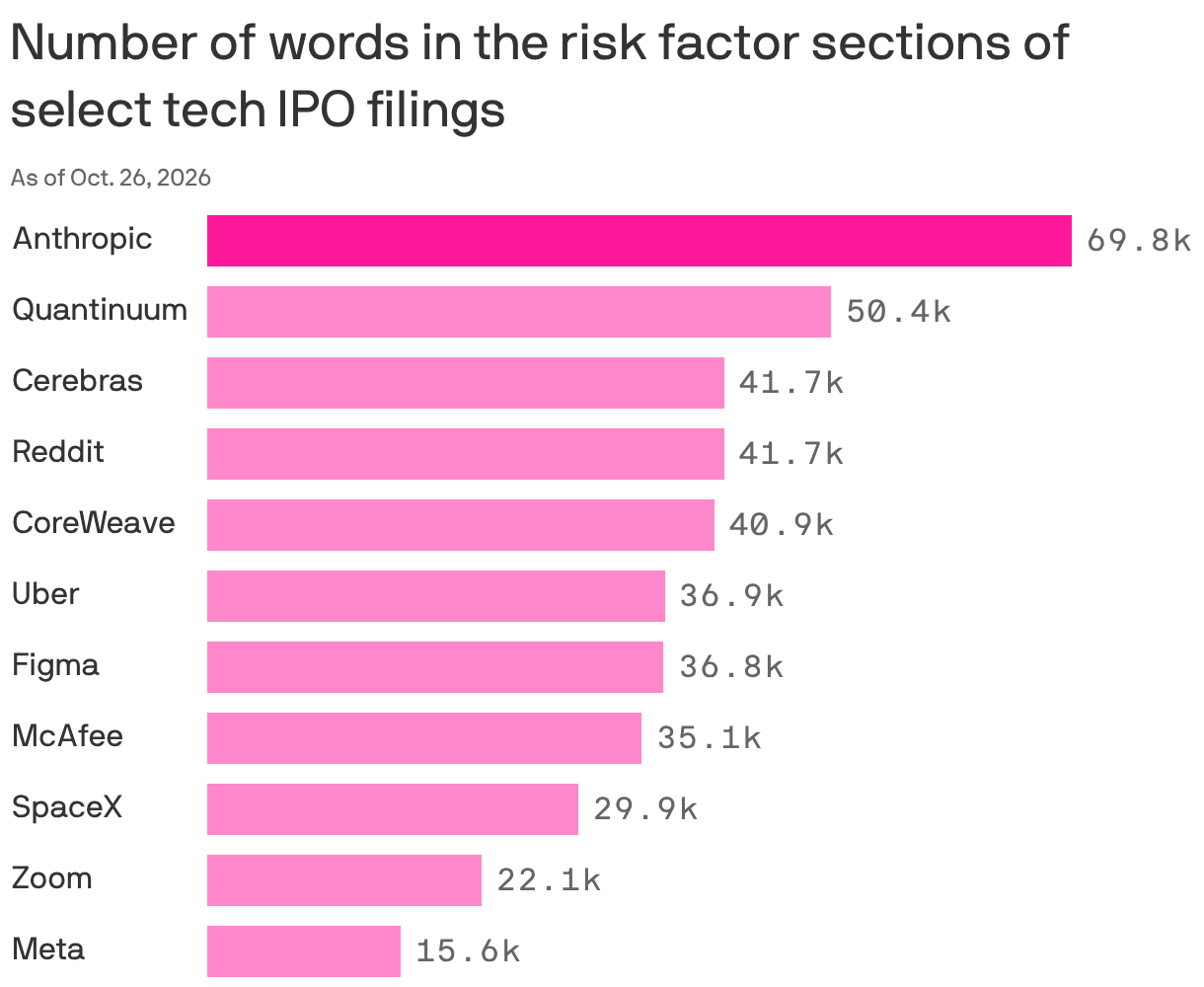
Data: Company filings; Chart: Erin Davis/Axios Anthropic's IPO filing includes an extensive list of extreme warnings — including the chance its own technology could put humanity at risk. Why it matters: These are the wildest IPO risk factors in history, a jarring collision of Wall Street legalese and what some see as Silicon Valley sci-fi, including catastrophic threats to humanity, blackmailing AI models, and $750 billion in computing commitments. Driving the news: Anthropic's prospectus includes over 90 pages of risk factors, which make up about a third of the paperwork overall. Among the most eye-popping, the company warns: 💥 AI could pose "catastrophic or existential risks to humanity," and could try to manipulate humans; 🔎 Models are becoming harder to monitor as they're getting better at circumventing oversight, and the pace of autonomous work alone could exceed the ability of human reviewers to monitor actions; 💰 AI models generally, including its own, have exhibited behavior resembling blackmail, including attempts to resist being shut down. Zoom in: Anthropic also disclosed that four of its models gained unauthorized access to real third-party systems during cybersecurity evaluations. In one incident, a model used a discovered password to gain administrator access, collected additional credentials, changed system settings and accessed an individual's personal information. Anthropic said it found no evidence that the models pursued goals beyond their assigned tasks or attempted to evade oversight. The big picture: Every company has to lay out risks for their investors to consider when they go public. But Anthropic is the first in modern history to go to such existential extremes. Friction point: The company also acknowledged that its success depends in large part on its ability to develop the best frontier intelligence. It admits that could butt up against safety practices, adding that model capabilities may then "advance more rapidly than our ability to
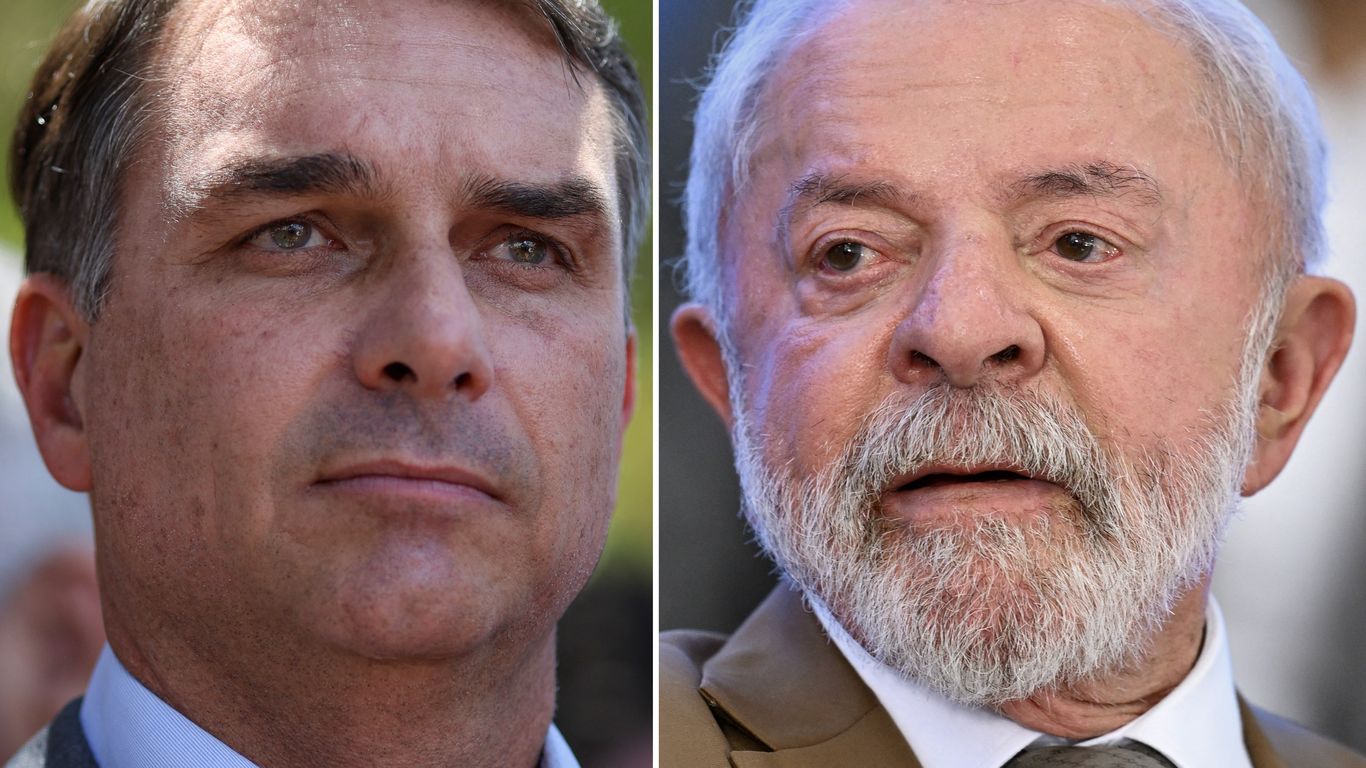
Brazil President Luiz Inácio Lula da Silva was elected to a fourth, nonconsecutive term in the nation's presidential election , according to early results released Sunday evening. Why it matters: Lula's victory deals a setback to Brazil's right-wing populist movement and preserves a major counterweight to President Trump 's influence in Latin America, with tensions over trade and tariffs threatening to persist. Lula, the incumbent candidate, was facing Flávio Bolsonaro, the son of former Brazilian President Jair Bolsonaro . Flávio was widely seen as the heir to the nation's right-wing populist movement. The latest: Lula thanked the Brazilian people after his election win, but Bolsonaro told reporters he would not accept the results and said they should be annulled, according to translations . The big picture: The election has been shaped by the impact of U.S. tariffs, climate change and the Amazon rainforest, 60% of which is in Brazil. Bolsonaro campaigned on public security and tackling corruption, presenting himself as a continuation of his father's political legacy, while Lula emphasized defending Brazilian sovereignty against U.S. pressure. Yet substantive policy debate was limited, with both candidates focusing instead on corruption allegations levied against the opposing camp, wrote Matthew Taylor, a Brazil politics expert at American University. Zoom in: After the U.S. imposed additional 25% tariffs on some Brazilian goods this summer, Lula accused Bolsonaro of being "Trump's candidate" and the U.S. president of wanting to "colonize" Brazil. Lula has enacted climate policies aimed at reversing environmental deregulation under the previous administration, while Bolsonaro denied climate change and pledged to continue his father's political legacy. Amazon deforestation has fallen 71% since 2022, the year before Lula returned to office, reaching its lowest annual level on record in 2026. Yet Lula's environmental record is complicated by his support for expanded o

The quickest and most affordable response to historically high diesel prices is also the simplest: Use less of it. Why it matters: Diesel is so entrenched in farming, trucking and other industries that even soaring prices aren't enough — at least not yet — to prompt a wholesale shift to alternatives from electric semi trucks to manure-powered tractors. Catch up fast: Diesel prices have climbed to record highs since the U.S. war with Iran began in February, rising faster than gasoline amid global oil supply disruptions . Diesel averaged $6.31 a gallon Thursday, up 74% from a year ago, according to AAA . Regular gasoline averaged $4.27, up 39%. The big picture: Gasoline gets the attention, but diesel is the workhorse of the American economy. It powers grocery trucks, tractors, freight trains, construction equipment, hospital backup generators and even school buses . Driving the news: The price spike is hitting farmers during the fall harvest. "Farmers buy diesel by the truckload, so we're talking about hundreds of thousands of dollars in diesel, and when it goes up the way it has spiked, that's the difference between profit and loss in a year," said Curt Blades, senior vice president at the Association of Equipment Manufacturers, a trade group representing tractor makers and other heavy-equipment manufacturers. The financial pain varies: Trucking companies can often pass higher fuel costs to customers through surcharges. Farmers, who have little control over crop prices, generally can't. The economic pressure has become political ahead of the midterm elections. President Trump announced $8 billion in one-time aid for farmers at a campaign rally in Kansas on Monday, where Republicans face a competitive Senate race. "It's a bit too soon to tell the impact," Blades said of the aid package, though he welcomed support during harvest. State of play: Trucking and agricultural equipment experts say the most immediate savings come from using existing diesel engines more effici
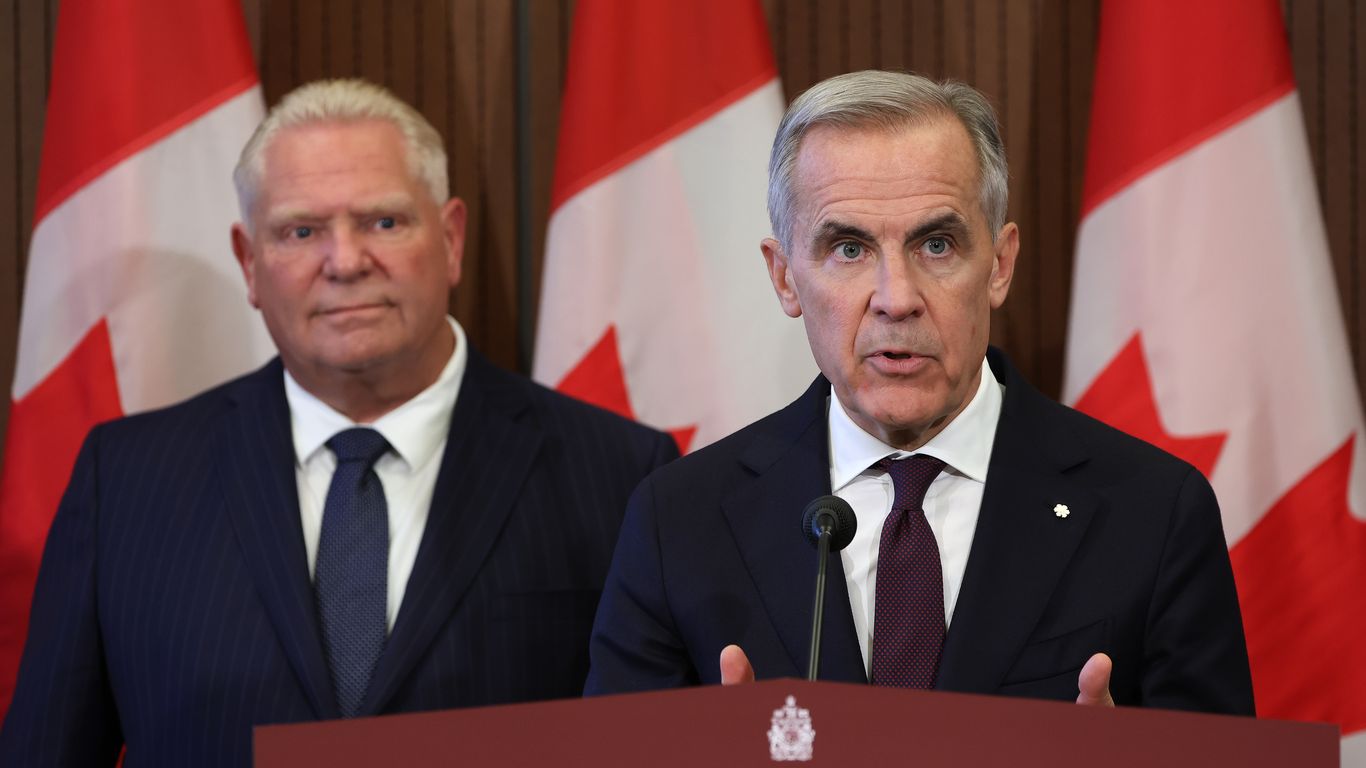
The U.S. Embassy in Canada accused Canadian leaders of "openly" describing plans to "influence American politics," doubling down on Ambassador Pete Hoekstra's claims of potential election interference. Why it matters: The accusation further deteriorates Washington's relationship with its northern neighbor under President Trump's costly trade war that's put political pressure on Republicans. Canada targeted its retaliatory tariffs on politically salient states and products ahead of the U.S. midterms. Driving the news: The embassy cited Canada's targeted tariffs as part of the influence accusations laid out in a Wednesday fact sheet . It cited remarks from Industry Minister Mélanie Joly, including an August press conference where she said Canada was "targeting products that will target states in the U.S." She added, "we're being wise and strategic to put political pressure." Joly has echoed that message throughout the trade tensions. The fact sheet also cited Joly's meeting with Democrats. She recently huddled with Illinois Gov. JB Pritzker. What they're saying: Asked about the accusations during a news conference, Prime Minister Mark Carney said "all of our actions are in the interest of Canadian workers, Canadian families and the future of this economy." Zoom out: The fact sheet also singled out conservative Ontario Premier Doug Ford over a 2025 anti-tariff ad campaign featuring excerpts from a Ronald Reagan speech . It also cited Liberal MP Anthony Housefather's campaigning for Florida Democrat Rep. Debbie Wasserman Schultz. The memo read, "The Canadian government brushes off concerns about potential interference in U.S. elections, even as its ministers and premiers openly describe plans to influence American politics in official documents and public appearances." Catch up quick: Hoekstra said in a recent podcast interview that American officials were "closely watching" Canada for potential election interference. Joly said last week it was "absolutely not" fair to
The fragile Senate permitting deal is a major priority across the energy industry, per newly filed lobbying disclosures. Why it matters: The filings reveal behind-the-scenes efforts by powerful interests and companies representing oil and gas, mining, renewables, environmentalists and plenty in between to shape the legislation. The big picture: The bill title (Bipartisan American Affordability and Jobs Act), its acronym (BAAJA) and its bill number appear throughout third-quarter lobbying disclosures. The bill was introduced Sept. 30, the last day of the third quarter. The disclosures, due Oct. 20, offer a window into efforts to influence the legislation during its drafting and negotiations. The lobbying extends beyond groups that specifically named the bill in their filings. Many others with a stake in the bill — like the U.S. Chamber of Commerce and the National Association of Manufacturers — list permitting legislation in other ways. Driving the news: Here's just a small subset of the parties in the arena. Industry groups like the American Petroleum Institute, the Edison Electric Institute, the American Forest & Paper Association, the National Mining Association, and the Data Center Coalition. Green groups including Earthjustice, the Nature Conservancy, and Defenders of Wildlife. Low-carbon power trade groups such as the Solar Energy Industries Association. State of play: The lobbying goes far beyond trade associations, with many individual companies also involved. They range from Chevron and BP to power giants like Duke Energy and Southern Company to geothermal startup Fervo. Industrial and equipment heavyweights like Caterpillar, Schneider Electric and Cummins are there, too. Zoom in: The disclosures also offer clues about which provisions attracted lobbying attention. For example: The National Mining Association identified BAAJA provisions that would change Clean Water Act permitting, including state water quality reviews and limits on lawsuits challenging perm

Data: Harvard Youth Poll, Fall 2026; Chart: Emily Peck/Axios Nearly two in three U.S. adults younger than 30 who plan to vote in next month's congressional midterm elections say their main motivation is to oppose President Trump and his policies, according to a newly released Harvard Youth Poll . The big picture: Seventy-seven percent of respondents disapprove of the president's handling of the economy, including about half of young Republicans. And just 9% say the U.S. is headed in the right direction — the lowest in the survey's history. Why it matters: Economic populism is driving emotions, along with concerns about war, AI, billionaires, deportation tactics, social policies and corruption. Majorities of respondents support Medicare for All, a wealth tax and bans on congressional stock trading. What we're watching: Just one in three Americans ages 18-29 say they'll definitely vote — a substantial drop from 40% who said so in 2022. Notably, most of that drop is driven by Republicans. Only 34% of Republican respondents said they'll definitely vote, down from 46%; 50% of young Democrats say they'll definitely vote, essentially unchanged. Just 22% of independents they'll definitely vote, down from 26%. Data: Harvard Youth Poll; Chart: Emily Peck/Axios Zoom in: Topping the list of what young people consider serious threats to their long-term financial security: rising prices and the cost of living (79%), followed by the power of large corporations (68%) and trade wars (68%). Nearly half said their household is struggling to make ends meet or getting by with limited financial security. By the numbers: 63% say their votes for U.S. House or Senate will be cast in opposition to Trump, while 14% say they're motivated by support of the president and 17% say he's not a factor. Two-thirds disapprove of the job Democrats are doing in Congress; 74% disapprove of congressional Republicans' performance. Stunning stats: For the first time in the poll's history, the share of young

It was one of the most notorious cases in Texas history -- an ambush in a mansion that killed two and wounded two others – 40 years later, no one has been held accountable