NYC man accused of 3 Central Park rapes arrested at Miami Burger King
A suspect was working at a Miami Beach Burger King when local police and U.S. Marshals arrested him over three alleged rapes reported in Central Park.
Fox News · 2h ago

A suspect was working at a Miami Beach Burger King when local police and U.S. Marshals arrested him over three alleged rapes reported in Central Park.
House Democrats' incoming freshman class is barely a week old and already threatening to defy party leaders in ways most of their incumbent colleagues wouldn't dare. Why it matters: It's a dynamic House leaders may have to learn to live with as they integrate a massive group of new members who were swept into office on a wave of populist, anti-establishment anger. "My class is huge not because of ... the Democratic Party and its brand but despite it," said Rep.-elect Don Leonard (D-Ohio). "Many of us are outsiders who didn't come up through the machine, don't buy into the conventions." Congressional Progressive Caucus chair Greg Casar (D-Texas) told Axios: "Any members that are new and have just run their elections are going to be very close to where the voters are, and we know the voters are very upset." State of play: House Minority Leader Hakeem Jeffries (D-N.Y.) is on track to become speaker, in part thanks to his rock-solid support among sitting House Democrats. His supporters include high-profile progressives such as Casar and Reps. Alexandria Ocasio-Cortez (D-N.Y.), Pramila Jayapal (D-Wash.) and Ro Khanna (D-Calif.). "There is one candidate in this race, Hakeem Jeffries, and I think that everyone is far more concerned about what that leadership means, what is it promising," Ocasio-Cortez told reporters on Tuesday. Things get more spotty when gauging Jeffries' support among incoming freshmen, some of whom have openly declined to commit to supporting his leadership. That includes members of the informal progressive "Bloc," including Reps.-elect Darializa Avila Chevalier (D-N.Y.), Melat Kiros (D-Colo.), Claire Valdez (D-N.Y.), Adam Hamawy (D-N.J.) and Chris Rabb (D-Pa.). "As far as I've heard, Jeffries is the only one running," said progressive Rep.-elect Randy Villegas (D-Calif.). "But ... I think we need to see some prioritization of some legislation, particularly around health care, foreign policy and immigration." Some incoming and sitting House Democrats ha
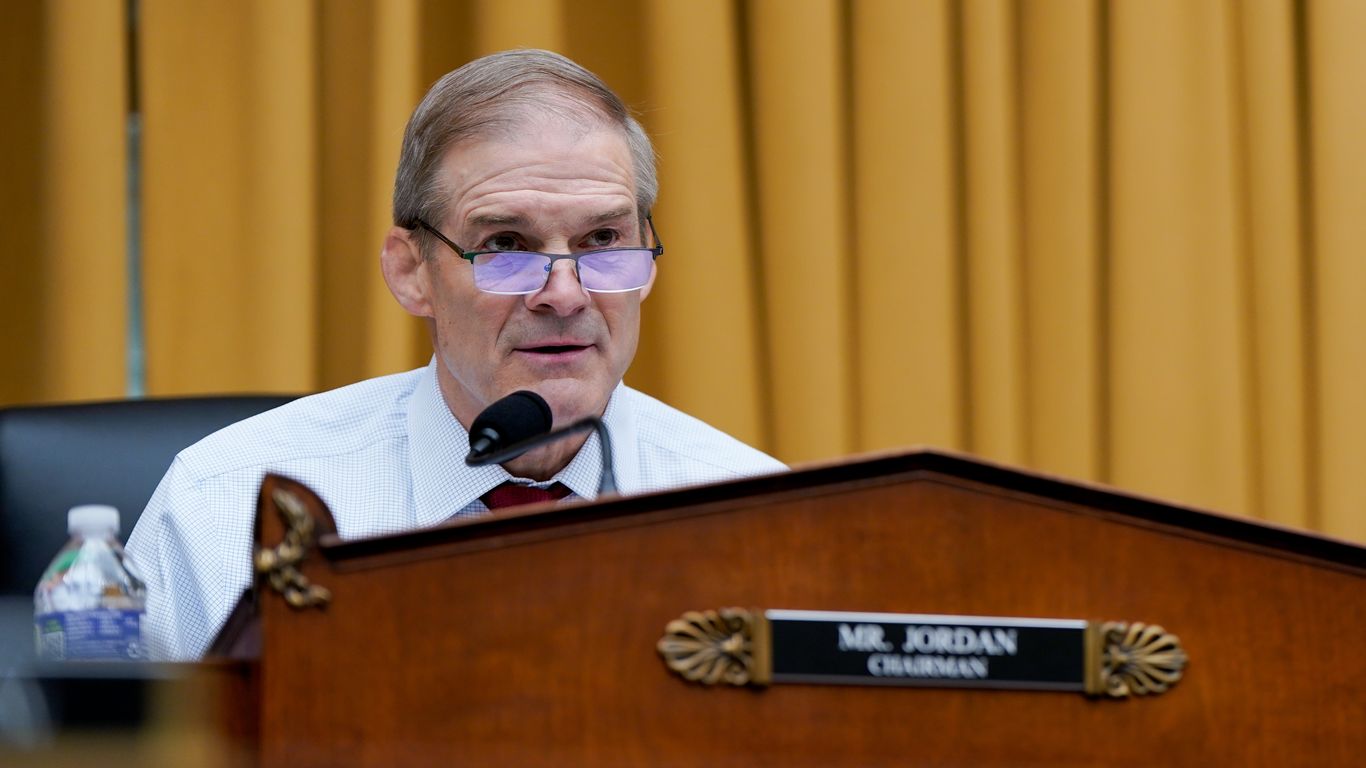
Controversial far-right congressman defied 2022 subpoena from Capitol attack panel and was accused of ignoring sexual abuse as college wrestling coach The election of Jim Jordan on Tuesday to lead House Republicans elevates a combative Donald Trump ideologue who defied a congressional subpoena over the 6 January attack, as the party tries as it tries to adjust to life out of power. Jordan will lead a diminished Republican conference, as its ranks shrink to one of the smallest in decades. But it is a triumph for the Ohio Republican who was pushed out of the contentious House speakership race three years ago after his Republican colleagues repeatedly voted against his bid for the gavel in the chaotic aftermath of Kevin McCarthy’s ouster. Continue reading...
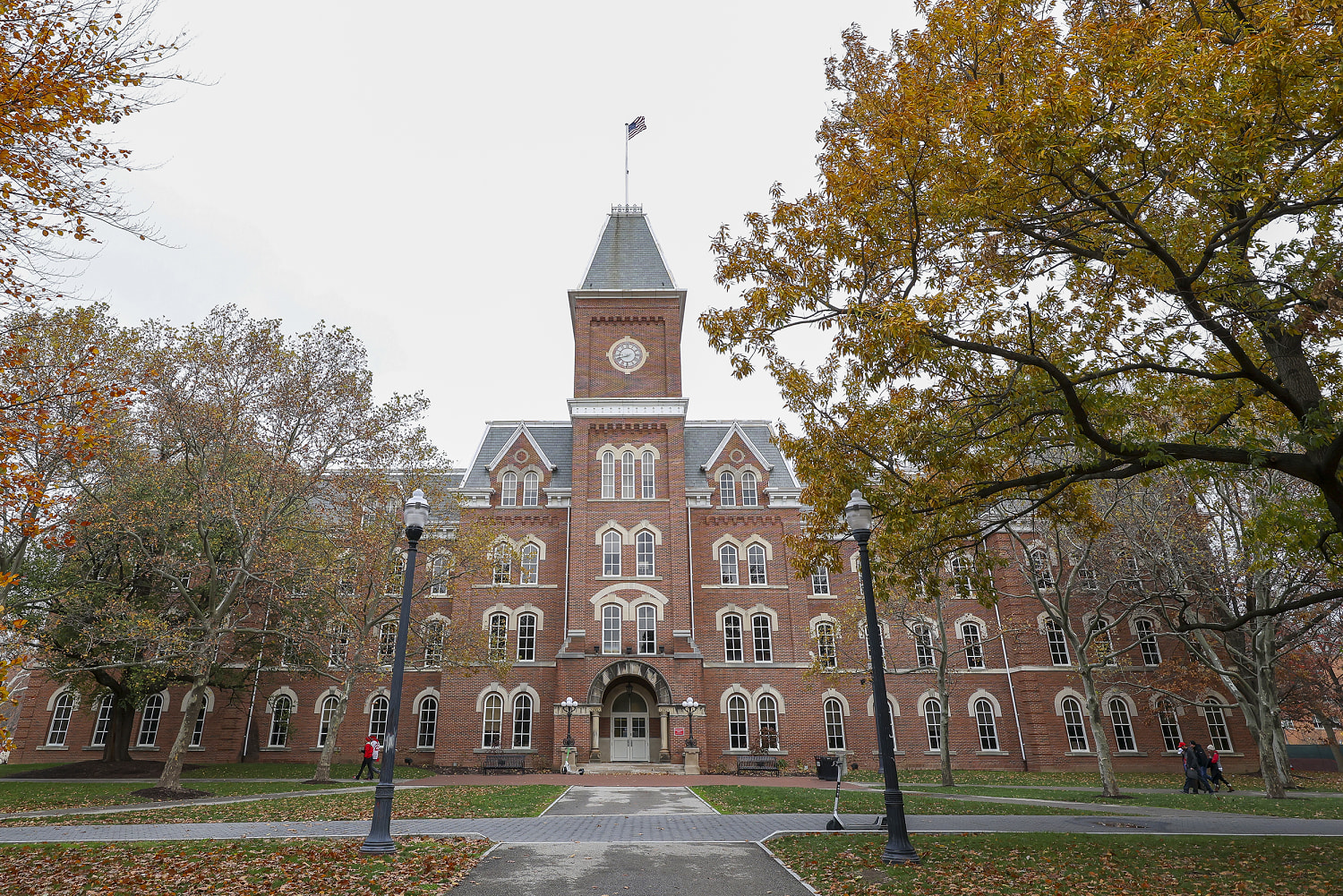
Columbus police on Tuesday released a report of their preliminary investigation into the alleged hazing incident at Ohio State University's chapter of Sigma Alpha Epsilon.
House Republicans elected Judiciary Chair Jim Jordan (R-Ohio) as their new leader Tuesday, handing the reins of the battered GOP conference to one of its most prominent conservative firebrands. Why it matters: Jordan's victory marks a major shake-up in House Republican leadership, elevating a founding member of the hardline Freedom Caucus who campaigned as an alternative to the leaders who presided over the GOP's crushing midterm defeat . Jordan bested Majority Leader Steve Scalise (R-La.), who had served as the No. 2 House Republican since 2014, in the conference-wide secret ballot for minority leader. His victory signals an appetite among House Republicans for a more confrontational approach as they prepare to enter the minority. State of play: Jordan and Scalise entered Tuesday's election locked in a tight race, with both camps expressing confidence in their chances of winning. Jordan drew public support from some of the conference's most conservative members, who argued Republicans needed a change in direction after their devastating midterm losses. Scalise leaned on his longstanding relationships across the conference and his decade-plus of experience in leadership. The big picture: Jordan's ascent represents a remarkable turnaround for a conservative agitator who spent much of his career challenging the Republican establishment before becoming one of President Trump's most vocal allies. He'll be tasked with uniting a fractured Republican conference and leading the party's efforts to reclaim the House majority in 2028.
A fraternity at Ohio State University has been placed on temporary suspension after a video surfaced online appearing to show two men at a frat event wrestling while on fire. OSU says the two individuals are receiving medical care, but the severity of their injuries is unknown.
Democrats swept into power last week as voters also embraced tougher criminal penalties and restrictions on bail. Why it matters: Six years after the George Floyd protests, Democrats won big without promising a return to sweeping 2020-era reforms. Some even adopted border-security rhetoric associated with Republicans. Democrats gained at least 12 state legislative chambers and won governorships in Georgia, Iowa, Nevada, Ohio and Texas. By the numbers: Voters approved all six statewide ballot measures Ballotpedia tracked that proposed tougher sentences, criminal penalties or bail restrictions in 2026. Five passed Nov. 3 in Indiana, Louisiana, Tennessee and Colorado. Alabama approved the sixth in May. Four expanded when courts could deny or restrict bail. Two increased penalties, including for fentanyl offenses and child sex trafficking. The shift: Some Democratic winners embraced tougher border-security language while opposing Trump's immigration crackdown. Texas Sen.-elect James Talarico called himself a "border security Democrat ," criticized former President Biden for failing to secure the border and said there needs to be comprehensive immigration reform. Michigan Sen.-elect Abdul El-Sayed , a progressive, said days before the election : "We needed tougher border security." He also criticized Trump's use of ICE. Zoom in: Colorado voters backed Democrats, tougher penalties and limits on federal immigration enforcement. That included electing Phil Weiser (D) as governor and approving tougher fentanyl penalties and life without parole for child sex trafficking. They rejected a measure requiring police to notify federal immigration authorities in certain cases involving violent crime suspects or people with prior felony convictions whose immigration status was unlawful or uncertain. Weiser and state Democrats are now weighing changes to the fentanyl measure, arguing it falls short on promised addiction treatment. Yes, but: Virginia voters approved automatically resto
A disturbing video shows two people engulfed in flames as onlookers cheered near Ohio State University, prompting a police and arson investigation.
Warning: Disturbing video. Ohio State put Sigma Alpha Epsilon on an immediate, temporary suspension "pending a full investigation" after an off-campus video showed two Ohio State students with their sweatpants on fire, trying to smother the flames. Mark Strassmann reports.
The police in Columbus, Ohio, were investigating the Sigma Alpha Epsilon fraternity after a video of the incident drew widespread attention online, according to the university.
A fraternity at Ohio State University has been temporarily suspended while authorities investigate a video that appears to show two people engulfed in flames.
A fraternity at Ohio State University has been temporarily suspended while authorities investigate a video that appears to show two people engulfed in flames
An Ohio State University fraternity is being investigated after video of two young men seemingly on fire circulated online over the weekend.
The movement founded by Greg Glassman grew into an empire, helping popularize the masculinity aesthetic embraced by Pete Hegseth and RFK Jr Comparative machismo is hardly new, but when Donald Trump publicly admired Senator Jon Husted’s backside earlier this month, later telling advisers it made the since-defeated Ohio incumbent more “interesting” to voters, the senator leaned into the compliment, saying it gave him extra motivation to “get down to the gym”. Would that odd exchange have taken place without CrossFit, the fitness empire founded by college dropout and gymnast Greg Glassman in the 1990s that grew to 15,000 gyms across 160 countries before he was drawn into public controversy at the height of #MeToo and the social justice movement in 2020? Continue reading...
Messi first to win consecutive MLS Golden Boots Inter Miami surrender 3-0 lead in dramatic draw Nashville set new league record with 77 points Lionel Messi won his second consecutive MLS Golden Boot award on Saturday, but Inter Miami squandered a three-goal lead in a 3-3 draw with Charlotte on the final day of the regular season. The Argentine superstar failed to score but set up Miami’s first two goals from corners at Nu Stadium as the defending champions secured second place in the Eastern Conference and home-field advantage for the first two rounds of the playoffs. Continue reading...
The Trump administration has proposed changes to the National Historic Preservation Act that could endanger historic sites that are significant to tribal nations across the country. Oklahoma tribes say that puts ancestral lands in Ohio at risk.
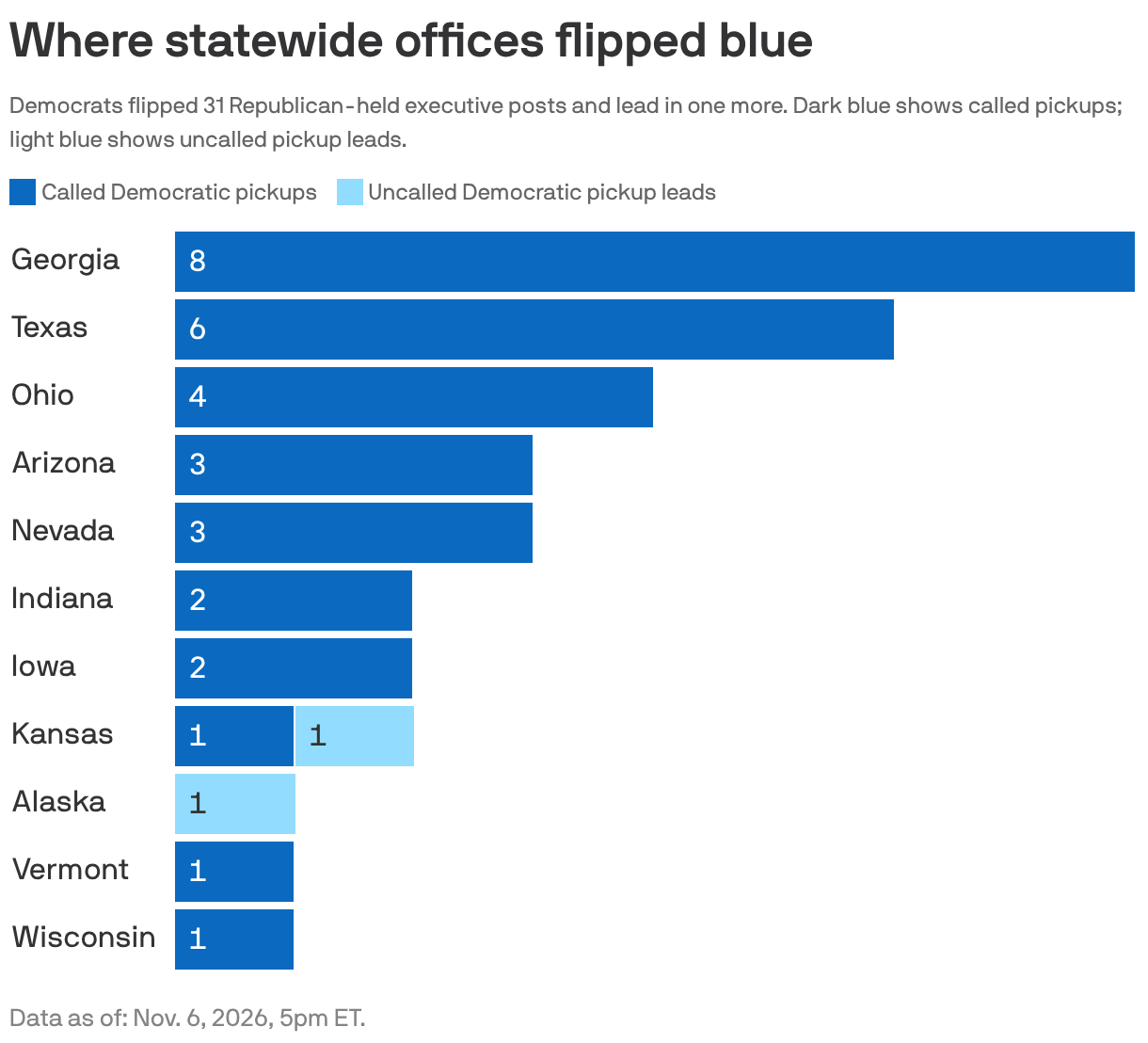
Single-holder executive offices only; excludes courts, commissions and federal offices. Data: Associated Press; Axios analysis; Chart: Andrew Pantazi/Axios Democrats' midterm gains extended deep into the machinery of state government: They swept every statewide executive office on the ballot in Texas, Georgia, Nevada, Wisconsin and Arizona. Why it matters: These low-profile victories will shape what millions of Americans pay for electricity, what their kids read in class and which party runs the 2028 presidential election in key states. The big picture: Democrats captured five Republican governorships, in Texas, Georgia, Ohio, Iowa and Nevada. But the scale of their gains becomes clearer farther down the ballot. Georgia: Democrats wrested all eight statewide executive offices on the ballot, including governor, attorney general, secretary of state and school superintendent. Texas: They flipped all six posts, defeating Gov. Greg Abbott and Lt. Gov. Dan Patrick in a state that hadn't elected a Democrat to statewide office in 32 years. Nevada: Democrats won all six executive offices, flipping governor, lieutenant governor and controller. Wisconsin: Democrats completed their Badger State domination, picking up the office of treasurer, the sole statewide office still held by a Republican. Arizona: Democrats held governor, attorney general and secretary of state. They lead in the three other executive races: treasurer, school superintendent and mine inspector. Data: Associated Press; Axios analysis Between the lines: The Democratic gains reach offices that decide which policies advance, which don't and which get challenged in court. Attorneys general: Nathan Johnson in Texas and Tanya Miller in Georgia will decide when their states sue the Trump administration and what corporations they investigate. Secretaries of state: Democrats flipped these offices in Georgia, Ohio and Indiana, putting new officials in charge of running the 2028 presidential election there. Texas' lieu
Maga’s regret voters were all-in for Trump’s racism. Then they found out they couldn’t afford it For the first time in a decade, election predictions far exceeded public expectations. What pollsters anticipated as a blue wave billowed into a blue tsunami . Wins that held ground for already blue seats eased nerves, and the flips of swing states like Michigan, Georgia, North Carolina and Ohio energized the blue base. But red-belt-busting wins in Republican strongholds like Texas, South Carolina and Kansas alongside pending races in Alaska and Mississippi left mouths agape. The explanation was that Democrats turned out far more supporters than their regulars, and that the “ regret voter ” (both swing voters and partisan Republicans) expanded the wave across districts Trump previously won . Elation and sighs of relief rolled over consistently Democratic voters who suffered multiple sucker punches from recent years of Republican upsets. Regret voters, who run the gamut from gen Z men to Latinos , farmers and the white working class , hope a different party can deliver on the economy Trump promised them. Blue voters look at the dismantling of democracy, multiple wars, mass deportations and Trump’s unchecked power in these last two years and see how it all could have been avoided. Regret voters, however, either co-signed or conceded to Trump’s naked racism and brutish bullying of marginalized people, but switched their votes as soon as the consequences hit their pockets. While some of the president’s backers may have been turned away by Immigration and Customs Enforcement (ICE) gunning down American citizens, the final straw for most wasn’t ICE’s brutality , but rather the price of eggs. Some may have been upset by the Tomahawk missile assault that killed 120 schoolgirls in Iran, but most fumed at the rocketing costs at the gas pump that followed. Few demanded answers for the nearly 60 deaths of innocent people detained in DHS detention centers since the start of 2024, but
Hundreds complained about Les Wexner’s ties to the convicted sex offender. But O.S.U. officials said he was not charged with wrongdoing and his name would remain.
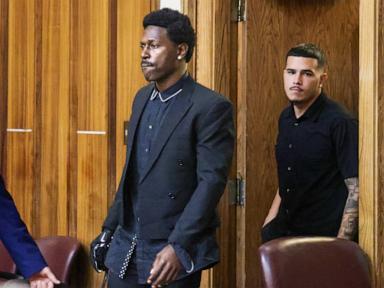
Former NFL star wide receiver Antonio Brown, accused of opening fire at a man in Miami last year, pleaded guilty to a lesser charge on Friday in an deal that’ll keep troubled former player out of prison.
Former NFL star Antonio Brown has pleaded guilty to aggravated assault with a firearm in connection with a 2025 shooting in Miami
Historians and political scientists say that framing the wins as ‘Ohio’s working class has come home’ is too simple At its peak, the Mahoning valley was once the beating heart of the US’s steel economy – a hardscrabble, heavily unionized Democratic bastion in north-eastern Ohio. But de-industrialization, sparked by the mass closure of steel mills in the late 1970s, transformed the region. Tens of thousands of manufacturing jobs disappeared. Populations declined. And support for Democrats slowly, but surely, faded. In 2020, Mahoning county voted for its first Republican presidential candidate – Donald Trump – in a generation. Continue reading...
Buffalo Thunderbolts would enter league in 2028 League could expand in time for 2031 World Cup Major League Rugby will play with just five teams in 2027 but has signed a letter of intent with the Buffalo Thunderbolts regarding a bid for entry in 2028 and is in discussions with 17 groups regarding future expansion. MLR was formed in 2018, and by 2022 the competition supported 13 teams. In 2025, teams in Utah, Miami, Los Angeles, Houston and New Orleans dropped out. Continue reading...
Democrats widen gap in House chamber by flipping more seats, including in Ohio, Arizona and North Carolina; Ted Cruz calls election a ‘Watergate-level repudiation’ Live results | Q&A: Ask your questions about Democrats’ win Sign up for Breaking News US email Welcome to our live coverage of the US midterm elections – here are some of the latest key developments. A number of closely watched contests in the midterms are still to be called, including the final two US Senate races – in Mississippi and Alaska. The Democratic candidates are hoping to oust Republican incumbents to bolster their new majority in Congress. Right now, Democrats have a 106-seat majority as we await final results. Democrats flipped another eight House seats , strengthening their majority in the lower chamber. Democrats are now leading Republicans 253 to 157, with 25 races left to call, as a number of GOP representatives felt the weight of the blue wave that has swept their party out of power. Republicans held on to two House seats in the west as congressman Mike Kennedy won re-election in Utah and Amanda McKinney won in Washington. Democratic socialist Nithya Raman was elected to serve as the mayor of Los Angeles , eking out a narrow win over incumbent Karen Bass, in a major shake-up in local politics that reflects the growing dissatisfaction with the direction of the city. The progressive urban planner had served on LA’s city council since 2020. Continue reading...
A note from our US editor: A reckoning is coming, but make no mistake: Trump is still president – we’ll need a free press in 2027 as much as we did in darker days. Please help today if you are able Betsy Reed is US editor of the Guardian Over the past two years, millions of people all over the world have watched Donald Trump’s destructive reign unfold with one question in their minds: Is there no check on his power? This week, voters deciding who controls Congress responded in a thunderous voice: there must be a check on the president’s power. From Texas to Ohio to South Carolina, Americans surged to the polls to register their opposition to Donald Trump – and to show their support for the kind of leaders who will look out for the interests of everyday people rather than those of a corrupt ruling elite. And now many people are looking at politics with a new and unfamiliar feeling of hope. Continue reading...
Young voters swung so hard toward Democrats in Tuesday's midterms that it raises new doubts about whether Republicans can build a lasting coalition among Americans under 30. Why it matters: Trump's success with Gen Z voters, especially young men , fueled talk of a generational shift toward Republicans. Tuesday's results tell a different story. By the numbers: An estimated 66% of voters ages 18–29 backed Democratic House candidates Tuesday, compared with 31% for Republicans, according to Tufts University's CIRCLE , which analyzed preliminary data from the NORC Civic Health & Elections Project. That's a 35-point Democratic advantage, compared with 14 points in the 2024 national House exit poll , when young voters favored Democrats 56%–42%. Democratic support among men under 30 rose from 51% in 2024 to 59% in 2026. Among young women, it climbed from 61% to 70%, according to 2024 exit polling by Edison Research and CIRCLE's updated 2026 analysis of NORC data. Young white voters favored Democrats 63%–34% in the SSRS survey, after splitting 50%–48% in 2024. State of play: Polls flashed warning signs for Republicans in the final weeks before Election Day. An October Harvard Youth Poll found voters ages 18–29 who said they would definitely vote favored Democrats 63%–26%. Just 9% of young Americans said the country was headed in the right direction. Zoom in: Democrats drew overwhelming support from young voters in major statewide races, according to preliminary SSRS polling. In Texas, 76% of voters under 30 supported Democratic Senate candidate James Talarico, while 73% backed Democratic gubernatorial candidate Gina Hinojosa, according to CIRCLE's state analysis . In Georgia, 70% backed Democratic gubernatorial candidate Keisha Lance Bottoms. More than 60% favored Democratic candidates for Senate and governor in Ohio. In Iowa, where young voters backed Trump in 2024, Republican Senate candidate Ashley Hinson lost significant ground with the group, according to AP Voter Poll
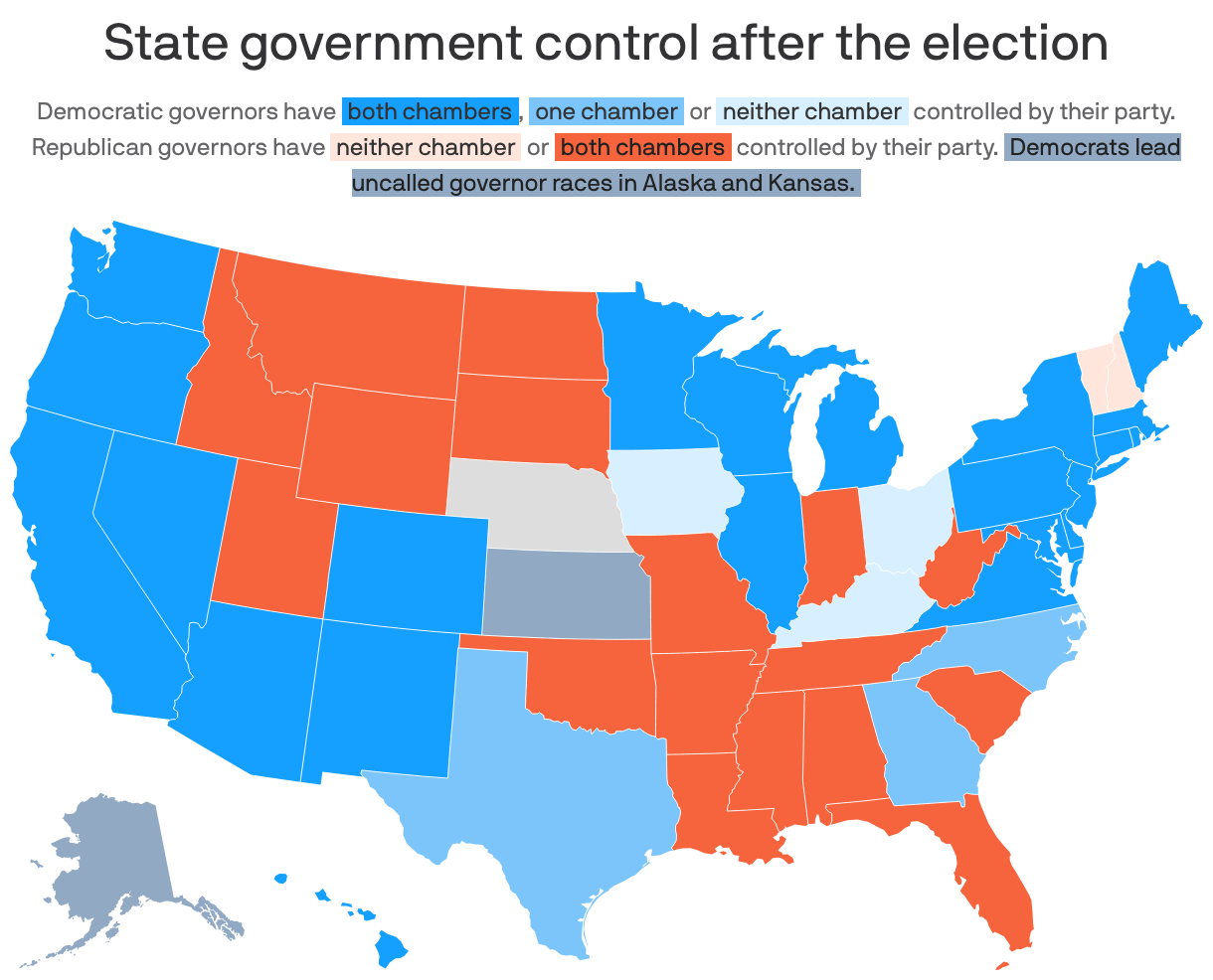
Data: Axios research; Map: Andrew Pantazi/Axios Democrats are on track to take control of a majority of legislative chambers, ending 16 years of Republican dominance over America's statehouses. If current leads hold, 75% of Americans will live in a state with a Democratic governor, and 53% will live in Democratic trifectas. Why it matters: Statehouses are the front line of American federalism, and Tuesday's gains dramatically expand Democrats' power to increase minimum wages, protect abortion access, and set voting rules ahead of 2028 for most Americans. Driving the news: The party is set to flip 12 legislative chambers, dismantle five Republican state trifectas, shatter 11 GOP supermajorities and build 12 of its own, according to AP returns as of 6pm ET on Wednesday. If leads hold, Democrats will control the governor's office and both chambers in five of the seven 2024 presidential battlegrounds: Arizona, Michigan, Nevada, Pennsylvania and Wisconsin. They have also broken Republican one-party rule in the sixth (Georgia) and flipped the House in the seventh (North Carolina). Democrats flipped five GOP-held governorships (Georgia, Iowa, Nevada, Ohio and Texas) and lead in Alaska. Republicans haven't flipped any, despite targeting Arizona, Michigan, Oregon and Wisconsin. Kansas, where Democrat Cindy Holscher was leading by about half a point Wednesday evening, is uncalled. The big picture: Ever since the 2010 Tea Party wave, Republicans have used their grip on statehouses to reshape American life: banning abortion, loosening gun laws, restricting collective bargaining and expanding private-school vouchers. They drew maps that kept them in power even in years Democrats won more votes statewide. Tuesday's Democratic gains broke that firewall. By the numbers: Republicans entered Election Day with 23 trifectas (control of the governor's office and both chambers) to Democrats' 16. If leads hold, Democrats will have 22 and Republicans 18. 24% of Americans will live under a
The helicopter went down in Biscayne Bay near a state park roughly seven miles from Miami, the authorities said.
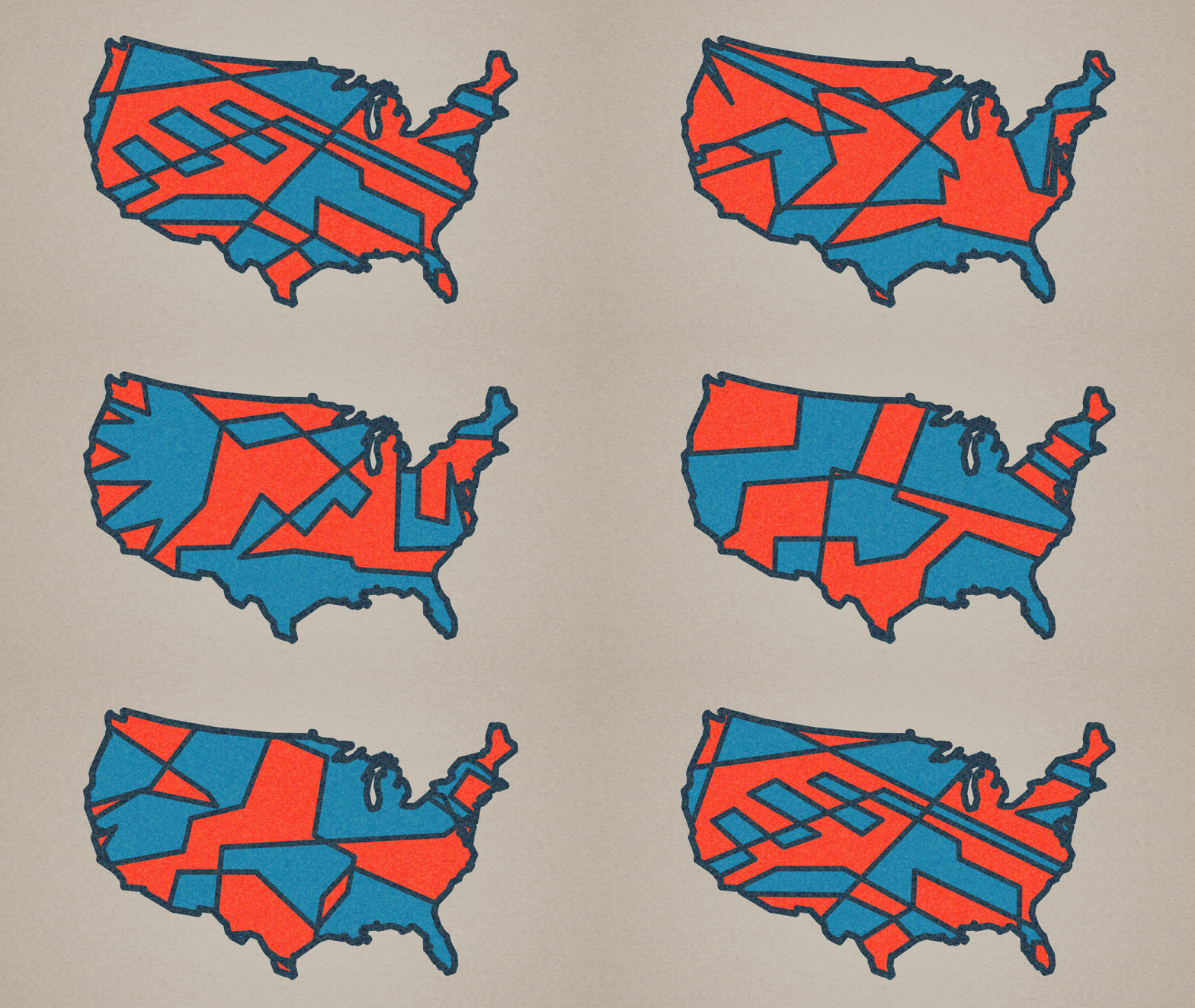
Data: The Downballot , Ballotpedia , AP ; Chart: Erin Davis/Axios Republican mapmakers thought they were drawing at least a dozen comfortably red districts to protect their House majority. Why it matters: They weren't red enough . In the seven states where Republicans redrew congressional boundaries, the GOP is on track to lose as many as eight seats — rather than gain the 15 it had hoped to pick up. With two exceptions — TX-32 and TN-09 — the pickups Republicans penciled in never materialized. Then there was a bloodbath in North Carolina. Zoom in: At the heart of the GOP's miscalculation was a bet that the 2026 electorate would look like 2024's. Instead, voters behaved more like they had in 2020 — or even 2018. TX-34: Republicans made an already Trump-leaning district significantly redder, shifting it from Trump +4 to Trump +10. Democratic Rep. Vicente Gonzalez still won by nearly 16 percentage points. TX-23: Republicans made an already red district slightly less Republican, shifting it from Trump +16 to Trump +15. Democrat Katy Padilla Stout won by eight points. TX-15: Rep. Monica De La Cruz's district remained essentially unchanged at Trump +18. She lost by 25 points. Between the lines: The GOP's heaviest losses came in Ohio and North Carolina districts that Republican mapmakers barely touched. Rather than shore up districts Trump had won by double digits, Republicans concentrated on making two Democratic-held seats in Ohio and one in North Carolina redder, betting they would flip in a normal election year. But 2026 was anything but normal. The bottom line: Perhaps the clearest example of a dummymander — when mapmakers spread their own voters too thin in pursuit of additional seats — came in Tennessee's 4th District . Republicans redrew TN-04 from Trump +44 to Trump +24, sacrificing much of its enormous GOP cushion. Democrat Victoria Broderick appears to have won by just 280 votes.
Women candidates won enough races Tuesday to set a new record for Democratic women's representation in the U.S. House — among other historic firsts in Congress and governor's races nationwide. The big picture: The spike for Democratic Women's Caucus members in the House alone marks an increase of more than 60% since 2016. At least 100 Democratic women and 16 Republican women have won House seats as of Wednesday morning, according to the Center for American Women and Politics at Rutgers University. The total is expected to climb for candidates across both parties, with dozens of races still uncalled. What they're saying: "Despite Republican attempts to silence us and take away our rights, we have built a coalition in Congress that is bigger and more powerful than ever," DWC Chairwoman Teresa Leger Fernández (D-N.M.) said in a statement. "We smashed through a glass ceiling," she added. "Because of the hard work of so many, Congress will look more like America." The intrigue: Women veterans are poised to make gains in Congress after 38 ran in Tuesday's general election — up from 21 in 2024, per civic organization With Honor Action . Several Democratic women veterans are leading in competitive House races that could flip Republican-held seats. In South Carolina , retired Navy Vice Adm. Nancy Lacore, who was removed as chief of the Navy Reserve under Defense Secretary Pete Hegseth, leads Republican Jenny Costa Honeycutt in the race for former Rep. Nancy Mace's seat. In Arizona, Marine veteran JoAnna Mendoza leads Republican Rep. Juan Ciscomani. In Ohio, Air Force veteran Kristina Knickerbocker leads Republican Rep. Mike Turner. The AP had not called any of the three races as of Wednesday morning State of play: Democratic women could gain powerful committee chair positions as control of Congress shifts. Currently, just one woman chairs a standing House committee: Rep. Virginia Foxx (R-N.C.), who leads the powerful Rules Committee. She's locked in a razor-thin reelection r
Miami-Dade Fire Rescue responded after a small helicopter went down near Nixon Beach off Miami, Florida, with two survivors pulled from the water.
Majority Leader Steve Scalise (R-La.) will announce his bid to lead House Republicans on Wednesday, a person familiar with his plans told Axios, as his party begins to regroup from stunning midterm losses that cost them their congressional majorities. Why it matters: Scalise's announcement sets up a potentially bruising battle for the minority leader post, with Judiciary Committee Chair Jim Jordan (R-Ohio) also being floated as a potential contender. It's Scalise's second attempt at the top House Republican job. Speaker Mike Johnson (R-La.) told staff that he will not run for minority leader on a Wednesday morning call, a person familiar with his plans said. Driving the news: Scalise pitched himself as a leader positioned to bring Republicans back into the majority "He is a proven and tested leader who is ready on day one. He's spent his career unifying Republicans and he is prepared for the big legislative and oversight battles ahead. The conference knows him, how he fights, and that he's a trusted leader," the person familiar with his plans said in statement. Catch up quick: Scalise defeated Jordan in the Republican conference's secret-ballot vote to nominate a speaker in October 2023, but withdrew a day later after failing to secure enough support on the House floor. Johnson ultimately emerged as speaker after weeks of Republican infighting. State of play: A Scalise-Jordan race would pit two of the House GOP's most prominent figures against each other. Scalise enters the contest with more than a decade of experience in leadership, while Jordan could draw support from the party's conservative wing. But the scale of the loss on Tuesday night has prompted calls for an entirely new leadership slate — a potential stumbling block for Scalise. Three House Republicans previously told Axios that a major midterm defeat could fuel calls for an entirely new leadership team The intrigue: Majority Whip Tom Emmer, meanwhile is making calls to lock down support from him to stay
Speaker Mike Johnson (R-La.) plans to step down as the House's top Republican after his party's epic midterm election losses wiped out their majority, according to a person familiar with his plans. Why it matters: Johnson's exit touches off a potentially contentious scramble to replace him with Republicans days away from choosing their next leaders. Johnson told staff that he will not run for minority leader on a Wednesday morning call, the person familiar with his plans said. Driving the news : House Majority Leader Steve Scalise (R-La.) and Judiciary Committee Chair Jim Jordan (R-Ohio) have been floated as potential successors, setting the stage for a bruising leadership battle. Johnson's political future remains uncertain, with questions swirling over whether he will remain in Congress or leave the House altogether after three years as speaker. The Louisiana Republican had spent months traveling across the country and raising millions of dollars in a last-ditch effort to preserve the GOP's majority. Flashback Johnson ascended to the speakership in October 2023 as a little-known lawmaker after weeks of GOP turmoil following Kevin McCarthy's historic ousting . Johnson spent much of his speakership navigating razor-thin Republican majorities, managing persistent GOP infighting and repeated conservative rebellions that brought legislative business to a standstill. But he also emerged as a prolific fundraiser and close Trump ally, helping shepherd the president's legislative agenda through a fractious Republican conference. Yes, but: Johnson had publicly insisted he intended to remain in Republican leadership even if the GOP lost control of the House. After suggesting to Fox News , that he could return to Shreveport and start a lawn care business if Republicans lost the majority, Johnson told CBS News in October that he planned to remain the top House Republican regardless of the election's outcome. His political future had become the subject of private speculation am
Mauricio Pochettino names 26-man roster to face Haiti McKennie and Sullivan among notable inclusions Quarter-final matches set for Miami, Cincinnati Mauricio Pochettino has selected his 26-man roster for the United States’ upcoming Concacaf Nations League quarter-final matches against Haiti, including recalls for Christian Pulisic, Weston McKennie and Folarin Balogun. After 13 players earned their first caps in the previous window, only two selections could be in line for international debuts this month. The two-leg series against Haiti marks the first competitive action for the US since they exited the World Cup with a calamitous showing against Belgium in the last 16. Pochettino’s side are heavily favored to win the competition outright, arriving in better form and health than chief rivals Mexico and Canada. Haiti will host their “home” leg in Miami on 14 November due to years-long security issues stemming from widespread gang violence in Port-au-Prince. The return leg will be played in Cincinnati on 17 November. Continue reading...
Democrats' big night gives them a chance to turn voter anger over high energy prices into legislative action and congressional oversight, but divisions within the party could complicate their plans. Why it matters: This was an energy election . High gasoline prices, record diesel costs, and rising power bills fueled discontent with President Trump and his party. Voters' rebukes of data centers could slow the buildout of power-hungry AI infrastructure. The latest: Stunning Senate wins in red states and House wins nationwide propelled Democrats to control of both chambers, and flipped several governor's mansions. Energy costs were prominent in key races, such as Democrats hitting GOP rivals over farmers' bills in Iowa, Kansas and Ohio. Texas Governor-elect Gina Hinojosa (D) bashed Greg Abbott (R) over his prior embrace of data centers in the state where developers are planning big projects. The data center backlash also featured in Ohio and Pennsylvania, where Sherrod Brown defeated Sen. Jon Husted (R) and Paige Cognetti unseated Rep. Rob Bresnahan (R). Both Republicans faced criticism over their support for data centers. State of play: A detailed Democratic energy agenda hasn't emerged, but there are early clues. Democratic Leader Chuck Schumer tied Republicans to electricity costs in his first comments after returns came in. Likely Speaker-in-waiting Hakeem Jeffries has vowed to quickly push an affordability agenda, with energy as a key pillar. He tasked Reps. Nikki Budzinski (D-Ill.) and Mike Levin (D-Calif.) with leading a "Gas and Utilities Affordability Working Group" that crafted ideas, though they remain under wraps. Another potential source of ideas: Hundreds of proposals backed this year by the 100-plus member House Sustainable Energy and Environment Coalition. Some could gain bipartisan backing, like support for advanced nuclear power. But other areas would be largely symbolic, like restoring some IRA tax credits. Catch up quick: In the Senate, Schumer has
Make no mistake: Democrats won by epic, sometimes historic margins across red and blue states, up and down ballots, obliterating almost everything President Trump, and a Republican Party remade wholly in his image, built over the past decade in American politics. Why it matters: Trump and Republicans are left with a mostly white, mostly old House and Senate minority, confronting a younger, more diverse ascendant Democratic Party with power and margins it hasn't held in 18 years, since the dawn of the Obama era. The results speak louder than any words we can write: Democrats won Senate races in Texas, Kansas, South Carolina, Ohio, and perhaps Mississippi en route to what could be a 55-seat majority. Democrats won swing districts all across red America, with national average margins of victory of roughly 13 points, according to a New York Times estimate . Texas is now a Democratic state, top to bottom — unthinkable mere months ago. James Talarico crushed Ken Paxton ( 55% to 43% ) like it was Connecticut. State Representative Gina Hinojosa will become the first Democratic governor of Texas in 32 years . Pastor Adam Hamilton is the first Democrat to win a Senate seat in Kansas in 94 years. North Carolina looks like a true-blue state after Democrats flipped the Senate seat and likely ousted Rep. Richard Hudson (R-N.C.), chair of the National Republican Congressional Committee (NRCC) — meaning he led the GOP drive to keep the House. North Carolina's congressional delegation could swing from 10R-4D to 5R-9D. Georgia was even worse for Republicans, where they lost all power at the state and U.S. Senate levels. Florida Gov. Ron DeSantis (R) predicted on X that the losses were so widespread, so deep, so severe that Republicans might not "have a shot at Senate control until 2032." How to think about last night more broadly: This is a 50-50 nation with fast, whiplash shifts in power at the federal level due to persistent discontent with the party in power. So, on one hand, this
Voters showed deep distrust of the AI race Tuesday, approving dozens of data center moratoriums and electing a raft of candidates who favor slowing a $10 trillion buildout, including in Texas — the epicenter of the boom. Why it matters : In an election that hinged on an affordability crisis for many Americans, voters made it clear they view Silicon Valley's AI ambitions not as a technological miracle, but as a resource-draining threat to their wallets and communities. The results were a warning shot to some of the nation's wealthiest and most powerful executives, many of whom are already working on ways to build a more palatable version of the revolution they are dead-set on winning. "What we just witnessed was an AI earthquake," Brad Carson, co-founder of Americans for Responsible Innovation, told Axios. "Voters just sent a clear message that they want rules for AI and data centers." Driving the news: Democratic challenger Gina Hinojosa's surprise victory in the Texas governor's race fundamentally scrambles the math for the AI buildout. Hinojosa campaigned on keeping a moratorium on data center construction in place until the state passes legislation tackling impacts on water, electricity, air and property rights in the legislative session that ends in mid-2027. While most 2027 U.S. data centers expected are already under construction, a hold for more than six months would bring extended delays to Texas, which accounts for 41% of new U.S. capacity in 2028, according to the research firm SemiAnalysis. Democrats won all three of the states that follow Texas for new data center capacity, including Ohio, Georgia and Arizona. The winners in Ohio and Georgia favor restrictive policies, although it's not yet clear how those will take shape. Between the lines: All told, nearly two-thirds of 2028 data center capacity could face delays, although most political analysts don't see Democrats permanently blocking construction. What they're saying: A host of candidates and politi
President Trump's Republican Party suffered an electoral humiliation Tuesday night that stretched across the battleground map and into some of the deepest-red territory in America. Why it matters: The 2026 midterms will go down as one of the most sweeping repudiations of a sitting president in modern American history, on a scale reminiscent of the post-Watergate reckoning of 1974. The big picture: Two years after Trump's comeback appeared to herald a historic political realignment , voters delivered a devastating verdict on his second presidency. Democrats seized control of both chambers of Congress, on course to gain as many as 40 House seats and at least seven Senate seats — eclipsing their wildest pre-election expectations. The wave swept deep into Republican territory, from Texas and Georgia to both Carolinas, flipping hundreds of legislative seats and delivering Democratic trifectas in the unlikeliest of states. 5 takeaways 1. Texas turns blue: After decades of dashed hopes, Democrats finally conquered the nation's most coveted Republican stronghold — in a landslide so sweeping that even three-term Gov. Greg Abbott was driven from office. Gina Hinojosa became the state's first Latina governor, while James Talarico defeated Trump-backed Ken Paxton to become the first Texas Democrat elected to the Senate since 1988. The Democratic onslaught extended across statewide offices and possibly Texas' House of Representatives, suggesting that the state's political future could be up for grabs after 32 years of GOP dominance. 2. Democrats storm Senate: What once looked like an impossibly difficult map for Democrats gave way to a historic rout, as Republicans watched their 53-seat majority crumble in states Trump carried by double digits. Democrats broke a 94-year losing streak in Kansas, ousted Republicans in Ohio , Iowa and North Carolina , and captured South Carolina for the first time since 1998. In Maine, Democrats finally toppled five-term Sen. Susan Collins after ma
It was a drubbing on a scale that neither side saw coming: Democrats pummeled Republicans across the battleground map and into some of the most MAGA-friendly terrain in the country. Why it matters: The results were an emphatic rejection of Donald Trump's second term in office — and set the stage for two years of corruption investigations and legislative frustration for the lame-duck president. Here's a rundown of what you need to know about last night's historic GOP beatdown. The size of the Dem majorities It was clear early in the night that Democrats would flip the Senate. Few predicted how big their majority would end up. Democrats will have at least 54 Senate seats, and another two — in Alaska and Mississippi — were too close to call early Wednesday. The New York Times projects Democrats will win 257 seats vs. 178 for Republicans — a 79-seat majority. Those numbers could change as more races are called, but in any scenario it will be an astounding majority. The big surprises 1. Texas turns blue: After decades of dashed hopes, Democrats conquered the nation's most coveted Republican stronghold — in a landslide so sweeping that even three-term Gov. Greg Abbott was driven from office. Gina Hinojosa will be the state's first Latina governor, while James Talarico defeated Trump-backed Ken Paxton to become the first Texas Democrat elected to the Senate since 1988. The Democratic onslaught extended across statewide offices and into the legislature, suggesting that the entire state's political future could be up for grabs after 32 years of GOP dominance. 2. More red-state romps: Democrats broke a 94-year losing streak in Kansas, ousted Republicans in Ohio , Iowa and North Carolina , and captured South Carolina for the first time since 1998. 3. House district reversals. Tennessee's 4th Congressional District race hadn't been called as of the wee hours Wednesday. But the returns were stunning regardless of the outcome. Trump carried the district two years ago by 24 points
Republicans tried to save their House majority with a bold wave of mid-cycle redistricting. It failed in spectacular fashion on Tuesday. Why it matters: Republicans not only fell short of winning seats in several districts they redrew to favor their candidates, they put some GOP incumbents in danger of losing by spreading their support thin. Rep. Scott DesJarlais (R-Tenn.), who has mostly won landslide reelections since entering Congress in 2010, trailed his Democratic opponent by 200 votes, according to the Tennessee secretary of state's unofficial final results . Republican state legislators carved up his district in an effort to shore up neighboring Republicans, making his district nearly 20 percentage points less GOP-leaning. State of play: While Republicans succeeded in picking up a Democratic district in Tennessee to make up for that loss, they largely failed to pick up the seats they tried to make reliably Republican in other states. Florida: Republicans are set to go 0-for-4 in redistricted seats, failing to unseat Democratic Reps. Darren Soto, Kathy Castor and Jared Moskowitz, or capture a new seat that Democrat Pia Dandiya won. Texas: Republicans are set to narrowly win just one of the five districts they redrew heavily in their favor, with Democrats easily hanging onto several Rio Grande Valley and San Antonio-area seats. Ohio: Democratic Reps. Greg Landsman and Marcy Kaptur held on despite Republicans drawing them into more hostile territory. Alabama: Democratic Rep. Shomari Figures is also set for a comfortable win in a district Republicans had planned to fall into their hands. Louisiana: The district of retiring Democrat Rep. Cleo Fields, which Republicans made significantly more GOP-leaning will go to a December runoff between Democrat Patricia Moore and Republican Gabe Firment. One of the most stunning results of the night was Democrats' multiple apparent victories in North Carolina, where House candidates were boosted by Sen-elect Roy Cooper's stron
Once seen as a bellwether of the nation’s political mood, Ohio has been solidly red since President Trump first won office. Tuesday’s results could change that.
The defeat of the two-term Republican by Brian Poindexter, a union ironworker, handed Democrats a seat that had appeared out of reach before the family clash became public.
Senate Republicans' worst nightmare came true Tuesday night, as they watched red state after red state fall to a historic Democratic wave . Why it matters: It's hard to remember now, but Republicans started off the 2026 cycle thinking they could expand their majority. They ended the night with what one source called a "huge f**king thumping" — losing or trailing in every toss-up on the map. At the start of the cycle, top operatives saw a red wall of incumbents in Trump-friendly states, an invincible Republican Sen. Susan Collins in Maine and a vulnerable Democratic Sen. Jon Ossoff in Georgia, who provided a path to expanding a majority. By 9pm Tuesday night, top GOP sources were quietly accepting the reality of the return of Majority Leader Chuck Schumer (D-N.Y.). "Republicans are going to wake up in a different country tomorrow and we are going to have to start from square one to reinvent a party," one senior GOP Senate aide told Axios on Tuesday evening. Between the lines: For the first time since 1972, Republicans lost a Senate seat in the home state of the chair of the National Republican Senatorial Committee. The defeat of Sen. Darline Graham (R-S.C.) came despite Sen. Tim Scott (R-S.C.) leading the NRSC. Republicans also lost in the home state of the next expected NRSC chair, Bernie Moreno (R-Ohio). Zoom in: North Carolina and Georgia were expected to be the premiere races of the cycle not too long ago. Both were called for Democrats before 8:30pm EST. That was just the beginning of the nightmare. In Texas, Elon Musk's more than $150 million infusion wasn't enough to save Texas GOP Senate nominee Ken Paxton after Paxton defeated Sen. John Cornyn in a nasty primary. In Ohio, Sen. Jon Husted's (R-Ohio) campaign had a rocky start — and wasn't bailed out by President Trump's publicity campaign about his rear end. Alaska started looking shaky even before a second Dan Sullivan joined the ballot, and Iowa wasn't a given either. In Kansas, alarm bells started ringing
Party sees historic victories with Gina Hinojosa’s stunning upset in Texas and Georgia’s Keisha Lance Bottoms becoming first Black female governor in US Democrats are hoping to win a majority of governor’s offices across the US after marking significant victories in Texas, Georgia, Ohio and Iowa. One of the biggest prizes of the night was the Texas governorship, with Democratic state representative Gina Hinojosa unseating Republican incumbent Greg Abbott in a stunning upset. Hinojosa will be the first Latina governor of the state, and the first Democrat elected to the Texas governorship in 30 years. Continue reading...
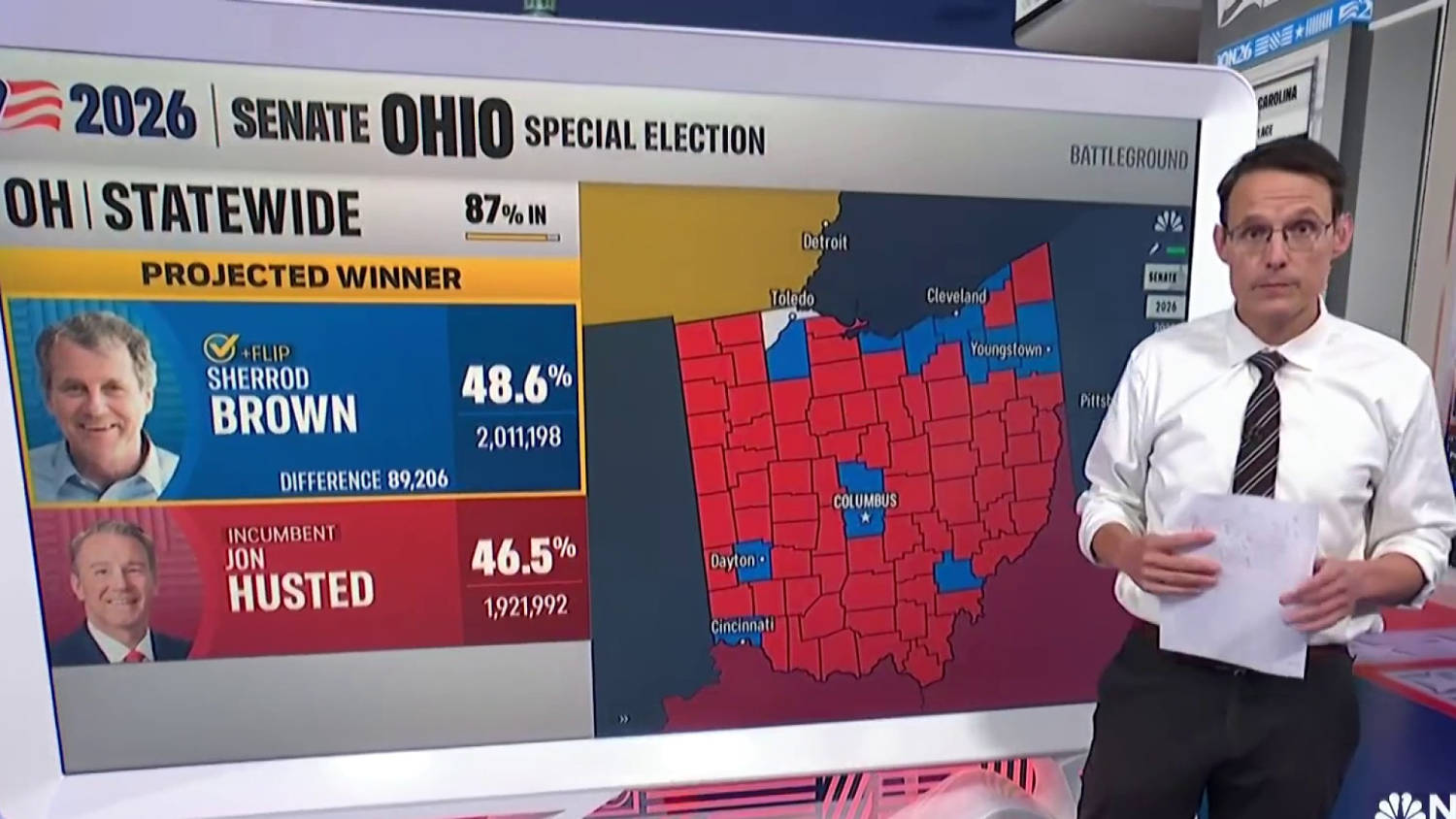
NBC News projects that Democrat Sherrod Brown has defeated Republican Jon Husted in the Ohio Senate race. NBC News’ Steve Kornacki analyzes Ohio’s voting results.
Ousted two years ago by a Republican challenger, Mr. Brown returns to Washington in the seat once held by Vice President JD Vance.