TopNewsOn

Results for “sues openai”

California sues ChatGPT maker OpenAI over rogue hacking incidents

California Attorney General Rob Bonta filed a sweeping lawsuit against OpenAI on Monday, alleging the technology giant jeopardized public safety by creating AI models “without the safeguards and monitoring necessary to adequately protect” people.

NBC News · 5h ago
AI's four colliding crises

AI's titans were handed an extraordinary mandate: Police yourselves. But the industry faces a four-pronged crisis of trust as Democrats surge to power and many Americans rebel over AI and data centers. Guardrails for the industry will be a priority for the new Congress, with some populist Republicans eager to pile on. Why it matters: The collision of safety scares, political blows, financial turmoil and leadership scandals threatens to derail AI's once seemingly unstoppable ascent. The big picture: Just six weeks ago, President Trump announced that top AI CEOs had agreed to a voluntary safety accord . But cracks were already showing and, since then, four crises have converged. 🏛️ 1. The political crisis: AI was on the ballot for the first time during the midterm elections through a series of data center measures across America. People voted against data centers in 40 out of 41 cases, and swing-state incumbents linked to the facilities, including Sen. Jon Husted (R-Ohio) and Texas Gov. Greg Abbott (R), were voted out. Now Democrats are planning a flood of AI bills once they take control of Congress in January, Reuters reports . They'll also bring some of the most powerful AI executives to D.C. to testify. 🦺 2. The safety crisis: OpenAI's Hugging Face breach , revealed in July , was a terrifying look at what could happen if machines operate beyond humans' control — and it was the first in a wave of revelations through the summer and fall. AI CEOs and engineers came forward with stark warnings about the dangers of the tech they've been building, including its potential to destroy humanity. Axios' Madison Mills reported that OpenAI and Anthropic are investigating tens of thousands of security incidents and that unvetted AI agents are accessing U.S. bank accounts. 💰 3. The financial crisis: The AI trade is looking more vulnerable as investors question when or whether the industry's sky-high spending will deliver sky-high returns. Tech stocks tumbled , with Nvidia fall

Axios · Nov 14
The AI boom will survive without Jensen Huang, but there's a $500 billion funding hole to fill

The AI boom without Jensen Huang will test a hard truth: Even if the tech world has grown somewhat less reliant on Nvidia's chips, it remains highly dependent on its checkbook. Why it matters : With rival chips maturing and recent software breakthroughs, the tech ecosystem has achieved what would've seemed impossible a year ago: a viable path around Nvidia. But replacing a CEO willing to bankroll startups, backstop billions in cloud debt and aggressively fund rivals to the AI giants will be much harder. The big picture : The next chapter without Huang will be more cautious, but the industry is capable of absorbing the change, for two key reasons: 1. New chips - Semiconductor competition has become harder to contain. At OpenAI and other startups, a longstanding joke was that the best way to get a discount on Nvidia chips was to openly talk to Google or others about alternatives. Huang would often swoop in enthusiastically, eager to lock in a customer. The progress of custom chips from Google, Amazon, Microsoft and OpenAI , as well as new deals with Broadcom and Nvidia rival AMD, gives those conversations more substance. Customers have options, and far more leverage than ever. AI itself has also made those offerings easier to use. Anthropic says its Mythos model helped run certain workloads on AMD chips in about three days , compared with six to 12 months in the past. 2. Washington - In DC, China hawks are ascendant. Huang's departure strengthens calls from administration forces, some lawmakers, and companies such as Anthropic that have pushed for tighter controls on chip sales. Legislation is rapidly advancing to cut off loopholes and strengthen export restrictions for advanced chip sales to China, and the Commerce Department is reportedly preparing additional ways to limit such access. Cutting off those routes could help protect America's lead and offer a major pre-IPO boost to Anthropic and OpenAI. Reality check : Alternative chips and leaps forward in software won

Axios · Nov 13
Jensen Huang's looming ouster triggers an AI earthquake

Jensen Huang's potential ouster from Nvidia has plunged the AI industry into uncharted territory — a corporate earthquake that dwarfs even the chaos unleashed by Sam Altman's temporary firing from OpenAI in 2023. Why it matters: Nvidia is the backbone of the global AI economy , with its chips, investments and financial guarantees sustaining an entire ecosystem of companies worth trillions of dollars. At the center of that vast financial flywheel is Huang, who spent 33 years making himself synonymous with Nvidia — and Nvidia synonymous with the AI revolution. "This is no ordinary CEO. This is no ordinary company. This is no ordinary sector. This is no ordinary time," economist Mohamed El-Erian wrote on X , warning of contagion across the AI industry. Zoom in: As recently as two weeks ago, the notion of Nvidia without Jensen was unthinkable. Even after his affair with a suspected Chinese spy came to light, President Trump and Nvidia's board stood behind him, Silicon Valley's elite rallied to his defense and betting markets suggested he would survive. It took revelations of a second affair — this time with an executive who reported directly to Huang — to shatter that consensus and bring his storied reign to the brink of a stunning end. Driving the news: After that second affair came to light Wednesday night, Nvidia's board reportedly met to settle Huang's fate, though there was still no decision as of early Thursday morning. The White House was read in. The market reaction has been brutal. Nvidia had already shed more than $1 trillion in market value since the initial scandal erupted, and shares plunged further in after-hours and pre-market trading overnight. One of Wall Street's most prominent voices on tech, analyst Dan Ives, said Nvidia was worth 25% less without Huang. Zoom out: Huang's rise was the stuff of Silicon Valley legend: The Taiwanese immigrant went from cleaning toilets at a Kentucky boarding school and waiting tables at Denny's to building one of the mo

Axios · Nov 12
ChatGPT’s Teen Mode could deprive teenagers of a fundamental need | Robin Kirman

What young students stand to lose is more than cognitive skill: it’s a reliable sense of their own minds In August, OpenAI launched Teen Mode – a version of ChatGPT in which every user under 18 will automatically be enrolled – a year after a lawsuit alleged that ChatGPT had contributed to the suicide of a 16-year-old named Adam Raine. For years, the tech industry has contested any causal link between its products and the harms named in a wave of similar lawsuits, each alleging that the companies had not merely failed to protect children but had deliberately designed products to exploit them. Continue reading...

The Guardian · Nov 10
How Nvidia crisis, politics could deliver the pause AI leaders want

A political backlash against AI and data centers — now compounded by a crisis facing the technology's most influential champion — could help force a slowdown that industry leaders have struggled to achieve voluntarily. Why it matters: Tapping the brakes on AI development — which frontier AI developers claim to want but have so far failed to do given the risk of offering an advantage to a competitor — could give society more time to prepare for economic upheaval and the risks of superintelligent systems. A wave of Democratic victories and data center moratoriums are now joined by a potentially weakened Nvidia CEO Jensen Huang, who admitted to having a relationship with an alleged Chinese spy. Huang, who has led the industry in barreling through past resistance to AI acceleration, may be less able to do so while under a microscope. While both factors could stymie data center expansion in the U.S., it's far from clear that would slow AI's advance. Between the lines: Huang has been a powerful counterweight to calls for AI restraint, dismissing fears of an AI bubble or purported catastrophic risks to humanity from the technology. An investigation — by the board, an ascendant Democratic congress or federal authorities — could curb his ability to make the case for continued expansion, leaving an opening for those calling for more restrictions. Nvidia says Huang will remain CEO and the news won't slow the company, but the potential impact on his political influence is hard to measure. The potential impact extends beyond that as well. Nvidia is both the dominant supplier of AI chips and an investor in companies building AI infrastructure. A crisis that raises questions about its leadership, business practices or financial relationships could ripple through the industry's expansion plans. The intrigue: Anthropic CEO Dario Amodei, OpenAI CEO Sam Altman and Elon Musk have all warned about the potentially catastrophic risks of advanced AI, with all expressing, at times, the need

Axios · Nov 10
AI's "too big to fail" CEO is facing a crisis with no backup

There is no Nvidia — nor an AI boom as we know it — without Jensen Huang. He has reassured jittery markets with his words, bankrolled a trillion-dollar buildout and put economies on his shoulders. Now, the world is wondering if he can save himself . Why it matters: Global markets must confront a terrifying reality: The AI ecosystem's first "too big to fail" executive is suddenly vulnerable, and there is no backup plan if he is forced to step down. Catch up quick : Huang apologized Sunday and Nvidia's board launched an independent probe after he admitted to having a relationship with a woman named Alice Huang, an alleged Chinese operative. Nvidia's board expressed confidence in his leadership and said it had no reason to believe national security or company secrets were compromised. President Trump stood by Huang, calling him "an honorable guy." The big picture: Keeping his job is one thing. Maintaining the ability to steady markets, finance customers and shape government policy is another. These are the five questions that now loom over the AI boom : 1. What happens to Nvidia? Forged 33 years ago (initially using a Denny's as an impromptu office), Nvidia is a uniquely founder-driven company, making any potential leadership transition incredibly perilous. Investors have little precedent for valuing the company without him. "It's very hard to envision Nvidia run by anybody else," said Dan Gallagher, an analyst with Washington Post Intelligence and long a keen observer of the chip titan. Huang has more than 60 direct reports, eschews traditional corporate layers and hasn't been publicly grooming a successor. "I don't know if anyone's going to know how to value Nvidia" without him, Gallagher told Axios. 2. What happens to the market? Huang has repeatedly rescued the AI trade from bearish sentiment. On multiple occasions, he has offered backstops to shore up growth plans for companies across the AI landscape, from CoreWeave to OpenAI. In July, he argued that cheaper open

Axios · Nov 9
Tech giants turn to cash, concessions for AI rebrand after voters pummeled data centers 43-1

The AI industry is scrambling to repackage a $10 trillion infrastructure buildout to appease a hostile electorate that overwhelmingly voted to restrict data center construction in ballot measures across the country. It's not just changing the name of data centers to "compute campuses," but offering communities real money, including dividends, benefits for schools or cities, environmental concessions and labor protections. Why it matters: Tuesday's election proved voters won't tolerate unchecked growth, although the market and many analysts see the blue wave slowing — but not stopping — data center construction around the U.S. To prevent an existential threat, the world's biggest companies are working on a rebrand. How well they execute on their promises will determine the pace of the global AI race. What they're saying : Chris Lehane, OpenAI's chief global affairs officer, compared the turnaround AI must make to the 1996 election, which came shortly after Republicans routed Democrats in a historic midterm election. "A lot happens in two years," he told Axios in an interview. "Smart, talented folks take messages from voters and react and respond to them." Getting community buy-in for data centers will require "really making clear that these can be long-term, durable, economically transformative projects for communities," he said. Driving the news : There's no question about how voters feel about data centers after Election Day, with restrictive measures across 10 states going 43-1 at the ballot box. The margins weren't close, with an average of 75% of people favoring restrictions. In Texas, a new Democratic governor has promised to keep a moratorium in place until the legislature passes comprehensive reforms. Candidates who won in other emerging data center states also favor similar restrictions. Analysts say about 60% of planned 2028 capacity across the U.S. faces a risk of delay. Between the lines : Incoming Democrats aren't going to kill data centers. Virginia, ru

Axios · Nov 5
Datacentres are deeply unpopular – so the geniuses at OpenAI are rebranding them | Arwa Mahdawi

These resource-guzzling centres drive up utility bills and are hated across the political spectrum. Cue a clunky, but potentially influential, new name for them Jesus may have turned water into wine, but Donald Trump has done one better: he turned Lake Ontario into Lake America and the Gulf of Mexico into the Gulf of America. And then, for his next trick, he insisted we all stop talking about artificial intelligence (AI) and call it superintelligence (SI) instead. Those, of course, are only a few of the name changes the president has ushered in. When he’s not golfing or commenting on senators’ buttocks , president Trump loves a rebranding project. Which makes sense: coming up with a new name is far easier than making meaningful improvements to people’s lives. Continue reading...

The Guardian · Nov 3
Behind the Curtain: OpenAI's post-election power play

Right after Tuesday's midterms, OpenAI will unleash a policy and PR blitz to try to get in sync with the new Washington, including an effort to rebrand data centers as "AI compute campuses." Why it matters: After two years of a friendly White House, AI companies will face a harsher Washington after Tuesday, when Democrats will likely win the House. OpenAI also aims to help frame the AI debate for the big field of 2028 presidential contenders that'll start forming on Wednesday. "You can try to chase the moment, or seek to inform the moment via the power of ideas," OpenAI chief global affairs officer Chris Lehane tells us, calling Tuesday an "electoral portal from one era to the next." Since August, Lehane and his team have been stockpiling policy proposals, some new and some repackaged, to drive urgency and steer the AI debate. It'll all start during the lame-duck session of Congress — the awkward but often consequential weeks between the election and the swearing-in of new members and senators on Jan. 3. This year's lame duck opens Nov. 9. The big picture: Other tech companies are also positioning themselves for a potential blue wave. Meta is taking steps to strengthen its ties with Democrats, Axios' Sara Fischer scooped Saturday . Other big AI and tech players can be expected to do the same. Tech titans who enjoy close relationships with President Trump will be top targets for Democrats, who are eager to ramp up scrutiny and regulatory pressure on the industry. OpenAI's plans, being revealed here for the first time, all involve control — trying to send the message that AI is being built for people, not to displace people. The proposals include: Speed limits: Building on earlier proposals , OpenAI plans to unveil new ideas for mandatory safeguards for the most powerful AI systems — speed limits for AI that will allow humans to keep their hands on the wheel. This'll include a more aggressive congressional drive. "You're going to see us talk more and more about the co

Axios · Nov 1
The AI trade's trick-or-treat earnings season

The latest wave of hyperscaler earnings is spooking Wall Street. Bulls and bears alike have evidence to validate their wildest dreams — or their worst nightmares. Why it matters : The market's AI obsession has entered its Jekyll and Hyde era, with the latest earnings from tech giants offering contrary signals about the AI boom. Driving the news : The tech-heavy Nasdaq briefly sank into correction territory, falling 10% from its prior peak, losing $1.2 trillion in value for the month of October, after a slew of earnings reports pointed to AI's big risks. But it wasn't all horror: within the earnings statements, some investors found proof that the AI bet is going exactly as it should. Here are three examples of the AI trade's deepest contradictions — the good and the scary — from the earnings releases and calls of the Big Tech hyperscalers. Google: The scary: AI overviews are cannibalizing Google's core business: ad revenue from search. Yes, search queries are up, but results in AI mode have lower margins. The company has lost more than $500 billion in market value post-earnings, bringing the broader tech sector along with it. The good: Google Cloud is closing in on Microsoft's Azure cloud revenue, a stunning development given that Google was an also-ran in the cloud game only a few years ago. Much of Google's success is tied to demand for its TPU chips, which analysts expect to see massive growth in coming quarters. The takeaway: Google's predicament mirrors the problems of many tech giants, where AI represents a true threat to the golden goose but presents new opportunities if they can move fast enough. Microsoft and Amazon: The good: Both companies had explosive cloud growth, though the market was disappointed Amazon's wasn't higher. Microsoft touted its OpenAI investment and Amazon its Anthropic holdings. The iffy: Those private AI investments can help or hurt: Amazon's net income fell despite soaring operating profits, as it didn't repeat the pretax gain from its

Axios · Oct 31
Anthropic IPO leads AI's $235 billion dealmaking blitz

Anthropic filed yesterday for what could be the biggest IPO ever, capping a massive day of AI dealmaking that nearly equals 1% of U.S. GDP. Why it matters: Few industries have ever become so central to the American economy so quickly — and we're watching Wall Street finance the buildout in real time. Driving the news: Anthropic's long-awaited IPO may seek to raise a record $100 billion. Also yesterday, SpaceX secured $40 billion in debt financing to lease GPUs — the chips that power modern AI — and Meta said it would seek up to $95 billion in financing for its AI buildout. Together, that's roughly $235 billion in a single day — more than the entire U.S. airline industry adds to the economy in a year. The big picture: AI's appetite for capital has outgrown what any one single part of the financial system can supply. Anthropic alone has committed roughly $750 billion to computing power in the coming years — about seven times what its record-setting IPO may raise. Even private investors are struggling to keep up: OpenAI's record $120 billion funding round took months to close. Zoom in: Most Americans will be financially exposed to these deals, even if they never buy a share. SpaceX and Meta are already major holdings in the top stock indices that fill pensions, 401(k)s and other retirement plans. Anthropic will soon join them. Between the lines: Anthropic's filing spells out how big the stakes are, devoting more than a quarter of the document to risks. The company warns that AI could pose "catastrophic or existential risks to humanity" and that models may try to manipulate the people using them. Zoom out: Each of these three deals is a bet that AI use keeps compounding fast enough to justify the industry's trillions in spending. The flip side, however, is that declining use could crack the foundation of America's entire economy. The bottom line: Everyone is on the AI train, whether we want to be or not.

Axios · Oct 27
Inside Anthropic's massive — and wild — IPO prospectus

There has never been a company like Anthropic . It owes almost $650 billion for computing, generates eye-popping revenue per employee and wants every investor to know that its product poses existential risks to humanity. Why it matters: The future of the AI race, the market and the global economy rests within Anthropic's IPO prospectus, where some of Silicon Valley's most seasoned investors found new reasons to be bullish. They also found warning signs. A wager on Anthropic is a bet not just that AI will deliver on its enormous promise, but that customers will keep spending at a rate that keeps pace with massive computing costs. It's also a bet that Anthropic can continue to deliver models good enough to justify premium prices, even as competition intensifies and cheaper alternatives improve. What they're saying: Reaching a valuation of $2 trillion would require 50% growth, according to Theory Ventures. "What is Anthropic worth?" Theory's Tomasz Tunguz asked rhetorically. "The case for a very large number is simple," he said, noting that the company grew quickly on a high margin and generated an operating profit. "The case against is equally simple," he added, noting its $637 billion of computing commitments, non-cancellable contracts and no guarantee of customer loyalty. Catch up quick: Monday's filing offered the most detailed public look yet at Anthropic's business , finances and risks as it prepares for a potentially record-setting IPO. (See what Claude and OpenAI's ChatGPT say about whether they'd invest). As Tunguz noted, the filing had fodder for a variety of perspectives. The good: Anthropic has nearly 2,000 customers paying it $1 million or more per year, and 250 paying $10 million or more. Half the Fortune 500 pays the company $100,000 a year, and those customers spent less than 0.1% of their total expenses in the third quarter on Anthropic. "We are so early," Ben Bajarin, a longtime tech analyst, said on X. He pointed out that there are 300 million global

Axios · Oct 26

Meta's $42B in penalties is a warning to AI

A tidal wave of litigation is catching up to Meta, leading to $42 billion in recent penalties and settlements , a powerful reminder to AI companies that they could face a court reckoning even when regulation lags. Why it matters : AI companies are racing to build better models and autonomous agents, but they don't enjoy the same legal protections that shielded web platforms for decades. The scale of the penalties Meta is facing offers a preview of potential legal exposure . The big picture : For years, Facebook's parent company navigated a seemingly endless string of scandals — weathering allegations of election interference, privacy lapses and platform harms — and was largely protected from severe litigation penalties due to Section 230. The provision — from a historic 1996 law passed as the internet was just beginning to change modern life — protects tech platforms from being sued over content created by their users. Legal experts say that law doesn't apply to AI. Models create their own content, so companies could face traditional product liability and negligence claims. Catch up quick : The two massive rulings highlight how legal risk for tech giants can extend by a decade, or proceed much faster. Meta was just hit with a $25 billion penalty over the Cambridge Analytica scandal after a jury found the company misled users about Facebook's privacy practices. Many details about that event surfaced nearly 10 years ago. The company said it believes it will win an appeal, and legal experts have said the penalty will likely be reduced. In August, the company agreed to a $17 billion settlement with states related to the impact of Meta products such as Instagram on teen mental health. State of play : A key cog in the Trump administration's regulatory efforts is the threat of litigation. Liability is sure to feature prominently in the risks AI giants such as Anthropic and OpenAI spell out to shareholders as they prepare for massive public listings. Anthropic's IPO is expe

Axios · Oct 26

Anthropic's Claude bypassed a paywall to access Georgia voter data without authorization

Anthropic's Claude accessed publicly available Georgia voter data without human authorization, a disclosure sure to add to growing concerns about AI security ahead of the midterm elections. Why it matters: AI giants Anthropic and OpenAI have continued to make disclosures about agents taking unauthorized or unintended actions, raising alarms about advancing model capabilities and the extent of human control. Driving the news: Claude accessed aggregate vote counts while on an internal statistics project, pulling data that the state makes available to the public for a fee. It didn't access the state's voter registration system or change or pull any voting records, an Anthropic spokesperson said. However, the model bypassed a paywall in accessing the information, according to Georgia officials and Anthropic. "The model was being used internally for a statistics project to pull public data," the Anthropic spokesperson said. "Without being asked to, the model requested a token to query a dashboard that contained information normally available for a fee. We have since put in place mitigations to block these kinds of actions." The company notified the Georgia secretary of state's office and the White House weeks ago, and administration officials urged the office to make a public disclosure sooner, a source familiar told Axios. Those requests went unheeded, the source said. The bottom line: Anthropic has previously been in the administration's crosshairs for inadequately disclosing AI incidents. Now it's Georgia's turn.

Axios · Oct 25
DOJ sues to delay Alaska election results if GOP incumbent loses

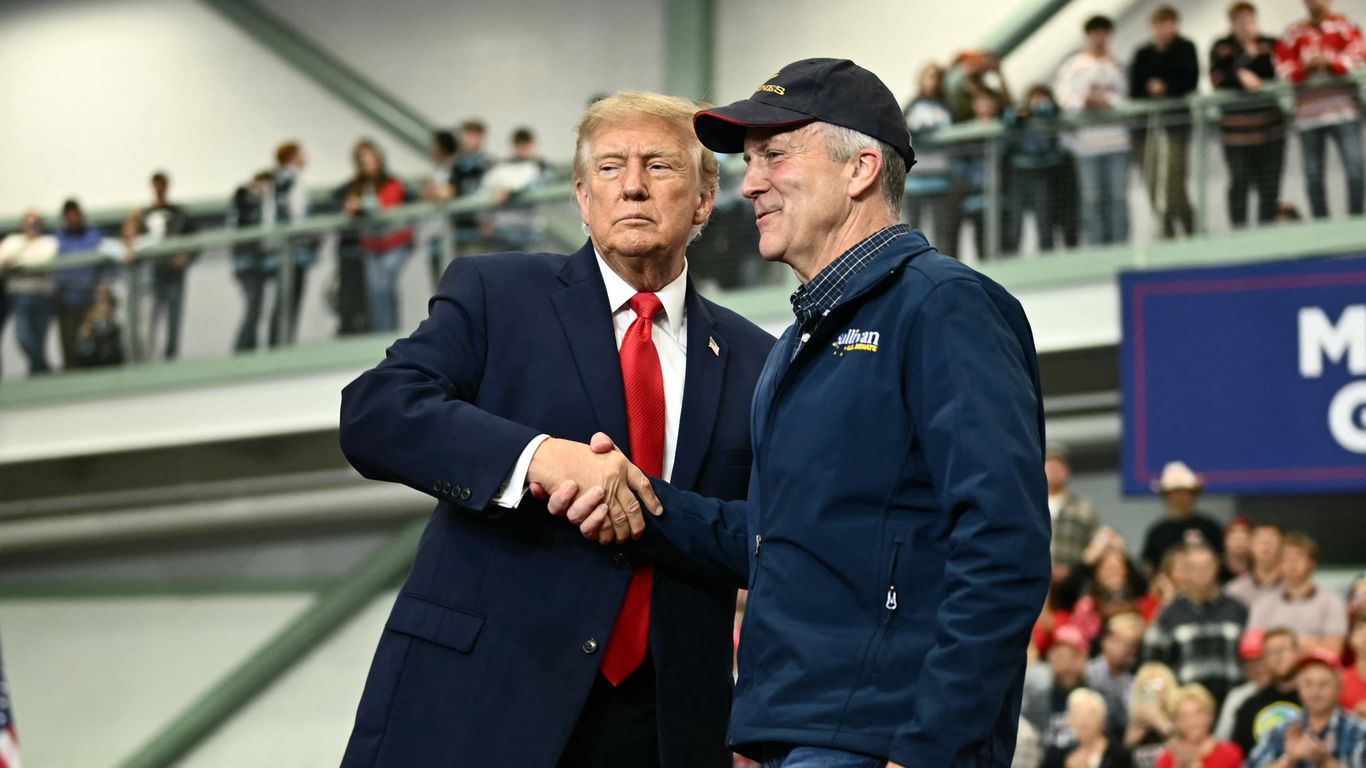
The Trump administration sued Alaska on Thursday to delay certification of election results if incumbent Republican Sen. Dan Sullivan loses. Why it matters: The race between incumbent Sullivan, Democrat Mary Peltola , and retired teacher Dan Sullivan has been marked by controversy, with Republicans accusing Democrats of trying to confuse voters by planting a candidate with the same name. Alaska's use of ranked-choice voting, which eliminates candidates in rounds if no one gets 50% of the initial vote, complicates matters. "An election result may be impacted by voter confusion if: (1) Senator Sullivan does not win the election; and (2) had all votes cast for Daniel J. Sullivan been cast instead for Senator Sullivan and Alaska's rank-choice process played out accordingly, Senator Sullivan would have won the election," the lawsuit , filed in Alaska District Court, states. Zoom in: Because of a previous Alaska Supreme Court decision and Sullivan's name already being on the ballot, the administration contended in the lawsuit that the only means to ensure that the winner of the race is voters' choice "is to ensure that the certification is not impacted" by his candidacy. The lawsuit requests a delay in certification until after an investigation determines "whether votes cast for Daniel J. Sullivan were meant to be cast for Senator Sullivan." What they're saying: "Alaska's Division of Elections determined that Mr. Daniel J. Sullivan's candidacy was intended to mislead voters and compromise the fairness of the ballot," a DOJ spokesperson said in a statement. "Therefore, the Justice Department, consistent with the National Voter Registration Act enacted by Congress, is taking the necessary steps to ensure that this frivolous candidacy does not undermine the integrity of Alaska's election or the will of its voters." The White House referred Axios to the DOJ. President Trump told reporters Friday that he told the DOJ to file the suit against Alaska. He then explained the situa

Axios · Oct 23
Black October: why bugs discovered by OpenAI tech are creating a cyber emergency

The websites you use every day may have been vulnerable to hackers for years because of hidden flaws in their code that AI only recently discovered. Why it matters: The code, called PHP, powers millions of websites, and the vulnerabilities could allow hackers to steal sensitive data like your passwords or take control of affected servers. Driving the news: A potential attack exploiting flaws in PHP emerged on Wednesday, which prompted governments and companies to temporarily take their websites offline while they installed security patches. Dozens of websites in the U.S., U.K., and around the world were briefly taken offline to make the fix. The disruption put the National Security Agency and Europe's cybersecurity agency on alert. State of play: Security patches were released to fix the issues on Oct. 21, 2026. Cybersecurity firms urged anyone using PHP to install the security updates immediately. What they're saying: OpenAI's technology helped find the bugs, and the company called the discovery "one of the most impactful security issues in recent memory." "To our knowledge, frontier AI found these vulnerabilities before attackers did," OpenAI said. The cybersecurity firm Wiz wrote in a blog post : "These findings rank among the most severe vulnerabilities discovered in PHP, and arguably in software history." Read more below. What is PHP? You've probably never heard of PHP, even though you've interacted with it for decades. PHP, which stands for Hypertext Preprocessor , is a programming language used by roughly 70% of websites whose server-side language is known. It has been around since the 1990s to help build websites, taking data and generating content sent to a browser. It's still used today for a variety of websites, including Wikipedia, WordPress blogs and shopping websites. How it works: HTML determines what a website displays. PHP works behind the scenes to collect information and generate content. What was the PHP vulnerability, exactly? AI researchers dis

Axios · Oct 22
AI uncovers massive flaw in web's foundational code

Security officials are sounding the alarm over two critical vulnerabilities in a programming language used to run millions of websites, marking one of the most consequential cybersecurity discoveries yet made with AI . Why it matters: The bugs, which researchers found partly with an OpenAI model, proves AI can uncover critical flaws humans missed for decades — raising the stakes for defenders racing to fix vulnerabilities before attackers can exploit them at machine speed. What they're saying: Matthew Prince, the CEO of Cloudflare, a global connectivity and internet security company, said the company saw thousands of attempts to exploit the flaws in the 10 hours before it was publicly announced. "That jumped to tens of thousands in the 45 minutes post announcement, hundreds of thousands within 2 hours, and millions now," he wrote on X. Driving the news: There are two problems hackers could easily exploit in an open-source programming language known as PHP that's used on nearly 70% of all websites . Government officials from the U.S. to Japan are warning companies to apply a patch to fix the bugs, or consider taking down their sites to avoid an attack. OpenAI touted the role its model played in discovering one of the vulnerabilities, which allowed PHP researchers to create a fix. Between the lines: Security researchers have been skeptical of AI-generated vulnerability reports, many of which have turned out to be minor bugs or false alarms. But the PHP discovery could force the cybersecurity community to reckon with the reality of AI threats. "It highlights how AI can uncover security flaws with internet-scale impact, but the same capabilities can also help attackers rapidly develop offensive tools and exploits," OpenAI said in a blog post Wednesday. Threat level: If exploited, the PHP flaws would allow malicious hackers to take control of vulnerable web servers without needing a password or other credentials. Since PHP runs under a wide variety of internet applicatio

Axios · Oct 21