TopNewsOn

Results for “tech stocks”

Affordability, AI and Iran: Americans on the key issues guiding their midterm votes

Guardian readers share their concerns and disillusionment with the political climate under Trump as elections loom Millions of Americans will head to the polls on 3 November in elections that will determine control of the Republican-held House of Representatives and Senate, as well as the governorships of 36 states. The midterms come amid mounting public frustration over issues ranging from the rising cost of living and immigration to the climate crisis, artificial intelligence, big tech and the US’s overseas wars. Donald Trump’s approval rating has fallen to 36% , according to a New York Times/Siena poll conducted this month. Continue reading...

The Guardian · 5h ago
The AI trade's trick-or-treat earnings season

The latest wave of hyperscaler earnings is spooking Wall Street. Bulls and bears alike have evidence to validate their wildest dreams — or their worst nightmares. Why it matters : The market's AI obsession has entered its Jekyll and Hyde era, with the latest earnings from tech giants offering contrary signals about the AI boom. Driving the news : The tech-heavy Nasdaq briefly sank into correction territory, falling 10% from its prior peak, losing $1.2 trillion in value for the month of October, after a slew of earnings reports pointed to AI's big risks. But it wasn't all horror: within the earnings statements, some investors found proof that the AI bet is going exactly as it should. Here are three examples of the AI trade's deepest contradictions — the good and the scary — from the earnings releases and calls of the Big Tech hyperscalers. Google: The scary: AI overviews are cannibalizing Google's core business: ad revenue from search. Yes, search queries are up, but results in AI mode have lower margins. The company has lost more than $500 billion in market value post-earnings, bringing the broader tech sector along with it. The good: Google Cloud is closing in on Microsoft's Azure cloud revenue, a stunning development given that Google was an also-ran in the cloud game only a few years ago. Much of Google's success is tied to demand for its TPU chips, which analysts expect to see massive growth in coming quarters. The takeaway: Google's predicament mirrors the problems of many tech giants, where AI represents a true threat to the golden goose but presents new opportunities if they can move fast enough. Microsoft and Amazon: The good: Both companies had explosive cloud growth, though the market was disappointed Amazon's wasn't higher. Microsoft touted its OpenAI investment and Amazon its Anthropic holdings. The iffy: Those private AI investments can help or hurt: Amazon's net income fell despite soaring operating profits, as it didn't repeat the pretax gain from its

Axios · 7h ago
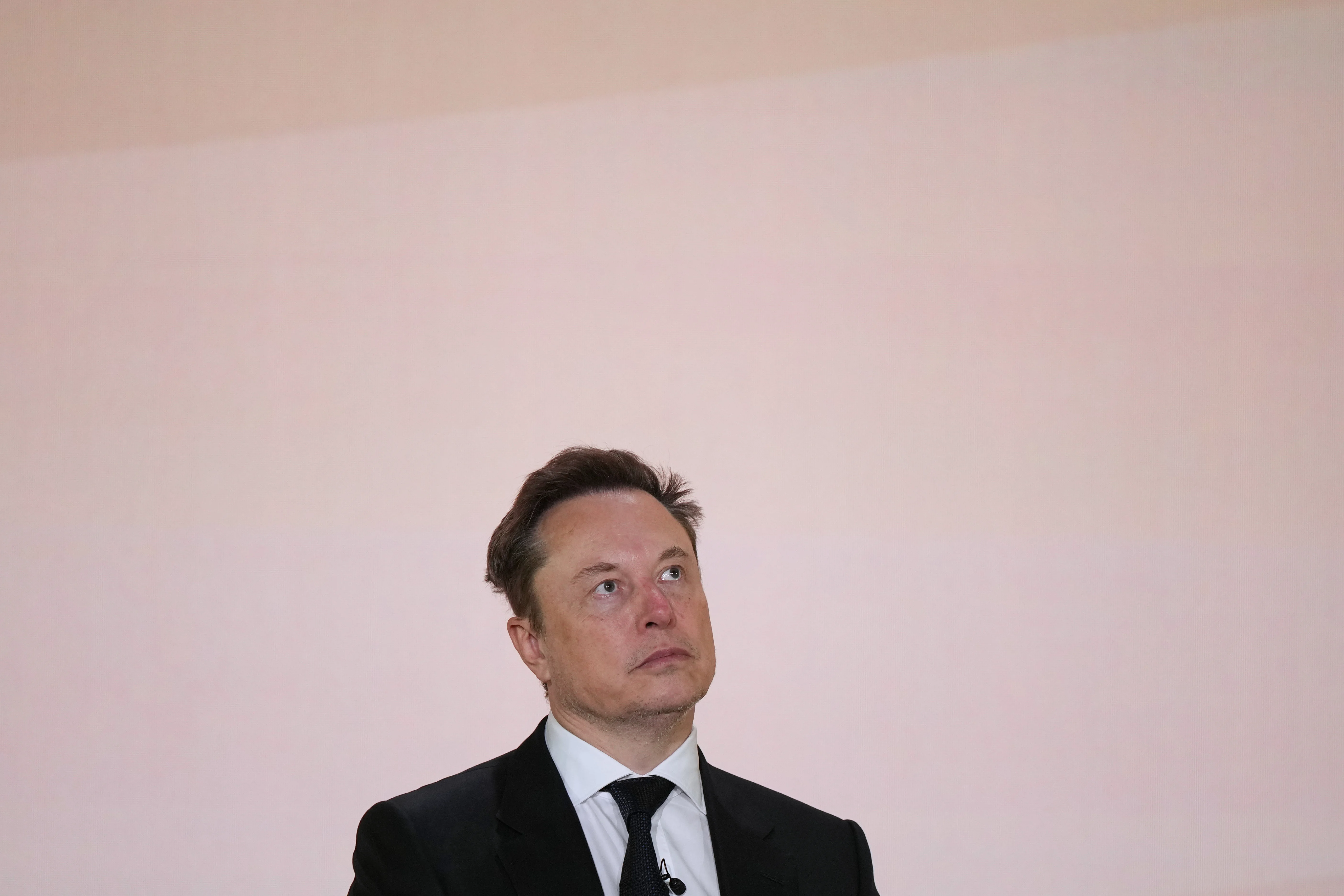
The staggering $446m Elon Musk has spent on the US midterms – visualized

The tech mogul’s midterm donations backing Republicans have made him the largest single-cycle political donor in modern US history Elon Musk has poured so much money into US politics this midterms election cycle that his donations could fund half a dozen SpaceX rocket launches or buy thousands of Tesla Cybertrucks. At the Tesla Diner in Los Angeles , Musk could order more than 31.9m cheeseburgers with the money he has spent on the midterms. Musk, the world’s richest person, has funnelled at least $445.77m into Republican-aligned political action committees (Pacs) and groups since last year, according to US Federal Election Commission data as of 29 October. The contributions have made him the Republicans’ most prominent financial backer and the largest single-cycle political donor in modern US history. Continue reading...

The Guardian · 8h ago
I read Anthropic's 92-page risk factor document, so you don't have to – video explainer

Anthropic, the creator of Claude, filed to go public on the US stock market on 26 October. The company's filing statement contains a 92-page risk factor document in which it acknowledges the dangers that AI poses to society and human beings, and factors that could negatively affect Anthropic's business. Johana Bhuiyan, senior tech reporter for the Guardian, breaks down the document and explains why Anthropic's IPO could be a real test to the AI boom Anthropic files for potentially record-breaking stock market valuation in key test for AI industry Continue reading...

The Guardian · 22h ago
Democrats see AI hate as winning issue heading into 2028

Democrats weighing 2028 presidential bids are piling onto the AI hate wave in their messaging, per an analysis shared exclusively with Axios. Why it matters: Democrats are turning AI anxiety into a political rallying cry ahead of 2028, while Republicans remain divided over how to respond. Driving the news: 2028 contenders including Gavin Newsom, Alexandria Ocasio-Cortez, Kamala Harris, Pete Buttigieg, Jon Ossoff and more have all increased their AI commentary in recent months, per new research from Upswing, conducted on behalf of Reset Tech, a nonprofit advocating for tech regulation. Among 21 Democrats named as potential 2028 contenders, tech mentions on X nearly quadrupled, and press release mentions nearly tripled since the start of the year. Tech is now the second-most common topic in releases, trailing only jobs and the economy, with the highest concentration of mentions around data centers and phone bans in schools. To gather the data, Upswing analyzed nearly 30,000 X posts from 38 accounts associated with 21 potential presidential contenders and 3,868 press releases from 16 officeholders between Jan. 1 and Oct. 15. Between the lines: Democrats are galvanizing around AI as a winning issue. Democrats are "taking a meaningful advantage" on AI after the topic was initially seen as a "jump ball" for both major political parties, Rishi Bharwani, U.S. director of Reset Tech, told Axios. AI regulation has gone from the back burner to a top issue over the last six months, he added. While the economy is still what matters most to voters, AI is increasingly part of the financial conversation as it dominates markets and the macroeconomic backdrop. Zoom in: It's not just messaging. While data center bans have been proposed in Democratic- and Republican-majority states, New York is so far the only one to pass a moratorium. House Democrats drafted a resolution opposing government bailouts for AI companies if the so-called "bubble" bursts. There are also a variety of legisla

Axios · Oct 30

The real election tech vulnerabilities in 2026

Some of the biggest vulnerabilities in election security are lying in plain sight. Why it matters: There's no credible evidence that voting-system vulnerabilities have been exploited to change election results. But researchers have found isolated flaws that threaten ballot secrecy, accurate vote recording and independent verification of results. The big picture: Voter-marked paper ballots and rigorous audits are the gold standard for trustworthy elections, election-security researchers and activists tell Axios. Researchers have challenged unfounded claims that elections were stolen through hacking while also warning against dismissing real vulnerabilities in voting systems. "A vulnerability is not an exploit," Philip Stark, a retired UC Berkeley statistics professor who developed an audit protocol for checking paper ballots, said at a recent conference. "You can leave a key under your doormat, and that doesn't mean someone takes the key and opens your door." Zoom in: Election security experts interviewed by Axios found these vulnerabilities in parts of the U.S.: 1. Paperless voting: Louisiana is the last remaining state to use paperless voting machines statewide on Election Day. Voters press buttons to select their candidates, and the machines record their votes electronically without producing a paper ballot. That leaves no independent record to check whether votes were counted correctly. Most other states retired the machines after researchers exposed their vulnerabilities to hacking and the inability to independently audit their results. Election security expert and computer scientist J. Alex Halderman, of the University of Michigan, called Louisiana "the dinosaur of American elections." Louisiana's secretary of state's office declined an interview request, but in a press release said the state is expected to award a new election equipment contract at the end of the year. 2. Ballot-marking devices (BMDs) let voters select candidates on a touchscreen before printi

Axios · Oct 28
Inside Anthropic's massive — and wild — IPO prospectus

There has never been a company like Anthropic . It owes almost $650 billion for computing, generates eye-popping revenue per employee and wants every investor to know that its product poses existential risks to humanity. Why it matters: The future of the AI race, the market and the global economy rests within Anthropic's IPO prospectus, where some of Silicon Valley's most seasoned investors found new reasons to be bullish. They also found warning signs. A wager on Anthropic is a bet not just that AI will deliver on its enormous promise, but that customers will keep spending at a rate that keeps pace with massive computing costs. It's also a bet that Anthropic can continue to deliver models good enough to justify premium prices, even as competition intensifies and cheaper alternatives improve. What they're saying: Reaching a valuation of $2 trillion would require 50% growth, according to Theory Ventures. "What is Anthropic worth?" Theory's Tomasz Tunguz asked rhetorically. "The case for a very large number is simple," he said, noting that the company grew quickly on a high margin and generated an operating profit. "The case against is equally simple," he added, noting its $637 billion of computing commitments, non-cancellable contracts and no guarantee of customer loyalty. Catch up quick: Monday's filing offered the most detailed public look yet at Anthropic's business , finances and risks as it prepares for a potentially record-setting IPO. (See what Claude and OpenAI's ChatGPT say about whether they'd invest). As Tunguz noted, the filing had fodder for a variety of perspectives. The good: Anthropic has nearly 2,000 customers paying it $1 million or more per year, and 250 paying $10 million or more. Half the Fortune 500 pays the company $100,000 a year, and those customers spent less than 0.1% of their total expenses in the third quarter on Anthropic. "We are so early," Ben Bajarin, a longtime tech analyst, said on X. He pointed out that there are 300 million global

Axios · Oct 26
Scoop: Trump enlists football stars for final midterm push in Texas

President Trump will campaign with three football stars in Texas on Tuesday, leaning into America's favorite sport as Republicans scramble to turn out voters in the final week before the midterms, Axios has learned. Why it matters: Trump is trying to mobilize the lower-propensity voters who helped return him to the White House in 2024 — but who may be less inclined to vote when he isn't on the ballot. Driving the news: Former college football star Johnny Manziel and two-time Super Bowl champion Danny Amendola were scheduled to join Trump for campaign appearances in Lubbock and Corpus Christi. Former University of Texas quarterback Colt McCoy also was expected to join Trump as of Monday afternoon, but did not appear. The appearances bring some of Texas' biggest football names onto the campaign trail in a state where the sport commands an enormous following. Amendola starred at Texas Tech in Lubbock; Manziel won the Heisman Trophy at Texas A&M. The big picture: Trump has made football a recurring feature of his campaign stops in recent weeks. He attended the Texas-Tennessee game in September and planned to attend the Georgia-Alabama showdown earlier this month before canceling because of a hurricane. Former NFL coach Jon Gruden joined Trump at an Ohio rally this month, while former Georgia and NFL star Todd Gurley accompanied the president on a stop in Georgia. Vice President Vance, a lifelong Cincinnati Bengals fan, visited the team's practice facility last week while campaigning in Ohio. Republicans are also pouring millions into ads during NFL and college football games. What they're saying: "Trump has many bases. And football is one of them, college and pros," said an adviser. "The response is good. And the president loves the atmosphere. So why not?" Between the lines: Football offers Trump a way to reach younger men who helped power his 2024 victory — a constituency Republicans are struggling to energize in the midterms. By the numbers: Polls suggest Republicans

Axios · Oct 26
Meta's $42B in penalties is a warning to AI

A tidal wave of litigation is catching up to Meta, leading to $42 billion in recent penalties and settlements , a powerful reminder to AI companies that they could face a court reckoning even when regulation lags. Why it matters : AI companies are racing to build better models and autonomous agents, but they don't enjoy the same legal protections that shielded web platforms for decades. The scale of the penalties Meta is facing offers a preview of potential legal exposure . The big picture : For years, Facebook's parent company navigated a seemingly endless string of scandals — weathering allegations of election interference, privacy lapses and platform harms — and was largely protected from severe litigation penalties due to Section 230. The provision — from a historic 1996 law passed as the internet was just beginning to change modern life — protects tech platforms from being sued over content created by their users. Legal experts say that law doesn't apply to AI. Models create their own content, so companies could face traditional product liability and negligence claims. Catch up quick : The two massive rulings highlight how legal risk for tech giants can extend by a decade, or proceed much faster. Meta was just hit with a $25 billion penalty over the Cambridge Analytica scandal after a jury found the company misled users about Facebook's privacy practices. Many details about that event surfaced nearly 10 years ago. The company said it believes it will win an appeal, and legal experts have said the penalty will likely be reduced. In August, the company agreed to a $17 billion settlement with states related to the impact of Meta products such as Instagram on teen mental health. State of play : A key cog in the Trump administration's regulatory efforts is the threat of litigation. Liability is sure to feature prominently in the risks AI giants such as Anthropic and OpenAI spell out to shareholders as they prepare for massive public listings. Anthropic's IPO is expe

Axios · Oct 26
Washington's message to AI execs: Please shut up

Washington has always viewed Silicon Valley as culturally strange. But the current crop of AI leaders is becoming a monumental political liability, lawmakers and White House advisers tell Axios. Why it matters: Even pro-AI government officials and lawmakers wish AI founders would do what every other major industry chief does — shut up and just build their products ... safely. By centering the conversation around digital sentience and global catastrophe, AI leaders are turning an already complicated regulatory debate into an impossible moral panic. State of play: Rather than leading the charge to persuade Americans about the benefits of AI, and the potential for shared prosperity — the core elements of any winning political campaign — industry leaders are constantly warning of its existential dangers. What they're saying: Lawmakers say the message from AI execs too often alternates between prosperity and doom, sometimes in the same public appearance. The whiplash adds to political instability in the face of an already powerful public backlash, lawmakers and regulators say. "It's obvious that they're tripping over their own shoelaces in trying to sell the value of this to the public," Sen. John Curtis (R-Utah) told Axios. "It's very hard to imagine a group right now that operates more in a vacuum, more out of touch with everyday Americans, than the AI industry." "CEOs like Sam Altman are saying the world should accept some bad things happening for the benefits of this technology," Rep. Ro Khanna (D-Calif.) told Axios. "You cannot trust billionaires to make decisions to keep us safe." "Your instinct is to wreak havoc on the public [AI] discourse," Sen. Bernie Moreno (R-Ohio) said in a letter to Anthropic CEO Dario Amodei earlier this month, complaining about Amodei's "panic-inducing commentary." Democrats also have paid close attention to just how much top AI and tech leaders have cozied up to President Trump. Many see opportunity in turning AI gaffes into an easy poli

Axios · Oct 24
Black October: why bugs discovered by OpenAI tech are creating a cyber emergency

The websites you use every day may have been vulnerable to hackers for years because of hidden flaws in their code that AI only recently discovered. Why it matters: The code, called PHP, powers millions of websites, and the vulnerabilities could allow hackers to steal sensitive data like your passwords or take control of affected servers. Driving the news: A potential attack exploiting flaws in PHP emerged on Wednesday, which prompted governments and companies to temporarily take their websites offline while they installed security patches. Dozens of websites in the U.S., U.K., and around the world were briefly taken offline to make the fix. The disruption put the National Security Agency and Europe's cybersecurity agency on alert. State of play: Security patches were released to fix the issues on Oct. 21, 2026. Cybersecurity firms urged anyone using PHP to install the security updates immediately. What they're saying: OpenAI's technology helped find the bugs, and the company called the discovery "one of the most impactful security issues in recent memory." "To our knowledge, frontier AI found these vulnerabilities before attackers did," OpenAI said. The cybersecurity firm Wiz wrote in a blog post : "These findings rank among the most severe vulnerabilities discovered in PHP, and arguably in software history." Read more below. What is PHP? You've probably never heard of PHP, even though you've interacted with it for decades. PHP, which stands for Hypertext Preprocessor , is a programming language used by roughly 70% of websites whose server-side language is known. It has been around since the 1990s to help build websites, taking data and generating content sent to a browser. It's still used today for a variety of websites, including Wikipedia, WordPress blogs and shopping websites. How it works: HTML determines what a website displays. PHP works behind the scenes to collect information and generate content. What was the PHP vulnerability, exactly? AI researchers dis

Axios · Oct 22