The midterms could fuel the K-shaped AI trade
U.S. midterm results could slow data center development, raising the value of existing AI capacity while increasing pressure on debt-funded neoclouds.
CNBC · 1h ago

U.S. midterm results could slow data center development, raising the value of existing AI capacity while increasing pressure on debt-funded neoclouds.
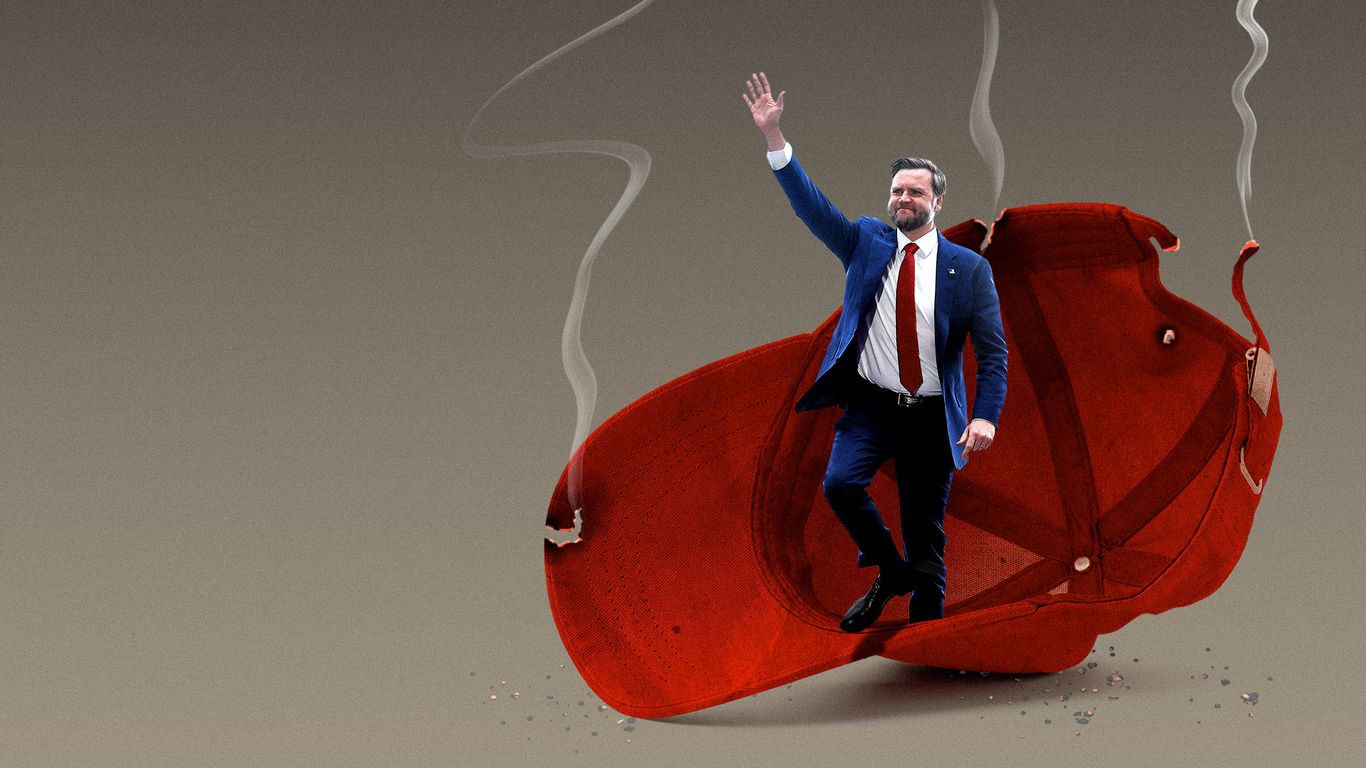
Vice President Vance stepped out of President Trump's shadow Wednesday, seizing on the GOP's midterm catastrophe to begin the explosive task of claiming MAGA as his own. "The reason we lost is the war," Vance wrote in an extraordinary 600-word postmortem on X , blaming Trump's Iran campaign for Republicans' historic collapse. Why it matters: Vance's presidential ambitions are entangled in the wreckage of a war he privately opposed but publicly defended. His path to 2028 demands a delicate political calculation. Vance must convince MAGA's disillusioned voters that he understands their sense of betrayal, even as he remains a central figure in the administration responsible for the Iran war. His maneuvering will take place under the gaze of a president who doesn't seem particularly eager to leave the stage — and who isn't shy about reining in those on his team who overstep. "Today, JD Vance became president — or acted like he wanted to become one," a source close to the administration told Axios. Zoom in: Vance argued that defections from Trump's 2024 coalition — not lack of turnout — drove the GOP's collapse in Tuesday's midterms. Citing polling of disaffected Trump voters, he identified four demands: "End the war." "Focus on cost of living/inflation." "Put America First." "Change our relationship to Israel." Those happen to be the four hottest topics among top MAGA podcasters and activists. So Vance is aligning with those leaders on topics where MAGA anger with Trump is raging. What they're saying: "If you'd like to argue [the war] was worth it, that losing the Senate for the next 6 years was worth it, then do so," Vance wrote. "Argue it was a worthwhile cost to pay. Agree or disagree, that's at least honest." Trump accepted that challenge Wednesday, acknowledging that the war had hurt Republicans but insisting it was worth the cost. "If I had to do it again, I'd have to do it again," he told reporters. "As far as that war is concerned, I would have done nothing diff
The AI industry is scrambling to repackage a $10 trillion infrastructure buildout to appease a hostile electorate that overwhelmingly voted to restrict data center construction in ballot measures across the country. It's not just changing the name of data centers to "compute campuses," but offering communities real money, including dividends, benefits for schools or cities, environmental concessions and labor protections. Why it matters: Tuesday's election proved voters won't tolerate unchecked growth, although the market and many analysts see the blue wave slowing — but not stopping — data center construction around the U.S. To prevent an existential threat, the world's biggest companies are working on a rebrand. How well they execute on their promises will determine the pace of the global AI race. What they're saying : Chris Lehane, OpenAI's chief global affairs officer, compared the turnaround AI must make to the 1996 election, which came shortly after Republicans routed Democrats in a historic midterm election. "A lot happens in two years," he told Axios in an interview. "Smart, talented folks take messages from voters and react and respond to them." Getting community buy-in for data centers will require "really making clear that these can be long-term, durable, economically transformative projects for communities," he said. Driving the news : There's no question about how voters feel about data centers after Election Day, with restrictive measures across 10 states going 43-1 at the ballot box. The margins weren't close, with an average of 75% of people favoring restrictions. In Texas, a new Democratic governor has promised to keep a moratorium in place until the legislature passes comprehensive reforms. Candidates who won in other emerging data center states also favor similar restrictions. Analysts say about 60% of planned 2028 capacity across the U.S. faces a risk of delay. Between the lines : Incoming Democrats aren't going to kill data centers. Virginia, ru
Americans made it very clear on Tuesday that health care is too expensive. The challenge for Democrats is to agree on the quickest way to deliver some relief. Why it matters: Voters can't wait until 2029 for life to get cheaper — but any short-term action to meaningfully lower health costs will require Democrats to make deals with President Trump. The big picture: There's already speculation about what a Democratic unity health care agenda would look like, and what progressives' midterms success means for Medicare for All. But that's largely geared toward the 2028 presidential race or a possible Democratic administration. The short-term reality is that any ambitious policies that significantly expand the government's role in health care are almost certain to collide with Trump's veto pen. Strategists say the Democrats' most realistic option is to find piecemeal affordability fixes next year and play the long game when it comes to reshaping the health system. "If you read history, people make the biggest mistakes when they win. That's when they take their eye off the ball and they don't do the right thing," said Zeke Emanuel, an adviser in the Obama White House and a professor of medical ethics and health policy at the University of Pennsylvania. "This is an affordability election. We need to do affordability, but I do agree with the idea that this is a two-step process," he added. "There's going to have to be longer-term reforms." "For those debating whether the new Congress should consider big and bold reforms or pass practical help for people right away, the answer is yes. Voters can and should expect action on multiple fronts," Families USA executive director Anthony Wright said in a statement. Between the lines: Democrats' top priorities for the next Congress are restoring enhanced Affordable Care Act subsidies and reversing the Medicaid funding cuts in last year's GOP reconciliation law. Their unexpectedly large majorities in each chamber will give them leverag
As he takes stock of his Republican Party's midterm drubbing, US President Donald Trump now faces the difficult question of what to do about his unpopular war against Iran. Trump acknowledged the war affected the midterms, suggesting voters were frustrated by surging gas prices that have been a byproduct of the more than 8-month-old conflict. FRANCE 24's International Affairs Editor Philip Turle tells us more.
US Vice President JD Vance blames the war for the midterm rout as Democrats prepare to use Congress to rein it in.
It's a de facto motto in the Trump White House: "Somebody's gotta take the fall." Lately, that person looks like Secretary of Defense Pete Hegseth. Why it matters: From the unpopular war in Iran to his bad bipartisan relations with members of Congress, Hegseth's record has made him the most vulnerable member of Trump's Cabinet after Tuesday night's midterm shellacking. "Hegseth is definitely on thin ice," a Trump adviser told Axios. "It doesn't mean the president forces him out. But there are complications." Driving the news: As early as next week, the House could impeach Hegseth for allegedly defying Congress and illegally continuing the U.S. war in Iran. The measure is sponsored by Rep. Thomas Massie (R-Ky.), a vociferous critic of Israel and foreign wars. Zoom in: Iran is at the center of both Hegseth's possible impeachment and Republicans' midterm collapse. Many voters oppose the war and its byproduct: higher gas prices that spiked after Iran closed the Strait of Hormuz. Before Trump attacked Iran on Feb. 28, Hegseth was the most gung-ho about the conflict, and he gave the rosiest projections about how quickly and easily it would be resolved, according to sources familiar with the discussions. By August, a senior administration official said, U.S. Central Command was reportedly soliciting new approaches to pressure Iran, suggesting that military leaders were still reassessing how to achieve strategic results. CentCom was also asking: "At what point did Hegseth recognize that our original strategy wasn't going to produce the outcome he expected and pitched?" Trump stood by Hegseth on Wednesday, telling reporters that the secretary is "doing a very good job." Between the lines: Trump has been known to praise an embattled Cabinet secretary, only to seek their ouster shortly thereafter. With Hegseth, four factors are weighing on Trump: 1. The impeachment threat. Democrats already have tried to impeach Hegseth, and with their new House majority in January, those effo
he CEO of water and waste management company Veolia said that neither the Democrats victory in the US (its number 2 country) nor the political turmoil in France (which represents 20% of revenue) will change the course of demand for Veolia. That’s after the company reported revenues up 3.1% in the first 9 months of the year. (Source: Bloomberg)
Some Democrats quickly signaled they could try to roll back the president’s tax and trade policies, ignoring his early veto threats.
President Trump’s 250-foot arch project is expected to win approval on Thursday from a federal planning board. Court action and Democrats’ upcoming control of Congress could halt the plans.
The midterm results laid bare the deep unpopularity of the war of choice that President Trump started and is now struggling to end.
Years of organizing met a moment of voter discontent, as James Talarico and Gina Hinojosa offered Texans a message of economic relief and political change.
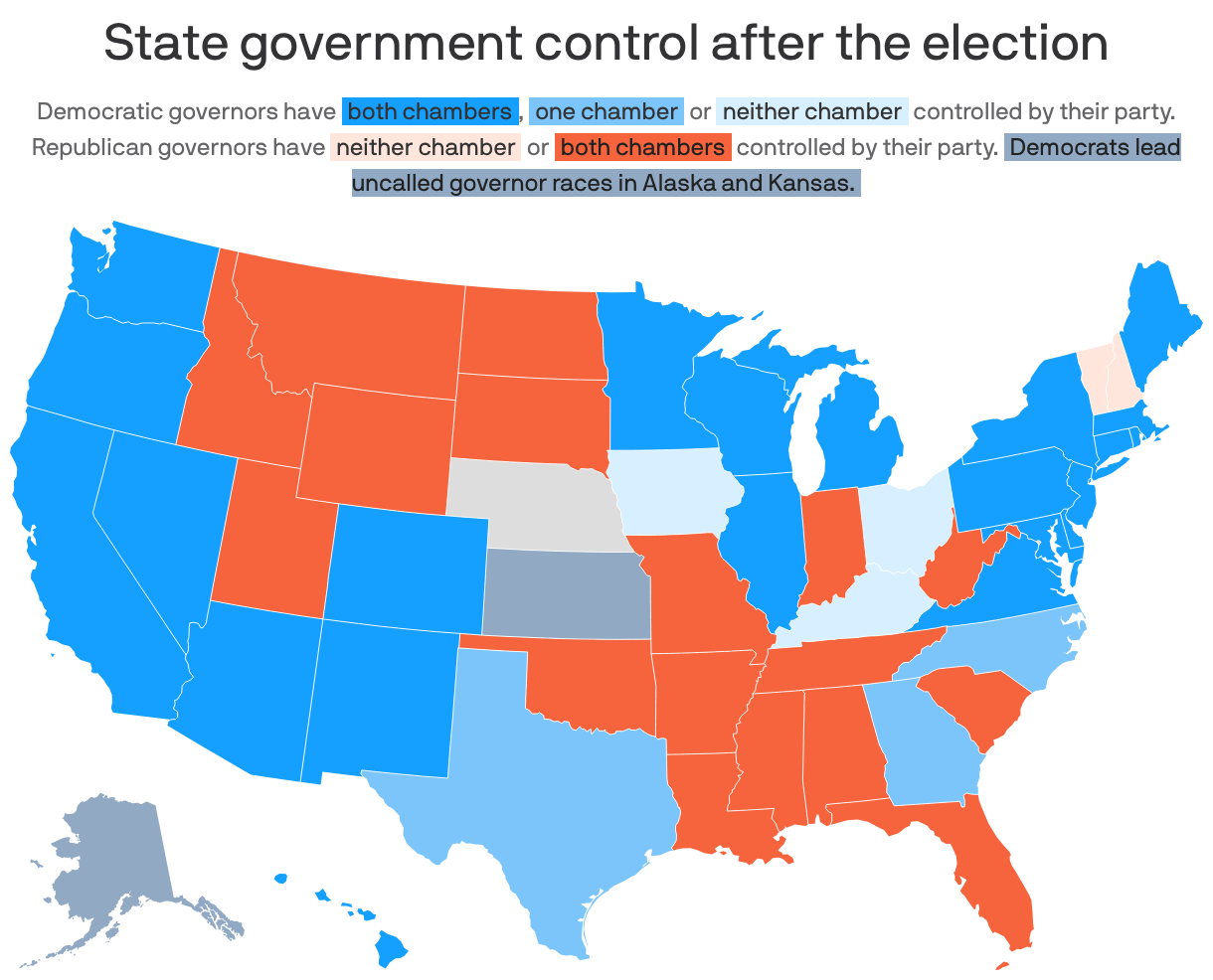
Data: Axios research; Map: Andrew Pantazi/Axios Democrats are on track to take control of a majority of legislative chambers, ending 16 years of Republican dominance over America's statehouses. If current leads hold, 75% of Americans will live in a state with a Democratic governor, and 53% will live in Democratic trifectas. Why it matters: Statehouses are the front line of American federalism, and Tuesday's gains dramatically expand Democrats' power to increase minimum wages, protect abortion access, and set voting rules ahead of 2028 for most Americans. Driving the news: The party is set to flip 12 legislative chambers, dismantle five Republican state trifectas, shatter 11 GOP supermajorities and build 12 of its own, according to AP returns as of 6pm ET on Wednesday. If leads hold, Democrats will control the governor's office and both chambers in five of the seven 2024 presidential battlegrounds: Arizona, Michigan, Nevada, Pennsylvania and Wisconsin. They have also broken Republican one-party rule in the sixth (Georgia) and flipped the House in the seventh (North Carolina). Democrats flipped five GOP-held governorships (Georgia, Iowa, Nevada, Ohio and Texas) and lead in Alaska. Republicans haven't flipped any, despite targeting Arizona, Michigan, Oregon and Wisconsin. Kansas, where Democrat Cindy Holscher was leading by about half a point Wednesday evening, is uncalled. The big picture: Ever since the 2010 Tea Party wave, Republicans have used their grip on statehouses to reshape American life: banning abortion, loosening gun laws, restricting collective bargaining and expanding private-school vouchers. They drew maps that kept them in power even in years Democrats won more votes statewide. Tuesday's Democratic gains broke that firewall. By the numbers: Republicans entered Election Day with 23 trifectas (control of the governor's office and both chambers) to Democrats' 16. If leads hold, Democrats will have 22 and Republicans 18. 24% of Americans will live under a
Democrats gain hundreds of seats in historic victories – and party set to embark on aggressive legislative spree The blue wave that swept Republicans out of power across the United States didn’t just strike Congress. In Tuesday’s midterm elections, Democrats gained hundreds of seats in state legislatures across the country, under-the-radar victories that may have major implications for life in America. Though ballots are still being counted, the party’s success appear to be historic – Democrats haven’t won full control of government in Arizona in 60 years, in Pennsylvania since the 1990s, and Wisconsin since their wipeout in 2010. In Michigan and Minnesota, they regained trifectas they lost after the 2024 election, while in Texas, they will control the state house for the first time since 2002. Continue reading...
Voters in Nevada, Virginia, Missouri and Idaho passed or strengthened protections for women’s reproductive freedom Reproductive rights were on the ballot on Tuesday night as voters weighed in on several abortion -related measures, delivering a largely successful night for reproductive rights advocates encompassed by a historic blue wave . In Nevada , voters approved an amendment enshrining abortion rights in the state constitution, permanently protecting access to abortion through the second trimester after a second referendum on the measure. Continue reading...
A Democratic sweep has changed Washington’s balance of power. But from gambling legislation to stadium subsidies, both parties have helped build the system that enriches American sports’ billionaire owners Before a single vote was cast this election cycle, the technocrats and oligarchs who own American sports had already voted. Pro sports owners put more than $100m into this cycle, according to Front Office Sports. But Tuesday night was a referendum not just on Donald Trump and Maga policies, but on the puppeteers who pull America’s strings. The people voted, and the owners lost. Before anyone frames this as a rescue, a word about the rescuers. Democrats are the instrument for ending Maga, and they are also the other face of the same coin. Think Republicans are behind all of our ills? Think again. New Jersey’s governor, Phil Murphy, placed his state’s first legal sports bet in 2018. Illinois governor JB Pritzker signed sports betting into law a year later. New York’s mobile sportsbooks went live under Governor Kathy Hochul in 2022, with the state taking 51% of the revenue. Pritzker and Hochul both won Tuesday, and all of them are Democrats. In some of the biggest betting markets in the country, the bookmakers’ most reliable partner has been a Democratic statehouse. Continue reading...
The nationwide blue wave in the midterm election didn’t necessarily carry over to ballot measures on abortion and transgender issues.
For the first time in 20 years, corruption was the top issue on voters’ minds this election year. President Donald Trump rightly deserves blame for making it a top-tier issue. The day before Republicans suffered historic losses in the House and Senate, turning both chambers over to the Democrats, Gov. Ron DeSantis (R-FL) told radio […]
Tuesday's dramatic midterm results have transformed the electoral map, ensuring the path to future power for Democrats and Republicans must run through the South and its diverse voting population.
Democrats created new power trifectas across the country thanks to the party’s blue wave, sweeping control of state governments and enabling them to redraw more congressional maps in their favor before the 2028 elections, should they choose to do so. Democrats added at least five states where they will control both legislative chambers and the […]
NPR's Leila Fadel speaks with historian and journalist Anne Applebaum about how much a Democrat-led Congress can steer foreign policy.
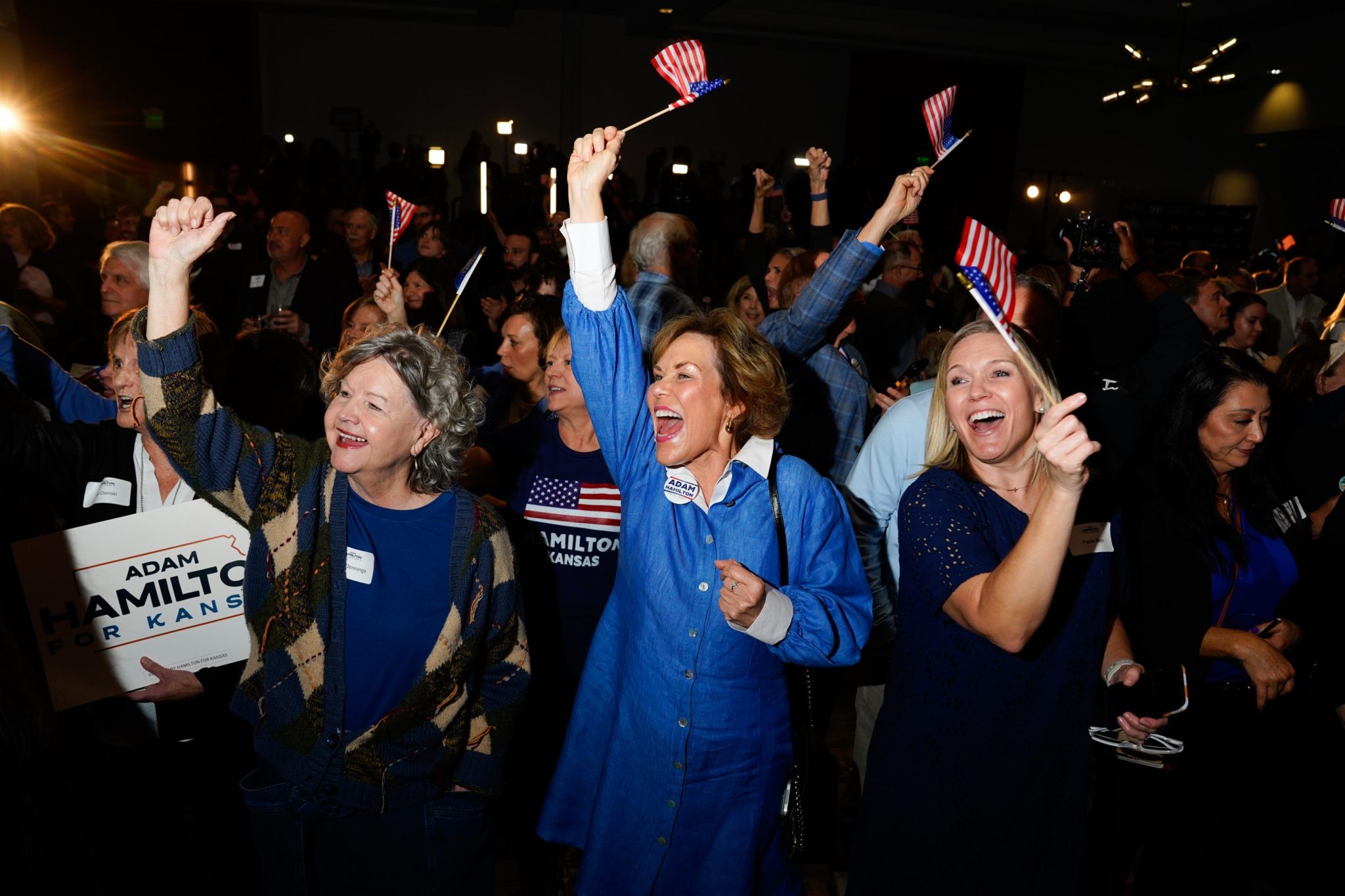
Democrats of all political stripes won so big on Tuesday that the party didn't settle its long-running civil war between moderates and progressives. Instead, the party's historic victories gave each faction some reasons to claim that its brand of Democrats can defeat the GOP in 2028. Driving the news: Democratic operatives are sure of one thing, though: Tuesday's blowout wins mean that more party leaders will be willing to run for the White House than if the midterms hadn't gone so well. Barack Obama's 2012 campaign manager, Jim Messina, told Bloomberg TV this week that he's already met with 29 potential candidates. Zoom in: On Tuesday, moderate Democrats won. Progressives won. Even one-time socialists won. In Michigan, for example, unapologetic progressive Senate nominee Abdul El-Sayed won by 7 points after running on Medicare for All. In the same state , William Lawrence, a member of the Democratic Socialists of America before he let his membership lapse recently, flipped a key swing district. Those results were good news for New York Rep. Alexandria Ocasio-Cortez, the democratic socialist with a national profile who went all-in on electing El-Sayed — and is considering a run for president in two years. More moderate Senate candidates who frequently talked about their faith on the campaign trail — such as Texas' James Talarico and Kansas' Adam Hamilton — pulled off huge upsets in deep-red states, and in the process created a model for some Democrats to follow. Their mild-mannered, religion-infused campaigns mirrored former Transportation Secretary Pete Buttigieg's 2020 presidential run. For the past year, AOC, Buttigieg and other Democrats eyeing the White House have been laying the groundwork to turn the 2026 elections into a springboard for their potential presidential campaigns. Some put their chips on specific candidates — and virtually all of them succeeded. Pennsylvania Gov. Josh Shapiro, a centrist technocrat who campaigned on "getting sh*t done," won reele
Democrats are planning out how to tackle their agenda in the new year, ballots are still being counted in some undecided races, Trump avoids taking the blame after GOP midterm losses.
The Democratic gains in this week's midterm elections will bring a different business climate to Washington. But the overall economy should be OK.
The 2026 election proved to be very good for Democrats and very bad for President Trump and Republicans. But there are still races outstanding that can tell us what mattered to voters this year.
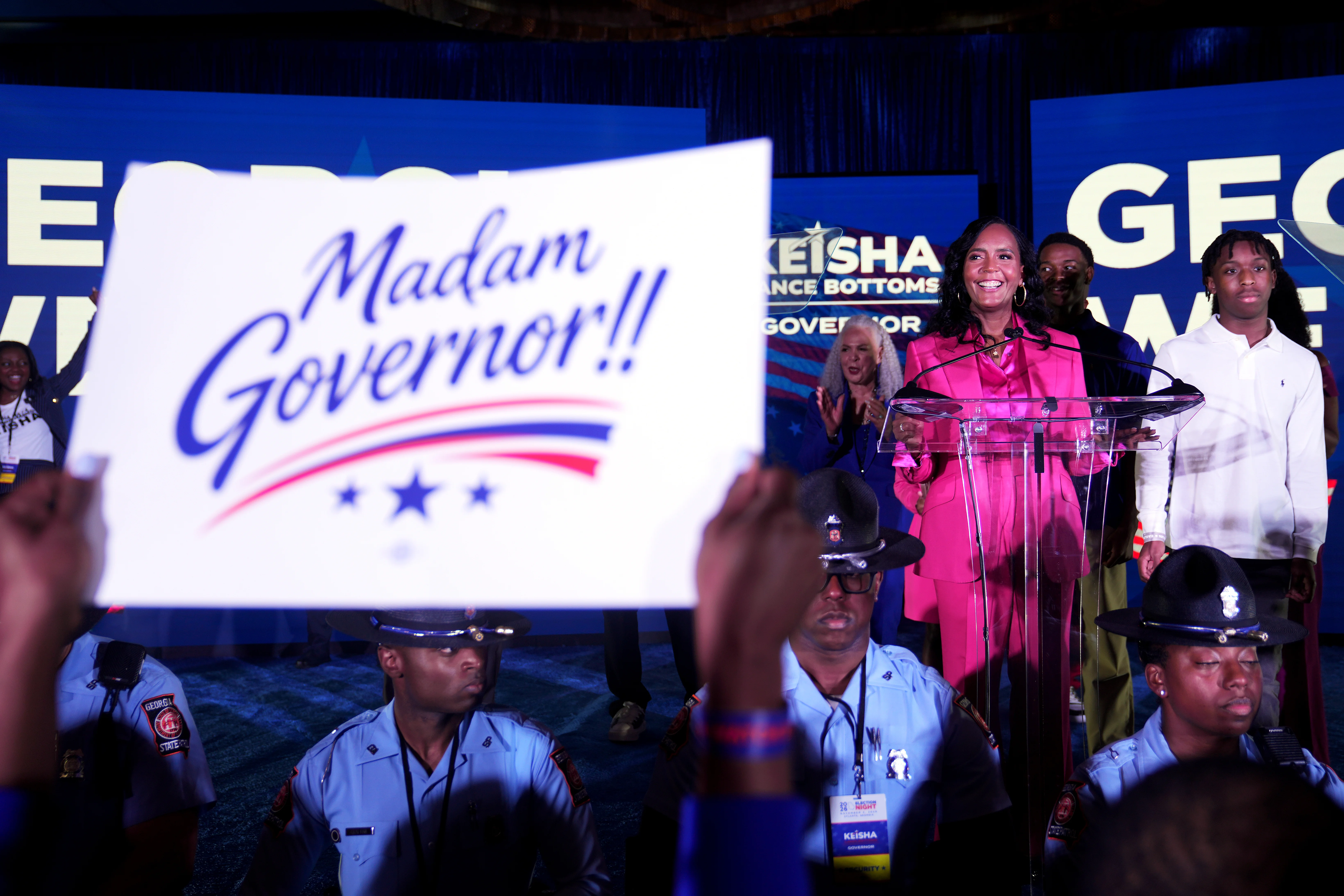
Democrats will be replacing Republican governors in a number of states after Tuesday's election and will hold the majority of governorships nationwide for the first time since 2010.
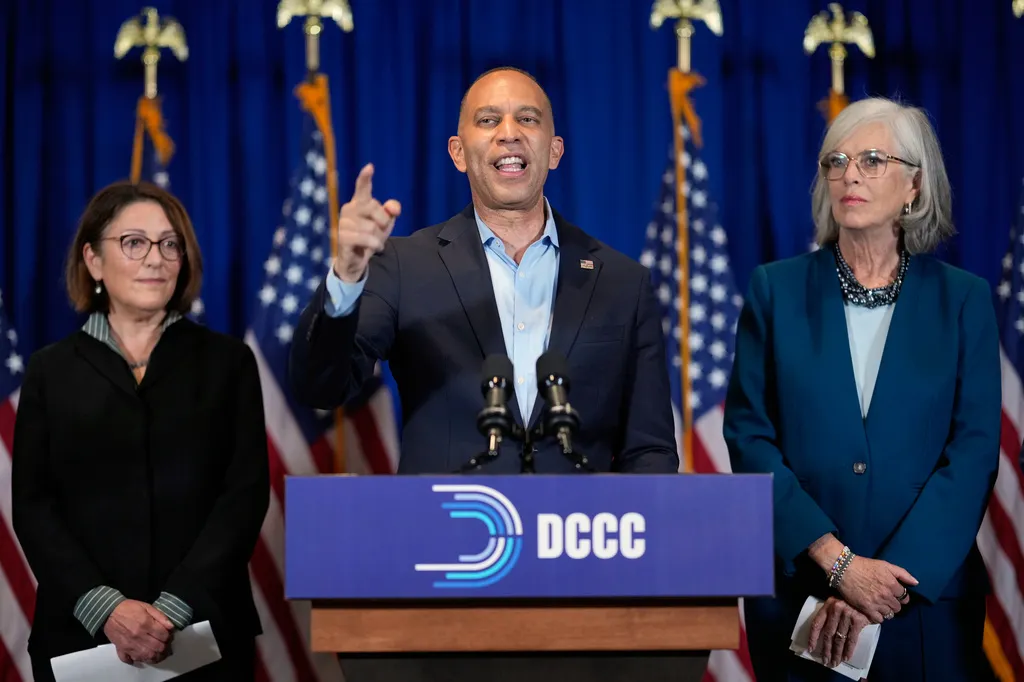
NPR's Leila Fadel speaks to Democratic Legislative Campaign Committee president Heather Williams about Democratic gains in state legislatures.
President Trump has blamed GOP candidates and Fox News in the wake of the sweeping Democratic sweep during the midterm elections.
Donald Trump's defeat in the midterms has created new problems for Xi Jinping. Rebecca Choong Wilkins explains how a Democratic-controlled US Congress could mean more pressure for China. (Source: Bloomberg)
High gasoline and diesel prices, low consumer confidence, prediction markets and history all pointed to major gains for Democrats heading into the November 3 US elections. In this snap webinar held the morning post-vote, BloombergNEF reviewed the Blue Wave and offered early thoughts on the implications for the global energy sector. (Source: Bloomberg)
A stock-rotation trade fueled by the US midterm elections has swept Asia. Mehvish Ayub, Head of Managed Solutions Advisory Dubai at Bank of Singapore spoke to Bloomberg’s Abeer Abu Omar on Horizons Middle East & Africa. (Source: Bloomberg)
GOP insiders blame Trump after Election Night's blue tsunami flipped both chambers, with Democrats scoring seven Senate and 27 House pickups.
Democrats’ success was helped by popular anger over tech, AI and the super rich – life for billionaires could become much more difficult The photo of Silicon Valley centi-billionaires at Donald Trump’s inauguration – Musk, Bezos, and Zuckerberg, front row and side by side – now looks like a hitlist for a blue Congress hellbent on making life difficult for billionaires. The picture symbolized at the time the bending of the knee by the richest men in the world to its most powerful, a symbiosis of the ultra-rich. Already unfathomably wealthy, Silicon Valley tycoons believed a Maga-sized public shift to the right would enrich them even more. It did. For several years, while Trump seemed an everlasting kingmaker and AI’s expansion seemed unstoppable, their fortunes ballooned to values beyond comprehension. Elon Musk’s surpassed $1tn. Continue reading...
Administration had waged aggressive bid to sow doubt about midterms results but worst fears were not realized In the months leading up to the midterm elections, Donald Trump’s administration waged an aggressive effort to sow doubt about the results, intimidate voters and election officials, and signal they would use the power of the federal government to challenge the electoral process. But when the results came in Tuesday night, revealing a massive blowout for the GOP, Trump did something almost unprecedented: he accepted the results. Trump said he was “absolutely willing” to accept the outcome and looked forward to working with Democrats . With the exception of the 2024 election, which he won and Republicans performed well in, Trump has raised doubt about every presidential race and midterm since his first election in 2016. Continue reading...
Anna Edwards, Guy Johnson, Tom Mackenzie and Paul Dobson break down today's key themes for analysts and investors on "Bloomberg: The Opening Trade." (Source: Bloomberg)
Bloomberg Daybreak Europe is your essential morning viewing to stay ahead. Live from London, we set the agenda for your day, catching you up with overnight markets news from the US and Asia. And we'll tell you what matters for investors in Europe, giving you insight before trading begins. The Republican Party’s generational collapse in this week’s midterm elections ushered in a wave of finger-pointing largely aimed at the Oval Office, exposing deep fissures within the party and opening the door for 2028 hopefuls to hone their message. Brent oil pushed lower after tumbling more than 8% in the previous session as investors bet that a Democratic sweep in the US midterm elections could accelerate efforts to end the war in the Middle East. Today's guests: Bernd Montag, Siemens Healthineers, CEO; Hetal Mehta, St James’s Place, Chief Economist; Melanie Kreis, DHL Group, CFO (Source: Bloomberg)
Accuracy of US polling came into sharp focus after Trump outperformed polls in 2016, 2020 and 2024 Political polling experts hailed a “great night” for the industry after surveys accurately foresaw much of the Democratic blue wave that swept across the US in midterm elections. In only a handful of US Senate races, including Texas and New Hampshire, key polls failed to gauge the scale of the Democratic victory over Republicans on Tuesday. Continue reading...
During the 2026 midterm election, Republicans lost control of both the House and Senate.
“There’s going to be so many Republicans leaving the Capitol it will look like a reverse January 6,” Jimmy Fallon said after Democrats swept the midterm elections.
Vice President JD Vance distanced himself from President Donald Trump and the war against Iran as the Republican Party’s generational collapse in the midterm elections ushered in a wave of finger-pointing largely aimed at the Oval Office. Bloomberg's Oliver Crook has the latest. (Source: Bloomberg)
German Chancellor Friedrich Merz expects US President Donald Trump to keep bypassing Congress despite midterm losses.
But the president still has veto power, which he can wield to dictate policy over tariffs, the war in Iran or aid for Ukraine In a rare occurrence, a US election may have actually been decided by foreign policy. Donald Trump ’s war in Iran and international tariffs are seen as playing a key role in the inflationary pressures that drove so many Americans to vote against his party on Tuesday in what has been described as a “generational wipeout” for the Republicans . And in the coming months, the president is going to face severe headwinds on those policies as Democrats storm back into control of Congress, threatening investigations of some of his top envoys and Pentagon contractors, big fights over budgets linked to the Iran war, and greater scrutiny of US relationships with allies such as Israel. Continue reading...
Guardian analysis shows how tumbling approval ratings may have hurt candidates backed by US president Track live results from all 50 states Send us your questions about the US midterms results and Democrats’ ‘blue wave’ Dozens of Republican candidates directly endorsed by Donald Trump lost their US midterm election races, according to analysis by the Guardian, raising questions over the power of the president’s support. In past elections, Trump’s endorsements have been coveted. In the final stages of this year’s campaign, he actively urged voters to act as though he were on the ballot. Continue reading...
A stock-rotation trade fueled by the US midterm elections swept Asia, denting regional chipmakers and boosting unfavored markets from China to Australia. Bloomberg's Anthony Stephens reports. (Source: Bloomberg)
Brent oil extended its slide after tumbling more than 8% in the previous session as investors bet that a Democratic sweep in the US midterm elections could accelerate efforts to end the war in the Middle East. Bloomberg's Onur Ant reports. (Source: Bloomberg)
Stephen A. Smith’s political commentary has been called out by his fellow sports analyst Nick Wright following the US midterm elections.
“2026 was not simply a blue wave; it was a blue tsunami. It was an ass kicking. It was not simply a bad 2006 midterm election. It was a Watergate-level repudiation,” Cruz wrote in a lengthy X post.
Democrats will hold Congress but President Donald Trump still has the power to block their plans.
Netanyahu's rivals say US midterm results show Israel 'cannot afford' to have the prime minister remain in office.