Striped bass fishing has been Bill Jakob's passion for more than 60 years, and he remembers an era when he'd spend all night casting his line into the crashing waves off Montauk and get eight or nine fish ranging up to 40 pounds (18 kilograms), a big catch by anyone's standards.
Science
Research, space and the environment
Science, page 2
Minerals in the space rock provide hints about the early history of the red planet, when water was flowing on the surface.
How handy would it be if you could make your tattoos invisible for a job interview in the morning, and reveal them again for a party in the evening? This sounds like science fiction, but it may soon be reality.
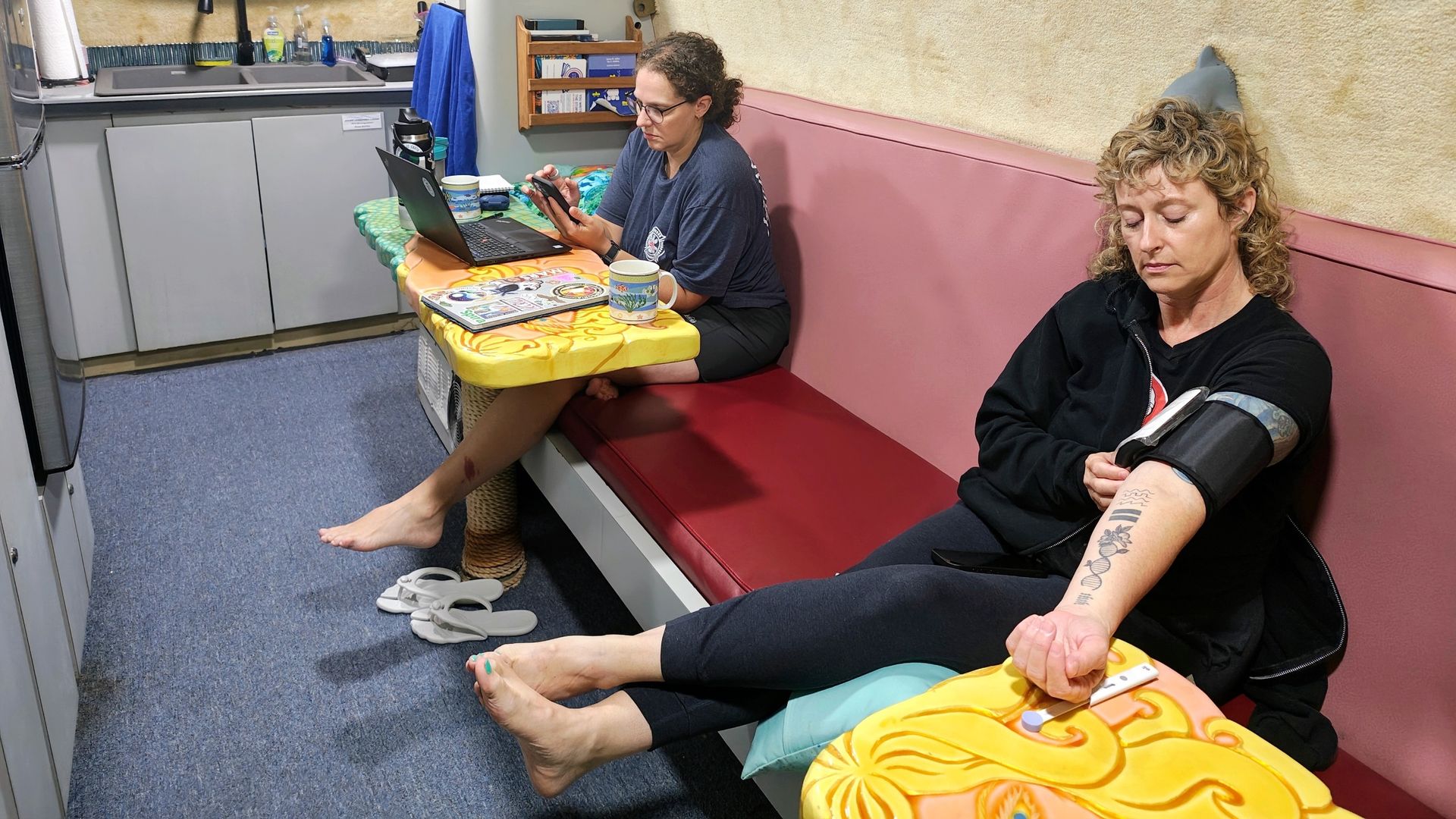
After five days of living underwater, Analog Astronaut Commander Dr. Musilova and her crew return to terra firma, affected by higher pressures and the team's disconnection from home.
Social media doesn't necessarily reflect who you are, but it may intensify particular personality traits and confirm or even persuade you that your worst behavior is justified.
A University of Massachusetts Amherst-led research team has discovered that weaker rock in mountain landscapes erodes three times faster than harder rock—even on gentler slopes—and is one of the main attributes governing mountain erosion. The finding also challenges our current understanding of the relationship between erosion and the release of carbon dioxide, and suggests that geologists and atmospheric scientists may be underestimating the CO₂ contributions coming from the Earth's rocky places.
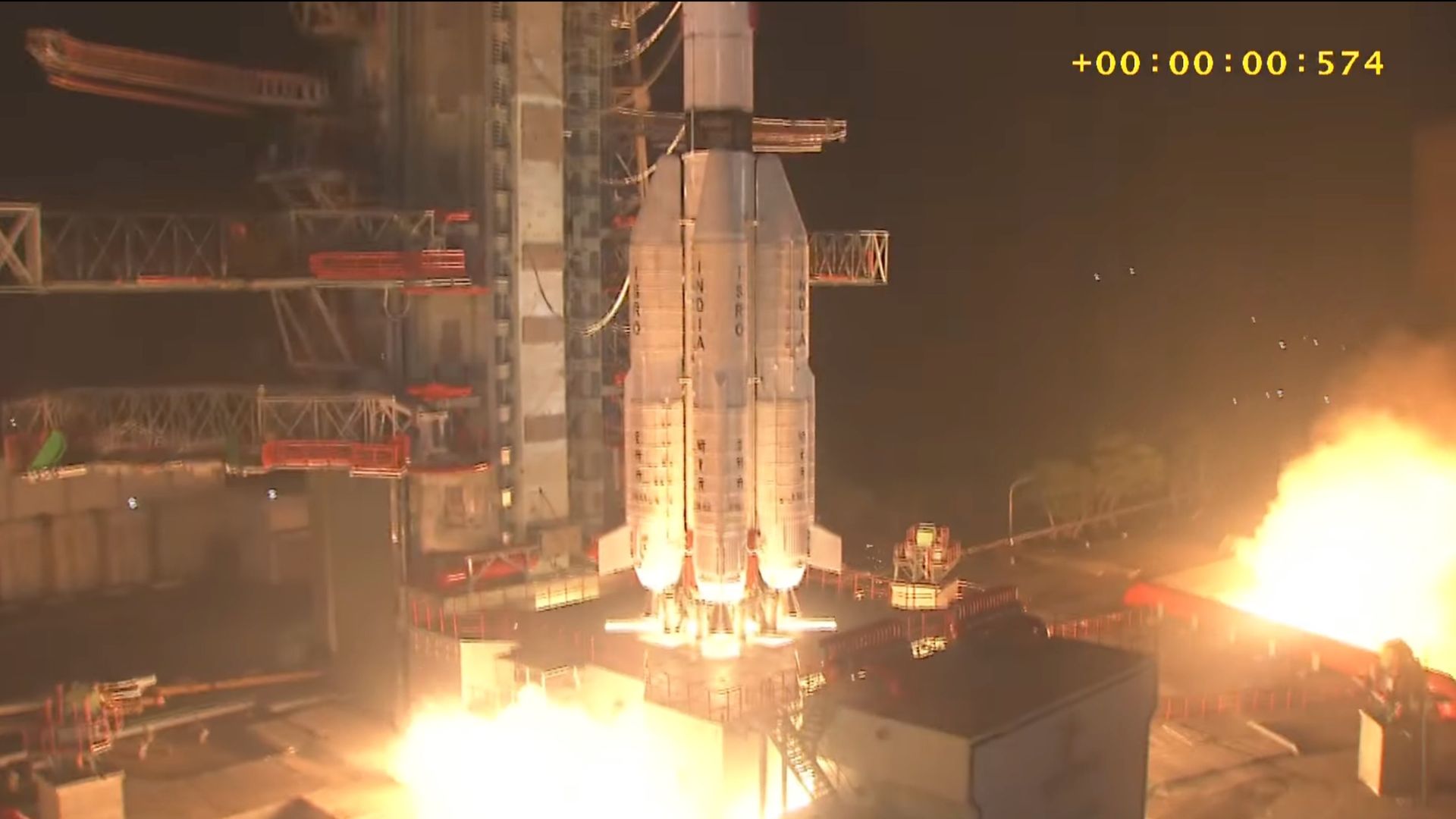
India launched the NVS-03 navigation satellite to orbit today (Oct. 30) atop a GSLV rocket. It was the fourth orbital launch from Indian soil so far this year.
F.O.P., a rare genetic condition, causes uncontrolled explosions of bone. New drugs may slow or halt the process.
A tiny glass chip developed by researchers at Heriot-Watt University has linked two telescopes together to enable them to act as a single powerful instrument, marking an important step toward a new generation of astronomical technology.
There is approximately 60 years of research on campus sexual assault and shelves full of books on young people's sexual experiences and behaviors, including their experiences with assault.
You finally started an online conversation with a stranger you find attractive, yet you don't really know what to say. They seem happy to talk, but you struggle to find the correct responses. You worry that their patience is growing thin. You pray for some guidance. Luckily, the solution could be just a few clicks away.
Science can't study a species—or unlock its potential to change the world—until people actually know it exists. Four new species of frogs have now been given names, thanks to the efforts of FIU biologist Alessandro Catenazzi.
The spooky is a hugely popular phenomenon in British culture, demonstrated in what now seems like a month-long Halloween celebration, a rich tradition of horror cinema and a growing interest in the uncanny. But there are other manifestations of haunting.
Particle accelerators are expensive. Not just to build or to run, but also to predict the outcome of measurements obtained from them.
Finding new drugs requires screening vast numbers of compounds to identify those that interact with a biological target. DNA-encoded libraries (DELs) help researchers explore these large collections by attaching a short DNA sequence to each molecule, acting as a molecular barcode that allows compounds with promising properties to be identified.
College students say they use AI mostly for learning and don't use it to cut corners but think that their peers do, according to the inaugural Dartmouth AI Survey, a new multiyear survey on how AI is shaping students' learning and career readiness.
Quantum researchers are searching for a topological superconductor—a material that, if discovered, would allow major advances in quantum computing by combining two distinct "flavors" of superconductivity.
Varying crop rotations and keeping the soil constantly covered with vegetation help protect crops against droughts and floods, in addition to increasing productivity. This technique was tested in Rio Grande do Sul state, Brazil, by researchers from the Center for Carbon Research in Tropical Agriculture (CCARBON) at the University of São Paulo (USP).
In space, no one can hear you scream, a bit like the empty theater screens that some horror franchise's final installments limp. But there are still some real gems among the space-based frightfests.
Global cities are subsiding by up to several inches a year, an exhaustive new survey shows