TopNewsOn

Science

Research, space and the environment

Science · page 7

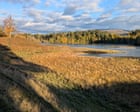
Country diary: The light and shade of autumn’s shortening days | Merryn Glover

Loch Insh, Cairngorms: In my three decades in Scotland I’ve adjusted to the darkness of this time of year, and found glory in the quality of light It is the one clear day in a fortnight of heavy cloud, wind and rain, so I am out by the loch, basking in the rays of light, breathing them in, hoarding for the weeks to come. This time of year makes them all the more precious. Here in the Highlands, once we are past the autumnal equinox , we can almost feel the Earth tipping away from the sun as the light grows shorter each day and the night steals back. It’s a turn that is especially obvious when the clocks change and our evenings are suddenly dark. Continue reading...

The Guardian · Oct 30

Scientists confirm global warming is accelerating faster than ever recorded

Earth is warming faster than ever recorded, with scientists detecting a major acceleration in global temperatures since around 2015. A new study reveals that the warming rate has surged to approximately 0.35°C per decade, nearly double the average pace observed from 1970 to 2015. After removing natural climate fluctuations, researchers confirmed the acceleration with more than 98% statistical confidence.

Science Daily · Oct 30
A mysterious star system just 16 light-years away may be hiding habitable planets

Astronomers have solved a 170-year-old planetary mystery in a nearby two-star system, discovering that a mysterious wobble was caused by stellar activity rather than a giant planet. Although Jupiter-sized worlds have been ruled out in key regions, smaller, potentially habitable planets could still be waiting to be discovered just 16 light-years from Earth.

Science Daily · Oct 30
Scientists discover mysterious seahorse lookalikes that no one has ever seen alive

Scientists have discovered that three bizarre deep-sea fish that look exactly like seahorses actually belong to a separate evolutionary group, proving that nature created the same unusual body shape more than once. Nicknamed "sea muppets," these elusive creatures are known from just seven specimens, and no one has ever seen one alive.

Science Daily · Oct 30
Scientists discover why chronic back pain feels so personal

A surprising discovery at UC San Diego suggests that chronic lower back pain may become deeply embedded in the brain's sense of personal identity. Researchers found that movement-triggered pain activates a brain network associated with self-awareness and memories, even though ordinary acute pain typically shuts this network down. This unexpected difference could explain why conventional pain medications often provide limited relief and why fear, anticipation, and past experiences can intensify chronic pain.

Science Daily · Oct 30
BBC Inside Science

Time is running out for one of the most ambitious environmental pledges in history.

BBC News · Oct 29