
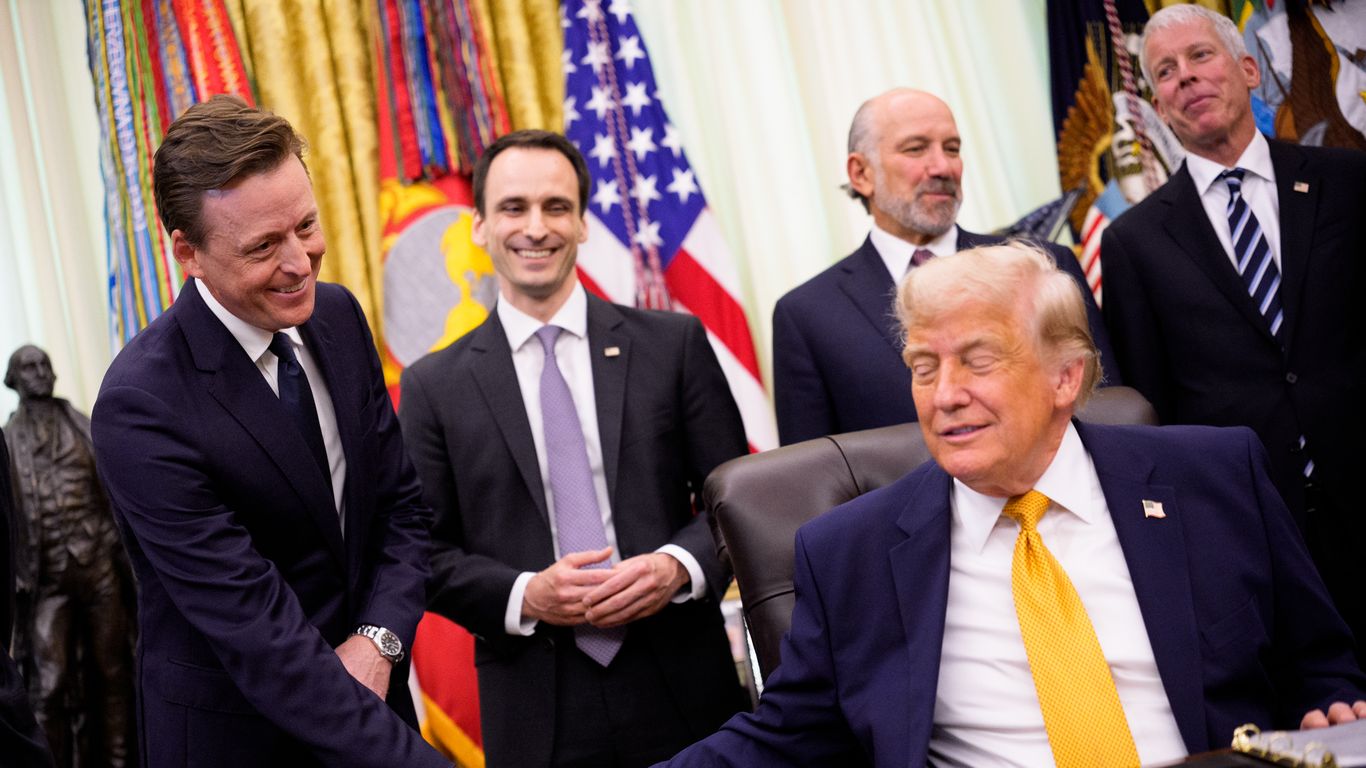
White House national cyber director Sean Cairncross is leaving his post, Axios has learned. Why it matters: Cairncross did not want to serve another two years and is leaving now to give the White House time to secure Senate confirmation before Democrats take control in January, two sources said. Cairncross' departure was described as amicable. The background: Cairncross leads the Office of the National Cyber Director, which coordinates cybersecurity policy and strategy across the federal government. The position requires Senate confirmation. The Trump administration's AI team has taken shape on the fly , but Cairncross was involved in key decisions. Case in point: He held technical meetings with Anthropic leaders over the summer after Commerce Department export controls effectively scrubbed the company's models from the internet. Catch up quick: Cairncross brought experience in Republican politics and national security, having worked with the intelligence community and dealt with cyber threats at the Republican National Committee. During Trump's first term, Cairncross represented the White House chief of staff on National Security Council committees before leading the Millennium Challenge Corporation, a federal foreign aid agency. Cairncross' head of policy and senior adviser Thomas Lind left in June and joined OpenAI in October, further depleting the Trump administration of technical expertise. The White House has not yet responded to Axios' request for comment. The big picture: The latest turnover in cyber personnel comes as the country grapples with critical infrastructure outages and increasingly powerful AI poised to empower cyber defenders and hackers alike. Democrats have criticized the administration's response to outages and warned that U.S. cyber defenses are falling behind AI-fueled threats. What we're watching: Trump is also filling other key cyber positions. His pick for the top job at the Cybersecurity and Infrastructure Security Agency, which helps de
Results for “cyber director”

Are Black Friday and Cyber Monday deals actually worth it? Shopping experts share tips on what to buy, what to skip and how to find genuine discounts.

Axios chief technology officer Dan Cox, who's spent 25 years at some of the world's biggest tech companies, puts the recent spate of high-profile failures in perspective: My parents, my siblings and plenty of other people are asking the same question: How worried should we be? The big picture: I've been in technology a long time. I take these threats seriously , but I'm not in panic mode. When something breaks, we need to understand what happened, how far it reaches and what we can do about it. A frightening headline doesn't answer those questions. Zoom out: The way I think about it, we've put powerful tools in more hands, and people are taking potshots to see what they can hit. Those shots can do real damage, and we need to protect ourselves. But hearing gunfire doesn't, by itself, mean an army is coming over the hill. We need to understand who's firing, what they can actually do and whether the threat is changing. Zoom in: Over the past few weeks, we've identified bad actors snooping around our own website, too. Our talented engineers have investigated threats and put mitigations in place. There may still be attempts on our site, but each incident gives us an opportunity to strengthen our systems. Between the lines: There are thousands of smart, resourceful and dedicated engineers working to protect the systems we all rely on. I see that commitment in our own team. I believe that if the threat grows, more people with those skills will step up. That's part of why I have confidence in our ability to respond, even as the threats evolve. The bottom line: Fred Rogers shared his mother's advice for frightening news: "Look for the helpers. You will always find people who are helping." I think about that here. There are a lot of capable people working on these problems. I have confidence in them, even while we have real work to do. I want people to feel informed enough to act, rather than frightened enough to assume the worst.

The internet has caught the emergency preparation bug , fueled by fears of AI-led cyberattacks , power grid vulnerabilities, transportation standstills and international threats . The big picture: The "prepper" mindset is resonating with larger slices of society — who are packing emergency bags, stocking up on water and taking inventory of non-perishables. Michael Mills, a University of Greenwich senior lecturer who studies doomsday preparation, says some people are turning to "lightweight versions" of traditional prepping amid doubts about global stability. By the numbers: Sales at Survival Frog, a survival retailer that sells gear like emergency food and radios, saw sales jump 450% between Oct. 27 and Nov. 16, compared to prior weeks, CEO and founder Byron Walker tells Axios. Competitors saw similar trends, he says. And most recent buyers at Survival Frog were new customers. Food, including canned meats, leads demand, Walker says, followed by products like radios, solar generators, battery packs and water filters. State of play: Systems the world relies on for travel , communications , business , food, health care and more have been disrupted in recent weeks — whether because of tech shortfalls or malicious acts. While officials assure the incidents aren't broadly connected, fears of critical infrastructure failing are growing, and more people considering how to prepare for crises. "It does seem much more mainstream now," Walker says of preppers. "You can't turn on the news without hearing about a new cyber attack or a tech meltdown." Many of the emergency preparation skills people are using have long been observed in disaster-prone areas. And as many Americans learned during COVID, supply chain disruptions mean having extra water, radios and shelf-stable foods around the house isn't a bad thing. Krystal, known online as the "Queen of Doomsday," spends about five hours daily coaching new preppers and told Axios that recent online engagement with her content, which

A wave of tech failures highlights weaknesses in America’s aging infrastructure that adversaries could exploit with increasingly accessible cyberattack tools, experts warn.
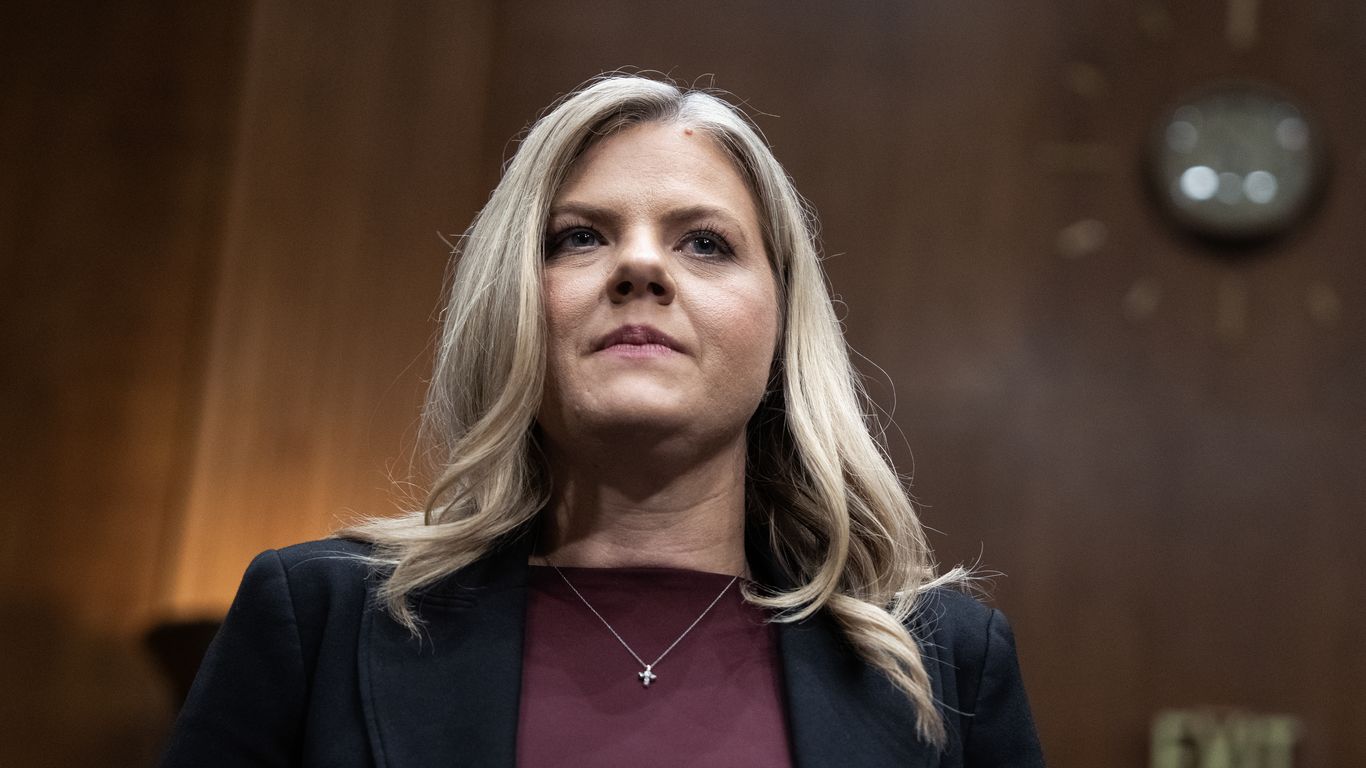
The White House is dropping Heidi Overton 's nomination to lead the Food and Drug Administration because of a lack of congressional support, Axios has learned. Why it matters: The decision means the Trump administration will have to find a new candidate to lead the FDA as HHS Secretary Robert F. Kennedy Jr. looks to advance his Make America Healthy Again agenda. "FDA nominee Heidi Overton lacks the support on the Hill to move forward with her confirmation," a senior administration official told Axios late Tuesday. The backstory: Overton, a physician and deputy director of the White House Domestic Policy Council, was nominated by Trump in August. Her nomination faced opposition from Democrats and skepticism from some Republican senators, including Sen. Bill Cassidy (R-La.), chair of the Senate's Health, Education, Labor and Pensions (HELP) Committee. Cassidy said he had "strong concerns" about Overton's role in the administration's efforts to change childhood vaccine recommendations, which he called "almost disqualifying." What they're saying: "We need to go in a new direction at FDA, and everybody fully supports Secretary Kennedy's vision to Make America Healthy Again and get back to a more populist and common-sense approach to health in America," the senior administration official said. What's next: The HELP committee had been scheduled to vote on Overton's nomination on Wednesday. The FDA has been led by acting Commissioner Kyle Diamantas since Marty Makary resigned in May. This is a breaking story and will be updated.


Chris Krebs, the former director of the Cybersecurity and Infrastructure Security Agency, joins "CBS Mornings" to break down the recent travel and banking outages.

Teams from the FAA and FBI are in Florida analyzing the router at the center of the historic ground stop that led to 18,000 flight cancellations. Meanwhile, Transportation Secretary Sean Duffy is calling on Congress to fund a brand-new telecommunications network for air traffic control. NBC’s Stephanie Gosk reports and Chris Krebs, former director of the U.S. Cybersecurity and Infrastructure Security Agency, joins TODAY with analysis. “A lot of these outages are due to patches and upgrades a

An international health organization has determined that the United States has lost its measles elimination status, according to multiple news reports. Why it matters: It's an official recognition of how much the country's public health has deteriorated due to a rolling series of outbreaks since early last year. Increased public skepticism about the safety and effectiveness of vaccines, a barrage of distrust from federal officials like Health Secretary Robert F. Kennedy Jr. and funding cuts for response efforts have all factored in the surge of cases, according to public health experts. The big picture: The Pan American Health Organization concluded there has been sustained transmission of the highly contagious virus for longer than 12 months, bringing the U.S. case count to its highest level in 35 years. The measles elimination status hinges on whether the same strain of measles stays in circulation for 12 months or longer without a break. The overwhelming majority of cases are in unvaccinated people. While overall measles vaccination rates remain relatively high, public health officials say they have to remain above 95% to maintain herd immunity. Driving the news: An expert panel convened by the Pan American Health Organization made the widely expected decision following a three-day meeting in Washington, D.C. What they're saying: "It is no surprise that the resurgence of measles has coincided with an administration that has inflicted significant damage to our health care system while spreading false claims about vaccines," said Richard Besser, president and CEO of the Robert Wood Johnson Foundation and a former acting director of the Centers for Disease Control. "It is unthinkable that people in the United States should be dying from measles in 2026," the Infectious Diseases Society said in comments prior to the decision. The group cited the potential long-term toll on infants infected this year, some of whom could develop serious neurologic disease years after t

Courts and governments worldwide felt the impact of this week's Microsoft outage, which sidelined work and stymied communication. Why it matters: When Microsoft's popular workplace software went offline Thursday, it meant an extended lunch break for some offices — but for the courts and governments, it raised questions about the vulnerabilities of the technology underpinning justice and governance. Case in point: The state of Maine's judicial branch warned in a Thursday alert that requests for protection orders filed by email — urgent requests to keep parties safe from harm — may not have been received. Multiple court documents reviewed by Axios show lawyers requesting deadline extensions or alerting judges to the outage impacting their work. That includes DOJ lawyers: Government attorneys asked for an extension in the case brought by Rep. Joyce Beatty (D-Ohio) over President Trump 's Kennedy Center takeover , saying the outage prevented them from "completing the necessary coordination." In a separate filing, Beatty's team acknowledged they were impacted as well. Zoom out: The impacts were also felt in courtrooms and offices internationally. The AP reported that a U.K. criminal trial was delayed as a result, with a Manchester judge saying, per BBC's reporting , "We are learning of the dangers of relying on computers and data systems." U.K.-based police forces also urged the public Friday to call first responders for aid, rather than using online forms. The Supreme Court of the Philippines said it, too, was affected by the outage. What they're saying: "We obviously need backup methods to keep the wheels of justice turning," says Gissou Nia, the founder and director of the Atlantic Council's Strategic Litigation Project. She pointed to a prior incident that previewed international reliance on U.S. tech: Though not exposed by an outage, the Trump administration's sanctions on the International Criminal Court prompted the Netherlands-based court to move off of Microsoft

The director of the Israeli spy agency Mossad is in Washington Friday for talks with senior Trump administration officials about the war in Iran , according to three sources with knowledge of the matter. Why it matters : The visit by Roman Gofman, one of Benjamin Netanyahu's closest confidants, comes as the Israeli prime minister is pressing President Trump to resume the war against Iran. Driving the news: Gofman is meeting with CIA Director John Ratcliffe, the sources said. He is also expected to travel to Miami to meet White House envoy Steve Witkoff, one of the sources said. Mossad, the CIA and the White House declined to comment. State of play: Trump has so far rejected pressure from Netanyahu to return to combat. The two discussed the Iran war during a Nov. 5 call, per a U.S. official. Instead, the president has sided with Saudi Arabia, Qatar and the UAE to continue the naval blockade and economic pressure campaign against Iran, while seeing if a deal is possible. "I could end it immediately. At the request of the nations that I'm looking to protect, we are doing it a little bit longer way, a little bit more civilly," Trump said on Thursday. "Saudi Arabia has asked me to please just let it be the way it is now for a while, because [Iran is] disintegrating. Qatar, Kuwait, UAE, Bahrain, all of them would much prefer the waiting period." The intrigue: Netanyahu has lost his majority in parliament after the Oct. 27 election in Israel. His opponent, Gadi Eisenkot, has received a mandate to form a new government. It is unclear whether he'll be able to do so. In the meantime, leaders of the Israeli opposition are concerned Netanyahu will try to launch an attack on Iran — or provoke Iran to attack Israel — in order to undermine Eisenkot's efforts, sources say. Netanyahu would be removed from power if Eisenkot succeeds. On Thursday, Netanyahu met with Eisenkot for two hours and briefed him on the situation with Iran. A source close to Eisenkot said he doesn't think the

Data: Photos: Getty Images, Nvidia, Apple; Chart: Erin Davis/Axios Nvidia has begun searching for a permanent replacement for longtime CEO Jensen Huang , who resigned Thursday amid scrutiny over reports of multiple extramarital affairs. Why it matters: Nvidia's next leader will inherit one of the world's most valuable companies — and the daunting task of succeeding the pioneer who transformed it into an AI powerhouse. The job will require as much political savvy as technological expertise, Axios' Nathan Bomey says. The next CEO must navigate regulatory scrutiny, geopolitical tensions and the economic upheaval unleashed by the AI boom. Catch up quick: Nvidia announced Thursday that CFO Colette Kress would serve as interim CEO following Huang's departure. The board said it would consider both internal and external candidates. Longtime director Harvey Jones was appointed Nvidia's first-ever board chair following Huang's departure. Reality check: Huang never publicly named a successor , leaving investors and analysts to speculate about who could take the helm. In an October Bloomberg interview released Thursday, Huang said he hoped Nvidia's next CEO was already working at the company. Here are 11 names that have surfaced in reporting and speculation — from leading contenders to long shots. Colette Kress Colette Kress, the new interim CEO of Nvidia. Photo illustration: Axios Visuals. Photo: Nvidia bio page Kress could stay on permanently, with analysts and investors viewing her as a leading contender because of her financial expertise, per Reuters . Nvidia's new board chair, Harvey Jones, praised Kress for her deep understanding of the company's business and customers. Kress has represented Nvidia on investor calls for more than a decade, making her one of the company's most recognizable executives. She's also the only person, aside from Huang, who had much visibility across the company, according to Axios' Ina Fried. Huang had several dozen direct reports, many of whom

Mississippi, a state with the largest share of Black residents in the country, has elected its first Black U.S. senator in nearly 150 years. Why it matters: For generations, Black Mississippians left the state to escape Jim Crow and pursue economic and political opportunities elsewhere. Now, Mississippi faces a new question: Was Scott Colom's victory a once-in-a-generation breakthrough, or the beginning of an era of Black political power? Driving the news: Colom's defeat of incumbent Sen. Cindy Hyde-Smith broke a barrier that had stood since Reconstruction. Mississippi was the first state to send Black senators to Congress, before violence and disenfranchisement stripped Black residents of their political power. In Colom's race, Democrats gained ground in 75 of the state's 82 counties, Marvin King, an associate professor of political science and African American studies at the University of Mississippi, told Axios. "It wasn't just a fluke of super high turnout in one particular region," he said. "Scott Colom's victory can signal that maybe Mississippi is ready to govern differently." The big picture: During the Great Migration , roughly 6 million Black Americans left the South to escape discrimination and seek better opportunities. Many Black Mississippians built political power in Northern cities such as Chicago, said Keneshia Grant, a Great Migration expert at Howard University. For many, the question became, "should we go and try for a better life in these other places ... or should we stay and fight where we are?" Grant said. "It was about economic opportunity, but I also think it was about terrorism too," Cassandra Overton Welchlin, executive director of the Mississippi Black Women's Roundtable, told Axios, pointing to the lynchings that drove families away. Welchlin left Mississippi for graduate school and considered staying away. "I did not want to come back to Mississippi because it is hard here," she told Axios. Mentors encouraged her to return. She did, ev
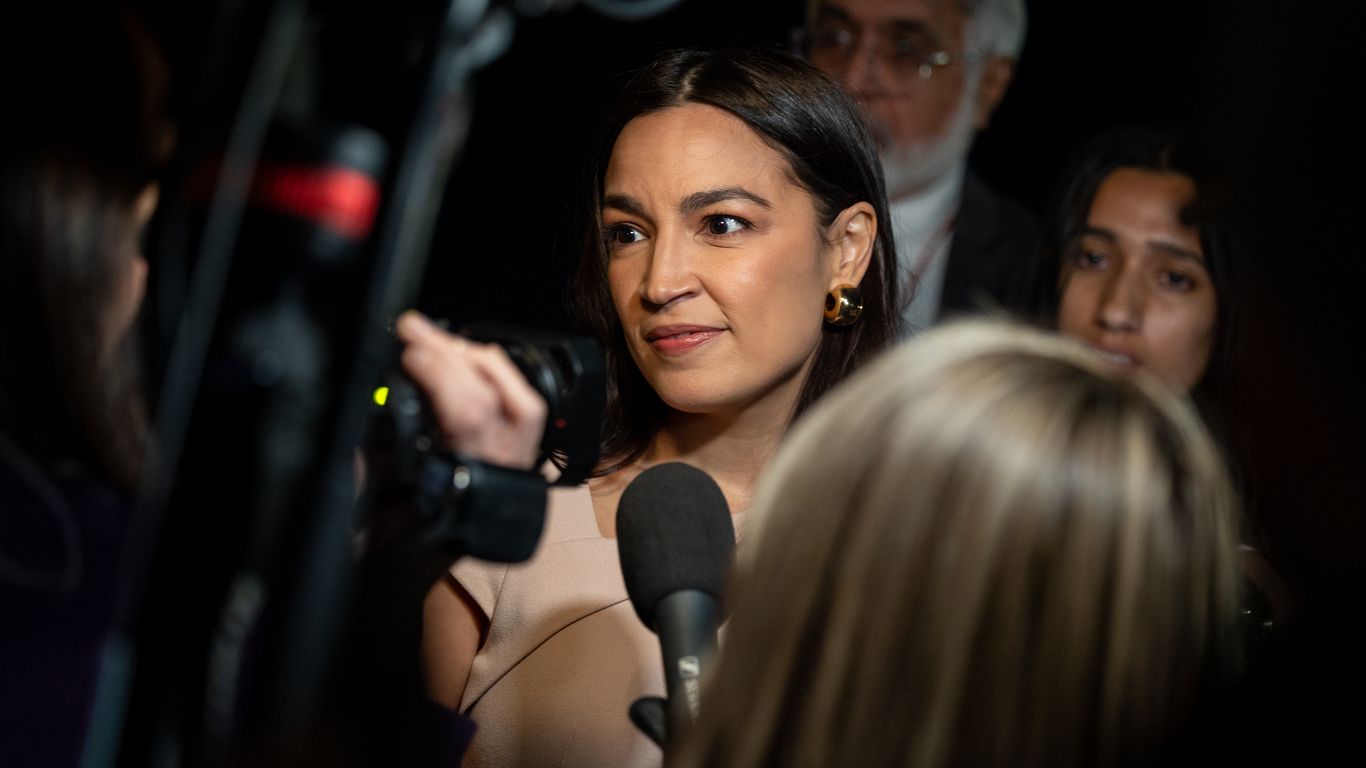
New York Rep. Alexandria Ocasio-Cortez is shaking up her team for the second time in the past few months as she prepares to make the biggest decision of her political life. Why it matters: The overhaul comes as the democratic socialist leader is debating whether to run for president in 2028 — or Senate Minority Leader Chuck Schumer's seat, which is up the same year. Zoom in: Ocasio-Cortez has parted ways with her longtime digital fundraising firm, Middle Seat, according to three people familiar with the decision. At the same time, sources said, she's brought on Aisle 518 Strategies — the company led by Democratic strategist Tim Tagaris, who oversaw Bernie Sanders' record-breaking online fundraising strategy in his two presidential campaigns. Middle Seat has been key to Ocasio-Cortez's operation. Over the past two years, she has paid the firm more than $6 million — about a quarter of her operation's disbursements during that period. AOC is close with Sanders, and if she decides to run for president, progressives say, she would be able to quickly staff up with his former advisers. But Ocasio-Cortez's latest move doesn't necessarily signal that she's leaning toward a presidential run or a Senate bid. Tagaris' firm has helped power the small-dollar fundraising operation for California Gov. Gavin Newsom, who's widely expected to run for the White House. It also has worked with other Democrats who are potential contenders for president — Arizona Sen. Mark Kelly, Georgia Sen. Jon Ossoff and former Vice President Kamala Harris, according to the company's website . Middle Seat, the firm AOC is leaving, has Sanders roots as well: It was founded by alumni of the Vermont senator's 2016 campaign. Flashback: Ocasio-Cortez's reorganizing follows several changes she made to her staff this year, as Axios previously reported . They included parting ways with her longtime campaign manager and creative director, as well as bringing aboard a few former aides. The Washington Sun reported

As executive director of the group from 1969 to 1985, he aligned its disparate local chapters and offices into a powerful lobby in Washington. He was 92.
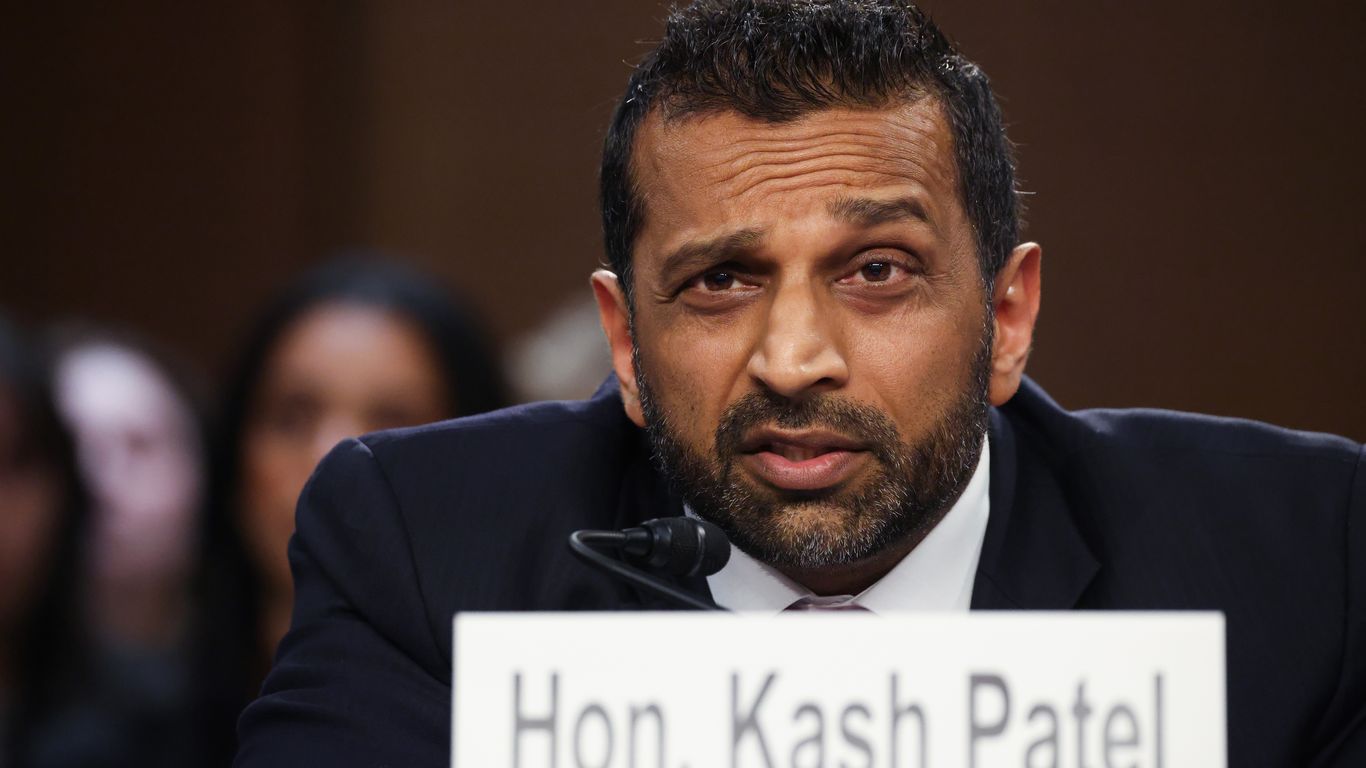
A federal judge took sharp aim at FBI Director Kash Patel on Tuesday, ruling in favor of The Atlantic and freezing most discovery in his defamation lawsuit against the publication. Why it matters: The ruling shields The Atlantic from potentially intrusive demands for its reporting materials and confidential sources while the court weighs dismissing the case entirely. What they're saying: " Plaintiff misrepresents Defendants' argument, the court's reasoning in Moldea, and the standard applicable in this District," U.S. District Judge Emmet Sullivan wrote in his 16-page ruling . "The Court concludes that discovery should be stayed at this juncture because of Defendants' legitimate First Amendment concerns and because discovery may be unnecessary," Sullivan wrote. Catch up quick: Patel sued The Atlantic after the magazine reported in April that he allegedly drinks excessively and is sometimes unavailable or difficult for his staff to wake because he was seemingly intoxicated. The story also alleged that Patel had grown increasingly worried about losing his job. Patel denied the reporting and sued the publication shortly after the story aired. Zoom in: The judge paused most discovery until he rules on The Atlantic's motion to dismiss the lawsuit, but both sides may request government records. The Atlantic says it needs Justice Department and FBI records to assess the truth of its reporting and Patel's reputation. Patel complained the requests were too broad, seeking everything from his medical and travel records to his calendar and records about personnel decisions. Sullivan rejected Patel's objection that the arrangement was unfair. The intrigue: The Atlantic warned that discovery could involve "the sitting FBI Director invading Defendants' newsgathering and editorial processes," potentially exposing confidential sources to retaliation. The Atlantic called Patel a "serial defamation plaintiff" and warned that he "may seek to wield governmental power" in connection with

President Trump, with the clock ticking and congressional investigators closing in, plans to govern even more imperially , hell-bent on stretching executive power, targeting those on his enemies list, pardoning allies, and daring the courts and Congress to slow him down. Why it matters: Trump and his allies are exploring executive action on new tariffs and immigration restrictions, and asserting greater control over spending. On X over the weekend, Trump discussed targeting and perhaps jailing Democrats who investigate administration officials. He claimed politically motivated harassment . Trump is retooling his White House by elevating the one official who's synonymous with his all-gas-no-brakes style: Stephen Miller, who took over for Susie Wiles as White House chief of staff on Monday. Watch Miller and Russ Vought , the White House budget director, to understand how this approach will unfold. Both are architects and advocates of vastly expanding presidential power, believing there are virtually no restraints on what Trump can do as president. The Swamp can expect tougher sledding: Miller, unlike most of his predecessors, is driven more by ideology than by meetings with lobbyists or industry groups. "Stephen gives zero f*cks what K Street thinks," a Trump confidant told us. Between the lines: Midterm losses pushed Presidents Clinton and Obama to the center. Trump's instincts are the opposite: Assert maximal power. The playbook: Restore MAGA. Two years ago, MAGA — mostly its network of podcasts , YouTubers and online activists — was a powerful, united force in media and politics. Today it's a hot, divided mess. Trump's attention to his base drifted. Now Vice President Vance and Miller desperately want to rebuild and rev up MAGA. That's why ending the Iran war , curtailing aid to Israel and pushing harder on RFK Jr.'s MAHA agenda are suddenly top-tier topics. Rule by pen. Miller, Vought and White House lawyers have been drafting executive actions to govern without C

The French government has blamed an Iranian military hacking unit for cyberattacks that disrupted refrigeration systems at roughly 700 grocery stores and other retail locations last month, causing food losses and at least 15 fires. Why it matters: The attacks underscore how Iranian government hackers are moving beyond stealing data and disrupting websites to manipulating the physical equipment that keeps essential services running. Driving the news: France's Ministry for Europe and Foreign Affairs attributed the Oct. 11–12 attacks to Iran on Monday, calling them the country's first cyberattack campaign conducted purely for sabotage on French territory. The government's Cyber Crisis Coordination Center specifically attributed the attacks to Shahid Kaveh, a hacking unit within Iran's Islamic Revolutionary Guard Corps. Hackers manipulated refrigeration equipment to raise temperatures, causing tens of millions of euros in food losses and at least 15 fires, according to French officials. The same operation also targeted equipment at small hydroelectric facilities in France, with limited effects, according to an intelligence report. Yes, but: The French government has not publicly attributed a separate wave of refrigeration attacks that occurred last week to the same hackers. Zoom in: French intelligence linked Shahid Kaveh to several online hacktivist personas, including CyberAveng3rs and Soldiers of Solomon, that publicly claim responsibility for the unit's operations. Investigators found that infrastructure used in the refrigeration attacks was also used to scan industrial equipment using techniques previously associated with Shahid Kaveh. They also found traces of Farsi in the attack infrastructure and identified a propaganda outlet linked to the unit that publicized the attack. The big picture: Iran has a history of targeting industrial equipment in cyber operations, including American water systems and Israeli refrigeration equipment. French intelligence linked Shah
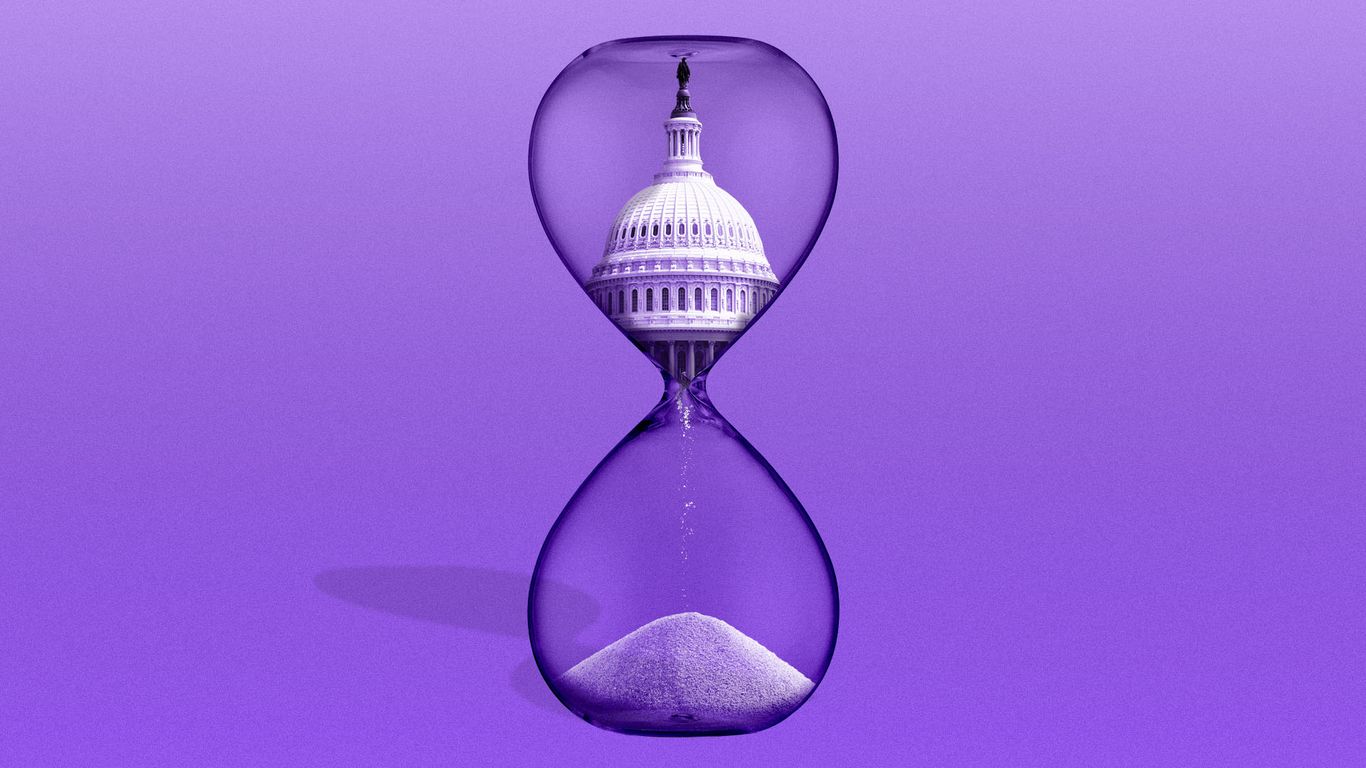
Republicans are returning to work this week, facing the prospect of an especially lame lame-duck session after a bruising midterm election that set off a countdown clock on their control of Congress. Why it matters: Democrats have little incentive to help Republicans advance their agenda before January, while departing GOP lawmakers could complicate matters further by skipping votes or defying party leaders. As a result, most of the items on their to-do list could get kicked to the new Congress. That's aside from a few items House GOP leaders would rather avoid altogether: another Jeffrey Epstein bill and an impeachment vote . Lawmakers also have just over a month before another potential government funding lapse. Driving the news: Rep. Thomas Massie — who GOP voters kicked to the curb in favor of a more Trump-aligned Republican — is pushing another Epstein-related vote, an additional headache for the administration and GOP leaders. He also plans to try to force a vote this week on his impeachment resolution against Defense Secretary Pete Hegseth. Republicans lose their House and Senate majorities Jan. 3, ending their ability to set both chambers' legislative agendas. Reality check: Trump still wields the presidential veto power. Rodell Mollineau, a Democratic strategist and former communications director for the late Senate Majority Leader Harry Reid, said Democrats may postpone some legislative fights until January, when they'll have more negotiating leverage. "I think there's some things that Democrats would be happy to kick down the road," he said. Yes, but: Congress still faces major legislative hurdles. Lawmakers need to pass the annual National Defense Authorization Act, potentially setting up a fight over the Iran war as some Republicans grow more willing to criticize the conflict. A bipartisan permitting bill could overhaul how energy and infrastructure projects are approved. Senate Republicans are also racing to confirm more Trump administration officials
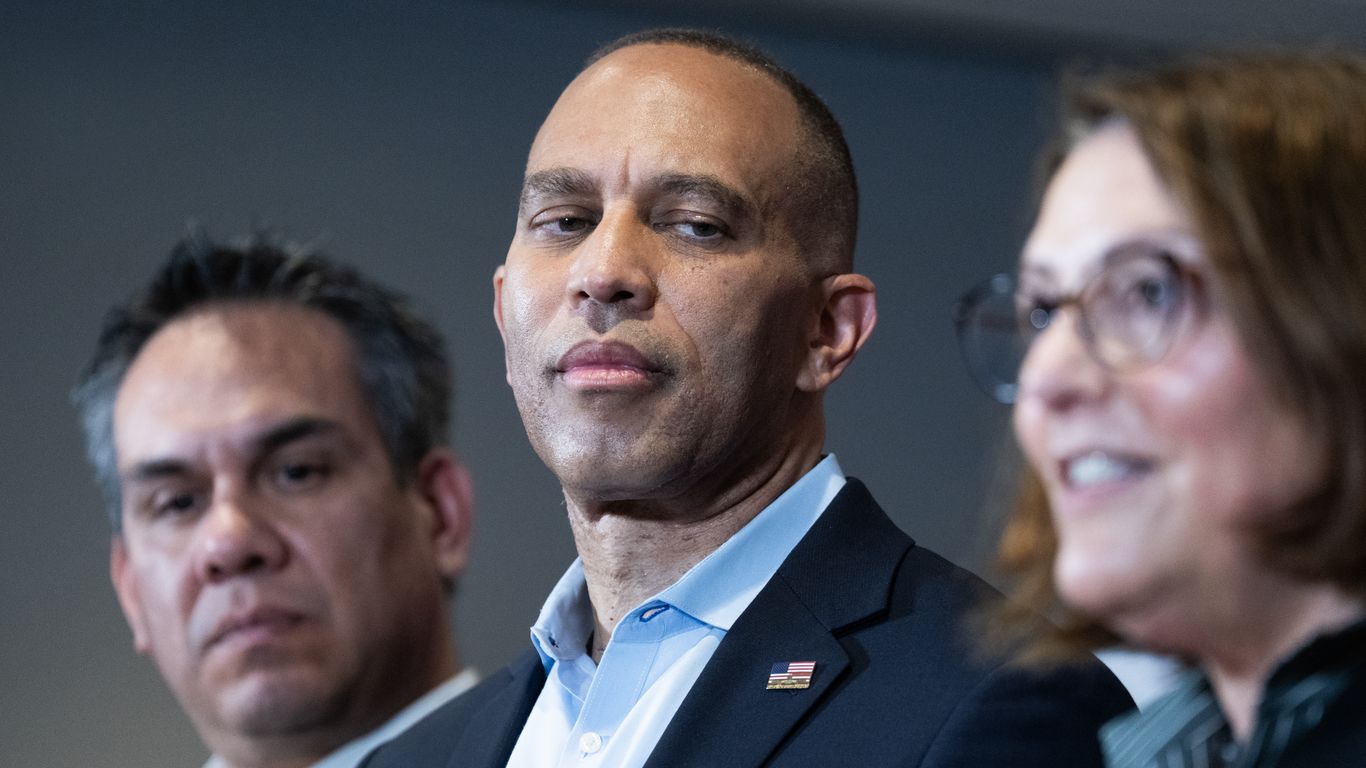
Democratic House members and members-elect are being bombarded with phone calls and emails urging them not to elect Minority Leader Hakeem Jeffries (D-N.Y.) as speaker, more than a dozen lawmakers and aides tell Axios. Why it matters: The calls point to a fundamental disconnect between House Democrats — most of whom are likely to vote for Jeffries — and at least a portion of their grassroots base. An incoming House Democrat told Axios they are "getting inundated" and have received "about 150" calls since the election urging them not to vote for Jeffries. A senior House Democrat said they received "over 500" calls in the last two days, telling Axios they also got asked about it in-person at a Chamber of Commerce meeting in their district. "I think our numbers are higher" than 500, said another House Democrat. "It's our No. 1 issue, and it's not close." State of play: Jeffries is in pole position to become speaker of the House after Democrats' landslide victory Tuesday, which is set to give them a massive majority of more than 250 seats. He has enjoyed the unanimous support of his caucus since becoming Democratic leader in 2022 and has never had a single House Democrat defect from him in a speaker vote. But the last speaker ballot was in January 2025, right before Democrats' grassroots base began railing against party leadership for what they perceived as insufficient resistance to the Trump administration. "Democrats in both chambers can't go back to business-as-usual politics. People want leadership that's ready to join the rest of us in this new era of politics," Ezra Levin, co-executive director of the progressive group Indivisible, said in a statement to Axios on Friday. A Democratic chief of staff who said their office got "about 300" calls told Axios: "Lots of people are saying make Jamie Raskin speaker." Raskin (D-Md.) has often been floated as a more progressive alternative to Jeffries, whose associations with pro-Israel groups and corporate PACs have long be

Refrigerator hacks. $6.3 billion crypto heists . 14-country espionage campaigns carried out in just 11 days. All in the span of a week. Why it matters: State-backed hackers are finding new ways to launch cyberattacks at remarkable speed and scale, with AI and automation threatening to widen the gap between attackers and defenders. Driving the news: Hackers tampered with refrigeration system s at dozens of European grocery stores in one night earlier this week — raising temperatures and spoiling food in a sweeping attack some linked to Russia. "It's hard to imagine this is not the work of a nation state pretending to be a criminal actor," Cynthia Kaiser, former deputy director of the FBI's cyber division, told Axios. "Given the concentration around Europe, Russia is a reasonable first suspect." French blood banks were also affected in the attacks on European refrigeration systems, authorities said Wednesday. SentinelOne researchers reported Tuesday that Russian-aligned hackers have previously claimed attacks on European refrigeration systems. Meanwhile, the Pentagon has also been investigating a series of suspected hacks of refrigeration systems on its military bases over the summer. Nextgov reported that investigators suspect Iran was behind those attacks. Others have suggested potential Iran ties in Europe as well. The big picture: No clear evidence has yet linked the attack on food supply through smart refrigeration to AI or automation, but nation-state hackers have used those tools in other breaches to speed up their operations. Google researchers said Friday that multiple hacking groups have used automated security testing tools in recent attacks. One China-linked group gained deep access to a victim's network in as little as 15 minutes. North Korean hackers behind last week's record-setting Binance heist also likely used automation to move stolen cryptocurrency and cover their tracks, according to Chainalysis. Case in point: China-linked hackers used an AI-powe

Talk of subpoenas and warnings to "lawyer up" hint at the extent of the health care investigations and oversight hearings that Democrats are expected to launch once they take control of Congress. Why it matters: Democrats have been building a paper trail for months to probe instances of political interference in vaccine policies, whether Health Secretary Robert F. Kennedy Jr. benefited financially from vaccine litigation and more. But the early efforts will more likely be directed at making a case for changes to federal Medicaid cuts, showcasing health affordability problems and examining whether federal health agencies are sufficiently funded and staffed. "You don't just do oversight to raise hell," said Tim Stretton, director of the Congressional Oversight Initiative at the Project On Government Oversight. "Trying to create some systematic change is arguably more important." What we're hearing: The House Oversight, Energy and Commerce and Ways and Means committees will be focal points of early activity, along with the Senate health and Finance committees. Some law firms already are advising their corporate clients to cooperate with committee staffs and minimize their exposure to possible negative headlines from hearings. One prominent player will be the likely new House Oversight chair, Robert Garcia (D-Calif.) — the one who publicly warned Republicans to "lawyer up" on Tuesday after Democrats flipped control of the House. The former Long Beach mayor lost his mother, a frontline health worker, and stepfather to COVID and has publicly assailed Kennedy for undermining public health and preventing or delaying needed cures. Bernie Sanders' expected return to chair the Senate health committee will give the Vermont independent another chance to harness public outrage on drug prices and spar with Kennedy over his tenure as health secretary. Zoom in: The power shift in Congress gives Democrats the ability to subpoena witnesses, demand records and hold officials and indivi

President Trump's much-contested " triumphal arch " has received its final planning approval, but a federal judge could still block construction. Why it matters: The Trump administration has said that work on the 250-foot arch could start immediately, even as lawsuits challenge whether the project can move forward. Driving the news: The National Capital Planning Commission — stacked with Trump loyalists — gave the project final approval Thursday during a packed virtual hearing that saw over 100 people testify and stretched over nine hours. Opposing speakers included the D.C. Preservation League's executive director, military veterans and some of the family members of those buried at Arlington Cemetery. Yes, but: A District judge is considering combined lawsuits to block the arch: One from D.C. and Virginia , and another from veterans — meaning the project could still be paused. The same judge earlier this week ordered that the government must notify the court within 30 minutes of beginning any activity related to arch construction. The government has said that Maryland-based Grunley Construction Company might already be preparing to start construction in anticipation of sign-off. The big picture: The proposed 250-foot arch has also been the source of fierce public objection and protests . Critics have accused the administration of sidestepping necessary federal historic-preservation reviews and congressional sign-off, among other concerns. Meanwhile, some Democratic lawmakers have suggested they'll make it harder for Trump to push his D.C. projects through once they assume Congressional control come January. Between the lines: Critics of the project say it would overshadow and dishonor nearby Arlington Cemetery, snarl traffic during construction, hurt the local environment and create airspace safety issues at DCA, among other issues. Building the project would take two to three years, with crews working 20 hours a day, per the administration. What they're saying: Th

After a wave of attacks in Europe, U.S. officials are warning of "ongoing" cyber threats targeting refrigeration systems used in healthcare, agriculture and other industries.

Democrats won the midterms on voter frustration with high prices . Now they face the same problem that sank Republicans: Americans want lower prices, and there is little that policymakers can do to deliver them quickly. Why it matters: Prices for necessities like groceries and gas can fall in a healthy economy. But the kind of broad price declines that would reverse years of price gains would likely come with job losses and falling incomes, leaving households worse off than before. It sets up an early test for the incoming Democratic-controlled Congress and Democrats in statehouses across the country: delivering relief that voters can actually feel in their household budgets. What they're saying: "Can you bring prices back to 2019 levels? No," Brendan Duke, senior director for federal budget policy at the Center on Budget and Policy Priorities, tells Axios. "But a lot of the price shocks are policy-induced, so there are ways that policy can reverse them." Duke points to reversing food assistance cuts, restoring health insurance subsidies and ending the Iran war as possible sources of relief, with the "big, fat asterisk" that President Trump might not sign off. Other economic problems — a potential rise in unemployment or the AI bubble bursting — could overshadow affordability without solving it, Duke says. The big picture: Democrats have limited power over sources of pressure on household budgets. Their midterm sweep helped lower oil prices through market expectations. But Trump still controls the next steps in the war, and further relief heavily depends on his next moves. Congress could vote to repeal tariffs, potentially reducing costs for imported goods and American manufacturers. But Trump could simply veto that legislation (and more generally, there is no guarantee that businesses would pass all the savings on to consumers). Plans to restore expired Affordable Care Act subsidies or reverse Medicaid cuts could hit a wall because of internal divisions or Trump's

Americans made it very clear on Tuesday that health care is too expensive. The challenge for Democrats is to agree on the quickest way to deliver some relief. Why it matters: Voters can't wait until 2029 for life to get cheaper — but any short-term action to meaningfully lower health costs will require Democrats to make deals with President Trump. The big picture: There's already speculation about what a Democratic unity health care agenda would look like, and what progressives' midterms success means for Medicare for All. But that's largely geared toward the 2028 presidential race or a possible Democratic administration. The short-term reality is that any ambitious policies that significantly expand the government's role in health care are almost certain to collide with Trump's veto pen. Strategists say the Democrats' most realistic option is to find piecemeal affordability fixes next year and play the long game when it comes to reshaping the health system. "If you read history, people make the biggest mistakes when they win. That's when they take their eye off the ball and they don't do the right thing," said Zeke Emanuel, an adviser in the Obama White House and a professor of medical ethics and health policy at the University of Pennsylvania. "This is an affordability election. We need to do affordability, but I do agree with the idea that this is a two-step process," he added. "There's going to have to be longer-term reforms." "For those debating whether the new Congress should consider big and bold reforms or pass practical help for people right away, the answer is yes. Voters can and should expect action on multiple fronts," Families USA executive director Anthony Wright said in a statement. Between the lines: Democrats' top priorities for the next Congress are restoring enhanced Affordable Care Act subsidies and reversing the Medicaid funding cuts in last year's GOP reconciliation law. Their unexpectedly large majorities in each chamber will give them leverag
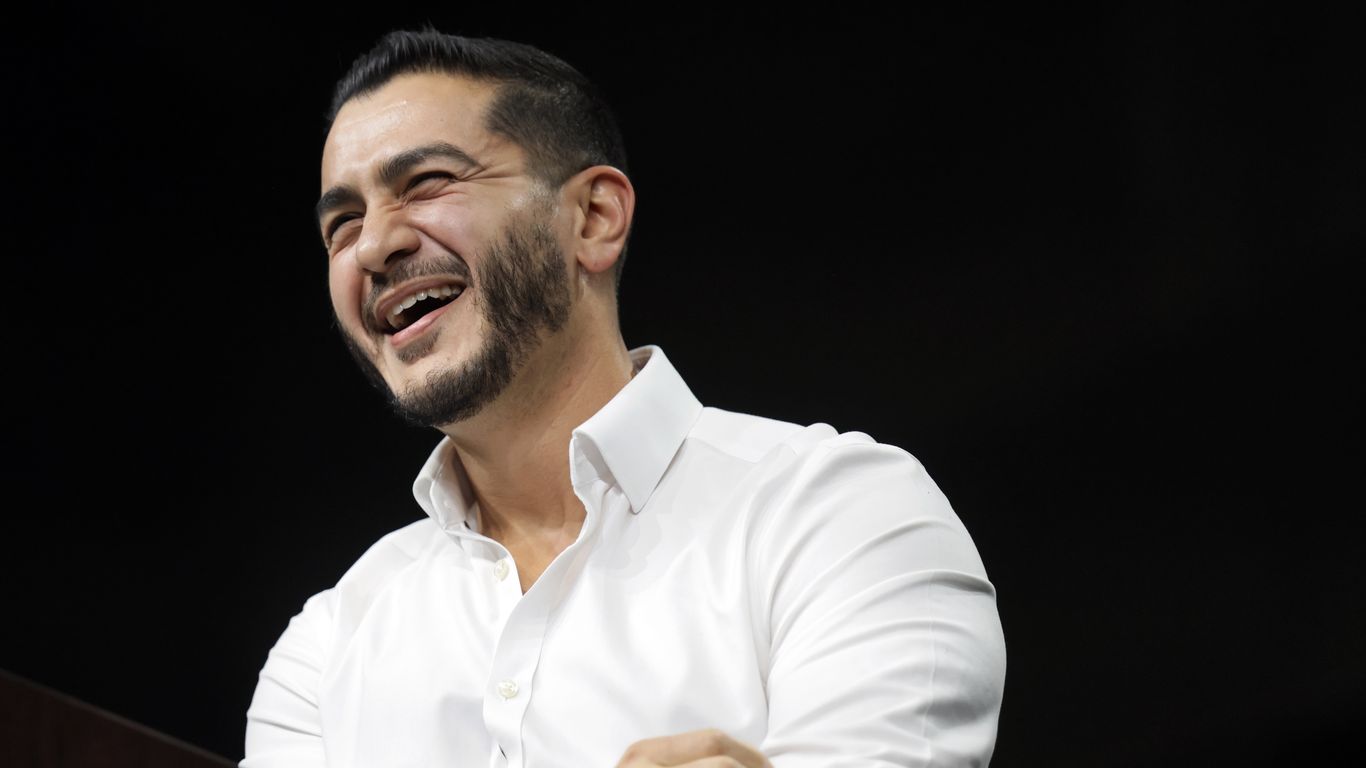
Democrat Abdul El-Sayed defeated Republican Mike Rogers in Michigan's closely watched U.S. Senate race, the Associated Press projected. He will become the nation's first Muslim senator. Why it matters: El-Sayed's win shows how an unapologetically progressive candidate can win in a battleground state President Trump carried just two years ago. The two candidates competed for the seat vacated by retiring Democratic Sen. Gary Peters, with Republicans hoping to flip a seat Democrats have held for decades. But the GOP failed in its endeavor — and already lost its Senate majority. The race took a stunning turn in its final days, when Democratic U.S. Rep. Haley Stevens, who narrowly lost the August primary to El-Sayed, endorsed Rogers . The move sparked furious backlash from Democrats and prompted several of Stevens' staffers, including her chief of staff, to resign. The big picture: El-Sayed, a former Detroit health director, ran on a progressive platform centered on Medicare for All, taxing billionaires, and reducing corporate influence in politics. His victory comes after a contentious Democratic primary and a bitter general election campaign that featured personal attacks over his background, medical credentials and Muslim faith. Rogers, a former congressman and FBI agent who narrowly lost a 2024 Senate bid, sought to portray El-Sayed as too extreme for Michigan . El-Sayed cast Rogers as a Washington insider aligned with Trump. Trump himself escalated the attacks in the final stretch of the race, questioning El-Sayed's loyalty to the U.S., and making unsubstantiated allegations of extremist ties. El-Sayed rejected the accusations. Between the lines: El-Sayed's win offers progressives a powerful new argument in the Democratic Party's debate over how to win back voters. Zoom out: Both candidates put affordability at the center of their campaigns, but offered sharply different solutions. El-Sayed called for universal health care, tackling medical debt and higher taxes on

North Korea appears to have used a fake job interview as part of its months-long preparations to steal $6.3 billion from Binance, the crypto exchange said Tuesday. Why it matters : The country's hackers are weaponizing both sides of the job market , posing as recruiters and job applicants to infiltrate companies and steal billions. Driving the news : Binance said one of its software engineers was contacted in September through a "legitimate job-hunting platform" by someone posing as a project director at a fictitious company. During the first-round interview, a fake HR representative conducted a live video call with the engineer and showed off a seemingly legitimate social media profile featuring personal photos and videos. The hackers waited until the second round — after building trust with the employee — to ask them to download an infected code repository as part of an interview assignment. Separately, another software engineer also downloaded a "tampered Homebrew installation" in June to install a popular AI coding tool onto their device. Binance's security team detected the installation and replaced the device, as well as rotated all credentials, but the engineer and colleagues were all exposed to the hacker. The intrigue: The fake interview was just one of several suspected North Korean attempts to compromise Binance employees. So far in 2026, Binance said it has detected and prevented 57 suspected North Korea-linked cyber incidents, including attempts involving fake job interviews and compromised software packages. Between the lines: North Korean hackers have spent years exploiting both sides of the hiring process. As job applicants, North Korean operatives pose as legitimate IT workers to land high-paying jobs at American companies. Those salaries are then funneled back to Pyongyang. Operatives are also increasingly posing as recruiters and prospective employees to lure in people who work at cryptocurrency firms in the hopes of tricking them into downloading

The Bose QuietComfort Headphones are 53% off ahead of Cyber Monday, saving you $190. Plus, shop a major discount on the newer second-generation model.

Affordability and small businesses’ economic woes feature heavily in the House race for Wisconsin’s third district After 18 years in business, Erin Klaus is closing her storefront, a handmade artisan market in downtown Eau Claire, Wisconsin, at the end of the year. She opened Tangled Up in Hue amid a recession, during a time when downtown was “kind of a ghost town”, weathering construction and the pandemic. But the current economic crisis proved too much. She’s seen a downward trend in sales for two years, and was dipping into her own pocket from her other job, as the executive director of business non-profit Downtown Eau Claire Inc, to pay staff. Continue reading...

President Trump extolled his administration's Reflecting Pool project , dug up debunked claims of vandalism and applauded the new White House helipad in a Monday pre-Election Day speech. The big picture: Trump's deep focus on remaking the nation's capital has taken center stage as the clock ticks down to midterm elections. Driving the news: "The pool is now better and more beautiful than it's ever been before, and we're very proud of it," Trump said in Monday's speech, adding, "We went through a lot with vandalism." But Trump's own Justice Department dropped vandalism charges against former Olympian David Hearn , whose case was later killed by a judge after prosecutors acknowledged that faulty installation caused the damage to the Pool. Trump added the administration was "giving serious thought" to renaming the Lincoln Memorial Reflecting Pool to the "Trump Reflecting Pool," before later saying he was kidding. Throughout the speech, he held up printed images he identified as pipes, joints and other Pool materials. He also showed an image that appeared to show "8647" sprayed onto the base of the emptied pool, claiming "that was a Comey phrase" — a reference to his former FBI director and top foe. Zoom out: He also discussed his White House renovation projects, including the recently installed helipad and Scotts Miracle-Gro's lawn restoration after the UFC fight on White House grounds. Friction point: Trump's projects, including his D.C.-area arch and White House ballroom, have been broadly panned by Americans in polling. "This project should be a project that unites all Americans," Trump said Monday of the newly reopened Reflecting Pool, which stood empty for an extended period earlier this year. Zoom in: His pre-election pitch at times sounded more like a typical rally speech, where he touted his immigration policies and war with Iran while slamming Democrats as "a party that hates America." This is the last day before the midterm elections, the most important midte

The top Senate GOP super PAC has nearly tripled its spending on streaming and social media platforms this election cycle to more than $200 million, Axios has learned. Why it matters : In a record cycle for ad spending, more political money is shifting to streaming, where super PACs have greater freedom to target voters, bargain and experiment — but platforms have more power to set the rules. In some states, streaming and social media have swallowed half of the Senate Leadership Fund (SLF) budget, according to a source familiar with the group's spending. SLF's $200M+ total for the 2026 cycle (up from $71M in 2024) doesn't include tens of millions of dollars funneled through the SLF-linked Texas PAC. The other side: The top Senate Democratic super PAC declined to provide a dollar figure for their spending on streaming. "Senate Majority PAC invested more this cycle in digital communications than any previous cycle, running digital campaigns in 12 states," SMP communications director Lauren French told Axios. Zoom in : Streaming and social platforms offer campaigns the power to target more specific audiences compared to traditional broadcast, and make it easier to measure the impact. "Its way more surgical than a linear broadcast buy," Zack Roday, managing director at Think Big, told Axios. But platforms can also set their own rules around which types of ads they want to accept. Some, like Netflix and TikTok, don't allow any candidate or issue ads . Republicans have complained about restrictions on ads that include transgender issues on Disney-owned platforms. Between the lines: Super PACs often pay multiple times what a campaign pays for ads on broadcast TV and radio because of laws ensuring candidates get the lowest rates. Online, super PACs can negotiate directly — and use their fat budgets and sprawling election maps as leverage. SLF works with platforms like SiriusXM, Paramount, Hulu, YouTube and others to lock in discounts based on their overall spending plans, ac

The world seems convinced the end is near — and social media is amplifying that belief, convincing people to stock up on food, water, generators and other items. Why it matters: Online chatter is fueling viral predictions of societal collapse amid growing unease about the future. But you're probably not going to die tomorrow. What they're saying: Michael Mills, a researcher at the University of Kent who has studied doomsday prepping for more than a decade, told Axios that modern doomsday fears aren't necessarily about a specific apocalyptic scenario. "It's an overall reaction to uncertainty in most cases," Mills said. He noted that whereas Cold War-era survivalists were often focused on nuclear conflict, modern preppers worry about terrorism, climate disasters, geopolitical threats and emerging technologies. He described the modern mindset as a "multifaceted concern with uncertainty." State of play: Viral posts have repeatedly urged people around the world to stock up on food and water, following similar recommendations from various governments and warnings from former FBI Deputy Director Dan Bongino. The situation has gotten so buzzy that President Trump was asked about it in an interview Monday. He said Americans don't need to stock up because the U.S. is "in good shape. We're strong. We have a great military and we will not have those kind of problems." Separately, conservative commentator Tucker Carlson — a man with 17.9 million followers on X alone — published a lengthy post Sunday evening alleging that Israeli Prime Minister Benjamin Netanyahu is pressuring Trump to launch renewed attacks on Iran after the midterms, potentially with a nuclear weapon. For what it's worth, Carlson has been predicting similar doomsday scenarios for a while, and he's been wrong before. And the Pentagon's newly reported plan calls for U.S. military bases to prepare to operate without outside support for at least 90 days, terrifying some people into asking , "What's the government k

Concerns about datacenters and high energy bills could help Democrats clinch races in Ohio, Arizona and Michigan In Arizona, where summer temperatures regularly hit triple digits, air conditioning can be a matter of life and death. This year, as the state recorded its hottest summer on record , Diali Avila’s monthly power bill went up to $400, the highest it has ever been. Avila, the state director for Climate Power, an advocacy group, said the upcoming elections offered voters an opportunity to elect candidates who can ease their utility bills. “People are making the connection: they’re looking at their electricity bills that they get at the end of the month, and then they’re looking at their ballot, and they’re [realizing], this is my moment to take action,” she said. Continue reading...

As governments urge public to prepare for cyber-attacks and natural disasters, US focuses on military preparation Governments around the world are spearheading new campaigns to encourage the general public to be prepared for a host of emergencies that could disrupt essential services, including cyber-attacks and natural disasters. The United States, however, is taking a different approach: focusing on military preparation, as opposed to the general population. With an influx of global messaging regarding emergency preparedness, the Guardian spoke with emergency experts about the Pentagon’s latest initiative and the state of US disaster preparedness at large. Continue reading...

“Heat” director Michael Mann was hospitalized this weekend after an accidental gun discharge at a gun range in Los Angeles.

A fight over whether the 2030 Census should stop asking about race and ethnicity has drawn more than 100,000 public comments, according to advocates tracking the federal docket. Why it matters: The change could weaken the nation's most complete snapshot of race — data used in civil rights enforcement and redistricting — just as America grows more multiracial. Catch up quick: The Census Bureau proposed in September to stop asking Americans about their race and ethnicity on the once-a-decade census. The Census Bureau says a shorter form could encourage more people to respond, while greater use of existing government records would reduce the need to ask certain questions. The proposal wouldn't end federal race data: Census could obtain demographic data from government records and other sources and ask about race and ethnicity on the American Community Survey (ACS) and other surveys. But civil rights advocates say that would give the federal government more power to determine people's race and ethnicity , rather than the respondents, leading to inaccurate data. State of play: Census extended the comment deadline from Oct. 13 to Nov. 2. An outside analysis of 52,424 published comments through Oct. 16 found 86% opposed the overall proposal, while 88% addressed removing race and ethnicity questions. This week, an advocacy alert citing Regulations.gov said the docket had topped 108,000 submissions . These comments are not meant to be treated like a survey or poll, but show that people who feel strongly enough to comment tend to be opposed. What they're saying: "If you've ever fought for political maps or explained why race or data matters...it is vital that you tell the Census Bureau what losing that information is going to mean to your work and to your community," said NC Counts Coalition executive director Stacey Carless. The big picture: Race has appeared in some form in every decennial census since 1790, but how Americans identify themselves has changed dramatically. Th


Legal experts welcome judge’s rejection of firing of James Comey’s daughter prosecutor but warn an appeal is likely A recent legal ruling against an effort to fire the star-prosecutor daughter of a former FBI chief targeted by Donald Trump could send a strong message about politicized firings – and influence other judges weighing similar cases, legal veterans said. Judge Jesse Furman ruled this week that the Department of Justice’s firing of assistant US attorney Maurene Comey without cause was unlawful. Comey, the daughter of former FBI director James Comey, successfully litigated numerous high-profile cases during her tenure at the southern district of New York, including guilty verdicts against Ghislaine Maxwell and Sean “Diddy” Combs. Continue reading...

You won't need to stay up all night Tuesday to spot a big Democratic wave in the 2026 midterm elections . But it could take days — or even weeks — to know whether Republicans have survived a smaller one and held on to the House or Senate. Why it matters: A handful of early results in key states and congressional districts will tell us whether Democrats are headed for a landslide or disappointment. What we're watching: Florida, Florida, Florida. Most polls close at 7pm ET, and the state counts quickly — ready for release when the Panhandle finally calls it a night an hour later. At 8:01pm , refresh your browser and watch FL-14. The great mid-cycle redistricting wars transformed this Tampa-based district from Harris +8 to Trump +11. If Democratic Rep. Kathy Castor survives, Republicans can all but kiss their majority goodbye, according to party strategists. Next up is FL-25. The country's most expensive general election race is playing out in a district that went from Harris +4 to Trump +9. If Democratic Rep. Jared Moskowitz's race is close — or too close to call early in the night — House Republicans can keep hope alive. While you're at it, this is a good time to check on South Carolina's Senate race, where polls close at 7pm and the state counts relatively fast. If Sen. Darline Graham loses to Annie Andrews in the Trump +18 state, Senate Republicans can say goodbye to their majority. (And they'll be sweating if it's close.) "Underperformance is rarely isolated," said Jason Thielman, executive director of the National Republican Senatorial Committee in 2024. "If you see the GOP underperforming early in the East, it is likely going to continue as you move further West." At 9pm, check in on Virginia: The commonwealth's polls close at 7pm, but historically tight races often aren't called until the 9pm hour. If Democrats flip VA-01, a Trump +5 seat, they're in for a very good night. If they flip VA-05, a Trump +12 seat, they're in for a great night. Between the lines: VA

Immigrants at Texas detention facility, protesting against harsh conditions, say they face threats of force-feeding Members of Congress sent a scathing letter to federal immigration officials this week demanding answers about conditions inside a Texas immigration jail, as detained immigrants on a prolonged hunger strike claim officials are retaliating against them and threatening them with force-feeding. A group of seven congressional Democrats sent the letter earlier this week to Markwayne Mullin, the Department of Homeland Security (DHS) secretary, and David Venturella, the Immigration and Customs Enforcement (ICE) acting director, protesting about the treatment of hunger strikers. Continue reading...

Democrats weighing 2028 presidential bids are piling onto the AI hate wave in their messaging, per an analysis shared exclusively with Axios. Why it matters: Democrats are turning AI anxiety into a political rallying cry ahead of 2028, while Republicans remain divided over how to respond. Driving the news: 2028 contenders including Gavin Newsom, Alexandria Ocasio-Cortez, Kamala Harris, Pete Buttigieg, Jon Ossoff and more have all increased their AI commentary in recent months, per new research from Upswing, conducted on behalf of Reset Tech, a nonprofit advocating for tech regulation. Among 21 Democrats named as potential 2028 contenders, tech mentions on X nearly quadrupled, and press release mentions nearly tripled since the start of the year. Tech is now the second-most common topic in releases, trailing only jobs and the economy, with the highest concentration of mentions around data centers and phone bans in schools. To gather the data, Upswing analyzed nearly 30,000 X posts from 38 accounts associated with 21 potential presidential contenders and 3,868 press releases from 16 officeholders between Jan. 1 and Oct. 15. Between the lines: Democrats are galvanizing around AI as a winning issue. Democrats are "taking a meaningful advantage" on AI after the topic was initially seen as a "jump ball" for both major political parties, Rishi Bharwani, U.S. director of Reset Tech, told Axios. AI regulation has gone from the back burner to a top issue over the last six months, he added. While the economy is still what matters most to voters, AI is increasingly part of the financial conversation as it dominates markets and the macroeconomic backdrop. Zoom in: It's not just messaging. While data center bans have been proposed in Democratic- and Republican-majority states, New York is so far the only one to pass a moratorium. House Democrats drafted a resolution opposing government bailouts for AI companies if the so-called "bubble" bursts. There are also a variety of legisla
Former FBI Director James Comey's lawyers will ask a federal judge to block the Justice Department from pursuing its third criminal case against the outspoken critic of President Donald Trump and frequent target of the Republican’s outrage

The people at the frontlines of the ongoing barrage of AI-enabled cyberattacks are being pummeled with attacks, vulnerabilities and false alarms. Why it matters: Humans are still at the frontlines of a fight enabled largely by AI — and they're struggling to wade through mountains of threat data to determine who's been hit and which attacks pose a real danger to companies. What they're saying: "The last month has been the longest year of my life," Justin Timothy, threat intelligence consultant at GuidePoint Security, told Axios. Even before "Black October," Timothy was already swamped and dealing with hacker gangs that returned from a seasonal summer lull. These groups specialize in ransomware, essentially attacking the networks of an institution and holding it hostage. While AI is playing a role in many new cyberattacks, the ransomware scourge has already been shutting down pipeline systems, hospitals, education software and other essential services for years. It's only expected to get worse this year as powerful new AI systems are amplifying the capabilities of attackers faster than defenders can insulate vast corners of the unprotected internet. The big picture: The people companies call when they're hacked are being swamped, piling onto the persistent burnout that has plagued the industry. Troy Bettencourt, who leads Palo Alto Networks' global digital forensics and incident response practice, told Axios that demand for his team's services has climbed by double digits over the last six weeks. Unlike past surges tied to historically harmful attacks like SolarWinds , this year's workload has been relentless. "It's just a continuous grind that increases," Bettencourt said. The same heavy workload is happening across the industry, and even Palo Alto Networks' incident response subcontractors are at max capacity, he said. Investigations that could once be handled by a single consultant now require teams of five to 20 people, he said. The company is also pulling employe

Binance halted trading Thursday after hackers allegedly linked to North Korea stole more than $6 billion, the largest crypto hack in history. Why it matters : The attack comes after a wave of high-profile cyber intrusions and data breaches during "Black October," when a series of security incidents and AI -discovered bugs triggered fears of a global crisis. Driving the news: Binance co-founder Yi He said on X that the crypto exchange had suspended deposits and withdrawals. "User funds are safe," she wrote. "Binance will cover all hacking losses." An estimated $6.3 billion were drained from wallets in the incident, Binance said , although the exchange and partners managed to freeze about $3 billion that can potentially be recovered. "This is unprecedented," said Kevin March, a co-founder of JPEG Trading, a cryptocurrency trading firm that closely tracked the hack to monitor market conditions. An initial investigation found linked the hack to a compromised laptop from one Binance engineer. That access allowed an attacker to gain access to Binance's systems to make withdrawals, the exchange said. Zoom in : Researchers from TRM Labs and Pangolin Intelligence found that the attack appeared to be the work of a North Korean hacking collective. "This was absolutely North Korea," Nick Carlsen, a senior TRM investigator, told The Wall Street Journal . Representatives of North Korea have previously denied allegations of hacking crypto exchanges. The country has turned hacking and scams into an industrial-scale scourge, focusing on crypto heists and a widespread practice of tricking Western companies into hiring North Korean workers . A Binance spokesperson said the exchange's security teams are "reviewing all relevant information with urgency." The big picture: If estimates hold up, the suspected Binance hack would be the biggest crypto attack in history. In 2025, North Korea-linked hackers stole about $1.5 billion worth of crypto from the Bybit exchange. Between the lines : C

After his far-right coalition lost 11 seats in the election, Israeli Prime Minister Benjamin Netanyahu is trying to discredit the results by claiming there was mass voting fraud in Arab communities. Why it matters: Netanyahu appears to be trying to spook the opposition bloc out of cooperating with Arab parties to form a new government. But the opposition is concerned he has an even more ambitious goal: To prevent the results from being certified at all. That would block the swearing in of a new parliament, in which he would lose his majority. Driving the news: Netanyahu and his Likud party started the campaign to delegitimize the Arab vote days before the elections. Half of Netanyahu's social media posts on Election Day cast suspicion on the unprecedented turnout in Arab communities, an apparent attempt to drive his supporters to the polls. Arab voters cast ballots in historic numbers, winning 19 seats between their two parties. On Wednesday, Netanyahu's Likud party issued a statement claiming the "elections were stolen" by the Arab parties through bribes and fraud. Its claims were based on the arrest of three activists from the Arab Ra'am party who were suspected of paying a small number of voters in one of the Arab cities. The Israeli police said there was no evidence to support Likud's claims of a "stolen" election. Behind the scenes: The situation escalated dramatically on Thursday when a letter sent to the director of the Shin Bet domestic security agency was leaked to Israel's Channel 12. It was written by the supreme court judge who heads the Central Elections Committee. The judge ordered the Shin Bet director to immediately investigate suspicions of election interference by foreign countries and submit conclusions within a week. Shortly after the letter leaked, Israeli media outlets identified Qatar as the country in question. The allegation is that it funneled money to one of the Arab parties to propel turnout in their communities. Over the past year, sever

Call it a new Apollo moment: Rocket launches from Cape Canaveral, Florida, are now outpacing those of the Cold War-era space race that first made the launch site famous. Why it matters: U.S. leaders are rushing to grow the number of rocket providers at America's busiest spaceport amid a space and arms race with China. Beijing plans to send a crew to the Moon by 2030 or sooner and is rapidly building up its satellite and rocket fleets. What they're saying: "There's nothing really comparable in the background of my career to what we're experiencing today," Space Force Col. Brian Chatman, the commander of Florida's rocket range, told Axios in an exclusive interview. Behind the scenes: The Cape is busy expanding to meet President Trump's mandate for the nation to support 1,000 annual launches by 2030. Chatman said with all the contractors on base, inspection backups and parking chaos abound. A rundown of some major projects Chatman is overseeing: SpaceX is expanding its footprint on the Cape for its Starship super heavy-lift launchpads. Newcomers Relativity Space and Stoke Space are setting up their facilities and are aiming to launch rockets for military and commercial customers sometime in late 2026 and 2027 . NASA is preparing for next year's Artemis III testing missions, and the Artemis IV voyage that aims to return astronauts to the Moon by 2028. Blue Origin is rapidly rebuilding its launch complex after its New Glenn rocket exploded in May. Jamie Draper, the Cape Canaveral Space Force Museum's director, told Axios there's been "boom and bust" cycles throughout the base's history. "We're definitely in one of those boom cycles right now," Draper said. By the numbers: Last year, Space Launch Delta 45, the military command overseeing the Cape, supported 109 orbital liftoffs from the base — the most in its history. In April, Space Launch Delta 45 oversaw five different rocket launches for unique missions, breaking a record set at the height of the U.S.-Soviet space rac
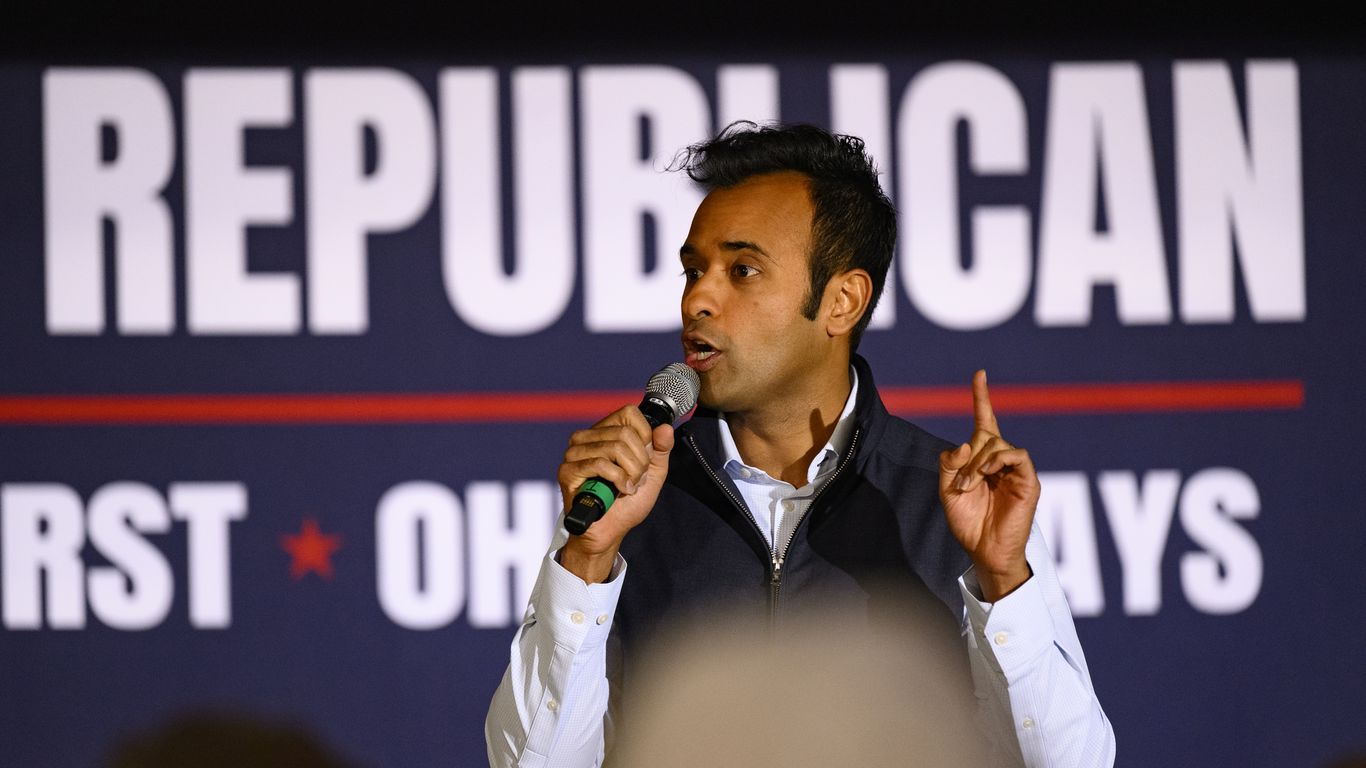
Republicans fear that Vivek Ramaswamy 's explosive attack ad featuring his opponent's estranged mother could cost them the Ohio governor's race, based on new internal polling that shows him falling further behind, Axios has learned. Why it matters: The poll's findings underscore Republicans' anxiety over Ramaswamy's decision to air the deeply personal attack on Democrat Amy Acton despite warnings from some fellow Republicans that it crossed a line. Driving the news: The private poll, commissioned by a Republican group and obtained by Axios, found Acton leading Ramaswamy by eight points — up from a two-point lead in the same poll earlier this month, before the ad began circulating on Oct. 19. The ad "is having a significant effect on the gubernatorial race," a memo attached to the poll states. Catch up quick: The ad at the center of the controversy features Donna Arthur, Acton's estranged mother, who accuses her daughter of lying about her childhood and urges Ohioans not to vote for her. Acton has said she was sexually abused by her stepfather when she was 12 and that her mother sided with her abuser. The stepfather was charged with sexual assault but fled to Pennsylvania, where he died in 2004 as a fugitive. Acton and her brother were removed from their mother's custody. Acton has said she hasn't seen her mother since 1978. Zoom out: As Axios first reported , Ramaswamy's campaign treated the ad as a game-changer in the campaign for governor, committing $4 million to airing the commercial statewide despite warnings from other Republicans that it could backfire. Ohio Gov. Mike DeWine (R), who worked closely with Acton when she was the state's health director, said that airing the ad was wrong and urged Ramaswamy to take it down. But President Trump and Vice President Vance backed Ramaswamy. Vance told the bipartisan critics of the ad to "stop whining." The intrigue: The new poll done for Republicans indicates that the ad was indeed a game-changer — just not the type R

The cybersecurity world braced for catastrophe after AI uncovered critical flaws in the web's foundational code , but the anticipated wave of automated attacks has surprisingly struggled to get off the ground. Why it matters: Millions of hacking attempts have yielded few successful attacks, an apparent lucky break due to the degree of difficulty of building attacks on the bugs. The defense work at many companies to address the issue also appears to have helped. The last week has unfolded in ways that remind some researchers of the Y2K phenomenon, a software problem in 1999 where warnings of Armageddon helped rally companies to engineer a solution in time. Driving the news: Security researchers say the PHP vulnerabilities that prompted widespread panic last week have proven unusually difficult to exploit, despite a flood of attempts to develop working attack code. Yet the difficulty of exploiting PHP shouldn't be mistaken for evidence that AI-powered hacking isn't a serious threat, Samantha Lewis, head of threat intelligence at Armadin, told Axios. "We don't have to wait another two years before this happens [again]," she said. "It could be three hours from now that the next one of these launches." Between the lines: The sheer volume of AI-discovered bugs means the next era of cybersecurity will be defined by resilience — how quickly a company can detect an intruder, contain the damage and recover. "This is the worst outlook I've ever had, and it also is the most interesting thing I've ever seen in my life," ExtraHop CEO Greg Clark told Axios. "This stuff actually works, it's going to change everything." Rubrik CEO Bipul Sinha warned that the world is in an "era of cyber tsunami," noting that "it will wash over everybody, nobody will be 100% safe." Zoom in: The shift to building resilience doesn't require throwing out the security playbook. Instead, companies should double down on basic cyber principles, such as using multi-factor authentication, Justin Timothy, thre