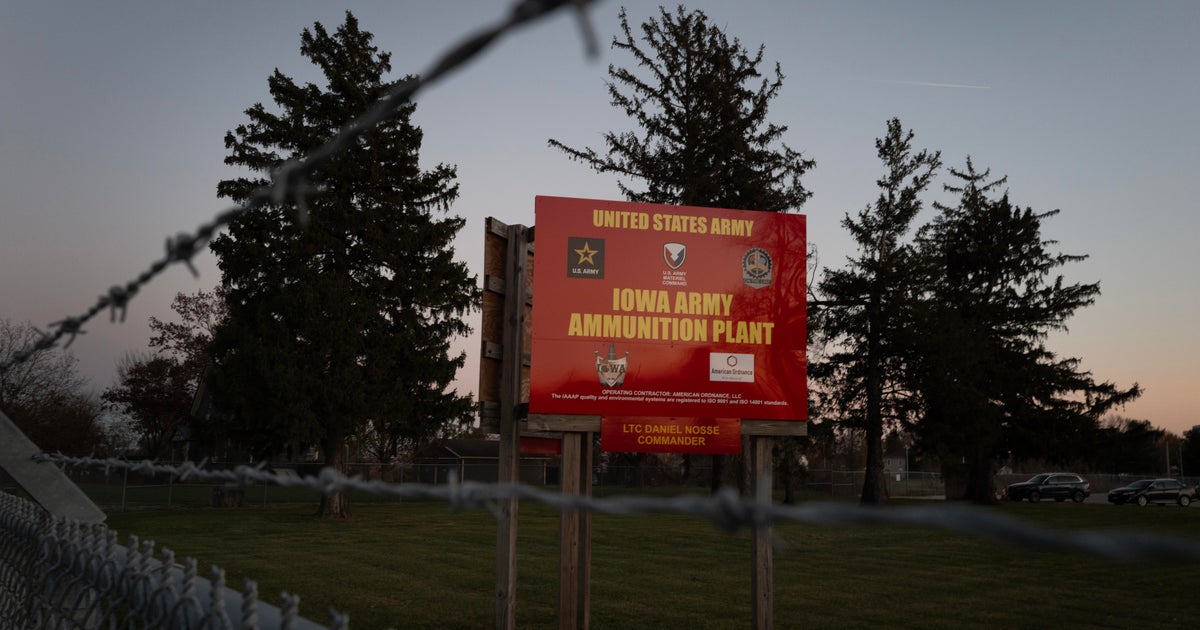
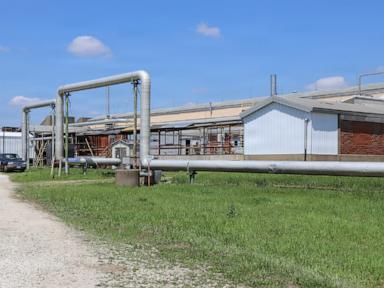
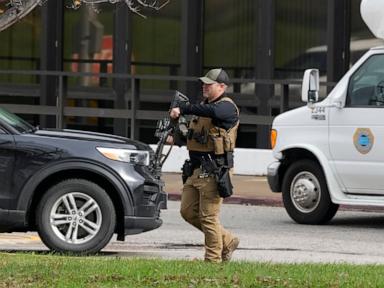
The U.S. Army's plan to detonate five tons of unstable explosives containing lead azide at a munitions plant in Iowa has been put on indefinite hold by a federal court Friday.
Results for “iowa”
Without funding deal, the government could shut down next month, Silicon Valley and national security community bump heads on efforts to restrict U.S. tech to China, Army delays detonation in Iowa.
The U.S. Army has delayed the detonation of about 5 tons of outdated bomb-making material in Iowa following residents' concerns about an expected cloud of lead dust.
The Army postponed the controlled detonation of 68 drums of lead azide at the Iowa Army Ammunition Plant in Middletown, citing a temperature drop.
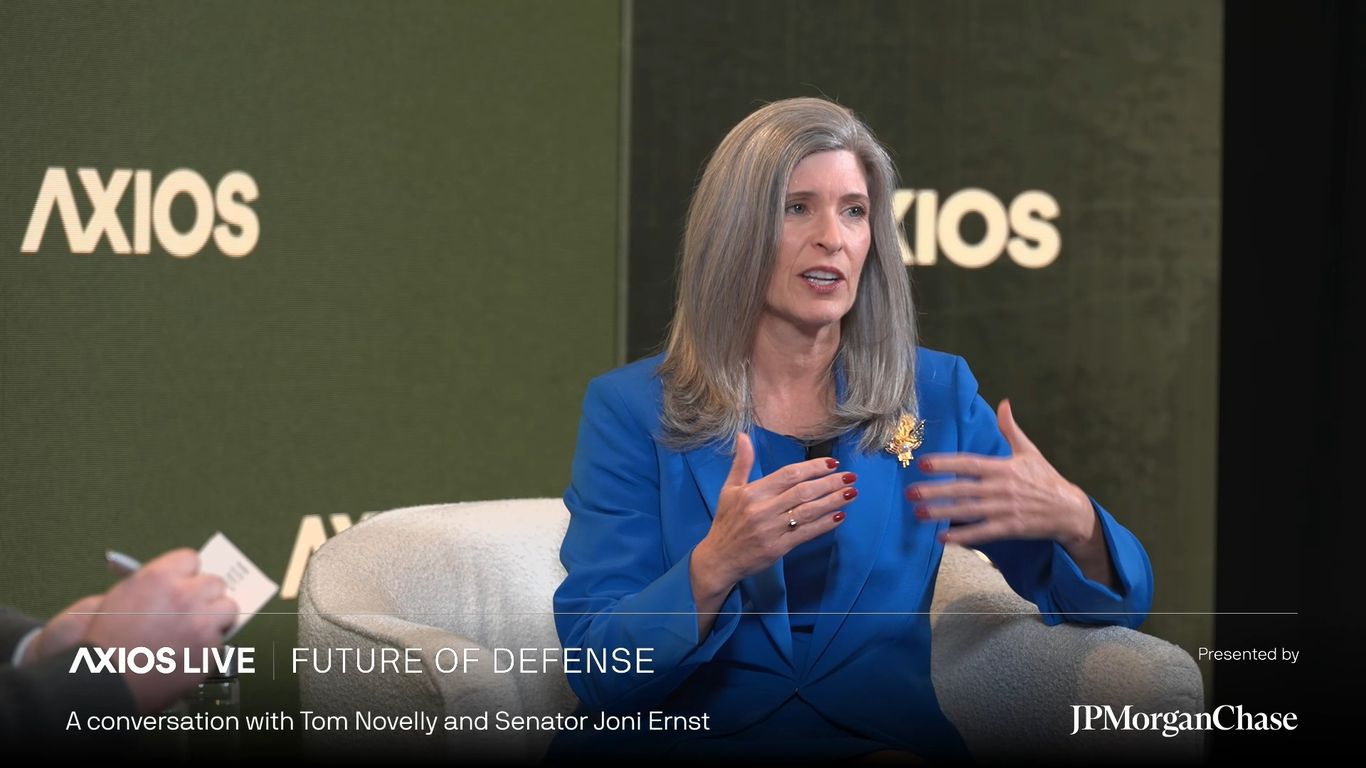
Sen. Joni Ernst (R-Iowa) said "a lot of people would be able to guess" if she regrets voting to confirm the embattled Defense Secretary Pete Hegseth, during Axios' Future of Defense Summit Thursday. Why it matters: The retiring Iowa senator, who served in the military for more than two decades, has been notably skeptical of Hegseth, and hasn't always been in lockstep with the Trump administration. Catch up quick: Despite her hesitancy over his nomination, Ernst ultimately voted to confirm Hegseth . However, she's continued to question him throughout his tenure. She recently questioned whether the embattled Pentagon leader has been "truthful" about the status of the Iran war, which she said Iowans rejected in the midterms. "If there is deception coming from our Pentagon and being transmitted to the president, I would want to know that," Ernst told reporters earlier this month. Driving the news: "There is very little transparency right now with what is being discussed between the White House and the Department of War," Ernst said of Pentagon communication over the war in Iran in a conversation with Axios' defense and space reporter Thomas Novelly. "As Congress, we would expect that we would be read into some of those conversations, and unfortunately, we have not been read into those conversations," she added. State of play: Ernst sits on the Senate Committee on Armed Services, where she chairs the Emerging Threats and Capabilities subcommittee. She predicted in her interview with Novelly that given the "not even hidden animosity" between Democrats and Hegseth, "it will be very difficult" for new Senate Armed Services Committee leadership to receive information. Editor's note: This is a breaking news story and will be updated.
Officials recommend that residents in path of expected toxic plume vacate area, and some schools will be closed Plans by the US army to detonate about 5 tons of bomb-making chemicals that have become unusable and might explode if moved have residents in south-east Iowa worried that a cloud of lead dust could cause environmental contamination and health problems. The detonation at the Iowa army ammunition plant is scheduled for Friday, and officials recommend that some residents in nearby Middletown begin vacating the area that morning. If they can’t leave their homes, they should stay inside and keep windows and doors closed. Continue reading...
The Army asked Middletown, Iowa, residents to temporarily evacuate Friday before it detonates 68 drums of lead azide at the Iowa Army Ammunition Plant.
Republican voters in four early 2028 primary states have favorable views of Israel by wide margins and have negative opinions of three leading right-wing critics of the Jewish state, according to a new poll by a national GOP consulting firm. Why it matters: The poll challenges the notion that Republican opinion toward Israel is fracturing significantly, and points to a potential disconnect between GOP voters' attitudes and the sentiments of those who often draw the most attention online. The survey, conducted by OnMessage Inc . for the Combat Antisemitism Movement 's political arm, essentially provides a roadmap for pro-Israel Republicans' messaging ahead of the 2028 presidential campaign. It seeks to cast the right's leading critics of Israel — Tucker Carlson, Candace Owens and Nick Fuentes — as liabilities in the GOP primary. Zoom in: After the midterms, Vice President Vance called on the U.S. and the GOP to "change our relationship to Israel," elevating the nations' longtime partnership as a 2028 campaign issue at a time when Vance is eyeing a presidential bid. Israel is supported by 68% of Republican voters in Iowa, New Hampshire, Nevada and South Carolina, according to the survey, a result similar to findings by Gallup and Pew . 17% disfavored Israel. 78% said the GOP's "relationship with Israel" makes them more likely to vote Republican. Large majorities also agreed with pro-Israel messages. In contrast , 53% of those surveyed said they disapprove of Carlson, and 30% approve. But among voters under 45 years old, Carlson's approval/disproval ratings were tied at 46%. 49% of the Republicans surveyed disapproved of Owens, while 23% approved. Fuentes, the least-known of the three media figures, was viewed unfavorably by 25% and favored by 13%. Among self-described MAGA Republicans, 22% approved and 23% disapproved of him, however. "The fringe messengers are underwater," says a slide deck for the poll, which was conducted ahead of the Combat Antisemitism Movement's
Residents are raising concerns about plans by the U.S. Army to detonate about 5 tons of bomb-making chemicals at an ammunition plant in southeast Iowa
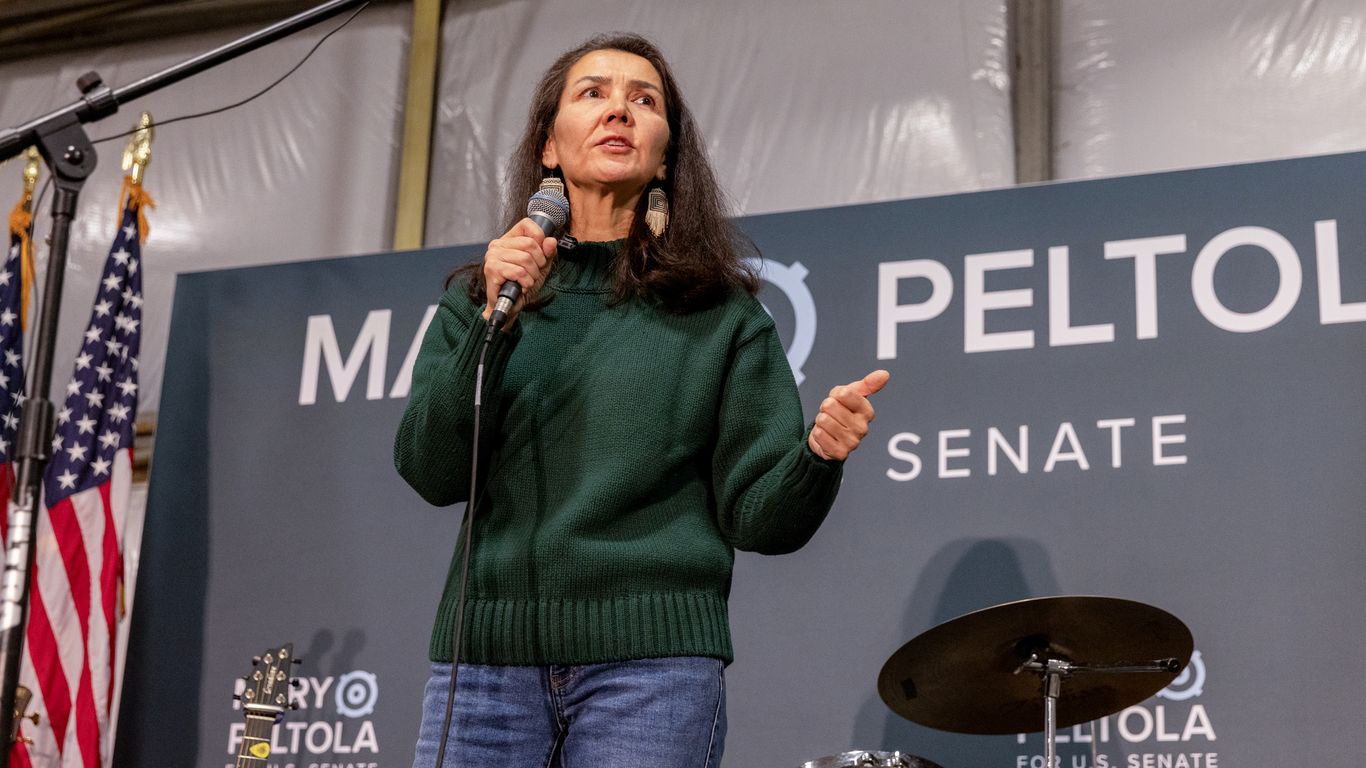
Former Democratic Rep. Mary Peltola has defeated two-term Republican Sen. Dan S. Sullivan , flipping another GOP-held seat in a state President Trump carried comfortably in 2024, the AP projects. Why it matters: Peltola becomes the first Democrat elected to the Senate from Alaska since 2008, extending a historic blue wave in a race marred by controversy. Her victory comes in a state Trump carried by 13 points in 2024, underscoring the extraordinary reach of the Democratic backlash against his second term. It also delivers another blow to Republicans after sweeping Democratic victories in states including Texas, Ohio, Iowa and South Carolina. State of play: The race drew scrutiny after The New York Times reported allegations that Democratic operatives recruited another candidate named Dan Sullivan to draw votes from the incumbent. It took a bizarre turn in its final days when the Times reported that people tied to Peltola's campaign were among those who allegedly helped draft the other Sullivan to run. Peltola's campaign denied involvement, but the reporting prompted Alaska's Republican governor, Mike Dunleavy, to order an investigation into whether state laws were broken. The Justice Department also launched a criminal investigation and subpoenaed people connected to the alleged effort. No one involved in the race has been charged with a crime. On the campaign trail, the candidates clashed over the cost of living, the Iran war and Alaska's energy industry, with Peltola challenging Sullivan's record in Washington. Peltola campaigned on her signature "fish, family and freedom" message, emphasizing affordability, protecting Alaska's fisheries and putting the state's interests ahead of party politics. Trump traveled to Alaska in October to rally support for Sullivan, whom he praised as one of Washington's most respected senators. Sullivan embraced the president's support , betting it would energize Republican voters despite their party's political headwinds. The big pic
Progressives should be careful not to get comfortable. There is work to be done Democrats had a great midterms result. Big wins in Ohio, Georgia, Iowa, Maine and Texas show the potential for a majority coalition that reaches well beyond traditional liberal strongholds. That’s a good sign for the party’s chances come 2028. Not surprisingly, the story of the midterms was “affordability”. Surveys showed that the economy was the top issue for the election, with a third of voters citing cost-of-living concerns as their number one issue, and nearly 40% of voters claiming their personal financial situation has worsened over the past year. It’s clear that voters don’t approve of Donald Trump’s economic management. Continue reading...
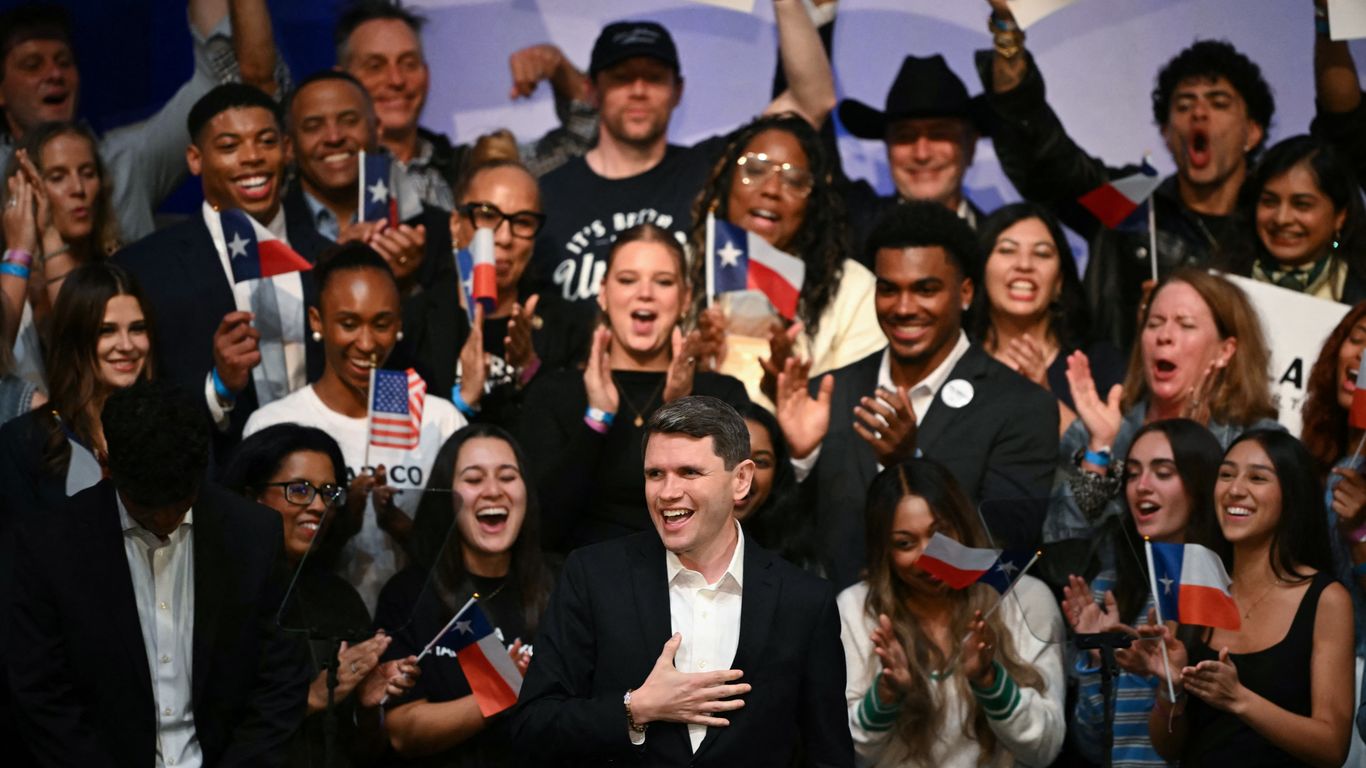
Democrats swept into power last week as voters also embraced tougher criminal penalties and restrictions on bail. Why it matters: Six years after the George Floyd protests, Democrats won big without promising a return to sweeping 2020-era reforms. Some even adopted border-security rhetoric associated with Republicans. Democrats gained at least 12 state legislative chambers and won governorships in Georgia, Iowa, Nevada, Ohio and Texas. By the numbers: Voters approved all six statewide ballot measures Ballotpedia tracked that proposed tougher sentences, criminal penalties or bail restrictions in 2026. Five passed Nov. 3 in Indiana, Louisiana, Tennessee and Colorado. Alabama approved the sixth in May. Four expanded when courts could deny or restrict bail. Two increased penalties, including for fentanyl offenses and child sex trafficking. The shift: Some Democratic winners embraced tougher border-security language while opposing Trump's immigration crackdown. Texas Sen.-elect James Talarico called himself a "border security Democrat ," criticized former President Biden for failing to secure the border and said there needs to be comprehensive immigration reform. Michigan Sen.-elect Abdul El-Sayed , a progressive, said days before the election : "We needed tougher border security." He also criticized Trump's use of ICE. Zoom in: Colorado voters backed Democrats, tougher penalties and limits on federal immigration enforcement. That included electing Phil Weiser (D) as governor and approving tougher fentanyl penalties and life without parole for child sex trafficking. They rejected a measure requiring police to notify federal immigration authorities in certain cases involving violent crime suspects or people with prior felony convictions whose immigration status was unlawful or uncertain. Weiser and state Democrats are now weighing changes to the fentanyl measure, arguing it falls short on promised addiction treatment. Yes, but: Virginia voters approved automatically resto
The blue wave, while a rebuke of Trump’s policies, was also a referendum on the party’s status quo On election night I stood in a crowd at Harlem Tavern, a restaurant in New York City, at the electoral party for Darializa Avila Chevalier, the Democratic Socialists of America (DSA) member and congresswoman-elect from New York’s 13th congressional district. The crowd cheered as what came to be called the “blunami” rolled in: Iowa blue, Kansas blue, Talarico in Texas, Abdul El-Sayed in Michigan, House, Senate, gubernatorial races overwhelmingly going for the Democratic party. The victories were a clear rebuke of Trump’s politics, but also a referendum on the Democratic party’s own centrism that is complicit in the violence of masked men hunting immigrants, the funding of a genocide and the denial of healthcare to citizens of the world’s wealthiest country. Heba Gowayed is an associate professor of sociology at CUNY Hunter College and Graduate Center and author of the book Refuge: How the State Shapes Human Potential . Continue reading...
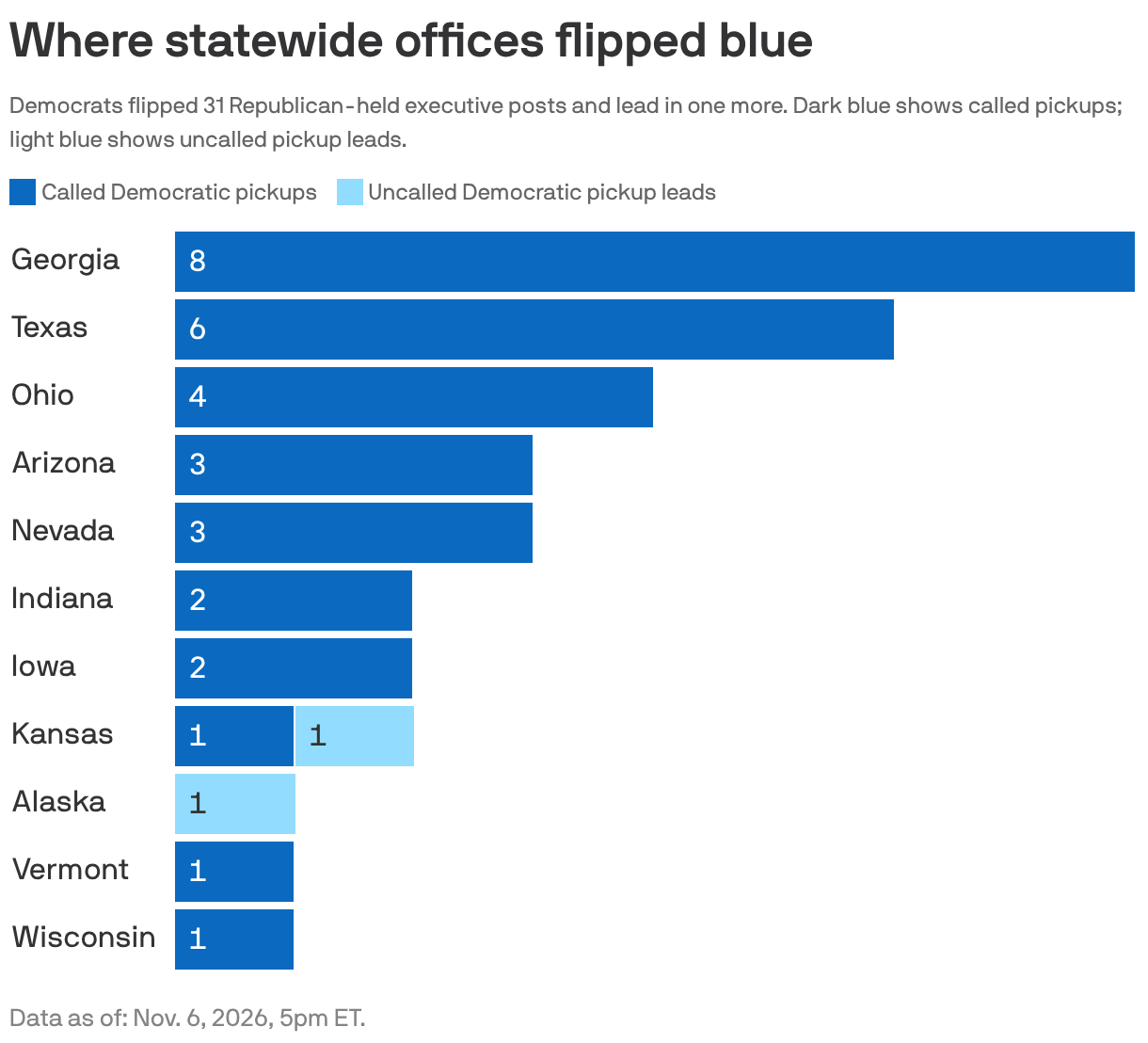
Single-holder executive offices only; excludes courts, commissions and federal offices. Data: Associated Press; Axios analysis; Chart: Andrew Pantazi/Axios Democrats' midterm gains extended deep into the machinery of state government: They swept every statewide executive office on the ballot in Texas, Georgia, Nevada, Wisconsin and Arizona. Why it matters: These low-profile victories will shape what millions of Americans pay for electricity, what their kids read in class and which party runs the 2028 presidential election in key states. The big picture: Democrats captured five Republican governorships, in Texas, Georgia, Ohio, Iowa and Nevada. But the scale of their gains becomes clearer farther down the ballot. Georgia: Democrats wrested all eight statewide executive offices on the ballot, including governor, attorney general, secretary of state and school superintendent. Texas: They flipped all six posts, defeating Gov. Greg Abbott and Lt. Gov. Dan Patrick in a state that hadn't elected a Democrat to statewide office in 32 years. Nevada: Democrats won all six executive offices, flipping governor, lieutenant governor and controller. Wisconsin: Democrats completed their Badger State domination, picking up the office of treasurer, the sole statewide office still held by a Republican. Arizona: Democrats held governor, attorney general and secretary of state. They lead in the three other executive races: treasurer, school superintendent and mine inspector. Data: Associated Press; Axios analysis Between the lines: The Democratic gains reach offices that decide which policies advance, which don't and which get challenged in court. Attorneys general: Nathan Johnson in Texas and Tanya Miller in Georgia will decide when their states sue the Trump administration and what corporations they investigate. Secretaries of state: Democrats flipped these offices in Georgia, Ohio and Indiana, putting new officials in charge of running the 2028 presidential election there. Texas' lieu
A 911 caller reported an "active killer" after a shooting on Thursday at the main U.S. Postal Service facility in Des Moines, Iowa. Investigators said a postal worker opened fire, wounding three people. Lana Zak reports.
Authorities say a female postal employee shot two colleagues at the main post office in Iowa’s capital city before being captured nearby
Young voters swung so hard toward Democrats in Tuesday's midterms that it raises new doubts about whether Republicans can build a lasting coalition among Americans under 30. Why it matters: Trump's success with Gen Z voters, especially young men , fueled talk of a generational shift toward Republicans. Tuesday's results tell a different story. By the numbers: An estimated 66% of voters ages 18–29 backed Democratic House candidates Tuesday, compared with 31% for Republicans, according to Tufts University's CIRCLE , which analyzed preliminary data from the NORC Civic Health & Elections Project. That's a 35-point Democratic advantage, compared with 14 points in the 2024 national House exit poll , when young voters favored Democrats 56%–42%. Democratic support among men under 30 rose from 51% in 2024 to 59% in 2026. Among young women, it climbed from 61% to 70%, according to 2024 exit polling by Edison Research and CIRCLE's updated 2026 analysis of NORC data. Young white voters favored Democrats 63%–34% in the SSRS survey, after splitting 50%–48% in 2024. State of play: Polls flashed warning signs for Republicans in the final weeks before Election Day. An October Harvard Youth Poll found voters ages 18–29 who said they would definitely vote favored Democrats 63%–26%. Just 9% of young Americans said the country was headed in the right direction. Zoom in: Democrats drew overwhelming support from young voters in major statewide races, according to preliminary SSRS polling. In Texas, 76% of voters under 30 supported Democratic Senate candidate James Talarico, while 73% backed Democratic gubernatorial candidate Gina Hinojosa, according to CIRCLE's state analysis . In Georgia, 70% backed Democratic gubernatorial candidate Keisha Lance Bottoms. More than 60% favored Democratic candidates for Senate and governor in Ohio. In Iowa, where young voters backed Trump in 2024, Republican Senate candidate Ashley Hinson lost significant ground with the group, according to AP Voter Poll

Police in Des Moines, Iowa, said multiple people were injured and a suspect is in custody following a shooting Thursday at a United States Postal Service facility.
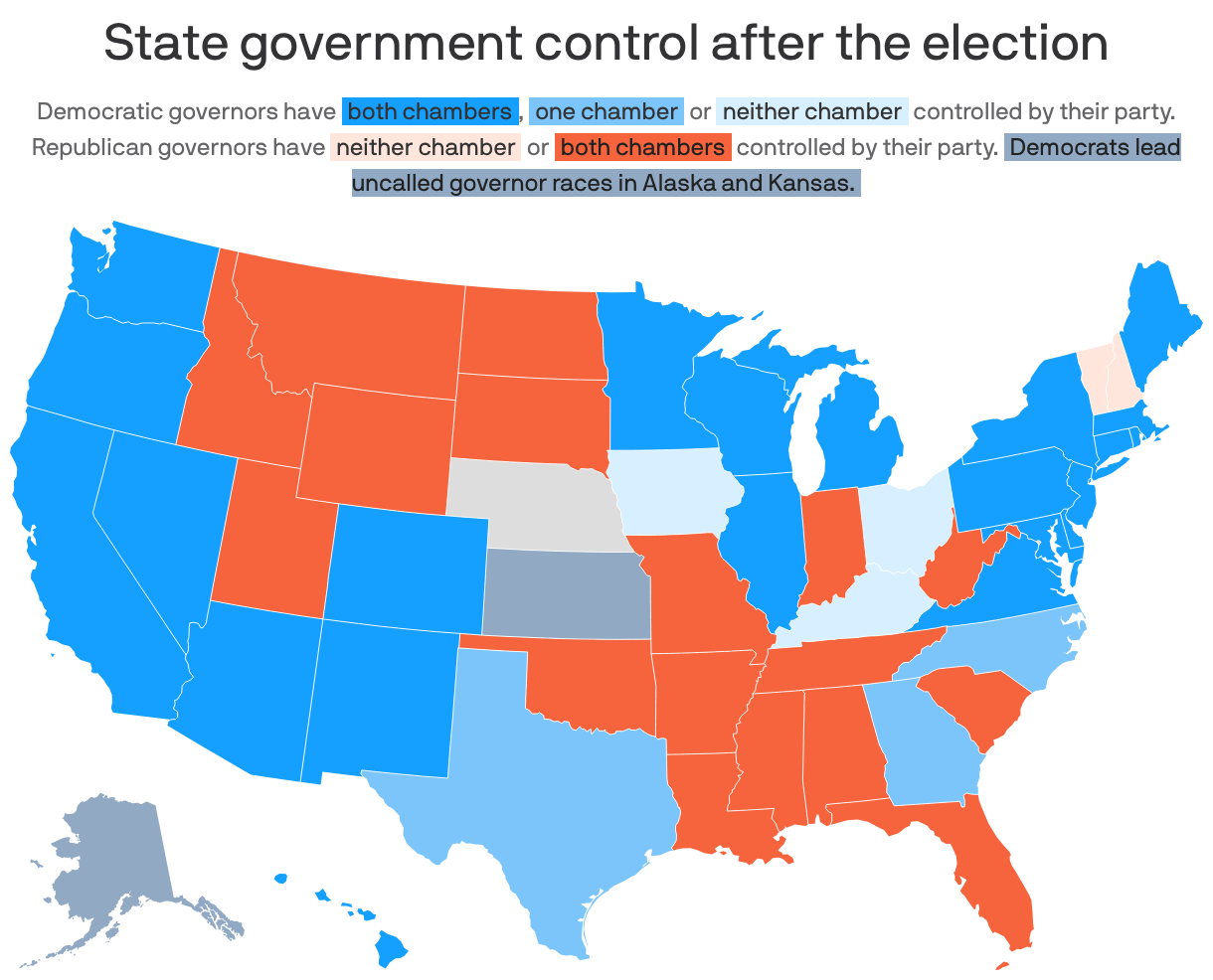
Data: Axios research; Map: Andrew Pantazi/Axios Democrats are on track to take control of a majority of legislative chambers, ending 16 years of Republican dominance over America's statehouses. If current leads hold, 75% of Americans will live in a state with a Democratic governor, and 53% will live in Democratic trifectas. Why it matters: Statehouses are the front line of American federalism, and Tuesday's gains dramatically expand Democrats' power to increase minimum wages, protect abortion access, and set voting rules ahead of 2028 for most Americans. Driving the news: The party is set to flip 12 legislative chambers, dismantle five Republican state trifectas, shatter 11 GOP supermajorities and build 12 of its own, according to AP returns as of 6pm ET on Wednesday. If leads hold, Democrats will control the governor's office and both chambers in five of the seven 2024 presidential battlegrounds: Arizona, Michigan, Nevada, Pennsylvania and Wisconsin. They have also broken Republican one-party rule in the sixth (Georgia) and flipped the House in the seventh (North Carolina). Democrats flipped five GOP-held governorships (Georgia, Iowa, Nevada, Ohio and Texas) and lead in Alaska. Republicans haven't flipped any, despite targeting Arizona, Michigan, Oregon and Wisconsin. Kansas, where Democrat Cindy Holscher was leading by about half a point Wednesday evening, is uncalled. The big picture: Ever since the 2010 Tea Party wave, Republicans have used their grip on statehouses to reshape American life: banning abortion, loosening gun laws, restricting collective bargaining and expanding private-school vouchers. They drew maps that kept them in power even in years Democrats won more votes statewide. Tuesday's Democratic gains broke that firewall. By the numbers: Republicans entered Election Day with 23 trifectas (control of the governor's office and both chambers) to Democrats' 16. If leads hold, Democrats will have 22 and Republicans 18. 24% of Americans will live under a

Democrats' big night gives them a chance to turn voter anger over high energy prices into legislative action and congressional oversight, but divisions within the party could complicate their plans. Why it matters: This was an energy election . High gasoline prices, record diesel costs, and rising power bills fueled discontent with President Trump and his party. Voters' rebukes of data centers could slow the buildout of power-hungry AI infrastructure. The latest: Stunning Senate wins in red states and House wins nationwide propelled Democrats to control of both chambers, and flipped several governor's mansions. Energy costs were prominent in key races, such as Democrats hitting GOP rivals over farmers' bills in Iowa, Kansas and Ohio. Texas Governor-elect Gina Hinojosa (D) bashed Greg Abbott (R) over his prior embrace of data centers in the state where developers are planning big projects. The data center backlash also featured in Ohio and Pennsylvania, where Sherrod Brown defeated Sen. Jon Husted (R) and Paige Cognetti unseated Rep. Rob Bresnahan (R). Both Republicans faced criticism over their support for data centers. State of play: A detailed Democratic energy agenda hasn't emerged, but there are early clues. Democratic Leader Chuck Schumer tied Republicans to electricity costs in his first comments after returns came in. Likely Speaker-in-waiting Hakeem Jeffries has vowed to quickly push an affordability agenda, with energy as a key pillar. He tasked Reps. Nikki Budzinski (D-Ill.) and Mike Levin (D-Calif.) with leading a "Gas and Utilities Affordability Working Group" that crafted ideas, though they remain under wraps. Another potential source of ideas: Hundreds of proposals backed this year by the 100-plus member House Sustainable Energy and Environment Coalition. Some could gain bipartisan backing, like support for advanced nuclear power. But other areas would be largely symbolic, like restoring some IRA tax credits. Catch up quick: In the Senate, Schumer has
President Trump's Republican Party suffered an electoral humiliation Tuesday night that stretched across the battleground map and into some of the deepest-red territory in America. Why it matters: The 2026 midterms will go down as one of the most sweeping repudiations of a sitting president in modern American history, on a scale reminiscent of the post-Watergate reckoning of 1974. The big picture: Two years after Trump's comeback appeared to herald a historic political realignment , voters delivered a devastating verdict on his second presidency. Democrats seized control of both chambers of Congress, on course to gain as many as 40 House seats and at least seven Senate seats — eclipsing their wildest pre-election expectations. The wave swept deep into Republican territory, from Texas and Georgia to both Carolinas, flipping hundreds of legislative seats and delivering Democratic trifectas in the unlikeliest of states. 5 takeaways 1. Texas turns blue: After decades of dashed hopes, Democrats finally conquered the nation's most coveted Republican stronghold — in a landslide so sweeping that even three-term Gov. Greg Abbott was driven from office. Gina Hinojosa became the state's first Latina governor, while James Talarico defeated Trump-backed Ken Paxton to become the first Texas Democrat elected to the Senate since 1988. The Democratic onslaught extended across statewide offices and possibly Texas' House of Representatives, suggesting that the state's political future could be up for grabs after 32 years of GOP dominance. 2. Democrats storm Senate: What once looked like an impossibly difficult map for Democrats gave way to a historic rout, as Republicans watched their 53-seat majority crumble in states Trump carried by double digits. Democrats broke a 94-year losing streak in Kansas, ousted Republicans in Ohio , Iowa and North Carolina , and captured South Carolina for the first time since 1998. In Maine, Democrats finally toppled five-term Sen. Susan Collins after ma
It was a drubbing on a scale that neither side saw coming: Democrats pummeled Republicans across the battleground map and into some of the most MAGA-friendly terrain in the country. Why it matters: The results were an emphatic rejection of Donald Trump's second term in office — and set the stage for two years of corruption investigations and legislative frustration for the lame-duck president. Here's a rundown of what you need to know about last night's historic GOP beatdown. The size of the Dem majorities It was clear early in the night that Democrats would flip the Senate. Few predicted how big their majority would end up. Democrats will have at least 54 Senate seats, and another two — in Alaska and Mississippi — were too close to call early Wednesday. The New York Times projects Democrats will win 257 seats vs. 178 for Republicans — a 79-seat majority. Those numbers could change as more races are called, but in any scenario it will be an astounding majority. The big surprises 1. Texas turns blue: After decades of dashed hopes, Democrats conquered the nation's most coveted Republican stronghold — in a landslide so sweeping that even three-term Gov. Greg Abbott was driven from office. Gina Hinojosa will be the state's first Latina governor, while James Talarico defeated Trump-backed Ken Paxton to become the first Texas Democrat elected to the Senate since 1988. The Democratic onslaught extended across statewide offices and into the legislature, suggesting that the entire state's political future could be up for grabs after 32 years of GOP dominance. 2. More red-state romps: Democrats broke a 94-year losing streak in Kansas, ousted Republicans in Ohio , Iowa and North Carolina , and captured South Carolina for the first time since 1998. 3. House district reversals. Tennessee's 4th Congressional District race hadn't been called as of the wee hours Wednesday. But the returns were stunning regardless of the outcome. Trump carried the district two years ago by 24 points
Sarah Trone Garriott, a Democratic state senator and Lutheran minister, beat Representative Zach Nunn, a Republican who had tied himself closely to President Trump.
Senate Republicans' worst nightmare came true Tuesday night, as they watched red state after red state fall to a historic Democratic wave . Why it matters: It's hard to remember now, but Republicans started off the 2026 cycle thinking they could expand their majority. They ended the night with what one source called a "huge f**king thumping" — losing or trailing in every toss-up on the map. At the start of the cycle, top operatives saw a red wall of incumbents in Trump-friendly states, an invincible Republican Sen. Susan Collins in Maine and a vulnerable Democratic Sen. Jon Ossoff in Georgia, who provided a path to expanding a majority. By 9pm Tuesday night, top GOP sources were quietly accepting the reality of the return of Majority Leader Chuck Schumer (D-N.Y.). "Republicans are going to wake up in a different country tomorrow and we are going to have to start from square one to reinvent a party," one senior GOP Senate aide told Axios on Tuesday evening. Between the lines: For the first time since 1972, Republicans lost a Senate seat in the home state of the chair of the National Republican Senatorial Committee. The defeat of Sen. Darline Graham (R-S.C.) came despite Sen. Tim Scott (R-S.C.) leading the NRSC. Republicans also lost in the home state of the next expected NRSC chair, Bernie Moreno (R-Ohio). Zoom in: North Carolina and Georgia were expected to be the premiere races of the cycle not too long ago. Both were called for Democrats before 8:30pm EST. That was just the beginning of the nightmare. In Texas, Elon Musk's more than $150 million infusion wasn't enough to save Texas GOP Senate nominee Ken Paxton after Paxton defeated Sen. John Cornyn in a nasty primary. In Ohio, Sen. Jon Husted's (R-Ohio) campaign had a rocky start — and wasn't bailed out by President Trump's publicity campaign about his rear end. Alaska started looking shaky even before a second Dan Sullivan joined the ballot, and Iowa wasn't a given either. In Kansas, alarm bells started ringing
Mr. Turek, a Paralympian and state representative, defeated Representative Ashley Hinson, a Republican, in one of this year’s top Senate races.
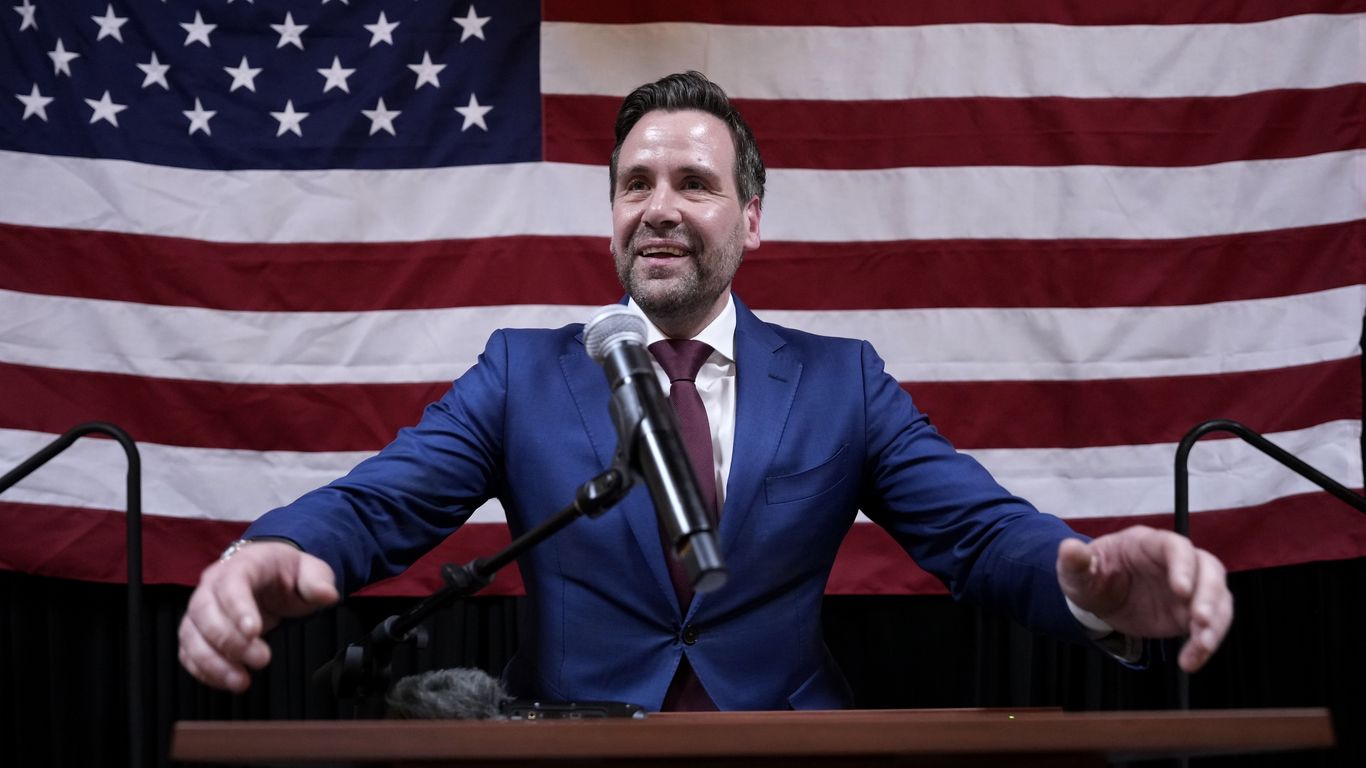
Democratic state Rep. Josh Turek defeated Republican U.S. Rep. Ashley Hinson in a major upset Tuesday, becoming the first Democrat elected to the U.S. Senate from Iowa since 2008, the AP projected and sealing Democratic control of the chamber. Why it matters: Turek's victory delivers Democrats control of the Senate — and signals a political backlash against Republicans in a state Trump won comfortably just two years ago. The big picture: Turek's victory breaks the GOP's hold on both of Iowa's Senate seats for the first time since Democrat Tom Harkin left office in 2015, marking a major breakthrough for Democrats in a state that has shifted right. State of play: The Cook Political Report rated the race a toss-up after moving it left during the campaign as mounting frustration over rising costs, Trump's tariffs and the Iran war put Republicans on the defensive. Zoom in: Turek, a Council Bluffs state lawmaker and Paralympic medalist, built his campaign around affordability and appeals to working-class and independent voters. He criticized Trump's tariffs and other administration policies that he argued were hurting Iowa farmers and families. He also made government ethics and corruption a central theme, including support for a ban on congressional stock trading. Between the lines: Republicans had held both of Iowa's U.S. Senate seats since Harkin retired, while GOP candidates have increasingly dominated statewide races. The bottom line: Turek's win offers Democrats a potential roadmap for competing in increasingly Republican states — and raises questions about the GOP's political strength heading into 2028.
Ashley Hinson loses heated contest in former swing state, a sign Republicans may be losing rural voters US midterm elections – live updates Track live results from all 50 states Democrat Josh Turek has won the US Senate race in Iowa , handing his party a significant victory in a Republican-led state where they have seen their power ebb in the age of Donald Trump. Turek’s victory over his Ashley Hinson, a Republican congresswoman, marked the first time since 2008 that a Democrat had won election to the Senate in Iowa, and represents a milestone in Democrats’ quest to regain control of the Senate. Continue reading...
Party sees historic victories with Gina Hinojosa’s stunning upset in Texas and Georgia’s Keisha Lance Bottoms becoming first Black female governor in US Democrats are hoping to win a majority of governor’s offices across the US after marking significant victories in Texas, Georgia, Ohio and Iowa. One of the biggest prizes of the night was the Texas governorship, with Democratic state representative Gina Hinojosa unseating Republican incumbent Greg Abbott in a stunning upset. Hinojosa will be the first Latina governor of the state, and the first Democrat elected to the Texas governorship in 30 years. Continue reading...
A hunter and former prosecutor, Mr. Sand avoided traditional Democratic labels and cast himself as dedicated to Iowans first.
Sand, auditor for state with strong Trump support, defeats Maha-backed Republican Zach Lahn as Democrats win big US midterms 2026 live – latest updates Track live results from all 50 states Democrat Rob Sand has been elected governor of Iowa , the Associated Press projects, a milestone as his party seeks to rebuild its political standing in the midwestern state. Sand , the state auditor who is the sole Democrat holding statewide office in Iowa, triumphed over Republican Zach Lahn, a political newcomer backed by Robert F Kennedy Jr’s “Make America healthy again” movement. Continue reading...
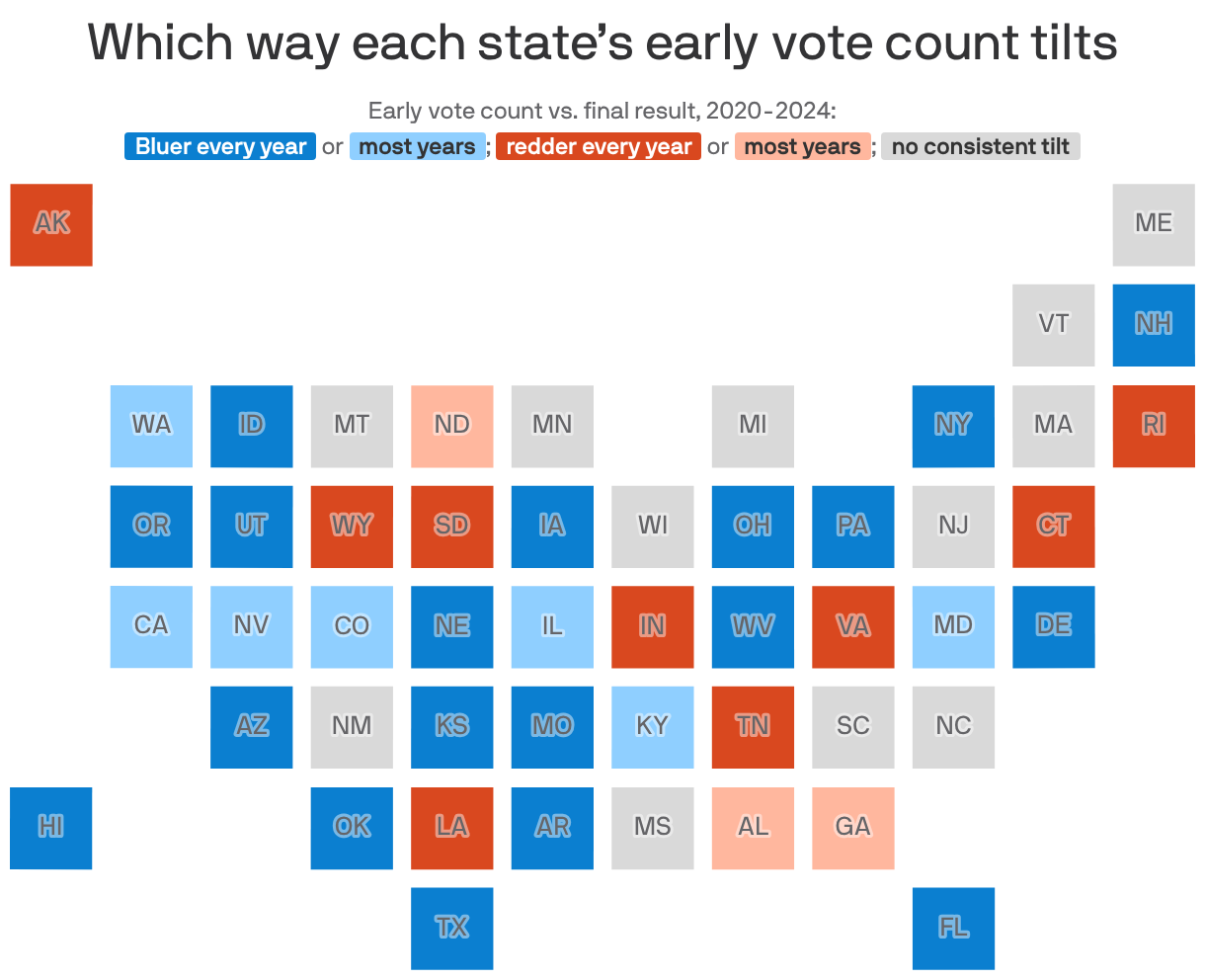
Data: AP via The New York Times and Axios research; Chart: Andrew Pantazi/Axios The first votes counted Tuesday night will almost certainly look redder than the final result, and control of the House and Senate could take days to settle. Why it matters: Early leads can create false impressions of who's winning and suspicion when those leads vanish. Election night is really election week. By the numbers: AP didn't call control of the House until seven or eight days after Election Day in each of the past three elections . The Senate was settled by 10:44pm on election night in 2018 and at 12:06am the next morning in 2024 . In 2022, it took four days , and in 2020, it wasn't called until Georgia's January runoffs , two months later. State of play: Republicans hold 53 Senate seats . Democrats need a net gain of four for a majority. The red head start: In every national election since 2018, the House and Senate votes counted by 9pm ET were 4 to 9 percentage points more Republican than the final result, an Axios analysis of AP and Edison Research vote counts found. It's mostly geography. Fast-counting Florida and other right-leaning states report first. At 9pm on election night 2022, Florida accounted for 40% of all Senate votes counted nationwide. By 11pm, more House races had been called for Republicans than Democrats in all four elections, including 2018 and 2020, when Democrats won the House. The tilt fades, slowly. At 6am Wednesday, the national House count was still 2 to 3 points more Republican than the final, largely because California, Washington and Oregon count for days. Data: Axios research; Chart: Andrew Pantazi/Axios Zoom in: Each state tilts its own way, depending on which ballots and which counties it counts first. States that count early and mail ballots first tend to start bluer than they finish. States that count Election Day votes first start redder. Ohio, Nebraska, Texas, Kansas and Iowa start blue. Sherrod Brown and Bernie Moreno were tied at 9pm in 2
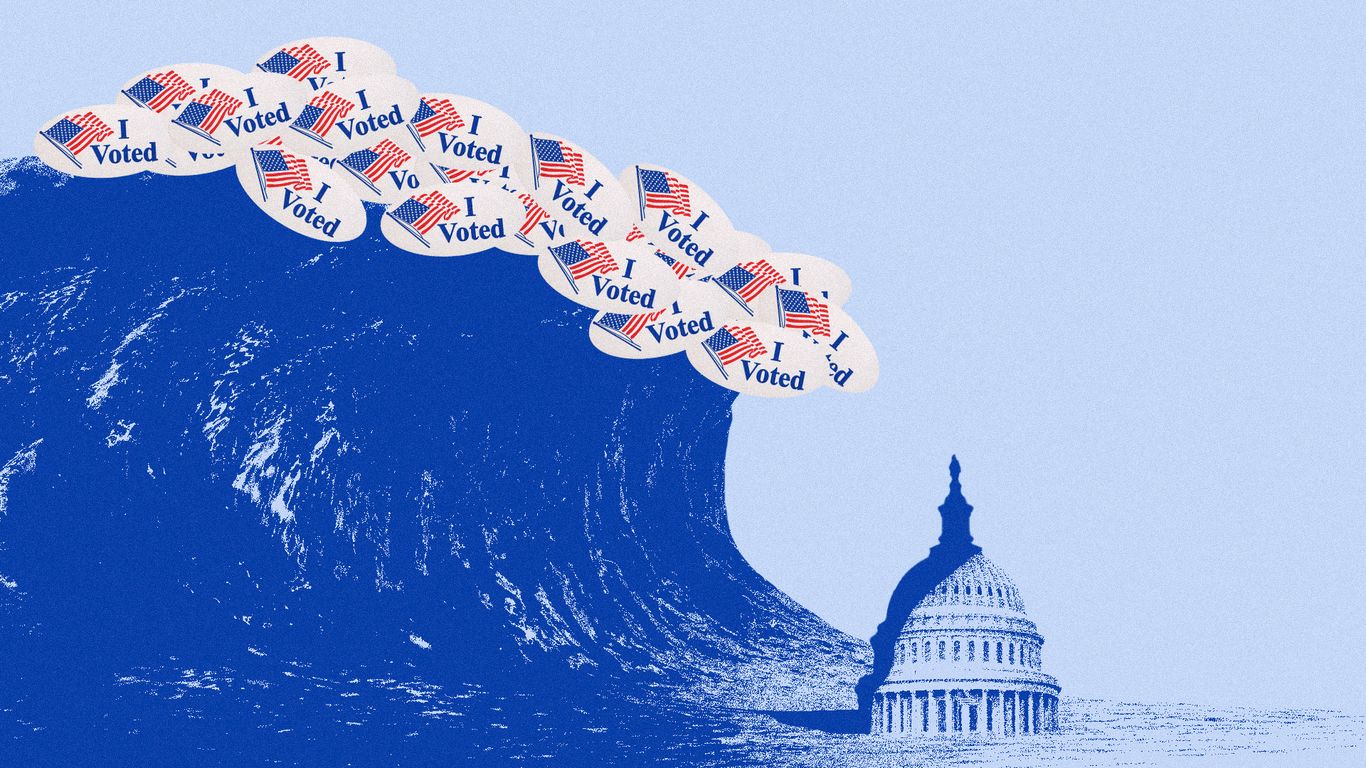
The threat of a blue tsunami is bearing down on President Trump's Washington, with virtually every major indicator forecasting a Democratic rout in Tuesday's elections. Why it matters: Expectations for the midterms have soared so high that some Democrats fear disappointment is inevitable, particularly if the party falls short of winning the Senate — a prize that seemed beyond reach just months ago. By the numbers: Five key metrics help distill the extraordinary consensus taking shape on the eve of the midterms. 🔮 95% and 80%: The probability of Democrats winning the House and Senate, respectively, according to election forecaster Nate Silver , whose model projects an average gain of 25 House seats. Silver says Democrats could now withstand a modest polling error and still capture the Senate — a remarkable cushion given the GOP's history of outperforming polls in the Trump era. 🗺️ 7 for 7: Democrats lead in every Senate battleground state surveyed in the final New York Times/Siena polls , including by 11 points in Michigan and seven in Texas. Trump carried six of those seven states in 2024, though five of the Democratic leads — Maine (+6), Kansas (+5), Ohio (+5), Alaska (+2) and Iowa (+1) — remain within the polls' margins of error. 🏛️ 240: The number of House seats Democrats could win under the upper end of Cook Political Report's forecast — potentially their largest majority since the first year of Barack Obama's presidency. Reaching that mark would require Democrats to sweep all 18 toss-up races. Cook already favors them in 222 districts, four more than needed for a majority. 🎲 73%: The probability of Democrats winning both chambers of Congress, according to Kalshi . After correctly favoring Trump in 2024, prediction markets have become a closely watched barometer of political expectations. Nearly $100 million in contracts have traded on Kalshi's congressional control market alone. 📊 +14: Democrats' lead on the generic congressional ballot in the final poll f
Residents would welcome the development, but the president’s past false promises cast doubt on the proposal On a Monday afternoon in late September, Donald Trump gathered Iowa Republicans in the Oval Office to make a big announcement: the firm Mesabi Metallics would invest $15bn to make the midwestern state the site of the largest steel mill in the country. One month later, and just days before the midterm election, word has spread in the small town of Wever, population 142, that the mill will be built somewhere nearby. And that’s been about it – no shovels in the dirt, workers on a job site or machinery on the dirt roads leading down towards the Mississippi River. Continue reading...
He had originally canceled the in-person appearances in favor of tele-rallies, only to reverse course Sign up for the Breaking News US email Hello and welcome to the US politics live blog. Donald Trump is making stops in Iowa and Kansas to throw support behind Republicans in competitive Senate races with just two days remaining before the midterm elections. He had originally canceled the in-person appearances in favor of tele-rallies, only to reverse course on Friday. Abdul El-Sayed , the Democratic nominee for Michigan’s tightly fought Senate race, wants Democratic congresswoman Haley Stevens to stay away from his campaign events. The two had planned to appear together Sunday at a church service in Detroit, but Representative Debbie Dingell later told CNN she had spoken to Stevens and told her, “This isn’t working.” A US judge dismissed Trump’s lawsuit against the Wall Street Journal with prejudice on Saturday, according to a court filing, bringing an end to his legal challenge over the newspaper’s reporting on his alleged birthday letter to Jeffrey Epstein . Continue reading...
With control of Congress on the line, next week’s midterms amount to a referendum on Trump, who has urged voters to pretend he is on the ballot Sign up for the Breaking News US email Hello and welcome to the US politics live blog. Donald Trump is tele-rallying from Mar-a-Lago with just three days to go before the midterm elections. On Sunday, he will make appearances at rallies in Iowa in Kansas in a reversal after he initially backed out . The top federal prosecutor in Alaska confirmed on Friday the existence of a criminal and a civil investigation into an alleged scheme by Mary Peltola’s campaign and national Democrats to confuse voters in the closely watched Senate race by recruiting a spoiler candidate who shares a name with the Republican incumbent, Dan Sullivan . Michigan Democratic Senate candidate Abdul El-Sayed resisted a demand from his defeated primary rival, congresswoman Haley Stevens , that he apologize for criticism of US military aid to Israel on Friday – two days before they were scheduled to campaign together in Detroit. Early voting this cycle has set a record. More than 49 million Americans have already cast ballots, either in person or by mail, the Associated Press reported. Continue reading...
The whiplash over President Trump’s schedule comes as polls show Republicans are in danger of losing seats, including in areas he won handily in 2024.
The president cancelled the events in favor of tele-rallies, as Republicans face a fight to retain control of Congress Donald Trump cancelled, and then promptly uncancelled, two in-person rallies in Kansas and Iowa this weekend as polls suggest US midterm election races in the previous Republican strongholds could go down to the wire. On Thursday, just five days before election day, the Republican National Committee (RNC) announced the president would no longer host the Kansas and Iowa rallies and instead participate in “a large number of tele-rallies”. The RNC claimed it felt it was in a “strong position” in Kansas and Iowa. Continue reading...
Donald Trump attacked the appearance of a Reuters reporter and called him 'disgusting' after the reporter asked a question about the president's cancellation of two upcoming campaign events. A day later, Trump rescheduled the canceled rallies in Kansas and Iowa. Trump lashes out at Reuters reporter who asked why he canceled rally in Kansas Continue reading...
High cancer rates have exposed a fault line in Iowa politics between public health and the interests of the powerful agriculture industry.
President Trump has been holding hours-long rallies for G.O.P. candidates nearly every day for weeks.
Democrats' main Senate super PAC is privately telling top donors that Texas offers their best shot at flipping a deep-red Senate seat, followed by Ohio, where the race remains close. Senate Majority PAC also sees victories in Iowa and Alaska as within reach, though the outcomes could take longer to become clear. Why it matters: Democrats are increasingly confident about Election Day on Tuesday — and sharing their qualified optimism with their biggest donors. To retake the Senate, Democrats need to win two of those four states — all of which Trump won by double digits in 2024 — flip North Carolina and Maine, and avoid an upset in Michigan. JB Poersch, president of Senate Majority PAC, projected confidence that Democrats will wrest control of the Senate from Republicans during a private donor briefing this week as he walked through the races state by state. He also reminded donors that Kansas, where even Republicans are deeply worried, is a state Trump won by roughly 16 points in 2024. But it's in play . What they're saying: "This matches what we've been saying publicly and privately for weeks. There are signs of optimism in Texas, but it remains a toss-up, as do Iowa, Ohio and Alaska," said Lauren French, a spokesperson for SMP. "There is positive movement for Democrats, but it is critical to remember that every seat on the battleground map voted for Donald Trump by double digits," she said. "These are deep red states and we're focused on bringing them over the finish line so the Senate can work to provide real relief to families who are being crushed by the cost-of-living crisis." The big picture: Texas hasn't elected a Democratic senator since Lloyd Bentsen in 1988. Democrats thought they'd end the drought in 2018 and let themselves fall for then-Rep. Beto O'Rourke, who lost to Sen. Ted Cruz by 2.6 percentage points. Four years later, O'Rourke tried again to prove a Democrat could win statewide in Texas. He lost the governor's race by nearly 11 percentage points. T
Senate Republicans see Iowa moving their way and Ohio slipping, with pessimism growing over Alaska and Kansas. Why it matters: Even when they squint, top Republicans struggle to see a majority beyond 51 seats, according to half a dozen senior operatives. ✈️ A combination of paid media and Air Force One visits has bolstered GOP confidence that they'll hold South Carolina and Mississippi . But across the map, the outlook looks bleak, with only a few bright spots. Zoom out: Republicans are fighting a two-front war: unprecedented Democratic enthusiasm and undeniable Republican apathy. 🏈 President Trump's strategy is to whip up the MAGA faithful with rallies in the reddest parts of red states. 😱 "The Red Scream is my biggest concern , not the blue wave," said Alex Castellanos, a veteran Republican consultant who has worked to help Trump get elected. ‼️ "Republicans and independents are going to be screaming for attention, and many of them, including those who voted for Trump, may show their frustration by not showing up." Zoom in: Texas is starting to look like a late-season football showdown against an SEC rival: The GOP is still in the game, but defeat seems like a real possibility. 🌾 In Kansas, Sen. Roger Marshall (R) has stopped the bleeding, but it's unclear whether there's enough time left to save his seat. 🛥️ Republicans are quietly bullish on Michigan, but they recognize that the demographics have to break heavily in their favor, especially among Black voters. By the numbers: The math hasn't changed, but Senate Minority Leader Chuck Schumer (D-N.Y.) sees multiple paths to 51 seats. No one disputes that North Carolina is going to have a Democratic senator. It seems like another lifetime ago that Republicans were talking seriously about flipping Georgia. If just two of the next tier of Ohio, Kansas and Alaska flip, the Senate would be split 50-50 before factoring in other competitive races, like Michigan, Iowa and Maine. 🦞 In Maine, Republicans and Democrats a
Harvard economist Jason Furman told Axios that if he were to return to his old job as chairman of the White House Council of Economic Advisers today, he would rely on AI tools over staff economists for much of the council's day-to-day analytical work. The big picture: Unsurprisingly, this made some waves in the online discourse, particularly the loose-knit community formerly known as Econ Twitter. Many veterans of the economic policy trenches see real risks in future policymakers becoming overly reliant on AI — or at a minimum think that Furman is underestimating the importance of human economists in advising the nation's leaders. What they're saying: "CEA work, at least in my experience, is highly bespoke as you're explaining the data flow (and much else) to very busy people who don't want only market-shop analysis," Jared Bernstein, the CEA chair under President Biden, wrote on Substack . "Yes, they want and need that — what will the markets make of this CPI, jobs, GDP, etc. report — but more so they want to know how this report fits into our narrative, our agenda, the president's trip today to Iowa." He adds that within a White House, "the human skill of reading-the-room is paramount. I'm far from an AI expert, but my sense is it sucks at that and probably always will, a conclusion that derives in no small part from listening to its creators!" Zoom in: Claudia Sahm, a former Federal Reserve economist, raised an issue that we've often heard from senior people in fields like consulting and investment banking: If you get rid of junior positions, where will future senior leaders come from? Furman's staff "went on to found the Yale Budget Lab, run Treasury economic policy and a Fed institute, serve in later [administrations], and publish research on trade, environment, and taxes. That's what '20 staff' become," she wrote on X . "No model does that." Bloomberg chief U.S. economist Anna Wong argues that the "ability to now not depend on anyone, as a senior person, is ve
Senate Republicans are weighing three last-ditch spending moves that would have been unimaginable six months ago: a cash infusion for Mississippi and even more money for South Carolina and Kansas. Why it matters: It's been 94 years since Kansas elected a Democratic senator, 44 years for Mississippi and 28 for South Carolina. But panic is spreading through the Republican Party. "The wall has broken. The enemy is inside the fort," one national Republican political operative told Axios. "We are now fighting hand to hand." The Senate map, which once looked impregnable for Senate Majority Leader John Thune (R-S.D.), is now full of vulnerabilities. Democratic challengers are polling within the margin of error in more than half a dozen deep-red states, according to internal GOP polls. The other side: "We're nervous about Alaska. We're nervous about Michigan. We're still going to hold the Senate at the end," said another operative. Zoom in: Two weeks ago, when Senate Leadership Fund decided to take out a $5 million "insurance policy" in South Carolina, operatives took a hard look at Idaho, South Dakota and Mississippi. At the time, they concluded they didn't need to spend any money in those states, according to a person familiar with the matter. But Senate Republicans are now reviewing the Mississippi race and may need to spend there to protect Sen. Cindy Hyde-Smith from a surprisingly competitive bid by Democratic district attorney Scott Colom . Senate Majority PAC, the main super PAC for Senate Democrats, announced a $1.2 million investment in the race on Tuesday. Zoom out: In early June, SLF started to reinforce a Midwestern red wall to protect the GOP majority, reserving $28 million in TV advertising in Ohio and $11 million in Iowa . Those investments have ballooned to $93 million in Ohio and $53 million in Iowa. After an initial $5 million buy in South Carolina, SLF's spending has increased to $8.5 million, according to AdImpact. And a super PAC linked to Sen. John Bar