
Voting is underway across the country Tuesday in a midterm election that could decide whether President Trump gets two more years of unified Republican rule — or faces a potential Democratic check on his power. Why it matters: The results will be the clearest national test of Trump's second presidency , following war abroad, economic anxiety at home and sweeping changes in Washington. Trump, facing all these challenges, has made himself the face of the Republican campaign for control. State of play: As voters head to the polls, the Trump administration is zeroing-in on the Alaska Senate race. The Department of Justice has sent more than a dozen target letters as part of its investigation into the Dan J. Sullivan campaign, which has been the subject of Trump's ire for several days. It's an escalation into the Trump administration's push for answers in the race where Democrats reportedly conducted an organized effort to recruit another "Dan Sullivan" to join Sen. Dan Sullivan (R) on the ballot. The Justice Department's move comes as the White House is circulating Election Day talking points across the administration, touting Trump's accomplishments as the GOP braces for a tough evening that could see them lose both the House and the Senate, according to some forecasters. Trump has been a massive force on the campaign trail, rallying in several states for his Republican picks. The president has claimed to voters that he is on the ballot this year, making the election about his policies and actions — despite his dismal polling ratings, plagued by the Iran war and economic anxiety. Trump spent the morning of Election Day criticizing Michigan Democratic Senate nominee Abdul El-Sayed, Rep. Ted Lieu (D-Calif.) and the Daily Mail in various social media posts. Zoom in: Voting machine glitches and hiccups popped up in various spots of the country Tuesday, including in the high-profile New York House race between Rep. Mike Lawler (R) and Democratic nominee Cait Conley. Otherwi
Results for “iran qeshm”
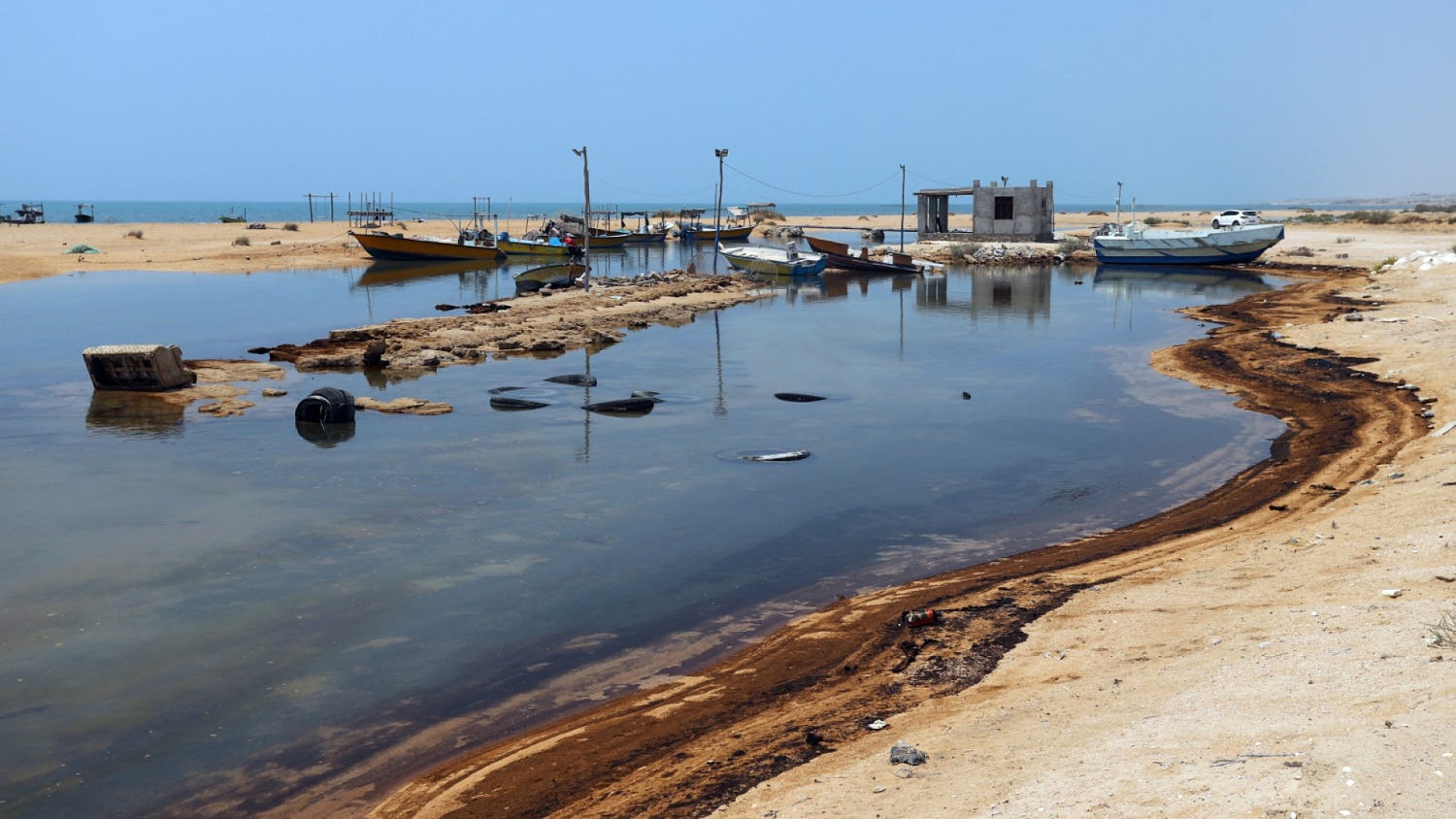
The U.S. carried out limited strikes on Iran’s Qeshm Island despite President Trump saying that strikes would not be carried out on Iran before the midterms. NBC News’ Raf Sanchez reports.
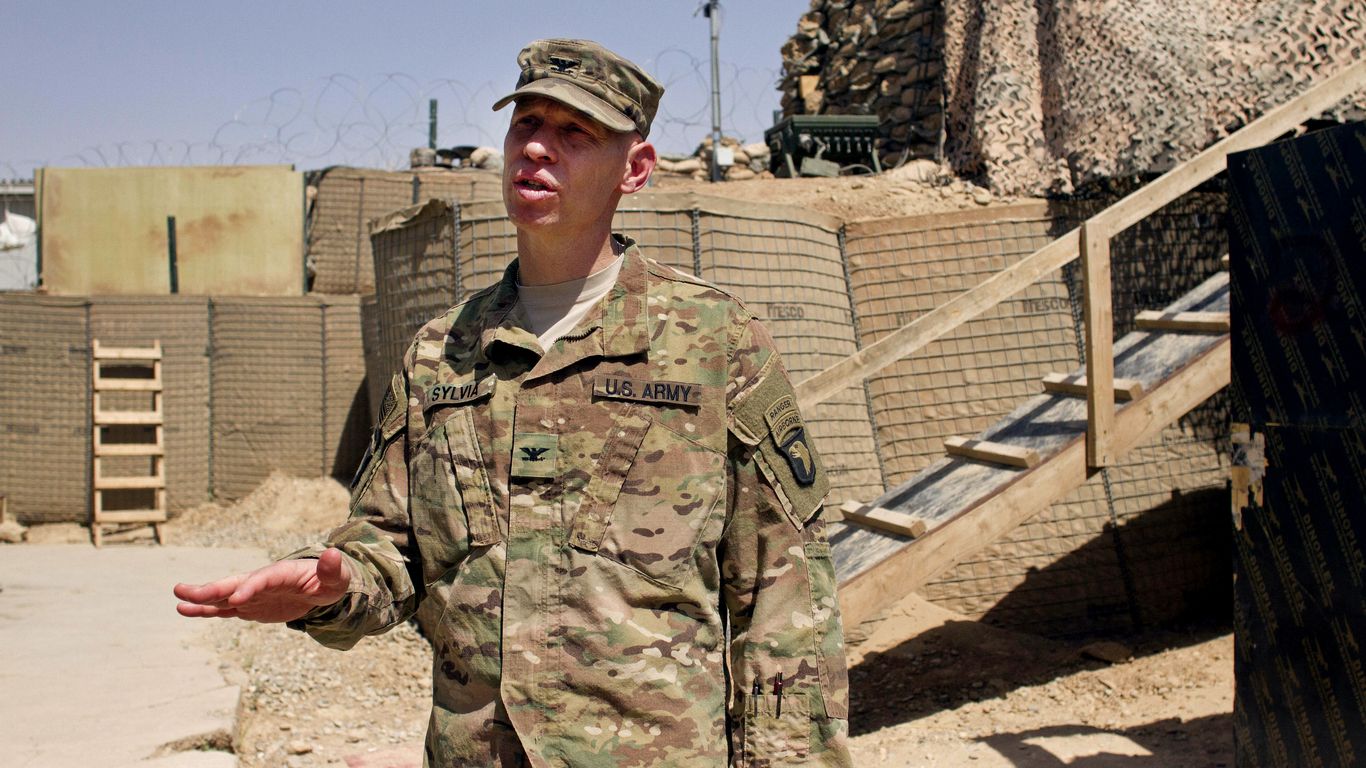
The Pentagon's former top military planner is under federal investigation and may face a court-martial for allegedly leaking to reporters from the Wall Street Journal and New York Times, according to three sources familiar with the controversy. Why it matters: Former Army Lt. Gen. Brett Sylvia was fired by Defense Secretary Pete Hegseth last week after being accused of misconduct as part of the department's war on leaks. Sylvia failed four polygraphs and admitted to the incidents during two interviews on video that lasted more than a total of two hours, according to details from an internal Pentagon report shared with Axios. "The president has no tolerance for leakers, so Sylvia's termination is the first step in the accountability process, not the last," one of the sources said. Zoom in: Starting in the fall of 2025, the sources said, Sylvia gave information without authorization to reporters Michael Gordon of the Wall Street Journal and Greg Jaffe of the New York Times. Neither reporter is suspected or accused of doing anything illegal, improper or unprofessional in their reporting. Journalists often rely on confidential sources in reporting on issues that involve institutions where insiders aren't authorized to speak publicly. The report states Sylvia admitted to more extensive contacts with Gordon in 2025 and 2026, when the general allegedly shared classified information about Ukraine and Iran with the reporter. The Justice Department is investigating that. Only one discussion with Jaffe appears in the investigative report, concerning Hegseth's unexplained purging of military leaders. Sources said the unauthorized communication by Sylvia potentially violated the Uniform Code of Military Justice's prohibition of "conduct unbecoming of an officer." Behind the scenes: Sylvia allegedly admitted to first disclosing information to Gordon in the fall of 2025 when the two met in the Pentagon and discussed unspecified information about Ukraine, the sources said. After th

Republicans are bracing for losses amid a backlash to the president’s economic leadership and the Iran war. Whether that means giving up control of the Senate is Tuesday’s biggest question.

Reports have suggested a vulnerable president could start a new bombing campaign. But that wouldn’t bring a deal any closer Will Donald Trump decide to resume a large-scale war against Iran after the US midterm elections? That question has loomed over the campaign for weeks, as officials leaked plans for a new round of joint US-Israeli military strikes that would target Iran’s underground nuclear facilities, missile arsenals and civilian infrastructure. Continue reading...

Republicans don't know if they'll lose big or small on Tuesday, but they're already bracing for an epic blame game. Why it matters: Privately, Republicans acknowledge it's not a complicated version of Clue. The leading suspect: Mr. President, in the Oval Office, with an assortment of weapons — and one war. Returning Republican senators are unlikely to blame President Trump publicly. There's a price for that. And don't expect Trump to shoulder the responsibility. But do expect departing GOP lawmakers to take shots at Trump or his team, and Trump to fire back at Senate Republicans, whom he's never been shy about torching. The irony of Trump's second midterm: With Republicans privately resigned to losing the House, Trump can still credibly claim victory if they hold the Senate. "It's Donald Trump's midterms. He gets all the credit if we win. He gets all the credit if we lose," one national GOP strategist told Axios. The Iran war: From Alaska to Maine, Trump's decision to go to war with Iran — and the resulting spike in gas and diesel prices — has become a major political liability for Republican Senate nominees. "It's not tariffs … it's the war, it's gas prices, it's diesel," Texas Attorney General Ken Paxton said at a closed-door fundraiser in September, Axios reported last month . Tariffs: Trump's trade policies have compounded Republicans' affordability problems, particularly in farm country, where producers have faced higher costs and uncertainty over export markets. "We need to end this tariff war now," former Rep. Mike Rogers (R-Mich.) , the GOP Senate nominee, said in an October campaign ad, breaking with Trump over his tariffs on Canada. Bad candidates: Trump's preferred nominees are also drawing blame, GOP strategists tell Axios. Paxton in Texas and Sen. Darline Graham in South Carolina have forced Republicans to spend heavily defending races that should have been easier — and where the party had other options. Complacent incumbents: Sens. Roger Marshall (R-Ka
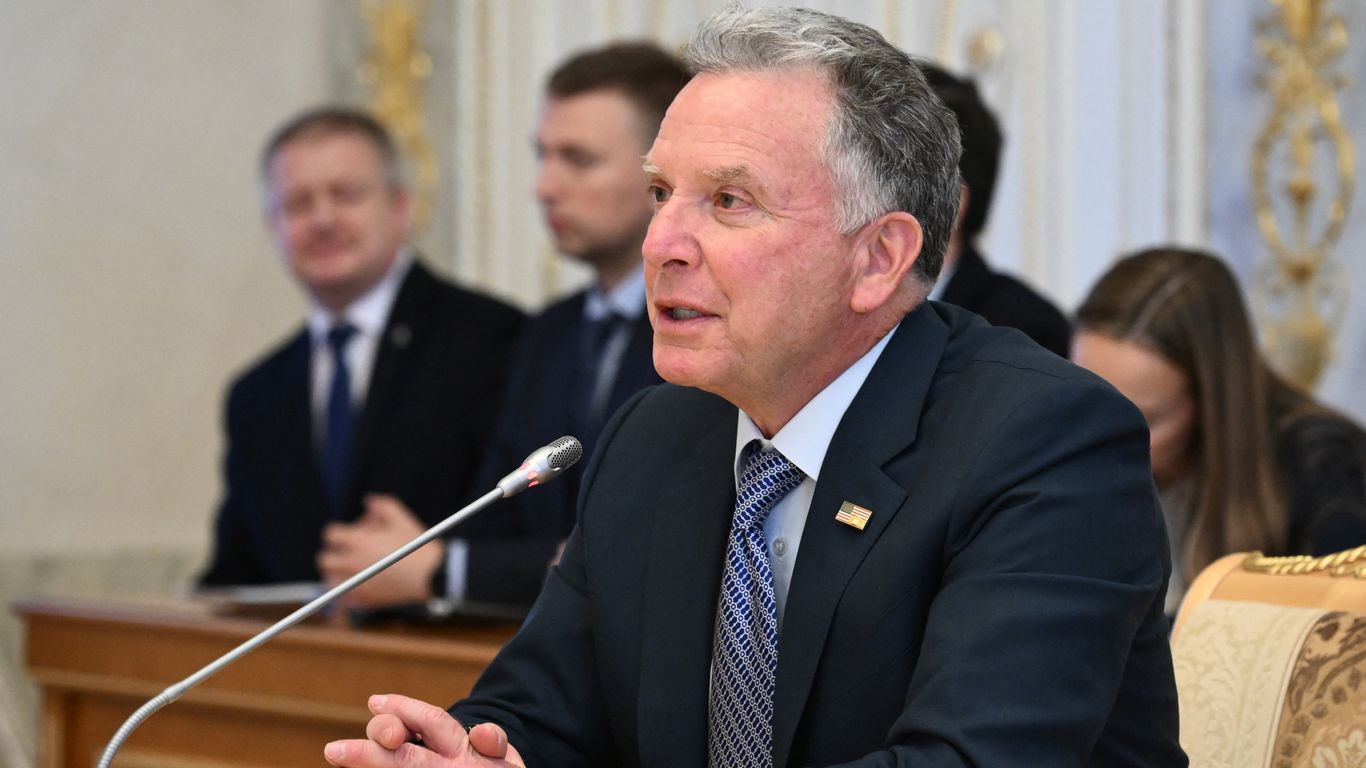
The U.S., Russia and Ukraine will hold peace talks in Abu Dhabi on Nov. 10-11 in an effort to reach a breakthrough on a deal for ending the war. Why it matters: U.S. officials say the meeting to restart a diplomatic effort suspended in February due to the war in Iran is a result of talks Presidnt Trump's envoys Steve Witkoff and Jared Kushner held with Ukrainian President Volodymyr Zelensky and Russian President Vladimir Putin in recent weeks. The White House hopes Putin will be more willing to compromise after Trump agreed to lift sanctions on Russian diesel sales and took other steps welcomed by Moscow. So far, Putin's only apparent concession is agreeing to resume talks. The parties remain far apart, particularly over territory. Russia's escalating attacks on Ukrainian cities and Putin's refusal to agree to a ceasefire casts doubt on prospects for progress. Zelensky said on Monday Ukraine has intelligence that Russia is preparing another massive attack against its energy and logistics facilities on Tuesday "when the world will be watching the American midterms". Driving the news: Kushner and Witkoff will lead to U.S. delegation for the talks in Abu Dhabi. "Discussions will focus on post-war security arrangements, de-escalation, humanitarian efforts, and next steps toward peace," Witkoff said in a statement. Witkoff added that lower-level U.S. officials will meet this week in Brussels with representatives from France, Germany, the United Kingdom, the EU, and NATO to discuss security guarantees for Ukraine, Europe's post-war security architecture, and economic opportunities to support Ukraine's reconstruction. "We look forward to building on the progress made in Kyiv, Oslo, and St. Petersburg toward a comprehensive, durable peace agreement that delivers lasting security for generations to come," Witkoff said.

Oil prices posted their sharpest drop in three months after investors got fresh hope that the U.S. would end the Iran war without further escalation.
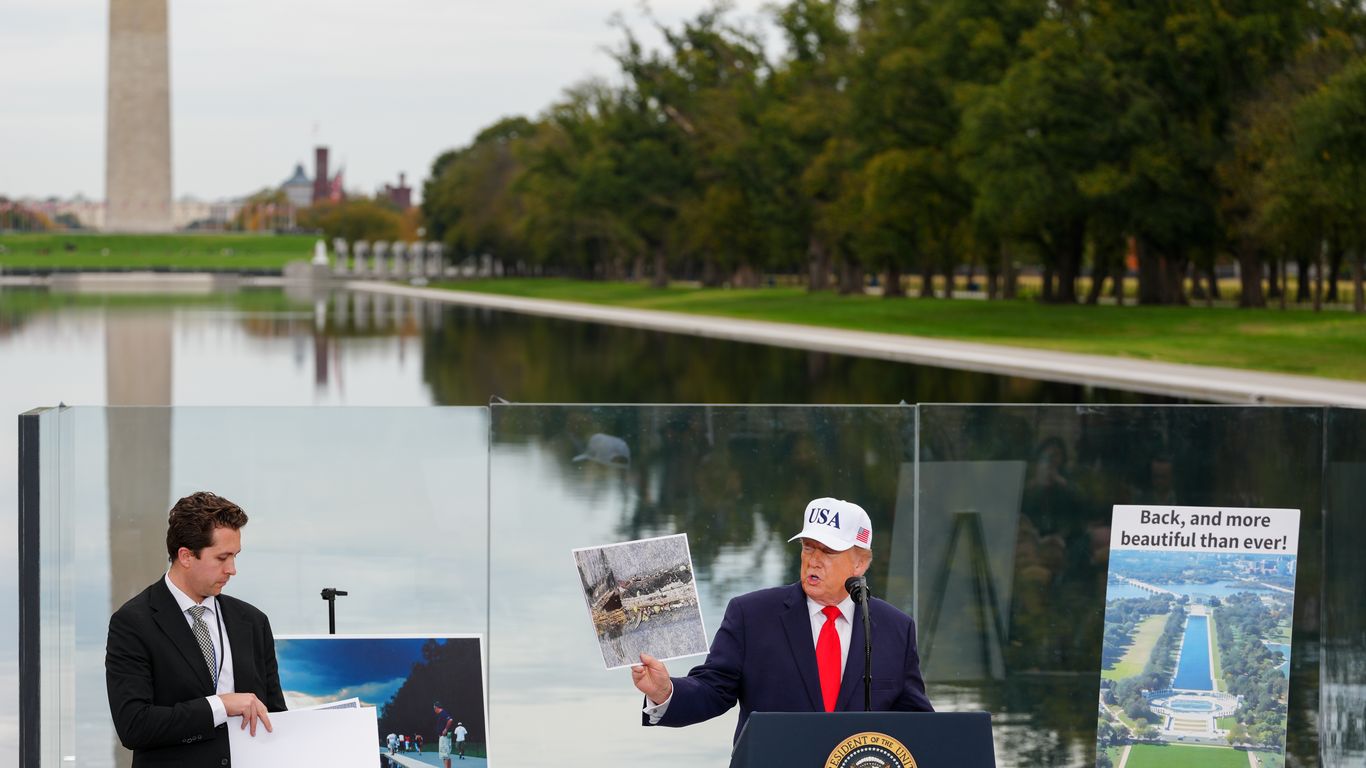
President Trump extolled his administration's Reflecting Pool project , dug up debunked claims of vandalism and applauded the new White House helipad in a Monday pre-Election Day speech. The big picture: Trump's deep focus on remaking the nation's capital has taken center stage as the clock ticks down to midterm elections. Driving the news: "The pool is now better and more beautiful than it's ever been before, and we're very proud of it," Trump said in Monday's speech, adding, "We went through a lot with vandalism." But Trump's own Justice Department dropped vandalism charges against former Olympian David Hearn , whose case was later killed by a judge after prosecutors acknowledged that faulty installation caused the damage to the Pool. Trump added the administration was "giving serious thought" to renaming the Lincoln Memorial Reflecting Pool to the "Trump Reflecting Pool," before later saying he was kidding. Throughout the speech, he held up printed images he identified as pipes, joints and other Pool materials. He also showed an image that appeared to show "8647" sprayed onto the base of the emptied pool, claiming "that was a Comey phrase" — a reference to his former FBI director and top foe. Zoom out: He also discussed his White House renovation projects, including the recently installed helipad and Scotts Miracle-Gro's lawn restoration after the UFC fight on White House grounds. Friction point: Trump's projects, including his D.C.-area arch and White House ballroom, have been broadly panned by Americans in polling. "This project should be a project that unites all Americans," Trump said Monday of the newly reopened Reflecting Pool, which stood empty for an extended period earlier this year. Zoom in: His pre-election pitch at times sounded more like a typical rally speech, where he touted his immigration policies and war with Iran while slamming Democrats as "a party that hates America." This is the last day before the midterm elections, the most important midte
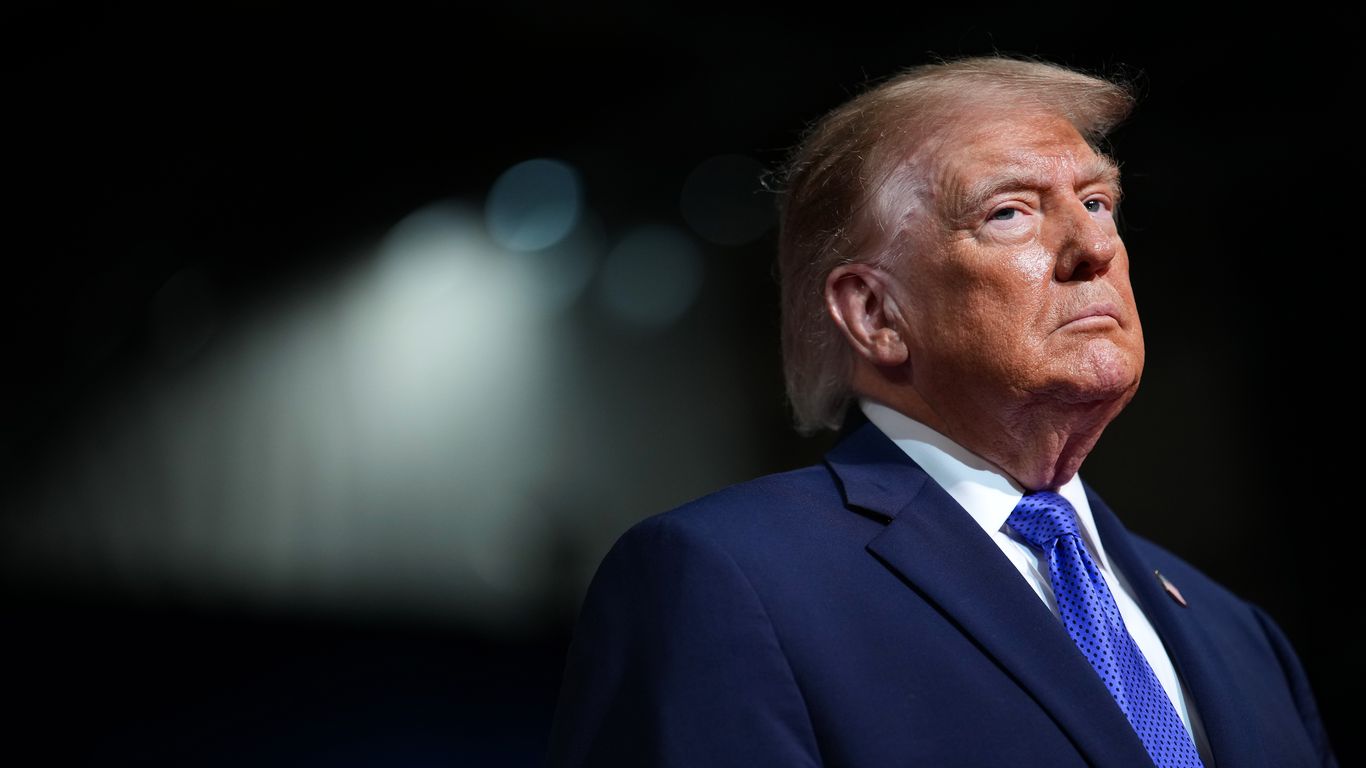
President Trump told Axios in a phone interview Monday he's "in no rush" to decide whether to resume fighting in Iran. Why it matters: The midterm elections have been seen as an inflection point for Trump on whether to unleash a massive bombing campaign to try to bring the war to an end. But it appears the president, at least for now, will continue pursuing dual tracks — letting negotiations play out while preparing to go back to war if he concludes a deal isn't possible. What he is saying: "One way or the other, we will do something, but there is no rush. We crippled them financially. They have no money, no gasoline and their people are getting very tired of it," Trump said in the interview. Driving the news: Qatari mediators have written a draft agreement outlining a three-day sequence of confidence-building measures aimed at resuming direct U.S.-Iran negotiations, according to regional sources. A diplomat with knowledge of the situation said the Qatari mediators are waiting for feedback from the U.S. and Iran. Trump is giving diplomacy a chance but is clear-eyed about the chances of reaching a deal. "We are talking to them. It's going fine. The problem with them is ... they try and tap tap tap [us along]. There's less urgency [on the Iranian side] than you think there would be, but they want to make deal more than they ever wanted," Trump said. Between the lines: Trump is weighing three courses of action, backed by three different camps: Make a deal: Vice President Vance and White House envoy Steve Witkoff are urging him to move toward a deal because a renewed war might not change the situation for the better. Most Gulf countries support this position and have communicated that to Trump, sources say. Go back to battle: Israeli Prime Minister Benjamin Netanyahu wants to resume combat, as does Secretary of Defense Pete Hegseth. They argue that Iran can't be trusted to make a deal let alone abide by one, and that Trump should finish the job militarily. Maximum econo
The world seems convinced the end is near — and social media is amplifying that belief, convincing people to stock up on food, water, generators and other items. Why it matters: Online chatter is fueling viral predictions of societal collapse amid growing unease about the future. But you're probably not going to die tomorrow. What they're saying: Michael Mills, a researcher at the University of Kent who has studied doomsday prepping for more than a decade, told Axios that modern doomsday fears aren't necessarily about a specific apocalyptic scenario. "It's an overall reaction to uncertainty in most cases," Mills said. He noted that whereas Cold War-era survivalists were often focused on nuclear conflict, modern preppers worry about terrorism, climate disasters, geopolitical threats and emerging technologies. He described the modern mindset as a "multifaceted concern with uncertainty." State of play: Viral posts have repeatedly urged people around the world to stock up on food and water, following similar recommendations from various governments and warnings from former FBI Deputy Director Dan Bongino. The situation has gotten so buzzy that President Trump was asked about it in an interview Monday. He said Americans don't need to stock up because the U.S. is "in good shape. We're strong. We have a great military and we will not have those kind of problems." Separately, conservative commentator Tucker Carlson — a man with 17.9 million followers on X alone — published a lengthy post Sunday evening alleging that Israeli Prime Minister Benjamin Netanyahu is pressuring Trump to launch renewed attacks on Iran after the midterms, potentially with a nuclear weapon. For what it's worth, Carlson has been predicting similar doomsday scenarios for a while, and he's been wrong before. And the Pentagon's newly reported plan calls for U.S. military bases to prepare to operate without outside support for at least 90 days, terrifying some people into asking , "What's the government k

Despite the US president’s ratings being at rock bottom, undoing his legacy will be difficult, not least because the Democrats are in disarray The stats and polling all suggest one thing: the Republicans are set for a hammering in the midterms. Donald Trump has the lowest approval rating of any US president going into a midterm election since Harry Truman. And it’s still dropping. The Democrats are projected to win by a margin of 11 percentage points , the largest swing by any party in almost 20 years. It is possible that the Democrats flip the Senate and secure a large majority in Congress. Those majorities would make a material difference, perhaps finally establishing oversight of the policies Trump has brought in during his second term: immigration enforcement, trade disputes, gutting the federal workforce, the Iran war, to say nothing of his own family’s corruption. The tide seems to be turning, and one question is on everyone’s mind: is the Trump era really ending? “Nobody wants to jinx it,” wrote David Wallace-Wells of the New York Times, but: “All the signs we have suggest that, historic or not, these midterms are likely to mark the end of a political era.” What that gives way to is a much more complicated picture in which the US will be delivered from Trump himself, but remains a country riven and undermined by what he has unleashed. By the time he is gone, Trump will have been president for eight years, and a toxic force for more than 12. That is a long time even for a normal politician. Under one who shatters norms and forces himself into the centre of everything, Trump’s effect is as if he were president for decades. Continue reading...
President Trump had a candid phone call with Israeli Prime Minister Benjamin Netanyahu Saturday about the state of U.S. negotiations with Iran and how quickly to return to combat, according to one Israeli and one U.S. source. Why it matters: The sources said Netanyahu is pressing Trump to strike Iran immediately after the midterm elections on Tuesday. But Trump, for now, wants to let negotiations play out — a strategy Netanyahu is concerned about. The Israeli source said the call was "tough," while the U.S. source described it as "direct." The White House and the Israeli prime minister's office declined to comment. Driving the news: As he did before Operation Midnight Hammer in June 2025 and Operation Epic Fury in February, Trump is pursuing dual tracks — trying to reach a deal to restart peace talks while also preparing for a possible resumption of major combat operations after the midterms. Last week Vice President Vance sent a letter to Iran's national security chief Mohsen Rezaei about the possibility of restarting negotiations . It was the most senior-level outreach by the U.S. to Iran in several months. Trump told reporters on Saturday that negotiations with Iran are "going fine" and noted he is not "in much of a hurry." While the Iranians want to make a deal, the president said they "are not very reliable. ... They make a deal and then they back out." At the same time, Trump said the U.S. still has to "take care" of one or two nuclear sites in Iran. "We can do that in 10 minutes. We have that planned. You can look at Pickaxe Mountain. We need to take care of that. We can do that very quickly," Trump said, referring to a suspected nuclear site built into a mountain. The Wall Street Journal first reported the Trump-Netanyahu call, but did not describe its contents. State of play: Qatari mediators met with Iranian officials on Sunday for the third consecutive day in an effort to reach a deal to restart direct negotiations between the U.S. and Iran. Iranian Forei

Iran’s strikes on more than two dozen U.S. bases in the Middle East focused on early warning systems before hitting aircraft and buildings

On the Bering Sea, Unalaska is the US’s most productive seafood port, employing thousands of workers. But Trump’s cuts, and his disastrous war with Iran, have caused chaos – and put Republican control of Congress at risk It was less than 17 hours until the start of Alaska’s lucrative Bering Sea crab season, and Oystein Lone was standing on a dock in the city of Unalaska, preparing to embark in rough conditions. The problem wasn’t the next day’s forecast of 60mph gusts, which would kick up white-capped swells and make crabbing, already one of the most dangerous jobs in the United States, even more hazardous. Nor was it the question of whether there’d be enough red king, tanner and snow crabs to go around – state regulators had, in fact, announced higher quotas for the season. Continue reading...
Guardian readers share their concerns and disillusionment with the political climate under Trump as elections loom Millions of Americans will head to the polls on 3 November in elections that will determine control of the Republican-held House of Representatives and Senate, as well as the governorships of 36 states. The midterms come amid mounting public frustration over issues ranging from the rising cost of living and immigration to the climate crisis, artificial intelligence, big tech and the US’s overseas wars. Donald Trump’s approval rating has fallen to 36% , according to a New York Times/Siena poll conducted this month. Continue reading...
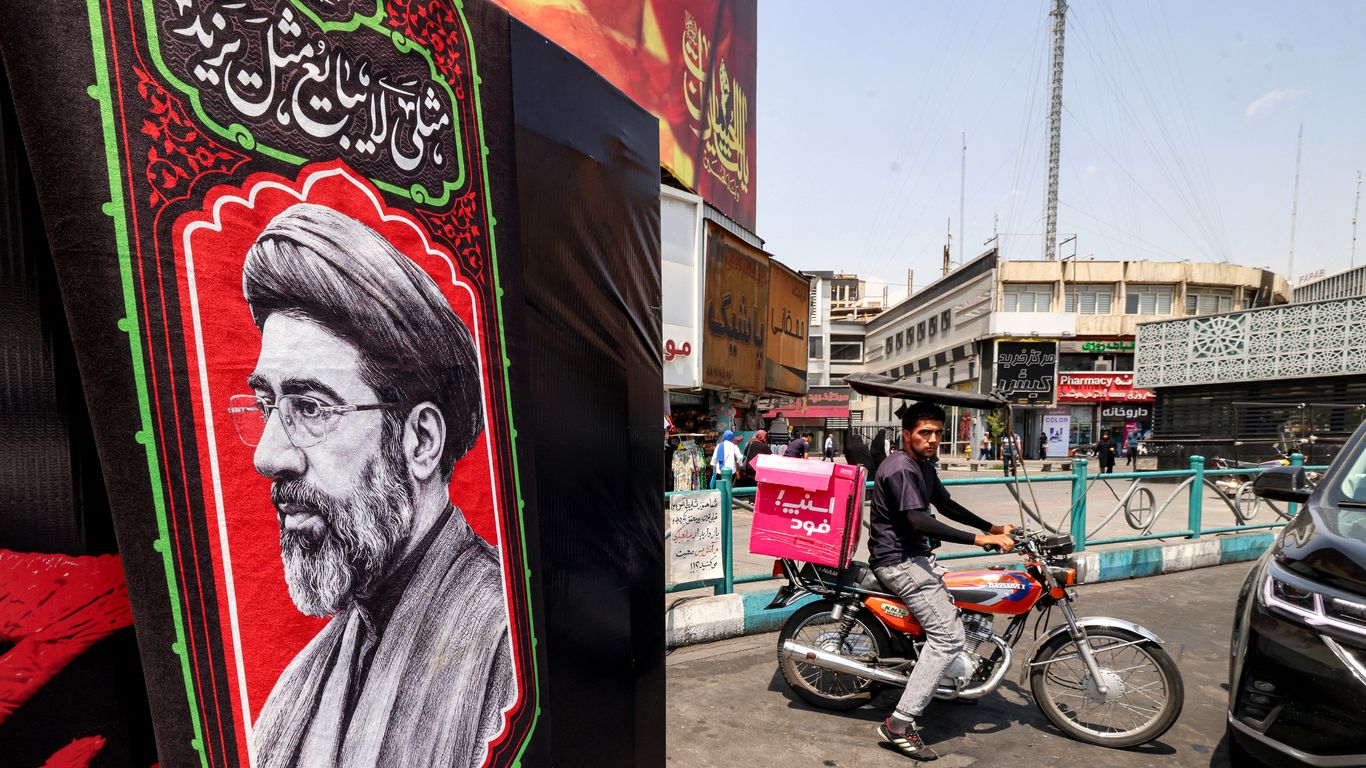
Iran's Supreme Leader Mojtaba Khamenei told the country's top three military commanders that a renewed attack by the U.S. and Israel ״must be met with an immediate and effective response, without geographical limitations״ in order to achieve "maximum deterrence," according to a statement from his office. Why it matters: This is the first publicly disclosed meeting between Khamenei and all the top commanders of Iran's armed forces since the war began. It comes as President Trump weighs major strikes on Iran after the midterm elections. Khamenei hasn't been seen or heard in public since he was wounded in an Israeli strike on the first day of the war. He has only issued written statements, which raised questions about his condition. The unusual apparent meeting took place a day after Qatari mediators held talks in Tehran for more than 12 hours in an effort to reach a deal to restart direct negotiations between the U.S. and Iran and avoid an outbreak of war after the midterms. The discussions continued in Doha, Qatar, on Saturday. What he's saying: "If the enemies once again launch military or terrorist attacks, it will be the Islamic Republic of Iran's Armed Forces and the Iranian nation that determine when and under what conditions those hostilities will end," Khamenei told the commanders, according to the statement. Zoom in: According to the statement, the meeting included armed forces chief of staff Gen. Ali Abdollahi, army commander Maj. Gen. Amir Hatami and Islamic Revolutionary Guard Corps commander Maj. Gen. Ahmad Vahidi. The commanders briefed Khamenei on the state of military readiness along the Gulf coastline and around the Strait of Hormuz, the Gulf of Oman, and Iran's northwestern and southeastern borders. They also reported "a several-fold increase" in production of various types of ammunition and reconnaissance, support, and combat weapons. Khamenei instructed the commanders that the "target bank" must be updated "so that all types of the American-Zionist
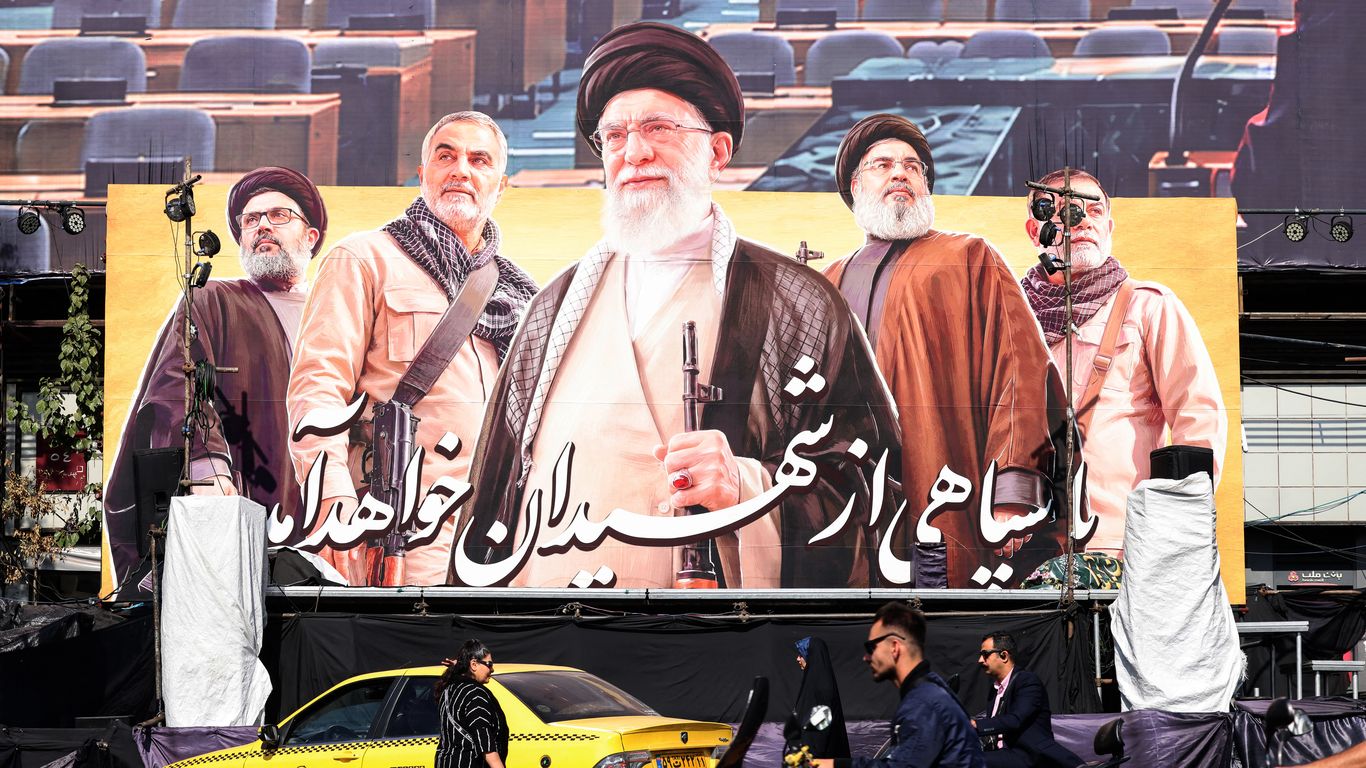
Qatari mediators held talks in Tehran for more than 12 hours on Friday in an effort to reach a deal to restart direct negotiations between the U.S. and Iran and avoid an outbreak of war after the midterms, according to diplomatic sources. The discussions will continue in Doha, Qatar, on Saturday. Why it matters: The U.S. is now just days away from a possible military operation that would inflict enormous damage on Iran and likely lead to retaliatory strikes against Israel and a host of Gulf countries. Driving the news: A diplomatic source said Qatari mediators were in regular contact with the White House during Friday's daylong session. "There was positive progress. Talks are still ongoing in an effort to unlock a deal between the U.S. and Iran," the source said. The Qataris are prodding the U.S. and Iran to agree on a set of reciprocal steps that would be implemented over a few days and get the parties back to direct talks on the Iranian nuclear program and other issues. A U.S. official said two competing demands have stymied the talks so far: the Trump administration's insistence that Iran make nuclear concessions as part of resuming talks, and Iran's stipulation that the U.S. first lift its naval blockade, release frozen funds and allow it to sell oil. The Qataris are trying to convince Iran to allow U.N. inspectors to visit its bombed nuclear sites as a confidence-building measure that the U.S. would respond to with some sanctions relief. The intrigue: Inside Trump's inner circle, there are different opinions on what he should do. Defense Secretary Pete Hegseth and Secretary of State Marco Rubio are highly skeptical that any nuclear agreement can be reached with the current Iranian regime. They think Trump's legacy should be to weaken the regime even more, including with further strikes, a U.S. official said. The person said that while Vice President Vance and Trump envoys Steve Witkoff and Jared Kushner want to resume negotiations, Trump is skeptical Iran will
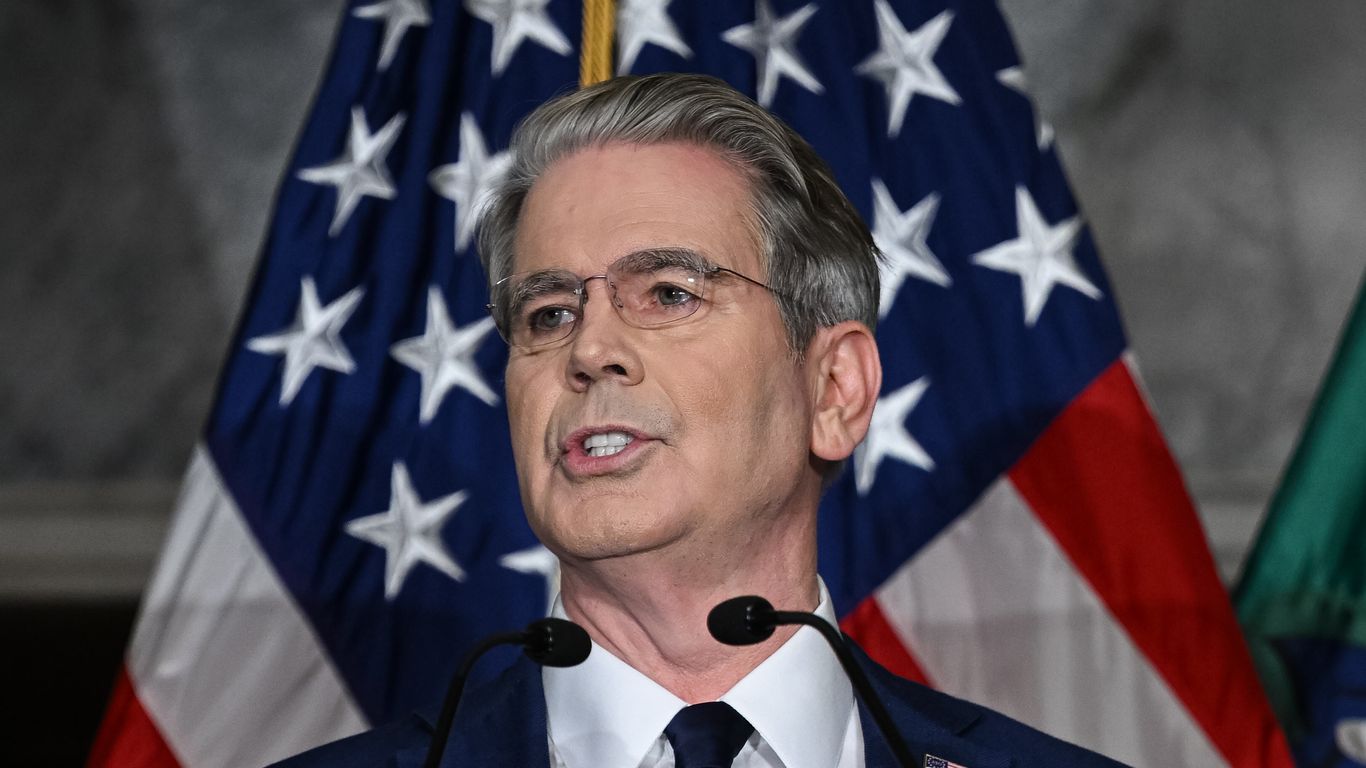
The U.S. naval blockade, sweeping economic sanctions and obstruction of overland export routes have crippled Iran's economy and intensified pressure on the regime, according to a new Treasury Department report obtained by Axios. Why it matters: Treasury Secretary Scott Bessent, who is leading an economic pressure campaign dubbed "Operation Economic Outcast," is one of Trump's closest aides urging him to let the initiative play out rather than rush back into combat. Though the report doesn't argue that the Iranian regime is close to collapsing, it does lay out the Treasury Department's view that its efforts have crippled Iran's economy and limited its ability to generate revenue. Driving the news: As he did before Operation Midnight Hammer in June 2025 and Operation Epic Fury in February, Trump is pursuing dual tracks — trying to reach a deal to restart peace talks while also preparing to possibly resume major combat operations after the midterms. The Treasury campaign, which launched in late August, is a third track. But U.S. officials say it needs more time to destabilize the regime and potentially convince the Iranian leadership to make concessions at the negotiations table. On Thursday, Trump met with his top national security and foreign policy aides to discuss the war. U.S. Central Command chief Adm. Brad Cooper, who commands forces in the Middle East, briefed Trump on the ongoing naval blockade . Bessent discussed the economic pressure campaign. "Bessent is telling the President the economic pressure campaign is working and that things are getting worse in Iran and that this could further destabilize the regime and push the Supreme Leader to agree to a deal," a U.S. official said. Zoom in: The Treasury report highlights several indicators of Iran's economic crisis: Currency collapse: The Iranian rial has lost roughly a quarter of its value since the operation began in August. In October, the unofficial exchange rate reached a record low of 2.687 million rials

Congress must act to ensure that families are able to heat their homes before the start of the season Heating oil may be the clearest warning yet of how the war in Iran is deepening the US’s energy affordability crisis. Families who heat their homes with oil are facing bills that could be 50% higher this winter, adding nearly $900 to the cost of keeping their homes warm. These families were already struggling before the war began. As the Guardian recently reported , research by my organization found that electricity shutoffs in 10 states had increased 28% over the past two years. Millions of Americans were already falling behind on their utility bills, forced to choose between paying for energy, food, medicine and rent. Now they face another round of increases in gasoline, electricity and home heating costs. Continue reading...
President Trump's energy policies and investment deals could become major targets of Democratic investigations if the party wins control of either chamber of Congress. Why it matters: Congressional probes could expose new details about the administration's dealings with major companies and foreign governments. What they're saying: House Democrats are likely to take a "shotgun" approach of "throwing everything out there and then seeing what sticks in the realm of popular opinion," TD Cowen analyst John Miller said via email. Democrats will be looking for agencies that exceeded their authority, deals involving administration officials' families, or both, Miller said. The big picture: Scratch the surface of Democrats' biggest potential oversight targets, and energy is everywhere. Russia. Trump's dealings with Moscow will again be front and center — and so will the energy dimension. Democrats in both chambers are likely to investigate Trump's diesel deal with Moscow, which they claim violates a 2022 law barring imports of Russian fuels. The inquiries could also extend to U.S. banks and ports, which lawmakers have already warned could face congressional investigation. Venezuela. "We expect Venezuela to be the subject of a number of inquiries," RBC Capital Markets analysts said in a note. Democrats have already raised questions about whether any oil companies knew about plans to depose Nicolás Maduro. Investigations could also examine the legality of the Pentagon's 35% stake in the corporate parent North American Blue Energy Partners and the terms of the deal, the note states. The Iran war. High gasoline and diesel prices give Democrats another reason to scrutinize the decision to attack Iran, especially if pain at the pump persists. Sens. Sheldon Whitehouse (D-R.I.) and Elizabeth Warren (D-Mass.) have already pressed major oil and gas companies about their profits during the conflict. AI and data centers. Wider and intense oversight of AI will touch on data centers' ener
‘Even though economists warned that tariffs would be inflationary, Trump has enthusiastically embraced them’ Donald Trump successfully campaigned for his second term two years ago promising to reduce prices on day one , but ever since he returned to the White House, he has done little to fight inflation or reduce prices. Instead, some of his most important policy decisions – most notably his war against Iran and his tariff wars – have increased inflation instead of reducing it. This helps explain why more than one in five Americans who voted for Trump now disapprove of the job he’s doing. Even though economists warned that tariffs would be inflationary, Trump has enthusiastically embraced them during his second term. Indeed, the “ liberation day ” tariffs he imposed soon after returning to office increased the price of hundreds of goods, including citrus fruits , steel, bananas, beef and auto parts. When the supreme court overturned those tariffs as illegal, Trump immediately imposed new 10% across-the-board tariffs that again helped push up prices (a lower court found those tariffs unlawful, too ). Time and again, Trump has slapped on new tariffs even though they inherently push up prices because tariffs are a tax on imported goods. Little wonder that a Fox News poll this month found that 77% of Americans disapprove of how Trump has handled tariffs. Continue reading...
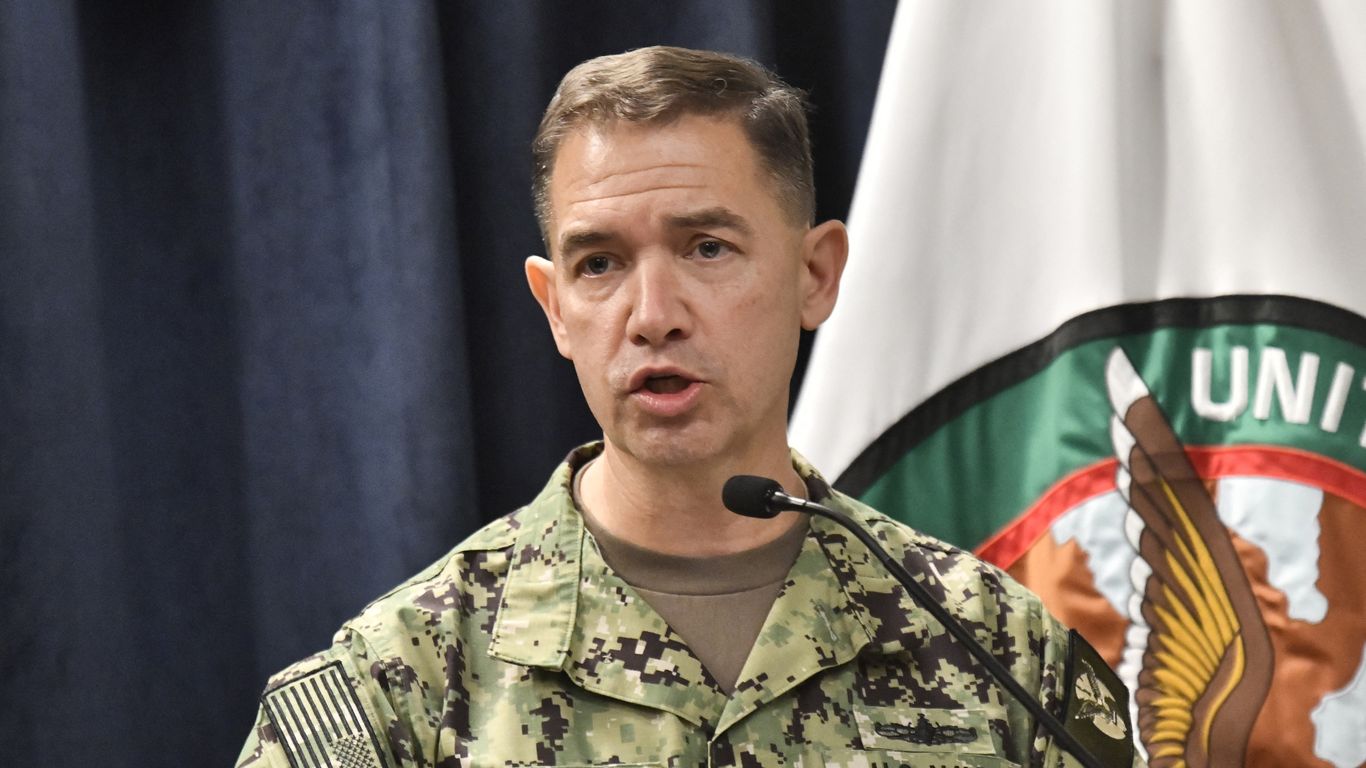
U.S. Central Command chief Adm. Brad Cooper, the commander of forces in the Middle East, briefed President Trump Thursday on the state of the Iran war, with a focus on the ongoing naval blockade , according to two U.S. officials. Why it matters: As he did before Operation Midnight Hammer in June 2025 and Operation Epic Fury in February, Trump is pursuing dual tracks — trying to reach a deal to restart peace talks while also preparing for a possible resumption of major combat operations after the midterms. Behind the scenes: Trump wanted to hear directly from the CENTCOM head on whether the naval blockade is working, the U.S. officials said. Cooper also briefed Trump on the military operation for guiding oil tankers out of the Strait of Hormuz to global energy markets. And he updated Trump on the economic pressure campaign the military is conducting in concert with the Treasury Department. Defense Secretary Pete Hegseth, Treasury Secretary Scott Bessent, Chairman of the Joint Chiefs of Staff Gen. Dan Caine, White House envoy Steve Witkoff and other senior officials also attended the meeting, the officials said. The White House and CENTCOM declined to comment. The Wall Street Journal first reported the meeting. Driving the news: A group of regional mediators led by Qatar is trying to get the U.S. and Iran to head off a resumption of war after the midterms in favor of negotiations. "The mediation is at a very sensitive stage," a regional source said. Qatari mediators recently delivered a letter from Vice President Vance to Iran's Secretary of the Supreme National Security Council, Gen. Mohsen Rezaei. Vance proposed restarting negotiations but stressed that any talks would have to address Iran's nuclear program. Trump and Vance met Wednesday to discuss a possible gesture of goodwill toward Iran, such as sending humanitarian goods like food and medicine, according to a source with knowledge. Later in the day, Trump publicly backed the idea. What they're saying: U.S. Amba
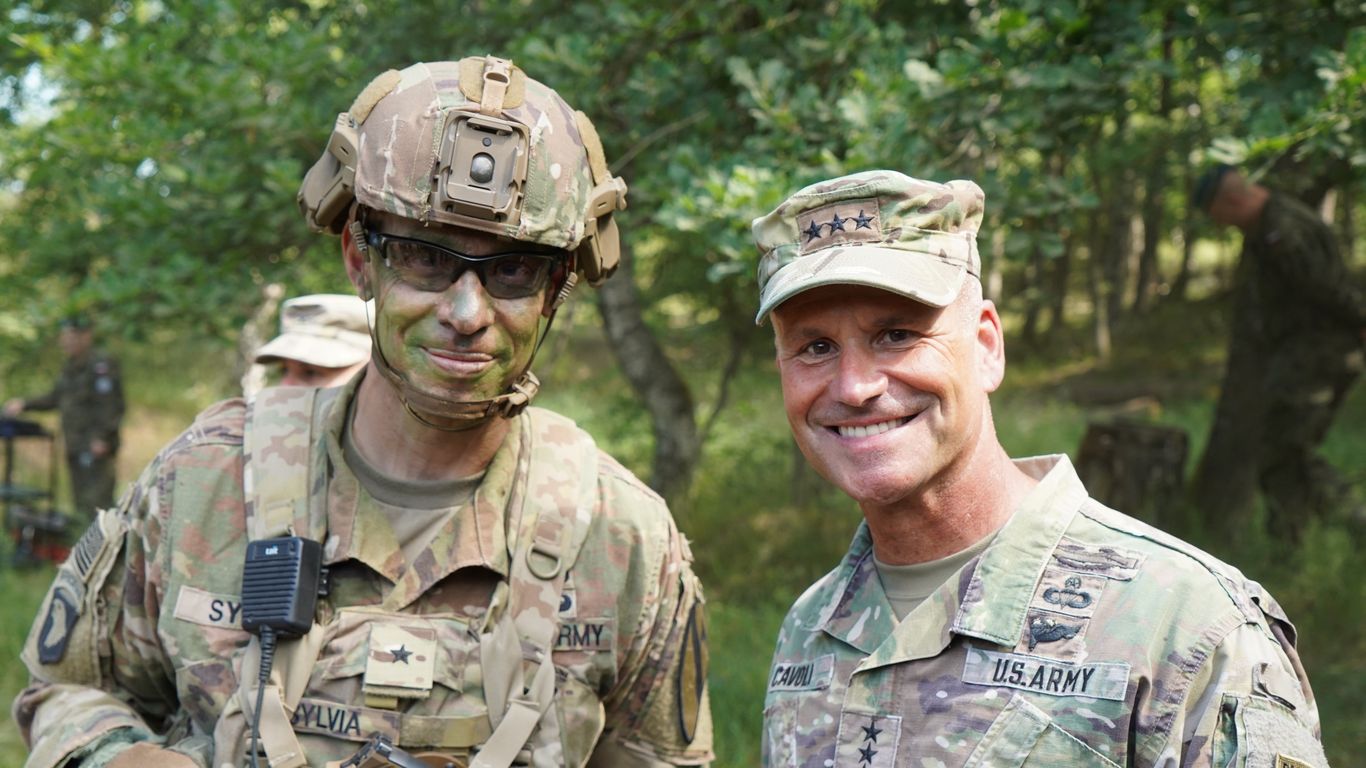
The Pentagon's top military planner admitted to leaking classified information about Ukraine and Iran to two reporters from separate outlets over a one-year period, according to an internal report of the investigation shared with Axios. Why it matters: Army Lt. Gen. Brett Sylvia was fired this week by Defense Secretary Pete Hegseth for the alleged misconduct, which the career soldier acknowledged on video after he failed four polygraph tests, a U.S. official said. "He had trouble passing multiple polygraph interviews," the report said. The report accused the general of making "unauthorized disclosures to the media," and said he "was cooperative with answering questions about interactions with the media to resolve this, and provided his personal phone for a forensics examination." Zoom in: The report and U.S. officials said that Sylvia's leaking began as early as June 2025 — before mainstream media outlets were removed from the Pentagon — and continued afterward via secure Signal app and once at a Silver Diner in Arlington, Va. "The meeting at the diner occurred because [redacted's] access to the Pentagon was revoked between meetings," the report says. "During the meeting at the diner, [Sylvia] relied on notes he took while reviewing a classified secret report to orally give redacted on U.S. assistance to Ukraine, the report says. The report says the reporter in question was writing a book and met twice with Sylvia. It also emphasized that the general "did not coordinate these meetings with [the Pentagon's Public Affairs Office], or seek to have the information reviewed before providing it to the reporter." The intrigue: U.S. officials suspect that Sylvia intentionally deleted any trace of contact on Signal between him and one of the reporters, but pretended it was an accident. "Sometime between June or July, Sylvia received Signal messages from [redacted]. Sylvia is unable to recall exactly what was in that message," the report said. "But he believes it had somethin

President Trump seems to think he can save a vulnerable Ohio Republican senator's ass by talking about how strong it is. Why it matters: Republicans are getting hammered over the war in Iran, gas prices and data centers. But they're playing along with Trump's ogling of male candidates, which he's described as an election strategy. "I don't do this with men very often. I started examining his body because I didn't know he was a great athlete. And I looked and I watched up and down and I looked at his ass," Trump said of Sen. Jon Husted (R-Ohio) at an Ohio rally. "My wife and I have a good sense of humor, and we know he's doing all he can to help us win," Husted told Axios. "We have made sure to hit the gym during the busy campaign to uphold the high standards the president has set for us." Zoom in: In five rallies over three weeks across the country, Trump gave a head-to-toe appraisal of his most vulnerable Republican senator. "His ass was like a big piece of muscle," Trump said in Michigan last week. "Then I looked at his legs and I said, 'Man, his feet are big,' " Trump said in North Carolina. Polling has shown Husted narrowly behind or tied with former Sen. Sherrod Brown (D), and Republicans view him as the most vulnerable GOP incumbent. Zoom out: Husted is getting the most love, but he's not alone. "You know, he's a very handsome guy," Trump said about Sen. Tim Sheehy (R-Mont.) at a Montana rally earlier this month. "I like the white hair, I like the big, strong build. Big, strong guy." Trump said of Rep. Mike Collins (R-Ga.), who is running for Senate in Georgia. Trump called him "all man." "I actually think that Rick Jackson's a very handsome, distinguished, beautiful-looking guy," Trump said about the Republican gubernatorial candidate in Georgia. "Look at this beautiful guy," Trump said of House candidate Ed Gallrein (R-Ky.). Trump called him: "Central casting." Between the lines: Senate Majority Leader John Thune (R-S.D.) has also joined the fun: "I know tha
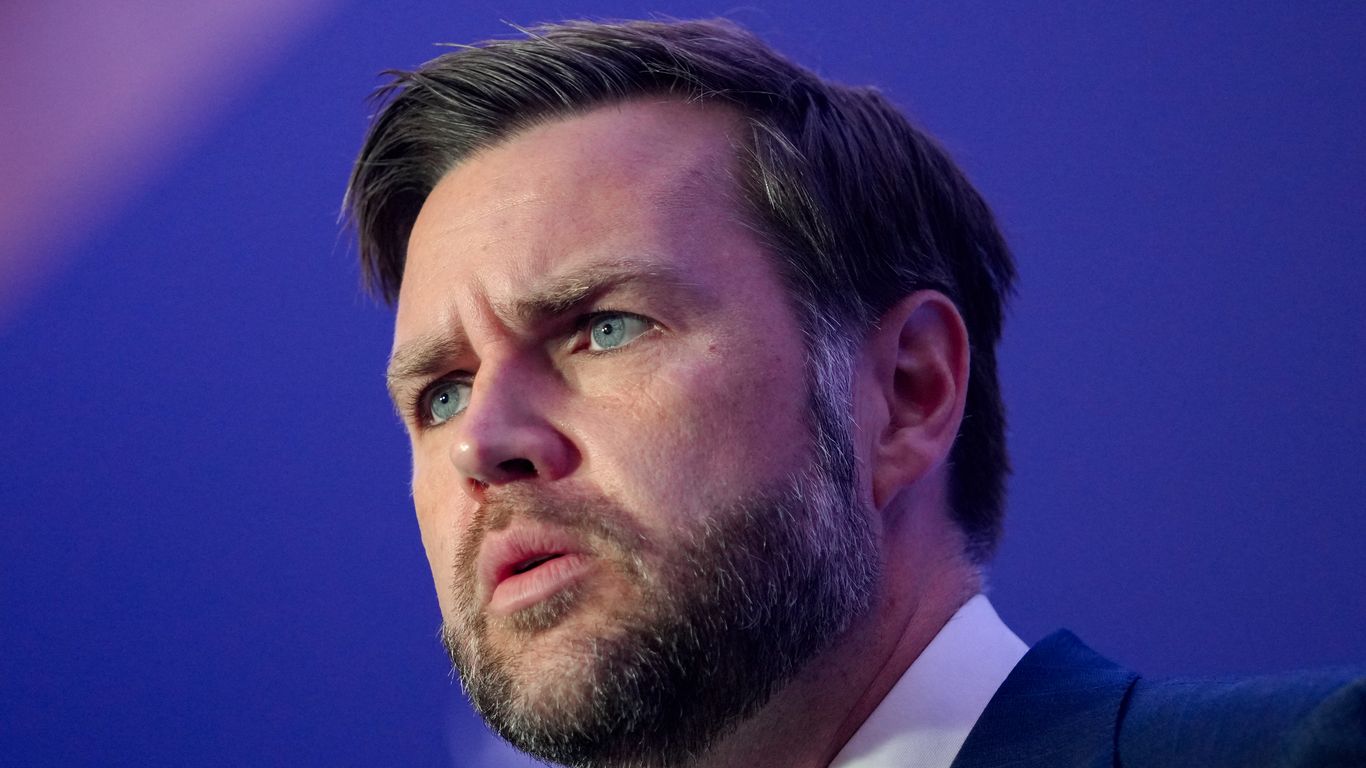
Vice President Vance sent a letter to Iran's national security chief stressing that any negotiations to head off U.S. military strikes "require discussions on the nuclear issue," a U.S. official said. Why it matters: The letter to Mohsen Rezaei, which focused on the possibility of restarting negotiations between the U.S. and Iran, is the most senior-level outreach by the U.S. to Iran in several months. It comes as President Trump considers resuming major combat operations in Iran after the midterm elections. Behind the scenes: Vance suggested sending the letter to Rezaei, who is one of the top national security officials in Iran and has a direct line to Supreme Leader Mojtaba Khamenei. "The President was enthusiastic about the letter," said the U.S. official, who declined to say when it was sent. The Wall Street Journal first reported the letter. Zoom out: One of the key sticking points in efforts to relaunch negotiations is Iran's demand that the U.S. first lift its naval blockade, release frozen funds, and allow oil sales. The U.S. wants Iran to restart nuclear negotiations before receiving any sanctions relief. What he's saying: Trump told reporters Wednesday that Vance's letter was about helping Iran obtain needed medical supplies. "Basically, it's getting supplies in to help people that are not well," he said.
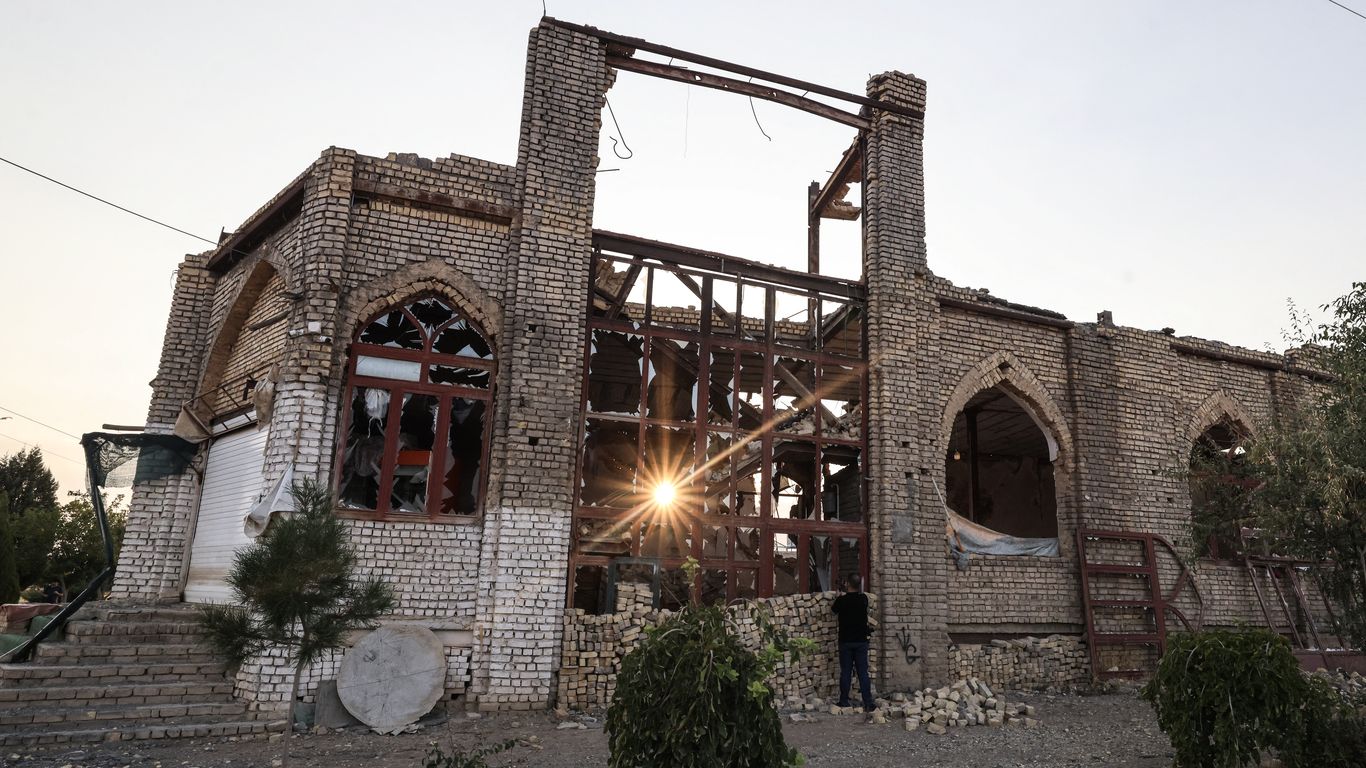
Regional mediators led by Qatar are trying to reach a diplomatic deal to restart negotiations between the U.S. and Iran and prevent the resumption of war after the midterm elections, three U.S., Israeli and regional sources say. The Qataris are working to convince Iran to allow UN inspectors to visit its bombed nuclear sites in return for some sanctions relief from the U.S. Why it matters: A renewed bombing offensive appears likely shortly after the midterms without a last-minute deal. IDF chief of staff Gen. Eyal Zamir spoke on Monday with CENTCOM commander Adm. Brad Cooper to coordinate ahead of potential attacks. Such an operation is expected to include a week of massive strikes on Iranian leadership, energy, nuclear and infrastructure targets, U.S. and Israeli officials say. What he's saying: President Trump told Axios in a brief interview Wednesday that negotiations with Iran are taking place through mediators but stressed that he doesn't know whether they'll bear fruit. "We need to finish the job — either through a deal or another way — we will find out if negotiations can succeed," he said. "While our Brave Armed Forces are fully prepared to defend the Homeland, Iran continues to give diplomacy a chance to succeed," Foreign Minister Abbas Araghchi said on X Wednesday. Behind the scenes: The mediation efforts are being led by Qatar, with the support of Pakistan, Saudi Arabia, Egypt and Turkey, sources say. Qatari negotiator Ali al-Thawadi visited Tehran earlier this week for talks with Iranian officials about a potential deal with the Trump administration. A regional source briefed on the talks said the Qataris presented ideas for how to bridge the gap between the U.S. demand that Iran give up its enriched uranium stockpile and Iran's insistence that the U.S. first lift its naval blockade and release Iran's frozen funds. The regional source and a U.S. official said the mediators are telling Iran that accepting the proposals may be the only way to avoid major a
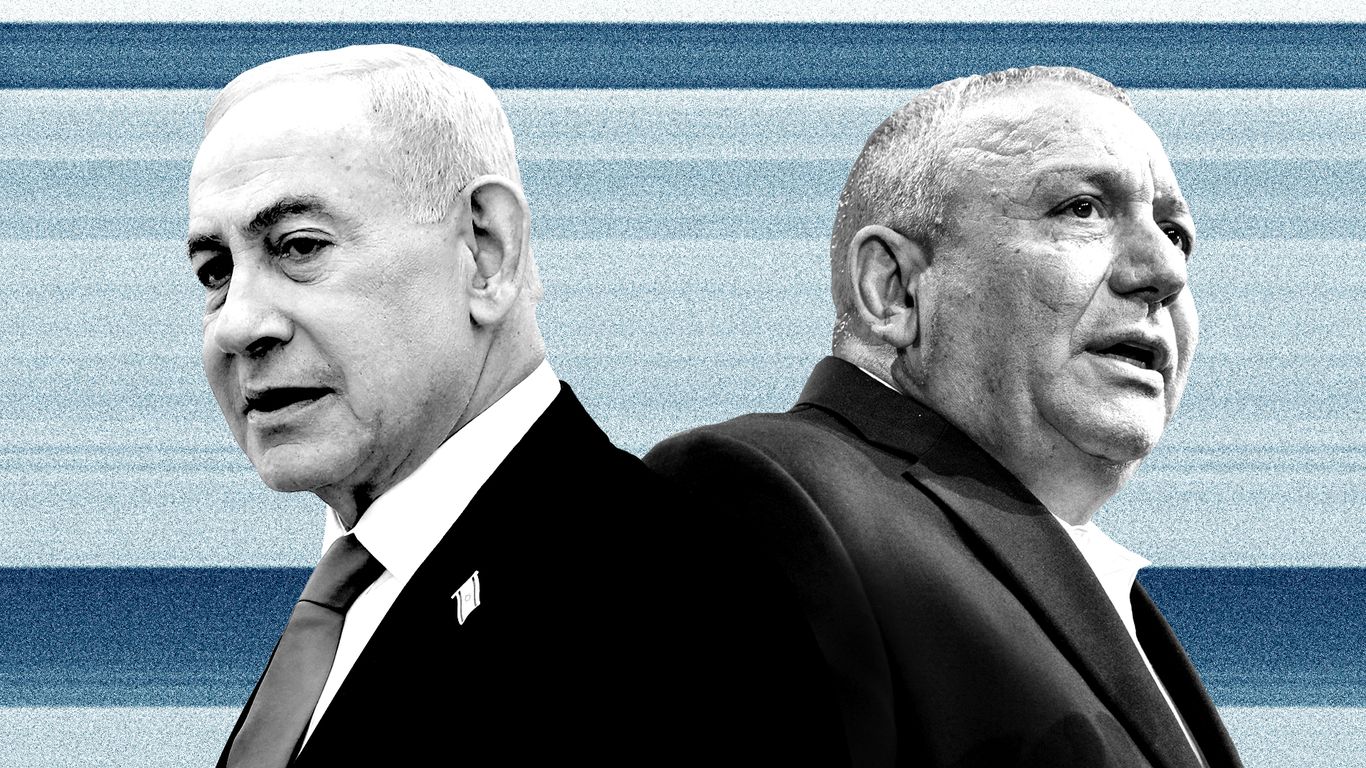
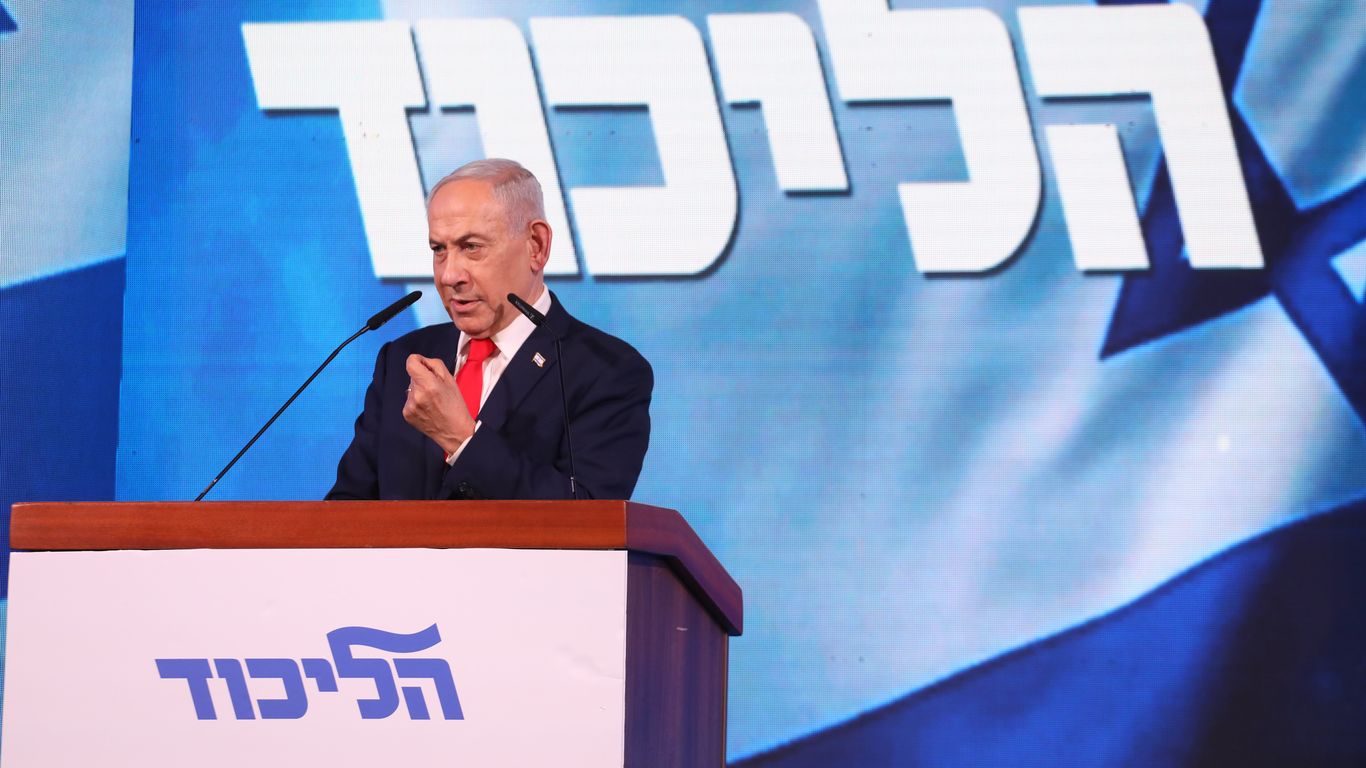
Israelis head to the polls today for one of the most consequential elections in the country's history — with rival camps warning that victory for the other would put Israel's future in jeopardy. Why it matters: The elections are yet another referendum on Benjamin Netanyahu's leadership and the path he's taken the country down over the past four years. It's Israeli voters' first chance to hold Netanyahu accountable for the security failures that led to the Hamas-led October 7 attacks — or to reward him for what he claims were unprecedented military successes in the three years of war since. If Netanyahu and his far-right coalition win, they're likely to renew the war with Iran in an effort to topple its regime, intensify their crackdown on Israel's democratic institutions and move to end Netanyahu's corruption trial. Driving the news: Netanyahu's campaign was totally focused on the war with Iran. After two military campaigns over the last 18 months in which he claimed that Israel destroyed Iran's nuclear program, Netanyahu's main talking point was that Iran is moving closer to a nuclear bomb. Earlier this week, Netanyahu went as far as posting an AI-generated image of Tel Aviv being destroyed by an Iranian nuclear bomb — implying that's what will happen if he loses. Behind the scenes: Netanyahu spent weeks trying to persuade President Trump to give him a green light to strike Iran ahead of the elections. Trump did not go along. In the 72 hours before the elections, Netanyahu tried to order the Israel Defense Forces to take steps to lay the ground for a potential new military strike or take actions short of an overt attack, Israeli officials say. IDF chief of staff General Eyal Zamir refused to abide. He warned that such a strike could lead to a miscalculation that quickly escalated hostilities and potentially forced the elections to be called off, the officials said. The Israeli officials said Zamir insisted there was no operational urgency in taking these steps ahea

TEL AVIV, Israel — Gadi Eisenkot is as low-key as Benjamin Netanyahu is bombastic. He's a political novice up against the longest-serving, most politically savvy prime minister in Israel's history. And yet, on the eve of Tuesday's elections , Eisenkot poses the most serious threat to Netanyahu's hold on power in years. Why it matters: A victory by the Yashar party leader would upend Israeli politics and could reset the country's strained relationships abroad. The intrigue: The contrast between the two top contenders could hardly be sharper. Their roots: Eisenkot, the son of Moroccan Jewish immigrants, grew up in Eilat, Israel's southernmost city. If he wins, Eisenkot will be the first prime minister of Moroccan descent in Israel's history. Their military backgrounds: Netanyahu served in the Israel Defense Forces' elite special forces unit "Sayeret Matkal" and later went into business and politics. Eisenkot joined the IDF Golani infantry brigade and rose through its ranks as a combat commander until becoming IDF chief of staff. He arrived at his rally on Sunday to the tune of the Golani brigade song from 1974. Their ties to America: Netanyahu is better versed in American politics — and more articulate in English — than many American politicians. Eisenkot is not an "American" politician at all, let alone a professional one. He speaks English with a heavy Israeli accent and doesn't deliver catchy soundbites. He does not enjoy being on TV. At his final campaign rally Sunday before about 1,000 supporters, Eisenkot was visibly uncomfortable being in the spotlight, even when the crowd cheered him on. Their trustworthiness: Netanyahu's credibility with the Israeli public has been battered by his long-running corruption trial, his political tactics, his refusal to take responsibility for the failures that led to October 7 and accusations of duplicity in his handling of the Iran war. Eisenkot is seen as a straight shooter, even among many of his opponents. Zoom in: The failur
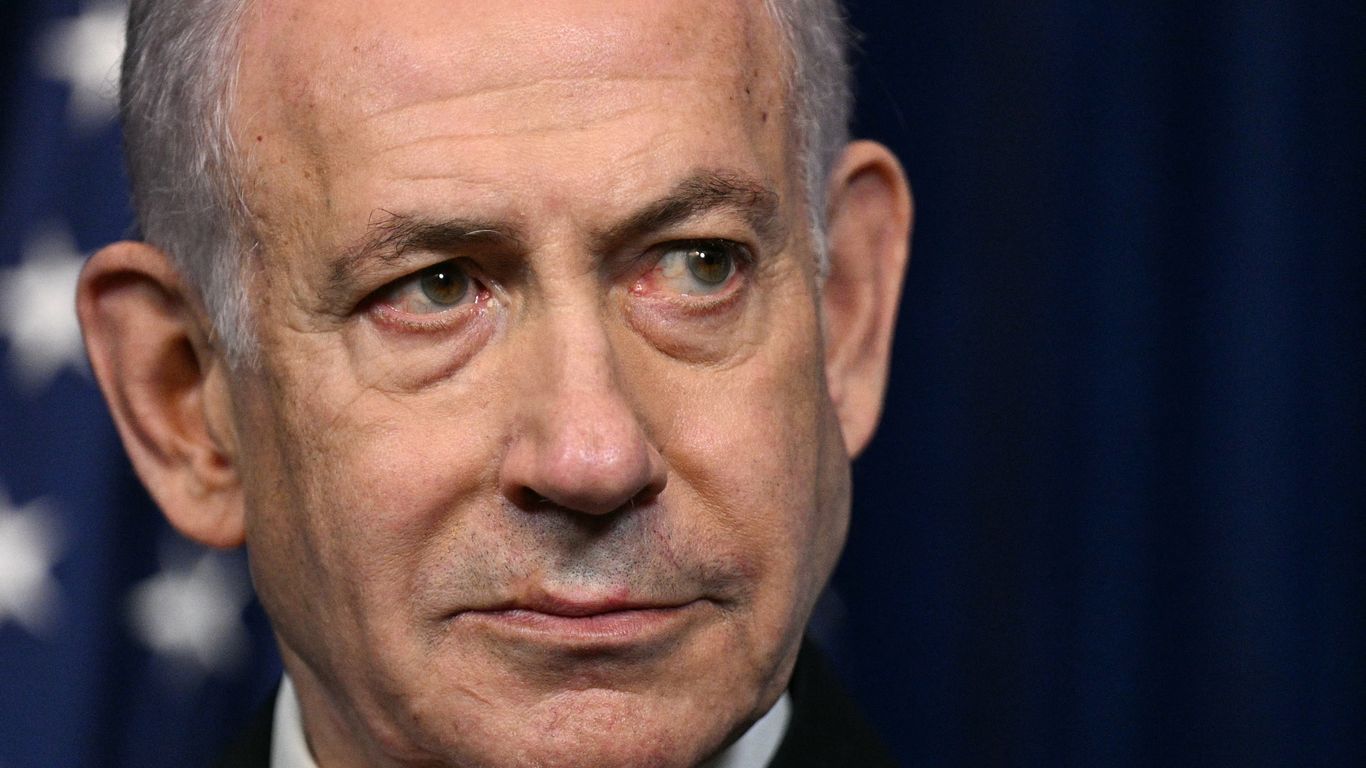
TEL AVIV, Israel — Israeli Prime Minister Benjamin Netanyahu — fighting for political survival in Tuesday's elections — has pleaded with President Trump in recent days to show more public support for his campaign, according to a U.S. source with knowledge and an Israeli source briefed on the matter. Why it matters: The U.S. source said the White House sees Netanyahu's aggressive lobbying as a "sign of desperation" and an indication that the Israeli leader thinks he's trailing. Neta Molcho, a spokesperson for Netanyahu's Likud party, denied the prime minister asked Trump to support his campaign "in recent days or before his endorsement statement." The White House did not respond to a request for comment. Trump said in an interview with Newsmax two weeks ago that people in Israel asked him to get involved in support of Netanyahu. Behind the scenes: The U.S. source said Netanyahu spoke with Trump twice in the last three days and asked him to double down on his Truth Social post last week endorsing him. The source said Netanyahu even suggested language for additional statements of support. An Israeli source briefed on Netanyahu's efforts said the Israeli prime minister proposed that Trump hold calls with Israeli reporters to express further support. The latest: On Sunday evening, Trump issued another statement endorsing Netanyahu and calling on Israelis to vote for him, mainly because of his hawkish position on Iran. "As everyone is aware, including the enemy, Bibi and I have had a great relationship in winning together...when you go to the Polls please remember that Bibi has been an outstanding Warrior Prime Minister!" Trump wrote on Truth Social. "There can no longer be the chant heard around the World of 'Death to America, Death to Israel,' and there won't be. Vote for Bibi Netanyahu for Prime Minister, we have to finish the job that we started!" he added. Driving the news: After weeks of hesitation, Trump endorsed Netanyahu last Sunday. He went as far as to suggest
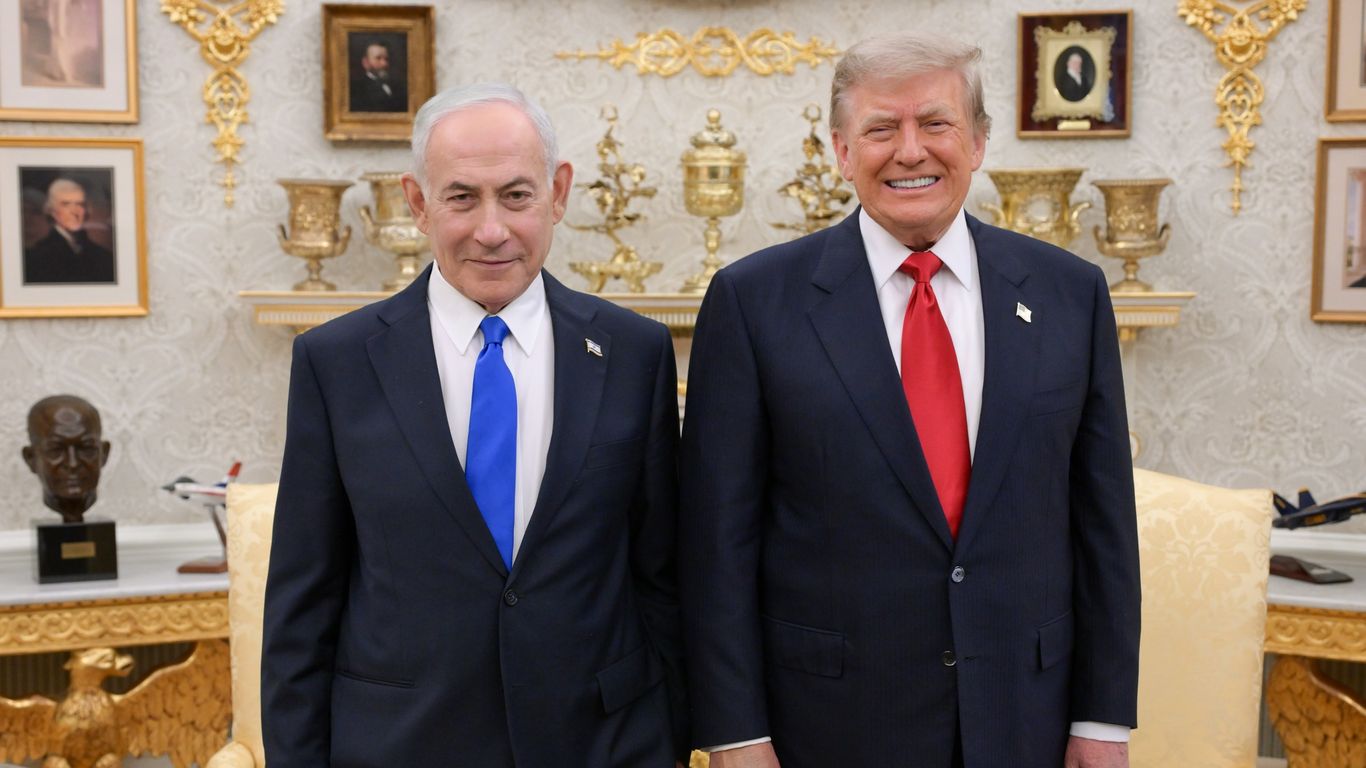
President Trump has endorsed Benjamin Netanyahu in Tuesday's Israeli election, but some of his advisers see opportunity for his Middle East agenda in a government led by someone else, U.S. officials tell Axios. Why it matters: Trump has never worked with an Israeli prime minister other than Netanyahu, and doesn't personally know any of the other candidates. The two have forged a close but often turbulent relationship. "He's the devil he knows," one Trump adviser said, describing the president's view of Netanyahu. Driving the news: After weeks of hesitation, Trump endorsed Netanyahu on Sunday — and even suggested his defeat would have consequences for U.S.-Israel relations. One U.S. official described the endorsement as a win-win for Trump, regardless of the outcome. If Netanyahu wins — or remains in power as caretaker prime minister — Trump could claim credit for rescuing him politically and use that leverage to press for concessions. If Netanyahu loses and his opponents form a government, Israel's new leaders would still have every incentive to cultivate good relations with Trump. His endorsement of their rival would quickly become a footnote. Behind the scenes: Many of Trump's closest advisers opposed his decision to endorse Netanyahu, believing the president should stay out of the Israeli election, according to sources familiar with the discussions. Vice President Vance notably declined to follow Trump's lead when asked about the election this week, amid growing hostility toward Netanyahu in parts of the MAGA movement. "I'm not attacking Bibi Netanyahu. I'm not endorsing Bibi Netanyahu. I think the president's endorsement is ultimately what matters," Vance told reporters. Zoom in: Vance, who endorsed former Hungarian Prime Minister Viktor Orbán days before his election defeat in April , said he would no longer get involved in foreign elections. The vice president is among the senior Trump officials who became disillusioned with Netanyahu during the war with Iran,
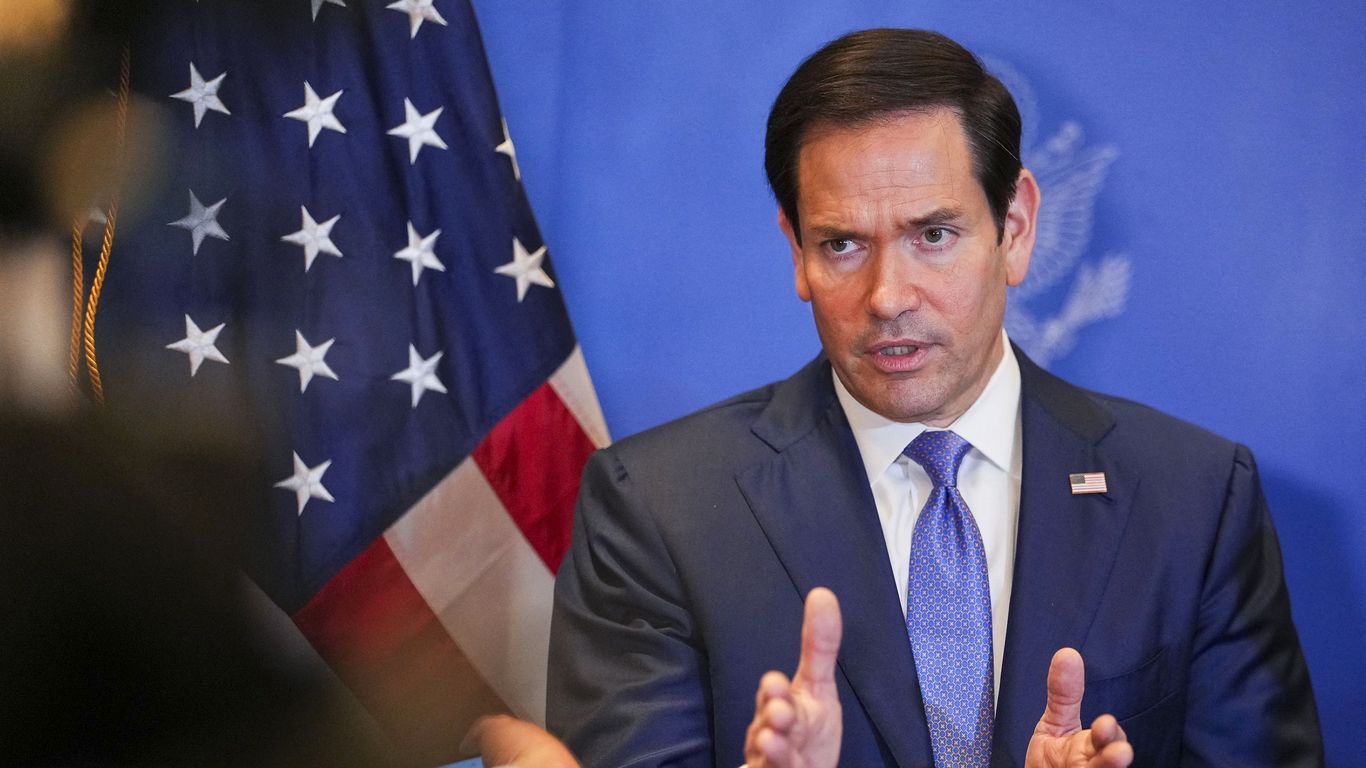
U.S. intelligence finds Iran has "substantially increased" its efforts to target American diplomats and officials in the Middle East and beyond, with lethal plots reaching "advanced stages," according to an Oct. 23 memo to Secretary of State Marco Rubio obtained by Axios. Why it matters: U.S. officials say the intelligence is one reason the State Department is drawing down personnel at several American embassies across the Middle East, amid mounting fears of a broader regional conflict. U.S. officials also fear that Iran-backed Houthi rebels in Yemen could expand their attacks beyond Saudi Arabia to other countries in the region. Adding to the volatile security environment is the prospect of renewed U.S. and Israeli military operations against Iran, potentially after the midterm elections. News of the memo exploded across the internet after Axios posted it last night, with media coverage worldwide . What they're saying: "We may do another little Operation Epic Fury, or [the Iranians] will agree [to a deal]," President Trump said at a rally in Florida on Friday. "If they're smart, they will just say, 'Let's get down to business,' but I doubt they will do that because perhaps they're not smart." Driving the news: In the one-page, unclassified memo obtained by Axios, Director of National Intelligence Jay Clayton warned Rubio that intelligence about Iranian assassination plots needs to reach more U.S. personnel than are currently authorized to receive it. The memo does not identify specific targets, countries outside the Middle East or the nature of the plots, but says the underlying intelligence has already been shared with senior State Department officials. Clayton offered to downgrade as much of the sensitive intelligence as possible so Rubio could share it more widely with personnel potentially at risk. State of play: Earlier this week, the State Department ordered family members and nonessential personnel to leave the U.S. Embassy in Riyadh and consulates in Jeddah

The quickest and most affordable response to historically high diesel prices is also the simplest: Use less of it. Why it matters: Diesel is so entrenched in farming, trucking and other industries that even soaring prices aren't enough — at least not yet — to prompt a wholesale shift to alternatives from electric semi trucks to manure-powered tractors. Catch up fast: Diesel prices have climbed to record highs since the U.S. war with Iran began in February, rising faster than gasoline amid global oil supply disruptions . Diesel averaged $6.31 a gallon Thursday, up 74% from a year ago, according to AAA . Regular gasoline averaged $4.27, up 39%. The big picture: Gasoline gets the attention, but diesel is the workhorse of the American economy. It powers grocery trucks, tractors, freight trains, construction equipment, hospital backup generators and even school buses . Driving the news: The price spike is hitting farmers during the fall harvest. "Farmers buy diesel by the truckload, so we're talking about hundreds of thousands of dollars in diesel, and when it goes up the way it has spiked, that's the difference between profit and loss in a year," said Curt Blades, senior vice president at the Association of Equipment Manufacturers, a trade group representing tractor makers and other heavy-equipment manufacturers. The financial pain varies: Trucking companies can often pass higher fuel costs to customers through surcharges. Farmers, who have little control over crop prices, generally can't. The economic pressure has become political ahead of the midterm elections. President Trump announced $8 billion in one-time aid for farmers at a campaign rally in Kansas on Monday, where Republicans face a competitive Senate race. "It's a bit too soon to tell the impact," Blades said of the aid package, though he welcomed support during harvest. State of play: Trucking and agricultural equipment experts say the most immediate savings come from using existing diesel engines more effici
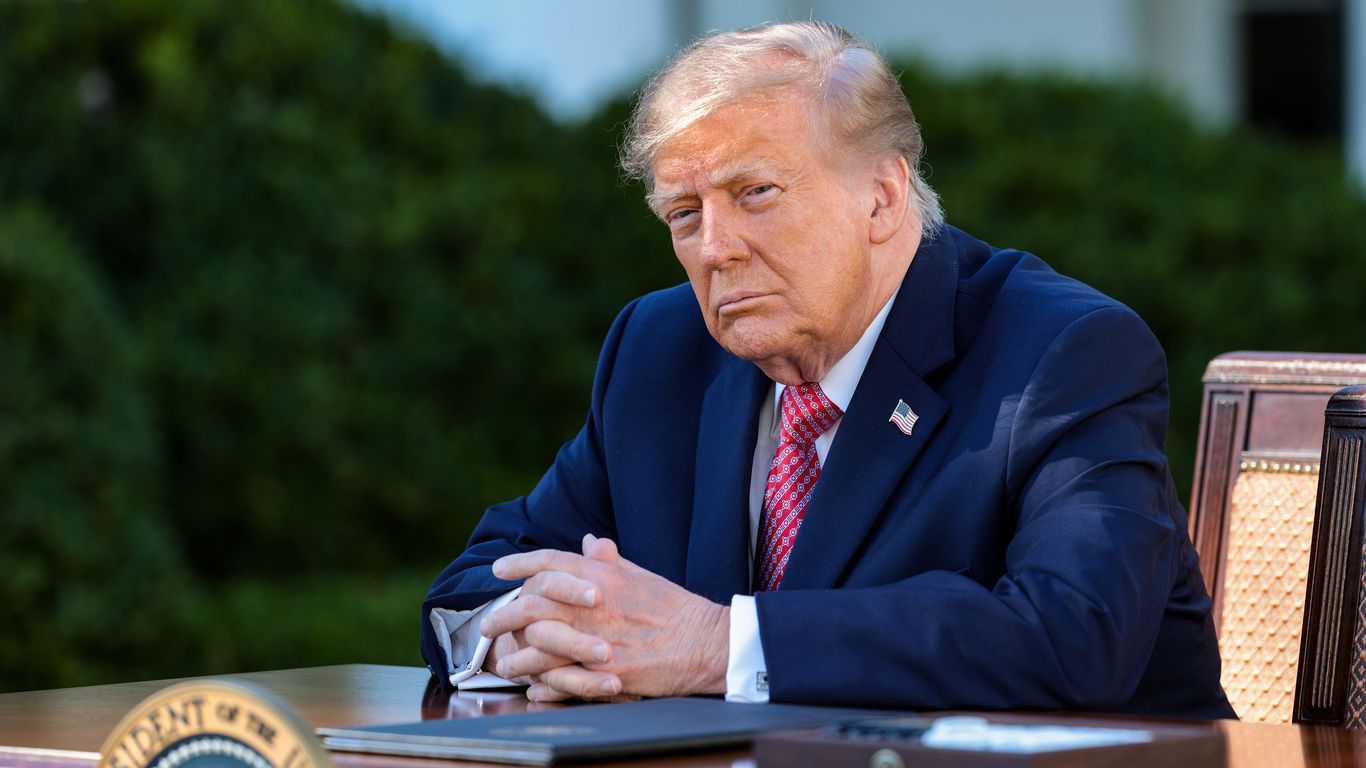
A federal judge on Thursday ordered President Trump to sit for a deposition by Dec. 11 in his $10 billion defamation lawsuit against the BBC over an edit of one of his speeches that the president's lawyers say was misleading. Why it matters: The order will likely force Trump to answer questions under oath in a legal battle he started. Driving the news: Judge Enjoliqué Lett ordered Trump to appear by Dec. 11, after lawyers for the BBC argued that Trump is improperly delaying his appearance. In a filing published Wednesday, Trump's counsel said the president could appear between Jan. 11 and Jan. 22, 2027, and argued that his presidential duties prevent him from sitting for the deposition before then. They also allege the BBC is "wrong to claim that President Trump is avoiding his deposition in this action." The president was originally scheduled to appear for the deposition on Oct. 16. However, his lawyers said, that appearance was canceled because Trump had to attend to "matters that have significantly impacted the United States' national security and economy," including the wars in Iran and Ukraine and the White House Accord on Super Intelligence. The other side: BBC attorneys say the president was campaigning in Georgia on Oct. 16, as reflected in a White House press pool report that includes his travel plans. The BBC argues the president chose political activity over appearing for the original deposition date. According to Trump's daily schedule, he attended an intelligence briefing and had executive time before departing for a rally in Georgia and then attended an RNC event in Palm Beach, Florida, that evening. The White House referred Axios to Trump's personal counsel. A spokesperson for Trump's legal team told Axios in an emailed statement that the BBC "defamed President Trump by intentionally, maliciously, and deceptively doctoring his speech in a brazen attempt to interfere in the 2024 Presidential Election." The BBC's legal team did not immediately respond t