Shares in technology companies dropped sharply Thursday, compounding recent declines that have sparked concerns about the durability of the artificial intelligence boom that has driven much of recent U.S. economic growth.
Results for “midterm results”
Victory has a thousand fathers. And Democrats everywhere are clamoring for a piece of this midterm triumph.
European far-right leaders quick to distance themselves from Donald Trump and stress their own priorities Europe live – latest updates US midterms live – latest updates The historic Republican defeat in the US midterm elections has forcibly reminded Europe’s far-right leaders of their perennial Donald Trump dilemma: they may love his nativist agenda, but the man himself is a toxic electoral liability. Since his re-election in 2024, European populist leaders such as Marine Le Pen in France and Giorgia Meloni in Italy have carefully calibrated their public postures towards the US president, walking a delicate transatlantic tightrope. Continue reading...
Senior leaders say party will be ‘united’ in focus, but progressives call on party to take radical action Progressive Democrats have declared that significant US midterm election wins across the country are as much a repudiation of their own party’s political establishment as of Donald Trump’s presidency. After a string of left-wing candidates scored stunning victories from Texas to Michigan, senior Democratic leaders have stressed the party’s new representatives in Washington will be “united” in their focus on reducing costs for Americans and ending corruption under Trump. Continue reading...
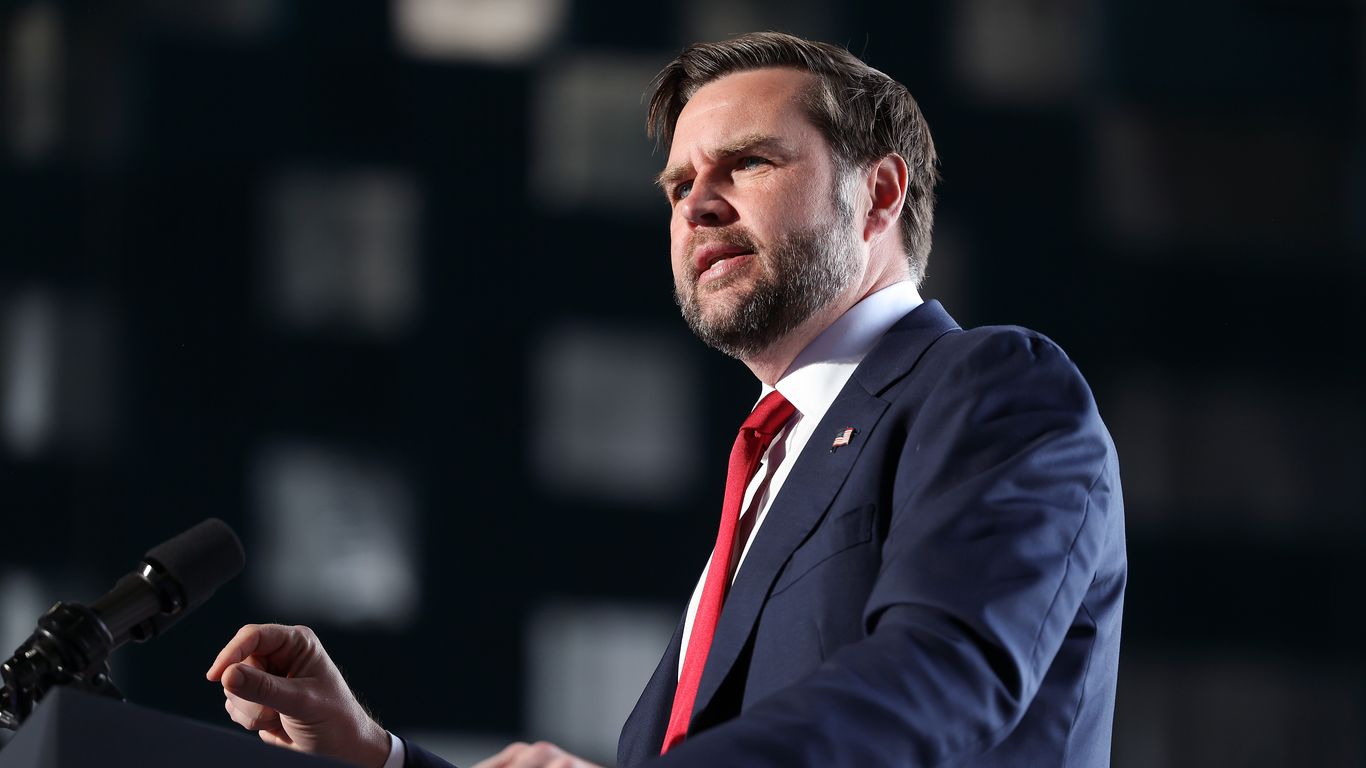
Vice President Vance stepped out of President Trump's shadow Wednesday, seizing on the GOP's midterm catastrophe to begin the explosive task of claiming MAGA as his own. "The reason we lost is the war," Vance wrote in an extraordinary 600-word postmortem on X , blaming Trump's Iran campaign for Republicans' historic collapse. Why it matters: Vance's presidential ambitions are entangled in the wreckage of a war he privately opposed but publicly defended. His path to 2028 demands a delicate political calculation. Vance must convince MAGA's disillusioned voters that he understands their sense of betrayal, even as he remains a central figure in the administration responsible for the Iran war. His maneuvering will take place under the gaze of a president who doesn't seem particularly eager to leave the stage — and who isn't shy about reining in those on his team who overstep. "Today, JD Vance became president — or acted like he wanted to become one," a source close to the administration told Axios. Zoom in: Vance argued that defections from Trump's 2024 coalition — not lack of turnout — drove the GOP's collapse in Tuesday's midterms. Citing polling of disaffected Trump voters, he identified four demands: "End the war." "Focus on cost of living/inflation." "Put America First." "Change our relationship to Israel." Those happen to be the four hottest topics among top MAGA podcasters and activists. So Vance is aligning with those leaders on topics where MAGA anger with Trump is raging. What they're saying: "If you'd like to argue [the war] was worth it, that losing the Senate for the next 6 years was worth it, then do so," Vance wrote. "Argue it was a worthwhile cost to pay. Agree or disagree, that's at least honest." Trump accepted that challenge Wednesday, acknowledging that the war had hurt Republicans but insisting it was worth the cost. "If I had to do it again, I'd have to do it again," he told reporters. "As far as that war is concerned, I would have done nothing diff

The AI industry is scrambling to repackage a $10 trillion infrastructure buildout to appease a hostile electorate that overwhelmingly voted to restrict data center construction in ballot measures across the country. It's not just changing the name of data centers to "compute campuses," but offering communities real money, including dividends, benefits for schools or cities, environmental concessions and labor protections. Why it matters: Tuesday's election proved voters won't tolerate unchecked growth, although the market and many analysts see the blue wave slowing — but not stopping — data center construction around the U.S. To prevent an existential threat, the world's biggest companies are working on a rebrand. How well they execute on their promises will determine the pace of the global AI race. What they're saying : Chris Lehane, OpenAI's chief global affairs officer, compared the turnaround AI must make to the 1996 election, which came shortly after Republicans routed Democrats in a historic midterm election. "A lot happens in two years," he told Axios in an interview. "Smart, talented folks take messages from voters and react and respond to them." Getting community buy-in for data centers will require "really making clear that these can be long-term, durable, economically transformative projects for communities," he said. Driving the news : There's no question about how voters feel about data centers after Election Day, with restrictive measures across 10 states going 43-1 at the ballot box. The margins weren't close, with an average of 75% of people favoring restrictions. In Texas, a new Democratic governor has promised to keep a moratorium in place until the legislature passes comprehensive reforms. Candidates who won in other emerging data center states also favor similar restrictions. Analysts say about 60% of planned 2028 capacity across the U.S. faces a risk of delay. Between the lines : Incoming Democrats aren't going to kill data centers. Virginia, ru
It's a de facto motto in the Trump White House: "Somebody's gotta take the fall." Lately, that person looks like Secretary of Defense Pete Hegseth. Why it matters: From the unpopular war in Iran to his bad bipartisan relations with members of Congress, Hegseth's record has made him the most vulnerable member of Trump's Cabinet after Tuesday night's midterm shellacking. "Hegseth is definitely on thin ice," a Trump adviser told Axios. "It doesn't mean the president forces him out. But there are complications." Driving the news: As early as next week, the House could impeach Hegseth for allegedly defying Congress and illegally continuing the U.S. war in Iran. The measure is sponsored by Rep. Thomas Massie (R-Ky.), a vociferous critic of Israel and foreign wars. Zoom in: Iran is at the center of both Hegseth's possible impeachment and Republicans' midterm collapse. Many voters oppose the war and its byproduct: higher gas prices that spiked after Iran closed the Strait of Hormuz. Before Trump attacked Iran on Feb. 28, Hegseth was the most gung-ho about the conflict, and he gave the rosiest projections about how quickly and easily it would be resolved, according to sources familiar with the discussions. By August, a senior administration official said, U.S. Central Command was reportedly soliciting new approaches to pressure Iran, suggesting that military leaders were still reassessing how to achieve strategic results. CentCom was also asking: "At what point did Hegseth recognize that our original strategy wasn't going to produce the outcome he expected and pitched?" Trump stood by Hegseth on Wednesday, telling reporters that the secretary is "doing a very good job." Between the lines: Trump has been known to praise an embattled Cabinet secretary, only to seek their ouster shortly thereafter. With Hegseth, four factors are weighing on Trump: 1. The impeachment threat. Democrats already have tried to impeach Hegseth, and with their new House majority in January, those effo
Democrats of all political stripes won so big on Tuesday that the party didn't settle its long-running civil war between moderates and progressives. Instead, the party's historic victories gave each faction some reasons to claim that its brand of Democrats can defeat the GOP in 2028. Driving the news: Democratic operatives are sure of one thing, though: Tuesday's blowout wins mean that more party leaders will be willing to run for the White House than if the midterms hadn't gone so well. Barack Obama's 2012 campaign manager, Jim Messina, told Bloomberg TV this week that he's already met with 29 potential candidates. Zoom in: On Tuesday, moderate Democrats won. Progressives won. Even one-time socialists won. In Michigan, for example, unapologetic progressive Senate nominee Abdul El-Sayed won by 7 points after running on Medicare for All. In the same state , William Lawrence, a member of the Democratic Socialists of America before he let his membership lapse recently, flipped a key swing district. Those results were good news for New York Rep. Alexandria Ocasio-Cortez, the democratic socialist with a national profile who went all-in on electing El-Sayed — and is considering a run for president in two years. More moderate Senate candidates who frequently talked about their faith on the campaign trail — such as Texas' James Talarico and Kansas' Adam Hamilton — pulled off huge upsets in deep-red states, and in the process created a model for some Democrats to follow. Their mild-mannered, religion-infused campaigns mirrored former Transportation Secretary Pete Buttigieg's 2020 presidential run. For the past year, AOC, Buttigieg and other Democrats eyeing the White House have been laying the groundwork to turn the 2026 elections into a springboard for their potential presidential campaigns. Some put their chips on specific candidates — and virtually all of them succeeded. Pennsylvania Gov. Josh Shapiro, a centrist technocrat who campaigned on "getting sh*t done," won reele
Accuracy of US polling came into sharp focus after Trump outperformed polls in 2016, 2020 and 2024 Political polling experts hailed a “great night” for the industry after surveys accurately foresaw much of the Democratic blue wave that swept across the US in midterm elections. In only a handful of US Senate races, including Texas and New Hampshire, key polls failed to gauge the scale of the Democratic victory over Republicans on Tuesday. Continue reading...
Guardian analysis shows how tumbling approval ratings may have hurt candidates backed by US president Track live results from all 50 states Send us your questions about the US midterms results and Democrats’ ‘blue wave’ Dozens of Republican candidates directly endorsed by Donald Trump lost their US midterm election races, according to analysis by the Guardian, raising questions over the power of the president’s support. In past elections, Trump’s endorsements have been coveted. In the final stages of this year’s campaign, he actively urged voters to act as though he were on the ballot. Continue reading...
Asian shares are mostly higher after U.S. stocks rallied following the midterm election, with the Dow Jones Industrial Average jumping more than 3%
President Trump has conceded that the Iran war cost Republicans dearly in the midterms. Now he must decide whether to cut his losses and reach a deal — or double down and go back to bombing. Why it matters: All of Trump's options are problematic: The first is to strike. But going back to war would be highly unpopular — keeping gas prices high and probably not yielding a better military result. Another is to negotiate. But if the Iranians refuse to make concessions — or, sensing weakness after the president's political loss, up their demands — Trump will have a hard time reaching a deal. The third is to "strangle," as aides put it. This would mean sticking with the status quo — the naval blockade coupled with crippling economic sanctions that leave the Iranian regime to "rot" — while continuing to test its appetite for a deal. This path, however, could take months to show progress. The big picture: The president has said for weeks he would end the war one way or another after the election. One of his former advisers told Axios: "It's one thing to lose the midterms. But Trump doesn't want to look like a loser twice." That's left even his closest aides unsure what he's going to do next. The intrigue: Vice President Vance, in an extraordinary statement Wednesday morning, bluntly blamed the war for the GOP's midterm drubbing. It added a new political calculation to Trump's decision. "The reason we lost is the war," Vance wrote on X . "The president himself said so last night. If you'd like to argue it was worth it, that losing the Senate for the next 6 years was worth it, then do so. ... But everyone knows why we lost. And any honest conversation about where we go from here must start there." Vance also cited the U.S. relationship with Israel as a serious liability for Republicans. Trump told reporters on Wednesday that Vance's analysis was "largely true" because the war drove gas prices up. But Trump said he'd do it again if he had to: "We had no choice. You can't let I
NBC News projects Democrats have won control of the House and Senate in the midterms. NBC News’ Ryan Nobles looks at some of the historic wins in states like Texas and Michigan along with Republican reaction.
Democrats' midterm tsunami obscured a major polling miss: Surveys correctly anticipated a blue wave, but failed to capture its full force. Why it matters: Pollsters appear to have underestimated Democrats by a wider margin than they underestimated Republicans in 2016 or 2024 — even if they got the headline outcome right this time. By the numbers: Democrats are on track to win the national House popular vote by roughly 13 percentage points, compared with a final Silver Bulletin polling average of 8.9 points, according to an initial analysis by The Argument's Lakshya Jain . That roughly 4-point gap is similar to the 2020 polling miss that underestimated Republicans and larger than the average partisan errors in 2016 and 2024, though comparisons to presidential years are imperfect. The big picture: Pollsters entered the 2026 midterms having underrated Trump's support in three consecutive presidential elections. Their central challenge was accounting for Republican voters who might be missing from their surveys. Many polling organizations have sought to compensate by weighting results based on party affiliation or how respondents voted in previous elections. A Pew analysis found that nearly 70% of national polls used such political weighting in 2024. In an October analysis , The Washington Post warned that a collapse in turnout among Trump voters could cause polls calibrated to the 2024 electorate to underestimate Democrats. Tuesday's results raise questions about whether the industry's efforts to correct past polling misses contributed to a new one. Reality check: Some of the pollsters that projected the largest Democratic margins appear to have come closest to the final result. AtlasIntel placed itself first in a ranking of final national House polls based on its projection of the popular-vote margin. It's the second straight election where the pollster stood out for its accuracy. AtlasIntel's final poll showed Democrats leading by 14.1 points, just 0.3 points from th
Republicans barely had time to absorb their sweeping midterm losses before President Trump returned to a familiar comfort zone: D.C. construction projects. Why it matters: Voters just delivered an overwhelming rebuke of the administration, demanding that politicians focus on the cost of living, yet the president remains fixed on remaking the nation's capital in his image. Driving the news: Trump hosted reporters at the White House on Wednesday for a previously unscheduled event to update them on the East Wing ballroom's construction, marking his first remarks to the White House press pool since the election. He spent the majority of his remarks discussing planned architectural changes around D.C., including a proposed Triumphal Arch, the National Garden of American Heroes and a planned expansion of a publicly owned golf course that would likely eliminate popular running and biking paths. His remarks came after a pre-election appearance Monday, during which he praised the new pipes installed at the Reflecting Pool and a proposed promenade from the Lincoln Memorial to the Potomac River. What they're saying: Trump addressed criticism he sometimes receives for working on his construction projects, saying he was "doing it because the White House is the ultimate symbol of America, and it's got to be pristine." "It's got to be perfect. And if you take a look at it, that's what it is right now. You have no idea how much work we had to do." He also noted that he spends "very little time" working on the White House, but said he does it because "it's relaxing …I love construction." Catch up quick: Democrats outperformed expectations in Tuesday's midterms, flipping the Senate before the night was over and then the House a few hours later, according to the AP. Democrats have gained complete control of at least five previously divided state governments while ending Republican trifectas in several other states. In ruby-red Texas, the white whale of potential pickups, Democrats fli
House Minority Leader Hakeem Jeffries (D-N.Y.) formally launched his bid for speaker of the House on Wednesday in a letter to colleagues obtained by Axios. Why it matters: Jeffries is widely expected to become speaker after House Democrats' landslide midterm win. He would make history as the first African American to serve in the role. What he's saying: "I write to humbly request your support in connection with my candidacy to serve as the next Speaker of the House of Representatives," Jeffries wrote. He added: "We must now deliver the dramatic change the American people are demanding in the majority." Read the letter in full, via DocumentCloud :
Donald Trump responded to JD Vance’s comments on the Iran war ultimately being the reason behind the catastrophic Republican losses in this year’s midterms, saying 'it's largely true' JD Vance says US war on Iran is ‘real reason’ Republicans lost midterm elections Continue reading...
Data: Financial Modeling Prep ; Chart: Ben Geman/Axios Oil prices fell sharply Wednesday as traders weigh signs — including a widely circulated post by Vice President JD Vance — that the midterm election will add pressure on the White House to find an offramp from the Iran conflict. Why it matters: Elections have consequences. Wednesday's price drop — around $8 per barrel — deepened after Vance posted on X that "everyone knows" the war is why Republicans got pummeled and "any honest conversation about where we go from here must start there." Sen. Chuck Schumer (D), the likely Senate majority leader in the next Congress, vowed that Democrats will push to end the war. "This crude price drop is entirely about the U.S. election and the belief that Trump will de-escalate rather than escalate on Iran. JD Vance's statement amplified that sentiment," Ben Cahill, a nonresident senior fellow with the Atlantic Council, told Axios via email. What they're saying: Pavel Molchanov, an analyst with Raymond James, said in remarks circulated to reporters that Vance's post was a "key catalyst" for today's oil price plunge. "The market is saying that Congress and members of his own administration are likely to start acting as a constraint on President Trump's war in Iran," Seb Barker, a strategist with the hedge fund, Marshall Wace, tells the Financial Times. Catch up quick: Oil prices were already falling to start the week on signs of new U.S.-Iran diplomacy. What we're watching: "[I]t remains unclear whether Vance's comments signal a more dovish stance toward Iran," Molchanov said. "For oil prices to sustainably move lower, a durable off-ramp is needed," he added.
The real question in my mind is whether Democrats will take advantage of the new age of populism The great sleeping giant of the US has awakened, taken a hard look at what’s become of the nation, and roared a thunderous “NO!” What occurred on Tuesday was not – as some are saying – the inevitable midterm swing of the pendulum against the party in power. Texas hasn’t elected a Democratic senator since 1988. The last time Kansas elected a Democratic senator was 1932. Robert Reich, a former US secretary of labor, is a professor of public policy emeritus at the University of California, Berkeley. He is a Guardian US columnist and his newsletter is at robertreich.substack.com . His new book, Coming Up Short: A Memoir of My America, is out now in the US and in the UK Continue reading...
Owners of pilates and yoga studios in the US got political and encouraged their followers to vote on social media Your local pilates instructors only want you to do two things: breathe through your side-planks and vote. In the days leading up to the US midterm elections, a wave of posts from fitness and wellness accounts blanketed Instagram, eschewing their typical messaging around the importance of strengthening your core in favor of the importance of exercising your civic duty. Owners of pilates and yoga studios and instructors across the US posted reels and pictures on platforms like Instagram encouraging their followers and clients to vote. Engagement varied depending on their following: posts reaped anywhere from 70 to more than 10,000 likes. Continue reading...
Democrats' sweeping statehouse gains Tuesday have opened a path to effectively replacing the Electoral College with a national popular vote in time for the 2028 presidential election — without needing to amend the Constitution. Why it matters: The results could give Democrats the legislative power to fundamentally change how America picks its president, potentially ending the possibility of winning the White House while losing the national popular vote. Driving the news: Democrats have won control of the governorship and both legislative chambers in Pennsylvania, Michigan, Arizona, Wisconsin and Nevada, enough to push an agreement called the National Popular Vote Interstate Compact beyond the 270-vote threshold required to take effect. The compact has been enacted by 18 states and Washington, D.C. since launching in 2006, representing 222 electoral votes so far. The agreement only kicks in when participating states collectively control at least 270 electoral votes. The five new Democratic trifectas could bring the total to 283. How it works: Americans don't directly elect the president. Instead, they actually cast ballots to choose electors, whose votes determine the winner every four years. Nearly every state awards all its electoral votes to the statewide winner. Maine and Nebraska also award electors based on congressional district results. But the Constitution explicitly gives states power to appoint electors "in such Manner as the Legislature thereof may direct." Under the compact, participating states would instead award their electoral votes to the national popular-vote winner once the agreement reaches 270 electoral votes. Yes, but: The five states would still need to enact the compact, and it's not clear if it will be a priority for the new Democratic states. The Electoral College would formally remain in place, and the compact could face constitutional challenges, including over whether congressional approval is required. Michigan failed to enact it during
Democrats have won a historic sweep in the US midterm elections, winning back control of Congress in a major setback for Donald Trump. Senate seats went blue in traditional Republican strongholds such as Texas, South Carolina and Kansas, where the Democrats had their first win since 1932. Voters have sent a strong message of discontent to the Trump administration over the economy, the cost of living and rising gas prices. Trump is now a lame-duck president for the rest of his term. Lucy Hough speaks to our Washington editor, Ankita Rao Continue reading...
Excitement over midterm election results tempered by worry of return to ‘business as usual’ Send us your questions about the midterm results US midterms 2026 live – latest updates Guardian readers from around the world have shared their reactions to the results of the US midterm elections on Tuesday night. Here’s what they had to say. Continue reading...
Women candidates won enough races Tuesday to set a new record for Democratic women's representation in the U.S. House — among other historic firsts in Congress and governor's races nationwide. The big picture: The spike for Democratic Women's Caucus members in the House alone marks an increase of more than 60% since 2016. At least 100 Democratic women and 16 Republican women have won House seats as of Wednesday morning, according to the Center for American Women and Politics at Rutgers University. The total is expected to climb for candidates across both parties, with dozens of races still uncalled. What they're saying: "Despite Republican attempts to silence us and take away our rights, we have built a coalition in Congress that is bigger and more powerful than ever," DWC Chairwoman Teresa Leger Fernández (D-N.M.) said in a statement. "We smashed through a glass ceiling," she added. "Because of the hard work of so many, Congress will look more like America." The intrigue: Women veterans are poised to make gains in Congress after 38 ran in Tuesday's general election — up from 21 in 2024, per civic organization With Honor Action . Several Democratic women veterans are leading in competitive House races that could flip Republican-held seats. In South Carolina , retired Navy Vice Adm. Nancy Lacore, who was removed as chief of the Navy Reserve under Defense Secretary Pete Hegseth, leads Republican Jenny Costa Honeycutt in the race for former Rep. Nancy Mace's seat. In Arizona, Marine veteran JoAnna Mendoza leads Republican Rep. Juan Ciscomani. In Ohio, Air Force veteran Kristina Knickerbocker leads Republican Rep. Mike Turner. The AP had not called any of the three races as of Wednesday morning State of play: Democratic women could gain powerful committee chair positions as control of Congress shifts. Currently, just one woman chairs a standing House committee: Rep. Virginia Foxx (R-N.C.), who leads the powerful Rules Committee. She's locked in a razor-thin reelection r
Democrats wasted no time gloating and warning the Trump administration about a pending flood of subpoenas and investigations once the 2026 midterm blue wave became clear. Why it matters: Democrats are eager to exercise their oversight powers over the president and his allies, but they must navigate that while addressing Americans' No. 1 election concern — the high cost of living. Driving the news: Before the AP even called the House for Democrats, expected House Oversight Chair Robert Garcia (D-Calif.) said in a statement that the president's allies should "[l]awyer up." He seconded the sentiment in a Wednesday post to X. Sen. Ron Wyden posted on X Tuesday night, "[s]ubpoenas." In response to a post from former Homeland Security Secretary Kristi Noem, who said the Trump administration was "too successful" during its first year, Sen. Maggie Hassan (D-N.H.) responded, "[w]ant to say that under oath?" The big picture: Voters aren't necessarily asking Democrats to choose between the cost of living and accountability. They want action on both. About half of voters said the high cost of living and government corruption were "crucial" to their votes for Congress, per the AP's Voter Poll. Roughly four in 10 voters said the economy was the top issue facing the country, compared with three in 10 who said it was democracy. Seven in 10 said Congress isn't doing enough to check presidential power. What they're saying: When asked about Wyden and Garcia's comments in an interview Wednesday morning, House Minority Leader Hakeem Jeffries (D-N.Y.) — the overwhelming favorite to become House Speaker — told TODAY that the "American people clearly don't want us to try and get even." "They want us to get things done to make their life more affordable. At the same period of time, what we have seen is unprecedented corruption unleashed on America, the likes of which we have never seen before." "And when you have people in high office who are so focused on enriching themselves, their family
Stance signals vice-president seeks to distance himself from the unpopular conflict ahead of possible 2028 run US midterms 2026 live – latest updates Track live results from all 50 states Tell us: what do you want to know about the results? JD Vance said on Wednesday that the war against Iran doomed the Republican party in the US midterm elections, which are widely seen as a sweeping rebuke of Donald Trump’s presidency. The intervention signals that the vice-president, once the face of the Trump administration’s deal-making efforts with Tehran, seeks to distance himself from the unpopular conflict ahead of a possible 2028 White House run. Continue reading...
World leaders are reacting to Democrats' comprehensive midterm wins, which saw them retake the Senate and flip the House on Tuesday night. Why it matters: The results could reshape President Trump's final two years in office, with major implications for U.S. relations with allies and adversaries alike. Zoom in: As Trump faces competing calls over whether to resume military action in Iran, Iranian officials supported the Democratic victories as a sign of opposition to the war. Iran's Parliament Speaker Mohammad Bagher Ghalibaf wrote on X , "Conscience or the cost of living, Americans said NO TO WAR, and we endorse this message." Prior to the election, regional mediators led by Qatar were trying to reach a diplomatic deal to restart negotiations between the U.S. and Iran to avoid reentering the war, three U.S., Israeli and regional sources said, but renewed fighting remains on the table. But while Israeli Prime Minister Benjamin Netanyahu wants to resume fighting in Iran, his political future remains uncertain, with neither bloc securing the 61-seat majority needed to form a government in Israel's recent election. Zoom out: Trump's second-term decisions have significantly strained relationships with U.S. allies and partners, leading countries to increasingly view Washington as unreliable, self-interested and less committed to global cooperation , according to Pew Research Center data. But Tuesday's election results appear to have infused renewed hope about relations from international leaders. Spanish Prime Minister Pedro Sánchez applauded Americans for voting "against policies that only make people poorer," and against "hate," "sexism," "climate denial" and "elite privilege," in a post on X ." South African President Cyril Ramaphosa told reporters he believes Democratic control of Congress will "introduce a new era in world relations," adding that he hopes for improved collaboration on geopolitics, trade and investment, Bloomberg reported. Trump, who has repeatedly c
Democrats clinched control of Congress, but the full scale of the party’s landslide, and Republicans’ losses, remained unknown.
House Speaker Mike Johnson told Republican aides that he would step down, according to a person familiar with the comments, after the party suffered heavy losses in the midterm elections.
Democrats have taken back the House and Senate in the 2026 midterms. Here’s what a majority in Congress means for them – and for Trump Tell us: what do you want to know about the midterm election results? Democrats win control of Senate as US voters reject Trump’s agenda US midterm elections – live updates Track live results from all 50 states Democrats have flipped the US Senate and House of Representatives in a massive rebuke of Republicans and Donald Trump’s agenda. With Democrats majorities in both chambers, the final two years of Trump’s presidency will look markedly different from the first half. But what can Democrats actually do with with congressional power? Continue reading...
The Iran war was the reason for the Democrats' blue tsunami that stunned Washington, Vice President Vance said in an X post Wednesday morning. Why it matters: The VP offered a surprisingly blunt assessment of why the GOP got crushed Tuesday night — and started to open at least a little daylight with President Trump's actions as the 2028 cycle begins. Vance's comments come hours after President Trump admitted the Iran war partly played a role in pushing Democrats over the edge in the midterm elections. Driving the news: "The reason we lost is the war. The president himself said so last night," Vance wrote on X . "If you'd like to argue it was worth it, that losing the Senate for the next 6 years was worth it, then do so. Argue it was a worthwhile cost to pay. Agree or disagree, that's at least honest." This is a breaking news story and will be updated.
Majority Leader Steve Scalise (R-La.) will announce his bid to lead House Republicans on Wednesday, a person familiar with his plans told Axios, as his party begins to regroup from stunning midterm losses that cost them their congressional majorities. Why it matters: Scalise's announcement sets up a potentially bruising battle for the minority leader post, with Judiciary Committee Chair Jim Jordan (R-Ohio) also being floated as a potential contender. It's Scalise's second attempt at the top House Republican job. Speaker Mike Johnson (R-La.) told staff that he will not run for minority leader on a Wednesday morning call, a person familiar with his plans said. Driving the news: Scalise pitched himself as a leader positioned to bring Republicans back into the majority "He is a proven and tested leader who is ready on day one. He's spent his career unifying Republicans and he is prepared for the big legislative and oversight battles ahead. The conference knows him, how he fights, and that he's a trusted leader," the person familiar with his plans said in statement. Catch up quick: Scalise defeated Jordan in the Republican conference's secret-ballot vote to nominate a speaker in October 2023, but withdrew a day later after failing to secure enough support on the House floor. Johnson ultimately emerged as speaker after weeks of Republican infighting. State of play: A Scalise-Jordan race would pit two of the House GOP's most prominent figures against each other. Scalise enters the contest with more than a decade of experience in leadership, while Jordan could draw support from the party's conservative wing. But the scale of the loss on Tuesday night has prompted calls for an entirely new leadership slate — a potential stumbling block for Scalise. Three House Republicans previously told Axios that a major midterm defeat could fuel calls for an entirely new leadership team The intrigue: Majority Whip Tom Emmer, meanwhile is making calls to lock down support from him to stay
Speaker Mike Johnson (R-La.) plans to step down as the House's top Republican after his party's epic midterm election losses wiped out their majority, according to a person familiar with his plans. Why it matters: Johnson's exit touches off a potentially contentious scramble to replace him with Republicans days away from choosing their next leaders. Johnson told staff that he will not run for minority leader on a Wednesday morning call, the person familiar with his plans said. Driving the news : House Majority Leader Steve Scalise (R-La.) and Judiciary Committee Chair Jim Jordan (R-Ohio) have been floated as potential successors, setting the stage for a bruising leadership battle. Johnson's political future remains uncertain, with questions swirling over whether he will remain in Congress or leave the House altogether after three years as speaker. The Louisiana Republican had spent months traveling across the country and raising millions of dollars in a last-ditch effort to preserve the GOP's majority. Flashback Johnson ascended to the speakership in October 2023 as a little-known lawmaker after weeks of GOP turmoil following Kevin McCarthy's historic ousting . Johnson spent much of his speakership navigating razor-thin Republican majorities, managing persistent GOP infighting and repeated conservative rebellions that brought legislative business to a standstill. But he also emerged as a prolific fundraiser and close Trump ally, helping shepherd the president's legislative agenda through a fractious Republican conference. Yes, but: Johnson had publicly insisted he intended to remain in Republican leadership even if the GOP lost control of the House. After suggesting to Fox News , that he could return to Shreveport and start a lawn care business if Republicans lost the majority, Johnson told CBS News in October that he planned to remain the top House Republican regardless of the election's outcome. His political future had become the subject of private speculation am
Donald Trump and his Republican party have been dealt a devastating blow in the midterm elections with Democrats taking control of the House and Senate Continue reading...
With the economy and national political climate of 2026: “You’re not going to advertise your way out of that,” said one expert.
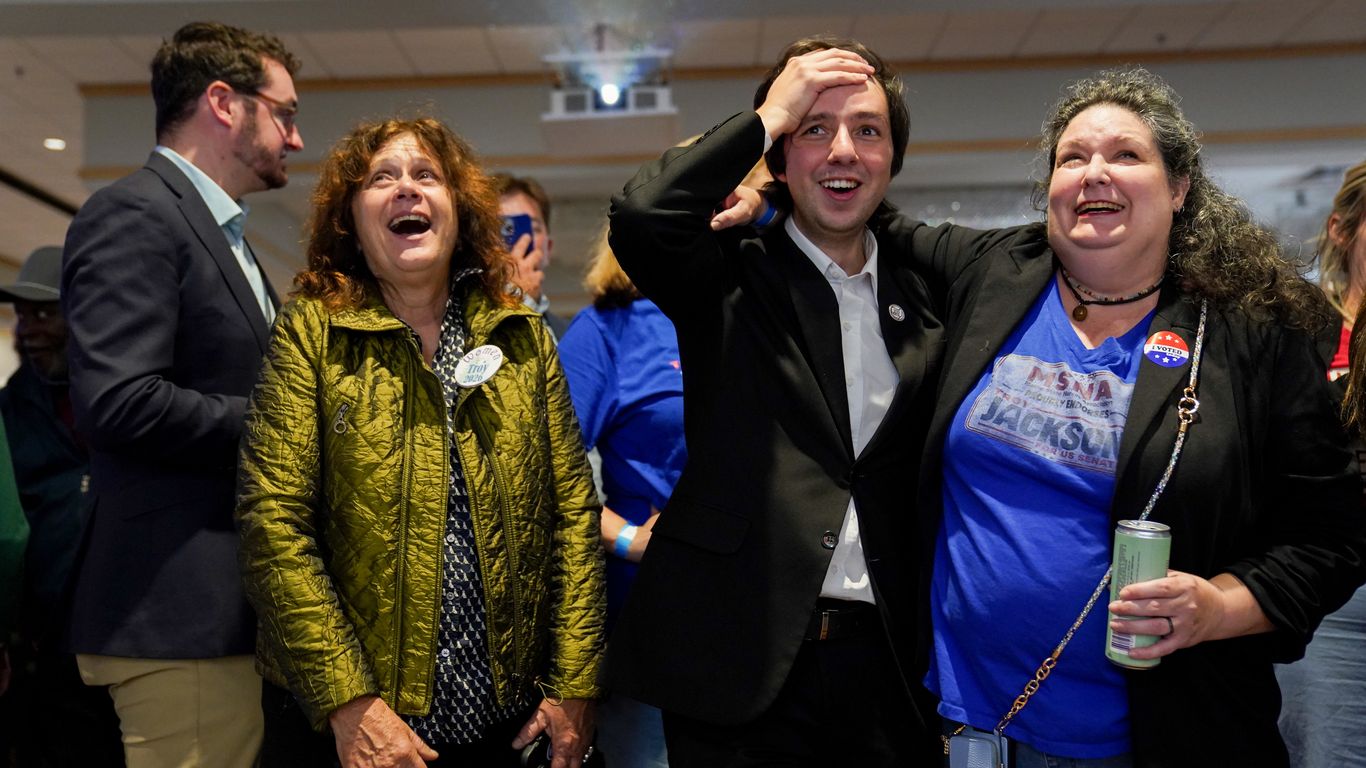
Voters watched results in near disbelief as James Talarico claimed victory in Senate race and Gina Hinojosa was elected state’s first Latina governor US midterms 2026 live – latest updates Track live results from all 50 states Tell us: what do you want to know about the midterm election results? “This is amazing,” exclaimed Tiffany Dunsmore, 44, the owner of Austin Scavenger Hunt, as the city skyline gleamed in the distance on a balmy night. “I cannot believe Texas went blue!” For 32 long years, turning Texas blue had been an elusive prize for Democrats in the US’s second biggest state. There were false dawns, nearly men and broken dreams. But on Tuesday the party’s agony finally came to an end. Continue reading...
The Democrats have taken control of the Senate and the House of Representatives. These charts and maps reveal the key trends and races behind this result The Republicans have lost seven Senators, 25 House districts and five governor races. As of 8.00am Eastern Time (ET) on Wednesday, more than 1,800 of nearly 2,500 counties with Senate elections had returned more than 90% of their votes. Americans did not turn out in significant numbers for the Republicans amid high fuel prices and dissatisfaction with the president. Continue reading...
With Democrats in power, Trump may be under siege and lose his dominance over the Republican party – but his id will relish at the prospect of fighting US midterms 2026 live – latest updates Tell us: what do you want to know about the midterm election results? Donald Trump posted a document on social media this summer by a supposed historian that compared him with, among others, Napoleon Bonaparte and Adolf Hitler. That now seems fitting: the US president has himself fought one battle too many, and appears to have brought about his own destruction. Tuesday’s US midterm elections were a thumping, shellacking and extinction-level event rolled into one. Ruby-red Republican strongholds once deemed safe toppled like dominoes. Democrats won Senate seats for the first time in Kansas since 1932, in Texas since 1988 and in South Carolina since 1998. Continue reading...
Former MLB star wins for Republicans in Texas Tafoya loses to Peggy Flanagan in Minnesota Former World Series champion turned Republican politician Mark Teixeira will represent Texas’s 21st Congressional District in Washington after defeating Democrat Kristin Hook in Tuesday’s midterm elections . On Wednesday morning, Teixeira was leading with 54.5% of the votes after 99% of the ballots had been counted. Continue reading...
US voters elected the first black female governor and the first Muslim to the Senate on a night of history The US midterm elections have ushered in a slew of historic wins, shattering racial and gender ceilings, among other barriers, for races at the state and national level. Here are some of the ways winning candidates are making history: Continue reading...
The Democrats have had a resounding win, taking control of the Senate and the House of Representatives in a historic midterms result. Hosts Reged Ahmad and Jonathan Yerushalmy examine what went wrong for the Republicans and why voters turned out in droves to deliver the blue wave so many predicted. But perhaps the biggest surprise of the night was Donald Trump accepting the result and vowing to work with the Democrats. So will he? Or could this make him more dangerous? Read more: Democrats win control of Senate as US voters reject Trump’s agenda US voters rebuke Trump as Democrats win control of Congress in ‘blue wave’ Analysis: Resounding wins for Democrats a wholesale rebuke of Trump’s Maga movement Continue reading...
Make no mistake: Democrats won by epic, sometimes historic margins across red and blue states, up and down ballots, obliterating almost everything President Trump, and a Republican Party remade wholly in his image, built over the past decade in American politics. Why it matters: Trump and Republicans are left with a mostly white, mostly old House and Senate minority, confronting a younger, more diverse ascendant Democratic Party with power and margins it hasn't held in 18 years, since the dawn of the Obama era. The results speak louder than any words we can write: Democrats won Senate races in Texas, Kansas, South Carolina, Ohio, and perhaps Mississippi en route to what could be a 55-seat majority. Democrats won swing districts all across red America, with national average margins of victory of roughly 13 points, according to a New York Times estimate . Texas is now a Democratic state, top to bottom — unthinkable mere months ago. James Talarico crushed Ken Paxton ( 55% to 43% ) like it was Connecticut. State Representative Gina Hinojosa will become the first Democratic governor of Texas in 32 years . Pastor Adam Hamilton is the first Democrat to win a Senate seat in Kansas in 94 years. North Carolina looks like a true-blue state after Democrats flipped the Senate seat and likely ousted Rep. Richard Hudson (R-N.C.), chair of the National Republican Congressional Committee (NRCC) — meaning he led the GOP drive to keep the House. North Carolina's congressional delegation could swing from 10R-4D to 5R-9D. Georgia was even worse for Republicans, where they lost all power at the state and U.S. Senate levels. Florida Gov. Ron DeSantis (R) predicted on X that the losses were so widespread, so deep, so severe that Republicans might not "have a shot at Senate control until 2032." How to think about last night more broadly: This is a 50-50 nation with fast, whiplash shifts in power at the federal level due to persistent discontent with the party in power. So, on one hand, this
An impeachment investigation would enhance transparency and allow Congress to reassert its authority In Tuesday’s midterm elections, voters sent the Republican party an unmistakable message: their love affair with Trumpism is coming to an end. The overwhelming victory for Democrats in both the US House of Representatives and the US Senate, was foreshadowed by a number of polls showing growing disenchantment with Donald Trump – and it was personal. Continue reading...
Voters showed deep distrust of the AI race Tuesday, approving dozens of data center moratoriums and electing a raft of candidates who favor slowing a $10 trillion buildout, including in Texas — the epicenter of the boom. Why it matters : In an election that hinged on an affordability crisis for many Americans, voters made it clear they view Silicon Valley's AI ambitions not as a technological miracle, but as a resource-draining threat to their wallets and communities. The results were a warning shot to some of the nation's wealthiest and most powerful executives, many of whom are already working on ways to build a more palatable version of the revolution they are dead-set on winning. "What we just witnessed was an AI earthquake," Brad Carson, co-founder of Americans for Responsible Innovation, told Axios. "Voters just sent a clear message that they want rules for AI and data centers." Driving the news: Democratic challenger Gina Hinojosa's surprise victory in the Texas governor's race fundamentally scrambles the math for the AI buildout. Hinojosa campaigned on keeping a moratorium on data center construction in place until the state passes legislation tackling impacts on water, electricity, air and property rights in the legislative session that ends in mid-2027. While most 2027 U.S. data centers expected are already under construction, a hold for more than six months would bring extended delays to Texas, which accounts for 41% of new U.S. capacity in 2028, according to the research firm SemiAnalysis. Democrats won all three of the states that follow Texas for new data center capacity, including Ohio, Georgia and Arizona. The winners in Ohio and Georgia favor restrictive policies, although it's not yet clear how those will take shape. Between the lines: All told, nearly two-thirds of 2028 data center capacity could face delays, although most political analysts don't see Democrats permanently blocking construction. What they're saying: A host of candidates and politi
President Trump's Republican Party suffered an electoral humiliation Tuesday night that stretched across the battleground map and into some of the deepest-red territory in America. Why it matters: The 2026 midterms will go down as one of the most sweeping repudiations of a sitting president in modern American history, on a scale reminiscent of the post-Watergate reckoning of 1974. The big picture: Two years after Trump's comeback appeared to herald a historic political realignment , voters delivered a devastating verdict on his second presidency. Democrats seized control of both chambers of Congress, on course to gain as many as 40 House seats and at least seven Senate seats — eclipsing their wildest pre-election expectations. The wave swept deep into Republican territory, from Texas and Georgia to both Carolinas, flipping hundreds of legislative seats and delivering Democratic trifectas in the unlikeliest of states. 5 takeaways 1. Texas turns blue: After decades of dashed hopes, Democrats finally conquered the nation's most coveted Republican stronghold — in a landslide so sweeping that even three-term Gov. Greg Abbott was driven from office. Gina Hinojosa became the state's first Latina governor, while James Talarico defeated Trump-backed Ken Paxton to become the first Texas Democrat elected to the Senate since 1988. The Democratic onslaught extended across statewide offices and possibly Texas' House of Representatives, suggesting that the state's political future could be up for grabs after 32 years of GOP dominance. 2. Democrats storm Senate: What once looked like an impossibly difficult map for Democrats gave way to a historic rout, as Republicans watched their 53-seat majority crumble in states Trump carried by double digits. Democrats broke a 94-year losing streak in Kansas, ousted Republicans in Ohio , Iowa and North Carolina , and captured South Carolina for the first time since 1998. In Maine, Democrats finally toppled five-term Sen. Susan Collins after ma
It was a drubbing on a scale that neither side saw coming: Democrats pummeled Republicans across the battleground map and into some of the most MAGA-friendly terrain in the country. Why it matters: The results were an emphatic rejection of Donald Trump's second term in office — and set the stage for two years of corruption investigations and legislative frustration for the lame-duck president. Here's a rundown of what you need to know about last night's historic GOP beatdown. The size of the Dem majorities It was clear early in the night that Democrats would flip the Senate. Few predicted how big their majority would end up. Democrats will have at least 54 Senate seats, and another two — in Alaska and Mississippi — were too close to call early Wednesday. The New York Times projects Democrats will win 257 seats vs. 178 for Republicans — a 79-seat majority. Those numbers could change as more races are called, but in any scenario it will be an astounding majority. The big surprises 1. Texas turns blue: After decades of dashed hopes, Democrats conquered the nation's most coveted Republican stronghold — in a landslide so sweeping that even three-term Gov. Greg Abbott was driven from office. Gina Hinojosa will be the state's first Latina governor, while James Talarico defeated Trump-backed Ken Paxton to become the first Texas Democrat elected to the Senate since 1988. The Democratic onslaught extended across statewide offices and into the legislature, suggesting that the entire state's political future could be up for grabs after 32 years of GOP dominance. 2. More red-state romps: Democrats broke a 94-year losing streak in Kansas, ousted Republicans in Ohio , Iowa and North Carolina , and captured South Carolina for the first time since 1998. 3. House district reversals. Tennessee's 4th Congressional District race hadn't been called as of the wee hours Wednesday. But the returns were stunning regardless of the outcome. Trump carried the district two years ago by 24 points
We’d like to hear from people in the US and around the world about their reactions to the results and what they could mean for the future We’d like to hear from people in the US and around the world about their reactions to the midterm election results, which saw Democrats win control of both houses of Congress after a series of sweeping victories over Donald Trump’s Republican party . Were you surprised by the scale of the Democratic victories? How are you feeling about the outcome, and what does it mean to you? Continue reading...