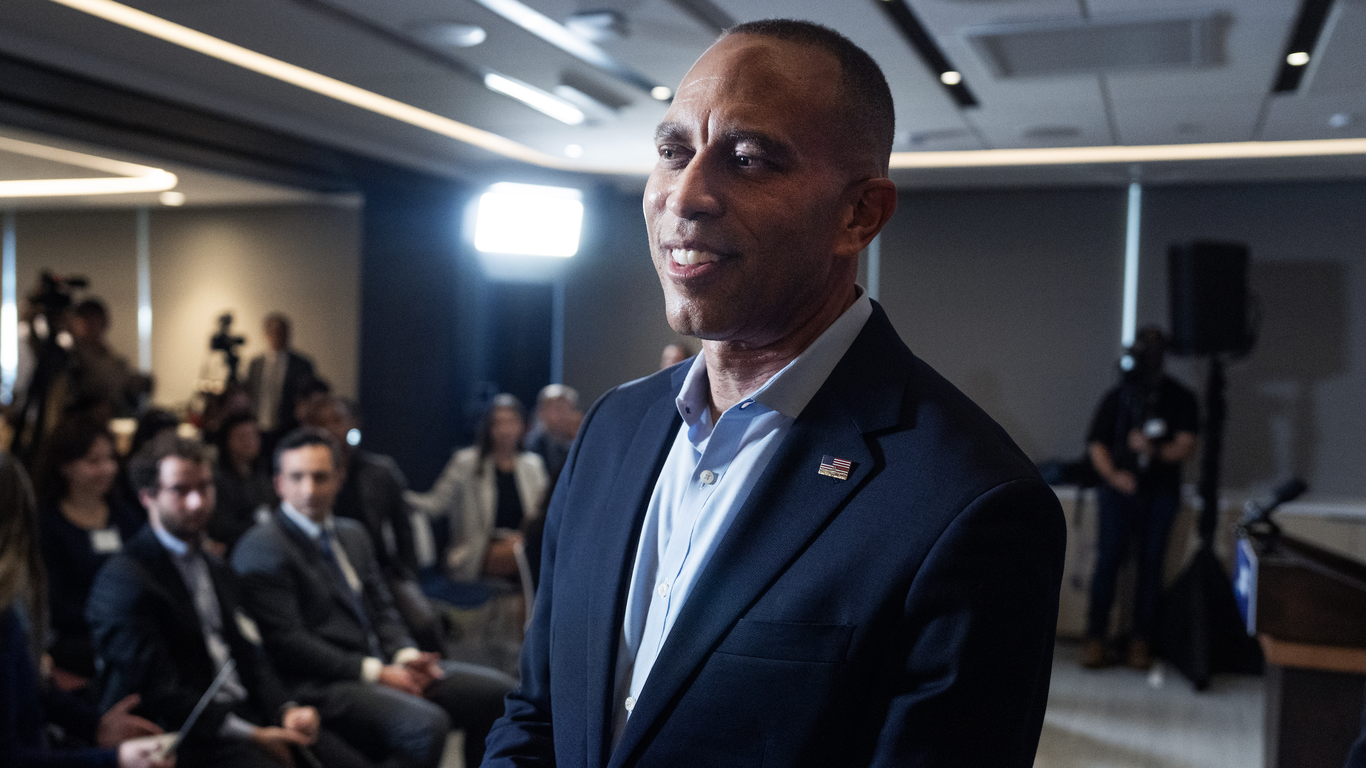
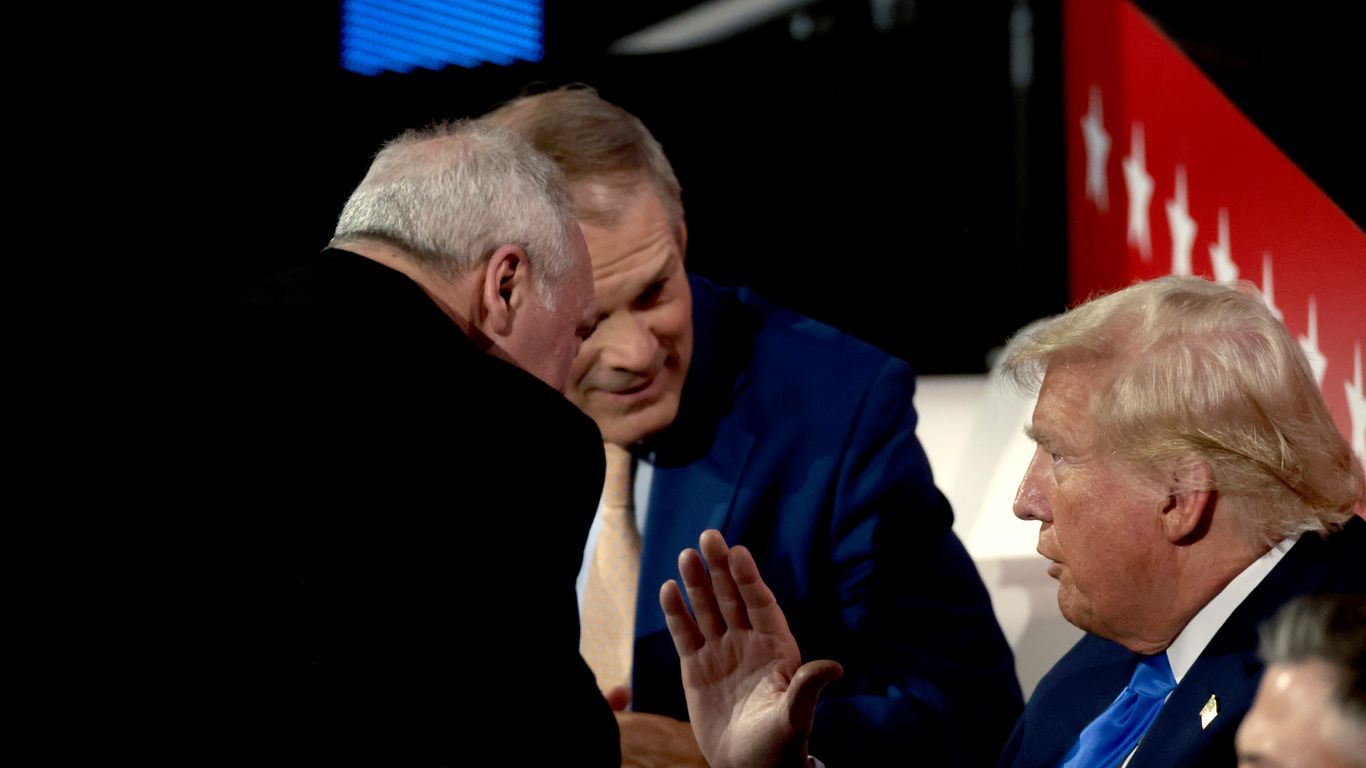
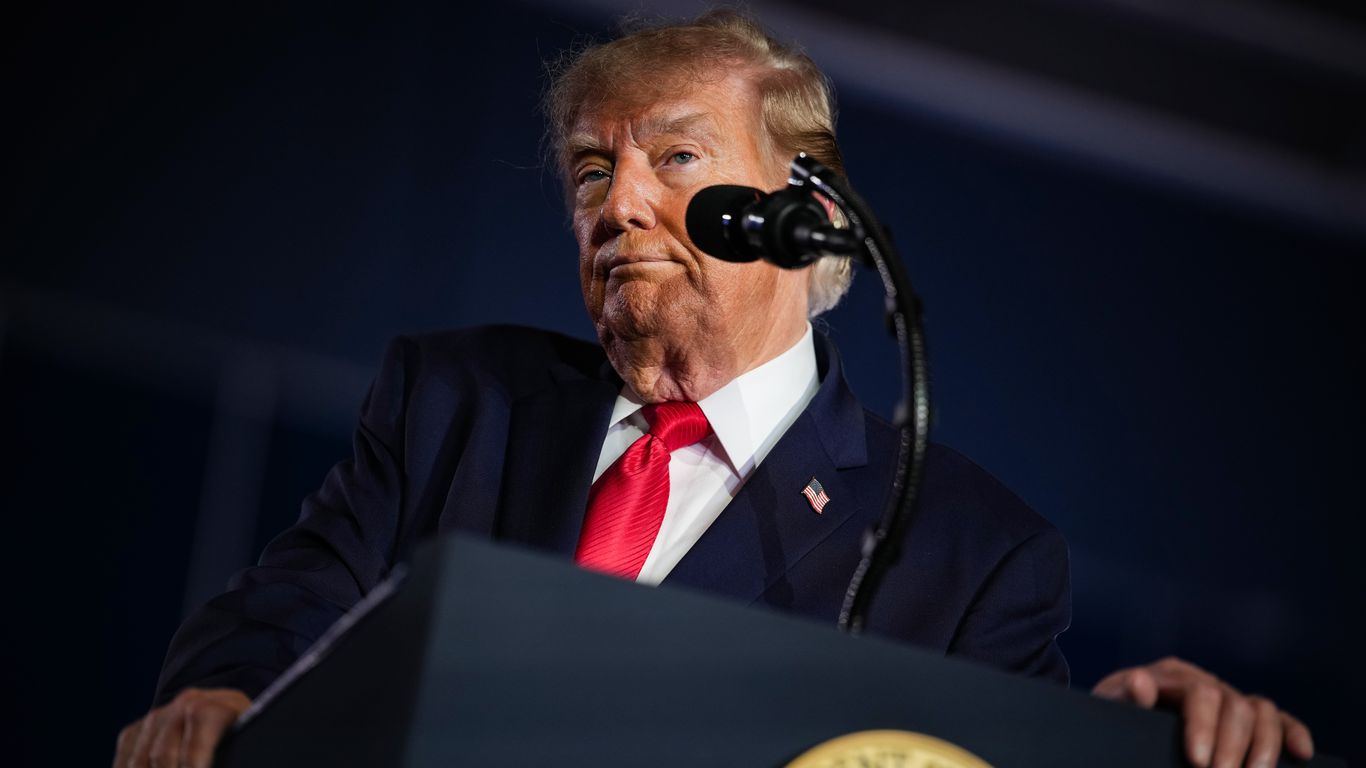
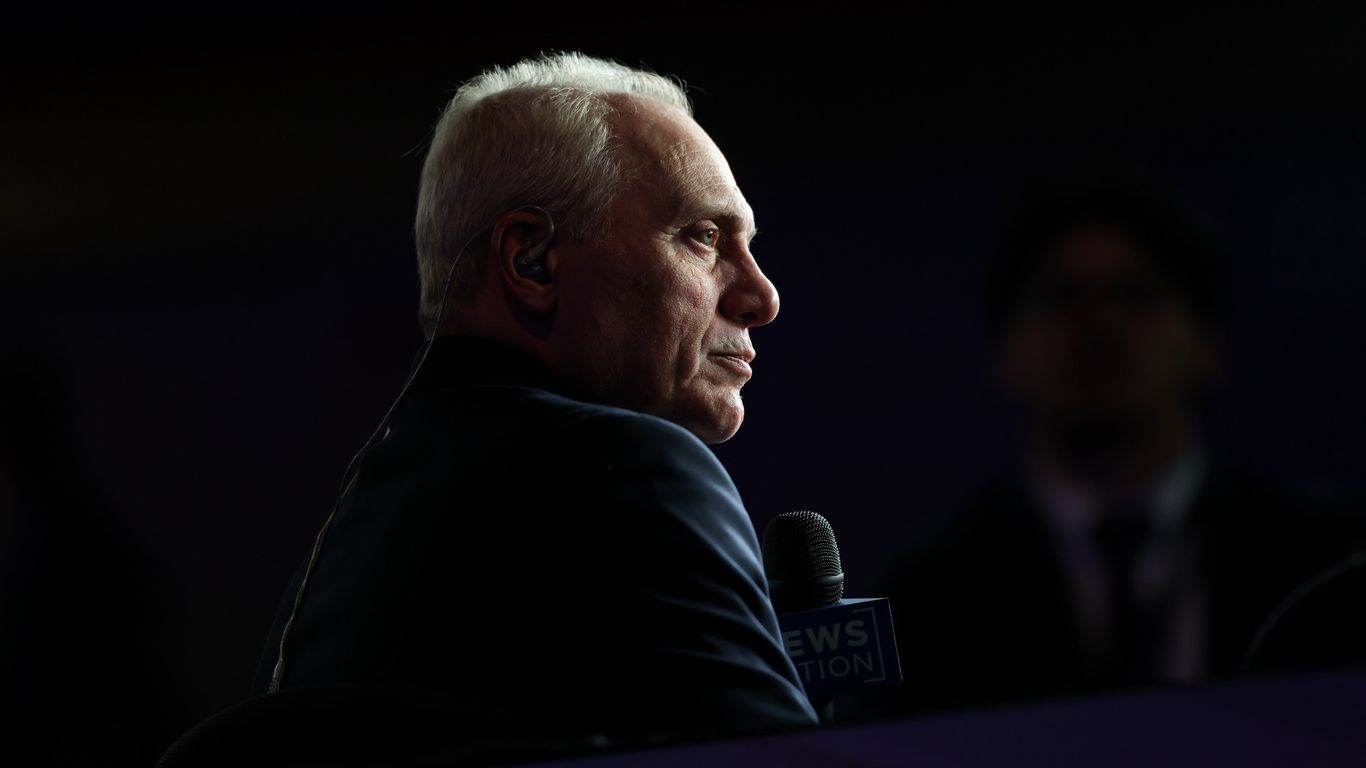
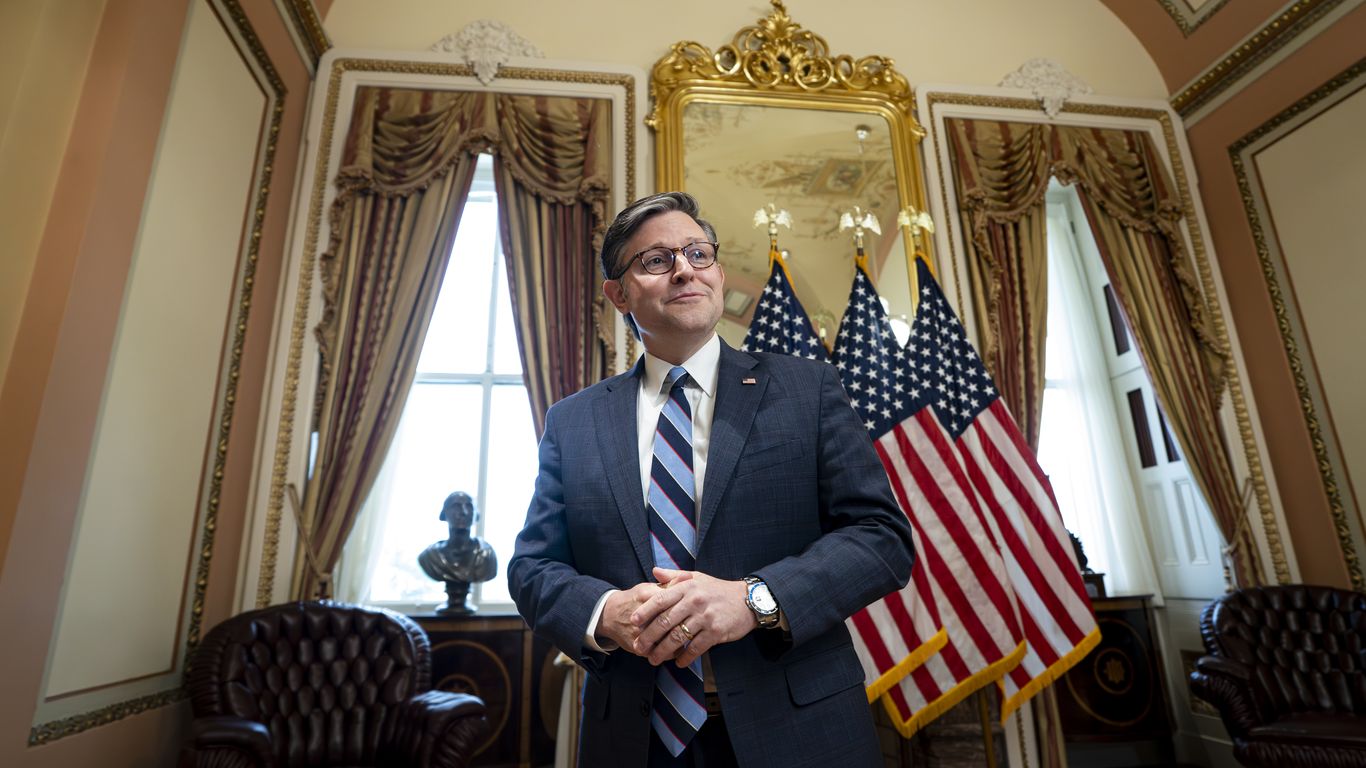
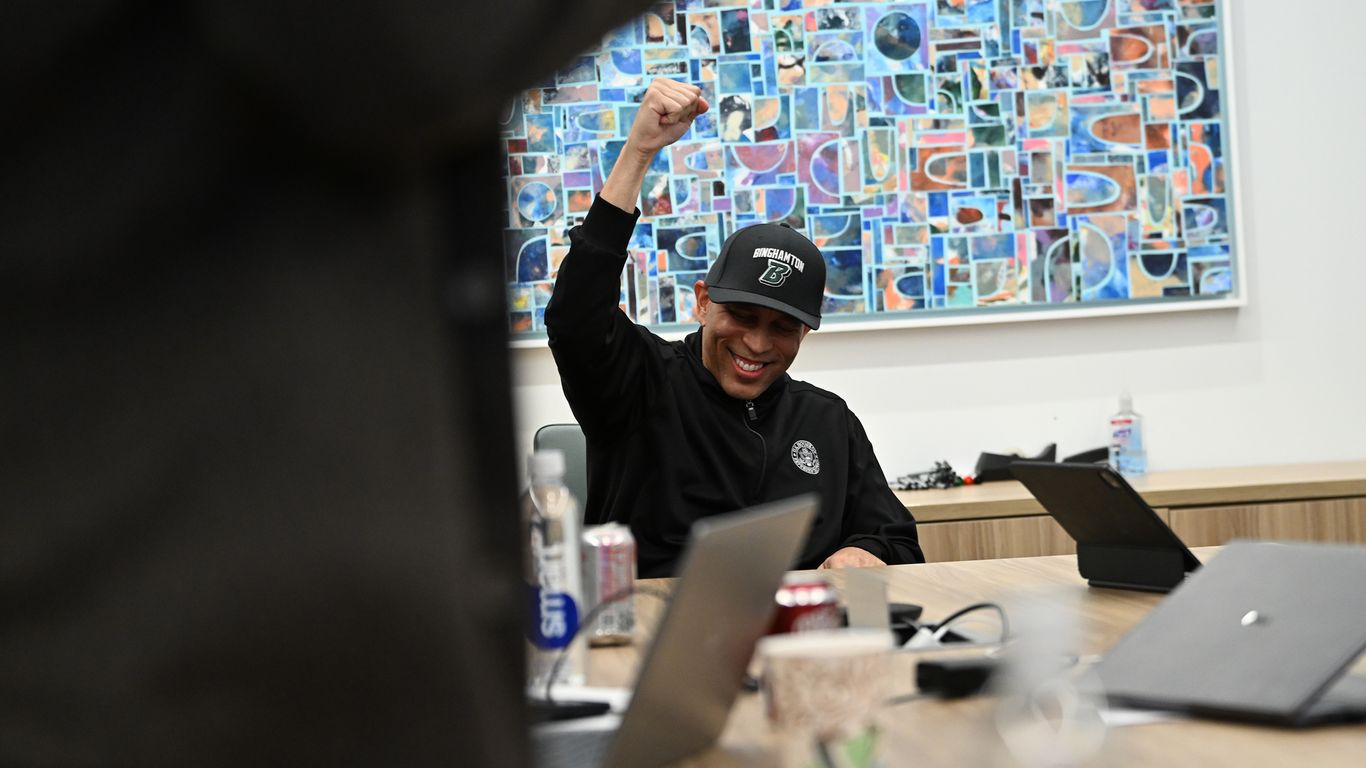
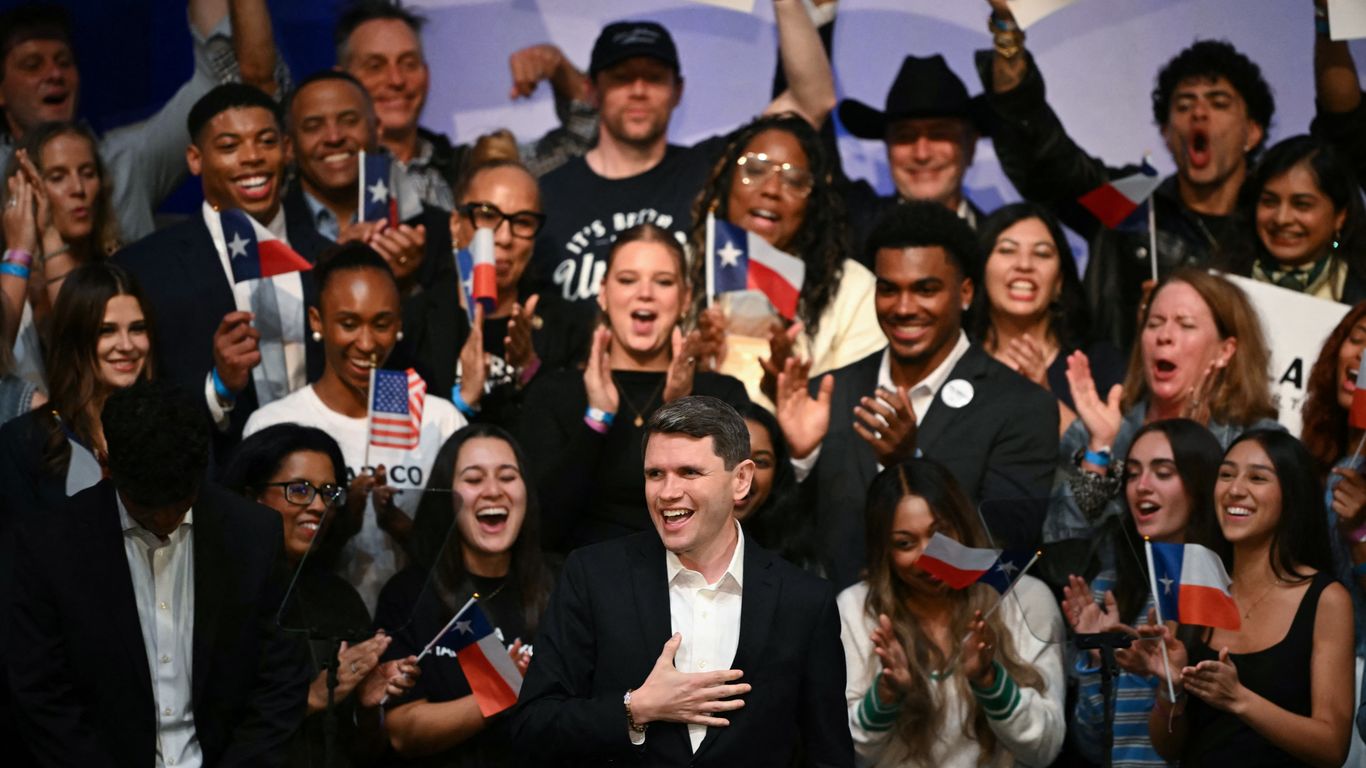
House Minority Leader Hakeem Jeffries (D-N.Y.) formally launched his bid for speaker of the House on Wednesday in a letter to colleagues obtained by Axios. Why it matters: Jeffries is widely expected to become speaker after House Democrats' landslide midterm win. He would make history as the first African American to serve in the role. What he's saying: "I write to humbly request your support in connection with my candidacy to serve as the next Speaker of the House of Representatives," Jeffries wrote. He added: "We must now deliver the dramatic change the American people are demanding in the majority." Read the letter in full, via DocumentCloud :
Results for “minority leader”
Republicans woke up "in shock" Wednesday morning after they got hit with the biggest midterms wave in 50 years. Within hours, that shock was turning into rage. Why it matters: The battle for control of what's left of the Republican conference — headlined by Majority Leader Steve Scalise (R-La.) and Judiciary Chair Jim Jordan (R-Oho) — is the first salvo in a quest to bring GOP lawmakers back from the political wilderness. Johnson set the tone Wednesday morning, when he took himself out of the running for leader, citing the toll the job has taken on his family. A key outstanding question is the extent to which Republican finger-pointing leads to a wholesale shake-up of the party's leadership ranks, versus a slight readjustment. Driving the news: The intra-party blame game quickly hit a fever pitch. "Dear Republican Senate and House "Leadership," No, the polls were not wrong. You were. Even with record amounts of money at your disposal, you managed to get absolutely annihilated," Rep. Greg Steube (R-Fla.) wrote on X Wednesday morning. "Please do us all a favor and step aside so new leadership can take a truly conservative direction," Steube added. "When you have the worst defeat in modern history, you need a new playbook," another GOP lawmaker told Axios. State of play: The fallout is rippling across the entire House GOP leadership team, with every top position facing a contested race. Minority leader: Scalise and Jordan are squaring off in a rematch of their bitter 2023 battle for the speakership. Minority whip: Tom Emmer faces a challenge from Rep. August Pfluger (R-Texas). NRCC Chair: Rudy Yakym and Brian Jack will face off for the post. Current NRCC Chairman Richard Hudson (R-N.C.) is on track to lose his own reelection bid. Zoom in: Behind the leadership infighting, Republicans are reckoning with what went so disastrously wrong on Election Day, with some blaming the Trump administration's policies for their losses. "Iran, Iran, Iran ... we should have never done
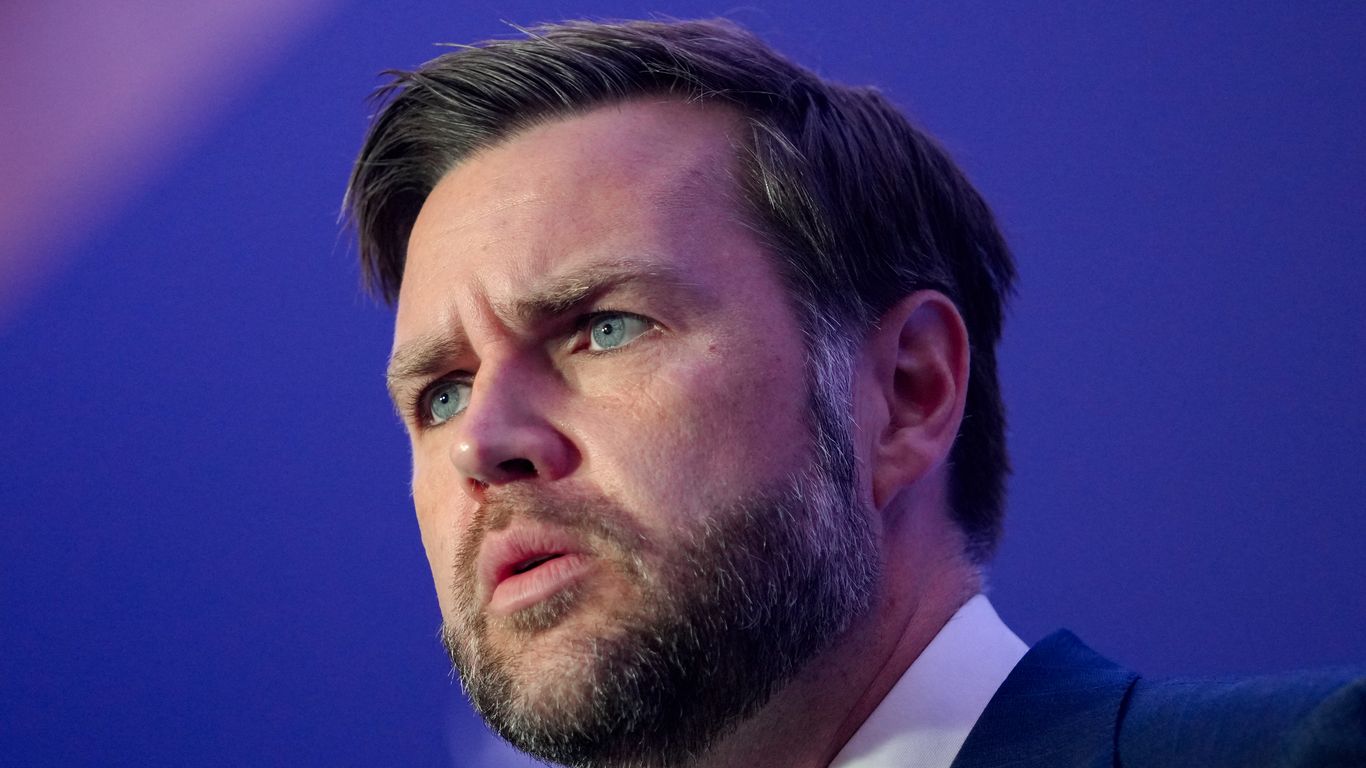
Data: Financial Modeling Prep ; Chart: Ben Geman/Axios Oil prices fell sharply Wednesday as traders weigh signs — including a widely circulated post by Vice President JD Vance — that the midterm election will add pressure on the White House to find an offramp from the Iran conflict. Why it matters: Elections have consequences. Wednesday's price drop — around $8 per barrel — deepened after Vance posted on X that "everyone knows" the war is why Republicans got pummeled and "any honest conversation about where we go from here must start there." Sen. Chuck Schumer (D), the likely Senate majority leader in the next Congress, vowed that Democrats will push to end the war. "This crude price drop is entirely about the U.S. election and the belief that Trump will de-escalate rather than escalate on Iran. JD Vance's statement amplified that sentiment," Ben Cahill, a nonresident senior fellow with the Atlantic Council, told Axios via email. What they're saying: Pavel Molchanov, an analyst with Raymond James, said in remarks circulated to reporters that Vance's post was a "key catalyst" for today's oil price plunge. "The market is saying that Congress and members of his own administration are likely to start acting as a constraint on President Trump's war in Iran," Seb Barker, a strategist with the hedge fund, Marshall Wace, tells the Financial Times. Catch up quick: Oil prices were already falling to start the week on signs of new U.S.-Iran diplomacy. What we're watching: "[I]t remains unclear whether Vance's comments signal a more dovish stance toward Iran," Molchanov said. "For oil prices to sustainably move lower, a durable off-ramp is needed," he added.
Democrats wasted no time gloating and warning the Trump administration about a pending flood of subpoenas and investigations once the 2026 midterm blue wave became clear. Why it matters: Democrats are eager to exercise their oversight powers over the president and his allies, but they must navigate that while addressing Americans' No. 1 election concern — the high cost of living. Driving the news: Before the AP even called the House for Democrats, expected House Oversight Chair Robert Garcia (D-Calif.) said in a statement that the president's allies should "[l]awyer up." He seconded the sentiment in a Wednesday post to X. Sen. Ron Wyden posted on X Tuesday night, "[s]ubpoenas." In response to a post from former Homeland Security Secretary Kristi Noem, who said the Trump administration was "too successful" during its first year, Sen. Maggie Hassan (D-N.H.) responded, "[w]ant to say that under oath?" The big picture: Voters aren't necessarily asking Democrats to choose between the cost of living and accountability. They want action on both. About half of voters said the high cost of living and government corruption were "crucial" to their votes for Congress, per the AP's Voter Poll. Roughly four in 10 voters said the economy was the top issue facing the country, compared with three in 10 who said it was democracy. Seven in 10 said Congress isn't doing enough to check presidential power. What they're saying: When asked about Wyden and Garcia's comments in an interview Wednesday morning, House Minority Leader Hakeem Jeffries (D-N.Y.) — the overwhelming favorite to become House Speaker — told TODAY that the "American people clearly don't want us to try and get even." "They want us to get things done to make their life more affordable. At the same period of time, what we have seen is unprecedented corruption unleashed on America, the likes of which we have never seen before." "And when you have people in high office who are so focused on enriching themselves, their family
House Speaker Mike Johnson told Republican aides that he would step down, according to a person familiar with the comments, after the party suffered heavy losses in the midterm elections.
Majority Leader Steve Scalise (R-La.) will announce his bid to lead House Republicans on Wednesday, a person familiar with his plans told Axios, as his party begins to regroup from stunning midterm losses that cost them their congressional majorities. Why it matters: Scalise's announcement sets up a potentially bruising battle for the minority leader post, with Judiciary Committee Chair Jim Jordan (R-Ohio) also being floated as a potential contender. It's Scalise's second attempt at the top House Republican job. Speaker Mike Johnson (R-La.) told staff that he will not run for minority leader on a Wednesday morning call, a person familiar with his plans said. Driving the news: Scalise pitched himself as a leader positioned to bring Republicans back into the majority "He is a proven and tested leader who is ready on day one. He's spent his career unifying Republicans and he is prepared for the big legislative and oversight battles ahead. The conference knows him, how he fights, and that he's a trusted leader," the person familiar with his plans said in statement. Catch up quick: Scalise defeated Jordan in the Republican conference's secret-ballot vote to nominate a speaker in October 2023, but withdrew a day later after failing to secure enough support on the House floor. Johnson ultimately emerged as speaker after weeks of Republican infighting. State of play: A Scalise-Jordan race would pit two of the House GOP's most prominent figures against each other. Scalise enters the contest with more than a decade of experience in leadership, while Jordan could draw support from the party's conservative wing. But the scale of the loss on Tuesday night has prompted calls for an entirely new leadership slate — a potential stumbling block for Scalise. Three House Republicans previously told Axios that a major midterm defeat could fuel calls for an entirely new leadership team The intrigue: Majority Whip Tom Emmer, meanwhile is making calls to lock down support from him to stay
Speaker Mike Johnson (R-La.) plans to step down as the House's top Republican after his party's epic midterm election losses wiped out their majority, according to a person familiar with his plans. Why it matters: Johnson's exit touches off a potentially contentious scramble to replace him with Republicans days away from choosing their next leaders. Johnson told staff that he will not run for minority leader on a Wednesday morning call, the person familiar with his plans said. Driving the news : House Majority Leader Steve Scalise (R-La.) and Judiciary Committee Chair Jim Jordan (R-Ohio) have been floated as potential successors, setting the stage for a bruising leadership battle. Johnson's political future remains uncertain, with questions swirling over whether he will remain in Congress or leave the House altogether after three years as speaker. The Louisiana Republican had spent months traveling across the country and raising millions of dollars in a last-ditch effort to preserve the GOP's majority. Flashback Johnson ascended to the speakership in October 2023 as a little-known lawmaker after weeks of GOP turmoil following Kevin McCarthy's historic ousting . Johnson spent much of his speakership navigating razor-thin Republican majorities, managing persistent GOP infighting and repeated conservative rebellions that brought legislative business to a standstill. But he also emerged as a prolific fundraiser and close Trump ally, helping shepherd the president's legislative agenda through a fractious Republican conference. Yes, but: Johnson had publicly insisted he intended to remain in Republican leadership even if the GOP lost control of the House. After suggesting to Fox News , that he could return to Shreveport and start a lawn care business if Republicans lost the majority, Johnson told CBS News in October that he planned to remain the top House Republican regardless of the election's outcome. His political future had become the subject of private speculation am
Democrats' big night gives them a chance to turn voter anger over high energy prices into legislative action and congressional oversight, but divisions within the party could complicate their plans. Why it matters: This was an energy election . High gasoline prices, record diesel costs, and rising power bills fueled discontent with President Trump and his party. Voters' rebukes of data centers could slow the buildout of power-hungry AI infrastructure. The latest: Stunning Senate wins in red states and House wins nationwide propelled Democrats to control of both chambers, and flipped several governor's mansions. Energy costs were prominent in key races, such as Democrats hitting GOP rivals over farmers' bills in Iowa, Kansas and Ohio. Texas Governor-elect Gina Hinojosa (D) bashed Greg Abbott (R) over his prior embrace of data centers in the state where developers are planning big projects. The data center backlash also featured in Ohio and Pennsylvania, where Sherrod Brown defeated Sen. Jon Husted (R) and Paige Cognetti unseated Rep. Rob Bresnahan (R). Both Republicans faced criticism over their support for data centers. State of play: A detailed Democratic energy agenda hasn't emerged, but there are early clues. Democratic Leader Chuck Schumer tied Republicans to electricity costs in his first comments after returns came in. Likely Speaker-in-waiting Hakeem Jeffries has vowed to quickly push an affordability agenda, with energy as a key pillar. He tasked Reps. Nikki Budzinski (D-Ill.) and Mike Levin (D-Calif.) with leading a "Gas and Utilities Affordability Working Group" that crafted ideas, though they remain under wraps. Another potential source of ideas: Hundreds of proposals backed this year by the 100-plus member House Sustainable Energy and Environment Coalition. Some could gain bipartisan backing, like support for advanced nuclear power. But other areas would be largely symbolic, like restoring some IRA tax credits. Catch up quick: In the Senate, Schumer has
Democrats will be able to take plenty of messaging votes on health care after their blowout wins Tuesday — but they'll face too many limits and internal disagreements to force all of the big policy changes they want. Why it matters: They'll have a tough time repealing Medicaid cuts or restoring enhanced Affordable Care Act subsidies while President Trump is still in office, and their own divisions will hold them back on other issues. And Medicare for All ? Last night gave the idea a big boost, but don't hold your breath. Friction point: With control of both the Senate and House, Democrats will have powerful new leverage — but that leverage will also expose fault lines. Until now, progressives backing Medicare for All and centrists favoring more incremental changes were united in opposing Trump administration policies and blaming the president and the Republican Congress for the health affordability crisis. They'll try to use their power in the next Congress to promote sweeping changes with an eye toward the 2028 elections while also advancing more piecemeal policies, hoping to force some deals with Republicans. But they'll still face divisions over how to expand the federal government's role in the health system, or how to bend the steep health cost curve. Driving the news: House Democrats have already signaled their opening moves with a 100-hour/100-day agenda agenda that prominently features health policies like reinstating the enhanced ACA tax credits that expired at the end of 2025. There will also be votes to roll back the steep cuts to federal Medicaid spending that Republicans included in their "One Big Beautiful Bill," per an 84-page memo from a health care working group to Democratic Leader Hakeem Jeffries (D-N.Y.). Other near-term agenda items include expanding Medicare drug price negotiations to private insurance, restoring withheld National Institutes of Health research funding and ending the use of AI in authorizing certain services in traditional Medic
Make no mistake: Democrats won by epic, sometimes historic margins across red and blue states, up and down ballots, obliterating almost everything President Trump, and a Republican Party remade wholly in his image, built over the past decade in American politics. Why it matters: Trump and Republicans are left with a mostly white, mostly old House and Senate minority, confronting a younger, more diverse ascendant Democratic Party with power and margins it hasn't held in 18 years, since the dawn of the Obama era. The results speak louder than any words we can write: Democrats won Senate races in Texas, Kansas, South Carolina, Ohio, and perhaps Mississippi en route to what could be a 55-seat majority. Democrats won swing districts all across red America, with national average margins of victory of roughly 13 points, according to a New York Times estimate . Texas is now a Democratic state, top to bottom — unthinkable mere months ago. James Talarico crushed Ken Paxton ( 55% to 43% ) like it was Connecticut. State Representative Gina Hinojosa will become the first Democratic governor of Texas in 32 years . Pastor Adam Hamilton is the first Democrat to win a Senate seat in Kansas in 94 years. North Carolina looks like a true-blue state after Democrats flipped the Senate seat and likely ousted Rep. Richard Hudson (R-N.C.), chair of the National Republican Congressional Committee (NRCC) — meaning he led the GOP drive to keep the House. North Carolina's congressional delegation could swing from 10R-4D to 5R-9D. Georgia was even worse for Republicans, where they lost all power at the state and U.S. Senate levels. Florida Gov. Ron DeSantis (R) predicted on X that the losses were so widespread, so deep, so severe that Republicans might not "have a shot at Senate control until 2032." How to think about last night more broadly: This is a 50-50 nation with fast, whiplash shifts in power at the federal level due to persistent discontent with the party in power. So, on one hand, this
House Minority Leader Hakeem Jeffries (D-N.Y.) is set to preside over a commanding Democratic majority after his party swept districts President Trump carried by double digits. Why it matters: Democrats' landslide win will make it much, much easier for the likely next speaker to secure the gavel without a sweat and ignore the demands of his progressive wing. Rep. Greg Stanton (D-Ariz.), a leader of the center-left New Democrat Coalition, told Axios in an interview Tuesday night that Jeffries "now has the space to utilize his full talents as speaker." The size of Democrats' victory, Stanton said, "allows him to govern without worrying about being leveraged by anyone." Driving the news: Jeffries is on track to enjoy a majority of dozens of votes, with the New York Times projecting Democrats to win as many as 256 seats to Republicans' 178. Democrats flipped districts where the national parties didn't even spend money, likely unseating Republicans such as Reps. Lauren Boebert and Richard Hudson who were considered safe just months ago. It's a major partisan win for Democrats as a whole, but the party's centrist wing is also hailing the result as a much-needed strategic victory over the left. Zoom in: Progressives — particularly "The Bloc," a group made up of hard-charging leftists like Darializa Avila Chevalier and Adam Hamawy — had hoped to use a small majority to extract concessions from Jeffries. Many of them have declined to commit to supporting Jeffries as speaker and signaled they would use their votes as leverage force votes on progressive legislation such as Medicare-for-All, defunding ICE and cutting aid to Israel. But the left's strategy is "going to look different from what it would have been with a smaller margin," one incoming House progressive told Axios, noting that "leaders have more flexibility when they have big majorities." Progressives "can't really extract much now [with this] colossal majority," a progressive strategist acknowledged, adding that "w
Senate Republicans' worst nightmare came true Tuesday night, as they watched red state after red state fall to a historic Democratic wave . Why it matters: It's hard to remember now, but Republicans started off the 2026 cycle thinking they could expand their majority. They ended the night with what one source called a "huge f**king thumping" — losing or trailing in every toss-up on the map. At the start of the cycle, top operatives saw a red wall of incumbents in Trump-friendly states, an invincible Republican Sen. Susan Collins in Maine and a vulnerable Democratic Sen. Jon Ossoff in Georgia, who provided a path to expanding a majority. By 9pm Tuesday night, top GOP sources were quietly accepting the reality of the return of Majority Leader Chuck Schumer (D-N.Y.). "Republicans are going to wake up in a different country tomorrow and we are going to have to start from square one to reinvent a party," one senior GOP Senate aide told Axios on Tuesday evening. Between the lines: For the first time since 1972, Republicans lost a Senate seat in the home state of the chair of the National Republican Senatorial Committee. The defeat of Sen. Darline Graham (R-S.C.) came despite Sen. Tim Scott (R-S.C.) leading the NRSC. Republicans also lost in the home state of the next expected NRSC chair, Bernie Moreno (R-Ohio). Zoom in: North Carolina and Georgia were expected to be the premiere races of the cycle not too long ago. Both were called for Democrats before 8:30pm EST. That was just the beginning of the nightmare. In Texas, Elon Musk's more than $150 million infusion wasn't enough to save Texas GOP Senate nominee Ken Paxton after Paxton defeated Sen. John Cornyn in a nasty primary. In Ohio, Sen. Jon Husted's (R-Ohio) campaign had a rocky start — and wasn't bailed out by President Trump's publicity campaign about his rear end. Alaska started looking shaky even before a second Dan Sullivan joined the ballot, and Iowa wasn't a given either. In Kansas, alarm bells started ringing
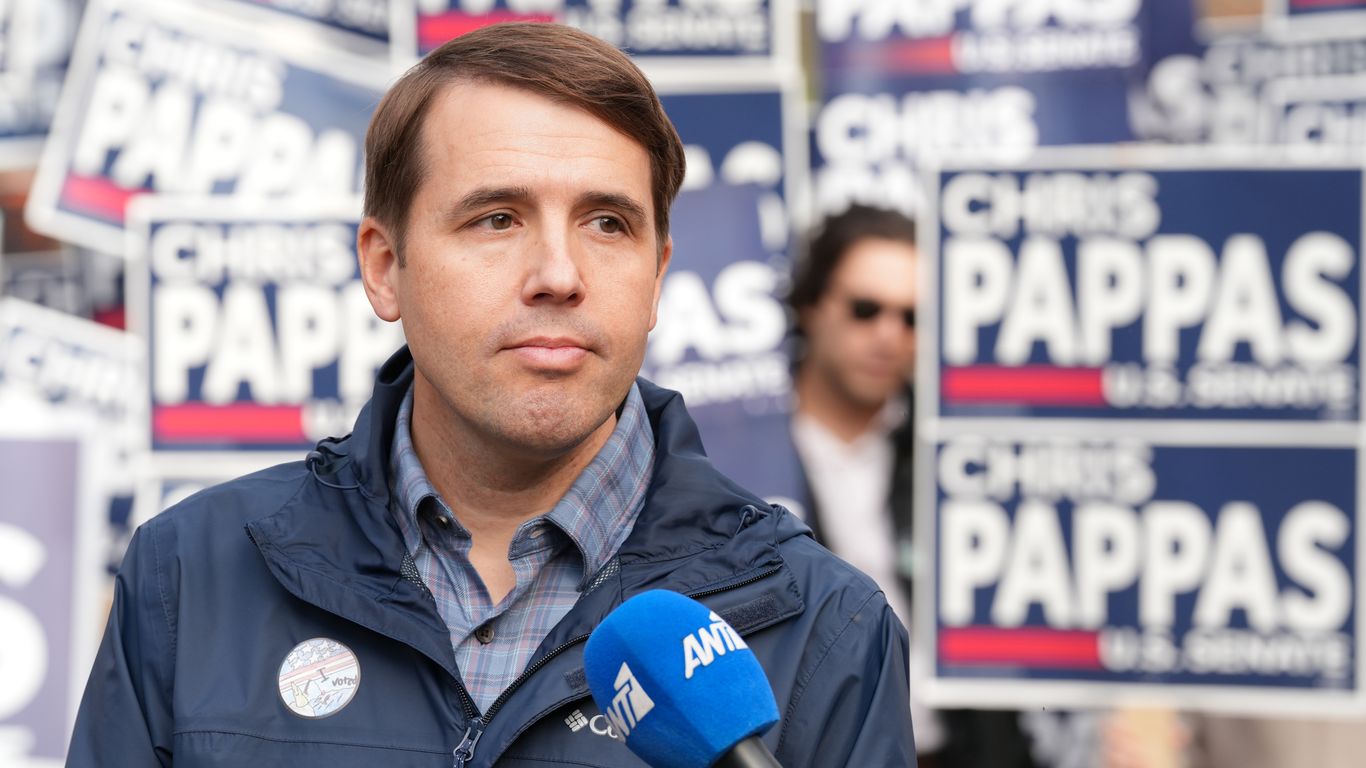
Democratic Rep. Chris Pappas defeated former GOP Sen. John Sununu in the New Hampshire Senate race, AP projects. Why it matters: Pappas' victory keeps the seat in Democratic hands and could boost the party's chances of taking control of the Senate. Driving the news: Pappas led Sununu 61% to 38% with 20% of the votes counted. He'll replace retiring Sen. Jeanne Shaheen (D-N.H.) in January. Catch up quick: Republicans saw New Hampshire as a top pickup opportunity, with Senate Majority Leader John Thune campaigning for Sununu in the competitive race, despite polls showing Pappas ahead. Most polls compiled by the New York Times in the weeks before Election Day showed the Democratic Pappas leading Sununu by 5 to 8 percentage points. Zoom in: Although President Trump endorsed him, Sununu has shown daylight with the president, criticizing his trade war with Canada and his so-called anti-weaponization fund — and he backed Trump's primary opponents in 2016 and 2024. Still, prominent New Hampshire Republicans — including Don Bolduc , the Trump -endorsed 2022 Senate nominee — endorsed Pappas in mid-October, accusing Sununu of being too beholden to the president. Between the lines: Republicans welcomed Sununu's entry into the race because of his family's long ties to New Hampshire politics. Sununu served in the Senate from 2003 to 2009 before losing to Shaheen in 2008. His brother Chris served as governor for eight years. Senate GOP Whip John Barrasso (R-Wyo.) posted on X in October 2025 that Sununu's decision to run catapulted New Hampshire to "a top-tier U.S. Senate race." The bottom line: Pappas' win reflects a preference New Hampshire voters expressed in pre-election polling : They wanted a check on Trump's power. Go deeper: Trump's former Senate pick backs Democrat in New Hampshire
Top party strategists may hate seeing one of their candidates gutted by a brutal ad. But they can still admire the hit. Why it matters: A record $11.6 billion has plastered political ads across screens of every size in the country during the 2026 midterms . Only a handful of those earned the grudging respect of operatives on both sides. 📺 Zoom in: Multiple Republican strategists singled out the "brutal" series of ads attacking Sen. Roger Marshall (R-Kans.) over lawsuits against patients with overdue medical bills — some of whom were later arrested . Against the advice of his own team, Marshall released a self-directed ad answering the attacks. In Nebraska , an ad highlighting a past vote by former Gov. Pete Ricketts to pardon a man convicted of rape was singled out by both parties as one of the cycle's most damaging. Ricketts is expected to win re-election to the Senate. In Maine, an upbeat jingle hit Democratic nominee Troy Jackson for having children with his second cousin. "If he'll f**k his own family, he'll f**k yours too," the radio ad said (among other things). Sen. Susan Collins (R-Maine) called for the ad to be taken down. And in Florida , Rep. María Salazar (R-Fla.) turned on her own party leader, criticizing President Trump over ICE's aggressive enforcement tactics, saying some immigration policies had "gone too far." The intrigue : Even hardened operatives are dealing with a new frontier: AI-generated attack ads that can make up scenarios and put words in an opponent's mouth. In Michigan , a Republican-aligned super PAC used AI-generated imagery to depict Democratic candidate Abdul El-Sayed in a fabricated family photo and playing a game with cards referencing "Death to America" and 9/11. In Texas, GOP Senate nominee Ken Paxton's team used AI to depict Democratic candidate James Talarico defacing a Bible with a crayon and saying: "In the beginning God was non-binary, and he wasn't a Christian. And God said, 'let there be six genders,' and there were." ?
The 2026 US midterm elections feature firebrand progressives trying to stake out new territory, moderate Republicans struggling in the shadow of Donald Trump, and a host of scandals that have made races closer than they should be. These candidates could shape not only power in Washington, but public and political understanding of what works – and wins votes – in different places across the country. Can a Democrat win in red Kansas? Could Texas finally flip away from Republicans? Will abuse allegations or absenteeism tank incumbents? How important is capturing online attention? And how can Republicans run away from Trump, their party’s leader, and modern architect, as his popularity wanes? The lessons learned – and the candidates who teach them – will play into the 2028 presidential election and alter the makeup of Congress at a critical time for both parties Continue reading...
A coach shaped by her circuitous basketball journey was uniquely suited to building the trust that made Golden State champions just 534 days after their first game The mighty , miserly Golden State Valkyries won their first WNBA title on Saturday night with a point guard Dallas had given up on and cast aside, a starting forward who had been waived five times and a late-blooming All-Star once passed over by every team in the league. That made them a fitting match for their coach. Natalie Nakase has pieced together a basketball life on making small openings count, turning a walk-on place at UCLA into a scholarship and an unsolicited scouting report into a coaching job in Japan’s top men’s league. The Valkyries’ nerve-shredding 68-63 fightback over the Atlanta Dream in Game 7 did more than make them the fastest expansion team in major North American professional sports history to win a championship – as 45-1 preseason longshots in their second season of existence. It was proof of concept for an organization that gave overlooked players the resources, responsibility and trust to become champions – and enlisted a leader whose own circuitous journey had taught her what those things could unlock. Continue reading...
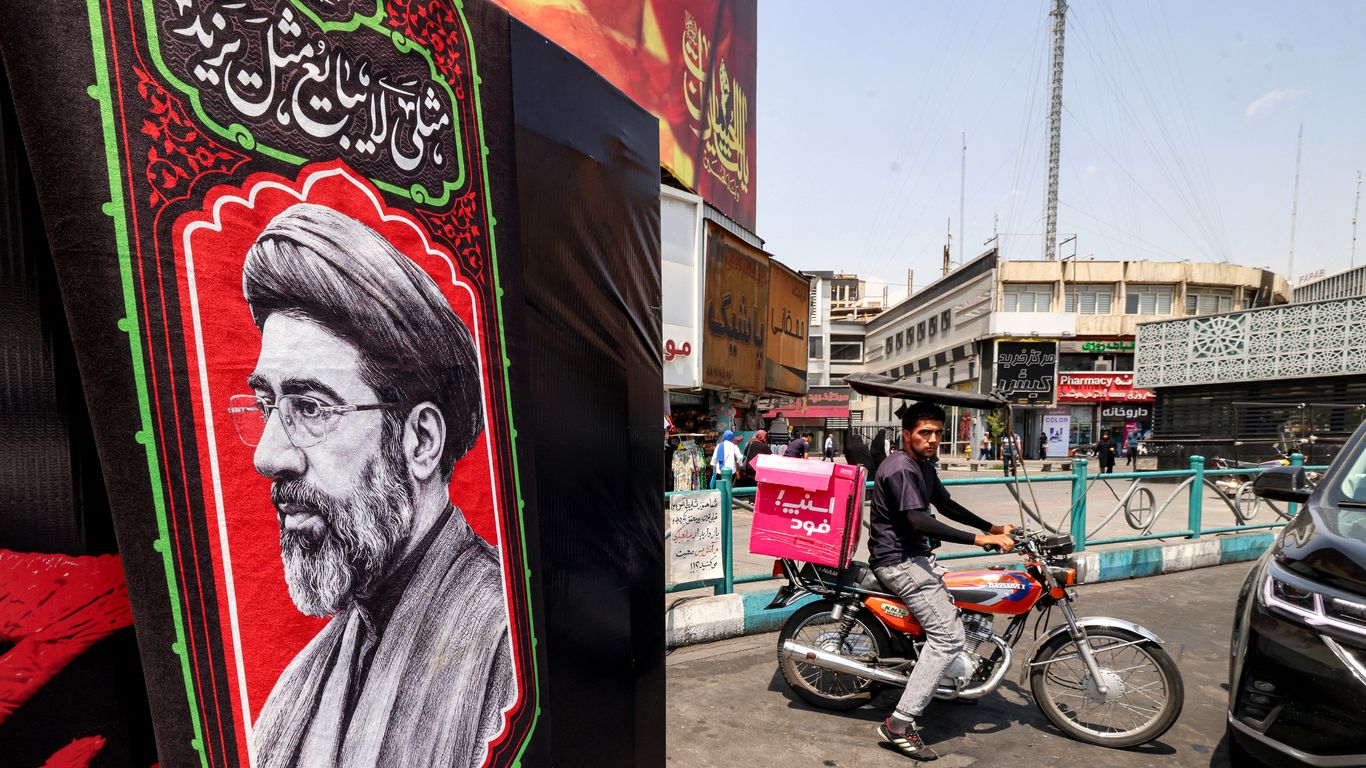
Iran's Supreme Leader Mojtaba Khamenei told the country's top three military commanders that a renewed attack by the U.S. and Israel ״must be met with an immediate and effective response, without geographical limitations״ in order to achieve "maximum deterrence," according to a statement from his office. Why it matters: This is the first publicly disclosed meeting between Khamenei and all the top commanders of Iran's armed forces since the war began. It comes as President Trump weighs major strikes on Iran after the midterm elections. Khamenei hasn't been seen or heard in public since he was wounded in an Israeli strike on the first day of the war. He has only issued written statements, which raised questions about his condition. The unusual apparent meeting took place a day after Qatari mediators held talks in Tehran for more than 12 hours in an effort to reach a deal to restart direct negotiations between the U.S. and Iran and avoid an outbreak of war after the midterms. The discussions continued in Doha, Qatar, on Saturday. What he's saying: "If the enemies once again launch military or terrorist attacks, it will be the Islamic Republic of Iran's Armed Forces and the Iranian nation that determine when and under what conditions those hostilities will end," Khamenei told the commanders, according to the statement. Zoom in: According to the statement, the meeting included armed forces chief of staff Gen. Ali Abdollahi, army commander Maj. Gen. Amir Hatami and Islamic Revolutionary Guard Corps commander Maj. Gen. Ahmad Vahidi. The commanders briefed Khamenei on the state of military readiness along the Gulf coastline and around the Strait of Hormuz, the Gulf of Oman, and Iran's northwestern and southeastern borders. They also reported "a several-fold increase" in production of various types of ammunition and reconnaissance, support, and combat weapons. Khamenei instructed the commanders that the "target bank" must be updated "so that all types of the American-Zionist
Data: U.S. Census Bureau, 2025 American Community Survey 1-year estimates; Table: Russell Contreras/Axios Homeowners were nearly twice as likely as renters to have an electric vehicle in 2025, new Census data show, revealing a striking divide in America's shift to electric cars. Why it matters : Homeownership is just one factor in EV adoption, but reliable access to charging is critical — giving homeowners with private driveways or garages an advantage over renters, particularly those in multifamily buildings. By the numbers: About 7.3 million U.S. households — 5.5% of the nation's 134 million — reported having at least one EV, according to the 2025 American Community Survey released Thursday. Homeowners reported EVs at a rate of 6.4%, compared with 3.6% of renters. California led the nation at 13.8% overall, more than twice the national rate. North Dakota (1.3%), Wyoming (1.6%) and Louisiana (1.6%) ranked among the lowest. State of play: For the first time, the Census Bureau asked households with vehicles kept at home whether they owned or leased an EV, offering a nationwide snapshot of who has gone electric. The figures cover fully electric vehicles and plug-in hybrids. Our thought bubble: Many factors, including local government policies, can influence EV adoption rates, but ultimately, it comes down to affordability and access to charging, says Axios Transportation Correspondent Joann Muller . Homeowners with higher incomes are more likely to afford EVs, sometimes as a second car. The intrigue: A 2026 study by researchers at the University of Vermont and University of California, Davis, found higher home-charger installation costs at rental properties in Burlington, Vermont. Renters were also less likely to adopt fully electric vehicles, even after researchers accounted for home values and vehicle preferences. Zoom in: Even California, the nation's EV leader, has a sharp homeowner-renter divide, new Census data show. About 17.7% of homeowners reported an EV, com
The U.S. naval blockade, sweeping economic sanctions and obstruction of overland export routes have crippled Iran's economy and intensified pressure on the regime, according to a new Treasury Department report obtained by Axios. Why it matters: Treasury Secretary Scott Bessent, who is leading an economic pressure campaign dubbed "Operation Economic Outcast," is one of Trump's closest aides urging him to let the initiative play out rather than rush back into combat. Though the report doesn't argue that the Iranian regime is close to collapsing, it does lay out the Treasury Department's view that its efforts have crippled Iran's economy and limited its ability to generate revenue. Driving the news: As he did before Operation Midnight Hammer in June 2025 and Operation Epic Fury in February, Trump is pursuing dual tracks — trying to reach a deal to restart peace talks while also preparing to possibly resume major combat operations after the midterms. The Treasury campaign, which launched in late August, is a third track. But U.S. officials say it needs more time to destabilize the regime and potentially convince the Iranian leadership to make concessions at the negotiations table. On Thursday, Trump met with his top national security and foreign policy aides to discuss the war. U.S. Central Command chief Adm. Brad Cooper, who commands forces in the Middle East, briefed Trump on the ongoing naval blockade . Bessent discussed the economic pressure campaign. "Bessent is telling the President the economic pressure campaign is working and that things are getting worse in Iran and that this could further destabilize the regime and push the Supreme Leader to agree to a deal," a U.S. official said. Zoom in: The Treasury report highlights several indicators of Iran's economic crisis: Currency collapse: The Iranian rial has lost roughly a quarter of its value since the operation began in August. In October, the unofficial exchange rate reached a record low of 2.687 million rials
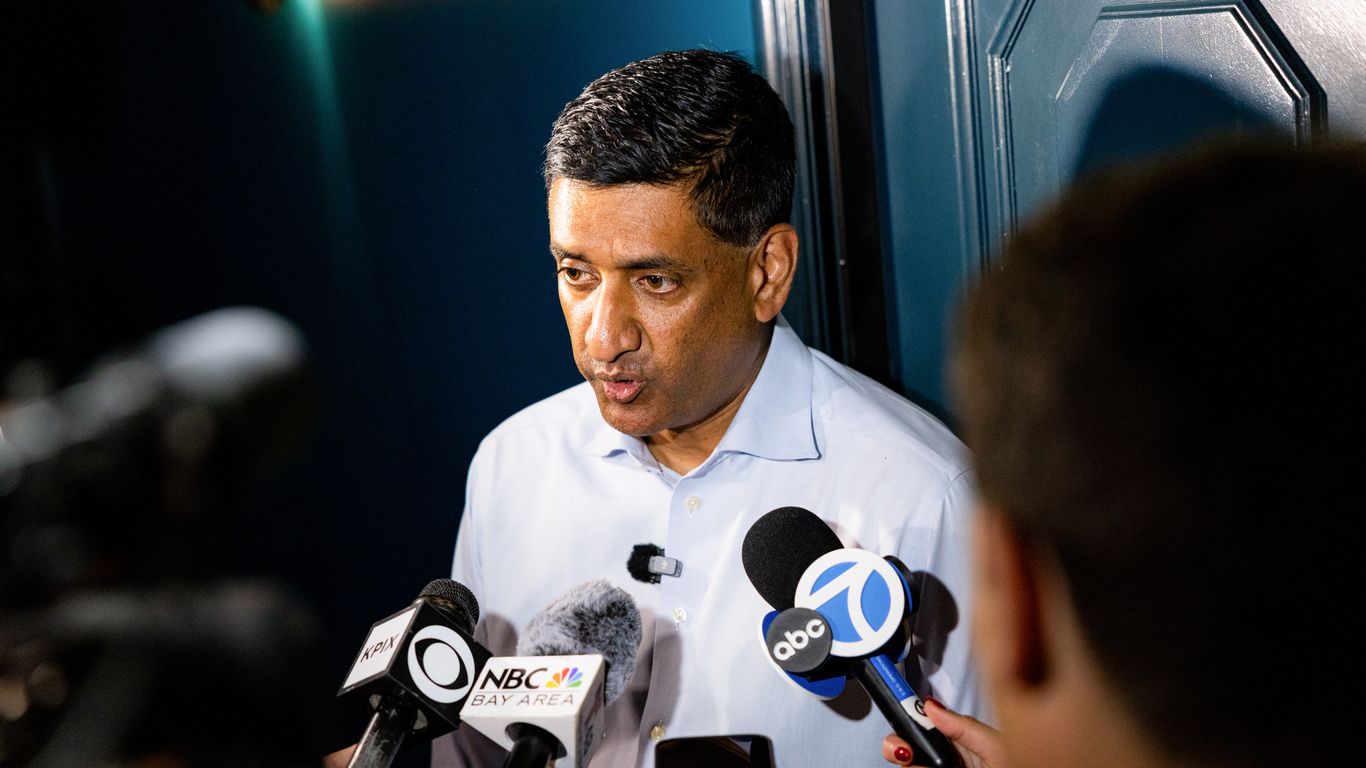
Rep. Ro Khanna (D-Calif.) is endorsing a trio of insurgent Democratic candidates who are challenging his fellow California House Democrats, Axios has learned. Why it matters: This is an aggressive move by a potential 2028 presidential contender who styles himself as one of the few Democrats willing to get into direct confrontations with the party establishment. He has backed members of the progressive "Bloc" who have refused to commit to voting for Minority Leader Hakeem Jeffries (D-N.Y.) as speaker. This is territory where even other high-profile House progressives — including Rep. Alexandria Ocasio-Cortez (D-N.Y.), another potential 2028er — have largely refused to tread. Driving the news: "Today I'm endorsing three new generation leaders Angela Gonzales-Torres, Eric Jones, and Mai Vang," Khanna said in a statement first shared with Axios. Gonzales-Torres, a former local elected official challenging Rep. Jimmy Gomez, "will join us in our fight against corruption, to stand up for survivors, and to lead with a moral vision," Khanna said. Khanna said he has known Jones — a venture capitalist running against Rep. Mike Thompson — "for many years," calling him "a change agent who understands the working class and building a better life for those left out." Vang, a Sacramento City Council member running against Rep. Doris Matsui, "will call out the genocide in Gaza, be for taxing billionaires, and stand for Medicare for All and the working class," Khanna said. Between the lines: Khanna said he has a "tremendous respect and admiration," for Thompson, 75, who has been in office since 1999. "But voters are crying out for change." Khanna said of Matsui, 82, who has held her seat since 2005: "I respect Doris Matsui's incredible service to our state and nation. This is the time to pass the baton." Jones is 35. Vang is 41. Khanna did not reference Gomez, who is under investigation by the House Ethics Committee over allegations of sexual misconduct. Gomez has admitted to "person
President Trump seems to think he can save a vulnerable Ohio Republican senator's ass by talking about how strong it is. Why it matters: Republicans are getting hammered over the war in Iran, gas prices and data centers. But they're playing along with Trump's ogling of male candidates, which he's described as an election strategy. "I don't do this with men very often. I started examining his body because I didn't know he was a great athlete. And I looked and I watched up and down and I looked at his ass," Trump said of Sen. Jon Husted (R-Ohio) at an Ohio rally. "My wife and I have a good sense of humor, and we know he's doing all he can to help us win," Husted told Axios. "We have made sure to hit the gym during the busy campaign to uphold the high standards the president has set for us." Zoom in: In five rallies over three weeks across the country, Trump gave a head-to-toe appraisal of his most vulnerable Republican senator. "His ass was like a big piece of muscle," Trump said in Michigan last week. "Then I looked at his legs and I said, 'Man, his feet are big,' " Trump said in North Carolina. Polling has shown Husted narrowly behind or tied with former Sen. Sherrod Brown (D), and Republicans view him as the most vulnerable GOP incumbent. Zoom out: Husted is getting the most love, but he's not alone. "You know, he's a very handsome guy," Trump said about Sen. Tim Sheehy (R-Mont.) at a Montana rally earlier this month. "I like the white hair, I like the big, strong build. Big, strong guy." Trump said of Rep. Mike Collins (R-Ga.), who is running for Senate in Georgia. Trump called him "all man." "I actually think that Rick Jackson's a very handsome, distinguished, beautiful-looking guy," Trump said about the Republican gubernatorial candidate in Georgia. "Look at this beautiful guy," Trump said of House candidate Ed Gallrein (R-Ky.). Trump called him: "Central casting." Between the lines: Senate Majority Leader John Thune (R-S.D.) has also joined the fun: "I know tha
Vice President Vance sent a letter to Iran's national security chief stressing that any negotiations to head off U.S. military strikes "require discussions on the nuclear issue," a U.S. official said. Why it matters: The letter to Mohsen Rezaei, which focused on the possibility of restarting negotiations between the U.S. and Iran, is the most senior-level outreach by the U.S. to Iran in several months. It comes as President Trump considers resuming major combat operations in Iran after the midterm elections. Behind the scenes: Vance suggested sending the letter to Rezaei, who is one of the top national security officials in Iran and has a direct line to Supreme Leader Mojtaba Khamenei. "The President was enthusiastic about the letter," said the U.S. official, who declined to say when it was sent. The Wall Street Journal first reported the letter. Zoom out: One of the key sticking points in efforts to relaunch negotiations is Iran's demand that the U.S. first lift its naval blockade, release frozen funds, and allow oil sales. The U.S. wants Iran to restart nuclear negotiations before receiving any sanctions relief. What he's saying: Trump told reporters Wednesday that Vance's letter was about helping Iran obtain needed medical supplies. "Basically, it's getting supplies in to help people that are not well," he said.
Dolores Huerta , the pioneering labor organizer who co-founded the United Farm Workers and coined the rallying cry "Sí, se puede," died Wednesday at 96, her family announced on her Instagram account. Why it matters: The civil rights legend helped lead strikes and boycotts, fought to expand rights for Hispanic Americans and became a powerful kingmaker in politics. What they're saying: "We are deeply saddened to announce that our beloved mother, Dolores Huerta, has passed away today at the age of 96," her family wrote in a statement posted on Instagram . "As you can imagine, this is an incredibly difficult time for us, and we ask for privacy as we grieve this incredible loss to our family. We know that many of you around the world share in our mourning, and we will be following up on plans to recognize and celebrate her incredible life and legacy." Her cause of death was cancer, per the New York Times. Zoom in: Huerta worked alongside farmworker leader César Chávez, organizing workers who were routinely subjected to poor labor conditions on farms. The pair founded UFW with fellow activist Gilbert Padilla. Huerta also stood next to Sen. Robert F. Kennedy moments before he was fatally shot after his 1968 California primary win, after having worked to get Mexican American voters to support him. She would befriend the widows of RFK and Martin Luther King Jr., Ethel Kennedy and Coretta Scott King, as they fought together for civil rights. Dolores Huerta, co-founder of the United Farm Workers group, with a union flag that reads 'Viva La Causa', 1970s. Photo: Cathy Murphy/Getty Images Catch up quick: Chávez, who died in 1993, allegedly sexually abused multiple women and girls during his time as UFW leader, which only came to light this year following a New York Times investigation. Huerta said that she was raped by Chávez decades ago, becoming the most high-profile figure to accuse him of misconduct . "I carried this secret for as long as I did because building the movement
Rival satellite companies are jockeying to loosen Elon Musk's grip on battlefield communications after his company's restrictions on Ukraine's Starlink service shook officials in Europe and the U.S. Why it matters: The episode, which temporarily disrupted Ukraine's drone usage, shows how vulnerable a military can be to the whims of a single company or market dominator. State of play: Musk's SpaceX, which is the parent company of Starlink, is by far the world's leader in space-based connectivity with more than 11,000 satellites, per the American Enterprise Institute's data . Eutelsat, a France-based SATCOM firm, is behind them with more than 600 satellites in its OneWeb network. This summer, Starlink announced it hit 12 million customers across more than 160 countries and territories. SpaceX's massive lead has made it difficult for European countries that want to establish independence from the Musk-led company. Driving the news: Now, non-U.S. firms seeking to compete with SpaceX are pitching their services with more urgency. Last week, Finnish firms ICEYE and Nokia announced an agreement with Ukraine's defense ministry to explore "sovereign satellite communications." The duo's initial satellites are "expected to launch in 2028," an ICEYE spokesperson told Axios, adding the need for reliable satellite communications has been "evident for years, especially in Europe." "Modern warfare has proven that reliable communications are a matter of national security," Ukrainian President Volodymyr Zelenskyy said in the ICEYE-and-Nokia announcement. "We must all rely on capabilities that we can control." Zoom in: The Wall Street Journal reported last week that Musk ordered the slowdown of Ukraine's Starlink service. Other outlets have said the White House was involved, which President Trump denied. Musk responded on Oct. 24 that Ukraine "violated Starlink terms of service" by using it for offensive drone strikes. That "loophole," he added, was recently "closed." Follow the money
TEL AVIV, Israel — Prime Minister Benjamin Netanyahu's far-right coalition is running nearly even with Gadi Eisenkot's opposition bloc in Tuesday's historic election — but both are short of a 61-seat majority, according to Israeli exit polls. Why it matters: Political stalemate is the most likely outcome of the election, with Netanyahu weakened but neither side having a clear path to forming a coalition government. Arab parties are poised to win 18 to 19 seats in what would be an unprecedented electoral achievement. While theoretically Eisenkot's bloc could try to swear in a minority government supported by the two Arab parties, that scenario looks unlikely. The numbers: Eisenkot's bloc emerged with a small lead in early exit polls, but Netanyahu's coalition closed the gap as the night wore on. The exit polls show Netanyahu's bloc with 51-52 seats and Eisenkot's bloc with 49-51 seats. Netanyahu's Likud party is projected to win 27 seats versus 21 seats for Eisenkot's Yashar party. State of play: A close outcome could leave the country in a state of limbo, with Netanyahu likely staying on as a caretaker prime minister at the helm of the executive branch and the opposition led by Eisenkot controlling the Knesset. That scenario could last until new elections are held as early as April. The two sides could try to break the deadlock by forming a unity government between Netanyahu and Eisenkot. But such a scenario is also improbable considering that none of the opposition parties will agree to sit in a Netanyahu-led government. What they're saying: Eisenkot claimed victory in a speech after midnight Israeli time. He said if Netanyahu was a "decent leader," he would exit the political stage after the public voted for change. During the speech, Eisenkot alluded to the possibility that the prime minister would launch military action before a new government is seated. "Netanyahu: don't dare use Israel's security for your political needs," Eisenkot said. He emphasized that the
Senate Republicans see Iowa moving their way and Ohio slipping, with pessimism growing over Alaska and Kansas. Why it matters: Even when they squint, top Republicans struggle to see a majority beyond 51 seats, according to half a dozen senior operatives. ✈️ A combination of paid media and Air Force One visits has bolstered GOP confidence that they'll hold South Carolina and Mississippi . But across the map, the outlook looks bleak, with only a few bright spots. Zoom out: Republicans are fighting a two-front war: unprecedented Democratic enthusiasm and undeniable Republican apathy. 🏈 President Trump's strategy is to whip up the MAGA faithful with rallies in the reddest parts of red states. 😱 "The Red Scream is my biggest concern , not the blue wave," said Alex Castellanos, a veteran Republican consultant who has worked to help Trump get elected. ‼️ "Republicans and independents are going to be screaming for attention, and many of them, including those who voted for Trump, may show their frustration by not showing up." Zoom in: Texas is starting to look like a late-season football showdown against an SEC rival: The GOP is still in the game, but defeat seems like a real possibility. 🌾 In Kansas, Sen. Roger Marshall (R) has stopped the bleeding, but it's unclear whether there's enough time left to save his seat. 🛥️ Republicans are quietly bullish on Michigan, but they recognize that the demographics have to break heavily in their favor, especially among Black voters. By the numbers: The math hasn't changed, but Senate Minority Leader Chuck Schumer (D-N.Y.) sees multiple paths to 51 seats. No one disputes that North Carolina is going to have a Democratic senator. It seems like another lifetime ago that Republicans were talking seriously about flipping Georgia. If just two of the next tier of Ohio, Kansas and Alaska flip, the Senate would be split 50-50 before factoring in other competitive races, like Michigan, Iowa and Maine. 🦞 In Maine, Republicans and Democrats a
Senate leaders could be guessing who will control the chamber well into November, thanks to a slew of tight races and state-specific voting rules. Why it matters: A GOP majority would ease the pressure on Senate Majority Leader John Thune to move quickly on nominations, while a Democratic majority would give Senate Minority Leader Chuck Schumer more leverage in the lame-duck session. If the chamber splits 50/50, leaders will have to start negotiating their power-sharing agreement. Zoom in: Four states could leave the majority in limbo. Alaska: Sen. Dan Sullivan (R) is trying to fend off former Rep. Mary Peltola (D). Alaska election results have taken weeks to finalize because of the vast state's transportation challenges, mail ballots and ranked-choice tabulation. The Trump Justice Department is preemptively trying to block results from being finalized if Sullivan narrowly loses. Maine's ranked-choice voting could lengthen the vote tallying if neither Sen. Susan Collins (R-Maine) nor Democratic nominee Troy Jackson gets more than 50% in the first round. Kansas' three-day grace period for mail-in ballots could delay results in the race between Democratic nominee Adam Hamilton and Sen. Roger Marshall (R-Kan.). It is far closer than expected. In Texas, a dragged-out recount could be coming. A candidate can request one if the margin is less than 10% of the winner's vote total — which is likely to happen between state Attorney General Ken Paxton (R) and state Rep. James Talarico (D). The candidate who requests it has to pay. The clock: Congress currently plans to leave for the holidays on Dec. 18. But if Republicans lose both the House and Senate , Sen. Bernie Moreno (R-Ohio) wants senators to stay in town through the holidays (yes, Thanksgiving and Christmas) to work on a massive GOP reconciliation package they can pass without Democratic support. The big picture: Congress has a long to-do list either way, including funding the government past Dec. 11, passing emergency
TEL AVIV, Israel — More than three-quarters of Israeli voters cast ballots in Tuesday's historic referendum on Benjamin Netanyahu — the highest level since 1999. Why it matters: This looks like bad news for the incumbent prime minister. Higher voter turnout will likely push several of the parties in his bloc below the electoral threshold — making it harder for the prime minister to reach a 61-seat majority in parliament. An increase in turnout among Arab minority communities could lead to a record number of seats in parliament for them. As in previous elections, Netanyahu has tried to energize his voters by making false claims about "Muslim Brotherhood supporters" of his opponents who are "stealing the elections." State of play: After multiple reports of long lines at many polling stations across the country, the Central Elections Commission issued orders to expedite the voting process and clarified that any voter who arrives at a polling station by 10 pm local time will be allowed to vote. Polls close at 10 pm local time (4pm ET) and exit polls will be published simultaneously by Israel's three TV networks. Driving the news: This is one of the most consequential elections in the country's history — with rival camps warning that victory for the other would put Israel's future in jeopardy. The elections are a referendum on the path Netanyahu has taken the country down over the past four years. It's Israeli voters' first chance to hold Netanyahu accountable for the security failures that led to the Hamas-led October 7 attacks — or to reward him for what he claims were unprecedented military successes in the three years of war since.
A day after Venezuela's exiled opposition leader returned to Caracas with great fanfare, U.S. Secretary of State Marco Rubio issued a veiled warning against interfering with the country's fragile democratic transition pushed by the Trump administration. "You're not going to street-protest your way into a democracy," Rubio told reporters Monday without explicitly mentioning María Corina Machado . Why it matters: Machado's demands for elections next year — and her criticism of a massive U.S. oil deal struck with the current Caracas regime — have put administration officials on edge after her surprise return. "Rubio is on a political edge," said a White House source familiar with his thinking. "Venezuela is the top foreign policy achievement of this administration, and if the progress we made gets undone and Machado is a spoiler, nobody wins." A Machado spokesperson didn't return messages seeking comment. Zoom in: Machado and U.S. officials agree that Venezuela needs to hold elections. But she has demanded they be held in 2027, while U.S. officials aren't sure. They want three things to happen first: Reform Venezuela's Supreme Court. It's stocked with loyalists of Nicolás Maduro , who was seized Jan. 3 by the U.S. and spirited to New York City to face narcotrafficking charges. The State Department hopes a new court is picked by year's end. Reform Venezuela's National Electoral Council. It's also filled with Maduro's people, and with the Supreme Court it helped him steal his last two elections as president. The State Department hopes a new council will be in place by early next year. Fix Venezuela's debt. Venezuela has one of the world's largest sovereign debt problems — $300 billion, more than its gross domestic product. The hoped-for timeline regarding this hurdle is less clear, and Rubio didn't explicitly discuss it Monday. Between the lines: As Axios first reported in September, Trump discussed all three of those issues with Rodriguez when he also told her privately
TEL AVIV, Israel — Gadi Eisenkot is as low-key as Benjamin Netanyahu is bombastic. He's a political novice up against the longest-serving, most politically savvy prime minister in Israel's history. And yet, on the eve of Tuesday's elections , Eisenkot poses the most serious threat to Netanyahu's hold on power in years. Why it matters: A victory by the Yashar party leader would upend Israeli politics and could reset the country's strained relationships abroad. The intrigue: The contrast between the two top contenders could hardly be sharper. Their roots: Eisenkot, the son of Moroccan Jewish immigrants, grew up in Eilat, Israel's southernmost city. If he wins, Eisenkot will be the first prime minister of Moroccan descent in Israel's history. Their military backgrounds: Netanyahu served in the Israel Defense Forces' elite special forces unit "Sayeret Matkal" and later went into business and politics. Eisenkot joined the IDF Golani infantry brigade and rose through its ranks as a combat commander until becoming IDF chief of staff. He arrived at his rally on Sunday to the tune of the Golani brigade song from 1974. Their ties to America: Netanyahu is better versed in American politics — and more articulate in English — than many American politicians. Eisenkot is not an "American" politician at all, let alone a professional one. He speaks English with a heavy Israeli accent and doesn't deliver catchy soundbites. He does not enjoy being on TV. At his final campaign rally Sunday before about 1,000 supporters, Eisenkot was visibly uncomfortable being in the spotlight, even when the crowd cheered him on. Their trustworthiness: Netanyahu's credibility with the Israeli public has been battered by his long-running corruption trial, his political tactics, his refusal to take responsibility for the failures that led to October 7 and accusations of duplicity in his handling of the Iran war. Eisenkot is seen as a straight shooter, even among many of his opponents. Zoom in: The failur
TEL AVIV, Israel — Israeli Prime Minister Benjamin Netanyahu — fighting for political survival in Tuesday's elections — has pleaded with President Trump in recent days to show more public support for his campaign, according to a U.S. source with knowledge and an Israeli source briefed on the matter. Why it matters: The U.S. source said the White House sees Netanyahu's aggressive lobbying as a "sign of desperation" and an indication that the Israeli leader thinks he's trailing. Neta Molcho, a spokesperson for Netanyahu's Likud party, denied the prime minister asked Trump to support his campaign "in recent days or before his endorsement statement." The White House did not respond to a request for comment. Trump said in an interview with Newsmax two weeks ago that people in Israel asked him to get involved in support of Netanyahu. Behind the scenes: The U.S. source said Netanyahu spoke with Trump twice in the last three days and asked him to double down on his Truth Social post last week endorsing him. The source said Netanyahu even suggested language for additional statements of support. An Israeli source briefed on Netanyahu's efforts said the Israeli prime minister proposed that Trump hold calls with Israeli reporters to express further support. The latest: On Sunday evening, Trump issued another statement endorsing Netanyahu and calling on Israelis to vote for him, mainly because of his hawkish position on Iran. "As everyone is aware, including the enemy, Bibi and I have had a great relationship in winning together...when you go to the Polls please remember that Bibi has been an outstanding Warrior Prime Minister!" Trump wrote on Truth Social. "There can no longer be the chant heard around the World of 'Death to America, Death to Israel,' and there won't be. Vote for Bibi Netanyahu for Prime Minister, we have to finish the job that we started!" he added. Driving the news: After weeks of hesitation, Trump endorsed Netanyahu last Sunday. He went as far as to suggest
Democrats in a pair of deep-red states are testing the religious right's dominance by putting their Christian faith at the center of their campaigns — potentially creating a template for the party to compete in similarly forbidding terrain. Why it matters: Upsets by Texas' James Talarico and Kansas' Adam Hamilton would all but ensure that Democrats take the Senate. A recent poll from Pew shows both an opening and an obstacle: White evangelicals still strongly favor Republicans, while many other Christian groups lean Democratic or are more narrowly split. The big picture: Talarico , a Presbyterian seminary student, and Hamilton, a United Methodist pastor, are challenging conservatives' claim to speak for faith. Their bids come after Democrat Raphael Warnock, senior pastor of Ebenezer Baptist Church, was elected to the Senate in 2021. President Trump won both Texas and Kansas by double digits in 2024. Neither state has sent a Democrat to the Senate in the 21st century — the last time Kansas did was in 1932. Both races this year are considered toss-ups . Zoom in: Talarico's "religiosity is a way to soften his liberalism" and potentially win over Christians turned off by his scandal-plagued opponent , says Brandon Rottinghaus, who co-hosts Houston Public Media's "Party Politics." Talarico has also made several visits to Black Baptist churches . Trump made inroads with minority communities in Texas, and Talarico looks to do the same after besting Rep. Jasmine Crockett (D-Texas), who is Black, in a brutal primary. He's harnessed scripture in his pitch against Christian nationalism and for protecting the vulnerable, invoking the biblical campaign slogan, "It's time to start flipping tables." "We're in a populist political moment, and many of the teachings of the social gospel give him an opportunity to link the politics and his faith together," Rottinghaus adds. By the numbers: A September Marist survey of 1,139 Texas registered voters showed Paxton with a 75% to 22% lead
Senate Majority Leader John Thune (R-S.D.) and Minority Leader Chuck Schumer (D-N.Y.) are living out their midterm nightmares — with nominees they didn't want and former colleagues they no longer control. Why it matters: Together, Schumer and Thune are stuck with five Senate races in which their party establishments thought they had a better chance of winning with someone else. 🤠 Texas: Thune's efforts to stop Texas Attorney General Ken Paxton from winning the party's Senate nomination failed. Now Republicans are spending more than $329 million to defeat state Rep. James Talarico— and it's still a nail-biter. 🍑 Georgia: GOP leaders couldn't convince Gov. Brian Kemp to run. The eventual nominee, Rep. Mike Collins, has struggled to keep pace with fundraising juggernaut Sen. Jon Ossoff (D). GOP money is in retreat. 🦞 Maine: Schumer endorsed Gov. Janet Mills, but Graham Platner's implosion left Democrats with backup Troy Jackson against Sen. Susan Collins. ⛴️ Michigan: Abdul El-Sayed defeated Rep. Haley Stevens and made a name for himself nationally. But he won by just one point even though primary polls showed him up by double digits. He's now polling within the margin of error against the GOP nominee, former Rep. Mike Rogers. 🏈 Minnesota: Peggy Flanagan ran as a progressive, said she would not support Schumer as leader and bested establishment-backed Rep. Angie Craig. But Cook Political Report moved her race against former NFL sideline reporter Michele Tafoya toward Republicans even as it shifted other races toward Democrats. To make matters worse, Thune's and Schumer's former colleagues are creating fresh headaches by boosting candidates across the aisle. Former Sen. Joe Manchin, who flipped to independent in 2024 after being elected as a Senate Democrat, is campaigning for Sen. Susan Collins (R-Maine), as Semafor reported. Former Sen. Kyrsten Sinema , who also flipped from Democrat to independent before leaving office, is boosting Republican Jay Feely in her hom
Senate Republicans are weighing three last-ditch spending moves that would have been unimaginable six months ago: a cash infusion for Mississippi and even more money for South Carolina and Kansas. Why it matters: It's been 94 years since Kansas elected a Democratic senator, 44 years for Mississippi and 28 for South Carolina. But panic is spreading through the Republican Party. "The wall has broken. The enemy is inside the fort," one national Republican political operative told Axios. "We are now fighting hand to hand." The Senate map, which once looked impregnable for Senate Majority Leader John Thune (R-S.D.), is now full of vulnerabilities. Democratic challengers are polling within the margin of error in more than half a dozen deep-red states, according to internal GOP polls. The other side: "We're nervous about Alaska. We're nervous about Michigan. We're still going to hold the Senate at the end," said another operative. Zoom in: Two weeks ago, when Senate Leadership Fund decided to take out a $5 million "insurance policy" in South Carolina, operatives took a hard look at Idaho, South Dakota and Mississippi. At the time, they concluded they didn't need to spend any money in those states, according to a person familiar with the matter. But Senate Republicans are now reviewing the Mississippi race and may need to spend there to protect Sen. Cindy Hyde-Smith from a surprisingly competitive bid by Democratic district attorney Scott Colom . Senate Majority PAC, the main super PAC for Senate Democrats, announced a $1.2 million investment in the race on Tuesday. Zoom out: In early June, SLF started to reinforce a Midwestern red wall to protect the GOP majority, reserving $28 million in TV advertising in Ohio and $11 million in Iowa . Those investments have ballooned to $93 million in Ohio and $53 million in Iowa. After an initial $5 million buy in South Carolina, SLF's spending has increased to $8.5 million, according to AdImpact. And a super PAC linked to Sen. John Bar