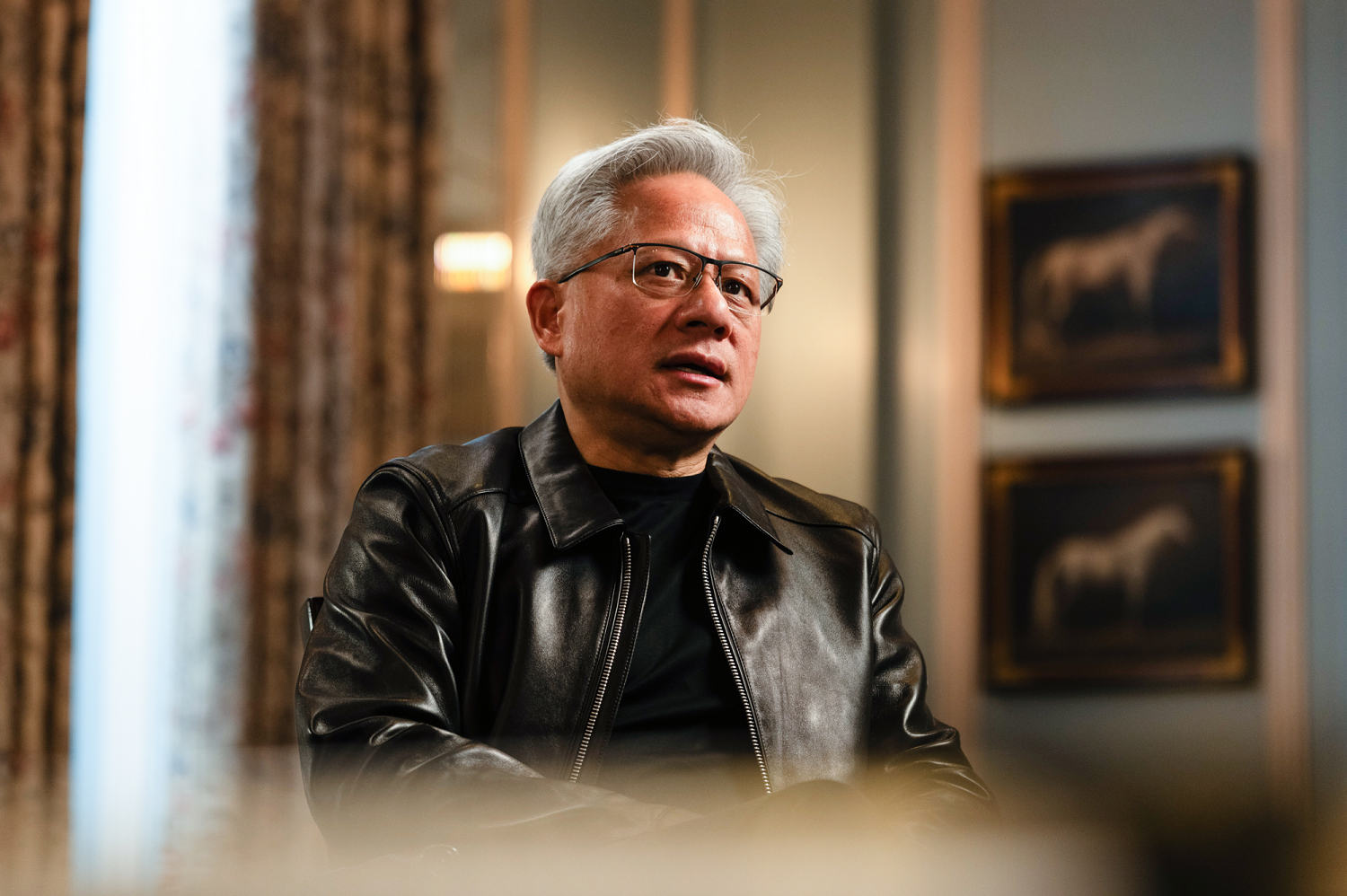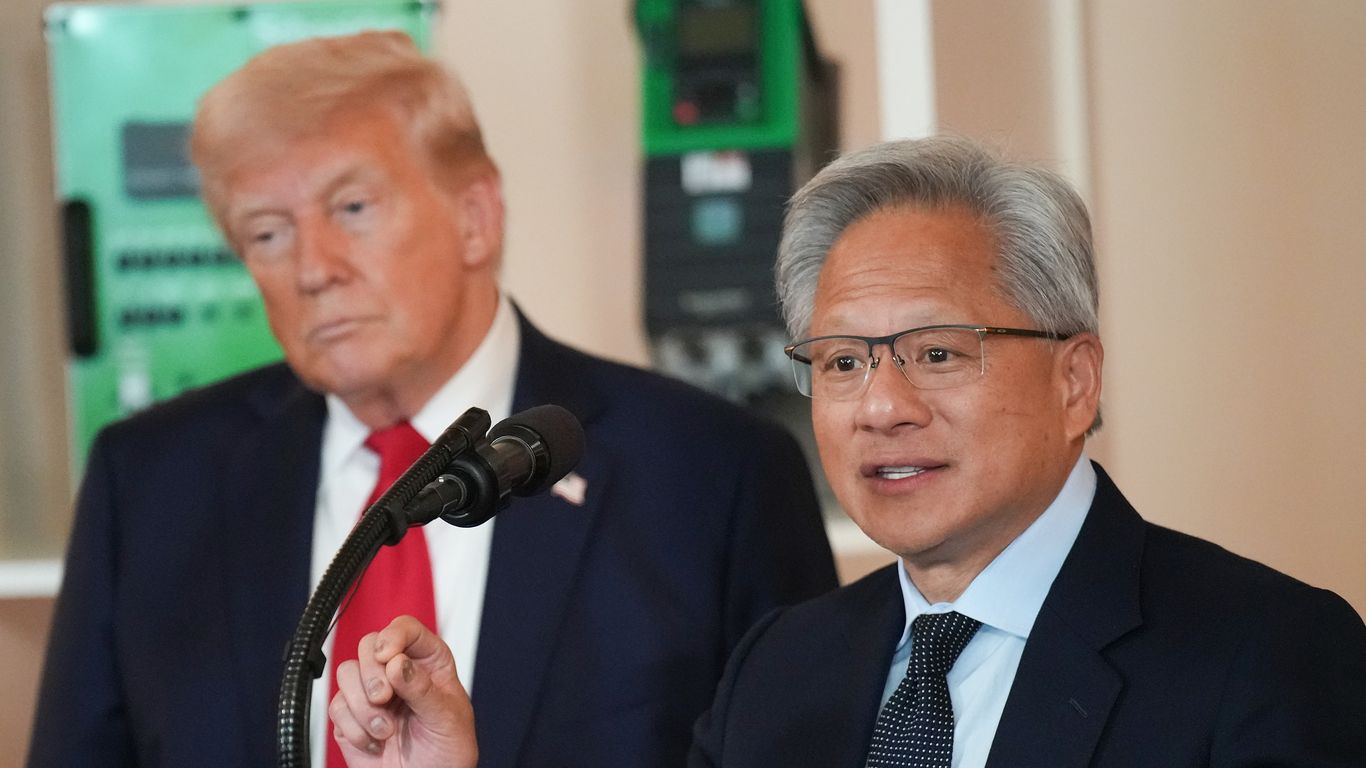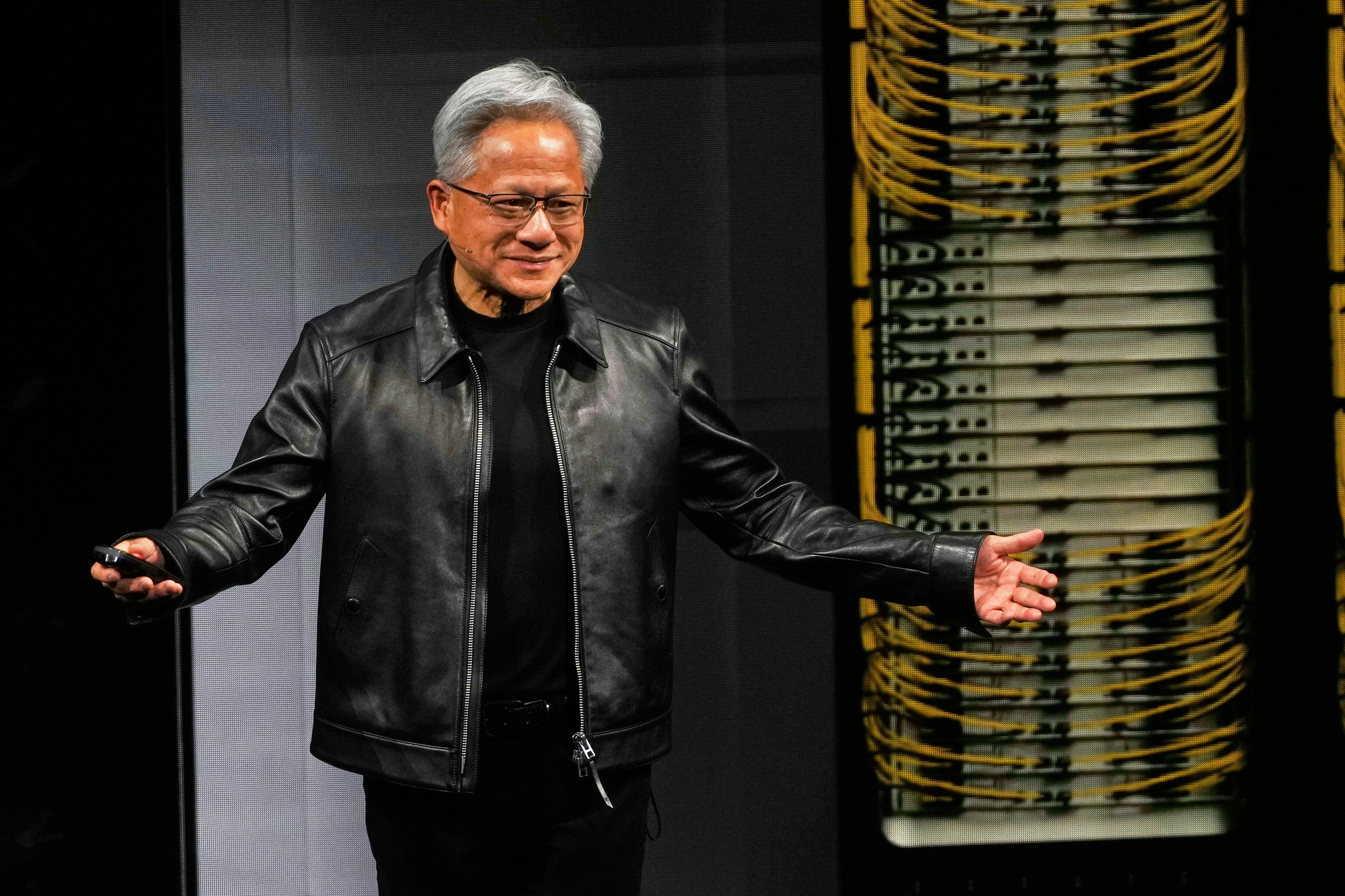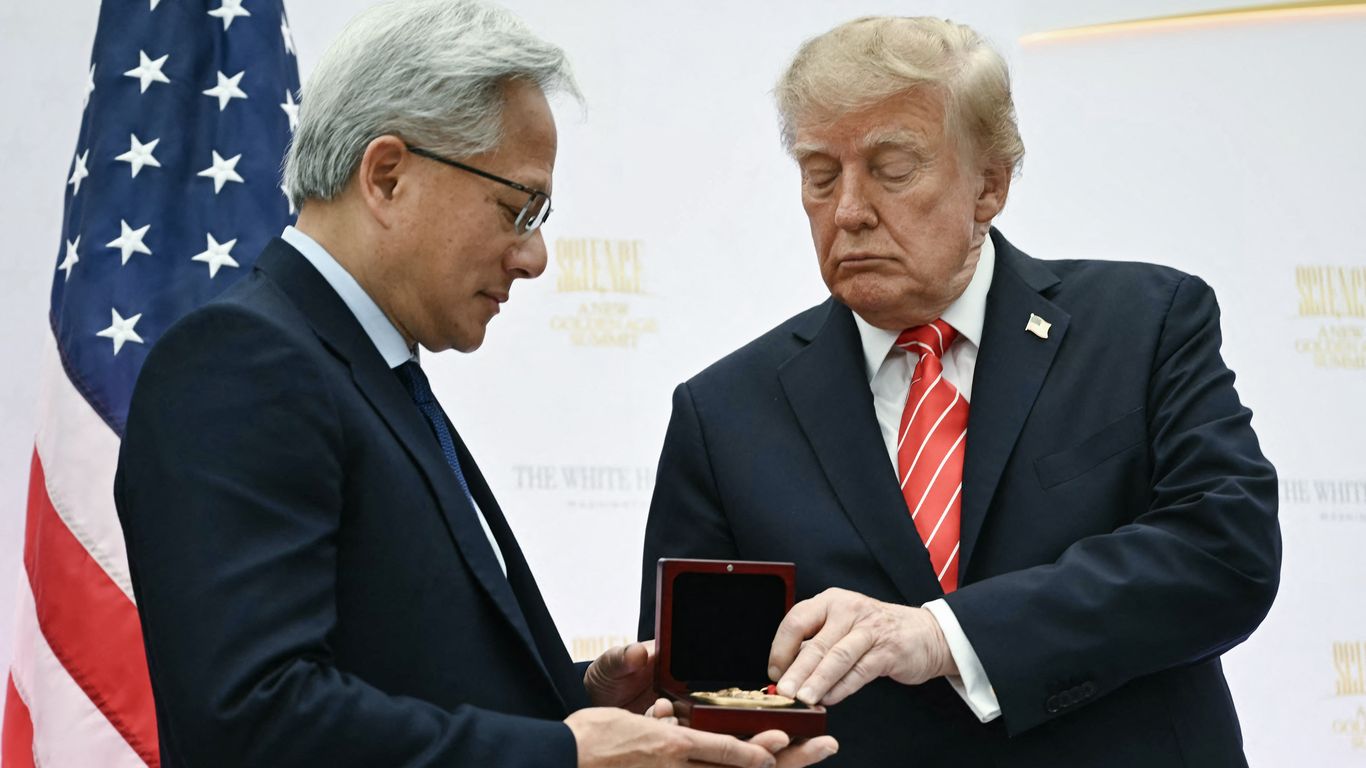
Nvidia hires former acting U.S. attorney to probe Jensen Huang affair
Nvidia’s board of directors has hired a former prosecutor to probe events surrounding CEO Jensen Huang’s affair with a woman believed to be a spy for China.
NBC News · 1h ago

Nvidia’s board of directors has hired a former prosecutor to probe events surrounding CEO Jensen Huang’s affair with a woman believed to be a spy for China.
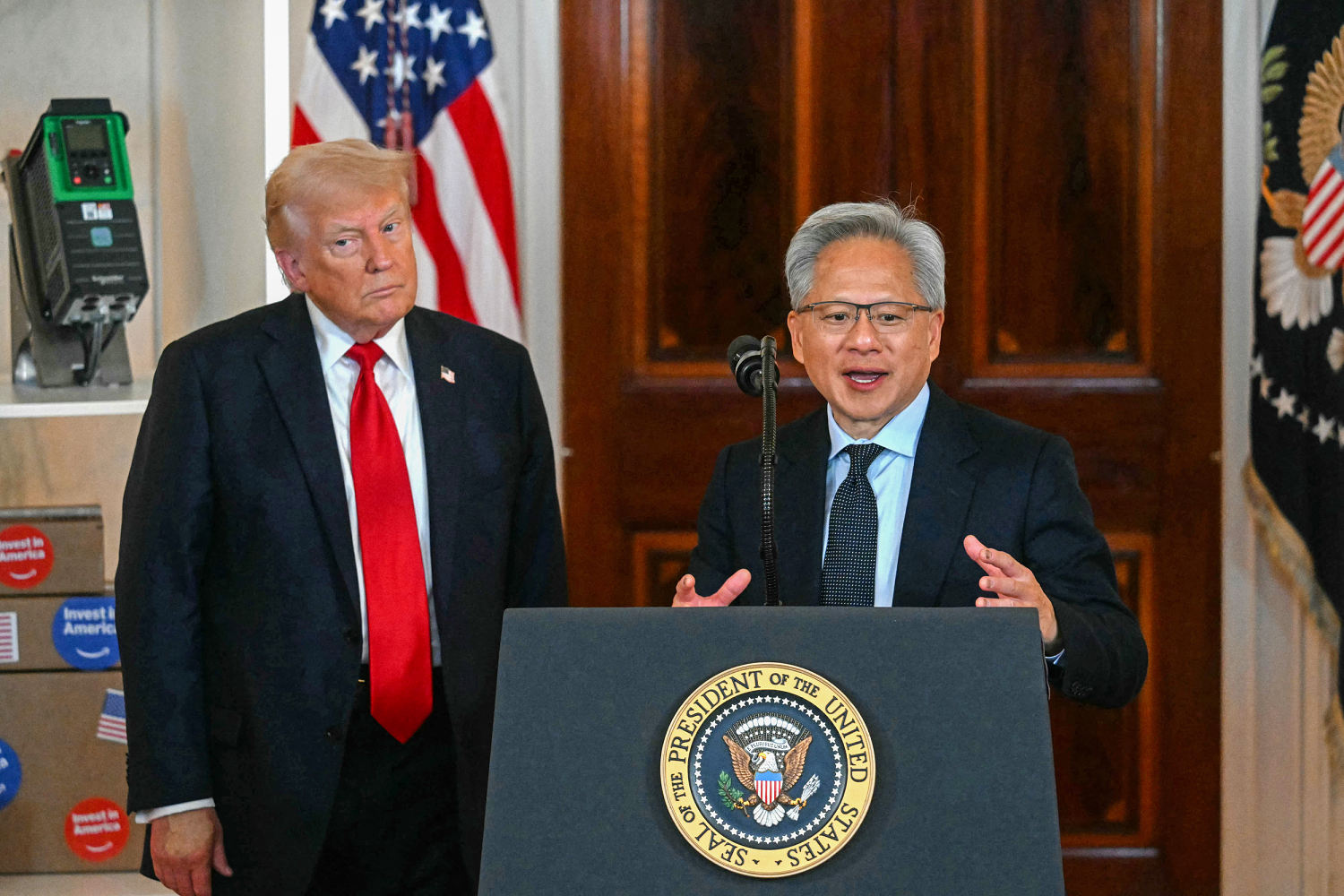
Trump backs Nvidia’s Jensen Huang as the DOJ investigates his relationship with an alleged Chinese spy.
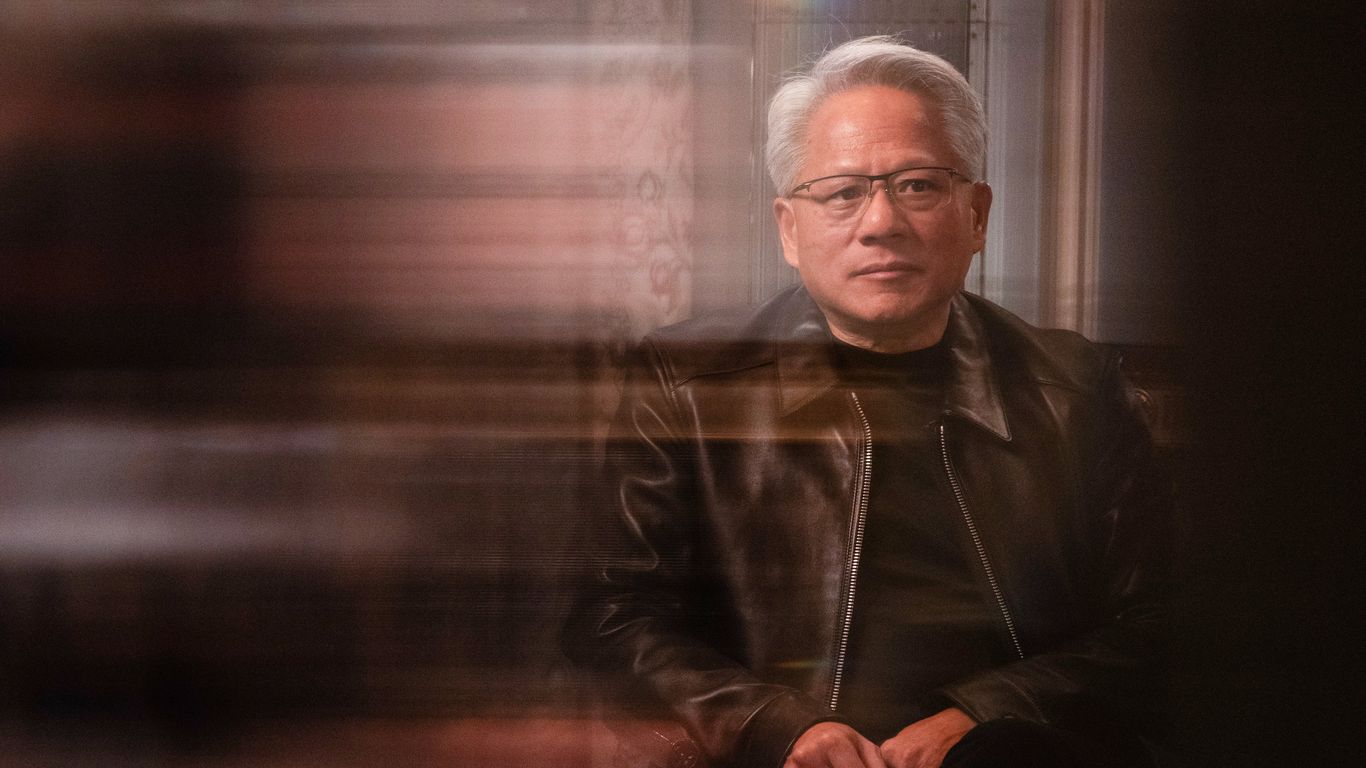
A political backlash against AI and data centers — now compounded by a crisis facing the technology's most influential champion — could help force a slowdown that industry leaders have struggled to achieve voluntarily. Why it matters: Tapping the brakes on AI development — which frontier AI developers claim to want but have so far failed to do given the risk of offering an advantage to a competitor — could give society more time to prepare for economic upheaval and the risks of superintelligent systems. A wave of Democratic victories and data center moratoriums are now joined by a potentially weakened Nvidia CEO Jensen Huang, who admitted to having a relationship with an alleged Chinese spy. Huang, who has led the industry in barreling through past resistance to AI acceleration, may be less able to do so while under a microscope. While both factors could stymie data center expansion in the U.S., it's far from clear that would slow AI's advance. Between the lines: Huang has been a powerful counterweight to calls for AI restraint, dismissing fears of an AI bubble or purported catastrophic risks to humanity from the technology. An investigation — by the board, an ascendant Democratic congress or federal authorities — could curb his ability to make the case for continued expansion, leaving an opening for those calling for more restrictions. Nvidia says Huang will remain CEO and the news won't slow the company, but the potential impact on his political influence is hard to measure. The potential impact extends beyond that as well. Nvidia is both the dominant supplier of AI chips and an investor in companies building AI infrastructure. A crisis that raises questions about its leadership, business practices or financial relationships could ripple through the industry's expansion plans. The intrigue: Anthropic CEO Dario Amodei, OpenAI CEO Sam Altman and Elon Musk have all warned about the potentially catastrophic risks of advanced AI, with all expressing, at times, the need
Donald Trump defended defense secretary Pete Hegseth, who is facing an impeachment resolution from Republican senator Thomas Massie, saying Hegseth 'won two wars'. The president, who said he had spoken to Nvidia CEO Jensen Huang, said he was 'amazed' by claims Huang conducted an affair with an alleged Chinese spy, and that the FBI was now looking into the issue Jensen Huang’s image has been shattered. Could he be pushed out at Nvidia? Republican Thomas Massie moves to force vote to impeach Pete Hegseth Continue reading...
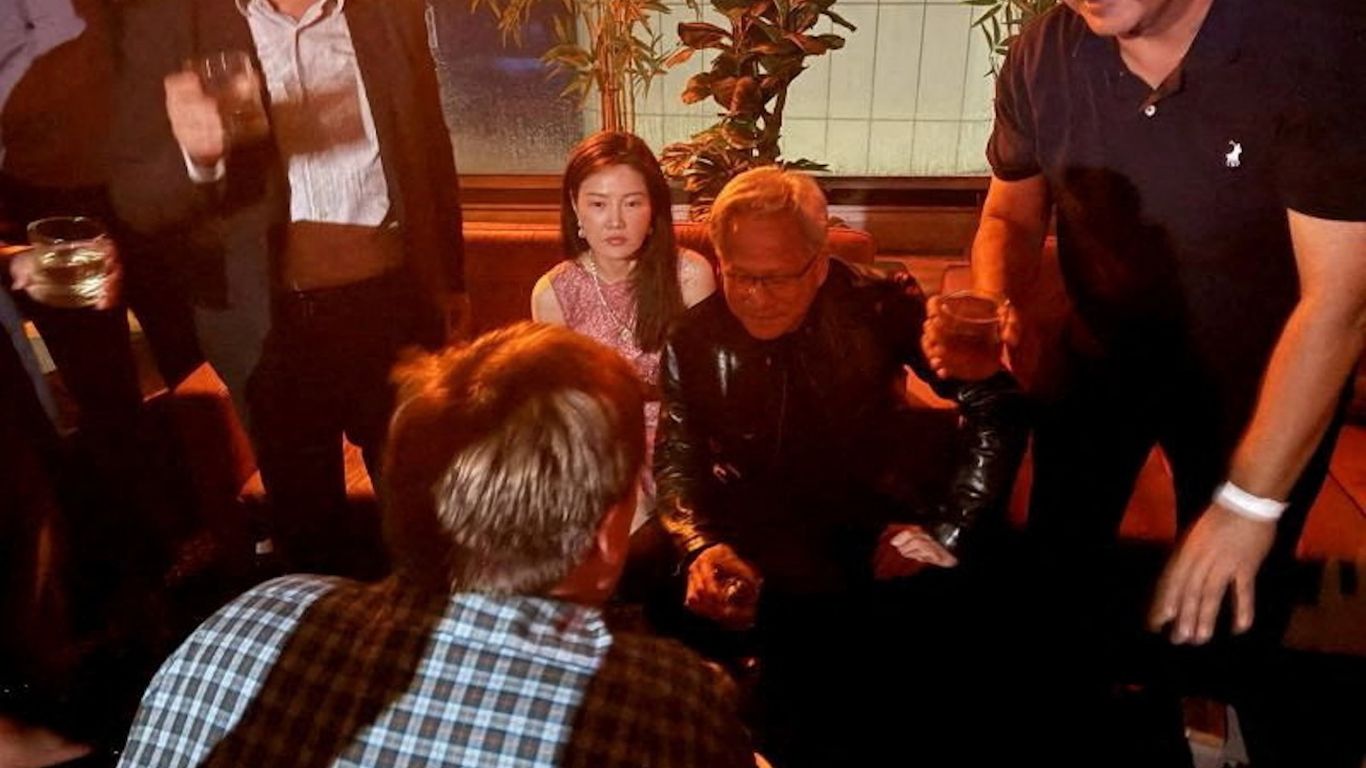
Nvidia CEO Jensen Huang's affair with a woman suspected of spying for China echoes past controversies involving prominent Americans whose romantic relationships raised national security concerns. Why it matters: Foreign intelligence operatives can use romantic relationships to gain access to political intelligence, corporate secrets and classified information — posing serious national security risks. Driving the news: Jensen Huang acknowledged an extramarital affair in a message to employees Sunday, following reports that he had a relationship with a suspected Chinese spy. Per The New York Times , U.S. authorities suspected China's Ministry of State Security of recruiting Alice Huang to seek information about Jensen Huang and influence his feelings about selling AI chips to Chinese firms. Nvidia's board says it has no reason to believe company secrets or national security were compromised. China has also denied the allegations. Zoom out: The evidence of foreign intelligence involvement varies, with some cases involving actual security breaches, while others raised concerns about possible foreign spying. Read more below. Jensen Huang State of play: Reports about Jensen Huang's relationship with Alice Huang have raised questions about whether Chinese intelligence gained access to Nvidia's secrets or sought to influence its business decisions. AFP and Reuters photos showed them together in 2024 and 2025. Employees reported seeing Jensen Huang at Megaspeed's offices, where Alice Huang worked as an executive, according to Culper Research, a short-seller that published a report on Nvidia's China business in May 2026. An employee told Culper that Jensen and Alice had a "very close" relationship. What's next: Three Republican House committee chairs have requested a briefing with Huang about his relationship with Alice Huang and Nvidia's safeguards against foreign threats. James J. Smith and Katrina Leung A 2006 DOJ report found that counterintelligence agent James J. Smith
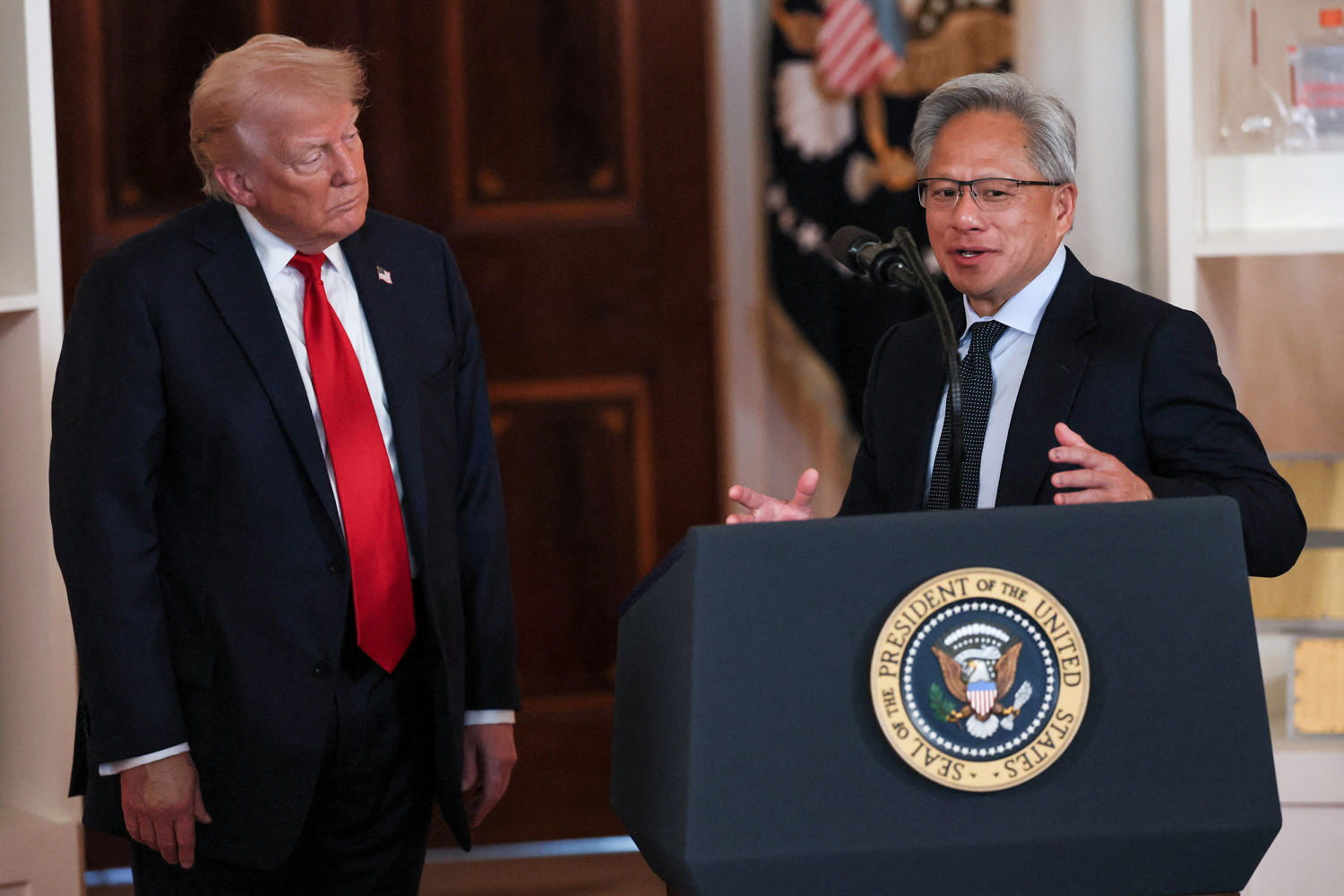
President Donald Trump said that he had spoken to Nvidia CEO Jensen Huang earlier in the day Monday, after Nvidia revealed late Sunday that it had launched an investigation into his extramarital affair with an alleged Chinese spy.
Alice Huang, a former executive of a Singapore-based AI computing company, is at the center of a suspected Chinese espionage scandal after Nvidia CEO Jensen Huang acknowledged an extramarital affair. Why it matters: The investigation raises questions about whether Chinese intelligence sought access to Nvidia's technology and CEO through Alice Huang as the U.S. and China compete in the AI race. Driving the news: Over the weekend, Jensen Huang admitted in a letter to Nvidia employees that he had a romantic relationship with a suspected Chinese spy. Though he did not name Alice Huang, the letter came after The New York Times first reported that U.S. authorities believed she was a Chinese spy in October. Photos captured Alice and Jensen Huan g together in 2024 and 2025. Though they have the same surname, Alice and Jensen Huang are not related or married. Jensen Huang has been married to Lori Huang for 40 years. Context: Little is known about Alice Huang. She has lead a Singapore-based company called Megaspeed International, a cloud computing and data center operator that became a multibillion-dollar Nvidia customer. The New York Times reported Monday that the Commerce Department was leading the investigation into Megaspeed before it was sent to the Justice Department after Nvidia reached out about the case. Read more about Alice Huang and Megaspeed below. Who is Alice Huang? Zoom in: Huang, also known as Huang Le, is a Chinese citizen with a reported background in journalism and finance. An AFP investigation found an online profile that said she previously worked at the financial services company HSBC and the broadcasters CCTV and Hunan TV. However, AFP said it couldn't independently verify the information. Zoom out: The New York Times reports that China's Ministry of State Security recruited Alice Huang to seek information about Jensen Huang and influence his feelings about selling AI chips to Chinese firms. But it's still unclear what information she provided to Beiji
Nvidia is coming under fire for having no clear succession plan to replace Jensen Huang in the event that something unexpected happens — like an international incident with him at the center . Why it matters: The spotlight on Huang shows the vulnerabilities of a large company being dependent on one executive — and the risks it poses to investors and customers, corporate governance experts tell Axios. Catch up quick: Huang — who founded the chips giant, serves as its all-powerful CEO and exerts significant influence over the global AI economy — admitted to having an affair with a woman suspected of being a Chinese spy. Nvidia's board announced an independent investigation Sunday, and experts say Huang's chances of keeping his job are a coin flip . The big picture: The company, by all accounts, has no clear bench of potential replacements. Huang famously has dozens of direct reports, ensuring that no single individual — other than him — has a wide-ranging purview at the company. "The biggest issue is no human goes on forever, and this is exactly why you want a good succession plan in place if something like this were to happen," says Charles Elson, a corporate governance expert and former University of Delaware professor. "You can't base a company that big around one person. You just can't," Elson added. "What if he gets hit by a bus?" CEO succession planning is a standard practice for big public companies, and it's not clear whether Nvidia has a confidential plan. State of play: The highest-profile member of Huang's executive team is Colette Kress, Nvidia's chief financial officer, who appears alongside him during the company's earnings calls. But analysts say Kress — who has spent her career in financial roles — isn't necessarily a natural successor to Huang in his role as an innovator and visionary for the AI age. What they're saying: "It's ridiculous that they have nobody in management identified," says Jeffrey Sonnenfeld, a professor at the Yale School of Managem
The AI chip boss’s actions raise urgent questions about corporate influence, national security and the US president’s willingness to listen to intelligence warnings It could be the plot of a spy thriller. One of the most powerful figures in the AI revolution admitted to having an affair with a Chinese businesswomen said to have passed intelligence to Beijing. When Donald Trump was briefed about the Nvidia co-founder Jensen Huang’s liaisons with Alice Huang, he took no action. Perhaps he thought only marriage vows had been broken. Or perhaps Mr Trump was willing to overlook the conduct of a friend who championed his unpopular datacentre expansion, whose company donated to his White House ballroom and who echoed his opposition to AI safeguards against expert advice. Nvidia became the cornerstone of AI by supplying brute computing power. As tech giants scrambled for the firm’s graphics processing units (GPUs), Mr Huang sold the picks and shovels for the AI gold rush – and amassed a $160bn fortune. When China joined the race for tech supremacy, Nvidia’s microchips became a national security issue. In October 2022, the US slapped export controls on GPU sales to China. Thirty months later, Nvidia was effectively banned from selling to Beijing. Mr Huang lobbied for looser controls. Such was his sway with Mr Trump that the White House scrapped Biden-era global AI chip restrictions and then permitted sales of Nvidia’s prized H200 processors to Chinese customers. Continue reading...
Show will stream on platforms of BetUS sportsbook Ex-Athletic NFL insider had resigned in April Patriots coach, Russini were pictured at resort Dianna Russini will return to sports media with a weekly one-hour show focused on the NFL backed by offshore sportsbook BetUS, she announced Monday. The Russini Report will stream on BetUS TV’s website and X account, accompanied by a weekly analysis column. BetUS has described the program as a “live NFL betting show” that will run through the remainder of the season with game previews, matchup breakdowns and guest interviews. Continue reading...
Nvidia’s stock slid after the company announced that it had opened an investigation into CEO Jensen Huang’s relationship with an alleged Chinese spy.
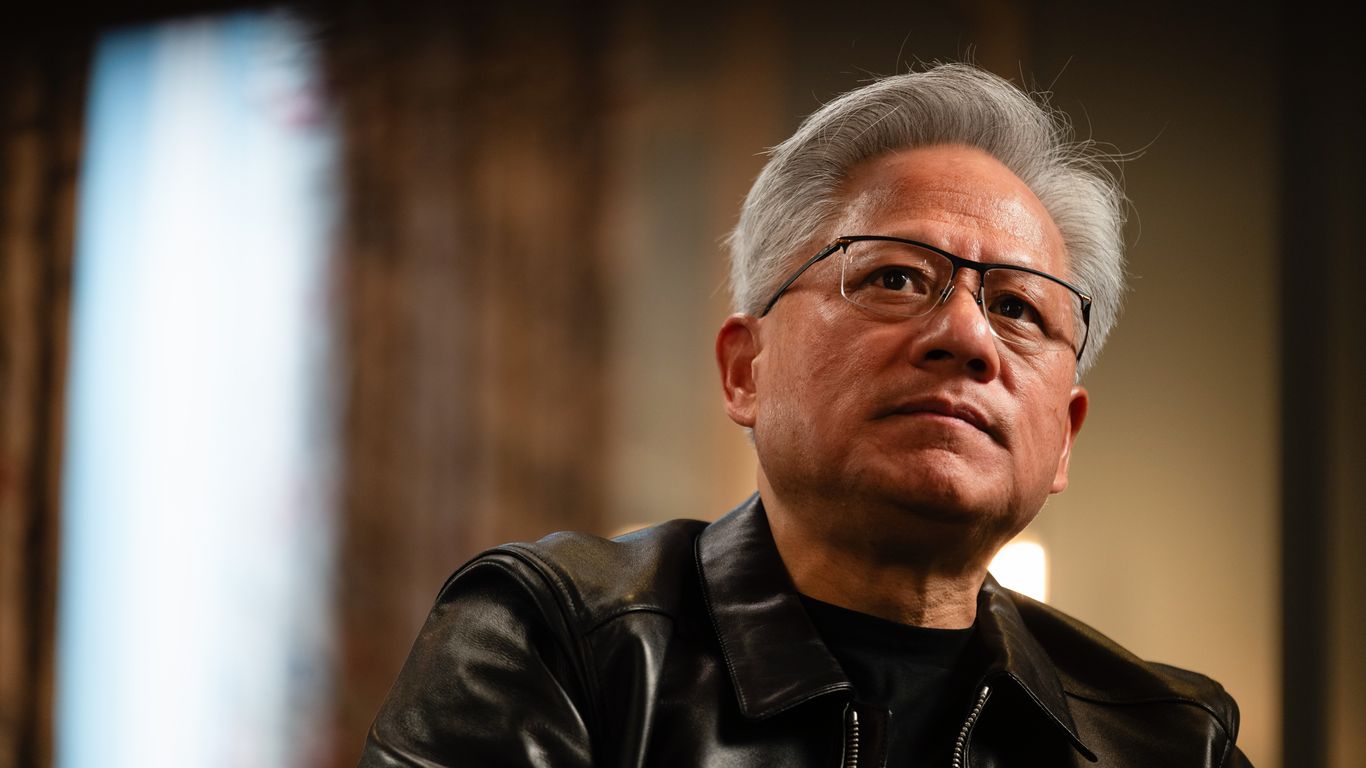
The world's most powerful AI executive admitted Sunday to an affair with a suspected Chinese spy, sending shock waves through an industry built on his singular influence. Why it matters: Nvidia CEO Jensen Huang has fashioned himself as the indispensable leader of an indispensable company — a $4.5 trillion behemoth with unparalleled clout in Silicon Valley, on Wall Street and inside President Trump's White House. Trump stood by Huang on Sunday evening, telling reporters that the Nvidia CEO is "an honorable guy" and "probably has an excuse" for his infidelity. The big picture: Huang, who has led Nvidia since founding the chipmaker 33 years ago, has become the AI boom's chief evangelist and most authoritative voice. He has brushed aside fears of both a speculative bubble and technological catastrophe, joining forces with Trump to calm markets and the public as warnings of an AI apocalypse reached fever pitch. For almost any other CEO, an affair with a suspected foreign intelligence operative could be career-ending. Huang's grip on Nvidia — and the company's extraordinary importance to the AI economy — may insulate him from the same fate. Driving the news: Huang confessed to the affair in a letter to staff Sunday, apologizing to his family as Nvidia's board launched an independent probe into the suspected Chinese intelligence operation. U.S. officials believe Alice Huang, an executive at Nvidia customer Megaspeed, was recruited by Beijing's top spy agency to gather information and potentially influence Nvidia's campaign to expand advanced chip sales to China. Nvidia's board said it had no reason to believe national security or company secrets were compromised and expressed confidence in Jensen Huang, who intends to remain CEO during the investigation. Zoom in: The New York Times first exposed the suspected Chinese espionage operation on Oct. 29, reporting that a woman believed to be working for Beijing had developed a close relationship with Nvidia's CEO. The company po
The chipmaking giant says it is looking into reports by The New York Times that its CEO, Jensen Huang, was the target of a Chinese intelligence operation.
President Trump defended Nvidia CEO Jensen Huang on Sunday night, even as the company's board launched an investigation into his affair with a suspected Chinese spy. Why it matters: The blowback to Huang's relationship is only getting more intense by the hour, with multiple members of Congress calling for probes and investors saying the news could put a cloud over the entire AI trade. What they're saying: Trump was asked Sunday night if he's taking Huang with him on an Asia trip next week. "I don't know, but I'd certainly take him," the president told reporters. "I haven't heard that he's done anything wrong," Trump added. "He dealt with somebody but, you know, so does everybody else." The intrigue: The New York Times reported in late October that Trump was briefed earlier this year about Huang's relationship with the potential spy but chose not to act. Huang has been one of Trump's favorite corporate executives since his return to office, frequently appearing at White House events. He also traveled with Trump to China earlier this year, even after the reported memo warning the president of Huang's relationship. What's next: A group of House Republican committee chairs have asked Huang to agree by Nov. 11 to a date for a briefing on his relationship and Nvidia's national security controls.
Nvidia CEO Jensen Huang admitted to having a romantic relationship with a suspected Chinese spy in a message to his company. The big picture: The company's board launched an independent investigation into reports that he was targeted by Chinese intelligence. Driving the news: "I owe my family and all of you an apology," Huang wrote in a draft email to Nvidia employees obtained by Axios. "I was unfaithful to my wife. My actions hurt her and our children. There is no excuse for what I did." Huang said he took "full responsibility" for his actions, adding that he had fallen short of his responsibilities to Nvidia's employees, board and shareholders. "Leading NVIDIA is the privilege of my life," Huang wrote. "I am fully committed to NVIDIA and will work to earn back your confidence." Flashback: Secretary of State Marco Rubio warned top Trump officials about Huang's relationship with a woman U.S. intelligence officials believed was a Chinese spy, The New York Times reported Friday. The woman, Alice Huang, was recruited to seek information and potentially push for Nvidia's advanced chips to be made available in China, countering existing restrictions, the Times reported. What they're saying: "Today's news will not slow NVIDIA. Jensen is committed to continuing to lead NVIDIA as CEO without interruption," John Rizzo, head of public policy communications at Nvidia said in a statement.
Nvidia CEO Jensen Huang is facing increasing congressional scrutiny after multiple reports Friday night suggested he had a romantic relationship with a purported Chinese spy. Why it matters: Huang is arguably the world's most powerful CEO, the man who runs one of the world's largest companies and whose products are central to the world's most important technology. The mere suggestion that he was in some way compromised by a Chinese intelligence agent could quickly become a major, bipartisan focus of the incoming Congress. What they're saying : Sen. Chris Coons (D-Del.) promised a probe of the latest Times report and Huang's relationships. "The more I learn about the insane relationship between the Trump Administration, Chinese spies, and AI billionaires, the more I'm convinced there is nothing this administration does that isn't corrupt. Congress will investigate and get answers," Coons posted to X, linking in another post to the Times' story. Catch up quick: A series of reports over the last 10 days has raised concerns about an allegedly illicit relationship with an undercurrent of espionage. Oct. 29 : The New York Times reported that Jensen Huang and a tech executive named Alice Huang had a "close relationship," that U.S. authorities had concerns about her intelligence connections with China, and that President Trump had been briefed on the situation. Oct. 31 : The Wall Street Journal reported that intelligence authorities in the U.S., Singapore and Taiwan all had reason to believe that Alice Huang might be a Chinese spy. Nov. 5: A group of House Republican committee chairs asked Jensen Huang to give them a briefing on his relationship with Alice Huang and Nvidia's controls over sensitive information, saying they need to determine "the extent to which U.S. national security has been placed at risk." Nov. 6: Both the New York Times and Financial Times reported that Alice Huang was in fact a Chinese spy, recruited by top intelligence officials specifically to spy on
Nvidia CEO Jensen Huang has been asked by three House Republican committee chairs to brief Congress behind closed doors about his reported ties to a woman accused of spying for China. Why it matters: The request escalates the scrutiny of the Nvidia CEO over his alleged relationship with Alice Huang, a businesswoman accused of spying for China. Catch up quick: Jensen Huang and Alice Huang purportedly had a "close" relationship, per reporting from The New York Times . The Times also reported that President Trump was briefed by intelligence officials about their relationship and the allegations that Alice Huang was a spy, but chose not to act. The Wall Street Journal subsequently reported that officials in at least three countries had concerns that Alice Huang was passing information to the Chinese government, potentially including sensitive details on Nvidia chips. Nvidia has denied the allegations, saying Jensen Huang and Alice Huang's contacts were just routine business interactions. The Chinese government previously called the allegations it was spying on Nvidia "groundless speculation." Zoom out: Reps. Brian J. Mast (R-Fla.), John Moolenaar (R-Mich.) and Rick Crawford (R-Ark.) sent a letter to Jensen Huang Thursday, requesting he sit for a joint briefing with the respective House committees that they chair: Foreign Affairs, the Select Committee on the Chinese Communist Party and the Select Committee on Intelligence. They are seeking answers on Nvidia's protocols to protect itself from foreign adversaries and his interactions with Alice Huang, according to the letter. "Recent reports raise significant national security concerns regarding the [People's Republic of China] access to sensitive U.S. technology and information," the letter reads. "The issue of PRC infiltration and access to cutting-edge U.S. technology is core to the investigative work of our three committees this Congress. It is vital that Congress determines the extent to which U.S. national security h
Democrat James Talarico has won the US Senate race in Texas, securing an astonishing and historic victory. Talarico, a state representative, beat the scandal-plagued attorney general Ken Paxton in the most expensive race of this midterms cycle. He is also the first Democrat to win a US Senate seat in the Lone Star state since 1988. Continue reading...
For years, Ken Paxton turned scandal into a test of Republican loyalty, but his Senate defeat exposed the limits of a political strategy that helped reshape Texas.
The USMNT striker scored his first goal since the World Cup in a losing effort against Paris FC. Could it lead to something more? Before this weekend, the last time Folarin Balogun scored was in the United States’ 2-0 win over Bosnia and Herzegovina at this past summer’s World Cup. In the immediate aftermath, the outlook for Balogun seemed rosy; an ascendant player who could muster a goal in tense games. At half-time against Bosnia, US fans weren’t just wondering how far his team could advance – they were sizing Balogun up against some of the world’s best strikers. But for most of the ensuing four months, Balogun has been in limbo. His breakout World Cup was overshadowed by a red card in that same game against Bosnia and Herzegovina, followed by a scandal of which he wanted no part. Just as it seemed a summer move away from Monaco could get his club career on track, he broke off a possible deadline-day move to Everton after a lengthy visit to the training grounds and a medical he felt was improperly handled. Continue reading...
Get all the stories you need-to-know from the most powerful name in news delivered first thing every morning to your inbox.
A tidal wave of litigation is catching up to Meta, leading to $42 billion in recent penalties and settlements , a powerful reminder to AI companies that they could face a court reckoning even when regulation lags. Why it matters : AI companies are racing to build better models and autonomous agents, but they don't enjoy the same legal protections that shielded web platforms for decades. The scale of the penalties Meta is facing offers a preview of potential legal exposure . The big picture : For years, Facebook's parent company navigated a seemingly endless string of scandals — weathering allegations of election interference, privacy lapses and platform harms — and was largely protected from severe litigation penalties due to Section 230. The provision — from a historic 1996 law passed as the internet was just beginning to change modern life — protects tech platforms from being sued over content created by their users. Legal experts say that law doesn't apply to AI. Models create their own content, so companies could face traditional product liability and negligence claims. Catch up quick : The two massive rulings highlight how legal risk for tech giants can extend by a decade, or proceed much faster. Meta was just hit with a $25 billion penalty over the Cambridge Analytica scandal after a jury found the company misled users about Facebook's privacy practices. Many details about that event surfaced nearly 10 years ago. The company said it believes it will win an appeal, and legal experts have said the penalty will likely be reduced. In August, the company agreed to a $17 billion settlement with states related to the impact of Meta products such as Instagram on teen mental health. State of play : A key cog in the Trump administration's regulatory efforts is the threat of litigation. Liability is sure to feature prominently in the risks AI giants such as Anthropic and OpenAI spell out to shareholders as they prepare for massive public listings. Anthropic's IPO is expe
Democrats in a pair of deep-red states are testing the religious right's dominance by putting their Christian faith at the center of their campaigns — potentially creating a template for the party to compete in similarly forbidding terrain. Why it matters: Upsets by Texas' James Talarico and Kansas' Adam Hamilton would all but ensure that Democrats take the Senate. A recent poll from Pew shows both an opening and an obstacle: White evangelicals still strongly favor Republicans, while many other Christian groups lean Democratic or are more narrowly split. The big picture: Talarico , a Presbyterian seminary student, and Hamilton, a United Methodist pastor, are challenging conservatives' claim to speak for faith. Their bids come after Democrat Raphael Warnock, senior pastor of Ebenezer Baptist Church, was elected to the Senate in 2021. President Trump won both Texas and Kansas by double digits in 2024. Neither state has sent a Democrat to the Senate in the 21st century — the last time Kansas did was in 1932. Both races this year are considered toss-ups . Zoom in: Talarico's "religiosity is a way to soften his liberalism" and potentially win over Christians turned off by his scandal-plagued opponent , says Brandon Rottinghaus, who co-hosts Houston Public Media's "Party Politics." Talarico has also made several visits to Black Baptist churches . Trump made inroads with minority communities in Texas, and Talarico looks to do the same after besting Rep. Jasmine Crockett (D-Texas), who is Black, in a brutal primary. He's harnessed scripture in his pitch against Christian nationalism and for protecting the vulnerable, invoking the biblical campaign slogan, "It's time to start flipping tables." "We're in a populist political moment, and many of the teachings of the social gospel give him an opportunity to link the politics and his faith together," Rottinghaus adds. By the numbers: A September Marist survey of 1,139 Texas registered voters showed Paxton with a 75% to 22% lead
Hackers are finding new ways to infect iPhones with spyware — even when victims never click a malicious link — according to new research shared with Axios. Why it matters: Software once used to spy on politicians, journalists and other high-value targets is becoming a tool for everyday cybercriminals looking to steal cryptocurrency and login credentials. Driving the news: Researchers at iVerify and Report URI said Thursday they've uncovered two campaigns in which criminal groups with suspected ties to China exploited online advertising infrastructure and legitimate websites to deliver iPhone spyware. In one case, iVerify found that a financial institution employee's iPhone was infected after they scrolled past a professional soccer advertisement on Instagram. The ad automatically triggered an attack that stole the person's login credentials and searched their cryptocurrency wallets. In another, Report URI uncovered a campaign affecting nearly 8,000 legitimate websites after hackers purchased roughly 630 expired domains that those sites still relied on. The attackers used those domains to redirect vulnerable iPhone visitors toward spyware designed to steal their credentials and cryptocurrency. How it works: Both campaigns exploited tools that load automatically as people browse the internet, eliminating the need to trick victims into clicking malicious links. In the iVerify case, malicious code began running as soon as the Instagram advertisement appeared on the victim's screen. The attack checked the iPhone's operating system before deploying a compatible exploit. In the Report URI campaign, attackers purchased expired domains once used to host legitimate website features, such as chatbots and analytics tools. Thousands of websites were still loading code from those domains, allowing criminals to quietly redirect visitors toward malicious software. Threat level: The findings show how cybercriminals are building an infrastructure for delivering spyware through everyd