Walmart stocks up on inflation-weary shoppers ahead of the holidays
Walmart raised its sales outlook and reported gaining market share as it lures more affluent shoppers who are hunting for deals amid high inflation.
NBC News · 21h ago

Walmart raised its sales outlook and reported gaining market share as it lures more affluent shoppers who are hunting for deals amid high inflation.
Companies such as Costco and Walmart are seeing a surge in sales for generators, canned goods and other disaster-preparedness staples.
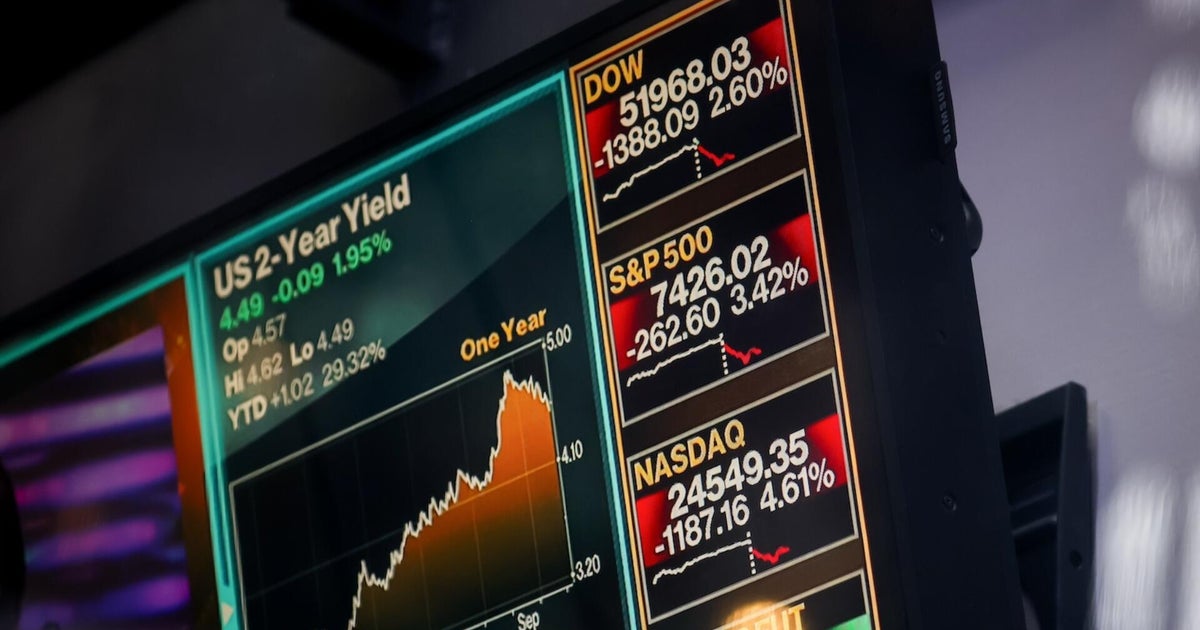
The Dow tumbled 1,100 points, while other stock markets also swooned, as Wall Street frets over AI growth and other market risks.
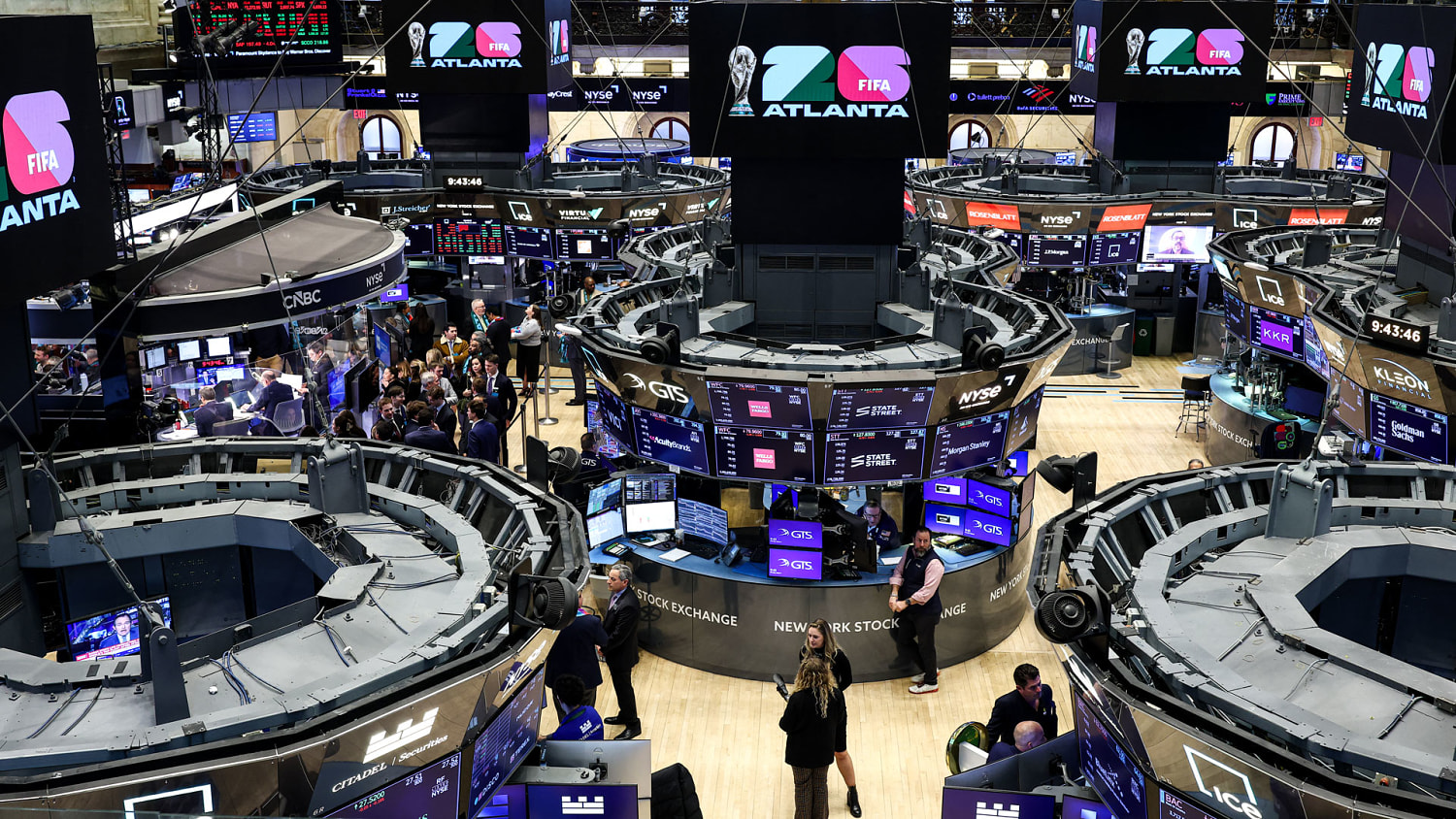
Watch a live look at the New York Stock Exchange big board as Anthropic trading begins.
If the sweeping Senate permitting bill becomes law, it will reflect a rare convergence of political and market forces strong enough to trump the Beltway aversion to big, bipartisan deals. Why it matters: The bill could transform how America builds energy infrastructure, with major implications for everything from electricity costs to data centers. Getting rid of bureaucratic hurdles for energy projects is a top priority for the fossil fuels and renewables sectors. But critics argue the plan would unacceptably weaken environmental protections and the rights of Native American tribes. The latest: A vote on final passage of the White House-backed bill could occur Thursday after the Senate plows through some more amendments. The big picture: Many industries — pipelines, transmission, housing, you name it — call permitting a long bureaucratic and judicial maze that stymies projects. Yes, but: That, on its own, isn't nearly enough to get this far. Here are other reasons the bill has a path to becoming law after years of failed efforts to upend permitting. 🗳️ The cost-of-living election. The midterms were soaked in affordability politics at a time of rising energy bills. While critics can call the projected savings modest, cost is politically front and center. The Rhodium Group estimates that big provisions it analyzed would cut average residential power prices by 3%-4% in 2035. Third Way, a group that favors the bill, supported the research firm's work. 📈 Rising electricity demand. U.S. power thirst has been rising in the last few years after staying largely flat for decades, driven partly by AI and wider electrification of the economy. 🦋 A maturing clean energy industry. As sectors like renewables and storage become more mainstream, " more developers and companies are seeing the real-world challenges" of doing projects, clean energy lobbyist Jeff Navin notes via email. That puts them in agreement with utilities and oil and gas companies. "They all run into problems ge
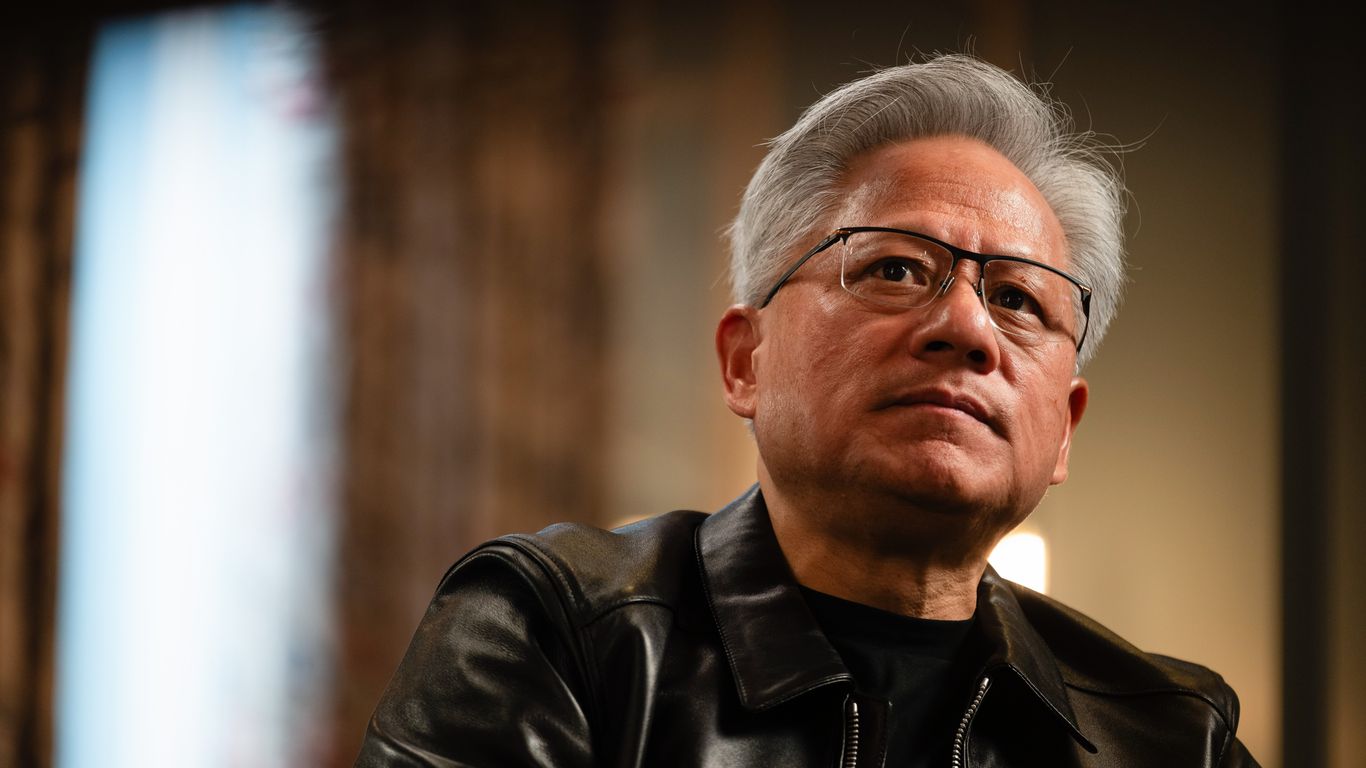
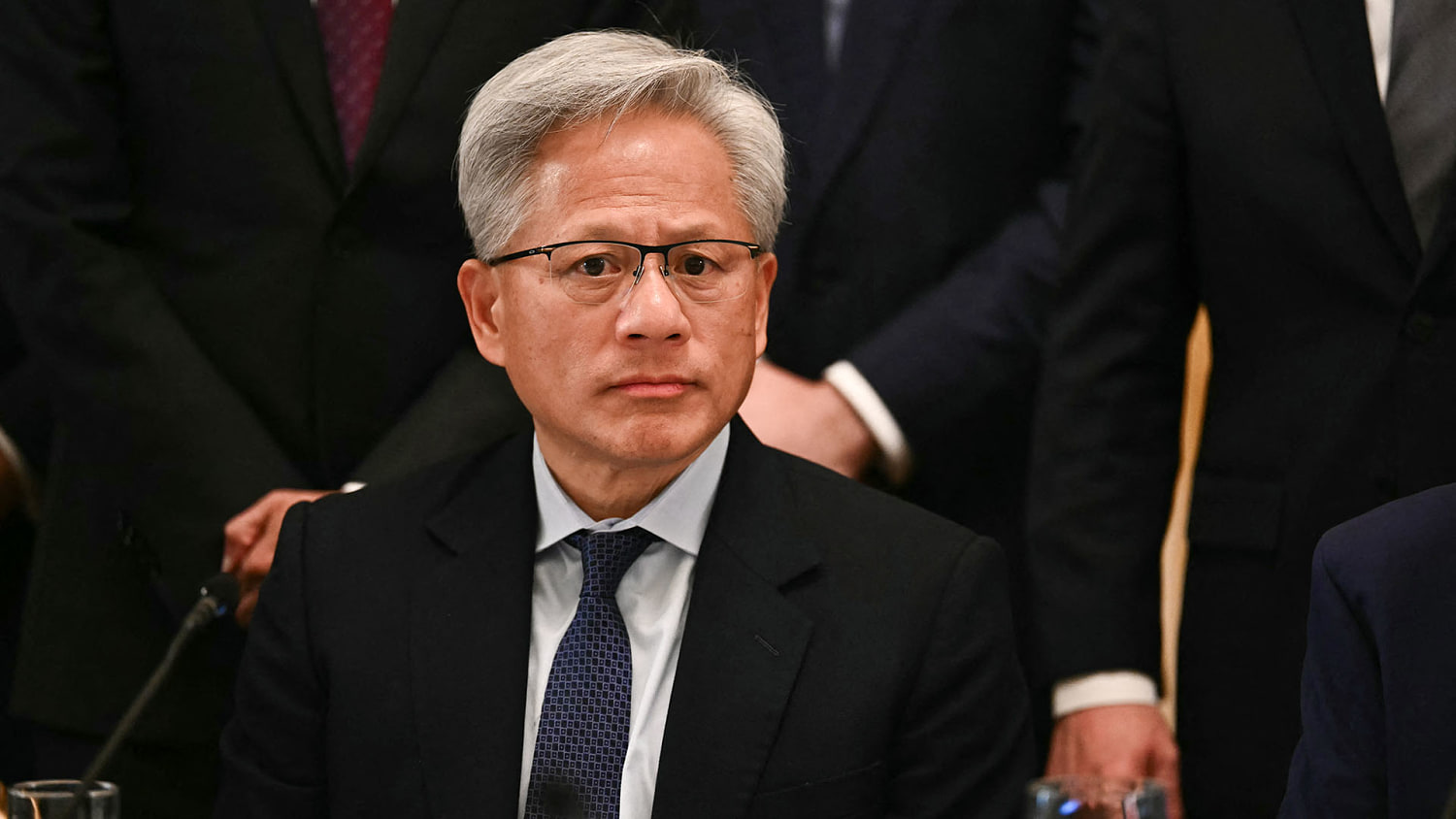
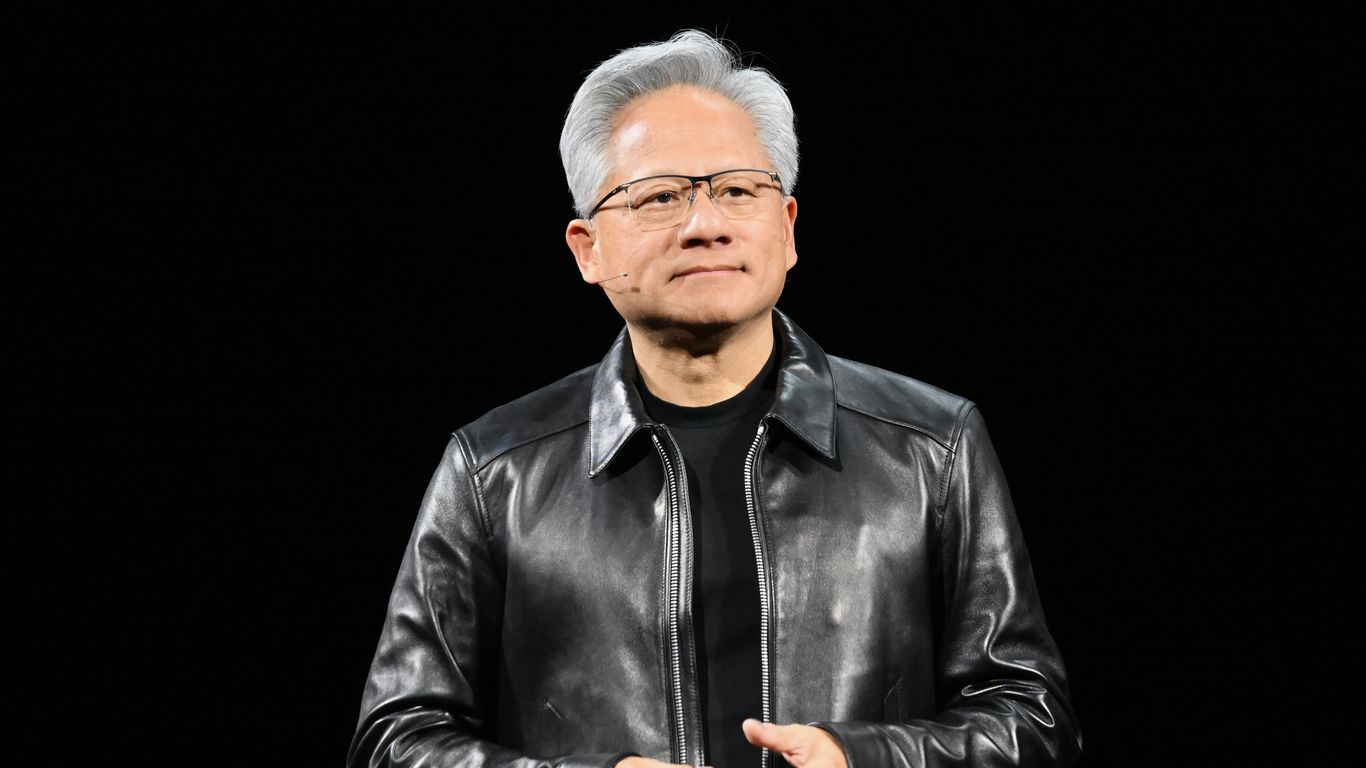
It has been a wild few weeks in the world of tech. First, Jensen Huang’s extramarital affairs, including with an alleged Chinese spy, forced an unimaginable leadership change at Nvidia – arguably the most consequential company in AI development. Then, chaos erupted as a rolling set of IT outages disrupted flights, banking, tech companies and the federal government. And now, Anthropic is blowing minds with a trillion-dollar IPO – one of the largest in stock market history. The Atlantic’s tech writer Charlie Warzel tells Kai Wright that these events are linked: they’re all examples of the ways in which we shoulder unprecedented risk today, in order to bet on AI’s future reward. It’s a convoluted logic that keeps the AI race speeding forward, no matter how many warning signs it blows past. Charlie Warzel is also host of the Atlantic’s podcast Galaxy Brain . Continue reading...
Anthropic on Thursday priced its long-awaited IPO at $83 per share, Axios has confirmed, which would give the Claude maker an initial market cap of $1.08 trillion and a fully diluted value of around $1.5 trillion. Why it matters: Wall Street expects the AI boom to continue, despite some recent tumult. Zoom in: Anthropic priced much higher than its planned range of $70 to $78 per share. The company also could raise significantly more money if underwriters exercise their so-called "greenshoe" option, while Anthropic also will receive $26 billion via a concurrent private placement from tech giants like Nvidia, Google and Microsoft. Axios has not yet been able to confirm the number of shares offered. Anthropic had said it planned to sell 825 million shares, which would work out to a $68.5 billion raise (plus the private placement), but it may increase the share count. Allocation decisions are expected to last several hours on Thursday evening. For context: Anthropic was valued at $965 billion in its most recent private round. The apples-to-apples comparison would be with the fully diluted value. SpaceX raised $75 billion in its IPO and a total of $86.25 billion with the exercised greenshoe, at a higher valuation than Anthropic. What we're watching: Shares are expected to begin trading Thursday, Nov. 19, on the Nasdaq under the ticker "ANT."
Leading AI lab Anthropic is expected to make the largest-ever public market debut when it starts trading on the Nasdaq stock exchange Thursday.
When the stock of Anthropic begins trading for the first time later this week, it will be a big test not only for the company behind the Claude AI chatbot but also for the entire artificial-intelligence industry and for the U.S. stock market itself
A Van Gogh bursting with color could fetch $180 million tonight. An art recovery lawyer says the dispute exposes a history the art market has long tried to bury.
Nvidia's interim CEO said Tuesday that the company will be "disciplined" as it decides how much to invest in neoclouds and other AI customers going forward. Why it matters: Nvidia isn't just the biggest chip partner for AI startups — it's a major source of capital . What they're saying: "Our momentum is real," interim CEO Colette Kress said on at the end of conference call with investors and analysts. "Our demand is accelerating. Our supply is growing. Our customers and our partners are with us, and employees are committed. We've got this." She said the company would continue to use its balance sheet and support startups and the broader AI ecosystem, but she made clear it won't be a blank check. "As the market matures and additional sources of capital become available, we are rigorously evaluating future investments, commitments, and guarantees," she added. In particular, Kress said the company would continue to be "disciplined and selective in our support" for so-called neoclouds . Those companies provide additional computing capacity to big AI players as well as smaller and regional operators. "Our neoclouds have been so instrumental in terms of both supporting enterprises and supporting many of the different countries around the world." CoreWeave and Nebius, two such neoclouds, each ose by more than 10% in after-hours trading. Zoom in: Kress didn't name-check any other specific customers but said the company would offer capital to suppliers to help them move quickly. Nvidia will provide financing assistance or guarantees to some "very strong customers," she said. The chip-maker will "look very deeply" into whether guarantees are needed and conduct "a lot of work to understand if those are the right types of investments we need to make." Catch-up quick: Huang resigned last week after revelations that he had a relationship with a woman who allegedly had ties to Chinese intelligence. She was also a major Nvidia customer and helped Chinese AI companies gain access to
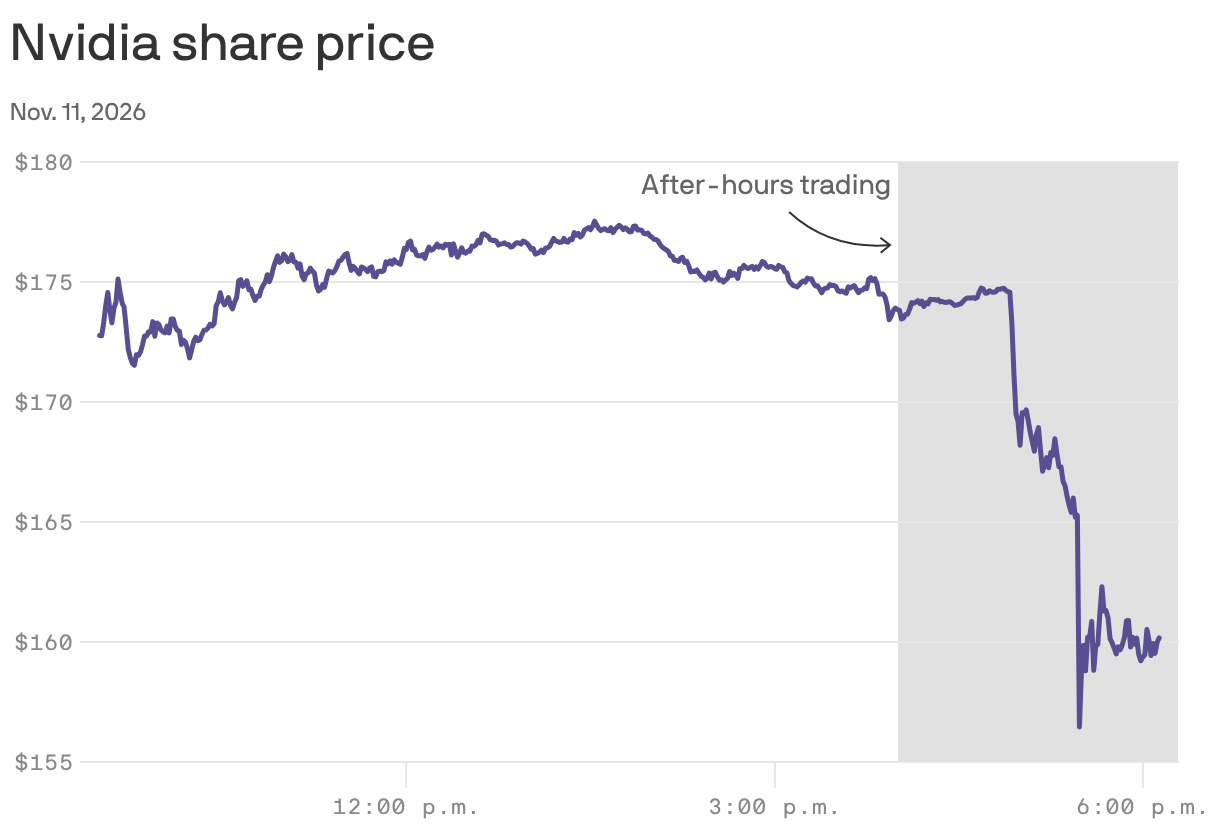
Nvidia posted a stronger-than-expected third quarter and a bullish outlook in its first earnings report after Jensen Huang was ousted as CEO in a scandal that has reportedly spawned an SEC investigation. Why it matters: Nvidia remains squarely at the center of the AI economy — and investors are anxious for guidance on the company's strategic roadmap following Huang's sudden exit. Zoom in: Nvidia recorded quarterly revenue of $115.8 billion and net income of $65.3 billion, both more than doubling its performance from a year earlier. S&P Capital IQ analysts had expected revenue of $108.7 billion and net income of $60.5 billion. The company's data center revenue — its largest segment — rose 110% from a year ago to $107.6 billion. The showing — which included a whopping gross profit margin of 74.8% — immediately calmed investors who have shaved more than $1 trillion off of Nvidia's market cap since the Huang scandal broke. The stock was up 2% in after-hours trading Tuesday. It marks the first moment for interim CEO Colette Kress — who is also still serving as CFO — to exert her leadership during the most tumultuous moment in the company's history. She didn't mention Huang on Tuesday in the earnings report but touted Nvidia's role as "an exceptional technology leader" and said sales of the company's new, advanced Vera Rubin chips are "off to an explosive start." "Our roadmap is on track and our ambition has never been greater," she said. What we're watching: Whether Nvidia discloses any additional details about its CEO search or other investigations on its earnings call. WSJ reported Tuesday afternoon that the SEC has opened a civil probe into the company. An SEC spokesperson declined to comment. Nvidia reps did not immediately respond to a request for comment. Huang posted a public letter Tuesday saying he'd be "honored" to return as CEO. Newly appointed Nvidia chairman Harvey Jones said on Tuesday afternoon's earnings call that the board unanimously accepted Huang's re
Anthropic's stock is poised to start trading on Nasdaq Thursday in one of the largest IPOs of all time. The AI world is watching.
Scammers are already exploiting the scandal surrounding Nvidia to lure unsuspecting investors and business professionals into downloading malware. Why it matters: AI is making it easier for criminals to capitalize on the news cycle and tailor scams to specific audiences before people have time to recognize the threat. Driving the news: KnowBe4, the cybersecurity training platform, says it's seen scammer emails using the subject line "Invitation: Nvidia Executive Partnership Discussion" that purport to offer information about Nvidia's investment strategy. Inside the email, recipients see a clickable image appearing to show information about Nvidia's 2026 investment parameters. Clicking it could lead to malware being downloaded onto their devices. KnowBe4 started seeing signs of the scam Wednesday, just a few days after Nvidia CEO Jensen Huang admitted to being unfaithful to his wife and a day before he resigned, triggering a crisis at the chip-maker. KnowBe4 CEO Bryan Palma told Axios that the campaign appears to be targeting people working in finance, transportation and government. It's unclear which group is behind the emails, he added. The big picture: The Nvidia lure is part of a growing trend in which hackers borrow a page from the marketing industry's playbook to turn breaking news into targeted phishing campaigns. Just like marketers, hackers can purchase detailed contact lists and use AI to sort potential victims by industry, profession and interests, Palma said. That allows them to tailor their scams to specific audiences rather than sending the same generic email to millions of people. AI is also speeding up their ability to develop and launch timely schemes, Palma said. By the numbers: Attackers are 5.4 times faster at responding to headlines in 2026 than in 2022, according to KnowBe4 data . In one case, following a major celebrity's death, scammers launched an email phishing campaign within 16 hours. Nearly 88% of phishing attacks tied to breaking news or
Stanley tumblers are some of the most popular water bottles on the market and right now you can get a 40-ounce quencher for 50% off on Amazon.
The announcement follows Kalshi's acquisition of a New York-based broker, FB Securities, in July.
Other companies whose CEOs have left due to personal conduct issues often lag financial markets for a year, research shows.
Data: AAA; Chart: Ben Geman/Axios Average U.S. diesel prices inched below $6 per gallon on Monday for the first time since Sept. 10 amid lower oil prices recently, per AAA data. Why it matters: Diesel soared even more than gasoline during the Iran war, and those costs rippled throughout the economy. Democrats featured high prices, especially for farmers, en route to midterm wins in typically red agricultural states. Zoom out: The worldwide diesel supply crunch remains acute even as the broader oil market is starting to fitfully stabilize. Ukrainian attacks on Russian refineries, damage to Middle Eastern production and shipments, throttled oil supplies, and expanded U.S. exports to meet overseas demand helped raise domestic costs. The bottom line: Prices are now far below the Sept. 22 record of nearly $6.53 per gallon. The recent relief is real, but it's limited. Average U.S. prices remain well above the prior record $5.82 per gallon set in 2022.
There's new evidence that double-digit health cost increases were hitting employers well before the forecasts of big spikes for 2027 — forcing big changes in workplace coverage for millions of Americans. Why it matters: The findings offer a higher-resolution view of how much health spending is putting a drag on the labor market and increasing affordability concerns for the approximately 160 million Americans who get coverage through work. They also show how factors like surprise billing disputes, more cancer diagnoses and expensive specialty drugs are combining to exert cost pressure, with no immediate relief in sight. Driving the news: A new Gallagher benefits survey of more than 3,700 firms found 36% of the companies reported premium increases of 10% or more during their most recent renewal. Pharmacy costs account for a quarter or more of some companies' total health spending. Cancer care is the No. 1 cost driver for about 7 in 10 firms. The survey, fielded from January to March, also found employers are trying to avoid saddling workers with a disproportionate share of rising costs while struggling to balance the quality of care with their financial risk. "The last two renewal cycles have been unlike anything we've ever seen before," said Robby White, Gallagher's U.S. benefits business line leader. "It's unsustainable, obviously. Every additional dollar that an employer spends on health care, they can't spend on their employees." Between the lines: The 2027 coverage year was already shaping up to be painful for many employers. Projections are showing premium spikes due to rising demand for health services, more chronic disease and increased use of drugs like GLP-1s. In fact, double-digit premium increases for both the 2026 and 2027 plan years suggest there are more underlying causes, according to benefits experts. One leading factor is chronic disease: More people are being diagnosed with cancer at a younger age, and advanced treatments and related care can result
It was random, but related, that we were hit with a tectonic election result, an epic AI-and-spy scandal , and the dramatic FAA shutdown in just over one week. This is our new reality: constant shock and awe, igniting chain reactions across politics, media, AI, business and culture. Why it matters: This month's three shocks hit separately. But their speed and spread are our new reality. Politics, AI, media and business are now one wired system: A jolt in one sets off the other three, instantly. We call this post-processable velocity : Change is moving faster than any person, company, market or government can absorb. People's fears about AI are now mushrooming into jitteriness about civilization's connective tissue. An AP story on Sunday asked: "Could everything be broken?" Images of empty European supermarket refrigerators , cleared of spoiled food after a spate of mysterious cyberattacks, added to the sense that our connections are crumbling, with the simplest conveniences in danger. What makes all this so disorienting for all of us is how interconnected politics, AI, business and media have become. The Nvidia spy scandal is a vivid example: Media, last weekend: The New York Times reports that Secretary of State Marco Rubio warned President Trump that Nvidia founder and CEO Jensen Huang was tied to a suspected Chinese spy. Social media erupts. Business, Monday: Nvidia stock falls more than 4% at the open and keeps sliding. Fears of economy-wide AI fallout follow. Politics, all week: Trump's top team gets dragged into a "what did they know and when" frenzy. Democrats demand hearings. Policy, now: Lawmakers are scrambling to untangle the web of spies, lies and AI, and are racing to tighten China's access to Nvidia chips that gave Huang the power he's now surrendered. Tech, going forward: AI companies are rethinking their reliance on Nvidia chips and exploring financing options beyond Nvidia. ⏱️ Huang's resignation was announced just 14 days after last month's New Yor
The downfall of Nvidia CEO Jensen Huang adds an explosive new risk to an already-strained AI boom, threatening to burst a financial bubble even if the technology ultimately succeeds. Why it matters: History shows that world-changing technology and devastating financial bubbles often go hand in hand. A market reckoning won't stop the AI revolution. But as with the dot-com crash, it could vaporize trillions in investor wealth as expectations come crashing back to earth. The big picture: "No sane person questions whether AI works. And that 'working' status is precisely what makes a bubble possible," veteran technology investor Paul Kedrosky told Axios. The risks have grown as technology companies commit trillions to infrastructure, increasingly relying on debt, investments in one another and complicated financing arrangements to keep the expansion going. Driving the news: Huang's stunning resignation Thursday has shaken confidence in the company at the center of the AI boom — and raised fresh questions about the sustainability of the broader investment frenzy. Nvidia, which named CFO Colette Kress as interim CEO, faces a leadership vacuum at a time when the industry is already grappling with financial and political uncertainty. Beyond selling chips, Nvidia has helped finance the massive expansion of computing infrastructure by investing in its customers and providing financial backstops for major projects. A more cautious approach by Huang's successor could undermine confidence in projects that have depended on Nvidia's financial support. What they're saying: RSM chief economist Joe Brusuelas told Axios that Huang's departure could trigger a "wholesale bursting" of the AI bubble. "The turmoil around Jensen Huang matters for the buildout if it makes lenders less confident that Nvidia will back the next round of projects," Columbia Business School professor Stijn Van Nieuwerburgh told Axios. Zoom out: The financial and political vulnerabilities were piling up well before
On the 30th anniversary of the franchise, Pokémon cards are skyrocketing in value — to the point that collecting them isn’t just big business, it’s a viable livelihood.
Treasury Secretary Scott Bessent on Sunday questioned whether Nvidia's earnings might have been inflated by inappropriate sales to China and urged the company to hire an outsider as CEO. Why it matters: Nvidia is central to the AI economy, which has been key to U.S. economic growth. The Treasury secretary casting doubt on the quality of its financial results and leadership could be a blow to an already shaky market. Since the scandal broke open in late October, Nvidia shares have shed more than $1.2 trillion in market capitalization, with impacts on millions of Americans. Driving the news: In a Fox News appearance Sunday morning, Bessent said Nvidia owes the market an explanation amid allegations former CEO Jensen Huang had an affair with a Chinese spy and oversaw sanctions-evading chip sales to Asian companies. "I want to keep coming back to what was the culture at Nvidia, and were they pressing these seemingly illicit sales to goose their revenues and their earnings?" Bessent said. "I think we need answers in the next 10 days from the board and from the outside counsel." Bessent also said it was "obvious" that some companies doing business with Nvidia were shell companies for Chinese interests and accused the chipmaker of a "culture of noncompliance." "This makes me think that as the board conducts the search for a new leader, that they need to go outside the company," he said. For the record: Nvidia did not immediately respond to a request for comment on Bessent's remarks. The intrigue: Huang has been a favorite of President Trump and other administration figures for some time, but Bessent has notably not been as effusive about him as others. In recent days, Bessent has also made clear that the Commerce Department has questions to answer about why it didn't impose tighter controls on Nvidia's exports. As Axios reported earlier this week, administration officials have accused Commerce Secretary Howard Lutnick of stalling curbs on Nvidia's exports. What to watch: N
Nvidia's near-30% stock plunge in the last month is a drag on the retirement savings of millions of Americans, many who may not realize just how much their investments are tied to the scandal-engulfed chip giant. Why it matters: Nvidia's enormous weight in popular index funds means even those who have never purchased a single share of the company could feel the pain of its corporate upheaval in their 401(k)s. The resignation of CEO Jensen Huang after he had an affair with an alleged Chinese spy may have cost an average Baby Boomer thousands of dollars, according to an Axios analysis of outside estimates. By the numbers: Index funds held nearly half of the assets in large private-sector 401(k) plans in 2023, according to the Investment Company Institute. Those funds include investments tracking the S&P 500, and Nvidia accounts for roughly 8% of that index, according to Tom Graff, chief investment officer at financial planning firm Facet. That exposure rises to around 14% in growth-style index funds and can reach 25% to 30% in some technology and semiconductor funds commonly found in retirement plans, Graff said. Zoom in : For an investor with $100,000 in an S&P 500 fund, a 30% drop in Nvidia shares would knock about $2,400 off the value of that investment given an 8% S&P holding, assuming other stocks in the fund stayed flat. For a growth-style tech fund with 25% exposure to Nvidia, that decline would amount to $7,500 in lost value. An average Baby Boomer holds about $260,000 in their 401(k), according to Fidelity . A tech-style exposure applied to that amount of holdings would equate to about a $20,000 reduction. Yes, but: Remember, a drop in your investment's value doesn't mean you've actually lost that cash — unless you sell your holdings. Zoom out: The potential fallout extends beyond Nvidia itself. About 40% of the S&P 500 is tied to the AI buildout, for which Nvidia is central, providing much of the financing and infrastructure needed to fuel the tech boom. If
Sprawling networks of space data centers could make it nearly impossible for humans to stargaze. That's just one of the many risks that come with placing tens of thousands of AI computers into orbit, according to a new report. Why it matters: Most Americans don't want data centers built near them, but putting them in space brings a new set of problems. Threat level: "Companies and policymakers should proceed with great caution," top academic researchers warn in a report for the Innovation for Cool Earth Forum, an annual event hosted by the Japanese government. If space data centers proliferate, the "most visible points of light in the sky during much of the night in much of the world could be satellites, not stars," the report said, mirroring astronomers ' worries. If the U.S. military adopts the technology, the data centers could become potential targets during future space conflicts . Thousands of orbital data centers whipping around the Earth at 17,000 miles per hour mean a growing "risk of collisions" and dangerous space debris . Space data centers are solar-powered, but the vast number of rocket launches needed to put them in orbit generate greenhouse gases and black carbon emissions . What they're saying: Columbia University's David Sandalow, the report's lead author, told Axios there are still "unknown unknowns" about space data center impacts. "If this is going to happen, it should happen slowly and with care," Sandalow said. "Not just launching lots and lots of these things and, kind of, seeing what happens. ... There's big risks." By the numbers: Despite those concerns, investors and tech innovators are all in on space data centers. In 2025, around $197 million in investments were tied to orbital data centers, per market research firm Quilty Space. That figure has swelled to $1.11 billion so far this year. SpaceX has applied for a constellation of 1 million data center satellites, according to the Secure World Foundation . Starcloud and Blue Origin's Proje
Millions of Americans are exposed to Nvidia shares through their retirement plans. That's not as bad as it sounds (really!).
Oil markets are heading into an unusual period as the Iran conflict remains in dangerous limbo: The supply crunch is easing, but prices could stay stubbornly high. Why it matters: While gasoline prices have dropped lately, don't expect pre-war levels anytime soon even as Middle East exports fitfully recover. Getting oil out of the region is expensive, which filters down to consumers. The threat of new attacks can keep oil costs higher, too, thanks to the risk premium embedded in prices. The big picture: Traders are watching the state of potential diplomacy — and the possibility of a prolonged stalemate. Oil prices jumped yesterday after President Trump said on his Truth Social that "we don't need a deal with Iran. Those days have long since passed." Driving the news: Export levels bounce around, but have recently returned to pre-war levels at times, barrel-tracking firms and analysts say. Yet shipping threats will "persist in 2027," and attacks spiked last month ( see the chart above ), per political risk intelligence firm Verisk Maplecroft. A new agreement on navigating the Strait of Hormuz would just be a piece of the puzzle — if it ever happens. "The threat of a renewed wave of shipping attacks will remain high as long as the underlying confrontation over Iran's nuclear and missile programmes remains unresolved," the firm's analysis states. Catch up quick: Tracking how much supply is returning is a moving target, and higher production from countries outside the Middle East — including the U.S. — matters too. The oil market is "showing tentative signs of rebalancing, with global oil supplies surpassing demand for the first time since the outbreak of the war in Iran," the International Energy Agency said this morning. Crude oil exports from the Persian Gulf region rose to 82% of pre-war levels last month, though recovery of refined product shipments is weaker, its monthly analysis states. With supply rising and oil demand lowered by the conflict, IEA predicts the g
Jensen Huang's self-destruction has left a trail of collateral damage that threatens to ensnare the board of Nvidia and the AI boom itself . Why it matters: Huang was a singular leader in the global economy, capable of exciting or calming markets with a single sentence and viewed as a virtually indestructible force behind Nvidia's rise. The big picture: His sudden exit after reports of multiple affairs — one with a suspected Chinese spy and the other with a direct report — has wiped out more than $600 billion in value from Nvidia's market cap. "His visionary leadership is going to be missed — it's not going to be replaced," Joel Shulman, CEO of ERShares, which has owned Nvidia shares since 2005, tells Axios. Zoom in: With the uncertainty over Huang's tenure at Nvidia now resolved, the attention will quickly pivot to a slew of unanswered questions, including: What will the investigations uncover? Just because he's gone doesn't mean this is over. If the FBI probe or the independent investigation ordered by the board show that Huang gave favorable treatment to Megaspeed — the company led by the suspected spy Alice Huang — he and Nvidia could face serious consequences. Huang is also expected to testify behind closed doors next week before a Congressional committee. Critics say the Nvidia board wasn't fulfilling its duty to provide proper oversight of Huang — particularly if it had any reason to be aware of his reported affairs before they become public. Peter Jaworski, business ethics professor at Georgetown University, said the situation raises questions about what the board knew and when they knew it. Nvidia reps haven't responded to Axios requests for comment on the board's handling of the matter. Who takes the permanent role as CEO? CFO Colette Kress was named to the interim role, but the board is conducting a global search that will consider outside and internal candidates for a permanant successor. She "has built enormous credibility internally and externally and
Watch live as the stock market reacts following the news that Nvidia CEO Jensen Huang has resigned amid reports of extramarital relationships.
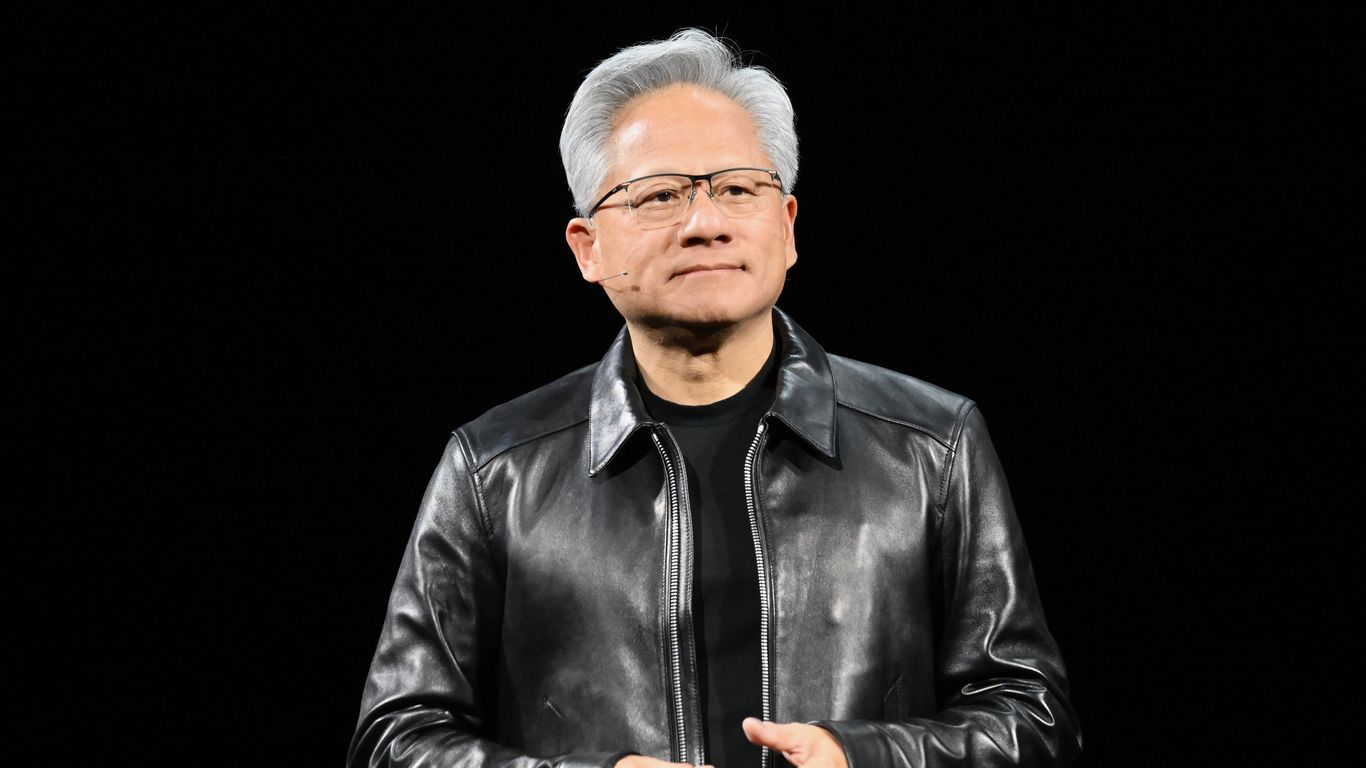
Jensen Huang resigned as CEO of Nvidia after he reportedly had two affairs, including one with a purported Chinese spy. Why it matters: It's impossible to overstate how critical Huang is to Nvidia, to the AI buildout, to the stock market and economy. His departure could, per Wall Street sources, be the catalyst that endangers a ballooning AI bubble. Driving the news: Nvidia's board named longtime CFO Colette Kress interim CEO, while launching a search for a permanent replacement. Kress, who joined Nvidia in 2013, will continue serving as CFO while overseeing the company. Harvey C. Jones was appointed Nvidia's first-ever board chair. The board said it expects Nvidia's operations, customer commitments and product roadmap to continue without interruption. Zoom out: Huang's resignation follows revelations about two extramarital relationships. The New York Times reported Wednesday that Huang had a relationship with Kimberly Powell, a senior Nvidia executive who reports to him. Nvidia's board had previously launched an independent investigation into Huang's relationship with Alice Huang, a Chinese businesswoman identified by U.S. intelligence as a Chinese intelligence asset. Nvidia did not provide a reason for Huang's resignation in Thursday's announcement, which comes after reports that the board had an emergency meeting over whether to oust the CEO. By the numbers: Nvidia shares fell more than 10% after news of Huang's resignation. This is breaking news.
Data: FactSet; Chart: Matt Phillips/Axios Nvidia CEO Jensen Huang's apparent from grace is a shock to a company at the core of the U.S. markets and the AI ecosystem that he did much to create. Why it matters: CEO scandals happen at companies. Their stocks fall. But there is no other company quite like Nvidia. Its size, financial resources and strategic position in the AI boom have made both the chipmaker and Huang, personally, pillars of the industry that has come to drive both the stock market and the economy. Catch up quick: Following revelations this week that Huang had admitted to an extramarital affair with a woman believed by the U.S. government to be a Chinese intelligence asset, the New York Times reported Wednesday evening that Huang also had a romantic relationship with an Nvidia executive who reports to him. The Wall Street Journal and other outlets are reporting that the company's board of directors was preparing to oust Huang. Nvidia shares plunged in the after-hours trading session. Context: The uncertainty surrounding Huang's position comes as the AI trade is going through one of the crises of investor confidence that have periodically hammered AI shares in recent years. The concern this time centers on the ability of the AI build-out to continue, as rising interest rates and a saturated market curtail the sale of bonds to pay for data centers. Chip makers like Nvidia have been particularly hard hit by this recent AI slump. Its shares were down roughly 30% from their recent high through Wednesday's close, vaporizing nearly $1.59 trillion in shareholder wealth. There have been market drawdowns around AI before, says Eric Sheridan, a research analyst at Goldman Sachs, in a big new report on the investment cycle. "The stakes are undoubtedly higher now as we're further along in the cycle and the dollars being spent have grown considerably, which may be adding to investor skittishness." Stunning stat: Since the end of last week, the company lost over $600
Jensen Huang's potential ouster from Nvidia has plunged the AI industry into uncharted territory — a corporate earthquake that dwarfs even the chaos unleashed by Sam Altman's temporary firing from OpenAI in 2023. Why it matters: Nvidia is the backbone of the global AI economy , with its chips, investments and financial guarantees sustaining an entire ecosystem of companies worth trillions of dollars. At the center of that vast financial flywheel is Huang, who spent 33 years making himself synonymous with Nvidia — and Nvidia synonymous with the AI revolution. "This is no ordinary CEO. This is no ordinary company. This is no ordinary sector. This is no ordinary time," economist Mohamed El-Erian wrote on X , warning of contagion across the AI industry. Zoom in: As recently as two weeks ago, the notion of Nvidia without Jensen was unthinkable. Even after his affair with a suspected Chinese spy came to light, President Trump and Nvidia's board stood behind him, Silicon Valley's elite rallied to his defense and betting markets suggested he would survive. It took revelations of a second affair — this time with an executive who reported directly to Huang — to shatter that consensus and bring his storied reign to the brink of a stunning end. Driving the news: After that second affair came to light Wednesday night, Nvidia's board reportedly met to settle Huang's fate, though there was still no decision as of early Thursday morning. The White House was read in. The market reaction has been brutal. Nvidia had already shed more than $1 trillion in market value since the initial scandal erupted, and shares plunged further in after-hours and pre-market trading overnight. One of Wall Street's most prominent voices on tech, analyst Dan Ives, said Nvidia was worth 25% less without Huang. Zoom out: Huang's rise was the stuff of Silicon Valley legend: The Taiwanese immigrant went from cleaning toilets at a Kentucky boarding school and waiting tables at Denny's to building one of the mo
Shares in Nvidia sank Wednesday night after the New York Times reported CEO Jensen Huang had a second affair with a senior executive who reports to him. Why it matters: The report adds to mounting scrutiny of Huang, already under investigation over an affair with a purported Chinese spy. The potential impact goes beyond one man and one business, though. Huang is arguably the world's most powerful CEO at the moment, his company serving as the beating heart of the AI revolution. He also has no obvious successor . Driving the news: Huang, 63, had a relationship with Kimberly Powell, 48, Nvidia's vice president of health care, according to the Times. Both are married to other people. The two were reportedly seen being affectionate at a hotel during Nvidia's annual developer conference in San Jose in March. A bystander recorded the interaction, and Huang's security team made an offer to the person to sign a nondisclosure agreement, per the Times. The paper reported that Nvidia declined to issue a statement, and Powell did not respond to a request for comment. By the numbers: Nvidia shares fell nearly 5% in after-hours trading Wednesday. The company's lost about $1 trillion in market cap since the Times first reported on Oct. 29 that Huang had a "close relationship" with a suspected spy. On the prediction market Kalshi, the odds of Huang being out as CEO by Jan. 1 doubled after the report. Zoom out: This new report comes after Huang confirmed in a company email that he had been unfaithful in his marriage. Nvidia has an independent panel investigating, and hired the law firm Wachtell, Lipton, Rosen & Katz to handle the probe. What we're watching: How Nvidia handles the growing scandal could have affects far beyond just its walls.
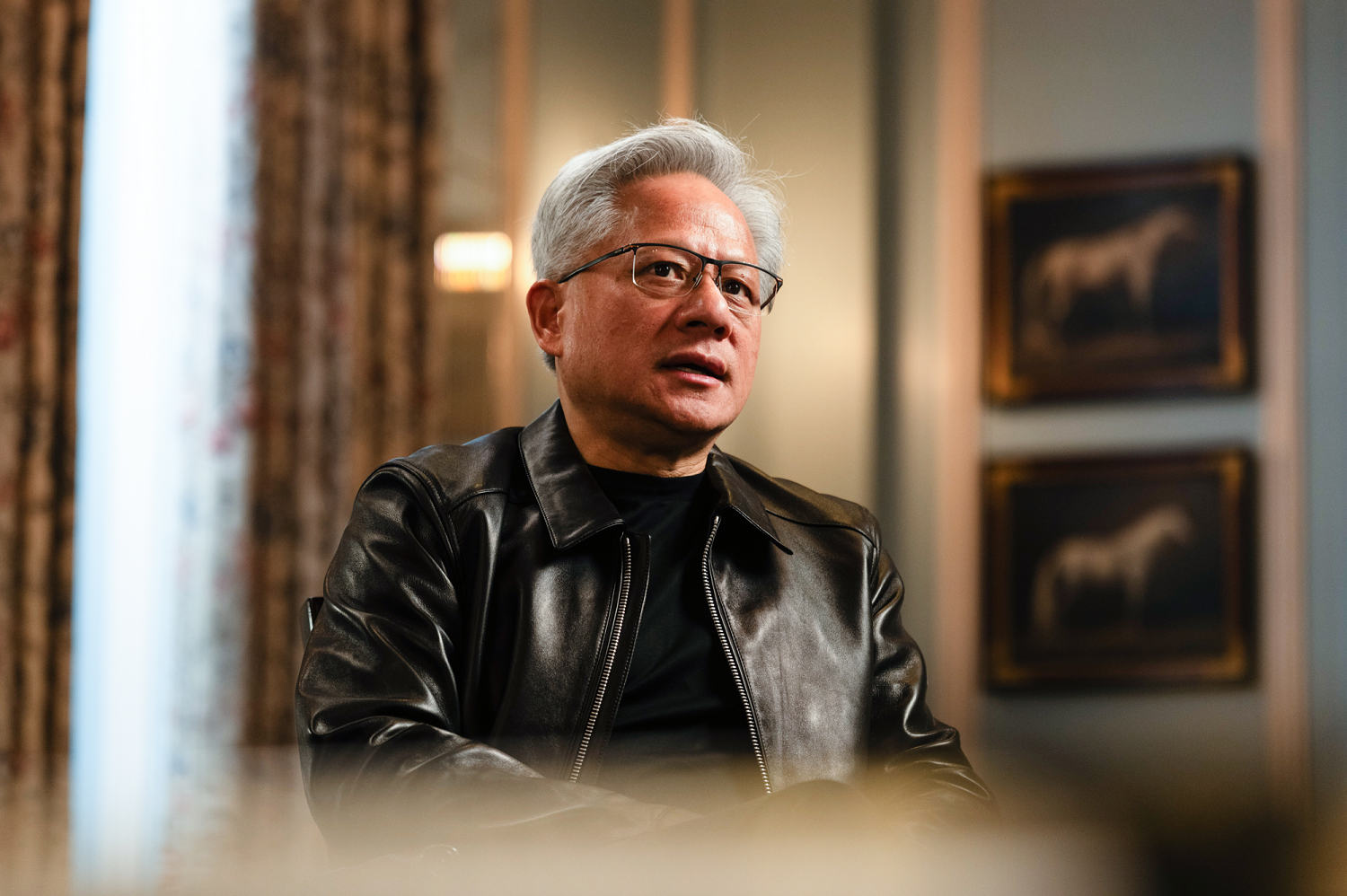
Investors and lawmakers are demanding answers from Nvidia's Jensen Huang over his affair with an alleged Chinese spy. Meanwhile, the tech giant's market valued has plummeted in recent days. Jo Ling Kent reports.
A week of political upheaval , financial turmoil and salacious scandal delivered one final indignity to the AI industry Tuesday, as Anthropic's staggering IPO target fell short of expectations. Why it matters: The bubble is wobbling. Investors, businesses and governments need a spectacular success from Anthropic to stave off a crisis of confidence that could tear through the broader economy. Facing new political headwinds, the industry can scarcely afford another setback — much less the spectacle of AI's crown jewel losing its luster on Wall Street. Zoom in: Anthropic announced plans Tuesday to raise as much as $64.4 billion in one of the largest IPOs in history, targeting a valuation of up to $1.4 trillion. That's roughly $600 billion below what investors envisioned just months ago, as slowing revenue growth, soaring infrastructure costs and a punishing market selloff tempered expectations. Anthropic's annualized revenue reached $81 billion in October, but its long-term commitments to chips, data centers and computing infrastructure have also climbed to nearly $901 billion. Zoom out: Anthropic's valuation reset caps a punishing stretch of new challenges that began with last week's stunning midterm results: 🌊 A blue wave of AI-skeptical Democrats will arrive in Congress armed with subpoena power and an appetite for investigating the industry's safety failures and vast political influence. Voters delivered another blow at the local level, favoring restrictions on data-center development in 40 of 41 ballot measures nationwide. 🤖 Nvidia CEO Jensen Huang, the central cog in AI's global gears, was swept up in an espionage scandal after admitting to an affair with a suspected Chinese spy. His board, the FBI and Congress are investigating. Nvidia has shed more than $1 trillion in market value since the first New York Times revelations on Oct. 29, with shares plunging further Tuesday as the company faces a new shareholder lawsuit. 📉 Wall Street went into a tailspin as in
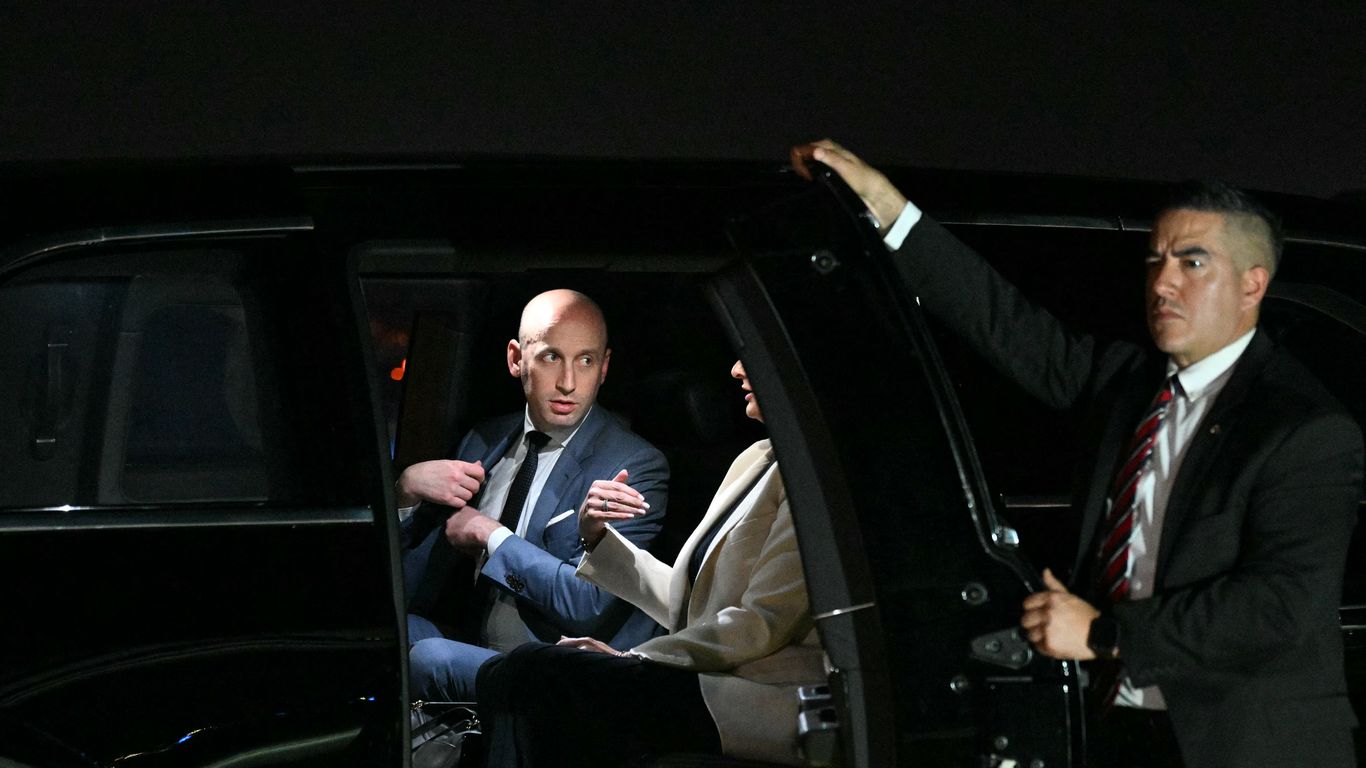
Stephen Miller wants to use his new role as White House chief of staff to win back young and minority men who helped elect President Trump in 2024 but swung toward Democrats in the midterms, two people familiar with the administration's plans tell Axios. Why it matters: Miller, named last week to replace Susie Wiles, plans to focus on reviving the populist agenda that helped the president build his 2024 coalition, with an emphasis on working-class voters. Young, working-class and minority men fled the GOP in droves in last week's elections , amid high prices fueled by Trump's tariffs, the war in Iran, and concerns about AI's impact on the job market. Another key factor in last week's voting: Latino men also swung sharply toward Democrats, as the administration's hard-line immigration crackdown became an increasingly contentious political issue. Driving the news: Miller wants to spend more time highlighting administration policies he believes haven't gotten enough attention, and that will appeal to working-class voters concerned about the economy, insiders tell Axios. His priorities will sound familiar to Trump watchers: eliminating what the administration considers "woke" policies from colleges and workplaces, lowering prescription drug prices, and rooting out government and health-care fraud. He also wants to emphasize reducing the federal bureaucracy and push for permitting reform , while highlighting how those efforts could help address affordability. Sources in the business community say Miller's ideological drive makes him mostly impervious to typical Washington lobbying. Yes, but: With Democrats taking control of Congress in January, Miller will have to advance that agenda without the help of Republican majorities in either the House or Senate. Some of his plans could be pursued through executive orders by Trump. Others, including permitting reform, would require bipartisan cooperation. That could be a challenge: Miller, a political fighter who's been called T
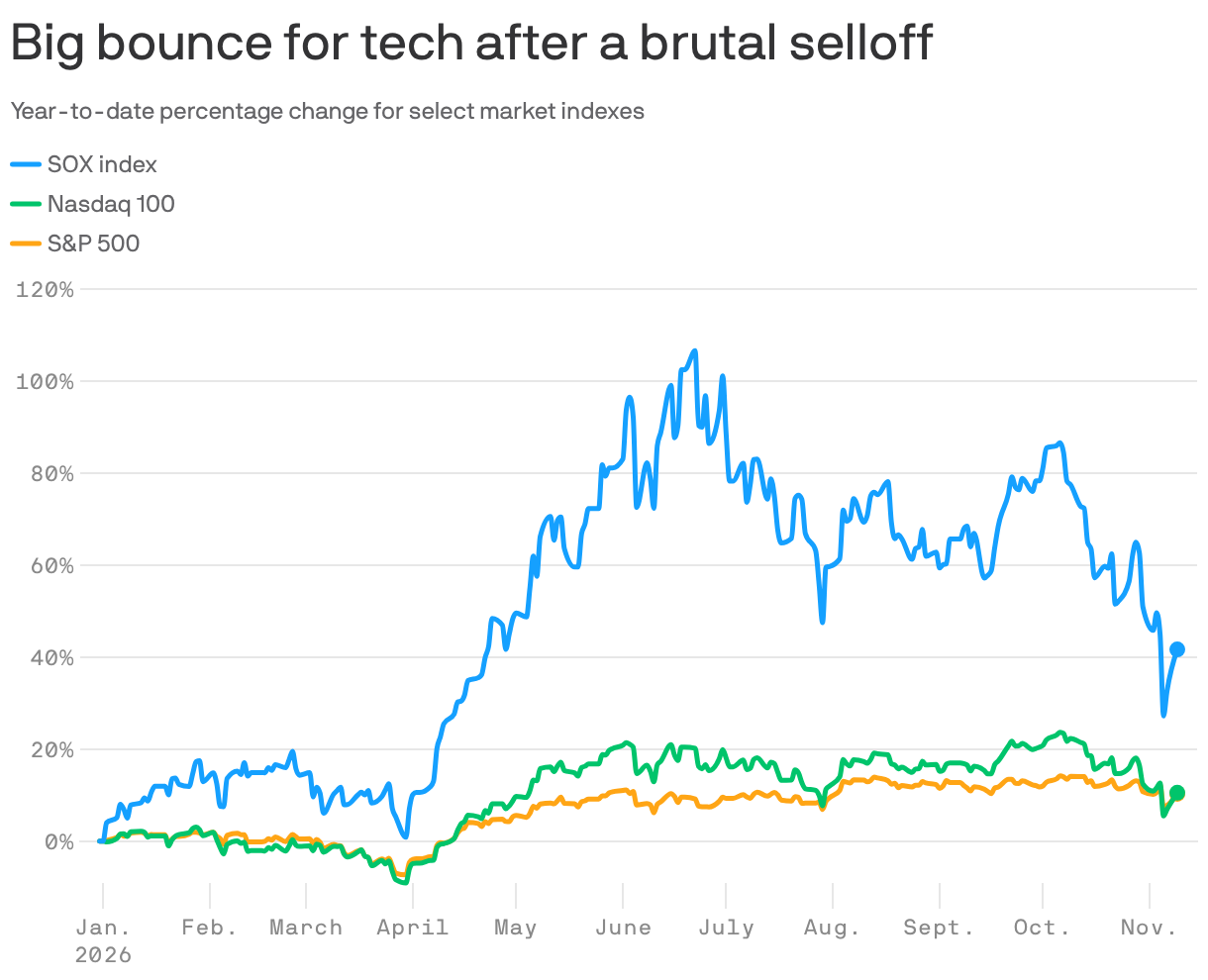
Data: FactSet; Chart: Matt Phillips/Axios The AI trade has regained momentum despite — or maybe because of — Nvidia's struggles following the weekend revelations from CEO Jensen Huang. The big picture: Monday's sudden burst of exuberance for AI was the latest wide swing for a market upended by last week's "blue tsunami" in the midterm elections and the threat they could pose to the data center boom. By the numbers: The Nasdaq 100 index of large-cap technology shares soared 3.4%, its biggest daily jump since late March and its second-best showing of the year. Zoom in: Stocks romped across the AI ecosystem — well, with one important exception. Pick-and-shovel plays such as engineering and construction companies, and makers of data center inputs like fiberoptic cables, servers and data storage devices soared. The companies that build and lease out data center computing power, known as neoclouds, also jumped. (Those companies had been at the epicenter of recent jitters about financing for the AI boom.) Hyperscalers rose, paced by Meta, which notched a gain of 5.1%. Semiconductors roared, with the SOX index posting its best gain — 6.9% — since late July. Yes, but: The glaring exception to the AI-palooza was its best-known player, Nvidia. Weekend revelations from CEO Jensen Huang — who acknowledged having an affair with a woman suspected of connections to Chinese intelligence — left investors grappling with uncertainty about the CEO's future. The intrigue: Some investors may see Nvidia's pain as potential gain for rivals. Broadcom jumped 8.8%, its best day in nearly a year. Advanced Micro Devices soared 13.3%, benefiting also from an upgrade to "Outperform" — effectively, a "buy" recommendation — from Oppenheimer analysts on Sunday. Context: Bullish commentary from Wall Street established the background music for Monday's big bounce, as analysts urged investors to buy into the market's recent soft patch. "We believe stocks are now clearly in oversold territory," Goldman S
Americans have conflicting views of the job market : They are more worried about unemployment rising nationwide, even as they are more confident that they could find another job if they lost their own. Driving the news: The perceived probability that unemployment will rise over the next year climbed to 45.3% in October, the highest since April 2020, according to the New York Fed's Survey of Consumer Expectations — an increase driven by those without a college degree. Yes, but: The perceived probability of finding another job if one lost their current position rose to 46.5%, the highest in about a year. Americans' perceived probability of losing their jobs over the next year also edged higher, rising 0.4 percentage point, to 13.9%. State of play: The mixed outlook underscores an unusual feature of today's labor market — hiring is picking up and unemployment remains historically low, but finding work can still be a prolonged struggle. The backdrop: The October jobs report showed that employers added a surprisingly robust 165,000 jobs last month. The unemployment rate has held in the narrow range of 4% to 4.2% for five consecutive months. But Friday's data also showed that 2 million Americans have been unemployed for at least six months, accounting for more than 25% of all unemployed workers. The average spell of unemployment climbed to 27.1 weeks in October, the longest since December 2021. (Excluding the pandemic, it's the highest reading since August 2016.) Of note: Ahead of the October Consumer Price Index report — out tomorrow — the New York Fed said that inflation expectations were unchanged last month at 3.9% over the next year, 3.3% over three years and 3% over five years.
Data: Axios analysis of FactSet data; Note: Correlation over preceding 30 trading sessions between daily change in West Texas Intermediate crude and change in 10-year U.S. Treasury yield; Chart: Neil Irwin/Axios For much of this year, on any given day, you could look at the price of oil and correctly guess what happened to bond yields. In the last few weeks, that correlation has evaporated. Why it matters: It's a sign that growth risks may be supplanting inflation worries as the dominant economic concern. State of play: It's not obvious whether an energy supply shock should affect inflation or growth more. On the one hand, more expensive fuel can ripple through prices for everything else. On the other, more expensive energy acts like a tax on consumers and businesses that consume it. Since the attack on Iran in late February , markets have treated the former concern as the central dynamic in the global economy. Zoom in: As such, on days when oil futures pointed to higher prices, bonds almost always sold off and their yields — which move in the opposite direction from their prices — rose. Traders were pricing in a world where inflation is higher for longer, and central banks react by raising rates more — and betting, implicitly, that growth would prove resilient despite the energy price headwind. For the 30 trading days ended Sept. 10, the correlation between the one-day move in West Texas Intermediate crude and 10-year U.S. Treasury yield reached a stunning 77%. The Financial Times noted in late September that the correlation was the highest it had been since the Persian Gulf War of the early 1990s. Yes, but: Now, that correlation has collapsed — and is about negative 10% over the last 30 trading days. In other words, on days when oil rises, it's more likely than not that bond yields fall. Between the lines: It's probably not a coincidence that this shift has occurred at the same time cracks have appeared in the debt market that's financing the AI buildout. As long
Nvidia’s stock slid after the company announced that it had opened an investigation into CEO Jensen Huang’s relationship with an alleged Chinese spy.
Investors are questioning whether Huang's future as Nvidia's CEO may be at risk amid allegations that he was targeted in a Chinese intelligence operation.
There is no Nvidia — nor an AI boom as we know it — without Jensen Huang. He has reassured jittery markets with his words, bankrolled a trillion-dollar buildout and put economies on his shoulders. Now, the world is wondering if he can save himself . Why it matters: Global markets must confront a terrifying reality: The AI ecosystem's first "too big to fail" executive is suddenly vulnerable, and there is no backup plan if he is forced to step down. Catch up quick : Huang apologized Sunday and Nvidia's board launched an independent probe after he admitted to having a relationship with a woman named Alice Huang, an alleged Chinese operative. Nvidia's board expressed confidence in his leadership and said it had no reason to believe national security or company secrets were compromised. President Trump stood by Huang, calling him "an honorable guy." The big picture: Keeping his job is one thing. Maintaining the ability to steady markets, finance customers and shape government policy is another. These are the five questions that now loom over the AI boom : 1. What happens to Nvidia? Forged 33 years ago (initially using a Denny's as an impromptu office), Nvidia is a uniquely founder-driven company, making any potential leadership transition incredibly perilous. Investors have little precedent for valuing the company without him. "It's very hard to envision Nvidia run by anybody else," said Dan Gallagher, an analyst with Washington Post Intelligence and long a keen observer of the chip titan. Huang has more than 60 direct reports, eschews traditional corporate layers and hasn't been publicly grooming a successor. "I don't know if anyone's going to know how to value Nvidia" without him, Gallagher told Axios. 2. What happens to the market? Huang has repeatedly rescued the AI trade from bearish sentiment. On multiple occasions, he has offered backstops to shore up growth plans for companies across the AI landscape, from CoreWeave to OpenAI. In July, he argued that cheaper open
Election results appear to have turbo-charged an already growing social, political and financial market rethink about AI ‘AI clog’: UK battles onslaught of chatbot-generated complaints Editorial: the AI backlash – Silicon Valley’s political power is cracking Last week’s midterms may not have cowed Donald Trump, but they should be a wake-up call for the grinning tech broligarchs who lined up at his inauguration two chaotic years ago. Clearly, the cost of living squeeze unleashed by Trump’s war in Iran was a big driver of the Democrat wave. But AI was also on the ballot – in many places, literally. Continue reading...
Authorities in Poland say they are investigating a shooting on Saturday that left six people dead and at least a 15 injured in the main market square in Krakow, a cultural center of the historic city. NBC News’ Daniele Hamamdjian reports.
Global tech stocks have plunged after the Democrats’ victory in the US midterm elections, with fears of a slowdown in AI development. Major tech corporations including Apple, Tesla and Nvidia shed about $1tn in a single trading session. Is this stock market jitters, or a sign the AI bubble might be about to burst? Lucy Hough speaks to senior economics correspondent Richard Partington Continue reading...
After Thursday’s share price plunge on Wall Street, could the volatility be the start of a huge market meltdown? Business live – latest updates Global financial markets have been thrown into a tailspin as investors bet on an AI slowdown after the US midterm elections. This is not the first time stock markets have wobbled in recent months due to concerns over a tech bubble. But could this volatility be the start of a huge market meltdown? Continue reading...
Americans pushed back against unregulated AI and data center development during the midterm elections, sending the stock market tumbling.
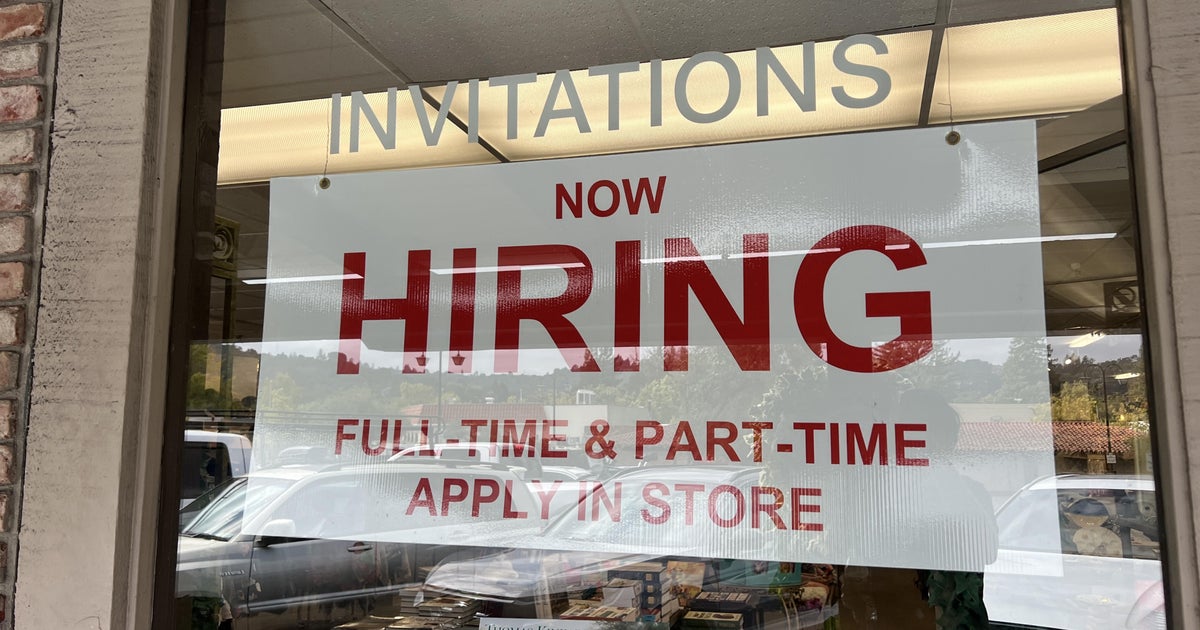
Hiring across the U.S. surged last month and unemployment dipped, a sign the job market is picking up speed.
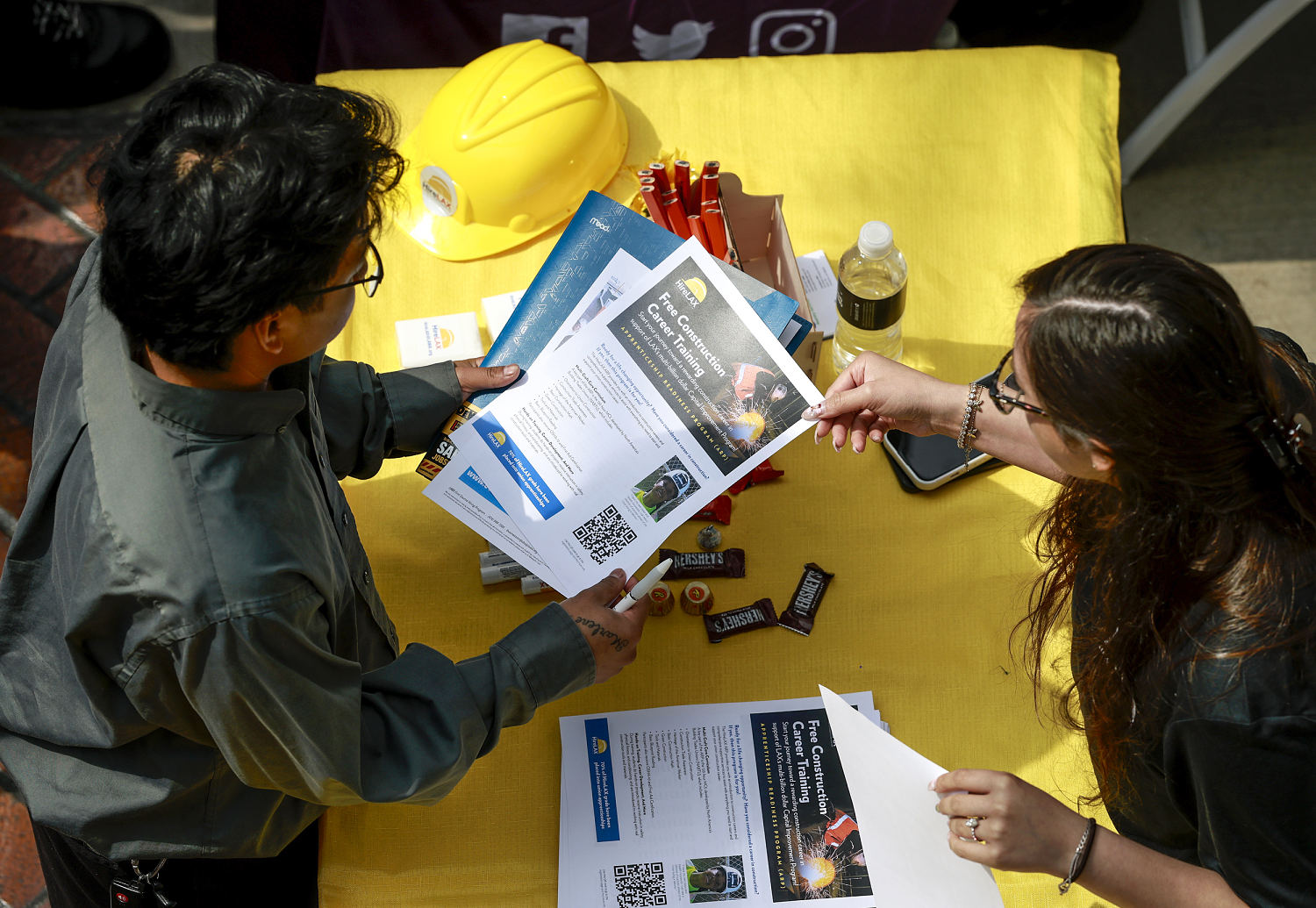
The economy added jobs in October, showing that a labor market which has troubled consumers for much of the year remained stable, but did not gain momentum.
Anticipation that Democrats’ ‘blue wave’ will lead to tighter rules on AI and datacenters sends tech stock plunging. Plus a big eight-legged surprise for customs officials in Peru Good morning. Stock markets around the world have fallen sharply as a rout in US tech stocks spread across the Atlantic after the Democrats’ midterms victory led to fears of a slowdown in the AI industry. A sell-off on Wall Street on Thursday was followed by sharp falls in Asian stocks markets on Friday morning. The dip in investor sentiment has also reached London. Susannah Streeter, the chief investment strategist at Wealth Club, said: “The tech sell-off has intensified. Big worries are colliding – the build-out of datacenters looks set to slow, which risks shredding the spending spree underpinning the boom, right at the time that investors have become super nervous about returns on this massive investment.” What happened to the Nasdaq? The Nasdaq share index had its worst day in 19 months after slumping 5.5% on Thursday amid growing signs that the AI industry will face tougher regulation. Continue reading...