One person was taken to hospital and more than 50 were assessed by medics after a substance, initially thought to be teargas, was released among concertgoers at Manchester’s Co-op Live arena, officials have said. Footage on social media showed concertgoers coughing and covering their mouths as they left a Don Toliver concert. Police declared a major incident to protect the 12,000-strong crowd, some of whom reported eye and respiratory symptoms Manchester’s Co-op Live arena evacuated after ‘unknown substance’ released in crowd Continue reading...
Results for “don toliver”
Democratic National Committee chair Ken Martin is moving to restrict candidates' ties to super PACs and dark-money groups in the party's 2028 presidential primary, a shift that could shake up the race for the White House. Why it matters: Most likely Democratic candidates for president were expected to rely on super PACs to boost their messaging — and go after other contenders. The DNC's new rules could complicate their plans and set up a clash between the party chair and soon-to-launch campaigns. Martin's plan will be a real-time test of whether party-driven campaign finance restrictions can function in a presidential primary that will follow a midterm election driven by billions in spending by PACs and dark-money groups. Zoom in: Under the rules that the DNC is announcing Monday, Democratic presidential candidates must disavow any super PACs or dark-money groups that either back them or attack their opponents in ads. If presidential hopefuls don't follow the guidelines, the DNC warns, they won't be allowed on the stage at primary debates. A DNC official said the change is backed by progressives such as Sens. Bernie Sanders (I-Vt.) and Elizabeth Warren (D-Mass.), as well as more moderate Democrats such as Rep. Jason Crow (D-Colo.) and former DNC chair Jaime Harrison. For years, the party's left wing has pushed for party primaries to ban super PACs and dark-money organizations, a term for 501(c)(4) groups that aren't required to disclose their donors. Yes, but: It's not clear whether the DNC's shift will be substantive — or merely symbolic. Super PACs, which can raise unlimited amounts of money, already are barred by law from directly coordinating with candidates. Even so, such groups often work alongside candidates while remaining technically separate. The DNC rules stipulate that candidates must sign a pledge to disavow such funders. Super PACs could, however, continue to spend on behalf of candidates that distance themselves from them. In practice, though, Democra
President Trump on Saturday said the reported hack of a crucial FBI database might have a silver lining — it could, he claimed, expose more details of what he called the " Russia Russia Russia hoax ." Why it matters: The president remains laser-focused on many of his past grievances about the FBI , even as the public grows increasingly alarmed about the vulnerability of government infrastructure. Driving the news: CNN and NBC reported Friday night that the FBI was looking into an apparent breach of the National Crime Information Center, which connects local and national law enforcement for information sharing. That follows breaches and outages that struck the FAA, NSA and USDA, just in the last week. What they're saying: Trump was asked about the FBI reports in a Fox News interview Saturday morning. "Well we just heard about it and I will say that it's not good, I don't like that," Trump said. "But maybe we'll learn things that we would have never learned otherwise. You had the Russia Russia Russia hoax, you had all these other hoaxes," he added, referring to Ukraine in particular. "Maybe we'll learn about them. Maybe we'll learn about the voter fraud, all the voter fraud that took place." "I always like to put things in a positive spin," Trump added. "Wouldn't it be great to learn about Russia Russia Russia," he said. The intrigue: The president's comments come just days after a summit with Russian President Vladimir Putin and Chinese leader Xi Jinping in Asia, after which he described Putin as a " friend ." What to watch: It's not clear who breached the FBI database, or what they might do with the data obtained.
As Spain heads into a critical election, polling shows that many voters attracted by rightwing parties don’t really agree with their ideas When Spain goes to the polls on 29 November, its citizens will be the first of some 200 million people in Europe eligible to vote in the following 12 months; 2027 will be a year of elections – including France , Poland , Estonia and Italy – which will be critical to the future of Europe. This will be the biggest electoral test in nearly 100 years of the strength and threat of extreme rightwing populist nationalism. Thirty years ago, around the turn of the 21st century, the left was ascendant, in charge or in coalition in 13 out of the EU’s 15 member states . Today, with Denmark the only social democratic-led government in the north of Europe, and Lithuania the only one in the east , Spain stands alongside tiny Malta as the only centre-left government in Europe’s south. Gordon Brown was UK prime minister from 2007 to 2010 Continue reading...

President Trump on Friday said he would block U.S. companies from building data centers overseas or impose a "tremendous tax" on them if they do. Why it matters: Trump's push to keep AI infrastructure in the country comes just weeks after data center expansion became a midterm-election flashpoint, as voters raised concerns about the environmental and financial impacts they pose. What they're saying: Trump acknowledged that the announcement may come as a surprise, saying he had not yet discussed it with his own officials. "They're making so much money they don't know what to do with it," he said of the data centers being built across the country. Trump also claimed data center expansion would help lower Americans' costs and taxes. Reality check: It's unclear how Trump would implement the proposed tax, since Congress has the Constitutional authority to impose federal taxes. Go deeper: Voters deliver "AI earthquake," rebuking tech and billionaires Editor's note: This is a breaking news story and will be updated.
Our tech infrastructure is riddled with problems. But they’re all downstream of the incentives baked into shareholder capitalism It’s been a bad week for our computerized infrastructure. We’ve seen outages at Microsoft , the FAA , a handful of banks , United Airlines , an unnamed classified NSA network , and Apple . People should be forgiven for suspecting a coordinated cyber-attack, a common cause, or at least a conspiracy. But there is none. The incidents are unrelated. They’re not the result of any cyber-attack, coordinated or not. And, even more surprising, they don’t seem to be the result of AI. (We can’t say anything about the NSA; we’ll probably never know the details of that one.) It’s really just a series of unfortunate coincidences. Continue reading...
House Democrats are largely steering clear of threats to shut the government down in December if Republicans put forward legislation that maintains funding for the war in Iran. Why it matters: Much of the party's left flank — including some members of Congress — think it's a fight they need to pick after their midterm landslide. "The American people were loud and clear on November 3rd: they want an immediate end to Donald Trump's reckless war in Iran," Reps. Yassamin Ansari (D-Ariz.) and Ro Khanna (D-Calif.) said in a joint statement on Wednesday. The pair said they will "oppose any funding package that does not explicitly prohibit funds from being used for offensive operations in Iran" because it would "defy the demands of Americans who want this war to end—now." State of play: The Democrats' majority doesn't officially begin until Jan. 3, while federal funding is set to run out on Dec. 11. Republican leaders are struggling to pass party-line procedural votes and will probably bring up their funding patch under a fast-track process that requires bills to pass with a two-thirds majority. In other words: The GOP will almost certainly need a large number of Democratic votes to pass any funding bill, especially if some of their own members defect. What they're saying: "Whatever they have to do to get it through they should do it, but I hope there's not a shutdown," said Rep. Brad Schneider (D-Ill.), the outgoing chair of the center-left New Democrat Coalition. "I don't think we should shut down the government, we take that way too casually as it is, so I'd be leaning into not doing it," said Rep. Scott Peters (D-Calif.). Said Rep. Greg Landsman (D-Ohio): "Everyone should do whatever they can to avoid a shutdown. The impact it has on the economy, but workers in particular, it's just not fair." Between the lines: Even some progressives acknowledged their imminent House majority takes a lot of the pressure off the December fiscal deadline. "If I can defund [the war] in De
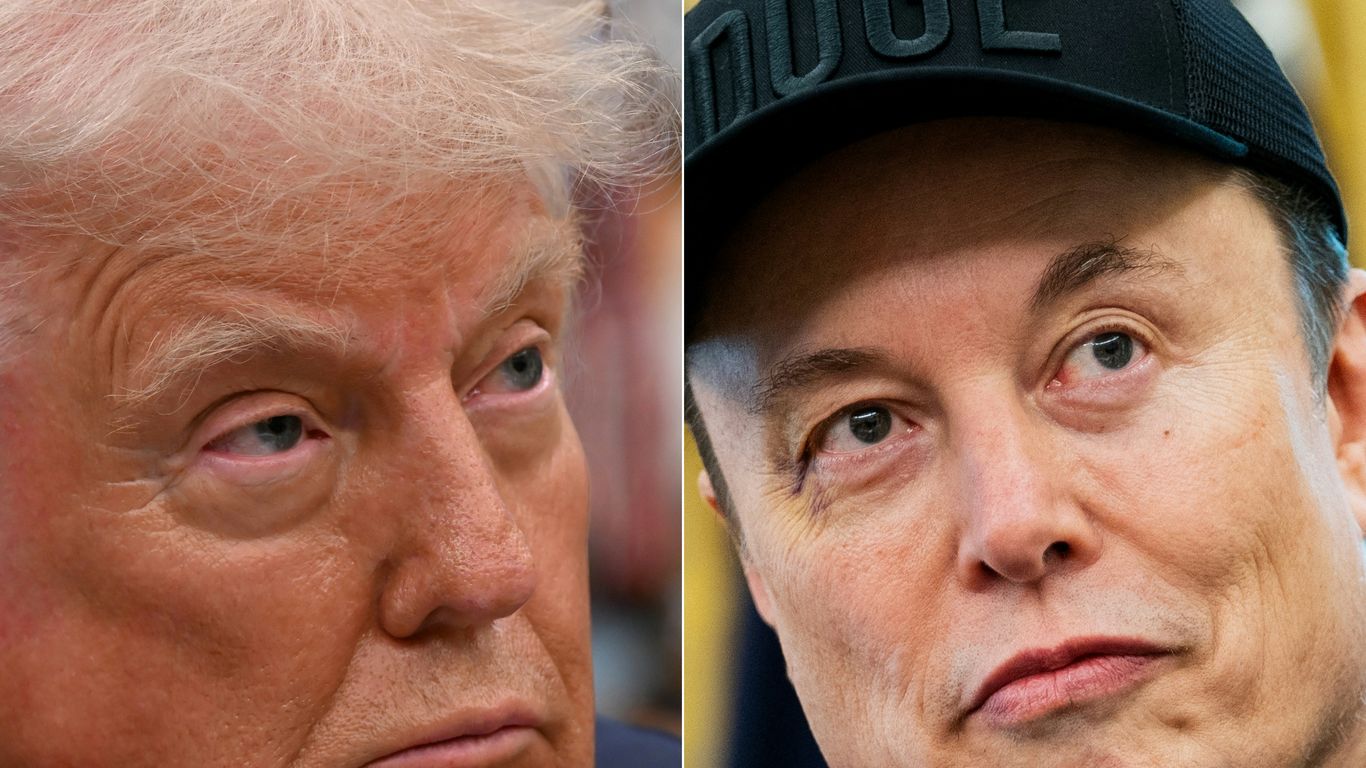
President Trump still considers Elon Musk an ally despite the world's richest man saying he's "not MAGA," the president told NBC News on Thursday. Why it matters: Musk's latest break from Trump's political movement comes after he spent millions backing Republicans in the midterms, only to see Democrats win control of Congress and many state governments. Trump and Musk have weathered public feuds before, repeatedly reconciling despite disagreements. Driving the news: "He's a friend of mine," Trump told NBC News of Musk. "There are lots of definitions out there. MAGA, to me, means something very specific, and when people veer from it, they don't do very well," Trump said. "Elon's got very good intentions," he said. "I mean, he was with me the whole — he traveled with me." Catch up quick: Musk said at the The New York Times' DealBook Summit Wednesday that he considers himself politically moderate. "I'm not sure what MAGA means, but if that means sort of blind adherence to a set of policies by the Republican Party, then I certainly don't have that," Musk told the New York Times. Musk said he felt "pretty foolish" about spending millions in the midterms. "If I could rewind the clock, I would have spent less money," he said. Yes, but: Musk reportedly accompanied Trump to China this week, underscoring how their personal relationship has endured despite their political differences. Between the lines: Musk may reject the MAGA label, but he has spent years championing its culture wars, bankrolling Republicans and turning X, the social media platform he bought for $44 billion, into a megaphone for far-right voices. He has attacked diversity initiatives, amplified anti-immigration rhetoric and promoted an antisemitic conspiracy theory for which he later apologized . He has also railed against what he calls the "woke mind virus" and backed far-right political movements abroad. Flashback: Musk has clashed with Trump over government spending, tariffs, climate policy and the invest
San Francisco isn’t preparing for an Anthropic shopping spree after employees gain newfound wealth from the company’s initial public offering.
The Senate GOP's last-ditch effort to pass a defense-heavy, $350 billion reconciliation package is dead on arrival without accompanying spending cuts, House Republicans tell Axios. Why it matters: House Republicans have just 16 days left in session before Democrats take control in January. Many don't want to spend their final days in power adding to the national debt. "My concern is we squander these very few days we have left on something that won't get out of the House," outgoing House Budget Chair Jodey Arrington (R-Texas) told Axios of the Senate's emerging plan. Republicans have already passed two party-line reconciliation bills this Congress: The "one big, beautiful bill" in the summer of 2025, and nearly $70 billion for immigration enforcement in the summer of 2026. Zoom in: Finding spending offsets could reopen some of the most contentious fights from the GOP's first reconciliation package. Arrington told Axios that Senate Republicans worry that finding cost savings in health care spending could open the door to amendment votes that undo Medicaid cuts in the One Big, Beautiful Bill Act. But Arrington, who didn't run for reelection in 2026, told Axios he doesn't believe the Senate's proposal has the votes to pass the House without offsets. State of play: Arrington said he raised his concerns with Senate Budget Chair Ron Johnson (R-Wis.), and argued Republicans shouldn't let the risks deter them from pursuing additional spending cuts. "Some Republican members of the Senate might go rogue and might decide to, I don't know, repeal some of the reforms that we put in the 'big, beautiful bill.' Maybe they do it out of spite for President Trump," he said. "The midterms have passed us. We lost, but we still have this window to do what we think is right," he said. Between the lines: Senate Republicans haven't committed to moving forward with another reconciliation package. Leaving a Wednesday night meeting on reconciliation, Sen. Johnson told reporters the Senate "pro
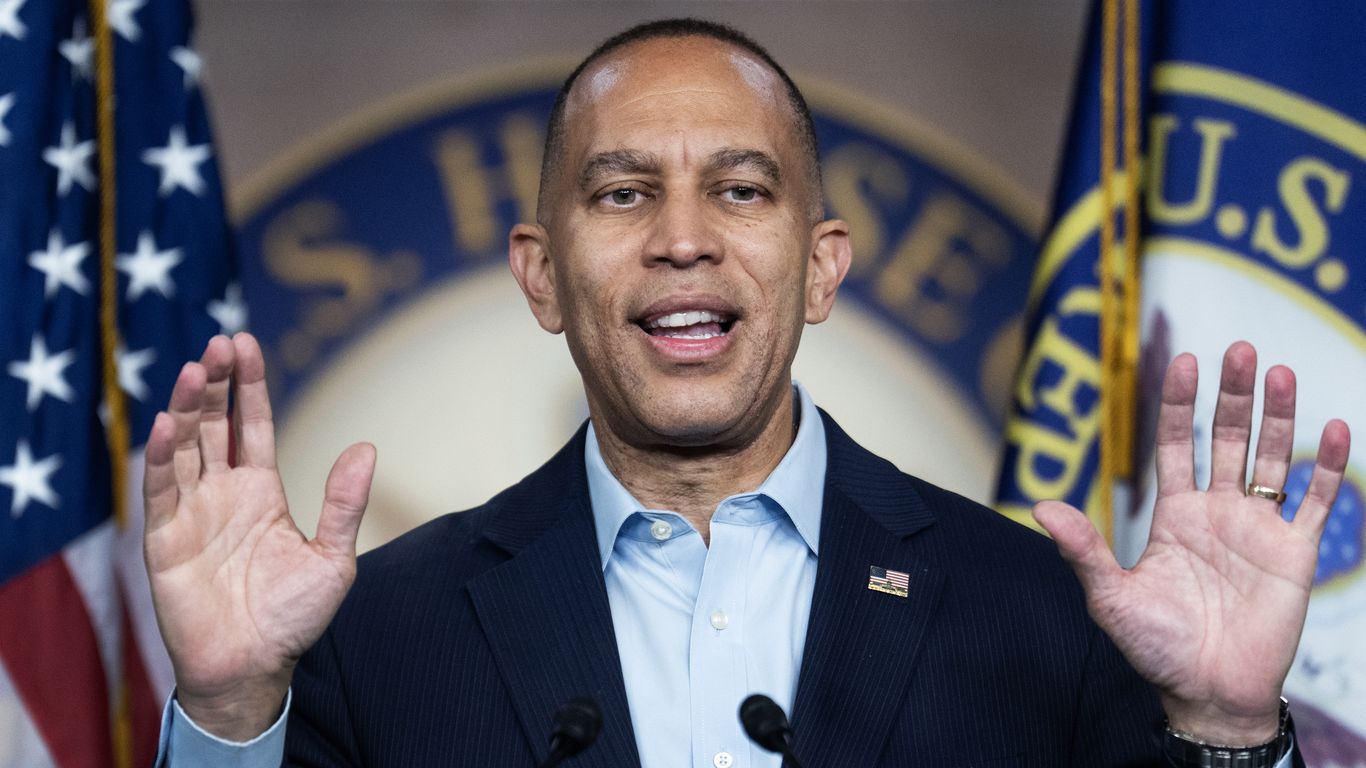
The left's campaign to whip up a groundswell of opposition to House Minority Leader Hakeem Jeffries (D-N.Y.) among his members failed in stunning fashion on Wednesday. Why it matters: Fewer than a dozen members voted against Jeffries' nomination for speaker. That bodes well for Jeffries' ability to manage the House going forward, his allies say. "There'll be no hostage taking," Rep. Troy Carter (D-La.) told Axios. Driving the news: Jeffries won a resounding victory Wednesday morning when House Democrats met behind closed doors to vote on their nominee for speaker of the House. Out of 264 Democratic House members and non-voting delegates, 251 voted to nominate him, 11 voted against and two did not vote. It was exactly the victory Jeffries' allies had hoped for after Tuesday's announcement that he planned to request a tallied vote rather than being nominated by acclamation. Reps.-elect Darializa Avila Chevalier (D-N.Y.), Adam Hamawy (D-N.J.), Melat Kiros (D-Colo.), Donavan McKinney (D-Mich.), Chris Rabb (D-Pa.) and Claire Valdez (D-N.Y.) put out a statement shortly after the vote confirming they voted against Jeffries. Rep.-elect Frederick Haynes III (D-Texas) also signed on to that statement, but a spokesperson said in a follow-up statement he "narrowly missed the vote" and that his "intended vote was no." Two other members-elect, Don Leonard (D-Ohio) and Angela Gonzales-Torres (D-Calif.), told Axios they also voted no. Rep.-elect Richard Ojeda (D-N.C.) missed the vote because he was in his district with family following the death of his father, but would have voted for Jeffries, a spokesperson told Axios. Zoom out: Many of the progressives who ultimately voted for Jeffries did so despite a torrent of phone calls and emails from constituents and grassroots activists urging them not to support him. Numerous high-profile progressives had said before the meeting they would vote for Jeffries, including Reps. Alexandria Ocasio-Cortez (D-N.Y.), Pramila Jayapal (D-Wash.) an
A trilateral gathering is good news for China and Russia, but bad for the US – and its traditional allies “Historic” is a neutral descriptor, not a favourable one. Things can be unprecedented for good reason. Donald Trump’s meeting with Xi Jinping and Vladimir Putin in Shenzhen, China on Thursday will be the first time that the leaders of the US, China and Russia have gathered for talks as a trio. The trilateral on the sidelines of the Asia-Pacific Economic Cooperation summit is striking, but it is not an achievement. The lack of a clear agenda is telling: the spectacle really is the substance. Mr Trump sees international affairs in terms of spheres of influence. This meeting reinforces the obvious conclusion for the rest of the world – that they don’t get to sit at the table, only to be on the plate. Mr Xi promotes the notion of a multipolar world. Others would be more sympathetic if all three governments were not determinedly undermining multilateralism. Continue reading...
House Democrats voted at a closed-door caucus meeting Wednesday morning to nominate Minority Leader Hakeem Jeffries (D-N.Y.) as their candidate for speaker. Why it matters: It's a symbolic but significant step that suggests Jeffries has the votes he needs to be elected the first Black House speaker on Jan. 3. Jeffries won 251 of the 262 votes cast, putting him comfortably above the 218 votes he needs to win on the House floor in January. The vote was tallied at Jeffries' request . His allied had initially hoped he would be elected by acclamation, but the Democratic leader changed tack at the 11th hour and decided to call his detractors' bluff. Between the lines: Wednesday's caucus vote was a secret ballot. On Jan. 3, each House member will have to stand up during a televised proceeding and announce who they are voting for. That could be difficult for the members — particularly progressives — who have been flooded with calls and emails from constituents urging them not to vote for him. Only a handful of incoming House members, including Reps.-elect Angela Gonzales-Torres (D-Calif.) and Don Leonard (D-Ohio), have outright said they will oppose Jeffries thus far.
Rep. Robert Garcia (D-Calif.), incoming chair of the House Oversight Committee, is laying the groundwork for a wave of investigations into President Trump's inner circle. Why it matters: It's going to be a long two years in Washington, as Democrats emboldened by the blue wave step up their scrutiny of those closest to the president and the administration. Driving the news: Garcia is sending document-retention letters Wednesday to Vice President Vance , Don Jr. , Eric Trump , Jared Kushner , Kimberly Guilfoyle , Stephen Miller , Susie Wiles , Kristi Noem , Corey Lewandowski , Attorney General Todd Blanche and more. "This is just the beginning," Garcia said in a statement. What to watch: How the administration responds. Already, at least one U.S. Attorney is going after other Democrats who've promised oversight actions in the coming Congress. This is a developing story.
The loss of the United States' measles elimination status is a particularly worrisome sign for infants in hot spots who are too young to be vaccinated against the disease. Why it matters: Outbreaks still may be concentrated within certain parts of the country. But infants and other unvaccinated people are living with a continuous threat. Driving the news: The Pan American Health Organization announced on Tuesday that it revoked the U.S. status after 26 years, as expected . That's after state reports of 7,700 cases and 10 deaths since measles first began spreading in Texas early last year, according to the New York Times . (The Centers for Disease Control and Prevention currently reports only nine deaths.) Hundreds of people — often unvaccinated children — have been hospitalized. State of play: The measles-mumps-rubella vaccine is highly effective, meaning the vast majority of cases today occur in people who haven't received an immunization against the disease. Just over 1 in 10 of those infected this year were hospitalized, but that jumps to 17% among children under 5 years old, per the CDC . Between the lines: For most of the population, remaining unvaccinated against measles is a choice, albeit one parents make for their children. But for the youngest Americans, receiving a vaccine isn't an option for several months. The earliest an infant can receive an immunization against measles is at 6 months, with the official recommendation for most children being a first dose between 12 and 15 months. Though infants do receive protective antibodies against measles from their mothers, those gradually decline over their first months of life. What they're saying: "Most babies don't receive a first measles vaccine until age 1. With measles endemic again, parents can no longer assume grocery stores, airports, churches, or even pediatricians' offices are safe spaces," Jerome Adams, President Trump's first-term surgeon general, posted on X. "The community protection we took for g
Transportation Secretary Sean Duffy's $50 billion request to overhaul the nation's air traffic control system is getting a chilly reception from Senate Republicans, who are balking at the hefty price tag. Why it matters: The pushback from within President Trump's own party casts doubt on the administration's ability to secure the full $50 billion, even after Friday's historic nationwide groundstop . Sen. John Kennedy (R-La.) told reporters that Duffy "made a huge mistake" by originally requesting $30 billion for air traffic modernization, then later upping the ask to $50 billion following the groundstop. "Maybe he was taking orders, but he's smart enough to know better than to say, 'I need 30 billion. We have a catastrophe. I need 50 billion now.'" Kennedy said, adding, "We're not going to give them $50 billion." Both Duffy and Trump have urged Congress to move quickly on the funding, which the administration formally requested Tuesday. Driving the news: Duffy, along with FAA Administrator Bryan Bedford, pitched the funding — which include $10 billion specifically for air traffic equipment modernization — to Senate Republicans at their weekly lunch. "I don't think the full $50 billion will be funded. Some of that is not safety related," Commerce Chairman Ted Cruz (R-Texas) told reporters. Cruz floated using the fast-track reconciliation process to secure additional funding for upgrading the air traffic control system, but said the administration needs to show it can effectively spend the $12.5 billion Congress already provided in the " Big, Beautiful Bill " last year. "Demonstrate that you can actually modernize, and come back to Congress when you need additional funds," Cruz said. Zoom in: Senate Majority Leader John Thune (R-S.D.) has also raised concerns about the unspent funds. "There's some explanations that have to be given as to why that number is where it is," Thune told reporters Monday. Thune poured cold water on using reconciliation to pass the additional
Shop the best gifts under $50 that we’ve tested and recommend. Browse affordable gifts from Rhode, Le Creuset, Lego, Kodak and more.
Americans were locked out of bank accounts, blocked from boarding flights and unable to check emails in rapid succession over the past week. Why it matters: The internet immediately pointed fingers toward an AI agent doomsday, sending people into a frenzy that the Big One™was about to happen. Reality check: Experts tell Axios these disruptions don't appear linked to hacking. To the extent they involve AI, the incidents may have just as much to do with widespread efforts to fix outdated code as they do with slop software. Downdetector data also show that while the seven days through Monday represent the highest number of weekly outages in the last 12 months, the pattern over longer periods such as 30 days is far from unprecedented. Driving the news: Some Americans struggled to access JPMorgan Chase banking services Monday. United Airlines briefly delayed departing flights later that day, days after the FAA executed the longest nationwide ground stop since 9/11. Microsoft Outlook's outage left users unable to access emails and other Microsoft 365 services. Homeland Security Secretary Markwayne Mullin suggested Monday that AI systems capable of writing and changing code could be contributing to the outages. Yes, but: No evidence so far points to AI-assisted hacking. In most cases, the outages have been attributed to software patching and appear otherwise unrelated, even as small technical problems snowballed into big ones. Chase blamed an internal software bug that delayed transactions involving other banks. United cited a technology problem; the FAA said a flood of network traffic destabilized older, legacy equipment. Microsoft cited a months-old bug, increased traffic and reduced server capacity. Between the lines: There are ways AI may have played a role that have nothing to do with hacking. Institutions around the world are racing to update software in order to solidify systems, given that AI models are capable of finding and exploiting vulnerabilities with shockin
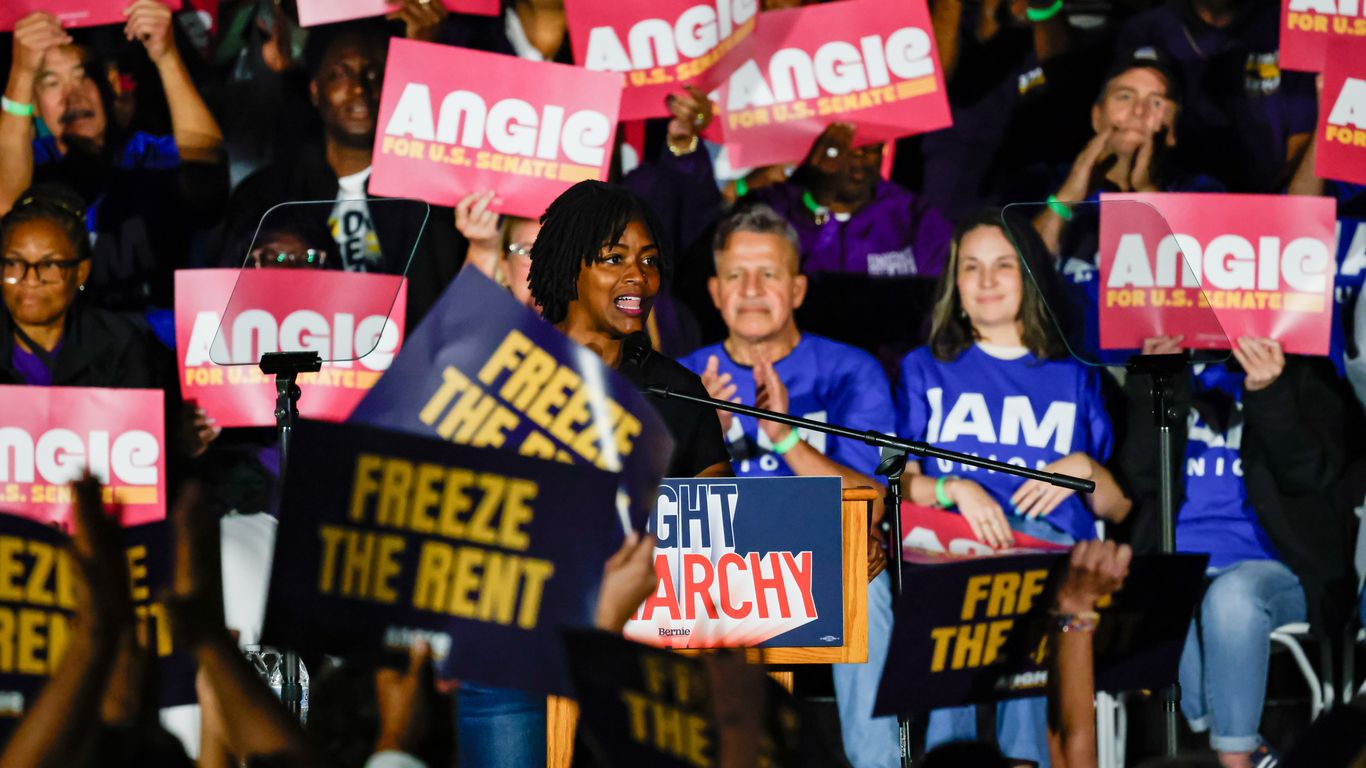
Some Democrats see Angie Nixon's Senate loss in Florida as a warning about running too far left. But her results with Hispanic voters challenge that idea, an Axios analysis found. Hispanic-majority precincts that some feared would reject her politics swung more than 21 points toward Democrats from 2024 and gave her a slight edge over moderate gubernatorial candidate David Jolly. Why it matters: Democrats gained more ground in Florida than in most states this year despite falling short in the two biggest races. Whether they can finish climbing out of their hole will shape the party's 2028 chances in a state seen as a Republican stronghold. " There definitely was a broad blue shift, it just wasn't deep enough," Daniel Smith, a University of Florida political science professor, tells Axios. "But you don't get to these close numbers without non-party affiliates and Republicans voting Democrat." The big picture: Florida swung further toward Democrats than Georgia's gubernatorial race or Ohio's Senate race, yet Florida Democrats had a bigger hole to climb out of. Governor: Democratic nominee David Jolly improved on the 2022 margin by more than 18 points, nearly 6 points above the median gain across 36 states, and 2 points more than neighboring Georgia, where Democrats took the office for the first time in decades. Senate: Nixon improved on the 2022 margin by nearly 14 points, more than a point above the national median, and 2.5 points above Ohio's Democratic gains. State of play: Florida's five statewide Democratic nominees finished within 1.6 points of one another in two-party margin, the least ticket splitting out of the 23 states with both a governor's race and a U.S. Senate race. Nixon's margin improved in Hispanic-majority precincts by 22 points over Val Demings in 2022 and 21 points better than Kamala Harris in 2024. The shift showed up regardless of where Hispanic voters came from, in mostly Cuban precincts (R+34 to R+14), mostly Puerto Rican ones (D+16 to D+35) an
The party’s big-tent approach has caused post-election feuding in the past. But a pair of singular goals can prevent it Democrats usually suffer big tent disease. To win, they put together such large coalitions of voters – working class, middle class, Black people, Latinos, women, young people, moderates, liberals – that once they’re in office, intraparty feuds often threaten their agenda. Will it happen again when they take power in January? I don’t think so. Two outside forces will keep Democrats glued together. Continue reading...
DENVER — Democrats' euphoria over their once-in-a-generation wave of midterm victories is giving way to a reality check: They were lucky to have a weakened opposition. And they might be "renting" this year's voters if they don't quickly deliver on their promises. Why it matters: If Democrats want to rack up policy wins ASAP, they'll need to work with President Trump — the guy many of them held up as what's wrong with America. That means giving him a few wins. Zoom in: Texas Sen.-elect James Talarico argued exactly that at a Democratic summit late last week in Denver — What's Next , held by the centrist group Majority Democrats . "If President Trump wants the same plaques and portraits and busts as LBJ, we can help make that a reality," Talarico said. "We should make the final two years of his presidency the most productive of any presidency in American history." Gina Hinojosa, who'll be Texas' first Democratic governor in more than three decades, has said she'll work with Trump on immigration . Michigan Sen.-elect Abdul El-Sayed, a frequent Trump target, is pitching the president on rebranding Medicare for All as " TrumpCare " to get it passed. And on CNN's "State of the Union" on Sunday, Mississippi Sen.-elect Scott Colom told Dana Bash he wants to collaborate with Trump to deliver on the president's own past promise to lower grocery prices. Zoom out: Midterm elections are usually a referendum on the sitting president, not a sign that voters are in love with the opposition party. And polls show that Democrats are still unpopular. At the Denver confab, several Democrats acknowledged that. Adam Jentleson , president of the moderate Searchlight Institute, said onstage: "The voters who decided last week's election have not yet fallen in love with us. ... They are on loan to us." Many Democratic leaders believe Congress must prioritize legislation aimed at lowering prices and ending the war in Iran, given the salience of those two issues in this year's elections. Some t
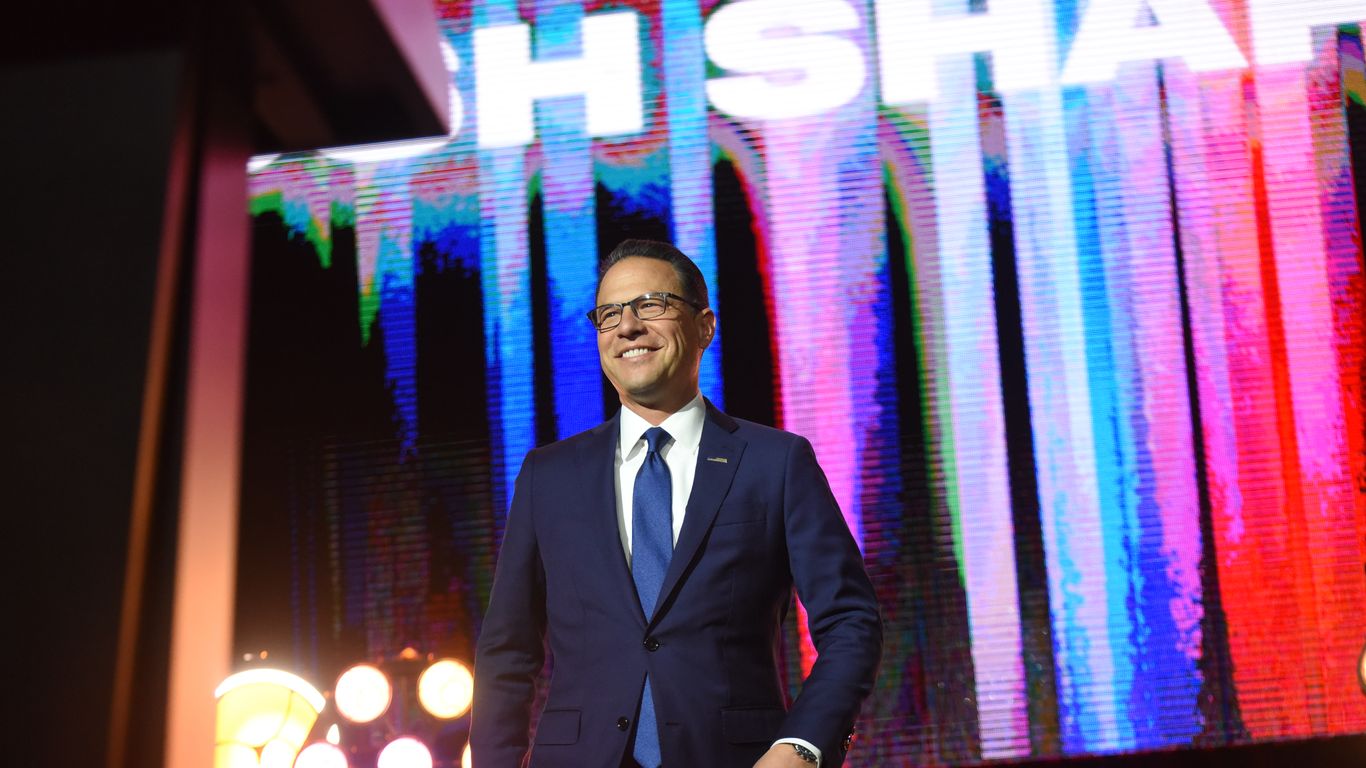
DENVER — Thousands of Democrats gathered here this weekend for a giddy postelection summit, reveling in their party's historic midterm victories and touting the center-left strategy they say powered them. But some progressives saw the event as a lavish, out-of-touch affair bankrolled by billionaires — exactly what Democrats just campaigned against. "I'm all for celebration, but perhaps a fancy retreat does not exactly meet the tenor of the moment," said Josh Orton, president of the liberal group Demand Justice and a veteran of Bernie Sanders' 2020 campaign. Why it matters: The competing views of What's Next, the buzzy confab held by the influential centrist organization Majority Democrats, offer an early glimpse of the ideological battles over health care, money in politics and other issues that will define the party's 2028 presidential primary. Zoom in: Democrats in the Mile High City were practically vibrating with happiness, still not quite able to believe they'd won back both chambers of Congress and flipped deep-red states such as Mississippi and South Carolina. "The vibes are excellent," Delaware Rep. Sarah McBride, a member of the Majority Democrats, said in an interview. "The last high-water mark, we were all in our houses on Zooms," she added, referring to the 2020 presidential election. "This is the first time there's been an undeniable capacity to celebrate widespread wins in the last decade." Free drinks flowed. Political operatives sported bomber jackets embroidered with the phrase "Majority Democrats." Speakers were immortalized in rock concert–style posters on the walls. For a brief moment in Denver's Mission Ballroom, the often-in-disarray Democratic Party looked united. Several presidential hopefuls downplayed the party's divides in speeches. Pennsylvania Gov. Josh Shapiro said onstage that ordinary people don't give "a damn" about "where we fall on some imaginary political spectrum." Michigan Sen. Elissa Slotkin quipped in her address that elected
Sprawling networks of space data centers could make it nearly impossible for humans to stargaze. That's just one of the many risks that come with placing tens of thousands of AI computers into orbit, according to a new report. Why it matters: Most Americans don't want data centers built near them, but putting them in space brings a new set of problems. Threat level: "Companies and policymakers should proceed with great caution," top academic researchers warn in a report for the Innovation for Cool Earth Forum, an annual event hosted by the Japanese government. If space data centers proliferate, the "most visible points of light in the sky during much of the night in much of the world could be satellites, not stars," the report said, mirroring astronomers ' worries. If the U.S. military adopts the technology, the data centers could become potential targets during future space conflicts . Thousands of orbital data centers whipping around the Earth at 17,000 miles per hour mean a growing "risk of collisions" and dangerous space debris . Space data centers are solar-powered, but the vast number of rocket launches needed to put them in orbit generate greenhouse gases and black carbon emissions . What they're saying: Columbia University's David Sandalow, the report's lead author, told Axios there are still "unknown unknowns" about space data center impacts. "If this is going to happen, it should happen slowly and with care," Sandalow said. "Not just launching lots and lots of these things and, kind of, seeing what happens. ... There's big risks." By the numbers: Despite those concerns, investors and tech innovators are all in on space data centers. In 2025, around $197 million in investments were tied to orbital data centers, per market research firm Quilty Space. That figure has swelled to $1.11 billion so far this year. SpaceX has applied for a constellation of 1 million data center satellites, according to the Secure World Foundation . Starcloud and Blue Origin's Proje
Dana White’s company squeezes fighters, bullies journalists and toadies up to Trump. But it has also given neglected Olympians a path to money and fame that didn’t exist before it If you don’t like what is being said, change the conversation. Amid the wreckage of an epic midterm beatdown, the diminished president of the United States spent part of last week channeling another Donald when he publicly floated longtime aide-de-camp Dana White – the Ultimate Fighting Championship chief executive , Meta board member and public face of professional face-slapping – as the next White House press secretary. Trump’s kayfabe featured a support team of UFC bruisers to help White keep the Washington press corps in line, a fantasy lineup that included Justin Gaethje, Daniel Cormier, Khabib Nurmagomedov and one “Kayla Harris”. Surely he meant Kayla Harrison, the twice Olympic champion judoka from small-town Ohio who on Saturday night submitted the great Amanda Nunes in the co-main event at Madison Square Garden and made a credible claim for being the greatest female mixed martial artist the sport has ever seen. Trump’s turn to White’s trademark bluster was a simple enough gambit to parse . In 2024, he rode the manosphere to an astonishing 63% backing among young white men, with White name-checking Joe Rogan , Theo Von, Adin Ross and the Nelk Boys from the victory podium like the heterodox heirs to Bill Buckley. Two years later, that support had cratered by 20 points in the midterms : the political equivalent of a 10-8 round. Suddenly, the prospect of White as some cauliflower-eared CJ Cregg seemed less like comic relief than a panicked attempt to inject a cycle of synthetic testosterone into Maga’s increasingly low-energy movement. Continue reading...
Don Willard faces 112-mile trip between NFL games NBA scrambles to replace referees stranded by delays College football games postponed as teams struggle An NFL official will work two games on the same day Sunday after the Federal Aviation Administration grounded all flights nationwide for several hours Friday, disrupting travel plans for professional and college teams across the country. Don Willard will officiate the Miami Dolphins’ game against the Indianapolis Colts at 1pm ET before traveling 112 miles east to work the Pittsburgh Steelers’ Sunday Night Football matchup against the Cincinnati Bengals. Continue reading...
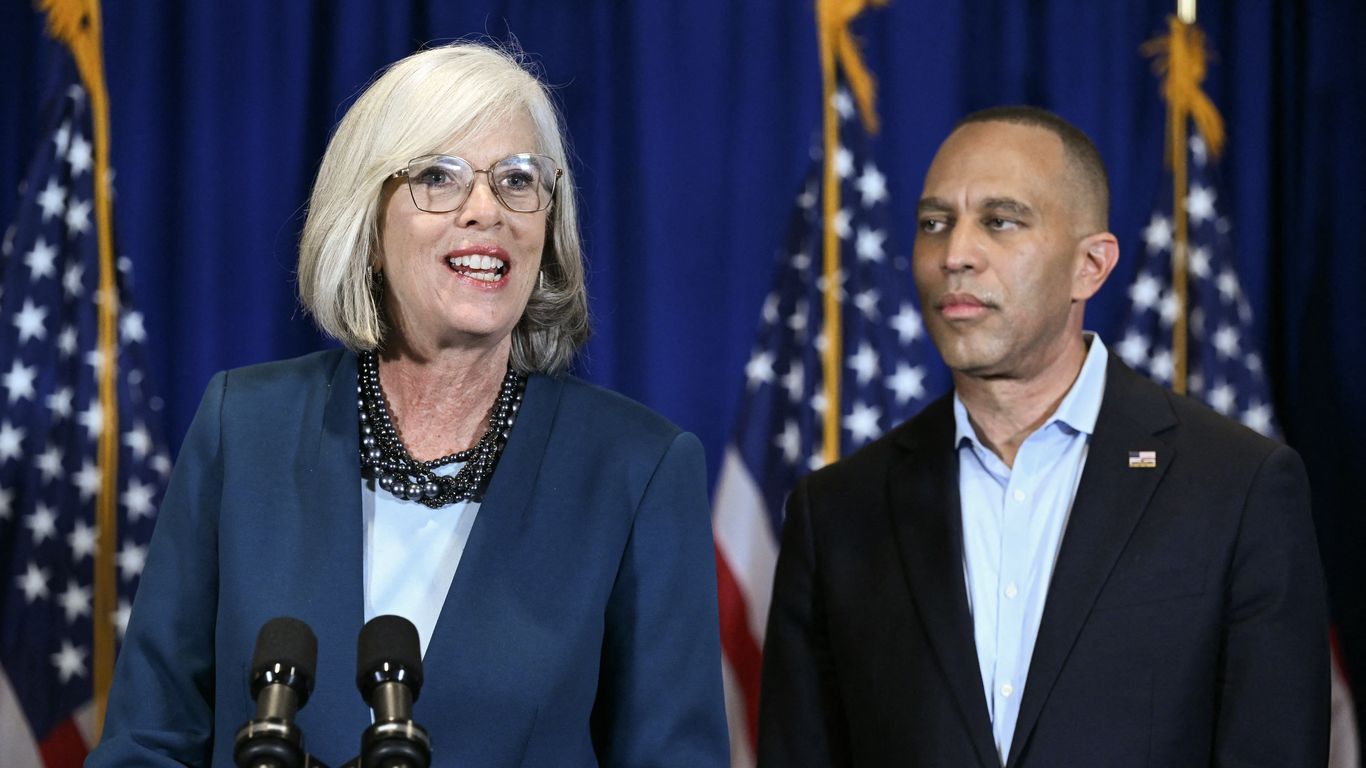
House members have responded to legitimate criticism with cynicism. Let’s not have another ‘Bernie bros’ moment Before we get started, some ground rules. You are, of course, completely free to disagree with everything I have to say here. However, doing so might mean that you’re racist, homophobic and/or sexist. (Not to boast, but I have a lot of oppression cards to play.) So, you might want to tread carefully, OK? That might sound ridiculous, but I don’t make the rules: I’m just taking a page from the corporate Democrat playbook. From Haley Stevens to Hakeem Jeffries, cynically weaponizing identity politics to ward off reasonable criticism seems to be all the rage. Arwa Mahdawi is a Guardian columnist Continue reading...
The Trump administration announced a six-month delay Friday in enforcing the Medicaid work requirements that were scheduled to take effect in January. Why it matters: The announcement pauses a set of rules that state officials have warned they're not ready to handle — and that could cause millions of people to lose their health coverage. Driving the news: The Centers for Medicare and Medicaid Services said there will be an "optional hold harmless period" through June 30 that will give states "a transition period to further modernize systems, improve processes, and streamline the applicant and beneficiary experience. Hospitals have been so worried about the impact of the work requirements that they've created their own outreach campaign to prepare people on Medicaid, per the New York Times . The concern is not that people will be kicked out of the program for not working, but that they'll be kicked out because they don't understand the reporting rules and won't be able to prove they've met the requirements. This is breaking news. Check back for updates.
As House Democrats barrel toward a speakership coronation , Senate Dems are getting their first contested race for leader in over 30 years. Why it matters: Democrats have spent years tearing themselves apart over the party's direction — without forcing their leaders to win a head-to-head vote. Senate Democrats will get that fight this year for the first time since Tom Daschle vs. Chris Dodd in 1994 — courtesy of Chris Van Hollen (D-Md.) challenging Chuck Schumer (D-N.Y.). But no one's challenging Hakeem Jeffries (D-N.Y.) for speaker. The last contested Democratic House leader race was in 2016, when Tim Ryan failed to beat Nancy Pelosi for minority leader. Between the lines: House Democrats are being bombarded with calls and emails urging them to oppose Jeffries, but the two most frequently floated alternatives — Jamie Raskin (D-Md.) and Ayanna Pressley (D-Mass.) — don't appear to want the job. Raskin told Axios that chairing the Judiciary Committee is his "dream job" and that he's "absolutely ... not a candidate for speaker in any way." "I am supporting Hakeem and voting for Hakeem," Raskin added. Pressley has privately told colleagues she isn't interested, multiple House Democrats told Axios. "Congresswoman Pressley is in active conversations with Leader Jeffries about how to leverage this majority, meet the moment and deliver for the people," spokesperson Ricardo Sanchez said in a statement to Axios. "She is aware of and appreciates the groundswell of support from people in her district and across the country lifting up her leadership." The big picture: Since the last contested Democratic leadership election, Republicans have endured the rise of MAGA, former Senate GOP leader Mitch McConnell's fall from power and a revolving door of House GOP leaders. In 2018, Kevin McCarthy drubbed Jim Jordan 159–43 to become House minority leader. In 2022, McConnell had to beat Rick Scott after the Florida Republican challenged him for Senate GOP leader. In 2023, McCarthy needed
The movement to prevent House Democratic Leader Hakeem Jeffries (D-N.Y.) from becoming speaker is struggling to get off the ground due to a fatal flaw: Nobody else wants the job. Why it matters: Despite the phone calls and online petitions, the demands from progressive holdouts, Jeffries' ascent has become a self-fulfilling prophecy. The House Democrats most often floated as potential challengers don't appear to be interested: Rep. Jamie Raskin (D-Md.) told Axios on Thursday his "dream job" is to chair the House Judiciary Committee. "I am not a candidate for speaker in any way. ... I am supporting Hakeem and voting for Hakeem," said Raskin. Rep. Ayanna Pressley (D-Mass.) has privately told colleagues she doesn't want the role despite an online movement seeking to draft her, according to multiple House Democrats who have spoken directly with her. "Congresswoman Pressley is in active conversations with Leader Jeffries about how to leverage this majority, meet the moment, and deliver for the people," spokesperson Ricardo Sanchez said in a statement to Axios. "She is aware of and appreciates the groundswell of support from people in her district and across the country lifting up her leadership." "He's the only one running," Rep. Adelita Grijalva (D-Ariz.) told Axios on Thursday when asked if she plans to vote for Jeffries as speaker. Said Rep. Delia Ramirez (D-Ill.): "I am really encouraging our leadership to make it easy for me to vote for the one person that's running. But as of right now, there's ... no one else that has put their name forward." "As far as I've heard, Jeffries is the only person running," said Rep.-elect Randy Villegas (D-Calif.). Jeffries said in a NY1 interview : "Someone could always emerge in the next week or so, but right now there are no declared challengers, no indication that anyone may put themselves forward." The intrigue: For once it's the Senate, not the House, providing all the drama on Capitol Hill. Sen. Chris Van Hollen (D-Md.) launche
Oil markets are heading into an unusual period as the Iran conflict remains in dangerous limbo: The supply crunch is easing, but prices could stay stubbornly high. Why it matters: While gasoline prices have dropped lately, don't expect pre-war levels anytime soon even as Middle East exports fitfully recover. Getting oil out of the region is expensive, which filters down to consumers. The threat of new attacks can keep oil costs higher, too, thanks to the risk premium embedded in prices. The big picture: Traders are watching the state of potential diplomacy — and the possibility of a prolonged stalemate. Oil prices jumped yesterday after President Trump said on his Truth Social that "we don't need a deal with Iran. Those days have long since passed." Driving the news: Export levels bounce around, but have recently returned to pre-war levels at times, barrel-tracking firms and analysts say. Yet shipping threats will "persist in 2027," and attacks spiked last month ( see the chart above ), per political risk intelligence firm Verisk Maplecroft. A new agreement on navigating the Strait of Hormuz would just be a piece of the puzzle — if it ever happens. "The threat of a renewed wave of shipping attacks will remain high as long as the underlying confrontation over Iran's nuclear and missile programmes remains unresolved," the firm's analysis states. Catch up quick: Tracking how much supply is returning is a moving target, and higher production from countries outside the Middle East — including the U.S. — matters too. The oil market is "showing tentative signs of rebalancing, with global oil supplies surpassing demand for the first time since the outbreak of the war in Iran," the International Energy Agency said this morning. Crude oil exports from the Persian Gulf region rose to 82% of pre-war levels last month, though recovery of refined product shipments is weaker, its monthly analysis states. With supply rising and oil demand lowered by the conflict, IEA predicts the g
Progressives should be careful not to get comfortable. There is work to be done Democrats had a great midterms result. Big wins in Ohio, Georgia, Iowa, Maine and Texas show the potential for a majority coalition that reaches well beyond traditional liberal strongholds. That’s a good sign for the party’s chances come 2028. Not surprisingly, the story of the midterms was “affordability”. Surveys showed that the economy was the top issue for the election, with a third of voters citing cost-of-living concerns as their number one issue, and nearly 40% of voters claiming their personal financial situation has worsened over the past year. It’s clear that voters don’t approve of Donald Trump’s economic management. Continue reading...
Chuck Schumer and Hakeem Jeffries are both cautious, calm, compromise-minded leaders fantasizing about a serious, sensible Democratic-run Congress. But social media is a temptress no party leader has tamed. The seduction of attention, likes and followers invariably proves too strong for the savviest, most self-promotional politicians to resist. Why it matters: That's the lesson of the Internet Era of American Politics — the algorithms always win. A few provocative members of Congress and online activists dominate the national conversation because they master the biggest social media platforms. That creates the impression that their views reflect a party, or a nation, when in reality they don't. And it shapes the party's image and agenda. Rep. Josh Gottheimer (D-N.J.), vice chair of the bipartisan Problem Solvers Caucus , told us: "Governing isn't about getting the most followers on X — it's about delivering actual results ... It's easy to scream and yell, and say no — it's much harder to figure out a way forward." By the numbers: Michigan Sen.-elect Abdul El-Sayed had 1.6 million Instagram followers as of Sept. 13. Today: 7.6 million and rising. One clip of him pulled an estimated 50 million-plus views across X, Instagram and TikTok. Schumer, who has led Senate Democrats since 2017, sits at 466,000 Instagram followers . A man who hasn't been sworn in has roughly 15x the leader's audience. El-Sayed telegraphed this in July: "If you're Chuck Schumer, I'm pretty damn dangerous!" True. Jeffries has nearly 1 million followers on Instagram. Rep. Alexandria Ocasio-Cortez has 9.8 million on her personal account alone. Yes, President Trump remade the GOP. But social media sucked in countless others to try to copy him, pushing rhetoric or ideas few politicians would've touched in the past. You see this in the rise of celebrity politicians who do little legislating but lots of instigating. You see this in the explosion of not just Instagram, X and YouTube followers by politici
A week that was supposed to see House Democrats transition seamlessly from a landslide midterm victory to a leadership coronation has instead been pocked by surprise Republican victories on the House floor. Why it matters: Skeptics of Democratic leadership have seized on these strategic fumbles to cast doubt on their much-heralded managerial abilities in the lead-up to the party's leadership elections next week. "It's really unfortunate that this happened this week when, obviously, that is a narrative we hear leadership portray," Rep. Delia Ramirez (D-Ill.) told Axios. Rep.-elect Melat Kiros (D-Colo.) said this week has "certainly not given me confidence," and that the election was an "indictment on how our party has been operating thus far, and this is a big part of why." "We do know that the Democratic caucus has blundered before on things, like whipping the votes to protect NPR last spring," said Rep.-elect Don Leonard (D-Ohio). "We botched that one." What happened: The House voted 211 to 204 on Tuesday to quash an effort by Rep. Thomas Massie (R-Ky.) to impeach Secretary of Defense Pete Hegseth, with support from all House Democrats present. The outcome quickly sparked backlash because nearly a dozen House Democrats were absent, many of whom got caught in a traffic jam returning from an Elect Democratic Women event. That was followed by an incident on Wednesday in which House Republicans passed a veterans bill by voice vote despite Democratic opposition. The incidents follow a procedural blowup in September in which a pair of centrist House Democrats repeatedly broke with leadership and helped the GOP advance key bills. What they're saying: House Minority Leader Hakeem Jeffries (D-N.Y.), asked about these incidents by Axios, touted a different veterans bill Democrats forced to a successful floor vote on Thursday via a discharge petition. "House Democrats once again successfully forced a vote on a piece of legislation designed to make life better for the American
The White House is standing by Commerce Secretary Howard Lutnick despite a view within the administration that Lutnick delayed action to address concerns over chip smuggling to China. Why it matters: Congress smells blood in the water following bombshell reports that U.S. national security may have been jeopardized by former Nvidia CEO Jensen Huang's relationship with a suspected Chinese spy. Lawmakers want to know what the Trump administration did or did not do in response to that intelligence — and Lutnick, the official in charge of the department at the center of export control policy, is squarely in their field of view. President Trump, however, is not distancing himself from the secretary. "Secretary Lutnick is a champion of President Trump's America First trade and tariff policies, which have secured almost 20 fair trade deals and trillions in manufacturing investments," a White House official tells Axios. "President Trump maintains complete confidence in the secretary and his ability to carry out the position as the most transformative Commerce Secretary in modern history." Catch up quick: Lutnick was sent intelligence about Jensen Huang's relationship with an alleged Chinese spy and repeatedly did not take export control action — despite pressure from the broader administration and the president himself, Axios first reported. Lutnick's role is prompting scrutiny on the Hill from members on both sides of the aisle. "Secretary Howard Lutnick and Under Secretary Jeffrey Kessler must explain why they have not closed export control loopholes and act today to ensure our advanced technology is not fueling China's military," Senate Banking Committee Chair Elizabeth Warren (D-Mass.) said in a statement. "The obvious question is why did he choose to sell advanced chips?," Sen. John Kennedy (R-La.) told Politico. "Secretary Lutnick needs to answer that in front of God and country," Kennedy added. "I mean, there will be a congressional investigation. But I don't think h
The Ukrainian government has asked the Pentagon and SpaceX to explain new restrictions it says are disrupting the satellite system its military uses to intercept Russian drones. Why it matters: This is the second time in recent weeks that Ukraine reported that Starshield, made by Elon Musk's SpaceX, was impeded. The Ukrainian military uses Starshield — the military version of SpaceX's Starlink satellite communications system — to control and operate its reconnaissance and to intercept drones. Driving the news: Ukrainian President Zelensky said Thursday he was briefed by the minister of defense and the commander of the Ukrainian military that "units have been recording significant disruptions to Starshield's operations" along the entire front line and in the parts of Ukraine occupied by Russia. "The Ukrainian military have already investigated the circumstances, and these are not random errors but systematic speed restrictions," he wrote on X. "We are trying to establish all the circumstances with the American side." Zoom in: A Ukrainian official said the restrictions have been happening for three days. "On the first day there were 10% limitations, on the second day 50%, and today 100% of the missions fail because of restrictions," the official said. Ukraine's charge d'affaires to the U.S., Denys Sienik, said the Starshield system shuts down when drones fly at more than 100 miles per hour. "We don't have clarification from SpaceX or Pentagon at the moment," he said. State of play: Zelensky said the new restrictions began shortly before President Trump's envoys Jared Kushner and Steve Witkoff met at the Kremlin with Russian President Vladimir Putin on Thursday. Kushner and Witkoff are expected to meet Zelensky later on Thursday in Dublin. Catch up quick: Ukraine relies on two SpaceX satellite services. Starlink, the commercial service, supports battlefield communications and logistics. Starshield is designed for government and military customers. Ukraine accesses it t
President Trump directed Vice President JD Vance on Thursday to turn his "complete and total attention" toward alleged corruption in Democrat-run cities and states, contending that "[w]e don't need a deal with Iran." The big picture: After Vance concluded that the Iran war drove Republicans' stunning midterm walloping, Trump is reorienting his No. 2's focus — and directing him to go after Democrats the president labeled as "CORRUPT AND EVIL." Editor's note: This is a breaking news story and will be updated.
President Trump on Thursday authorized a crack down on companies suspected of diverting Nvidia's advanced AI chips to China for the third time this year — even consulting Elon Musk before giving the go-ahead. One administration official has repeatedly stood in the way: Commerce Secretary Howard Lutnick. Why it matters: This standoff illustrates a breakdown in efforts to keep American technology out of China's hands as the world wonders why the Trump administration has not taken action against the company at the center of suspected chip smuggling — and an espionage scandal. This report was assembled from interviews with six high-level sources who were briefed on or, in some cases, heard the discussions. Inside the room: On Thursday, as the spy scandal rocked the administration, Lutnick met in the Situation Room with Treasury Secretary Scott Bessent, Defense Secretary Pete Hegseth, U.S. Trade Representative Jamieson Greer and National Security Adviser and Secretary of State Marco Rubio. During the meeting, Bessent confronted Lutnick about why his department has resisted implementing the export controls, particularly on Megaspeed, the company at the center of the spy scandal. The group sided with Bessent. Lutnick appeared to agree, but then muttered under his breath, "I need to check with the president." Friction point: Lutnick's seemingly innocuous comment raised concerns, the sources said, because officials have repeatedly believed the Commerce Department would impose the export controls, only to have nothing happen. "He's stalling it out," said one official, describing how Lutnick had previously met privately with the president to change his mind about the export limit. "This is an ongoing concern with Howard and this issue," said another. This time , one person in the room called his bluff by saying: "Great. Why don't we do it today?" Around 5pm, the group headed to the Oval Office. Trump called tech advisor Elon Musk and agreed to move forward. Musk supported Rubi
Trump has already made history as the only president to be impeached twice. After the Republicans’ thrashing in the midterms, could there be a third attempt? The days are getting shorter, the nights are getting longer and some Republicans are getting nervous. After a long stretch of impunity, it’s impeachment season in the US. While the attempt to impeach the defence secretary, Pete Hegseth, failed yesterday , Donald Trump may be worried he’s next. In January, the president warned Republicans that they had better win the November elections or he would be in big trouble. “If we don’t win the midterms … they’ll find a reason to impeach me,” Trump said . He repeated this plea to voters during an October rally in Oklahoma : “Pretend I’m running, please. Just pretend. ’Cause I am on the ballot. And if we don’t win, they’ll end up impeaching me.” Continue reading...
Rep.-elect Don Leonard (D-Ohio) hasn't been sworn in yet, but he's making a name for himself on Capitol Hill as one of the most outspoken anti-establishment progressives in the incoming freshman class. Why it matters: That's an unlikely position for a Democrat who represents a rural Ohio district that President Trump carried by 10 percentage points in 2024. Leonard is archetypal of a burgeoning breed of swing-district House Democrats — populist in style, receptive to left-wing policies and unbound by traditional political norms — that will be well-represented in the 120th Congress. "I'm really vibing with my class," he told Axios in a Tuesday interview on Capitol Hill. "These are everyday citizens who heard the same call I heard and stood up." State of play: Leonard, a professor of city planning who defeated Republican Rep. Mike Carey in last Tuesday's midterm elections, was turning heads on Capitol Hill before he even arrived for freshman orientation on Sunday. He told his local CBS affiliate the day after the election he will "be shopping for a new leader" unless House Minority Leader Hakeem Jeffries (D-N.Y.) changes his pro-Israel positions. He made an even bigger splash on Tuesday with a video he posted to social media saying he met with "senior members" who warned him his life would be a "living hell" and that he would lose reelection if he opposes Jeffries for speaker of the House. The other side: House Democratic Caucus chair Pete Aguilar (D-Calif.), asked about Leonard's video at a press conference Tuesday afternoon, told reporters, "I don't know what senior Democrats he's talking about." "I think all of us here can attest to the work, the time, the energy that Hakeem Jeffries put into helping us build this majority," Aguilar said. Aguilar predicted Jeffries will be "overwhelmingly selected" as speaker and that he doesn't "lose any sleep over that." "Members could have ideas and interests and they could have asks along the way, but the outcome is not in ques
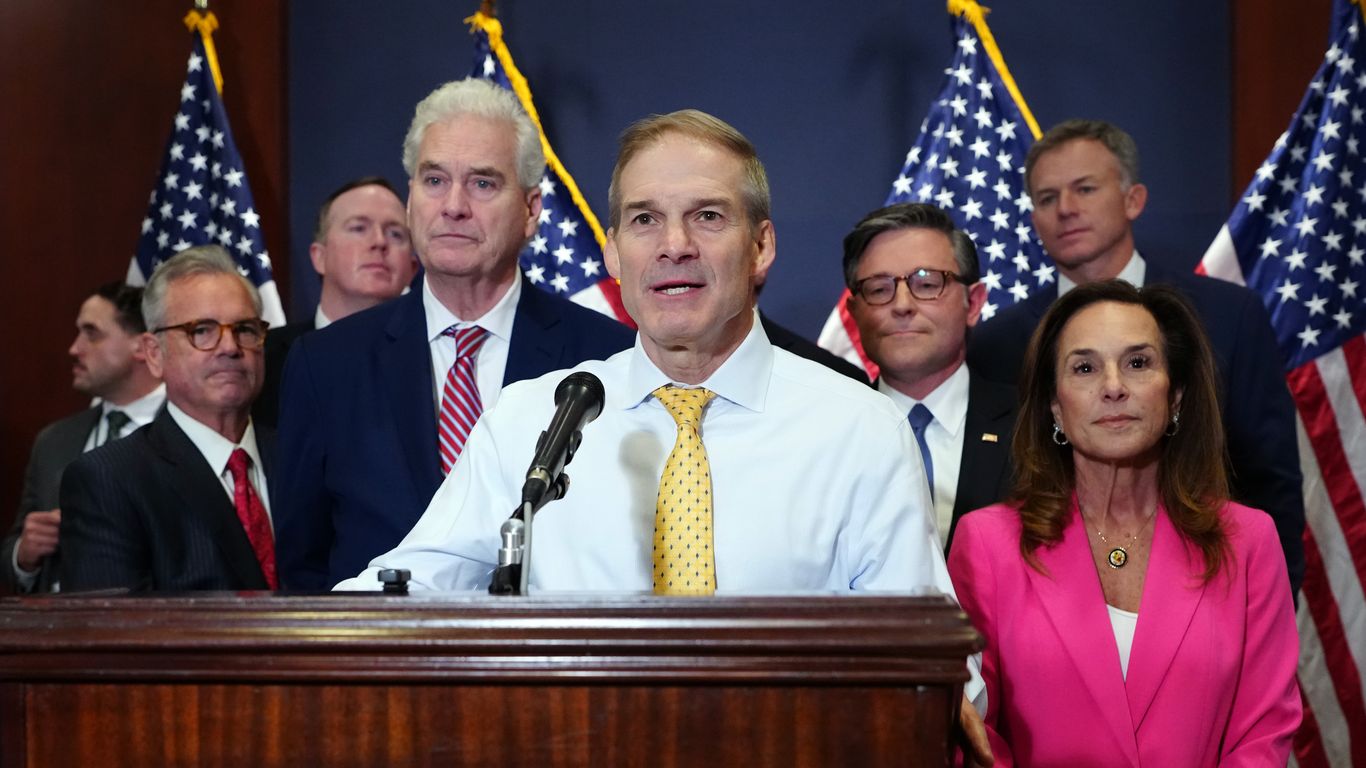
House Republicans are turning to one of their fiercest fighters to lead their diminished conference after one of their biggest drubbings in decades. Why it matters : Jim Jordan , 62, a founding member of the hardline House Freedom Caucus, has completed a stunning insurgent-to-establishment turn after spending much of his nearly 20 years in Congress battling Republican leaders from the right. The Ohio Republican's victory over House Majority Leader Steve Scalise (R-La.) represents a bet by Republicans that they shouldn't move away from President Trump to claw their way back to power. But Republicans are divided over what went wrong in the midterms, and whether a more confrontational approach is the right answer. Driving the news: Republicans emerged from last week's defeat hungry for change , handing Jordan a 106–73 victory over long-time GOP leader Scalise. GOP Whip Tom Emmer (R-Minn.) and Conference Chair Lisa McClain (R-Mich.) survived their elections. Jordan pitched himself as a battle-tested fighter capable of defending Trump against Democratic investigations and winning back the majority. What they're saying: "I think when you take a beating like we took, you need to make some changes, and I also think we're gearing up for war," Rep. Randy Fine (R-Fla.), who backed Jordan, told Axios. "We need someone who can punch hard, and I think that he'll do that," Fine said. "We just got beat bad. We can't just go in with the same step forward," Rep. Dan Meuser (R-Pa.) told Axios. McClain told Axios: "Don't count Jim Jordan out. He's a fighter. He's been able to get stuff done." Yes, but: Not all Republicans are convinced they have the right response to their losses. Rep. Carlos Gimenez (R-Fla.), who backed Scalise, argued that Republicans lost too many independent and Hispanic voters, pointing specifically to the Trump administration's immigration enforcement policies. Asked whether Republicans should have examined their losses before electing new leaders, Gimenez said:
A lesson from the US midterms is that electorates are repelled by the arrogant mega-rich buying democracy. This is a fight Labour can afford to pick For most people, $224m (£168m) is a lot of money, especially if you spend it and get nothing in return. But Elon Musk is richer than most people. In fact, there is no one richer. As the wealthiest of the US’s tech oligarchs Musk could afford to blow huge sums on a failed bid to prop up Republican candidates in Texas, his adoptive home state, in last week’s midterm congressional elections. He is reported to have spent a further $250m failing to engineer results in other races. Rafael Behr is a Guardian columnist Continue reading...
The Republican leadership fights are over. For Democrats, the pain has only just begun. Why it matters: All the talk about changing party leadership is empty if no one steps up to run. Senate Republicans demanded more time and deeper conversations about their leadership, but no one stepped forward to challenge John Thune, who won by acclamation. Democrats are demanding their own conversations about the party's future and the leadership of Chuck Schumer and Hakeem Jeffries. Neither has a challenger. ‼️ The intrigue: Where there was a contested leadership fight, the challenger won. Rep. Jim Jordan, the Freedom Caucus founding member who spent years tormenting Republican leaders, will now lead the battered House GOP after defeating 12-year leadership veteran Rep. Steve Scalise by 33 votes. Jordan is the kind of fighter House Republicans want to take on Democrats as they enter the minority, lawmakers told Axios. "We're gearing up for war. And you're talking to a guy who's known as a hammer. You know we need someone who can punch hard, and I think that he'll do that," Rep. Randy Fine (R-Fla.) told Axios. 🤺 Zoom in: No such fighter has emerged to challenge Democratic leaders from within their ranks, and Schumer said he is "confident I will be elected majority leader." The closest thing to a challenge is Sen. Chris Van Hollen (D-Md.), who's listening to calls to run for Democratic leader while also considering a presidential campaign. It's hard to do both. Meanwhile, opposition to Schumer is building: " [T]he time is now for change," Sen. Bernie Sanders (I-Vt.) said Tuesday. He appeared with Sen. Elissa Slotkin (D-Mich.), who said she's not "actively seeking the job" but demanded a plan for change. 🏛️ Over in the House, Jeffries is dismissive of the idea that anyone would challenge him after the midterms gave him a massive majority. "You think I don't have the vote nailed down? I guess we'll find out next Wednesday," he told reporters on Monday. Some of his new members a
House Democrats' incoming freshman class is barely a week old and already threatening to defy party leaders in ways most of their incumbent colleagues wouldn't dare. Why it matters: It's a dynamic House leaders may have to learn to live with as they integrate a massive group of new members who were swept into office on a wave of populist, anti-establishment anger. "My class is huge not because of ... the Democratic Party and its brand but despite it," said Rep.-elect Don Leonard (D-Ohio). "Many of us are outsiders who didn't come up through the machine, don't buy into the conventions." Congressional Progressive Caucus chair Greg Casar (D-Texas) told Axios: "Any members that are new and have just run their elections are going to be very close to where the voters are, and we know the voters are very upset." State of play: House Minority Leader Hakeem Jeffries (D-N.Y.) is on track to become speaker, in part thanks to his rock-solid support among sitting House Democrats. His supporters include high-profile progressives such as Casar and Reps. Alexandria Ocasio-Cortez (D-N.Y.), Pramila Jayapal (D-Wash.) and Ro Khanna (D-Calif.). "There is one candidate in this race, Hakeem Jeffries, and I think that everyone is far more concerned about what that leadership means, what is it promising," Ocasio-Cortez told reporters on Tuesday. Things get more spotty when gauging Jeffries' support among incoming freshmen, some of whom have openly declined to commit to supporting his leadership. That includes members of the informal progressive "Bloc," including Reps.-elect Darializa Avila Chevalier (D-N.Y.), Melat Kiros (D-Colo.), Claire Valdez (D-N.Y.), Adam Hamawy (D-N.J.) and Chris Rabb (D-Pa.). "As far as I've heard, Jeffries is the only one running," said progressive Rep.-elect Randy Villegas (D-Calif.). "But ... I think we need to see some prioritization of some legislation, particularly around health care, foreign policy and immigration." Some incoming and sitting House Democrats ha
The “Daddy Gang” is finally getting to hear from the co- “founding father” of “Call Her Daddy.”
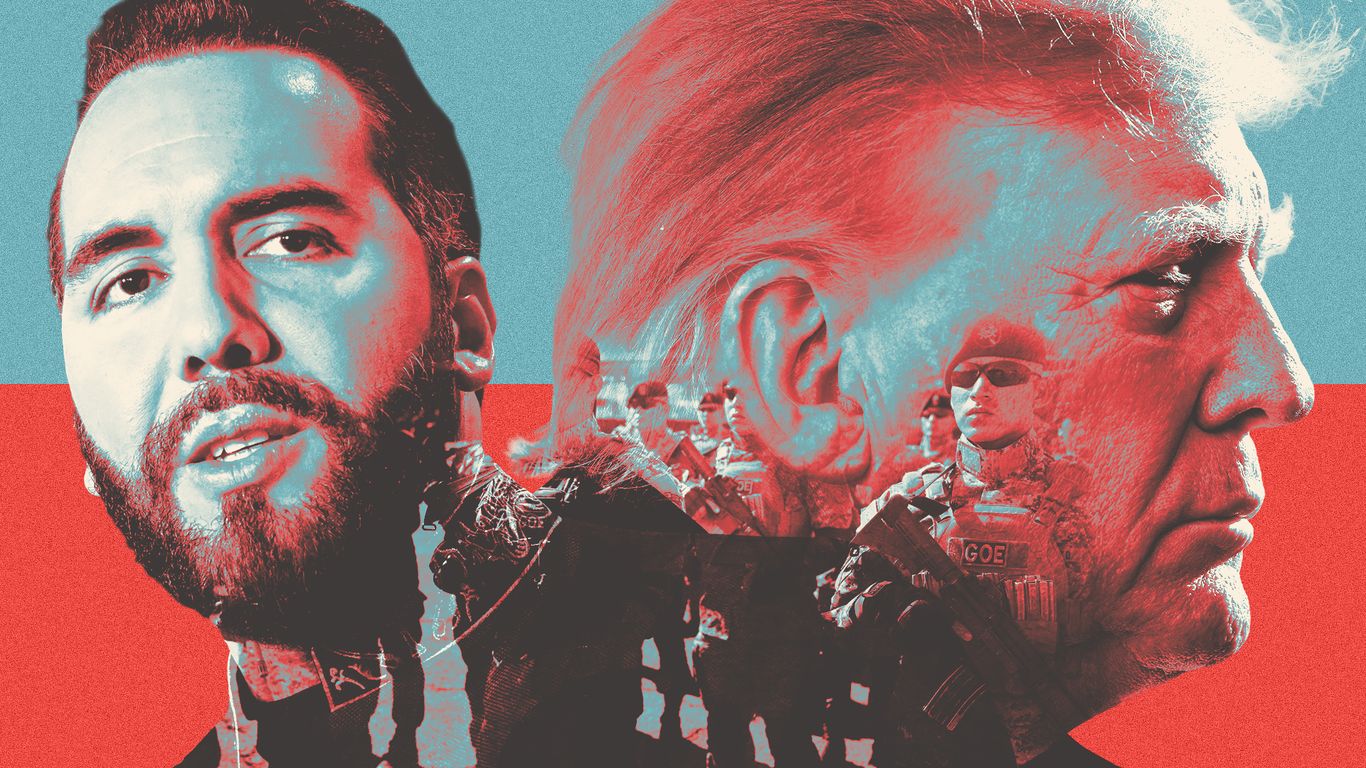
State Department officials have quietly raised objections to El Salvador's gang-fighting efforts in Haiti — even as President Trump has offered his full support, according to diplomatic notes and informed sources. On Monday, El Salvador issued a formal rebuke that questioned the "credibility" of the top U.S. diplomat in Haiti. Why it matters: The controversy exposes the tension between Trump's MAGA foreign policy objectives and the professional diplomatic establishment in the State Department. "There is a class of bureaucrats who don't want to see the change in the Western Hemisphere that POTUS wants," a U.S. official told Axios. Zoom in: Haiti is a failed state racked by extreme corruption and gang violence despite years of international efforts, including the UN-backed Gang Suppression Force (GSF) that El Salvador and other nations have backed. Four Salvadoran aviation technicians supporting medical evacuations were captured Oct. 18 by gangs that refused to heed the entreaties of El Salvador's President Nayib Bukele to return the men or their bodies. Bukele responded by surging special forces units to Haiti after receiving the blessing of Trump, an ally, on Oct. 27, Axios first reported . "You have to do what you have to do," Trump told Bukele, who proceeded to launch military operations that resulted in firefights with gangs in the streets of Port-Au-Prince. Friction point: Tensions between State Department officials and El Salvador erupted after an Oct. 31 gang attack on a Salvadoran convoy of five armored personnel carriers near the U.S. embassy, which was struck by gunfire. On Nov. 3, Salvadoran attack helicopters repelled gangs attacking GSF soldiers from Chad, Bukele posted on X . The next day, U.S. Chargé d'Affaires David Howell complained in a text message to Haitian Prime Minister Alix Didier Fils-Aimé that El Salvador wasn't "coordinating" with the GSF. "They took at least three casualties. They don't have a medical plan. They nearly killed GSF troops as
Current and former House Democrats, flush with victory following their landslide midterm wins , are already looking at potential opportunities to run for Senate in 2028, Axios has learned. Why it matters: Democrats' 2026 romp — with wins in Texas, South Carolina, Kansas and possibly even Mississippi — has some party members reevaluating what were once considered impossible targets. A source close to Rep. Sharice Davids (D-Kan.) — who was reelected by 21 percentage points in a district former Vice President Harris carried by four points in 2024 — did not rule out her running against Sen. Jerry Moran (R-Kan.). "All options are on the table," the source said, adding that Davids' "focus right now is on delivering actual results and overcoming the chaos from these extreme policies we're seeing." Sen. Roger Marshall (R-Kan.) was defeated by Democrat Adam Hamilton last week, marking the first time in nearly a century a Democrat has been elected to the U.S. Senate from Kansas. North Carolina: Rep. Don Davis is "taking a look at" a run against Republican Sen. Ted Budd, a source familiar with his thinking told Axios. Davis won a third term on Tuesday after defeating his GOP opponent in a district President Trump carried by 12 points in 2024. Republicans redrew the district with the express goal of ensuring Davis' loss. Former Rep. Wiley Nickel, who was elected Wake County district attorney on Tuesday, would consider a Senate run if state Attorney General Jeff Jackson doesn't, a source close to him told Axios. The two served together in the House. Democratic former Gov. Roy Cooper won North Carolina's other U.S. Senate seat last week in a nearly 20-percentage-point landslide over Republican Michael Whatley. Pennsylvania: A huge field of Democrats is gearing up to potentially run for the seat held by Democratic Sen. John Fetterman. Fetterman, who has morphed from a populist firebrand to an arch-centrist, has angered much of the party by siding with Republicans on key votes. Rep
Republicans are returning to work this week, facing the prospect of an especially lame lame-duck session after a bruising midterm election that set off a countdown clock on their control of Congress. Why it matters: Democrats have little incentive to help Republicans advance their agenda before January, while departing GOP lawmakers could complicate matters further by skipping votes or defying party leaders. As a result, most of the items on their to-do list could get kicked to the new Congress. That's aside from a few items House GOP leaders would rather avoid altogether: another Jeffrey Epstein bill and an impeachment vote . Lawmakers also have just over a month before another potential government funding lapse. Driving the news: Rep. Thomas Massie — who GOP voters kicked to the curb in favor of a more Trump-aligned Republican — is pushing another Epstein-related vote, an additional headache for the administration and GOP leaders. He also plans to try to force a vote this week on his impeachment resolution against Defense Secretary Pete Hegseth. Republicans lose their House and Senate majorities Jan. 3, ending their ability to set both chambers' legislative agendas. Reality check: Trump still wields the presidential veto power. Rodell Mollineau, a Democratic strategist and former communications director for the late Senate Majority Leader Harry Reid, said Democrats may postpone some legislative fights until January, when they'll have more negotiating leverage. "I think there's some things that Democrats would be happy to kick down the road," he said. Yes, but: Congress still faces major legislative hurdles. Lawmakers need to pass the annual National Defense Authorization Act, potentially setting up a fight over the Iran war as some Republicans grow more willing to criticize the conflict. A bipartisan permitting bill could overhaul how energy and infrastructure projects are approved. Senate Republicans are also racing to confirm more Trump administration officials
The Advent calendar industry is booming, which has become a problem for some who don't think the contents are worth the price tags. Lilia Luciano reports.
Winning candidates promised to cut costs, rein in corporations, curb billionaire power and improve the economy Don’t worry, cash-strapped Americans, “relief is on the way”, the senator Chuck Schumer promised last week in a press conference celebrating Democrats’ massive midterms win . Winning candidates promised to cut food and healthcare costs, rein in corporations ripping off consumers and workers, curb billionaire power and make the world’s biggest economy better serve the working class. Continue reading...
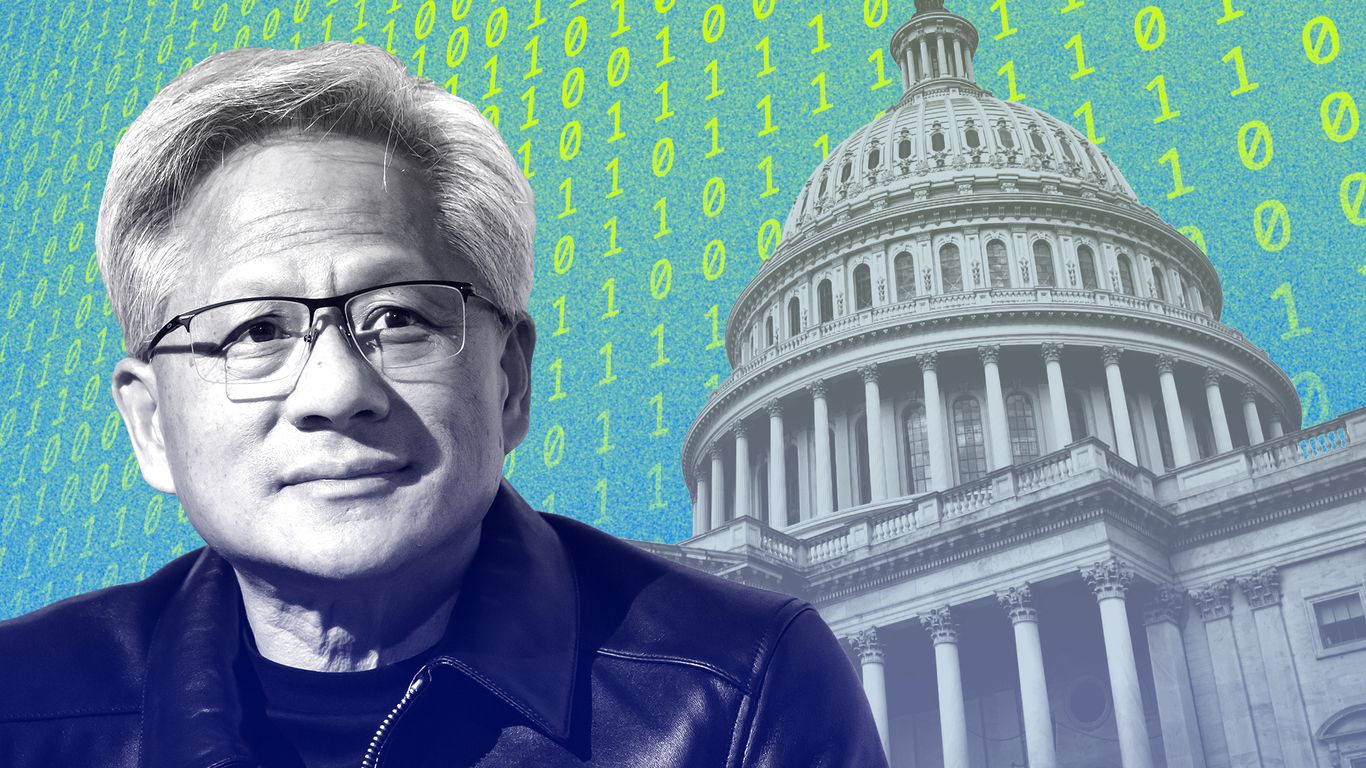
There is no Nvidia — nor an AI boom as we know it — without Jensen Huang. He has reassured jittery markets with his words, bankrolled a trillion-dollar buildout and put economies on his shoulders. Now, the world is wondering if he can save himself . Why it matters: Global markets must confront a terrifying reality: The AI ecosystem's first "too big to fail" executive is suddenly vulnerable, and there is no backup plan if he is forced to step down. Catch up quick : Huang apologized Sunday and Nvidia's board launched an independent probe after he admitted to having a relationship with a woman named Alice Huang, an alleged Chinese operative. Nvidia's board expressed confidence in his leadership and said it had no reason to believe national security or company secrets were compromised. President Trump stood by Huang, calling him "an honorable guy." The big picture: Keeping his job is one thing. Maintaining the ability to steady markets, finance customers and shape government policy is another. These are the five questions that now loom over the AI boom : 1. What happens to Nvidia? Forged 33 years ago (initially using a Denny's as an impromptu office), Nvidia is a uniquely founder-driven company, making any potential leadership transition incredibly perilous. Investors have little precedent for valuing the company without him. "It's very hard to envision Nvidia run by anybody else," said Dan Gallagher, an analyst with Washington Post Intelligence and long a keen observer of the chip titan. Huang has more than 60 direct reports, eschews traditional corporate layers and hasn't been publicly grooming a successor. "I don't know if anyone's going to know how to value Nvidia" without him, Gallagher told Axios. 2. What happens to the market? Huang has repeatedly rescued the AI trade from bearish sentiment. On multiple occasions, he has offered backstops to shore up growth plans for companies across the AI landscape, from CoreWeave to OpenAI. In July, he argued that cheaper open