Americans Cast Their Votes, From Sea to Shining Sea
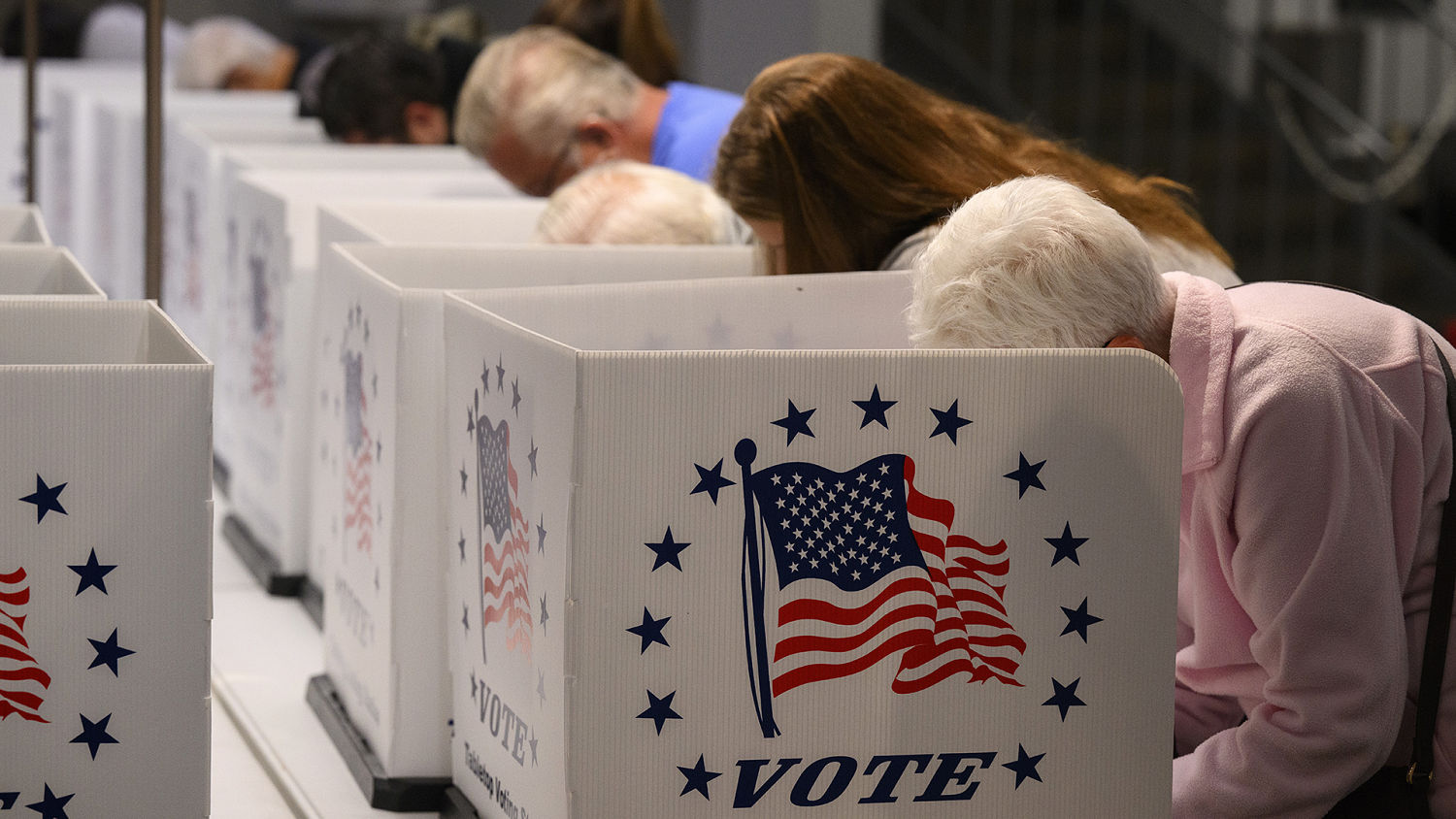
In gymnasiums, town halls, classrooms and even restaurants, voters headed to the polls on Tuesday to decide control of the Senate, House and more.
The New York Times · 24m ago

In gymnasiums, town halls, classrooms and even restaurants, voters headed to the polls on Tuesday to decide control of the Senate, House and more.
This batch of key Southern states will offer early insight into the battle for Senate control.
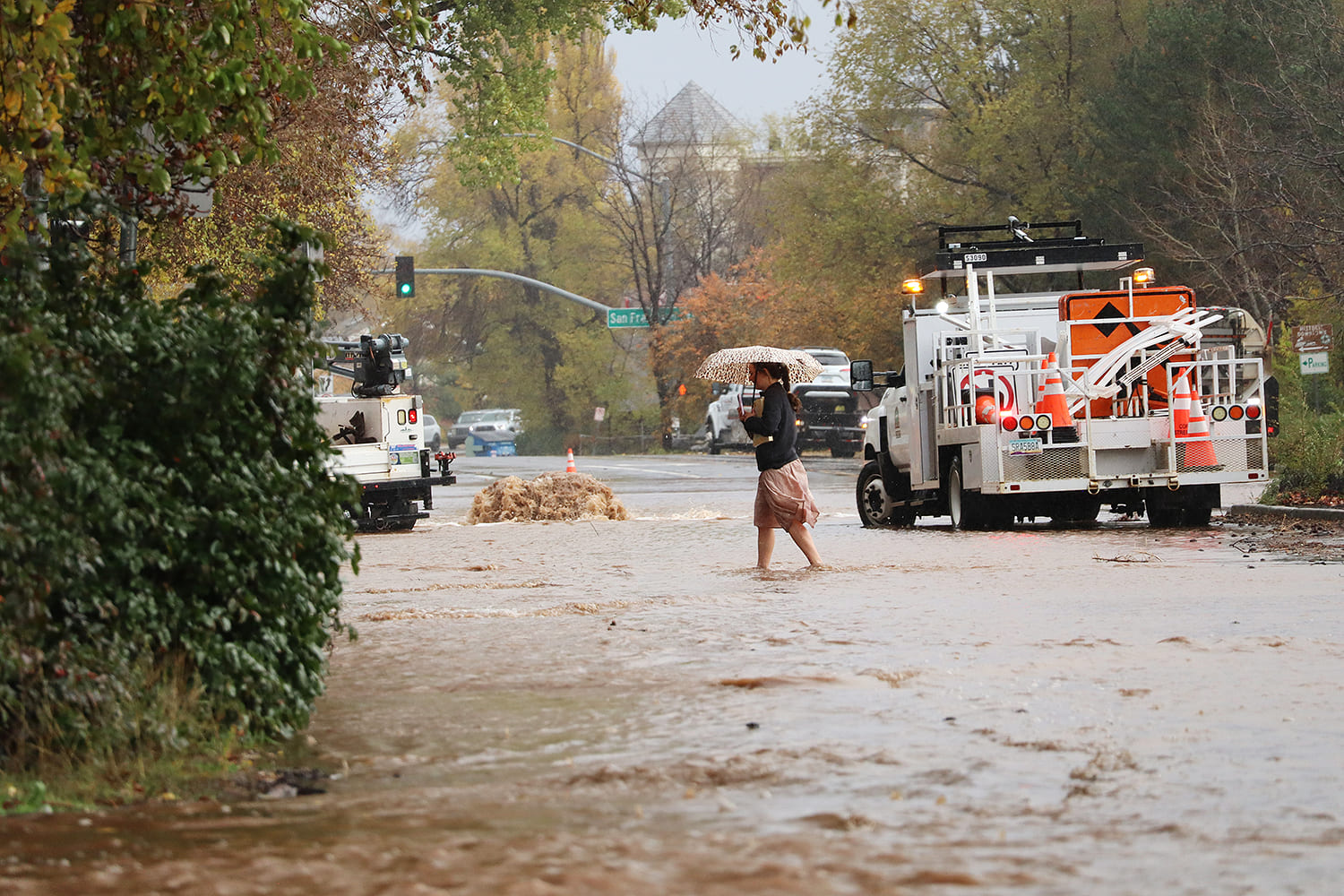
Ruined roads have created a voting obstacle for hundreds of residents of Rock Point, Ariz.
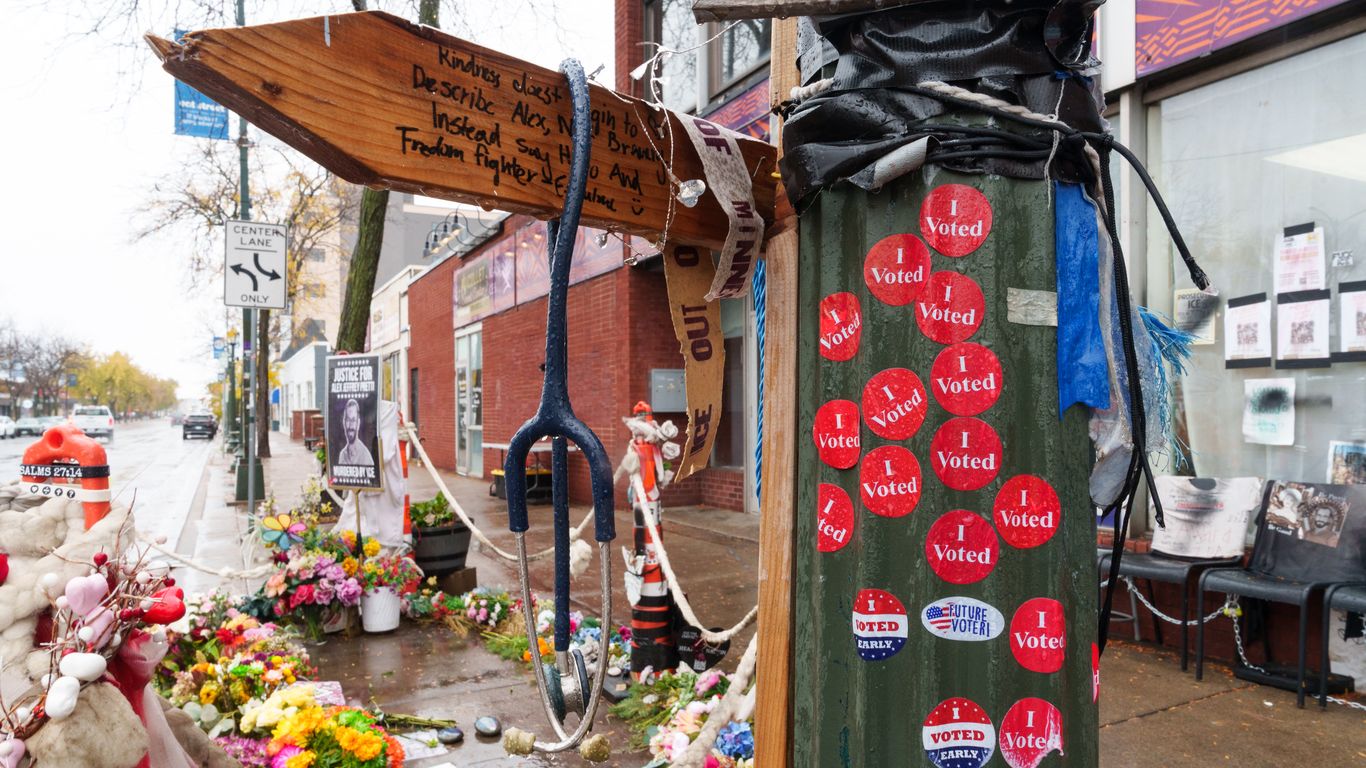
Voters in Minneapolis and Houston are among those leaving "I Voted" stickers at memorials for people killed by federal immigration agents. Why it matters: The tributes highlight how the Trump administration's unpopular immigration crackdown is motivating voters this election cycle. Zoom in: In Minneapolis , people are placing stickers on memorials for Alex Pretti , an ICU nurse, and Renee Good , a writer and mother, who were killed by federal agents in January. In Houston , voters have covered a memorial for Lorenzo Salgado Araujo , a construction worker and father who was fatally shot by ICE agents in July, with stickers and handwritten messages like "I voted for you" and "Por usted" — "for you" in Spanish. A voter places an "I Voted" sticker on a memorial for Lorenzo Salgado Araujo. Photo: Mark Felix/Bloomberg via Getty Images Ronaldo Salgado, Araujo's oldest son, placed his sticker on his father's memorial in the first week of early voting and hundreds followed him, the Houston Chronicle reports . "I am beyond touched that this community and that the entire city is voting with my dad in mind ... I didn't realize it would grow this big," he told the Washington Post. The big picture: These midterms are testing whether President Trump's 2024 gains with Latino voters have lasted. National polls in the lead-up to Election Day showed Latino voters swinging back toward Democrats , with immigration as a key area of disagreement with the administration. In an October NBC News/Telemundo poll , 67% of Latino voters said Trump's enforcement has gone too far, 31% said they or someone close now carries ID because of ICE concerns, and 27% know someone detained or deported. More from Axios: Voting machine chaos hits key House battleground Inside the White House's Election Day messaging strategy Democrats could learn wrong message from a blowout victory
The two blue states had appeared competitive, but recent surveys have showed promising signs for Chris Pappas and Peggy Flanagan.
US voters vote today in the midterm elections, which will decide whether Republicans retain control of the House and Senate. A Democratic victory in either chamber would significantly constrain Trump’s ability to advance his domestic agenda. Even if Republicans retain one or both chambers, a reduced majority could make passing legislation more difficult, and could pave the way for Democrats to launch investigations into the administration. US midterm elections 2026 live: Americans go to the polls to decide control of Congress What are the races to watch in the US midterm elections and why do they matter? Continue reading...
Voting is underway across the country Tuesday in a midterm election that could decide whether President Trump gets two more years of unified Republican rule — or faces a potential Democratic check on his power. Why it matters: The results will be the clearest national test of Trump's second presidency , following war abroad, economic anxiety at home and sweeping changes in Washington. Trump, facing all these challenges, has made himself the face of the Republican campaign for control. State of play: As voters head to the polls, the Trump administration is zeroing-in on the Alaska Senate race. The Department of Justice has sent more than a dozen target letters as part of its investigation into the Dan J. Sullivan campaign, which has been the subject of Trump's ire for several days. It's an escalation into the Trump administration's push for answers in the race where Democrats reportedly conducted an organized effort to recruit another "Dan Sullivan" to join Sen. Dan Sullivan (R) on the ballot. The Justice Department's move comes as the White House is circulating Election Day talking points across the administration, touting Trump's accomplishments as the GOP braces for a tough evening that could see them lose both the House and the Senate, according to some forecasters. Trump has been a massive force on the campaign trail, rallying in several states for his Republican picks. The president has claimed to voters that he is on the ballot this year, making the election about his policies and actions — despite his dismal polling ratings, plagued by the Iran war and economic anxiety. Trump spent the morning of Election Day criticizing Michigan Democratic Senate nominee Abdul El-Sayed, Rep. Ted Lieu (D-Calif.) and the Daily Mail in various social media posts. Zoom in: Voting machine glitches and hiccups popped up in various spots of the country Tuesday, including in the high-profile New York House race between Rep. Mike Lawler (R) and Democratic nominee Cait Conley. Otherwi
As Americans went to the polls for an election widely seen as a referendum on his second term, President Trump again downplayed concerns over the cost of living and addressed unpopular foreign policy matters.
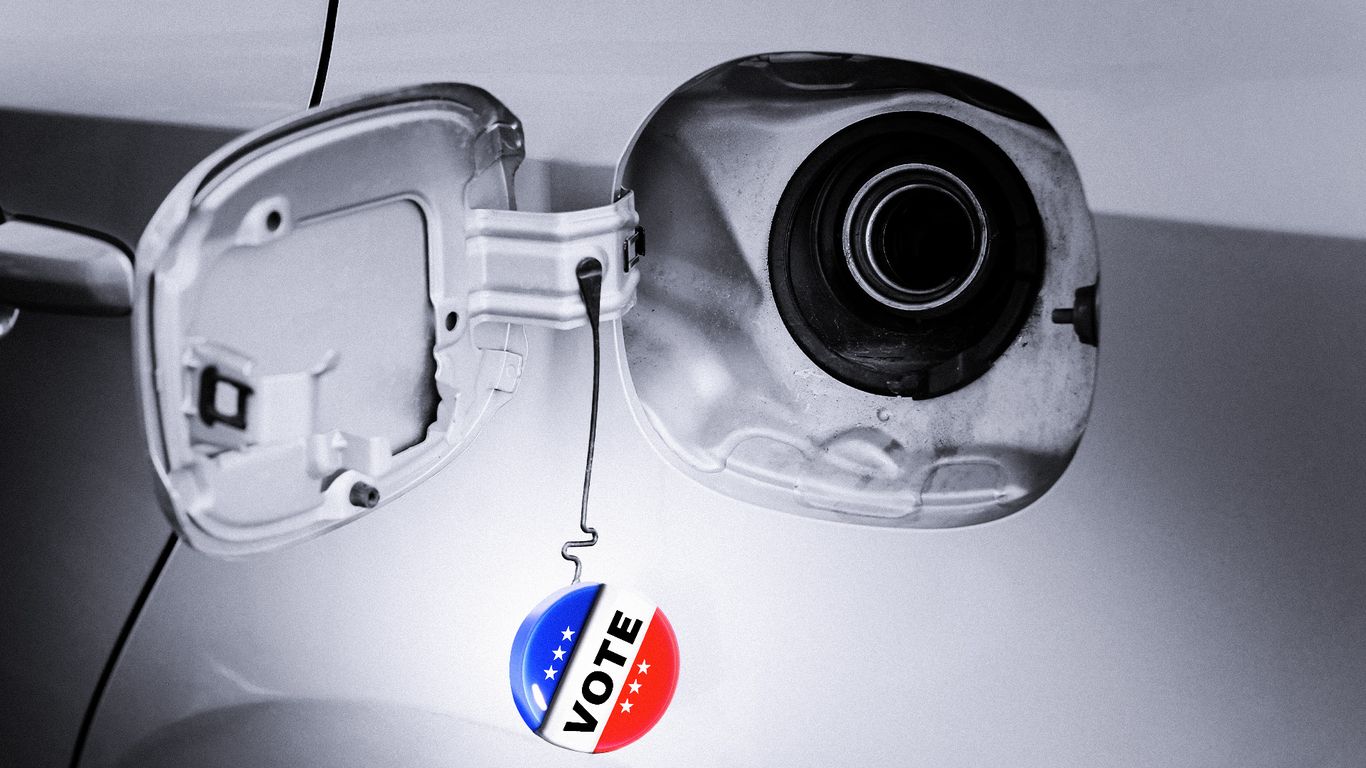
There's a lot at stake for energy in the midterms, from the fate of the bipartisan permitting deal to the growing backlash against data centers and electricity prices. Why it matters: The results could spotlight which energy topics resonate with voters — and which have become political liabilities. Gasoline and diesel prices have been big on the campaign trail, offering a chance to see how much voter frustration over energy costs matters at the ballot box. Data center politics: There are sharp differences between the parties, even though data centers aren't especially popular with either party's slate of candidates. Why it matters: The pace of the AI buildout affects power demand and emissions. State of play: 32.4% of Democratic candidates support moratoriums at the federal, state, or local level, compared to just 3.4% of Republicans, per Data Center Watch, which tracked hundreds of races. Zoom in: Meanwhile, Ballotpedia is tracking dozens of ballot measures on data centers, many of which would impose new restrictions. Ohio is a hot spot. Control and permitting: The outcome will affect the politics of the lame-duck session — and that means the politics of the bipartisan permitting deal. What they're saying: If Democrats take both chambers, "leaders might opt to wait until they hold the gavels next year to renegotiate compromises," the research firm ClearView Energy Partners said in a note. Yes, but: A reminder that backers of the current bill think it's folly to expect political space to write a more liberal bill that President Trump would sign, or that could even pass the Senate. Threat level: What if the results are very close? ClearView notes that if Trump and allies contest the results, "weeks of post-election skirmishing could complicate passage of any bill." Political lessons: The results could offer clues about where energy and climate policy are headed. State of play: Exit polling is not famously precise, but it could provide a barometer of how much voters t
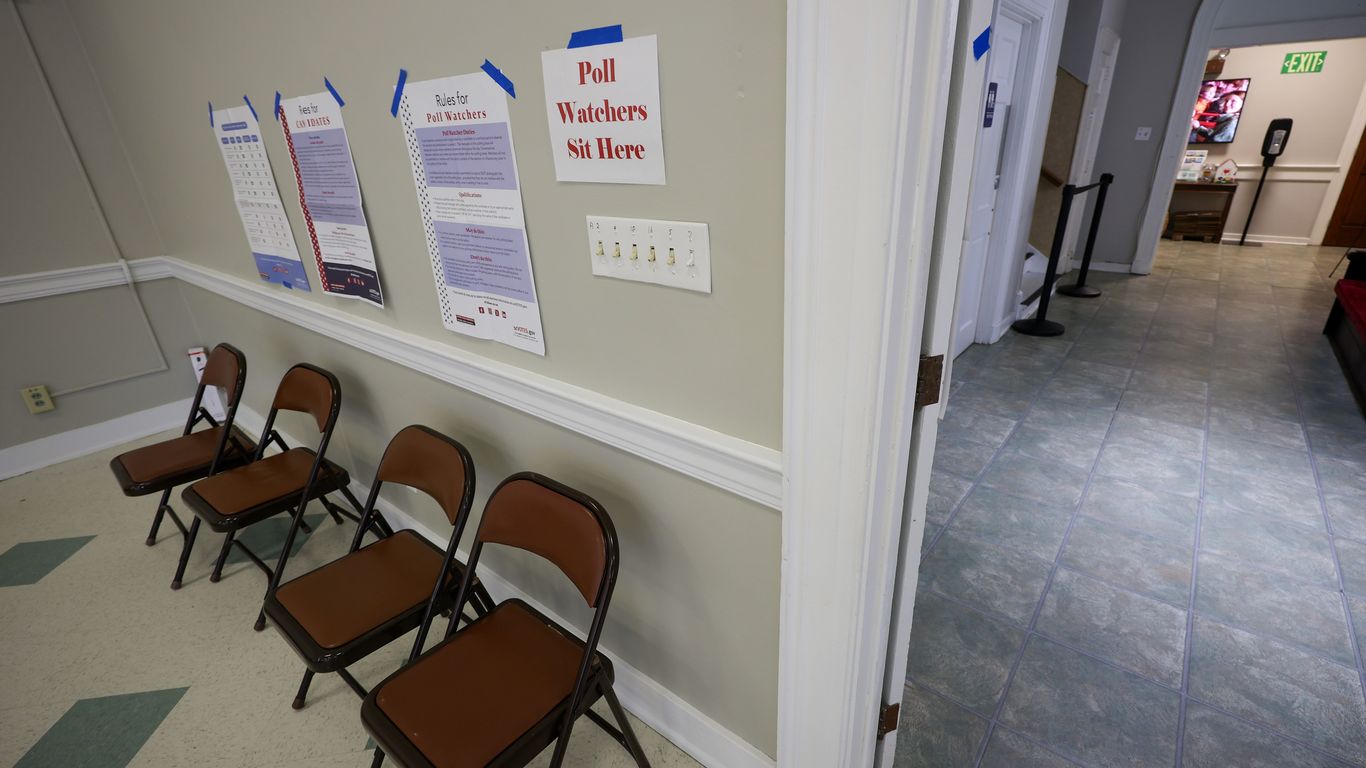
The Justice Department said Tuesday it will deploy about 1,000 election monitors to all 50 states for the first time ever to watch the polls. Why it matters: The unprecedented effort comes after courts repeatedly rejected the DOJ's efforts to force states to restrict voting for alleged noncitizens. It comes amid a long-running Trump administration push to fight voter fraud , which studies say isn't nearly as prevalent as the administration suggests. Driving the news : The department, in a statement early Tuesday, said one of its most important goals was to protect election integrity. "Today, the DOJ will further this mission by engaging in its largest monitoring effort in history—with approximately 1,000 election monitors and observers deployed, and, for the first time, in all 50 states," the department said. The department said observers would come from the DOJ, U.S. Attorney's offices, and staff from the Office of Personnel Management. What they're saying: "I am very proud we are deploying the largest monitoring effort in DOJ history, and pursuing transparency for elections in an assertive and nondiscriminatory manner," assistant attorney general Harmeet K. Dhillon said in the statement. The intrigue: Some local election officials have already expressed concerns that such a massive wave of observers could intimidate or otherwise interfere with voters. What to watch: The DOJ is still pursuing legal efforts in multiple states to have ballots segregated or otherwise impact counting.
Voters are heading to the polls in a critical midterm election that will decide which party controls Congress. NBC News’ Ryan Nobles reports.
The US has been voting for senators, members of the House of Representatives and state governors in the midterm elections. Here are the results in full US midterm elections 2026 live: Americans go to the polls in referendum on Trump’s agenda The US legislature, Congress, has two chambers: the House of Representatives and the Senate. Continue reading...
Nate Cohn, our chief political analyst, explains how polling has fared in the Trump era and whether we should trust this year’s midterm polls that are favorable to Democrats.
Democrats are poised to romp in today's election — easily winning the House and, according to most forecasts, flipping the Senate too. Yet the party itself is less popular than the IRS . Even the GOP has a better brand. Why it matters: There's a difference between a blowout and a mandate. Confusing the two could tempt Democrats to overread the results and forget the serious credibility problem they still face heading into 2028. The big picture: Democrats have done a lot of things right to position themselves for a big night. They recruited candidates who've put red state Senate races that seemingly were beyond reach, within their grasp. Many of those candidates vastly outraised their Republican opponents. But polls across the board still show a lesser-of-two-evils election — or as one Republican tied to President Trump's political operation described it, a contest of which party voters hate more. Voters are more eager to disempower Trump than to empower Democrats. By the numbers: Just 29% of registered voters have a positive opinion of the Democratic Party vs. 38% who view the Republican Party positively, according to a pre-election NBC News poll . The same poll showed Democrats with a 7-point lead in the congressional generic ballot, 52 to 45. And nearly 6 in 10 voters who plan to back Democrats in the election said their vote is about stopping Trump and Republican policies — vs. 4 in 10 who said they were more motivated to help Democrats enact their policies, per an October CBS News/YouGov poll . Zoom in: Many Democrats say they're determined not to repeat the mistake they made after the last midterms in 2022. They defied predictions of a red wave and saw it as an endorsement of Joe Biden and their party — when voters actually were increasingly angry. The post-2022 takeaway ultimately laid the groundwork for Trump's return to the White House after the 2024 election. Democrats won the House in the 2018 midterms — and went on to impeach Trump the following year. Thi
As results roll in Wednesday Australian time, keen election-watchers can tune in to see whether red seats flip blue – or if we’re in for a long week of vote counting Get our breaking news email , free app or daily news podcast Donald Trump has called it “most important in our lifetime” while senator Bernie Sanders says it’s the most important “in modern American history”. Barack Obama called it a “circuit-breaker” and the “last, best chance” to rein in the president. In any case, all eyes will be on the United States on Wednesday Australian time for the 2026 midterm elections. Will Americans use the day as a referendum on Donald Trump’s second term? Will Democrats see a clean sweep of Congress? Continue reading...
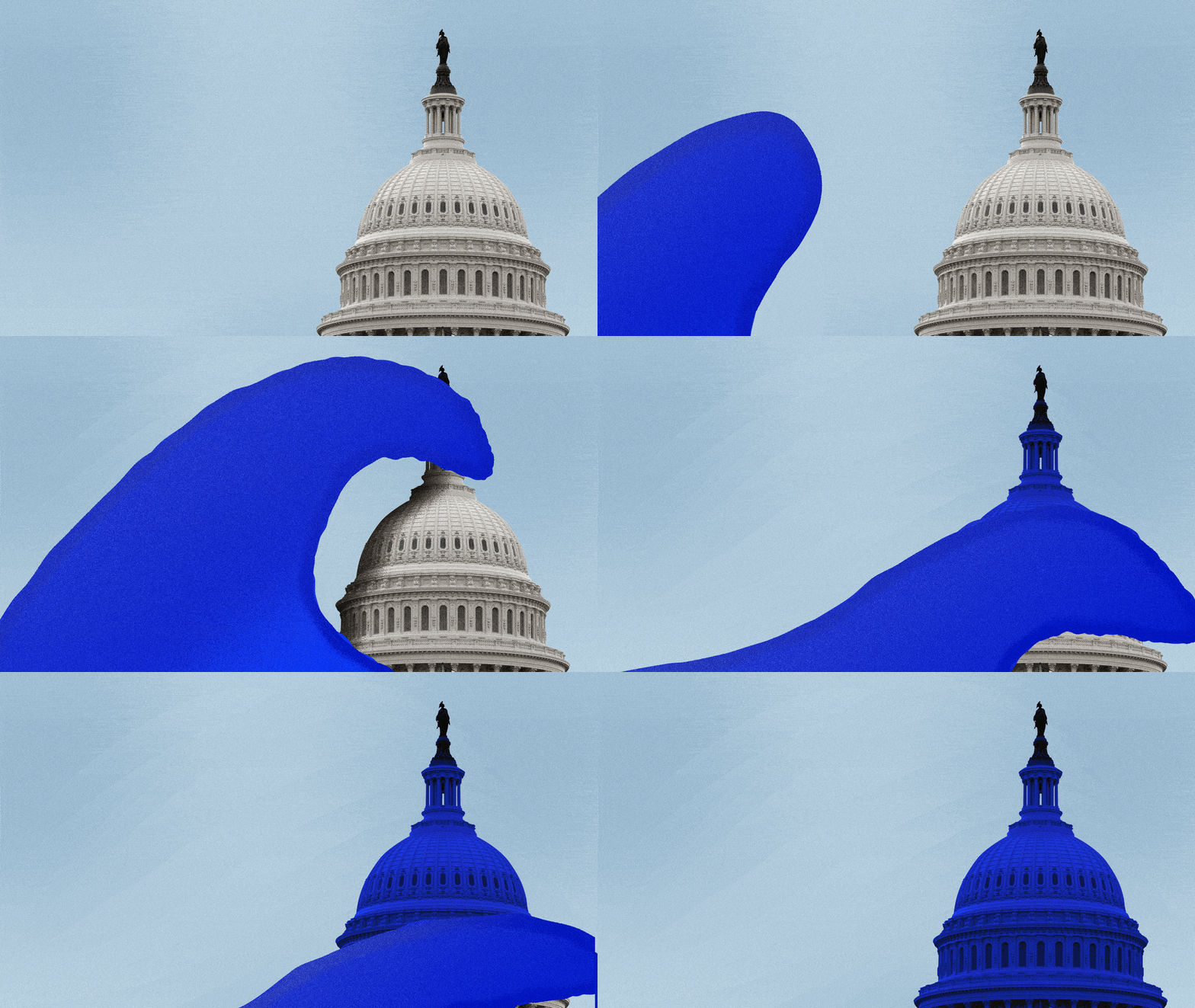
The threat of a blue tsunami is bearing down on President Trump's Washington, with virtually every major indicator forecasting a Democratic rout in Tuesday's elections. Why it matters: Expectations for the midterms have soared so high that some Democrats fear disappointment is inevitable, particularly if the party falls short of winning the Senate — a prize that seemed beyond reach just months ago. By the numbers: Five key metrics help distill the extraordinary consensus taking shape on the eve of the midterms. 🔮 95% and 80%: The probability of Democrats winning the House and Senate, respectively, according to election forecaster Nate Silver , whose model projects an average gain of 25 House seats. Silver says Democrats could now withstand a modest polling error and still capture the Senate — a remarkable cushion given the GOP's history of outperforming polls in the Trump era. 🗺️ 7 for 7: Democrats lead in every Senate battleground state surveyed in the final New York Times/Siena polls , including by 11 points in Michigan and seven in Texas. Trump carried six of those seven states in 2024, though five of the Democratic leads — Maine (+6), Kansas (+5), Ohio (+5), Alaska (+2) and Iowa (+1) — remain within the polls' margins of error. 🏛️ 240: The number of House seats Democrats could win under the upper end of Cook Political Report's forecast — potentially their largest majority since the first year of Barack Obama's presidency. Reaching that mark would require Democrats to sweep all 18 toss-up races. Cook already favors them in 222 districts, four more than needed for a majority. 🎲 73%: The probability of Democrats winning both chambers of Congress, according to Kalshi . After correctly favoring Trump in 2024, prediction markets have become a closely watched barometer of political expectations. Nearly $100 million in contracts have traded on Kalshi's congressional control market alone. 📊 +14: Democrats' lead on the generic congressional ballot in the final poll f
US president shares delayed results of chaotic renovation on DC site as Americans prepare to head to the polls Donald Trump unveiled the delayed results of his $14m renovation of Washington DC’s Lincoln Memorial reflecting pool in what is expected to be his final press conference before voters head to the polls for the midterm elections. On the eve of a consequential election day, with polls indicating that most voters feel the US president has grown too focused on building projects in the nation’s capital, he stood in front of the newly opened reflecting pool to discuss – in detail – changes to the pool’s pipe, the grass surrounding the area and granite. Continue reading...
Our polls suggest the economy is biggest motivator of voters’ choices in these midterm elections and that Democrats are more trusted to fix things.
Soggy, dreary weather is expected to hit the central U.S. as voters head to the polls Tuesday, but experts said the impact on the electoral outcome is expected to be minimal.
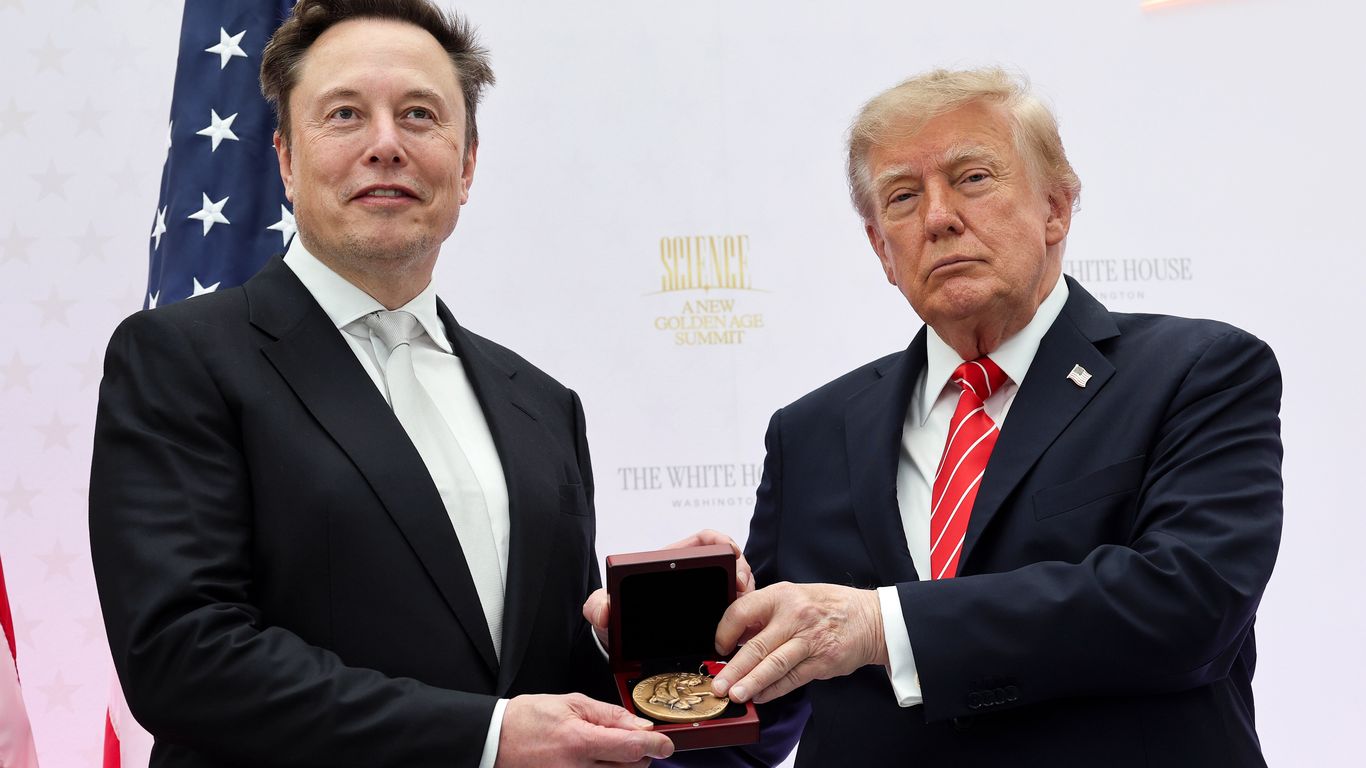
President Trump said Monday he'd move to protect Elon Musk if Democrats investigate the SpaceX and Tesla CEO after midterm elections. He also suggested the possibility of pre-emptive pardons for staff and others around him if Democrats win the election. Why it matters: Trump is positioning himself for a combative final two years in the White House, as polls increasingly point to the prospect of a significant blue wave. What they're saying: In an interview for the "Pod Force One" podcast published early Monday, host Miranda Devine asked Trump about rumors of Musk being investigated or having assets seized. "It's talk. But if it is talk, we'll have to protect them," Trump said. He went on to say he wouldn't hesitate to pardon staffers if he thought Democrats were pursuing them. Editor's note: This is a breaking news story and will be updated with more information.
At more than $52m, the race has become the most expensive in US history, but residents are fed up with flooding Aida Havel mulled her fate over coffee after working the early voting polls all day in Kill Devil Hills, North Carolina. “We are trapped,” she concluded. The Dare county commission candidate lives about 50 miles (80km) south, on Hatteras Island on the state’s Outer Banks. Continue reading...
Republicans are focused on a race that could flip the Senate – and where an Alaska Native is favored Days before Alaskans get to vote, the federal government is already trying to overturn the result. Last week, at Donald Trump’s behest, the justice department sued to block the certification of Alaska’s US Senate race, if the Republican incumbent narrowly loses; a judge dismissed that suit on Sunday, though the administration said it planned to appeal . On Wednesday, Trump demanded that Mary Peltola, the Alaska Native Democrat whom polls favor to win , be removed from the ballot and prosecuted. Piling on, Alaska’s Republican governor has since ordered an investigation into Peltola’s campaign. Continue reading...
Republicans are burning tens of millions of last-minute ad dollars to try to rescue three red-state senators who they say ignored months of warnings that their campaigns were in danger. Why it matters: Senate races in Kansas, South Carolina and Mississippi are normally GOP layups. This year, Republicans have diverted resources from swing-state battles to defend them. The frustration with Sens. Roger Marshall (Kansas), Darline Graham (South Carolina) and Cindy Hyde-Smith (Mississippi) comes amid broader GOP finger-pointing as polls show a nationwide backlash against President Trump . "Democrats may win these seats in a wave ... but not a blue wave. It's the wave of arrogance [and] laziness ... that washed over these GOP incumbents and made them think they were invincible," said a national GOP operative involved in several key Senate races. By the numbers: National Republicans have spent $33 million in Kansas, $21 million in South Carolina and $2.4 million in Mississippi, according to data compiled by campaign finance expert Rob Pyers. Trump also has spent valuable campaign time in all three states. Behind the scenes: Republicans say the three senators ignored warnings to raise more money and build stronger campaign operations. National Republican Senatorial Committee chair Tim Scott warned all GOP senators in February 2025: "We do not need to spend time and money in places where races should not be competitive." Trump's political operation also warned Senate Republicans that they would need to pull their own weight. The most complaints center on Marshall, who has raised just $7.5 million compared with $19 million for his Democratic opponent, Adam Hamilton. Republicans blame his strained relationship with the banking and credit card industries — major GOP donors — and a lack of outreach to K Street. Republicans describe Marshall's campaign as overconfident. About a month ago, his team told aides to other GOP senators that the race would be effectively over within 10 d
Polls show some kind of “wave” seems likely for the Democrats in this midterm election. But will it translate into Democrats flipping the House and Senate? Nate Cohn, our chief political analyst, outlines four possible scenarios.
Instead of relying on exit polls, we have created Times Voter Trends, a project that will break down estimates for the results of U.S. House and Senate elections by age, race, education and gender.
Voters are turning against the Republicans. But the clearest possible message is needed to safeguard democracy The psychologist Jennifer Freyd identified a pattern often used by perpetrators: deny, accuse, and reverse victim and offender. More than one observer has noted that Donald Trump employs that pattern politically. With polls suggesting Republicans are likely to lose the House and perhaps the Senate too in the midterms, the man who refused to accept Americans’ democratic verdict in 2020 is hawking a narrative of cheating Democrats who will steal seats via illegitimate votes. The January 6 insurrection showed how acute the peril to American democracy had become. It is more so now. This time, Republican efforts to undermine the results began well in advance. In 2020, Mr Trump’s vice-president, Mike Pence, the attorney general, William Barr, and others refused his most outrageous demands; now the justice department is supine. And the supreme court’s gutting of the Voting Rights Act , which safeguarded against the worst kinds of racial discrimination, means that states no longer require pre-approval for decisions that could well tilt a race. Districts have already been redrawn. Continue reading...
Florida Republicans aren't panicking about sluggish turnout for the midterms , but in the words of one GOP elder: "We're white-knuckled." Why it matters: Florida once looked like a much safer Republican bet for the midterms. Losing any statewide race would stun and embarrass its elite Republican residents, starting with President Trump . "I don't necessarily want to be the bearer of bad news, but I don't think the turnout is as strong as we would like to see," Florida Gov. Ron DeSantis fretted last week. The biggest GOP concern is U.S. Rep. Byron Donalds' campaign for governor, though most polls show him narrowly leading Democrat David Jolly. Donalds has raised $176 million; Jolly just $28 million. Zoom in : The GOP's jitters are rooted in early turnout data. Republicans led Democrats in early ballots cast by just 2.8 percentage points as of Saturday afternoon. That's much lower than in the past two general elections — and it's despite a much-bigger Republican registration advantage over Democrats: 11 points. Republican turnout is weakest in parts of the conservative Panhandle and rural North Florida, including many of the 17 counties Donalds lost in the Republican primary. In those 17 counties, GOP turnout is 3.2 points below 2022, compared with 1.1 points below in counties that Donalds won, University of Florida political scientist Michael McDonald found. Between the lines: Republican turnout is made up of more habitual voters, while Democrats and independents are banking ballots from people who don't always show up. That could benefit Jolly if polls underestimate those voters. Democrats already have surpassed their entire 2022 early and mail-in vote totals in 15 counties, compared with four counties for Republicans. Nearly every poll shows independent voters favoring Democrats by double digits, so Republicans need a heavy turnout advantage. About two-thirds of Florida voters typically cast ballots before Election Day, making the early and absentee margins critica
Cost of living has loomed over this election cycle as workers and unions champion candidates fighting for higher wages and tackling rising prices For millions of Americans heading to the polls on Tuesday, affordability is a constant and worsening issue, and it’s been a prevailing concern this election cycle. In Lorain county, Ohio, Gina Jones and her co-workers at the Lorain county job and family services have been on strike since February 2026, the longest public sector strike in Ohio history and on pace to break the US record for longest public sector strike. Continue reading...
Guardian readers share their concerns and disillusionment with the political climate under Trump as elections loom Millions of Americans will head to the polls on 3 November in elections that will determine control of the Republican-held House of Representatives and Senate, as well as the governorships of 36 states. The midterms come amid mounting public frustration over issues ranging from the rising cost of living and immigration to the climate crisis, artificial intelligence, big tech and the US’s overseas wars. Donald Trump’s approval rating has fallen to 36% , according to a New York Times/Siena poll conducted this month. Continue reading...
You won't need to stay up all night Tuesday to spot a big Democratic wave in the 2026 midterm elections . But it could take days — or even weeks — to know whether Republicans have survived a smaller one and held on to the House or Senate. Why it matters: A handful of early results in key states and congressional districts will tell us whether Democrats are headed for a landslide or disappointment. What we're watching: Florida, Florida, Florida. Most polls close at 7pm ET, and the state counts quickly — ready for release when the Panhandle finally calls it a night an hour later. At 8:01pm , refresh your browser and watch FL-14. The great mid-cycle redistricting wars transformed this Tampa-based district from Harris +8 to Trump +11. If Democratic Rep. Kathy Castor survives, Republicans can all but kiss their majority goodbye, according to party strategists. Next up is FL-25. The country's most expensive general election race is playing out in a district that went from Harris +4 to Trump +9. If Democratic Rep. Jared Moskowitz's race is close — or too close to call early in the night — House Republicans can keep hope alive. While you're at it, this is a good time to check on South Carolina's Senate race, where polls close at 7pm and the state counts relatively fast. If Sen. Darline Graham loses to Annie Andrews in the Trump +18 state, Senate Republicans can say goodbye to their majority. (And they'll be sweating if it's close.) "Underperformance is rarely isolated," said Jason Thielman, executive director of the National Republican Senatorial Committee in 2024. "If you see the GOP underperforming early in the East, it is likely going to continue as you move further West." At 9pm, check in on Virginia: The commonwealth's polls close at 7pm, but historically tight races often aren't called until the 9pm hour. If Democrats flip VA-01, a Trump +5 seat, they're in for a very good night. If they flip VA-05, a Trump +12 seat, they're in for a great night. Between the lines: VA
The whiplash over President Trump’s schedule comes as polls show Republicans are in danger of losing seats, including in areas he won handily in 2024.
Polls show the sister of the late Senator Lindsey Graham in a virtual tie with her Democratic opponent, Dr. Annie Andrews. An upset was unthinkable just a few months ago.
The president cancelled the events in favor of tele-rallies, as Republicans face a fight to retain control of Congress Donald Trump cancelled, and then promptly uncancelled, two in-person rallies in Kansas and Iowa this weekend as polls suggest US midterm election races in the previous Republican strongholds could go down to the wire. On Thursday, just five days before election day, the Republican National Committee (RNC) announced the president would no longer host the Kansas and Iowa rallies and instead participate in “a large number of tele-rallies”. The RNC claimed it felt it was in a “strong position” in Kansas and Iowa. Continue reading...
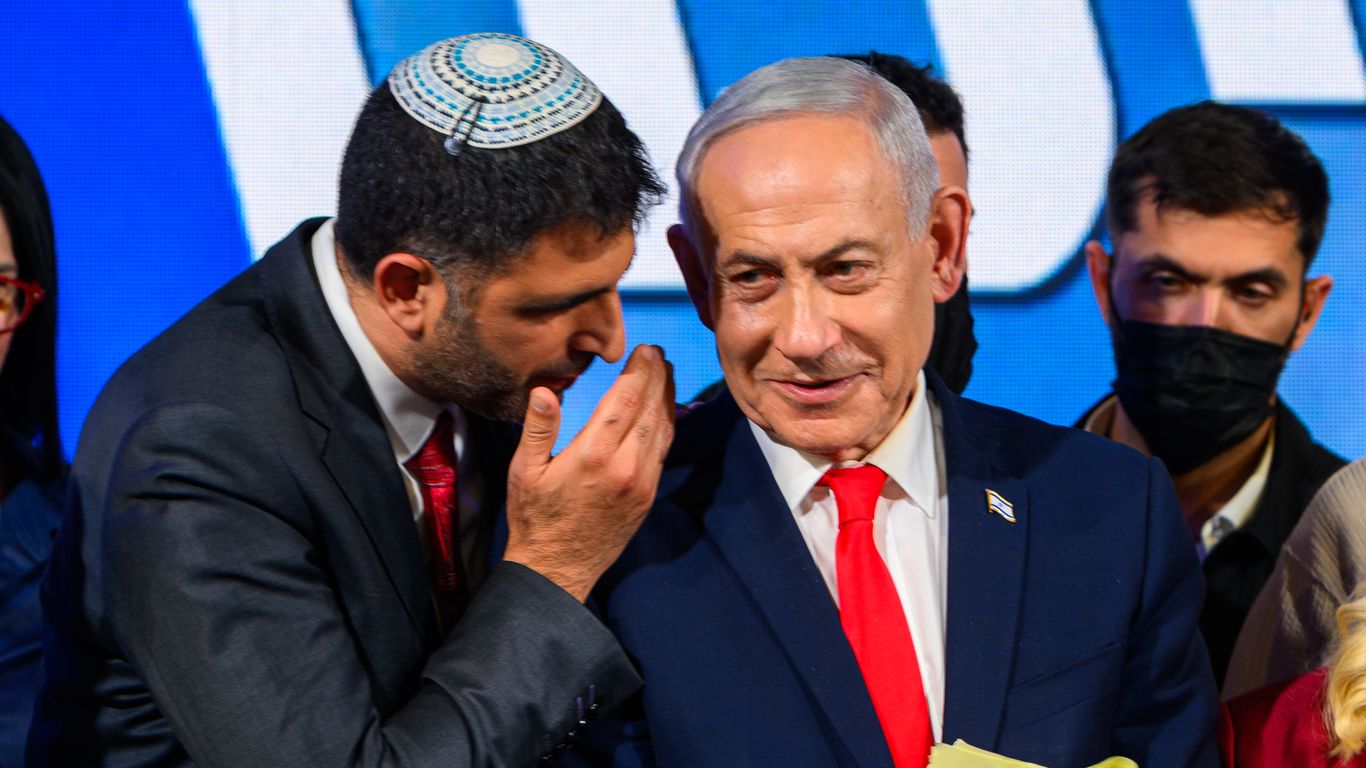
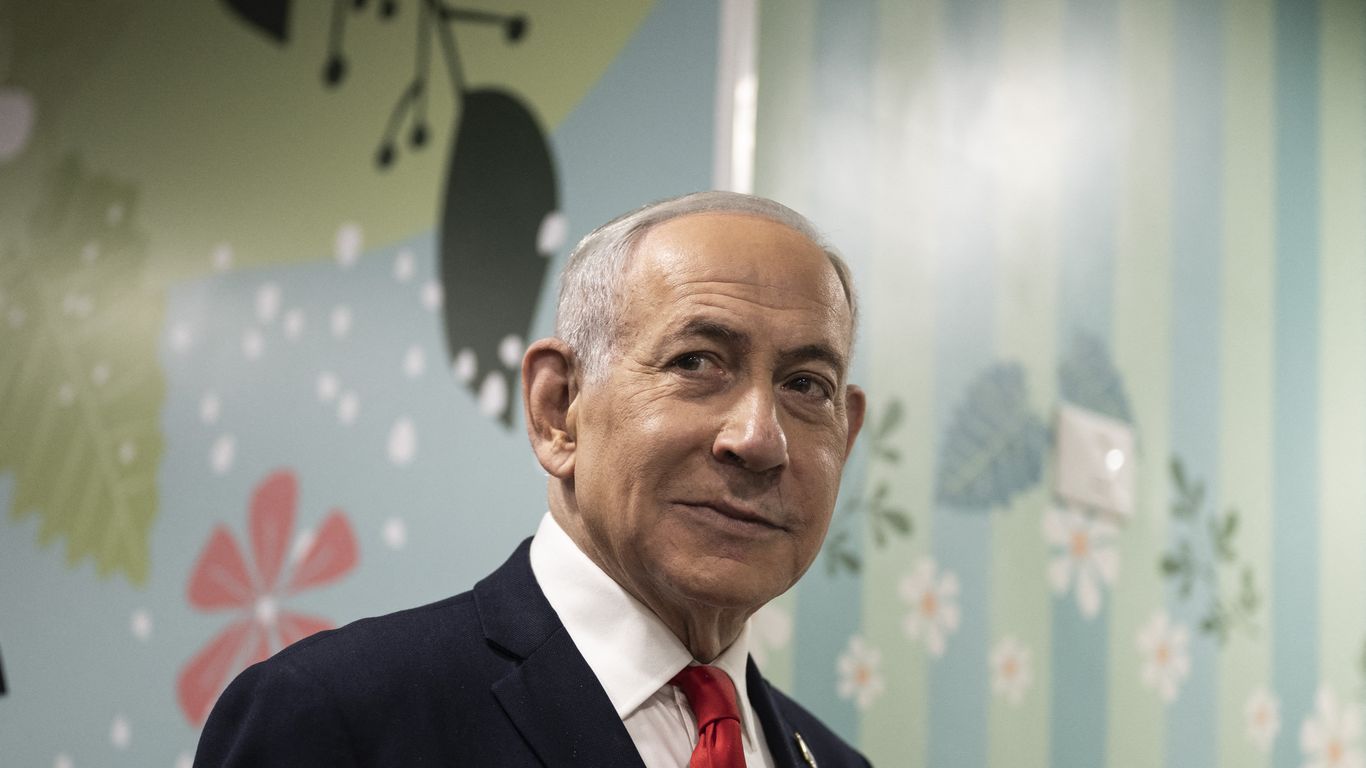
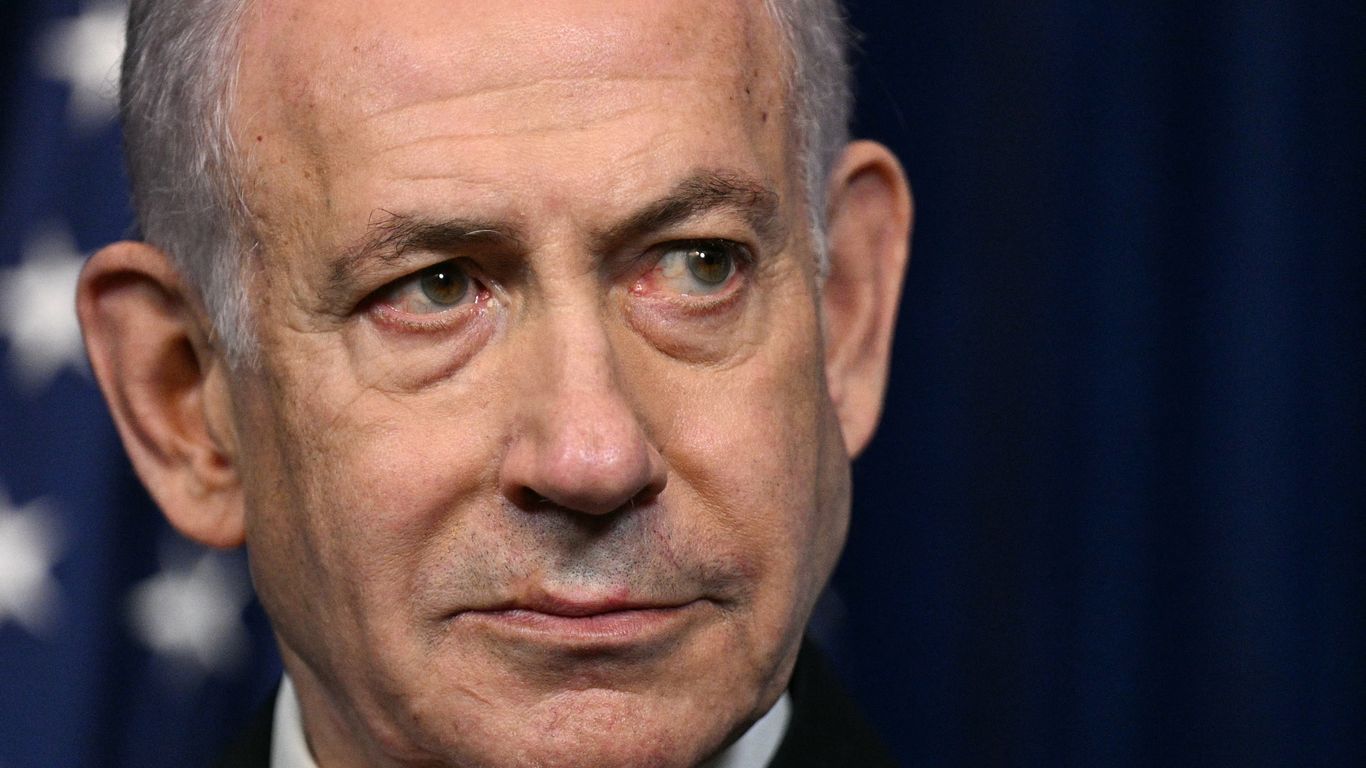
After his far-right coalition lost 11 seats in the election, Israeli Prime Minister Benjamin Netanyahu is trying to discredit the results by claiming there was mass voting fraud in Arab communities. Why it matters: Netanyahu appears to be trying to spook the opposition bloc out of cooperating with Arab parties to form a new government. But the opposition is concerned he has an even more ambitious goal: To prevent the results from being certified at all. That would block the swearing in of a new parliament, in which he would lose his majority. Driving the news: Netanyahu and his Likud party started the campaign to delegitimize the Arab vote days before the elections. Half of Netanyahu's social media posts on Election Day cast suspicion on the unprecedented turnout in Arab communities, an apparent attempt to drive his supporters to the polls. Arab voters cast ballots in historic numbers, winning 19 seats between their two parties. On Wednesday, Netanyahu's Likud party issued a statement claiming the "elections were stolen" by the Arab parties through bribes and fraud. Its claims were based on the arrest of three activists from the Arab Ra'am party who were suspected of paying a small number of voters in one of the Arab cities. The Israeli police said there was no evidence to support Likud's claims of a "stolen" election. Behind the scenes: The situation escalated dramatically on Thursday when a letter sent to the director of the Shin Bet domestic security agency was leaked to Israel's Channel 12. It was written by the supreme court judge who heads the Central Elections Committee. The judge ordered the Shin Bet director to immediately investigate suspicions of election interference by foreign countries and submit conclusions within a week. Shortly after the letter leaked, Israeli media outlets identified Qatar as the country in question. The allegation is that it funneled money to one of the Arab parties to propel turnout in their communities. Over the past year, sever
House progressives are planning to use their growing power to force votes next year on their most sweeping and divisive policies, including Medicare for All, abolishing ICE and cutting aid to Israel. Why it matters: The ultimate goal is to get these policies on the front burner for a Democratic president in 2029, even if that means forcing House Democrats into tough decisions. Rep. Pramila Jayapal (D-Wash.) told Axios the left wants mark-ups and votes on bills such as Medicare for All "so that we can prepare for when we have the trifecta and so that we can really build the support we need." "Forcing the vote is important so we can see where everyone is at, I think that's really key for 2028 and 2029," said Mai Vang, a progressive House candidate in California. The big picture: Here is what progressives most want to see go to a House vote in 2027, according to lawmakers, candidates and operatives who spoke to Axios: 1) Medicare for All The Medicare for All Act introduced by Rep. Pramila Jayapal (D-Wash.) has 118 co-sponsors — more than half the House Democratic caucus. The left wants to force the issue onto the floor and make their Democratic colleagues reckon with the policy's popularity in public opinion polls . Ultimately, they aim to ensure support for Medicare for All is a must-have for any 2028 presidential candidate to win the primary. "Years ago I negotiated with [former House Speaker Nancy] Pelosi to get the hearings , but we have not had a markup," Jayapal, a former Progressive Caucus chair, said in an interview with Axios. Jayapal pointed to the bill she and Rep. Pat Ryan (D-N.Y.) unveiled last week, which would lower the Medicare age from 65 to 50, as a potential compromise measure that could get caucus-wide support next year. Yes, but: A Democratic wave could bring in a bloc of members from red-leaning districts who could be sensitive to being tagged as wanting to end private insurance. Jayapal told Axios there's an "opening we've never seen before" with
Democrats will happily tell you how good they feel about retaking the House on Tuesday — just as soon as they stop hyperventilating into a paper bag. Why it matters: They've been burned too many times on Election Day to feel anything more than "nauseously optimistic," as one House Democrat put it to Axios. The polls point to a decisive Democratic victory on Nov. 3, yet fears of a massive polling error or some other eleventh-hour disaster are giving party members sleepless nights. "One woman at a rally in New Jersey told me last week that she was 'nauseously optimistic,'" Rep. Jamie Raskin (D-Md.) told Axios. "That may capture a lot of people's last-minute jitters." A House Democrat who has spoken to leadership told Axios: "They feel optimistic. You know, guarded. Guarded optimism. Where we're going to end up, you never know." State of play: Democrats are targeting dozens of Republican-held seats they think could flip, some of which President Trump carried by 10, 15, even 20 percentage points in 2024. Democrats' House Majority PAC, for instance, went on the air Wednesday in retiring Rep. Elise Stefanik's (R-N.Y.) district, which Trump won by 21 points. They also began spending against Rep. Mike Flood (R-Neb.), who won his last reelection with 60% of the vote. HMP is so bullish it has moved money out of the races to replace retiring Reps. Don Bacon (R-Neb.), Chuck Edwards (R-N.C.) and Darrell Issa (R-Calif.), which they believe Democrats are on track to win handily. "I am cautiously optimistic we win between 20-25 seats," Rep. Ro Khanna (D-Calif.) told Axios. Democrats' landslide scenario puts them closer to 40 or 50 pickups, which would be a historic night for the party. Yes, but: Mid-decade redistricting in Republican-controlled Southern states is all but certain to cut into those gains. The GOP is expected to easily flip redrawn seats in Tennessee and Louisiana where the incumbent Democrats chose to retire rather than face uphill reelection battles. Democratic lead
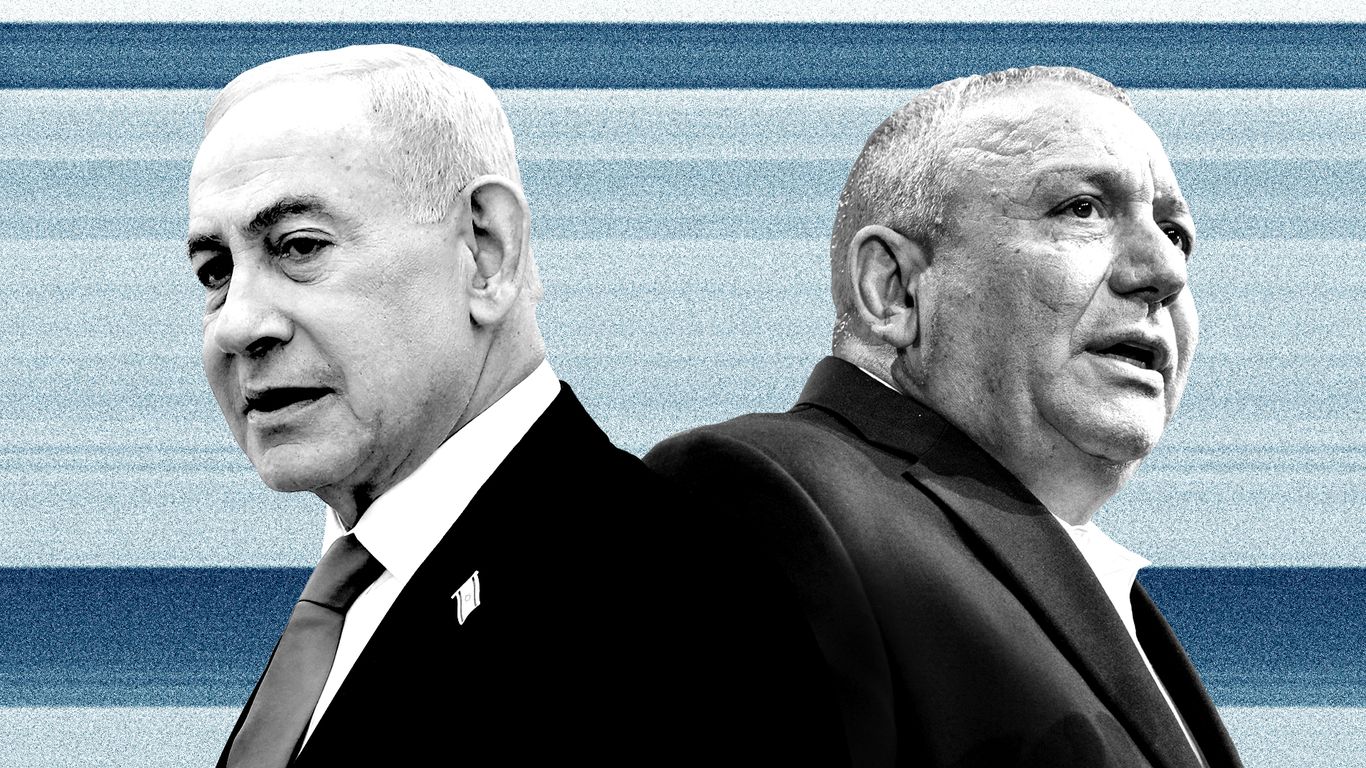
TEL AVIV, Israel — Israeli Prime Minister Benjamin Netanyahu's electoral coalition opened a sizable lead over Gadi Eisenkot's opposition bloc with 85 percent of the vote counted. But while Netanyahu outperformed exit polls, which had Eisenkot's opposition coalition ahead, neither bloc will clear a 61-seat majority. That sets the stage for weeks of wrangling over the country's next government. Why it matters: Netanyahu will emerge from the election down but not out. His bloc is on pace to secure 53 seats — 11 fewer than he currently commands. But Eisenkot's bloc trails with 48 seats, leaving both men without a clear mandate to lead a government. While Eisenkot could theoretically swear in a government with the support of Arab parties — which are on track to secure a record-breaking 19 seats — such a scenario is highly unlikely. The intrigue: The actual vote count significantly boosted Netanyahu's standing compared to initial exit polls, which showed Eisenkot's bloc ahead. President Trump told Axios in a brief interview Wednesday that at first he received "horror reports" about Netanyahu's prospects. But "he's in pretty good shape now," Trump said. "I heard my endorsement made a big difference for Bibi," he added. Asked whether he is going to get involved in an effort to form a Netanyahu-led unity government, Trump said he hadn't thought about it. "I will take a look," he said. State of play: There are 500,000 votes left to be counted, from soldiers, diplomats, prisoners and others who voted outside their designated area. These votes could slightly shift the blocs' seat totals or the allotment of seats within each bloc. But they are unlikely to change the overall balance of power. Driving the news: Israeli President Isaac Herzog will begin consulting next week with the different parties before issuing a mandate to either Netanyahu or Eisenkot to form a government. "We must do everything possible, especially after yesterday, to avoid another round of elections. So I ex
If Democrats gain full control of Congress next week, as many polls and prediction markets suggest they will, private equity could once again find itself in the political crosshairs. The big picture: Private equity has become a rhetorical punching bag for a number of Democratic House and Senate candidates, including in debates and on the stump, as an affordability bête noire. Most of this has related to housing, both single-family and mobile homes, but also has extended to health care. What they're saying: "It's no doubt that housing is way out of control and a big part of that is because private equity has come into Maine," said Troy Jackson in an Oct. 6 debate with Sen. Susan Collins. "I do think we have to go after private equity, make it so that they can't buy these things and charge outrageous prices." Chris Pappas, running for an open Senate seat in New Hampshire, said during a campaign stop at a mobile home community: "We need to... address the housing crisis that we're seeing, including addressing the corporate private equity influence that we're seeing in housing that's making it less affordable and is causing a lot of consternation here at this park." Rep. Marcy Kaptur (D-Ohio) decried PE ownership of residential care facilities during a public event, saying: "Those people know nothing about health care." State of play: Congress passed a bipartisan bill this past summer to restrict PE ownership of single-family homes, with the Treasury Department last week issuing related regulations . The legislation became law despite not being signed by President Trump, who supported it but was in a snit over the Senate not passing his voter identification bill. Zoom in: A Democratic sweep would likely result in Sen. Elizabeth Warren (D-Mass.) taking the Banking, Housing and Urban Affairs Committee gavel, which means she'd go from writing strongly worded letters to holding hearings and guiding legislation. "Americans are sick and tired of private equity's playbook of ro
TEL AVIV, Israel — Prime Minister Benjamin Netanyahu's far-right coalition is running nearly even with Gadi Eisenkot's opposition bloc in Tuesday's historic election — but both are short of a 61-seat majority, according to Israeli exit polls. Why it matters: Political stalemate is the most likely outcome of the election, with Netanyahu weakened but neither side having a clear path to forming a coalition government. Arab parties are poised to win 18 to 19 seats in what would be an unprecedented electoral achievement. While theoretically Eisenkot's bloc could try to swear in a minority government supported by the two Arab parties, that scenario looks unlikely. The numbers: Eisenkot's bloc emerged with a small lead in early exit polls, but Netanyahu's coalition closed the gap as the night wore on. The exit polls show Netanyahu's bloc with 51-52 seats and Eisenkot's bloc with 49-51 seats. Netanyahu's Likud party is projected to win 27 seats versus 21 seats for Eisenkot's Yashar party. State of play: A close outcome could leave the country in a state of limbo, with Netanyahu likely staying on as a caretaker prime minister at the helm of the executive branch and the opposition led by Eisenkot controlling the Knesset. That scenario could last until new elections are held as early as April. The two sides could try to break the deadlock by forming a unity government between Netanyahu and Eisenkot. But such a scenario is also improbable considering that none of the opposition parties will agree to sit in a Netanyahu-led government. What they're saying: Eisenkot claimed victory in a speech after midnight Israeli time. He said if Netanyahu was a "decent leader," he would exit the political stage after the public voted for change. During the speech, Eisenkot alluded to the possibility that the prime minister would launch military action before a new government is seated. "Netanyahu: don't dare use Israel's security for your political needs," Eisenkot said. He emphasized that the
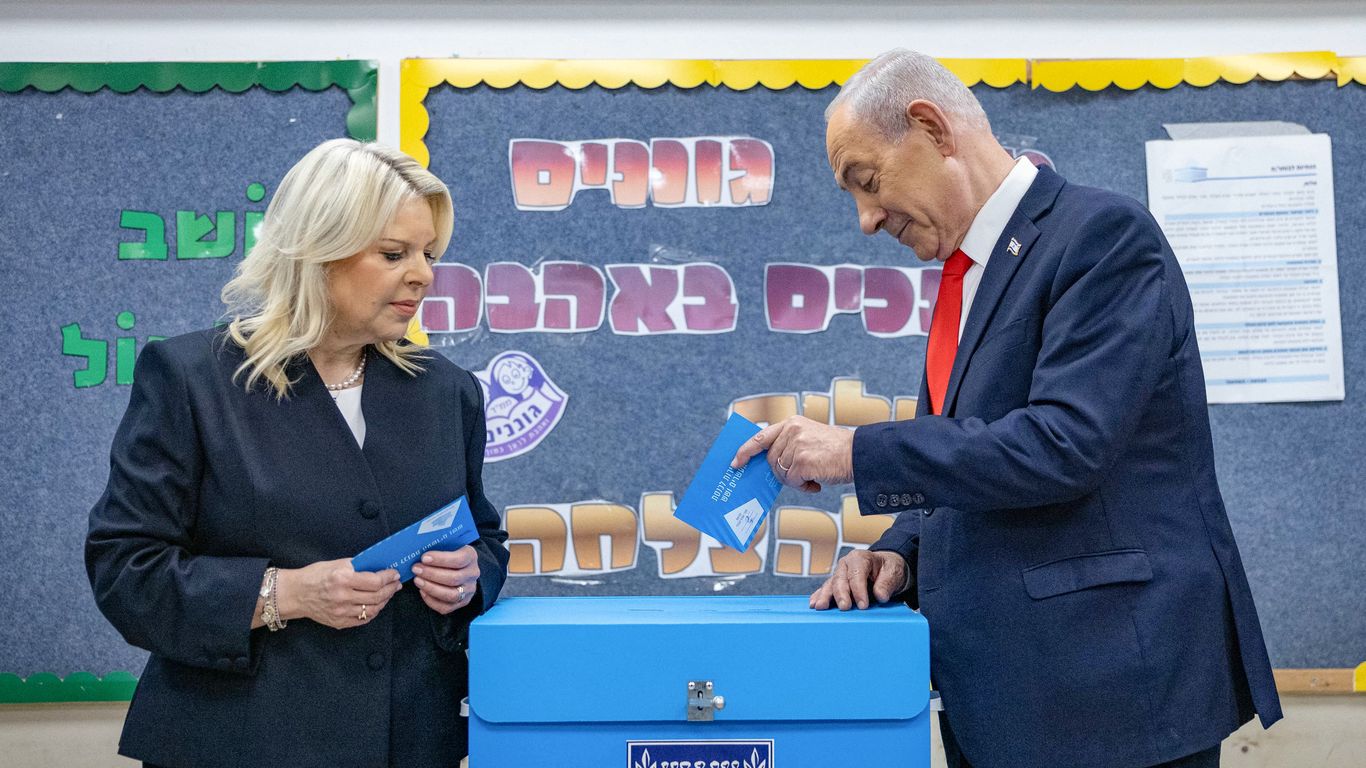
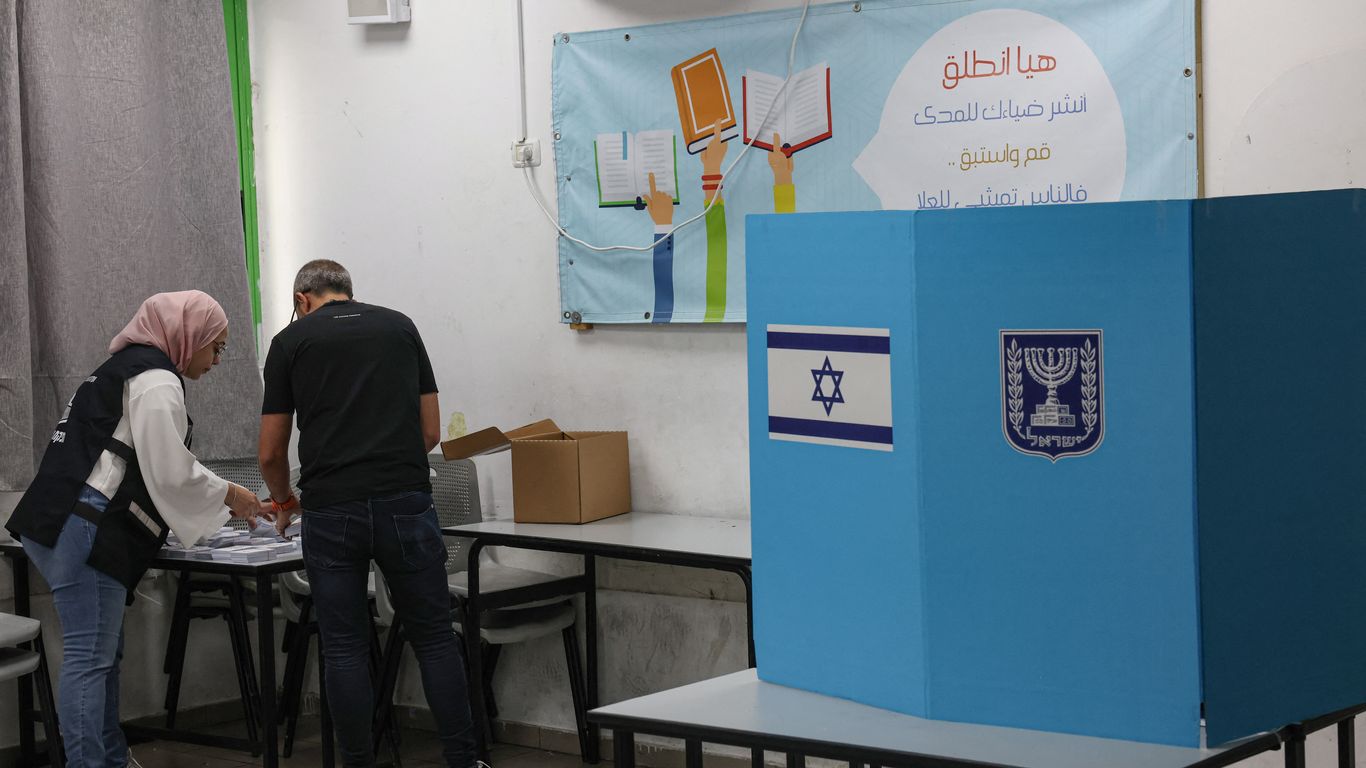
TEL AVIV, Israel — More than three-quarters of Israeli voters cast ballots in Tuesday's historic referendum on Benjamin Netanyahu — the highest level since 1999. Why it matters: This looks like bad news for the incumbent prime minister. Higher voter turnout will likely push several of the parties in his bloc below the electoral threshold — making it harder for the prime minister to reach a 61-seat majority in parliament. An increase in turnout among Arab minority communities could lead to a record number of seats in parliament for them. As in previous elections, Netanyahu has tried to energize his voters by making false claims about "Muslim Brotherhood supporters" of his opponents who are "stealing the elections." State of play: After multiple reports of long lines at many polling stations across the country, the Central Elections Commission issued orders to expedite the voting process and clarified that any voter who arrives at a polling station by 10 pm local time will be allowed to vote. Polls close at 10 pm local time (4pm ET) and exit polls will be published simultaneously by Israel's three TV networks. Driving the news: This is one of the most consequential elections in the country's history — with rival camps warning that victory for the other would put Israel's future in jeopardy. The elections are a referendum on the path Netanyahu has taken the country down over the past four years. It's Israeli voters' first chance to hold Netanyahu accountable for the security failures that led to the Hamas-led October 7 attacks — or to reward him for what he claims were unprecedented military successes in the three years of war since.
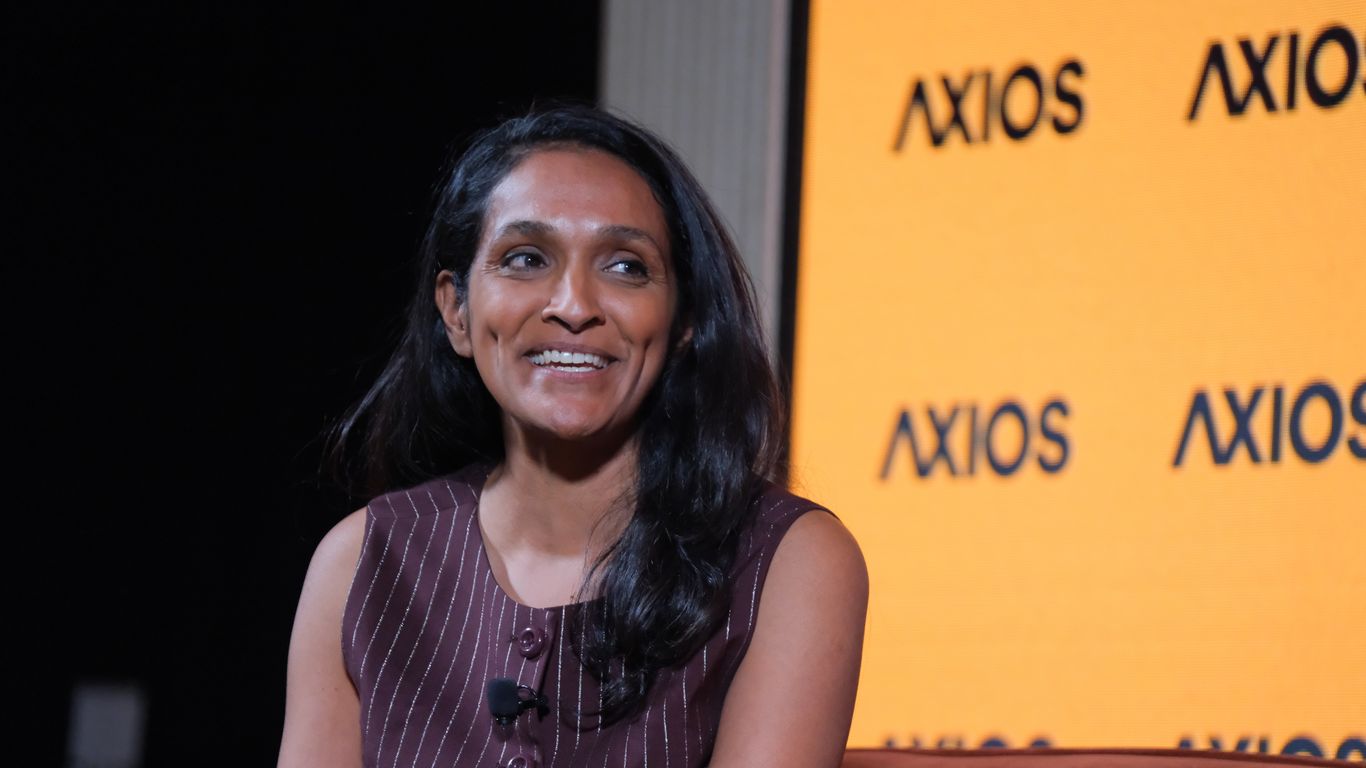
A fight over Israel is fracturing the socialist movement just as it stands within reach of capturing the Los Angeles mayor's office . Why it matters: The same socialist movement celebrating its ascendancy through New York City Mayor Zohran Mamdani is now debating whether to disown Nithya Raman before Los Angeles voters can even weigh in. National Democratic Socialists of America (DSA) leaders face demands to overturn the local chapter's endorsement of Raman over her position on the Boycott, Divestment and Sanctions (BDS) movement against Israel. The Los Angeles chapter of DSA still enthusiastically endorses Raman , arguing Angelenos deserve a functioning city government. The mayoral race has been defined by homelessness, affordability and public safety. By the numbers: Raman leads incumbent Mayor Karen Bass in recent polls ahead of the Nov. 3 election, though many voters remain undecided. Overall : A September Berkeley IGS/L.A. Times poll put Raman ahead 39%-28%, with 33% undecided. A more recent Manhattan Institute poll showed Raman leading 38%-32%, with 30% undecided. Among likely Latino voters: Raman led 45%-21%, with 34% undecided in the Berkeley poll. Among socialists: DSA's Los Angeles chapter endorsed Raman in a 937-484 vote, with 52 abstentions. State of play: On Oct. 4, DSA's National Political Committee found that the chapter violated endorsement rules by failing to ask Raman about BDS, but stopped short of invalidating its support. National leaders have considered proposals to revoke the endorsement and bar the chapter from using resources to campaign for her, per Vanity Fair . A DSA faction has called for questioning Raman about her views on Palestine, with possible expulsion if national leaders find her positions incompatible with the group's principles. Sticking point: The Democratic Socialists of America's published endorsement requirements say candidates must actively support BDS and avoid affiliations with the Israeli government or "Zionist lobbying
Israelis head to the polls today for one of the most consequential elections in the country's history — with rival camps warning that victory for the other would put Israel's future in jeopardy. Why it matters: The elections are yet another referendum on Benjamin Netanyahu's leadership and the path he's taken the country down over the past four years. It's Israeli voters' first chance to hold Netanyahu accountable for the security failures that led to the Hamas-led October 7 attacks — or to reward him for what he claims were unprecedented military successes in the three years of war since. If Netanyahu and his far-right coalition win, they're likely to renew the war with Iran in an effort to topple its regime, intensify their crackdown on Israel's democratic institutions and move to end Netanyahu's corruption trial. Driving the news: Netanyahu's campaign was totally focused on the war with Iran. After two military campaigns over the last 18 months in which he claimed that Israel destroyed Iran's nuclear program, Netanyahu's main talking point was that Iran is moving closer to a nuclear bomb. Earlier this week, Netanyahu went as far as posting an AI-generated image of Tel Aviv being destroyed by an Iranian nuclear bomb — implying that's what will happen if he loses. Behind the scenes: Netanyahu spent weeks trying to persuade President Trump to give him a green light to strike Iran ahead of the elections. Trump did not go along. In the 72 hours before the elections, Netanyahu tried to order the Israel Defense Forces to take steps to lay the ground for a potential new military strike or take actions short of an overt attack, Israeli officials say. IDF chief of staff General Eyal Zamir refused to abide. He warned that such a strike could lead to a miscalculation that quickly escalated hostilities and potentially forced the elections to be called off, the officials said. The Israeli officials said Zamir insisted there was no operational urgency in taking these steps ahea
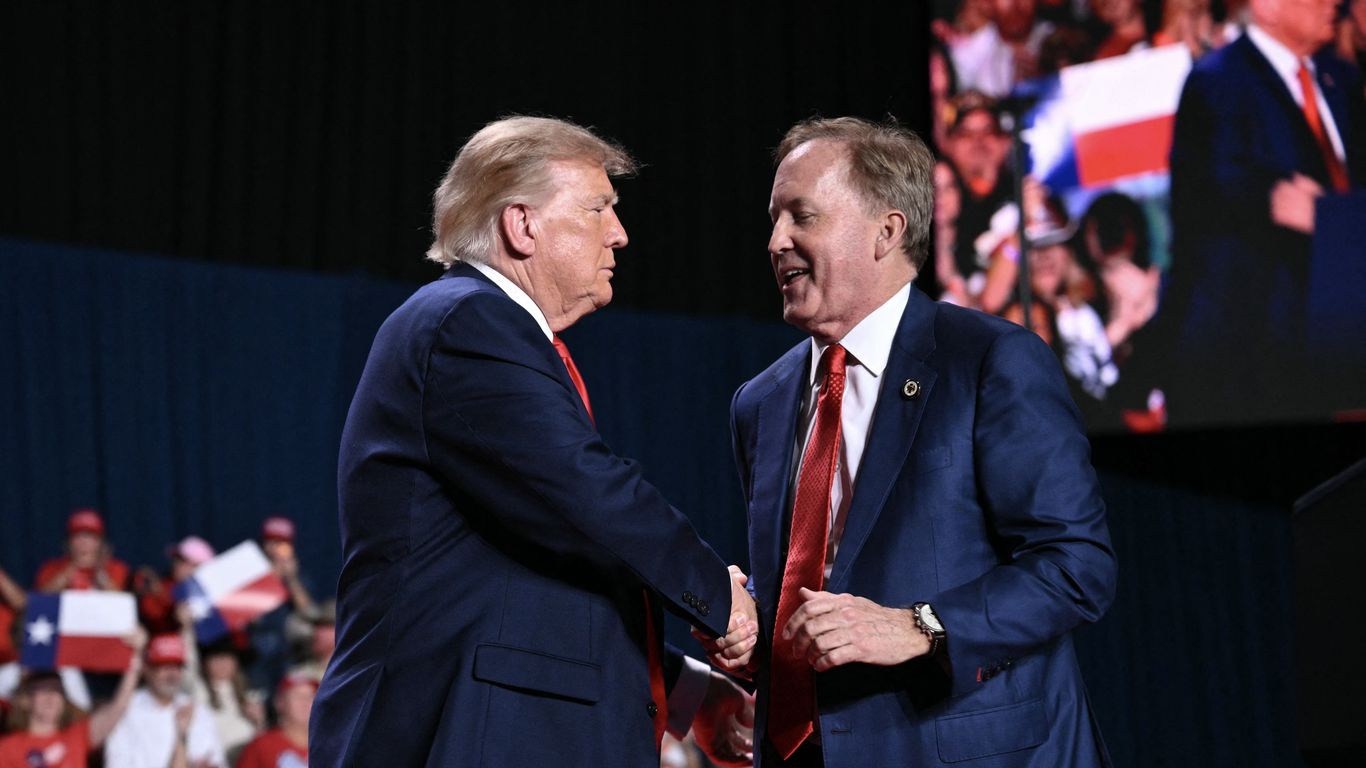
President Trump will campaign with three football stars in Texas on Tuesday, leaning into America's favorite sport as Republicans scramble to turn out voters in the final week before the midterms, Axios has learned. Why it matters: Trump is trying to mobilize the lower-propensity voters who helped return him to the White House in 2024 — but who may be less inclined to vote when he isn't on the ballot. Driving the news: Former college football star Johnny Manziel and two-time Super Bowl champion Danny Amendola were scheduled to join Trump for campaign appearances in Lubbock and Corpus Christi. Former University of Texas quarterback Colt McCoy also was expected to join Trump as of Monday afternoon, but did not appear. The appearances bring some of Texas' biggest football names onto the campaign trail in a state where the sport commands an enormous following. Amendola starred at Texas Tech in Lubbock; Manziel won the Heisman Trophy at Texas A&M. The big picture: Trump has made football a recurring feature of his campaign stops in recent weeks. He attended the Texas-Tennessee game in September and planned to attend the Georgia-Alabama showdown earlier this month before canceling because of a hurricane. Former NFL coach Jon Gruden joined Trump at an Ohio rally this month, while former Georgia and NFL star Todd Gurley accompanied the president on a stop in Georgia. Vice President Vance, a lifelong Cincinnati Bengals fan, visited the team's practice facility last week while campaigning in Ohio. Republicans are also pouring millions into ads during NFL and college football games. What they're saying: "Trump has many bases. And football is one of them, college and pros," said an adviser. "The response is good. And the president loves the atmosphere. So why not?" Between the lines: Football offers Trump a way to reach younger men who helped power his 2024 victory — a constituency Republicans are struggling to energize in the midterms. By the numbers: Polls suggest Republicans
TEL AVIV, Israel — Israeli Prime Minister Benjamin Netanyahu — fighting for political survival in Tuesday's elections — has pleaded with President Trump in recent days to show more public support for his campaign, according to a U.S. source with knowledge and an Israeli source briefed on the matter. Why it matters: The U.S. source said the White House sees Netanyahu's aggressive lobbying as a "sign of desperation" and an indication that the Israeli leader thinks he's trailing. Neta Molcho, a spokesperson for Netanyahu's Likud party, denied the prime minister asked Trump to support his campaign "in recent days or before his endorsement statement." The White House did not respond to a request for comment. Trump said in an interview with Newsmax two weeks ago that people in Israel asked him to get involved in support of Netanyahu. Behind the scenes: The U.S. source said Netanyahu spoke with Trump twice in the last three days and asked him to double down on his Truth Social post last week endorsing him. The source said Netanyahu even suggested language for additional statements of support. An Israeli source briefed on Netanyahu's efforts said the Israeli prime minister proposed that Trump hold calls with Israeli reporters to express further support. The latest: On Sunday evening, Trump issued another statement endorsing Netanyahu and calling on Israelis to vote for him, mainly because of his hawkish position on Iran. "As everyone is aware, including the enemy, Bibi and I have had a great relationship in winning together...when you go to the Polls please remember that Bibi has been an outstanding Warrior Prime Minister!" Trump wrote on Truth Social. "There can no longer be the chant heard around the World of 'Death to America, Death to Israel,' and there won't be. Vote for Bibi Netanyahu for Prime Minister, we have to finish the job that we started!" he added. Driving the news: After weeks of hesitation, Trump endorsed Netanyahu last Sunday. He went as far as to suggest
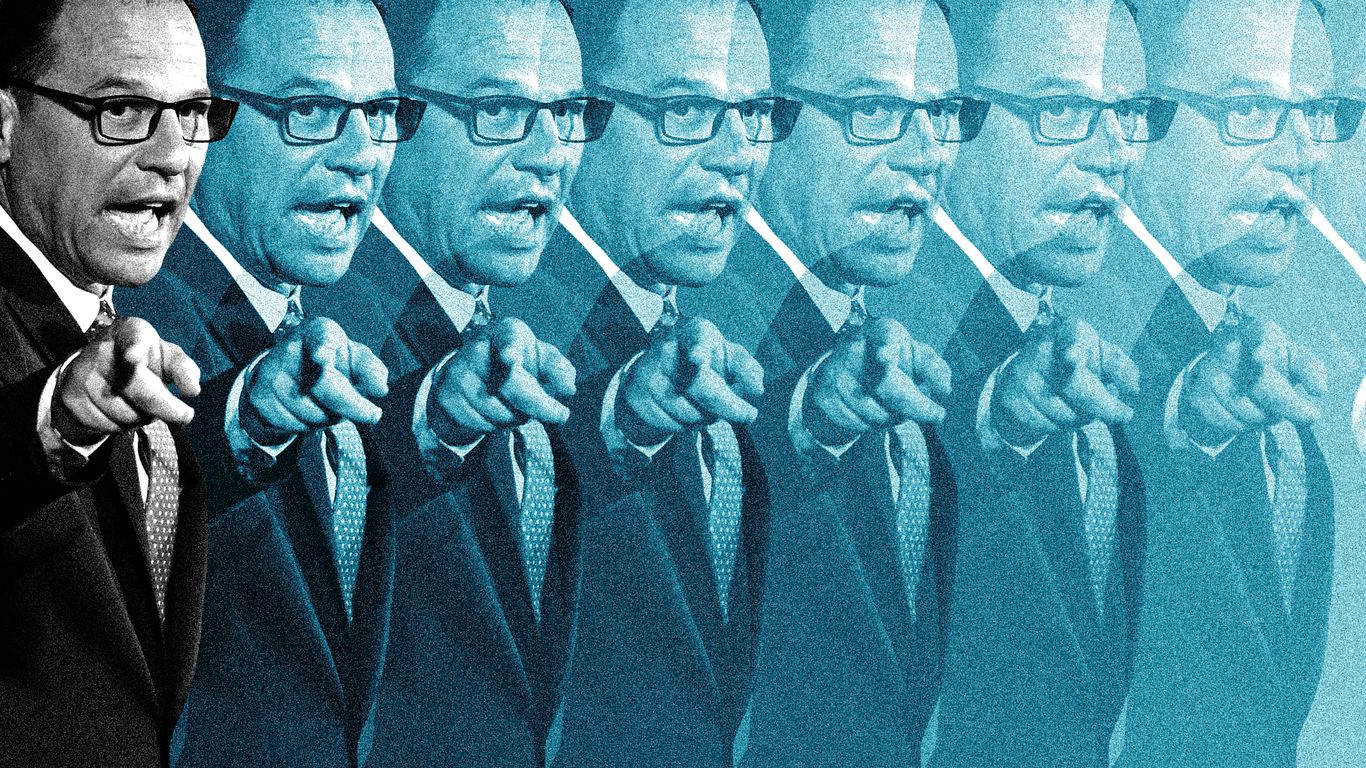
Pennsylvania Gov. Josh Shapiro is an electoral juggernaut in America's biggest swing state — and he's widely seen as a likely contender for president in 2028. But strategists in both parties question how tested he really is. Shapiro's success — he's cruised to victory in multiple statewide races — has come with an asterisk: He hasn't faced a well-financed opponent in recent contests, leading some political insiders to see him as more of a wildcard than his resume suggests. Why it matters: Shapiro's unfamiliarity with intense, bruising campaigns could become a liability in the 2028 Democratic primary, where if he was a top candidate, he'd be confronted with a barrage of attack ads, opposition research and rivals with deep pockets. A plugged-in Democratic operative in Pennsylvania suggested that because of Shapiro's lack of being tested, "it is totally possible that he has an incredible glass jaw — and that he is the Scott Walker of 2028." Walker was the swing-state Wisconsin governor who looked good on paper as a potential presidential candidate but flopped after entering the 2016 GOP primary. Zoom in: In next week's election, Shapiro is running for a second four-year term as the Keystone State's governor. He's on pace to defeat Republican challenger Stacy Garrity by double digits, according to the latest polls. The money gap is gargantuan: Shapiro has dropped $42 million on campaign ads, according to the ad-tracking firm AdImpact. Garrity, the state's treasurer, has spent just $3 million on ads — a drop in the ocean in a state as large as Pennsylvania, with its expensive advertising markets. It's not that Garrity prefers, say, door-knocking to TV ads. She's just outmatched: Campaign finance reports show she's only raised about $11 million this cycle, compared with Shapiro's $64 million. Making matters worse for Garrity, the Republican Governors Association (RGA) has not come to her rescue on the airwaves. Christopher Nicholas, a longtime GOP strategist in Pennsylvan
Senate Majority Leader John Thune (R-S.D.) and Minority Leader Chuck Schumer (D-N.Y.) are living out their midterm nightmares — with nominees they didn't want and former colleagues they no longer control. Why it matters: Together, Schumer and Thune are stuck with five Senate races in which their party establishments thought they had a better chance of winning with someone else. 🤠 Texas: Thune's efforts to stop Texas Attorney General Ken Paxton from winning the party's Senate nomination failed. Now Republicans are spending more than $329 million to defeat state Rep. James Talarico— and it's still a nail-biter. 🍑 Georgia: GOP leaders couldn't convince Gov. Brian Kemp to run. The eventual nominee, Rep. Mike Collins, has struggled to keep pace with fundraising juggernaut Sen. Jon Ossoff (D). GOP money is in retreat. 🦞 Maine: Schumer endorsed Gov. Janet Mills, but Graham Platner's implosion left Democrats with backup Troy Jackson against Sen. Susan Collins. ⛴️ Michigan: Abdul El-Sayed defeated Rep. Haley Stevens and made a name for himself nationally. But he won by just one point even though primary polls showed him up by double digits. He's now polling within the margin of error against the GOP nominee, former Rep. Mike Rogers. 🏈 Minnesota: Peggy Flanagan ran as a progressive, said she would not support Schumer as leader and bested establishment-backed Rep. Angie Craig. But Cook Political Report moved her race against former NFL sideline reporter Michele Tafoya toward Republicans even as it shifted other races toward Democrats. To make matters worse, Thune's and Schumer's former colleagues are creating fresh headaches by boosting candidates across the aisle. Former Sen. Joe Manchin, who flipped to independent in 2024 after being elected as a Senate Democrat, is campaigning for Sen. Susan Collins (R-Maine), as Semafor reported. Former Sen. Kyrsten Sinema , who also flipped from Democrat to independent before leaving office, is boosting Republican Jay Feely in her hom
The White House counsel's office warned Politico in a Monday letter that it had 48 hours to retract or correct recent stories about alleged staff drama, or it would suffer unspecified consequences. That deadline expires Thursday. Why it matters: The White House demand threatens to escalate already tense relations with Politico specifically and, more generally, the press corps that covers President Trump in Washington. Politico, CNN, and MS NOW are already banned from covering Trump in the Oval Office and on Air Force One because the president does not like their coverage. Trump blocked all three outlets from the White House grounds as well, but a judge on Oct. 13 restored their access. CNN threatened legal action Wednesday to regain access to Air Force One and the "pool" of television networks that accompany the president. Zoom in: In his letter to Politico, White House Counsel Will Scharf singled out three stories concerning White House Chief of Staff Susie Wiles despite "on-the-record refutations" or contrary evidence supplied by senior staff and even the president. Oct. 15: In a story headlined " Trump's ice maiden is under fire ," Politico Playbook reported that Trump was considering a replacement for Wiles. Trump called it "fake news." Oct. 16: Politico Playbook wrote that the prior day's story had caused a "freakout" and that the president "blew up" over it. A White House spokesman called it "unbelievably stupid and false." Oct. 16: In a story headlined " Susie Wiles helped set up Fox interview ahead of press secretary's exit ," Politico insinuated the chief of staff set up Katie Zacharia to fail in a Sean Hannity interview on Fox the night before. The White House and Fox News denied the reporting. And White House officials provided text messages to Politico before publication showing Zacharia — not Wiles — set up the interview, which the New York Post reported the following day. "Politico has not corrected or retracted its false reporting. Instead, a Politico
Senate Republicans are weighing three last-ditch spending moves that would have been unimaginable six months ago: a cash infusion for Mississippi and even more money for South Carolina and Kansas. Why it matters: It's been 94 years since Kansas elected a Democratic senator, 44 years for Mississippi and 28 for South Carolina. But panic is spreading through the Republican Party. "The wall has broken. The enemy is inside the fort," one national Republican political operative told Axios. "We are now fighting hand to hand." The Senate map, which once looked impregnable for Senate Majority Leader John Thune (R-S.D.), is now full of vulnerabilities. Democratic challengers are polling within the margin of error in more than half a dozen deep-red states, according to internal GOP polls. The other side: "We're nervous about Alaska. We're nervous about Michigan. We're still going to hold the Senate at the end," said another operative. Zoom in: Two weeks ago, when Senate Leadership Fund decided to take out a $5 million "insurance policy" in South Carolina, operatives took a hard look at Idaho, South Dakota and Mississippi. At the time, they concluded they didn't need to spend any money in those states, according to a person familiar with the matter. But Senate Republicans are now reviewing the Mississippi race and may need to spend there to protect Sen. Cindy Hyde-Smith from a surprisingly competitive bid by Democratic district attorney Scott Colom . Senate Majority PAC, the main super PAC for Senate Democrats, announced a $1.2 million investment in the race on Tuesday. Zoom out: In early June, SLF started to reinforce a Midwestern red wall to protect the GOP majority, reserving $28 million in TV advertising in Ohio and $11 million in Iowa . Those investments have ballooned to $93 million in Ohio and $53 million in Iowa. After an initial $5 million buy in South Carolina, SLF's spending has increased to $8.5 million, according to AdImpact. And a super PAC linked to Sen. John Bar