
Results for “general strike”

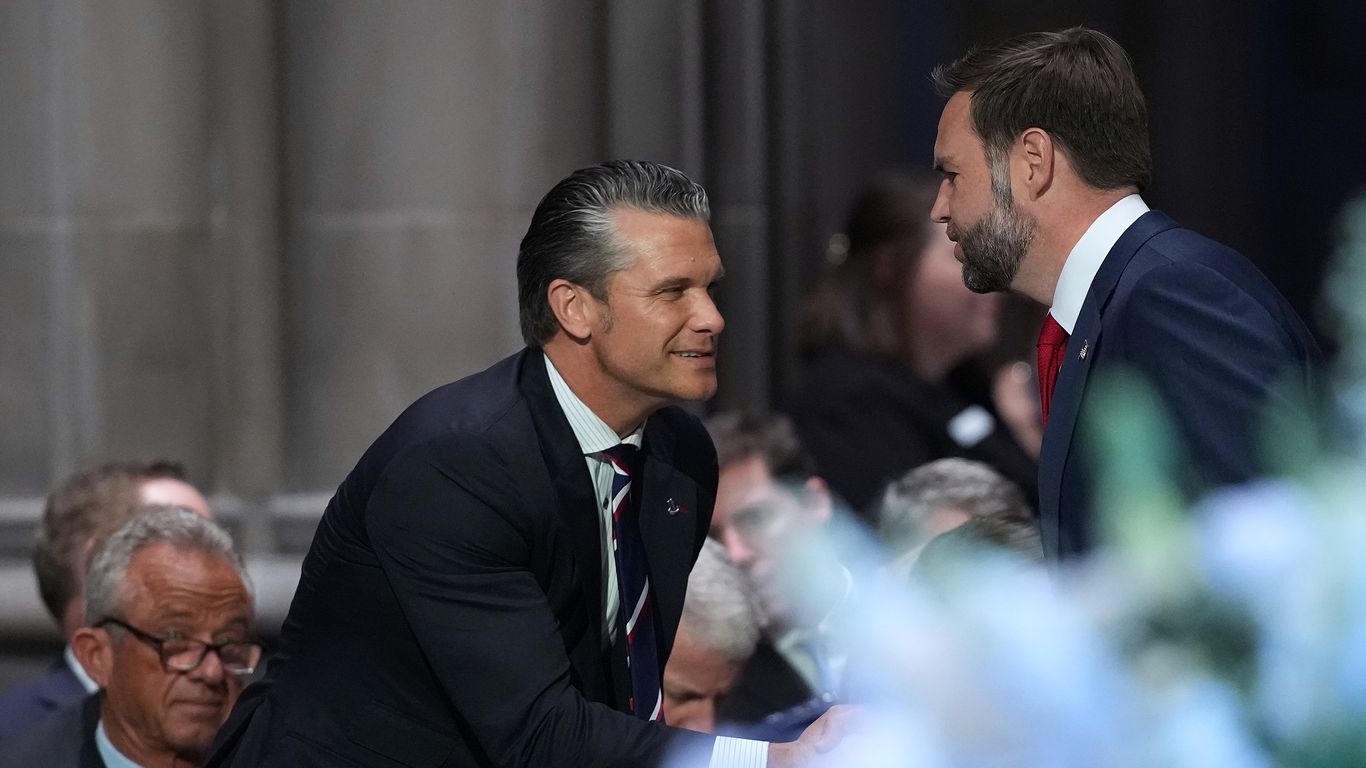
Vice President JD Vance on Tuesday said that the vote to impeach Defense Secretary Pete Hegseth "isn't about Iran," but rather his willingness to take on challenges at the Pentagon. Why it matters: It's the latest instance of the Trump administration backing the embattled Cabinet member, who is facing the possibility of enough GOP members defecting for the impeachment effort to succeed. The Iran war is at the center of the allegations against Hegseth, with three of the eight articles of impeachment specifically concerning the conflict. Other allegations include that Hegseth illegally initiated military conflict in Venezuela and Yemen. What they're saying: "Has Pete Hegseth committed impeachable crimes? The question is absurd and the answer is: obviously not," Vance said Tuesday on X . "Like so much of Congress, impeachment has become a ridiculous show that stands in for actual policymaking. Congress has so many tools for registering its policy disagreements." Vance added that Congress was choosing to impeach Hegseth as they did President Trump. "Legislation is hard. Impeachments are easy (and ultimately, inconsequential)." "The irony is that legislators are most angry at Pete on the issues where he's most correct: repositioning forces away from Europe/Ukraine and reorganizing the general officer corps," he continued. "This isn't about Iran, this is about the fact that Pete took on the bureaucracy at the Pentagon." Go deeper: Hegseth faces impeachment resolution from GOP member with little to lose Editor's note: This is a breaking news story and will be updated.
Democrats will charge into January with a sweeping mandate — but as President Trump has repeatedly noted, his veto power can deliver a robust roadblock to his opponents' agenda. Why it matters: Democrats may be forced to compromise to get legislative priorities through. Trump will have to decide how frequently he'll use the power — and whether he'll strike down bills popular among Americans. State of play: Democrats have secured 54 seats in the upcoming Senate, per the AP's projections , and are leading in two tight races in Mississippi and Alaska that have yet to be called. In the House, they've won 254, per AP , with several race calls still to come. Neither majority will be large enough to cross the two-thirds threshold Democrats would need to override a presidential veto on their own. Friction point: Trump knows that — and has teased his plans to impede Democrats' progress by using the power liberally. On Tuesday night, as election results rolled in, Trump posted an image of a red MAGA-esque hat that read "VETO" in all caps. A similar hat was displayed on the Resolute Desk during a Thursday signing ceremony. Asked on Fox News how he'd work with a Democratic Congress, Trump pointed to the veto: "They're in control, but they're really not in control because they can send over, you know, 50 different great bills that they're all excited about and I send them back with a nice stamp, veto." White House spokeswoman Lauren Bis said in a statement provided to Axios that Trump is "willing to work with anyone to continue delivering victories for hardworking Americans." She added, "If Democrats choose to pursue radical left policies, they are choosing to work against the American people." Worth noting: Lawmakers secured enough support to override a Trump veto across party lines during his first term on the National Defense Authorization Act in 2021. Yes, but: While Trump could use veto threats to force lawmakers to negotiate or to halt legislation altogether, vetoing popul
Current and former House Democrats, flush with victory following their landslide midterm wins , are already looking at potential opportunities to run for Senate in 2028, Axios has learned. Why it matters: Democrats' 2026 romp — with wins in Texas, South Carolina, Kansas and possibly even Mississippi — has some party members reevaluating what were once considered impossible targets. A source close to Rep. Sharice Davids (D-Kan.) — who was reelected by 21 percentage points in a district former Vice President Harris carried by four points in 2024 — did not rule out her running against Sen. Jerry Moran (R-Kan.). "All options are on the table," the source said, adding that Davids' "focus right now is on delivering actual results and overcoming the chaos from these extreme policies we're seeing." Sen. Roger Marshall (R-Kan.) was defeated by Democrat Adam Hamilton last week, marking the first time in nearly a century a Democrat has been elected to the U.S. Senate from Kansas. North Carolina: Rep. Don Davis is "taking a look at" a run against Republican Sen. Ted Budd, a source familiar with his thinking told Axios. Davis won a third term on Tuesday after defeating his GOP opponent in a district President Trump carried by 12 points in 2024. Republicans redrew the district with the express goal of ensuring Davis' loss. Former Rep. Wiley Nickel, who was elected Wake County district attorney on Tuesday, would consider a Senate run if state Attorney General Jeff Jackson doesn't, a source close to him told Axios. The two served together in the House. Democratic former Gov. Roy Cooper won North Carolina's other U.S. Senate seat last week in a nearly 20-percentage-point landslide over Republican Michael Whatley. Pennsylvania: A huge field of Democrats is gearing up to potentially run for the seat held by Democratic Sen. John Fetterman. Fetterman, who has morphed from a populist firebrand to an arch-centrist, has angered much of the party by siding with Republicans on key votes. Rep

Elon Musk's sprawling empire — from rockets to robots, electric cars to AI — is facing a political onslaught with few parallels in modern corporate history. Why it matters: The world's richest man confronts a constellation of risks spanning the halls of Congress, his Texas industrial empire, Wall Street and his vision for AI supremacy. 💰 Political: To Democrats, Musk embodies corrosive forces of the MAGA era — extreme wealth, billionaire influence over government, the gutting of federal institutions, the poisoning of social media and the unchecked power of AI. Musk spent at least $475 million on the midterms, becoming the election's largest individual donor — only to see more than 99% of his traceable spending go to losing candidates, according to WIRED . Musk's most humiliating defeat came in Texas, where a $160 million bet on Ken Paxton ended in a Democratic sweep of the Senate seat, governorship and attorney general's office. In a hint of a possible détente, Sen.-elect James Talarico praised the billionaire as a "great business leader and entrepreneur," and offered to work with him on technology and innovation. Musk, who said last month that Talarico "hates Texas," responded : "Nice of him to say that." ⚖️ Congressional: Armed with subpoena power, Democrats are preparing to investigate Musk's DOGE operation, its access to sensitive government data and whether his companies benefited from his extraordinary influence over the Trump administration. Musk is already downplaying his dependence on Washington, claiming government contracts will account for less than 5% of SpaceX revenue a year from now. "Happy to cancel any that the government doesn't want," he posted Friday . The scrutiny also extends to national security: Lawmakers are demanding answers about Musk's reported communications with Vladimir Putin and his role in the October slowdown of Starshield that disrupted Ukraine's drone operations. Elon Musk responds to reporting about his vulnerabilities in Texas.

Trump has long relied on sports to project strength and fuel his culture wars. But after a crushing midterm defeat, even his UFC ally cannot distract from the political fallout In the wake of being destroyed in the midterm elections , it was only a matter of time before Donald Trump did something outrageous in an attempt to misdirect public attention away from his catastrophic losses. Before the midterms, published reports suggested the possibility of apocalypse, global or domestic – a nuclear strike on Iran, martial law to suspend last week’s, the invalidation of individual races, such as in Alaska – but Trump opted for banality over Armageddon, offering his vacant press secretary opening to Ultimate Fighting Championship CEO Dana White. It was absurd, and widely posited that a confused Trump had erroneously conflated UFC’s White with the Dana White who made more sense, former Heritage Foundation staffer Dana White. Because the public reactions made him look even more lost, confirming the sentiments of recklessness and disorder, utter chaos and buffoonery that led to the Republicans being routed in the midterm elections, the president said his offer to White was all a joke . As a disciple of the notorious McCarthyite Roy Cohn, who taught Trump one of his main political pillars – never apologize or admit wrongdoing. Ever. – Trump should not, of course, be taken at his word. Continue reading...

Attorney General Todd Blanche on Sunday dismissed former Trump health adviser Calley Means' corruption allegations against senior White House officials, even as a former FDA commissioner described pressure from tobacco lobbyists and a Republican congressman called for scrutiny. Why it matters: The feud inside President Trump's coalition raises a central question about Trump's health agenda: Were his advisers undermining it, as Means alleges, or were they carrying out the president's wishes? The latest: Asked on CNN's "State of the Union" whether the DOJ would investigate Means' allegations, Blanche responded: "Something that someone says on a podcast? No, I do not listen to that. Absolutely not." Blanche called Means a "disgruntled former administration official" and praised former White House chief of staff Susie Wiles , who Trump announced Friday would be replaced by Stephen Miller . On "Fox News Sunday," Blanche said allegations about Wiles' financial dealings did not concern him. But Rep. Marlin Stutzman (R-Ind.) told CNN that "any allegation of any impropriety like this should be looked at." Driving the news: Means, who alleged widespread corruption in a Friday interview with Joe Rogan, told CBS' "Face the Nation" that he had wanted Wiles removed. Means accused Wiles of blocking an initiative to examine children's sugar consumption because she wanted sugar-industry donations for the midterms. He also alleged that Wiles' deputies pushed policies favorable to the flavored-vaping and kratom industries over the objections of officials working on the Make America Healthy Again agenda. Means accused Trump pollster Tony Fabrizio of advising against defining ultra-processed foods while receiving money from PepsiCo. The White House and the Justice Department did not respond to Axios' request for comment. What they're saying: Former FDA Commissioner Marty Makary backed up part of Means' account in a statement to CBS. "Big tobacco exploited their connections to administra
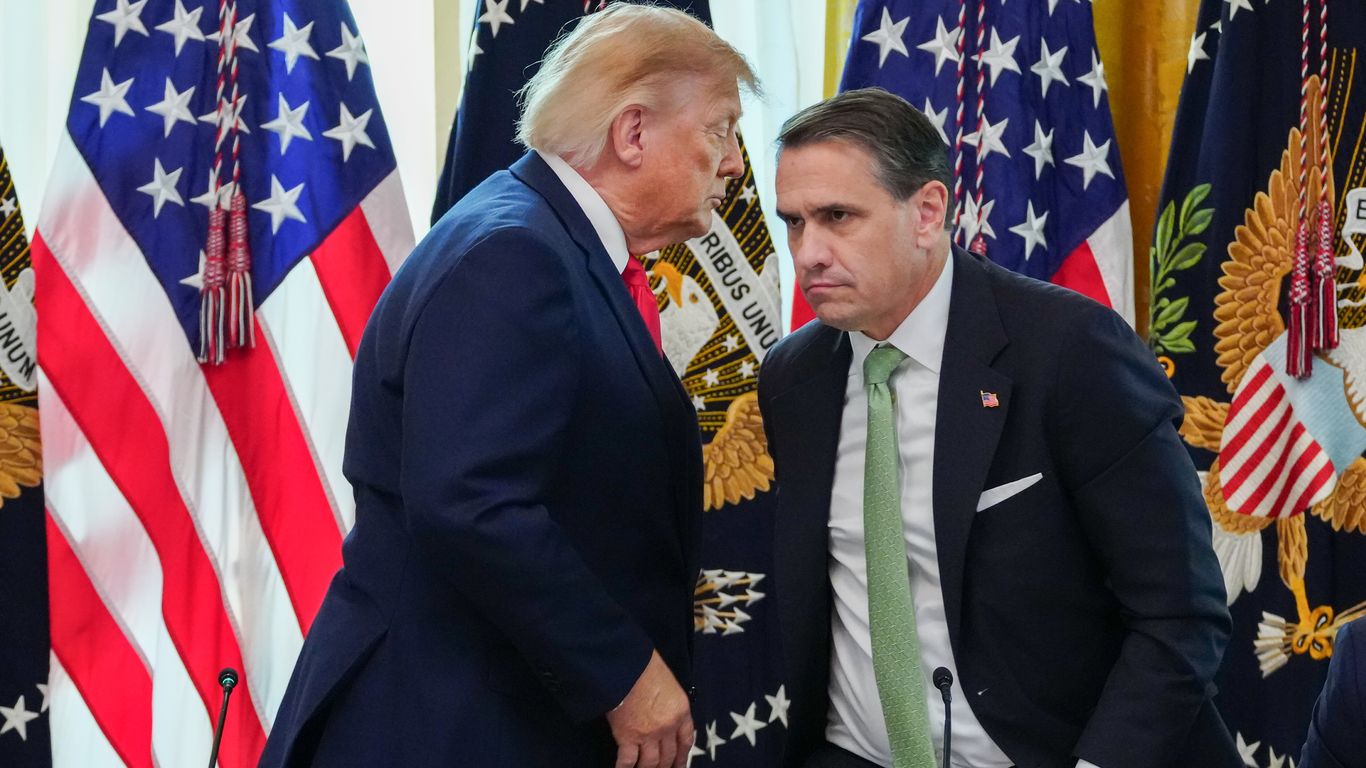
Attorney General Todd Blanche refused Sunday to rule out prosecuting Democratic lawmakers who say they'll investigate Trump officials, a day after President Trump ordered the Justice Department to probe lawmakers. Why it matters: The confrontation threatens a constitutional crisis over the separation of powers: Trump is ordering prosecutors to go after lawmakers in a potential effort to hamper Congress' power to hold the executive branch accountable. Driving the news: In a Truth Social post Saturday, Trump accused Democrats of threatening administration officials and Republican donors with investigations and impeachment. "This is extortion at the highest level, and they should be held accountable for this," Trump wrote. He singled out Sen. Elissa Slotkin (D-Mich.), accusing her of threatening young people who hold Republican views. "The imprisonment should be against these EXTORTIONISTS," Trump wrote. "By copy of this statement, I am ordering the Department of Justice to look into this criminal act, immediately!" he added. The latest: On CNN's "State of the Union," Blanche acknowledged Congress' constitutional oversight authority but argued that Democrats' rhetoric had crossed a line. Asked whether DOJ would investigate Democratic lawmakers, Blanche did not identify a criminal statute or confirm that an investigation had begun. Asked whether lawmakers could face imprisonment, Blanche said it depended on what crimes they had committed. On Fox News, he said the possibility of criminal charges depended on what Democrats had said. The White House and Justice Department have not responded to requests for comment. What they're saying: Blanche singled out incoming House Oversight Committee Chair Robert Garcia (D-Calif.), who warned officials, including incoming White House chief of staff Stephen Miller, to "lawyer up." "I would be very worried if I was a member on that committee," Blanche told CNN. He also said the department would provide legal defense for administration

From the military to healthcare, Trump systematically dismantled Obama-era protections for transgender rights Shelby Chestnut remembers turning on the news in 2016 and hearing something he didn’t expect. Then- attorney general, Loretta Lynch, had just announced a federal lawsuit to block HB2 in North Carolina , otherwise known as the “bathroom bill”. Lynch said the law, which made it illegal for transgender people to use a public restroom that did not align with the sex listed on their birth certificate, was reminiscent of those passed during the Jim Crow era that restricted public facility use by race. Then, she addressed transgender Americans directly: “But no matter how isolated or scared you may feel today, the Department of Justice and the entire Obama administration wants you to know that we see you; we stand with you; and we will do everything we can to protect you going forward.” HB 2 was repealed within the year. Chestnut said he thought at the time: “Oh this is the next phase of protections for trans people.” Continue reading...

No state looms larger, more dominant or more instructive about the future of American politics, governance and AI than Texas . Why it matters: Texas is suddenly — and unexpectedly — the American story. It's the battleground and proving ground for immigration policy, AI, data center growth, Hispanic voting patterns, and the direction of the Democratic Party. Put simply, it seems nearly impossible for Republicans to retain the presidency in 2028 without the Lone Star State. And it seems nearly impossible for AI to keep growing so fast if Texas rejects or dramatically slows it. Texas is so populous, so wealthy, so Hispanic, so energy-rich — and now so top-to-bottom blue — that both parties see it as a de facto nation-state capable of reordering ... everything. "Texas is everything," Steve Bannon, one of the top voices of MAGA, told us. Bannon has been so Texas-obsessed all year that he took his influential podcast, " War Room, " on the road to the " forward lines " of Texas for months at a time. Bannon said Texas needs to be an early focus for Stephen Miller, the new White House chief of staff. Houston Mayor John Whitmire on Friday directed police to limit cooperation with ICE, saying : "Elections matter." Bannon said he expects many more such actions, with Texas becoming a sanctuary state "quickly unless dramatic action is taken." "Trump is going to be forced to federalize the border," Bannon said, either with National Guard troops or federal law-enforcement agents. The big picture: Texas was red as blood on Nov. 2, the day before midterms. Now it'll have a Democratic governor ... lieutenant governor ... attorney general ... comptroller ... land commissioner ... agriculture commissioner ... Texas House ... and U.S. senator, 37-year-old James Talarico. Talarico won by double digits over state Attorney General Ken Paxton, and Gina Hinojosa — who'll be Texas' first Latina governor — upset three-term Gov. Greg Abbott. Democrats won all four state Supreme Court seats on th

Stephen Miller is no Susie Wiles: He believes in almost limitless presidential power, considers the Democratic Party an extremist organization, and dreams of ruthless crackdowns on immigration and foreign adversaries. Why it matters: Miller, the new White House chief of staff, isn't just unlike anyone who's had the job under Trump — he's unlike any to occupy the powerful position in the modern era. He puts the hard in hard-liner and understands how to pull the levers of power to get his way and make the U.S. government a MAGA machine. Miller's appointment sets the stage for two years of partisan warfare with the new Democratic-led Congress, which is likely to launch investigations of Trump's administration, political committees and allies. "Stephen is Trump's wartime consigliere," Roger Stone, one of the president's oldest friends and advisers, told Axios. The big picture: Despite his post-midterm comments about finding ways to work with Democrats, Trump's choice of Miller signals that he's not looking for truces. He's prepping for war, and sees Miller as a brass-knuckle general and tactical expert impervious to criticism or traditional restraints. Trump's MAGA brain for a decade, the 41-year-old has detailed his Miller Doctrine in speeches, policies and press conferences: Presidential power is "very substantial and will not be questioned." Miller said those words about Trump's Muslim travel ban in 2017 on CBS's "Face the Nation," but to him they broadly apply to other areas of the executive's authority. Court authority is limited. In May 2025, when courts blocked aspects of Trump's deportation policies, Miller said the rulings were the work of "radical rogue judges" who were "at war" with the executive and legislative branches. The political opposition is a threat to America. "The Democrat Party is not a political party. It is a domestic extremist organization," Miller told Sean Hannity in August 2025. He also warned that if Democrats won Congress, "it's game over.
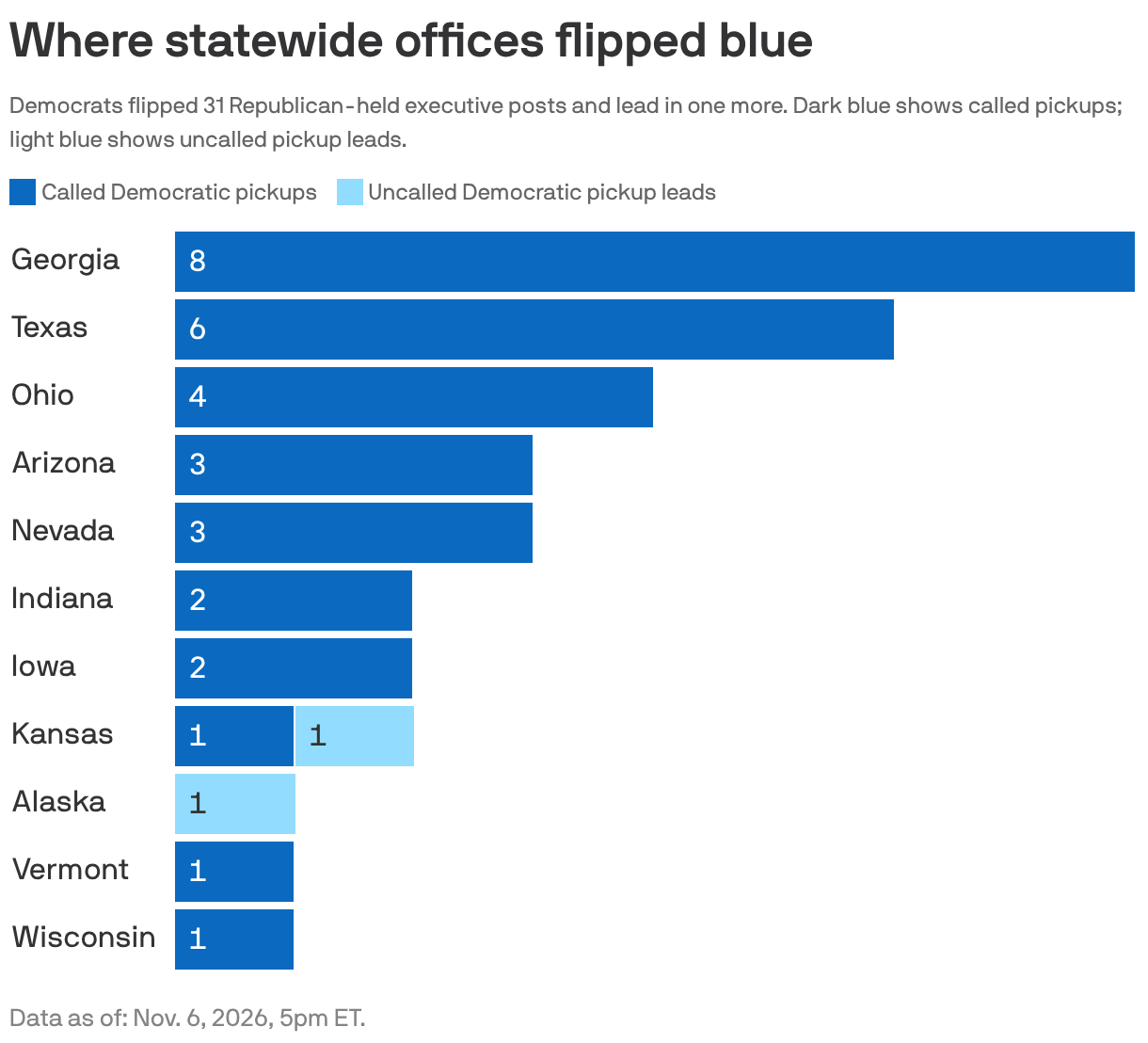
Single-holder executive offices only; excludes courts, commissions and federal offices. Data: Associated Press; Axios analysis; Chart: Andrew Pantazi/Axios Democrats' midterm gains extended deep into the machinery of state government: They swept every statewide executive office on the ballot in Texas, Georgia, Nevada, Wisconsin and Arizona. Why it matters: These low-profile victories will shape what millions of Americans pay for electricity, what their kids read in class and which party runs the 2028 presidential election in key states. The big picture: Democrats captured five Republican governorships, in Texas, Georgia, Ohio, Iowa and Nevada. But the scale of their gains becomes clearer farther down the ballot. Georgia: Democrats wrested all eight statewide executive offices on the ballot, including governor, attorney general, secretary of state and school superintendent. Texas: They flipped all six posts, defeating Gov. Greg Abbott and Lt. Gov. Dan Patrick in a state that hadn't elected a Democrat to statewide office in 32 years. Nevada: Democrats won all six executive offices, flipping governor, lieutenant governor and controller. Wisconsin: Democrats completed their Badger State domination, picking up the office of treasurer, the sole statewide office still held by a Republican. Arizona: Democrats held governor, attorney general and secretary of state. They lead in the three other executive races: treasurer, school superintendent and mine inspector. Data: Associated Press; Axios analysis Between the lines: The Democratic gains reach offices that decide which policies advance, which don't and which get challenged in court. Attorneys general: Nathan Johnson in Texas and Tanya Miller in Georgia will decide when their states sue the Trump administration and what corporations they investigate. Secretaries of state: Democrats flipped these offices in Georgia, Ohio and Indiana, putting new officials in charge of running the 2028 presidential election there. Texas' lieu

Chris Mann, a former police officer and prosecutor, defeated Mr. Kobach, a Republican who helped elevate concerns about election fraud to national prominence.
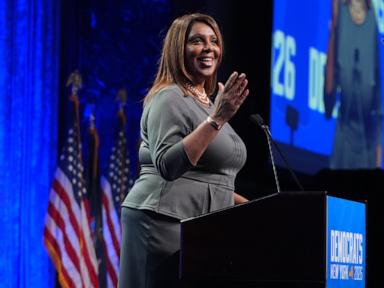
Four men named in a former Cornell University student’s lawsuit are joining a co-defendant’s effort to block New York’s attorney general from leading a reopened criminal investigation into the woman’s gang rape allegations

Congress returns next week facing a renewed push for transparency over the Jeffrey Epstein files, as a top House Democrat promises new investigations following the party's midterm victories. Why it matters: The Epstein files controversy has been a recurring political issue throughout President Trump's second term and featured prominently in the midterm campaigns . Democrats' incoming House majority could bring fresh scrutiny of his administration's handling of the files. Driving the news: Rep. Thomas Massie (R-Ky.) is harnessing that momentum as lawmakers return, ahead of his January departure from Congress . Massie said in a Thursday post that when the House returns, the effort to force a vote on a second Epstein Files Transparency Act would secure the necessary 218 signatures. Rep. Ro Khanna (D-Calif.) , who has led the bipartisan effort with Massie, announced in September that they had received sufficient signature commitments for the measure — but House Speaker Mike Johnson (R-La.) sent the House home early. What's inside: Massie and Khanna introduced the Epstein Files Transparency Act II in July, building on their initial legislation that Trump signed in November of last year after previously working to undercut the effort. The bill would allow state attorneys general, local prosecutors and victims to sue the U.S. attorney general over alleged unlawful withholdings, redactions or failure to produce records. It would also require the attorney general to provide certain unredacted documents to victims upon request. Zoom out: The momentum is unlikely to slow when Democrats take control of Congress in January. With corruption emerging as a top election concern, Democrats ran attack ads accusing the GOP of protecting powerful elites. Candidates from both parties and outside groups aired at least $70 million in TV ads mentioning Epstein, pedophilia and allegations of child sexual abuse between Sept. 1 and Oct. 21, according to AdImpact data reviewed by Axios' Alex Is

As war rages on in Kyiv and other cities, the first lady celebrates her single-city ceasefire with Russian and Ukrainian envoys Beaming from a podium in the White House’s Grand Foyer, Melania Trump welcomed senior Russian and Ukrainian officials on Thursday to celebrate a ceasefire in an embattled Ukrainian town for which she has become the unlikeliest broker. The evacuation from Oleshky, a frontline Ukrainian town now occupied by Russia where 800 people lived through a protracted humanitarian crisis, may seem like a sideshow at this point in the war. Russian missiles and drones continue to rain down on Kyiv and other major cities, and a single Russian strike described as a “double-tap” bombing killed 40 people in Zaporizhzhia on Wednesday. Continue reading...
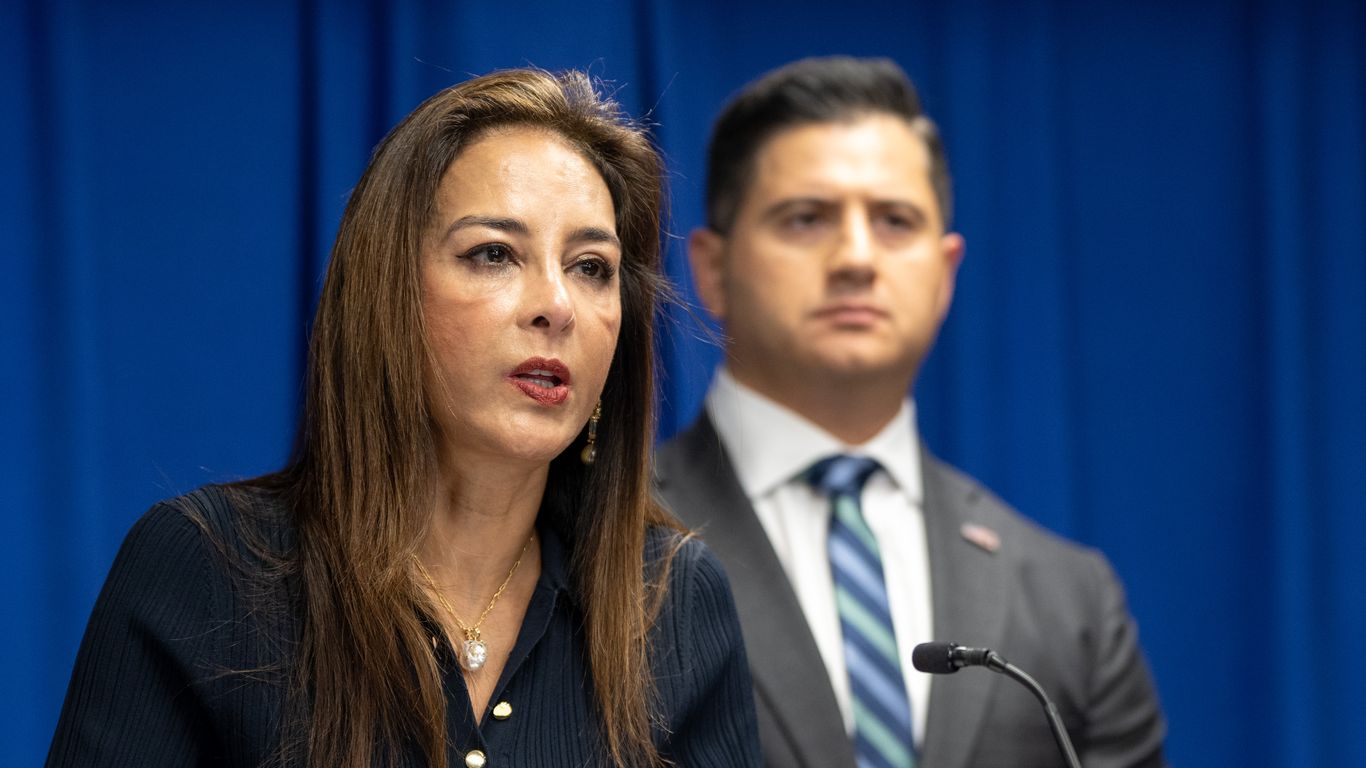
Harmeet Dhillon , assistant attorney general for civil rights at the Justice Department, has resigned from her role, Attorney General Todd Blanche said Thursday. Why it matters: Dhillon, who spent her tenure replacing attorneys with others more closely aligned with the Trump administration's ideology, is the first senior-level Justice Department official to step down following Democrats' blue sweep in the midterm election. What they're saying: "She has defended the civil liberties of every American and enforced the law without fear or favor," Blanche wrote on X . "The Department is grateful for her dedicated public service, and we wish her every success in her future endeavors," he said. The DOJ did not respond to Axios' request for comment. Flashback: Before joining the DOJ, Dhillon founded the Dhillon Law Group, Inc., and the Center for American Liberty, a nonprofit organization dedicated to defending Americans' civil liberties. What we're watching: It's unclear whether other top officials may resign during the lame-duck period. Go deeper: Trump picks Dhillon to lead AZ election integrity program Editor's note: This is a breaking news story and will be updated.
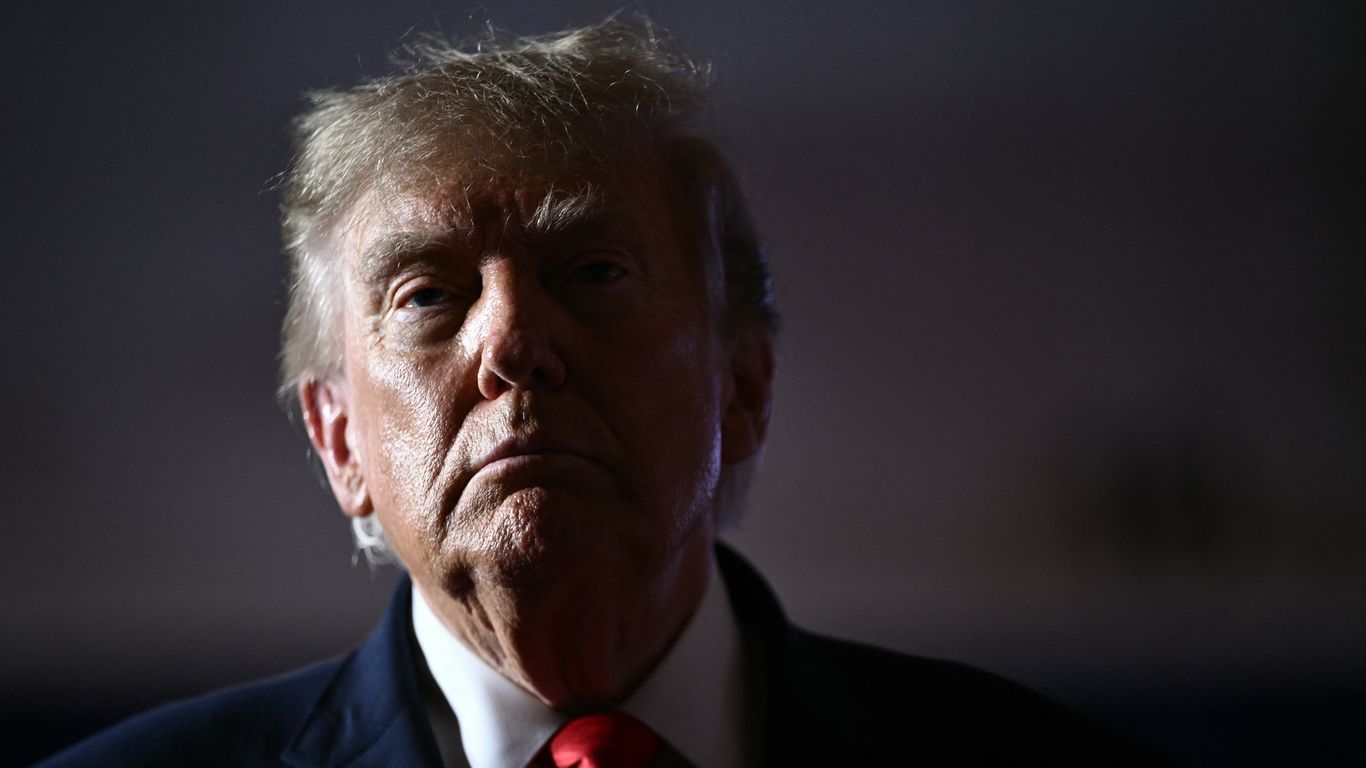
President Trump has conceded that the Iran war cost Republicans dearly in the midterms. Now he must decide whether to cut his losses and reach a deal — or double down and go back to bombing. Why it matters: All of Trump's options are problematic: The first is to strike. But going back to war would be highly unpopular — keeping gas prices high and probably not yielding a better military result. Another is to negotiate. But if the Iranians refuse to make concessions — or, sensing weakness after the president's political loss, up their demands — Trump will have a hard time reaching a deal. The third is to "strangle," as aides put it. This would mean sticking with the status quo — the naval blockade coupled with crippling economic sanctions that leave the Iranian regime to "rot" — while continuing to test its appetite for a deal. This path, however, could take months to show progress. The big picture: The president has said for weeks he would end the war one way or another after the election. One of his former advisers told Axios: "It's one thing to lose the midterms. But Trump doesn't want to look like a loser twice." That's left even his closest aides unsure what he's going to do next. The intrigue: Vice President Vance, in an extraordinary statement Wednesday morning, bluntly blamed the war for the GOP's midterm drubbing. It added a new political calculation to Trump's decision. "The reason we lost is the war," Vance wrote on X . "The president himself said so last night. If you'd like to argue it was worth it, that losing the Senate for the next 6 years was worth it, then do so. ... But everyone knows why we lost. And any honest conversation about where we go from here must start there." Vance also cited the U.S. relationship with Israel as a serious liability for Republicans. Trump told reporters on Wednesday that Vance's analysis was "largely true" because the war drove gas prices up. But Trump said he'd do it again if he had to: "We had no choice. You can't let I

The president’s approval was essential to winning Republican Senate primaries. It became lethal in competitive general-election races.

Former FBI agent Nicole Parker warns that hackers turning up supermarket freezer temperatures in Europe could target U.S. critical infrastructure next.

Women candidates won enough races Tuesday to set a new record for Democratic women's representation in the U.S. House — among other historic firsts in Congress and governor's races nationwide. The big picture: The spike for Democratic Women's Caucus members in the House alone marks an increase of more than 60% since 2016. At least 100 Democratic women and 16 Republican women have won House seats as of Wednesday morning, according to the Center for American Women and Politics at Rutgers University. The total is expected to climb for candidates across both parties, with dozens of races still uncalled. What they're saying: "Despite Republican attempts to silence us and take away our rights, we have built a coalition in Congress that is bigger and more powerful than ever," DWC Chairwoman Teresa Leger Fernández (D-N.M.) said in a statement. "We smashed through a glass ceiling," she added. "Because of the hard work of so many, Congress will look more like America." The intrigue: Women veterans are poised to make gains in Congress after 38 ran in Tuesday's general election — up from 21 in 2024, per civic organization With Honor Action . Several Democratic women veterans are leading in competitive House races that could flip Republican-held seats. In South Carolina , retired Navy Vice Adm. Nancy Lacore, who was removed as chief of the Navy Reserve under Defense Secretary Pete Hegseth, leads Republican Jenny Costa Honeycutt in the race for former Rep. Nancy Mace's seat. In Arizona, Marine veteran JoAnna Mendoza leads Republican Rep. Juan Ciscomani. In Ohio, Air Force veteran Kristina Knickerbocker leads Republican Rep. Mike Turner. The AP had not called any of the three races as of Wednesday morning State of play: Democratic women could gain powerful committee chair positions as control of Congress shifts. Currently, just one woman chairs a standing House committee: Rep. Virginia Foxx (R-N.C.), who leads the powerful Rules Committee. She's locked in a razor-thin reelection r
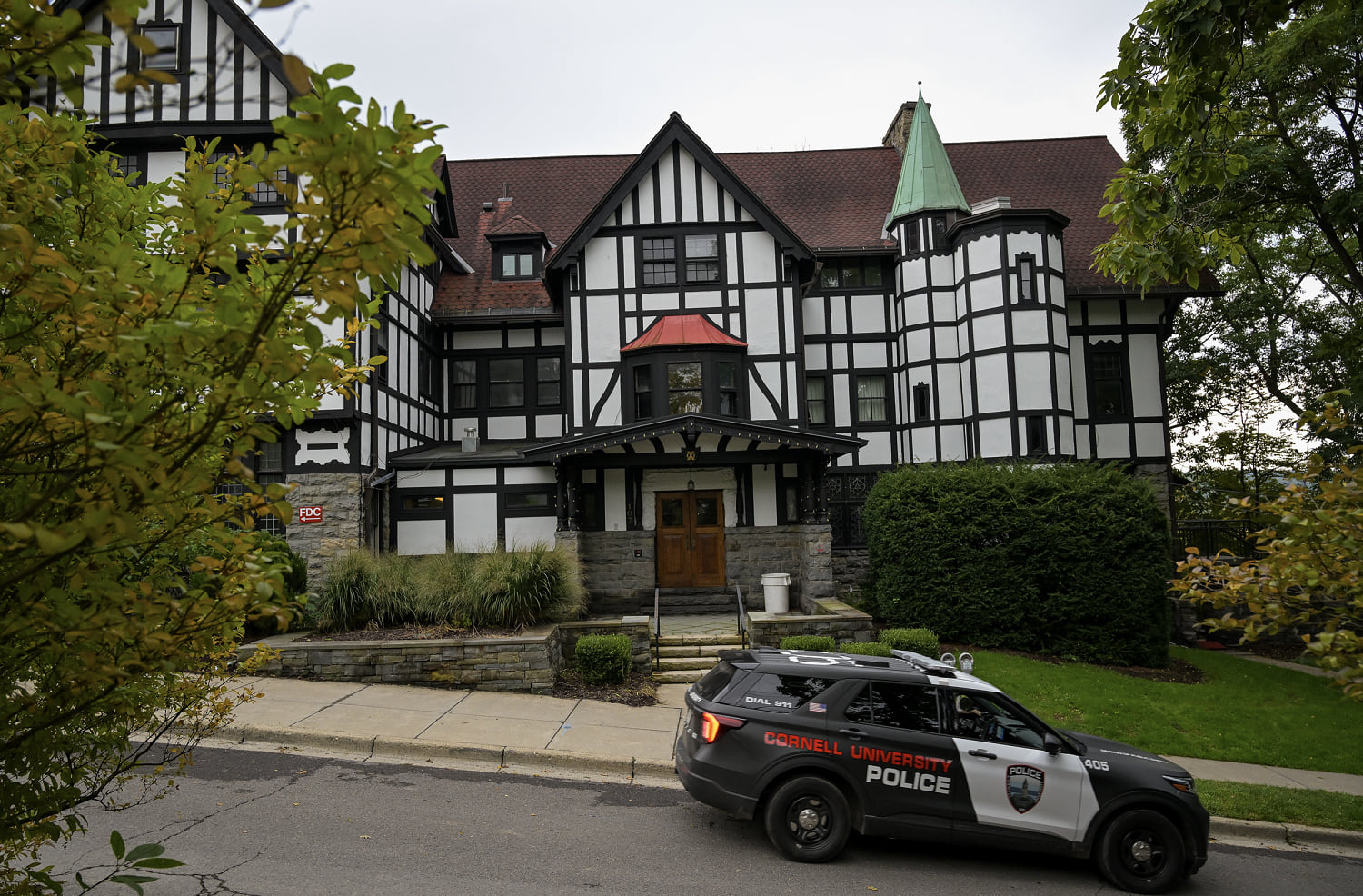
New York Attorney General Letitia James announced Wednesday that a former federal prosecutor who oversaw the criminal case against Sean “Diddy” Combs will lead the investigation into an alleged 2024 sexual assault at a Cornell University fraternity house.

Aaron Ford, the state’s attorney general, will be Nevada’s first Black governor.

Texas woke up red on Tuesday and went to bed blue. Why it matters: Just months ago, Democratic campaigns in the MAGA heartland appeared quixotic — obligatory more than realistic. Now those Democratic candidates have swept to power, led by two state representatives from liberal Austin — James Talarico , soon to be seated in the U.S. Senate, and Gina Hinojosa , who will take her place in the new year in the governor's mansion. Zoom in: The Democratic victories were comprehensive. State Rep. Vikki Goodwin (D-Austin) unseated three-term Republican Lt. Gov. Dan Patrick, per the Associated Press. Democrat Nathan Johnson , a state senator from Dallas, defeated Republican Mayes Middleton, state senator from Galveston, in the race for attorney general. What they're saying: "We shocked the world tonight. With a Texas chip on our shoulder, we showed the world that anything is possible tonight," Hinojosa said. "We just took back Texas," Talarico told his supporters. What happened: An unpopular president and high gas and grocery prices deep-sixed red-state GOP candidates across the country. But the Texas GOP was further hampered by an unpopular U.S. Senate candidate (even members of his own party impeached him) — Texas Attorney General Ken Paxton. And Greg Abbott, who had served as governor since 2015, was unwilling to debate his gubernatorial opponent. Meanwhile, the Democrats were disciplined, with Talarico and Hinojosa staying on message about affordability even as their Republican opponents tried to make the race about social issues. Follow the money: Republicans went down despite a rescue mission from Elon Musk, who gave north of $150 million in support of Paxton's campaign in a single quarter this year — and gave at least $5.5 million to Abbott's campaign this cycle. The big picture: The Democratic wins have huge implications for the 2028 presidential race. Democrats have proven, after years of flailing, that they could win statewide in Texas, potentially putting the Lone
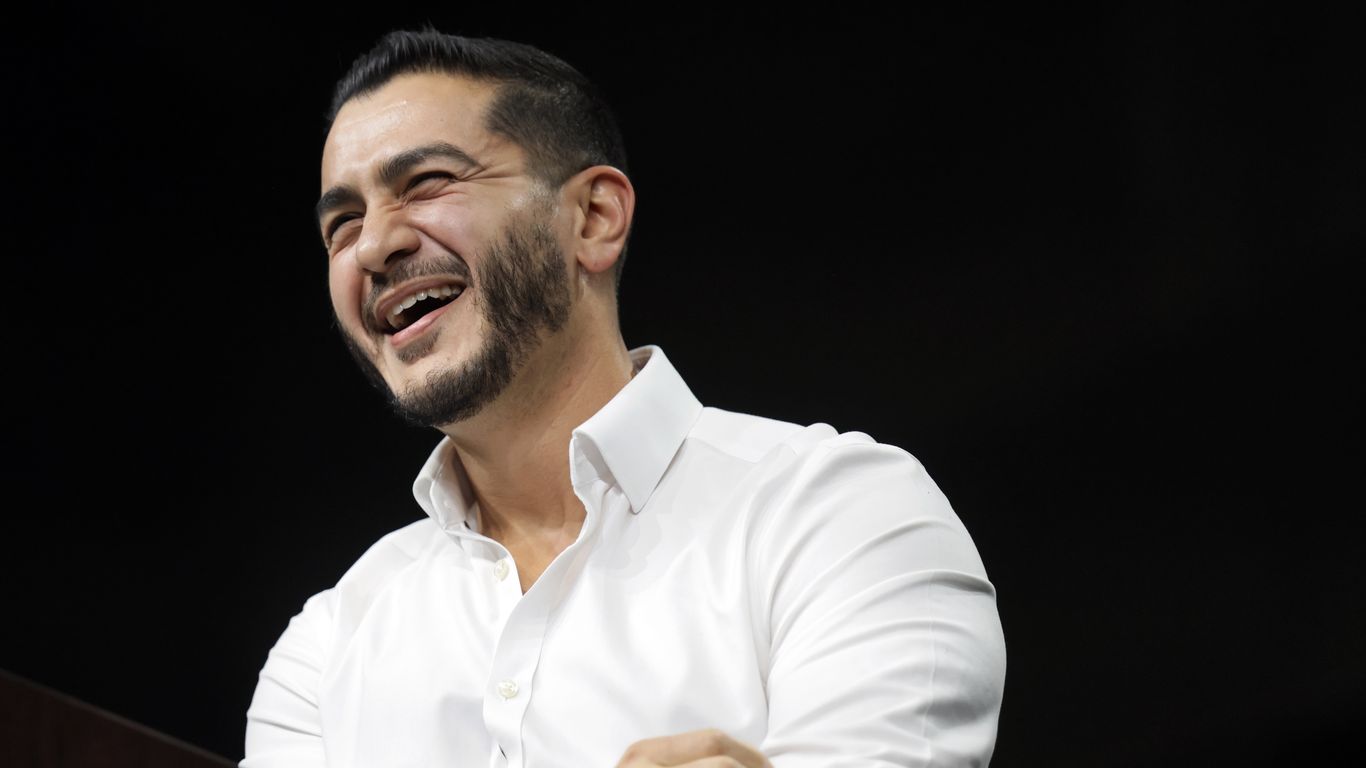
Democrat Abdul El-Sayed defeated Republican Mike Rogers in Michigan's closely watched U.S. Senate race, the Associated Press projected. He will become the nation's first Muslim senator. Why it matters: El-Sayed's win shows how an unapologetically progressive candidate can win in a battleground state President Trump carried just two years ago. The two candidates competed for the seat vacated by retiring Democratic Sen. Gary Peters, with Republicans hoping to flip a seat Democrats have held for decades. But the GOP failed in its endeavor — and already lost its Senate majority. The race took a stunning turn in its final days, when Democratic U.S. Rep. Haley Stevens, who narrowly lost the August primary to El-Sayed, endorsed Rogers . The move sparked furious backlash from Democrats and prompted several of Stevens' staffers, including her chief of staff, to resign. The big picture: El-Sayed, a former Detroit health director, ran on a progressive platform centered on Medicare for All, taxing billionaires, and reducing corporate influence in politics. His victory comes after a contentious Democratic primary and a bitter general election campaign that featured personal attacks over his background, medical credentials and Muslim faith. Rogers, a former congressman and FBI agent who narrowly lost a 2024 Senate bid, sought to portray El-Sayed as too extreme for Michigan . El-Sayed cast Rogers as a Washington insider aligned with Trump. Trump himself escalated the attacks in the final stretch of the race, questioning El-Sayed's loyalty to the U.S., and making unsubstantiated allegations of extremist ties. El-Sayed rejected the accusations. Between the lines: El-Sayed's win offers progressives a powerful new argument in the Democratic Party's debate over how to win back voters. Zoom out: Both candidates put affordability at the center of their campaigns, but offered sharply different solutions. El-Sayed called for universal health care, tackling medical debt and higher taxes on

Latino voters helped Democrats break Republicans' decades-long grip on Texas and reclaim both chambers of Congress on Tuesday, casting doubt on President Trump's historic 2024 gains with the fast-growing electorate. Why it matters: Republicans bet Trump's Latino breakthrough two years ago would create a lasting GOP realignment in Texas and beyond. Tuesday's results exposed how quickly those gains could unravel — and raised new questions about Republicans' coalition heading into 2028. Early results show Hispanic voters' shift aided Democrats in capturing a Senate seat and the governorship in Texas for the first time in a generation. Tuesday's results — particularly in South Texas border counties — reflected some of the anger among Hispanics over high prices and the Trump administration's immigration enforcement. "This is what happens when you mess with the Latino community. We are sending a clear message," said Hector Sanchez Barba, president and CEO of the voting group Mi Familia Vota. By the numbers: Early NBC News exit poll results showed Latino voters moving away from Republicans. Democrats' 16-point advantage in Latino party identification grew from 10 points in 2024, according to NBC's polling. Some 43% of Latino voters identified as Democrats, up from 39% in 2024. Republican identification slipped from 29% to 27%. In the early NBC exit poll, 75% of voters nationally described the economy as struggling, while 65% said Trump's policies had made economic conditions worse. State of play: Democrats reclaimed the House and Senate while ending Republicans' statewide winning streak in Texas dating to 1994. Democratic state Rep. James Talarico defeated Republican Attorney General Ken Paxton , winning a Senate seat Democrats last captured in 1988. Democratic state Rep. Gina Hinojosa ousted Republican Gov. Greg Abbott , becoming Texas' first elected Latina governor. Early returns also suggested Latino voters helped Democrats win crucial House contests in Colorado and Geo

Democrat James Talarico has won the US Senate race in Texas, securing an astonishing and historic victory. Talarico, a state representative, beat the scandal-plagued attorney general Ken Paxton in the most expensive race of this midterms cycle. He is also the first Democrat to win a US Senate seat in the Lone Star state since 1988. Continue reading...

Democrat James Talarico defeated Republican Ken Paxton in Texas' closely watched U.S. Senate race, delivering a historic breakthrough for Democrats in a state Republicans have dominated for decades. Why it matters: Talarico's victory ends the nation's longest Democratic drought in statewide elections and flips a critical Senate seat as Democrats fight for control of the chamber. The Austin-area state representative becomes the first Democrat elected to the U.S. Senate from Texas since Lloyd Bentsen in 1988. His win also marks the first Democratic victory in a Texas statewide election since 1994, a stunning reversal in a state President Trump carried by nearly 14 points in 2024. The big picture: The race became the nation's most expensive Senate battle after Texas Attorney General Paxton defeated longtime incumbent Sen. John Cornyn in the Republican primary, with massive spending from both parties . Republican leaders had warned that Paxton's nomination could jeopardize the seat, and the party poured enormous resources into defending it. On the campaign trail: Talarico, a former public school teacher and Presbyterian seminarian, built his campaign around affordability, public education and criticism of wealthy donors' influence over politics. Paxton, a three-term Texas attorney general and close ally of President Trump , emphasized immigration enforcement and conservative policies. Between the lines: Paxton's candidacy exposed divisions within the Texas GOP, with party leaders initially warning that nominating the attorney general could endanger a seat Republicans had held for decades. Paxton defeated Cornyn in the May Republican primary runoff after securing Trump's endorsement, setting up the costly general election battle. His campaign was also shadowed by years of legal and ethical controversies, including his 2023 impeachment by the Republican-controlled Texas House. The state Senate later acquitted him. The backdrop: Democrats have spent decades trying to turn

James Talarico, a state lawmaker, beat Ken Paxton, the Republican attorney general, after a bruising and costly campaign.
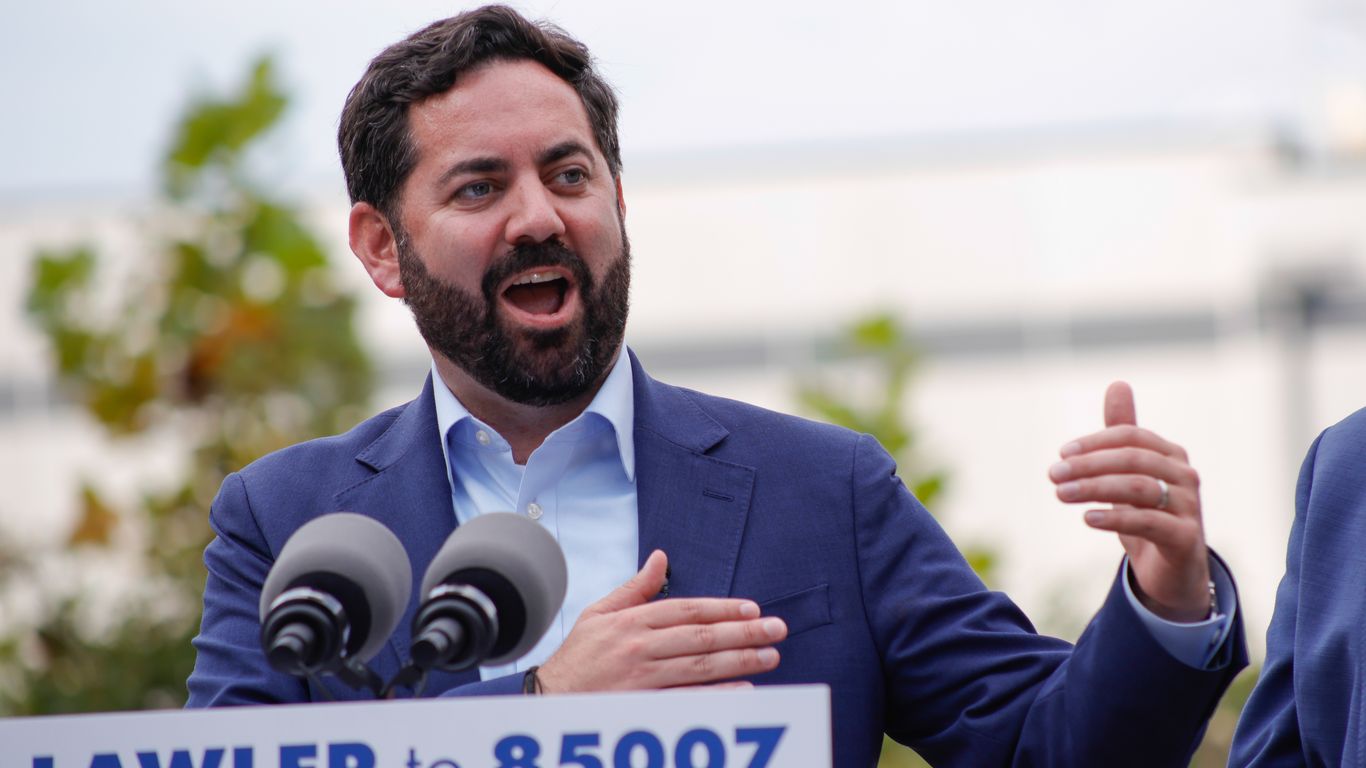
Voting machines across New York's Westchester County are rejecting paper ballots on Election Day, raising concerns about potential delays in one of the nation's most competitive House races. Why it matters: Results could be delayed for one of the country's most prominent House races, between Rep. Mike Lawler (R-N.Y.) and Democratic nominee Cait Conley, as officials address a problem with paper ballots. Driving the news: The Westchester County Board of Elections said Tuesday it was aware of a problem preventing voting machines from accepting paper ballots at polling locations throughout the county. The Board of Elections said it is speaking with New York State officials and the Westchester County government "to address this issue and ensure that voting continues with as little disruption as possible." The cause remains unclear. Election officials initially blamed the thickness of paper ballots but later removed that explanation from their statement, per reports. New York Attorney General Letitia James wrote on X that her office is monitoring the issue. What they're saying: Lawler said officials were working with vendors to resolve the problem, while Conley reassured voters that their ballots would count. Westchester County government wrote on its website: "Let us be absolutely clear: Every eligible vote will be counted." What we're hearing: Voters in the county told Fox 5 NY that they had to fill out paper ballots instead of using the machines. Voters said their ballots were placed in a security box. Other voters shared discontent with the ballots issue on social media . Katie Miller , wife of Trump adviser Stephen Miller, claimed on X: "This is how the Left steals elections. Mike Lawler's competitive district and they are turning away voters." Context: The county covers roughly 30% of New York's 17th District, which Lawler represents. The contest has emerged as a key battleground race in Democrats' push to gain control of the House. Zoom out: The ballot-scanning pro
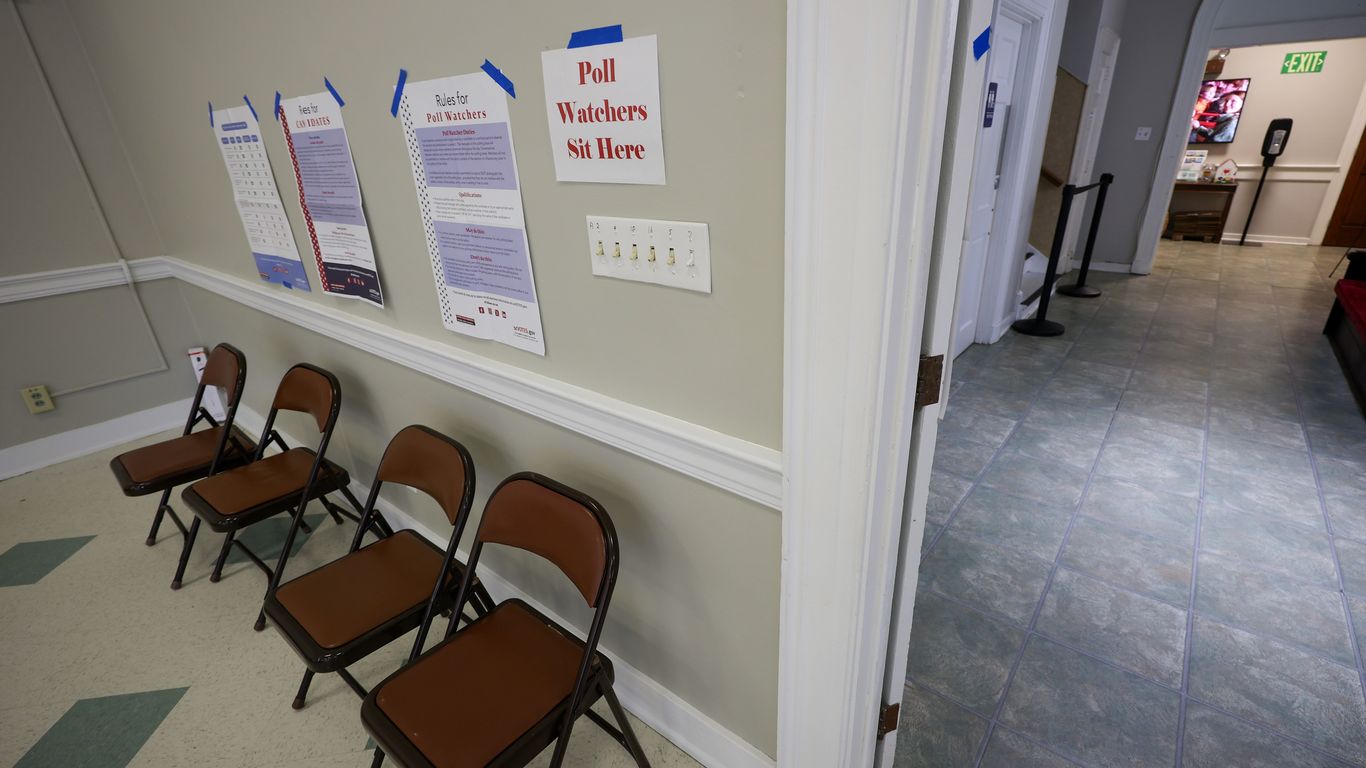
The Justice Department said Tuesday it will deploy about 1,000 election monitors to all 50 states for the first time ever to watch the polls. Why it matters: The unprecedented effort comes after courts repeatedly rejected the DOJ's efforts to force states to restrict voting for alleged noncitizens. It comes amid a long-running Trump administration push to fight voter fraud , which studies say isn't nearly as prevalent as the administration suggests. Driving the news : The department, in a statement early Tuesday, said one of its most important goals was to protect election integrity. "Today, the DOJ will further this mission by engaging in its largest monitoring effort in history—with approximately 1,000 election monitors and observers deployed, and, for the first time, in all 50 states," the department said. The department said observers would come from the DOJ, U.S. Attorney's offices, and staff from the Office of Personnel Management. What they're saying: "I am very proud we are deploying the largest monitoring effort in DOJ history, and pursuing transparency for elections in an assertive and nondiscriminatory manner," assistant attorney general Harmeet K. Dhillon said in the statement. The intrigue: Some local election officials have already expressed concerns that such a massive wave of observers could intimidate or otherwise interfere with voters. What to watch: The DOJ is still pursuing legal efforts in multiple states to have ballots segregated or otherwise impact counting.

Data: AdImpact; Chart: Erin Davis/Axios Republicans on the ballot this cycle have all but stopped mentioning President Trump in their campaign ads , according to an Axios analysis of broadcast advertising data from AdImpact. Why it matters: Trump has tried to make the 2026 midterms a referendum on his presidency. His party has run the other way. The big picture: Ads from both parties in Senate, House and gubernatorial races have shifted from a heavy focus on Trump during the primaries to a much greater emphasis on the economy in the general election. Both parties have also leaned much more heavily into health care, with a noticeable increase among House Republicans. By the numbers: The drop-off is steepest among Republicans, and especially in House races. Trump appeared in 66% of House Republicans' primary ads but shows up in just 3% of their general election ads. In Senate races, Republican ads mentioning him fell from 77% to 22%. Governor's races saw the same shift: Republican ads mentioning Trump fell 34 percentage points. Democrats have also pulled back from Trump, though less dramatically. Trump appeared in 45% of Democratic primary ads, but just 18% of their general election ads. Zoom in: Republican candidates are mentioning some of Trump's signature issues less than during the primaries. The share of Republican ads mentioning immigration has dropped 20 percentage points in Senate races and 14 points in House races. Ads referencing law enforcement fell from 11% of Republican Senate primary ads to 6% in the general election, even as their mentions of crime increased. Data: AdImpact; Chart: Erin Davis/Axios Between the lines: Candidates often lean on the country's most prominent political figure in primaries, then pivot to policy issues in the general election. But this year's drop-off stands out given how hard Trump has pushed to tie himself to the midterms. He has urged voters to pretend he's on the ballot and essentially demanded ads running during the Republ

The Pentagon's former top military planner is under federal investigation and may face a court-martial for allegedly leaking to reporters from the Wall Street Journal and New York Times, according to three sources familiar with the controversy. Why it matters: Former Army Lt. Gen. Brett Sylvia was fired by Defense Secretary Pete Hegseth last week after being accused of misconduct as part of the department's war on leaks. Sylvia failed four polygraphs and admitted to the incidents during two interviews on video that lasted more than a total of two hours, according to details from an internal Pentagon report shared with Axios. "The president has no tolerance for leakers, so Sylvia's termination is the first step in the accountability process, not the last," one of the sources said. Zoom in: Starting in the fall of 2025, the sources said, Sylvia gave information without authorization to reporters Michael Gordon of the Wall Street Journal and Greg Jaffe of the New York Times. Neither reporter is suspected or accused of doing anything illegal, improper or unprofessional in their reporting. Journalists often rely on confidential sources in reporting on issues that involve institutions where insiders aren't authorized to speak publicly. The report states Sylvia admitted to more extensive contacts with Gordon in 2025 and 2026, when the general allegedly shared classified information about Ukraine and Iran with the reporter. The Justice Department is investigating that. Only one discussion with Jaffe appears in the investigative report, concerning Hegseth's unexplained purging of military leaders. Sources said the unauthorized communication by Sylvia potentially violated the Uniform Code of Military Justice's prohibition of "conduct unbecoming of an officer." Behind the scenes: Sylvia allegedly admitted to first disclosing information to Gordon in the fall of 2025 when the two met in the Pentagon and discussed unspecified information about Ukraine, the sources said. After th

Elon Musk is looking to shake up America's wireless industry, potentially bringing the first major new competitive threat in years to a business dominated by three companies. Why it matters: The cellular industry has seen enormous technological change, but relatively little disruption to its competitive structure. Musk has the money, spectrum and satellite network to attempt something different — though he faces daunting obstacles. Driving the news: SpaceX is assembling the pieces to become a major U.S. wireless carrier, potentially building its own terrestrial network and buying available spectrum. The moves are meant either to build the capability to bypass existing carriers or to bring them to the table for a deal that would allow Musk to strike a deal for wholesale access to their networks. Musk may have reason to move quickly while the current administration and its regulatory appointees remain in place, a reason some analysts have cited in the context of proposals for a merger between Tesla and SpaceX . What they're saying: Blair Levin, a former FCC chief of staff who now heads policy at Optimal Advisory, says Musk's financial resources distinguish him from previous challengers. "For the first time, there is an entity capable of scaring investors in the traditional big three," Levin told Axios. Unlike Dish, which faced serious financing constraints, SpaceX can draw on capital markets that have rewarded Musk's ambitious plans. The latest : SpaceX has held talks with EchoStar about acquiring Boost Mobile or gaining access to its network arrangements, according to a Washington Post report Monday. That could provide a quick route to customers and infrastructure, although approval of such a deal is far from a foregone conclusion if Musk's businesses are drawn into a regulator quagmire after the midterm elections. The Post reported that Verizon, AT&T and T-Mobile have all rebuffed Musk's efforts to gain access to their networks. State of play: Musk also has a path t

Republicans don't know if they'll lose big or small on Tuesday, but they're already bracing for an epic blame game. Why it matters: Privately, Republicans acknowledge it's not a complicated version of Clue. The leading suspect: Mr. President, in the Oval Office, with an assortment of weapons — and one war. Returning Republican senators are unlikely to blame President Trump publicly. There's a price for that. And don't expect Trump to shoulder the responsibility. But do expect departing GOP lawmakers to take shots at Trump or his team, and Trump to fire back at Senate Republicans, whom he's never been shy about torching. The irony of Trump's second midterm: With Republicans privately resigned to losing the House, Trump can still credibly claim victory if they hold the Senate. "It's Donald Trump's midterms. He gets all the credit if we win. He gets all the credit if we lose," one national GOP strategist told Axios. The Iran war: From Alaska to Maine, Trump's decision to go to war with Iran — and the resulting spike in gas and diesel prices — has become a major political liability for Republican Senate nominees. "It's not tariffs … it's the war, it's gas prices, it's diesel," Texas Attorney General Ken Paxton said at a closed-door fundraiser in September, Axios reported last month . Tariffs: Trump's trade policies have compounded Republicans' affordability problems, particularly in farm country, where producers have faced higher costs and uncertainty over export markets. "We need to end this tariff war now," former Rep. Mike Rogers (R-Mich.) , the GOP Senate nominee, said in an October campaign ad, breaking with Trump over his tariffs on Canada. Bad candidates: Trump's preferred nominees are also drawing blame, GOP strategists tell Axios. Paxton in Texas and Sen. Darline Graham in South Carolina have forced Republicans to spend heavily defending races that should have been easier — and where the party had other options. Complacent incumbents: Sens. Roger Marshall (R-Ka

Former US representative, health secretary and state attorney general is a shoo-in after a stunning comeback victory in primary It was Tuesday, and the man poised to be the next governor of California wanted to talk about Donald Trump . Xavier Becerra had come to Guelaguetza restaurant in Los Angeles to talk about Trump’s attacks on voting in the state, but instead found himself answering questions about a presidential provocation of a different order. Continue reading...

As governments urge public to prepare for cyber-attacks and natural disasters, US focuses on military preparation Governments around the world are spearheading new campaigns to encourage the general public to be prepared for a host of emergencies that could disrupt essential services, including cyber-attacks and natural disasters. The United States, however, is taking a different approach: focusing on military preparation, as opposed to the general population. With an influx of global messaging regarding emergency preparedness, the Guardian spoke with emergency experts about the Pentagon’s latest initiative and the state of US disaster preparedness at large. Continue reading...

Facing an energized Democratic opponent, the Texas attorney general is testing whether party loyalty can overcome voters’ reservations about him.

President Trump had a candid phone call with Israeli Prime Minister Benjamin Netanyahu Saturday about the state of U.S. negotiations with Iran and how quickly to return to combat, according to one Israeli and one U.S. source. Why it matters: The sources said Netanyahu is pressing Trump to strike Iran immediately after the midterm elections on Tuesday. But Trump, for now, wants to let negotiations play out — a strategy Netanyahu is concerned about. The Israeli source said the call was "tough," while the U.S. source described it as "direct." The White House and the Israeli prime minister's office declined to comment. Driving the news: As he did before Operation Midnight Hammer in June 2025 and Operation Epic Fury in February, Trump is pursuing dual tracks — trying to reach a deal to restart peace talks while also preparing for a possible resumption of major combat operations after the midterms. Last week Vice President Vance sent a letter to Iran's national security chief Mohsen Rezaei about the possibility of restarting negotiations . It was the most senior-level outreach by the U.S. to Iran in several months. Trump told reporters on Saturday that negotiations with Iran are "going fine" and noted he is not "in much of a hurry." While the Iranians want to make a deal, the president said they "are not very reliable. ... They make a deal and then they back out." At the same time, Trump said the U.S. still has to "take care" of one or two nuclear sites in Iran. "We can do that in 10 minutes. We have that planned. You can look at Pickaxe Mountain. We need to take care of that. We can do that very quickly," Trump said, referring to a suspected nuclear site built into a mountain. The Wall Street Journal first reported the Trump-Netanyahu call, but did not describe its contents. State of play: Qatari mediators met with Iranian officials on Sunday for the third consecutive day in an effort to reach a deal to restart direct negotiations between the U.S. and Iran. Iranian Forei

Voters are turning against the Republicans. But the clearest possible message is needed to safeguard democracy The psychologist Jennifer Freyd identified a pattern often used by perpetrators: deny, accuse, and reverse victim and offender. More than one observer has noted that Donald Trump employs that pattern politically. With polls suggesting Republicans are likely to lose the House and perhaps the Senate too in the midterms, the man who refused to accept Americans’ democratic verdict in 2020 is hawking a narrative of cheating Democrats who will steal seats via illegitimate votes. The January 6 insurrection showed how acute the peril to American democracy had become. It is more so now. This time, Republican efforts to undermine the results began well in advance. In 2020, Mr Trump’s vice-president, Mike Pence, the attorney general, William Barr, and others refused his most outrageous demands; now the justice department is supine. And the supreme court’s gutting of the Voting Rights Act , which safeguarded against the worst kinds of racial discrimination, means that states no longer require pre-approval for decisions that could well tilt a race. Districts have already been redrawn. Continue reading...

Florida Republicans aren't panicking about sluggish turnout for the midterms , but in the words of one GOP elder: "We're white-knuckled." Why it matters: Florida once looked like a much safer Republican bet for the midterms. Losing any statewide race would stun and embarrass its elite Republican residents, starting with President Trump . "I don't necessarily want to be the bearer of bad news, but I don't think the turnout is as strong as we would like to see," Florida Gov. Ron DeSantis fretted last week. The biggest GOP concern is U.S. Rep. Byron Donalds' campaign for governor, though most polls show him narrowly leading Democrat David Jolly. Donalds has raised $176 million; Jolly just $28 million. Zoom in : The GOP's jitters are rooted in early turnout data. Republicans led Democrats in early ballots cast by just 2.8 percentage points as of Saturday afternoon. That's much lower than in the past two general elections — and it's despite a much-bigger Republican registration advantage over Democrats: 11 points. Republican turnout is weakest in parts of the conservative Panhandle and rural North Florida, including many of the 17 counties Donalds lost in the Republican primary. In those 17 counties, GOP turnout is 3.2 points below 2022, compared with 1.1 points below in counties that Donalds won, University of Florida political scientist Michael McDonald found. Between the lines: Republican turnout is made up of more habitual voters, while Democrats and independents are banking ballots from people who don't always show up. That could benefit Jolly if polls underestimate those voters. Democrats already have surpassed their entire 2022 early and mail-in vote totals in 15 counties, compared with four counties for Republicans. Nearly every poll shows independent voters favoring Democrats by double digits, so Republicans need a heavy turnout advantage. About two-thirds of Florida voters typically cast ballots before Election Day, making the early and absentee margins critica

Cost of living has loomed over this election cycle as workers and unions champion candidates fighting for higher wages and tackling rising prices For millions of Americans heading to the polls on Tuesday, affordability is a constant and worsening issue, and it’s been a prevailing concern this election cycle. In Lorain county, Ohio, Gina Jones and her co-workers at the Lorain county job and family services have been on strike since February 2026, the longest public sector strike in Ohio history and on pace to break the US record for longest public sector strike. Continue reading...
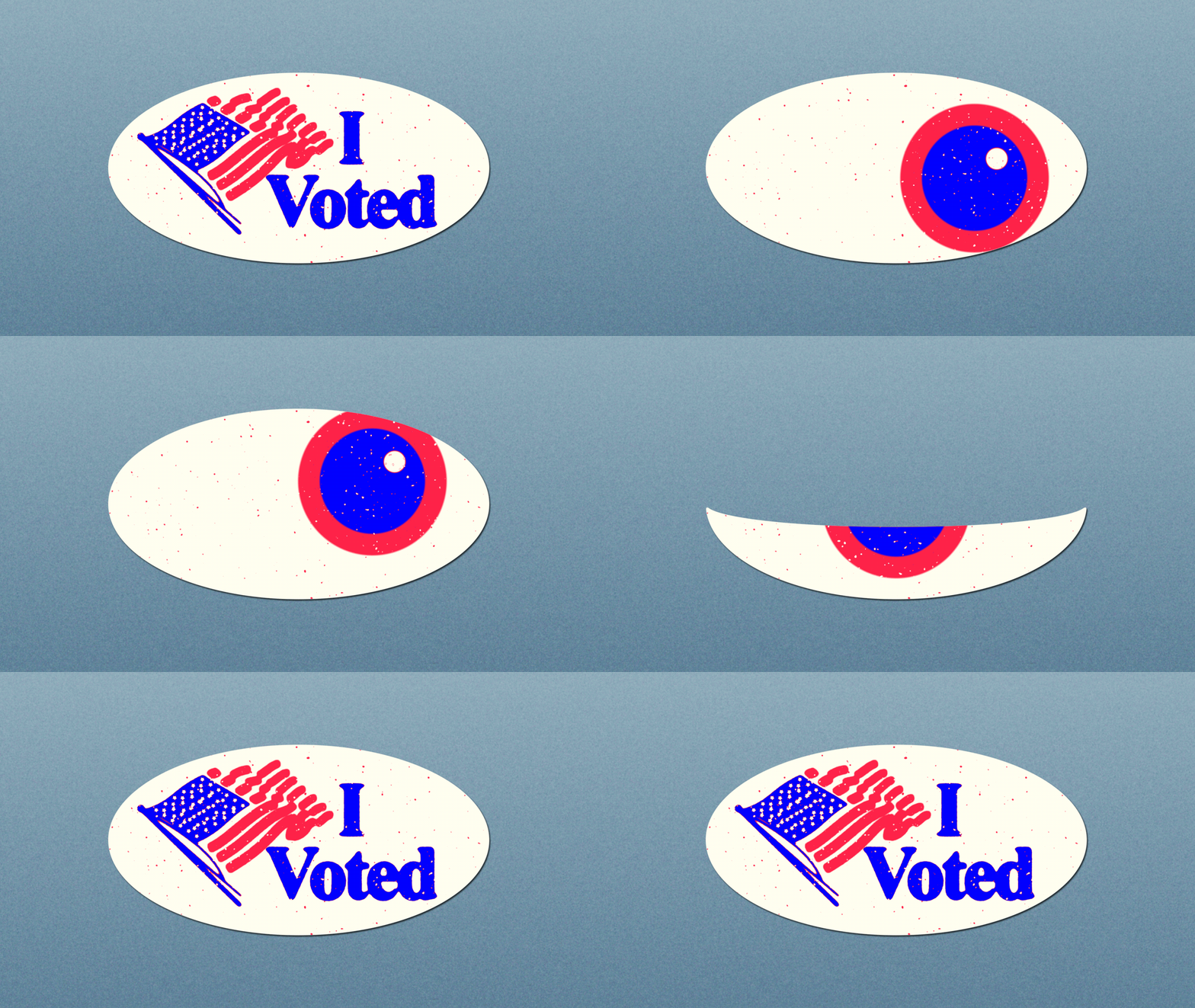
You won't need to stay up all night Tuesday to spot a big Democratic wave in the 2026 midterm elections . But it could take days — or even weeks — to know whether Republicans have survived a smaller one and held on to the House or Senate. Why it matters: A handful of early results in key states and congressional districts will tell us whether Democrats are headed for a landslide or disappointment. What we're watching: Florida, Florida, Florida. Most polls close at 7pm ET, and the state counts quickly — ready for release when the Panhandle finally calls it a night an hour later. At 8:01pm , refresh your browser and watch FL-14. The great mid-cycle redistricting wars transformed this Tampa-based district from Harris +8 to Trump +11. If Democratic Rep. Kathy Castor survives, Republicans can all but kiss their majority goodbye, according to party strategists. Next up is FL-25. The country's most expensive general election race is playing out in a district that went from Harris +4 to Trump +9. If Democratic Rep. Jared Moskowitz's race is close — or too close to call early in the night — House Republicans can keep hope alive. While you're at it, this is a good time to check on South Carolina's Senate race, where polls close at 7pm and the state counts relatively fast. If Sen. Darline Graham loses to Annie Andrews in the Trump +18 state, Senate Republicans can say goodbye to their majority. (And they'll be sweating if it's close.) "Underperformance is rarely isolated," said Jason Thielman, executive director of the National Republican Senatorial Committee in 2024. "If you see the GOP underperforming early in the East, it is likely going to continue as you move further West." At 9pm, check in on Virginia: The commonwealth's polls close at 7pm, but historically tight races often aren't called until the 9pm hour. If Democrats flip VA-01, a Trump +5 seat, they're in for a very good night. If they flip VA-05, a Trump +12 seat, they're in for a great night. Between the lines: VA
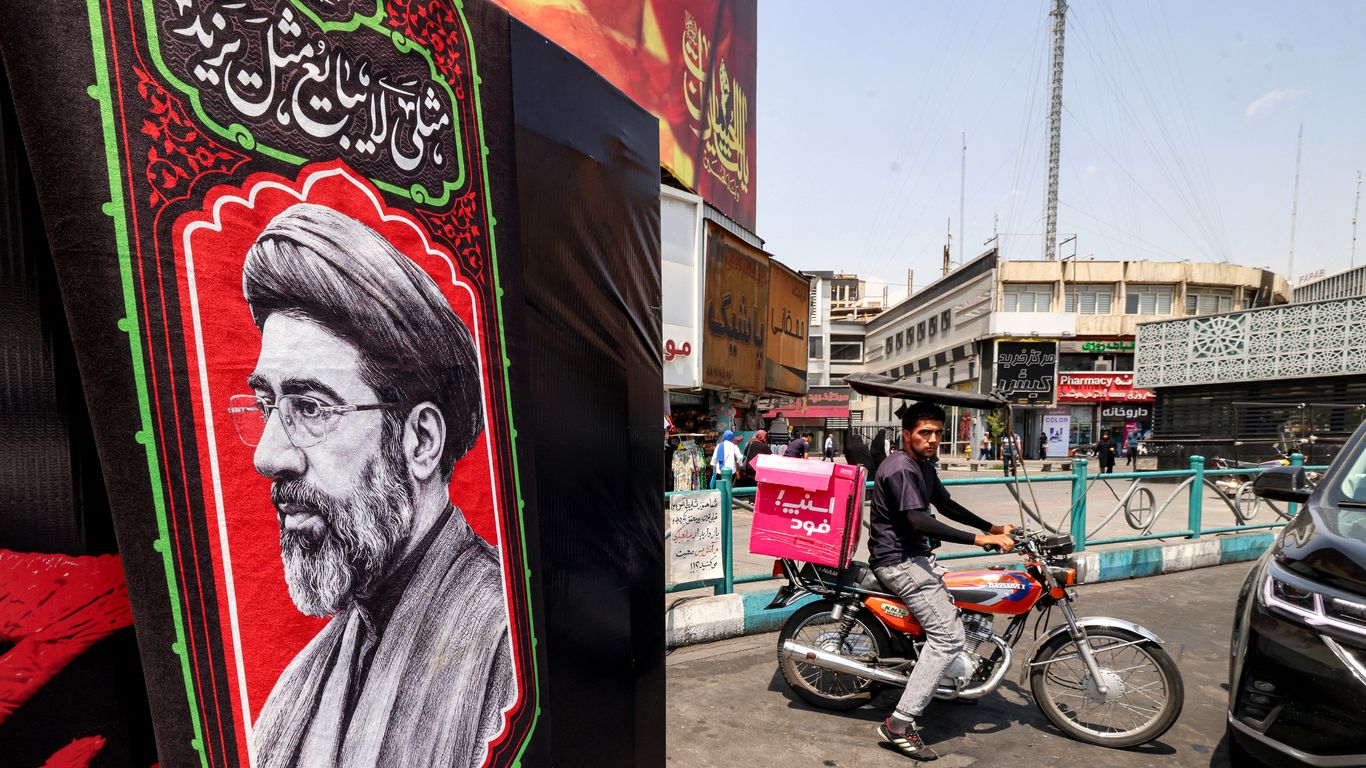
Iran's Supreme Leader Mojtaba Khamenei told the country's top three military commanders that a renewed attack by the U.S. and Israel ״must be met with an immediate and effective response, without geographical limitations״ in order to achieve "maximum deterrence," according to a statement from his office. Why it matters: This is the first publicly disclosed meeting between Khamenei and all the top commanders of Iran's armed forces since the war began. It comes as President Trump weighs major strikes on Iran after the midterm elections. Khamenei hasn't been seen or heard in public since he was wounded in an Israeli strike on the first day of the war. He has only issued written statements, which raised questions about his condition. The unusual apparent meeting took place a day after Qatari mediators held talks in Tehran for more than 12 hours in an effort to reach a deal to restart direct negotiations between the U.S. and Iran and avoid an outbreak of war after the midterms. The discussions continued in Doha, Qatar, on Saturday. What he's saying: "If the enemies once again launch military or terrorist attacks, it will be the Islamic Republic of Iran's Armed Forces and the Iranian nation that determine when and under what conditions those hostilities will end," Khamenei told the commanders, according to the statement. Zoom in: According to the statement, the meeting included armed forces chief of staff Gen. Ali Abdollahi, army commander Maj. Gen. Amir Hatami and Islamic Revolutionary Guard Corps commander Maj. Gen. Ahmad Vahidi. The commanders briefed Khamenei on the state of military readiness along the Gulf coastline and around the Strait of Hormuz, the Gulf of Oman, and Iran's northwestern and southeastern borders. They also reported "a several-fold increase" in production of various types of ammunition and reconnaissance, support, and combat weapons. Khamenei instructed the commanders that the "target bank" must be updated "so that all types of the American-Zionist

A federal judge said Friday she plans to appoint a special master to investigate whether Justice and Interior Department officials misled the court about the Trump administration's plans to renovate a D.C. golf course, according to news reports . Why it matters: The investigation could lead to professional sanctions, contempt proceedings or criminal referrals against administration officials over allegations government lawyers misled the judge. Driving the news: U.S. District Judge Ana Reyes opened a hearing Friday by reading ethics rules requiring attorneys to be truthful with courts, then questioned Associate Attorney General Stanley Woodward Jr. about the administration's conflicting accounts, according to news reports. Trump announced Oct. 18 the golf course would close Nov. 15 for roughly 15 months of renovations. Woodward told the court the next day there was "no plan to close the course." On Oct. 28, the Justice Department acknowledged Trump had directed the closure. Catch up quick: A preservation group and two golfers are suing the administration over what they say is President Trump's illegal plan to convert the historic, public East Potomac Golf Links into a championship-level golf course. After government crews cut down more than 400 trees, Reyes barred further tree removal without court approval and required 10 business days' notice before closing the park or making irreversible changes. The administration has appealed. What they're saying: "The Department of Justice will not be deterred from executing on the President's agenda," a spokesperson said in an emailed statement. The White House and DOI didn't immediately respond to Axios' request for comment. What's next: Reyes said she intends to appoint a special master who could review documents, question witnesses under oath and hold hearings. The government would have five business days to object after a special master is selected, the Washington Post reported . This is a breaking news story and will be

Immigrants at Texas detention facility, protesting against harsh conditions, say they face threats of force-feeding Members of Congress sent a scathing letter to federal immigration officials this week demanding answers about conditions inside a Texas immigration jail, as detained immigrants on a prolonged hunger strike claim officials are retaliating against them and threatening them with force-feeding. A group of seven congressional Democrats sent the letter earlier this week to Markwayne Mullin, the Department of Homeland Security (DHS) secretary, and David Venturella, the Immigration and Customs Enforcement (ICE) acting director, protesting about the treatment of hunger strikers. Continue reading...

We need neither ‘peace in our time’ nor ‘perpetual peace’ – but enough peace to keep civilization To save the United Nations from the irrelevance in which it now wallows, the next secretary general will require the concerted backing of the few powers that govern the security council. The paradox is that the great powers who created the institution in the 1940s and recently treat it with a cavalier cynicism are now the ones who need it most, as does the rest of the world. Continue reading...

The Pentagon's top military planner admitted to leaking classified information about Ukraine and Iran to two reporters from separate outlets over a one-year period, according to an internal report of the investigation shared with Axios. Why it matters: Army Lt. Gen. Brett Sylvia was fired this week by Defense Secretary Pete Hegseth for the alleged misconduct, which the career soldier acknowledged on video after he failed four polygraph tests, a U.S. official said. "He had trouble passing multiple polygraph interviews," the report said. The report accused the general of making "unauthorized disclosures to the media," and said he "was cooperative with answering questions about interactions with the media to resolve this, and provided his personal phone for a forensics examination." Zoom in: The report and U.S. officials said that Sylvia's leaking began as early as June 2025 — before mainstream media outlets were removed from the Pentagon — and continued afterward via secure Signal app and once at a Silver Diner in Arlington, Va. "The meeting at the diner occurred because [redacted's] access to the Pentagon was revoked between meetings," the report says. "During the meeting at the diner, [Sylvia] relied on notes he took while reviewing a classified secret report to orally give redacted on U.S. assistance to Ukraine, the report says. The report says the reporter in question was writing a book and met twice with Sylvia. It also emphasized that the general "did not coordinate these meetings with [the Pentagon's Public Affairs Office], or seek to have the information reviewed before providing it to the reporter." The intrigue: U.S. officials suspect that Sylvia intentionally deleted any trace of contact on Signal between him and one of the reporters, but pretended it was an accident. "Sometime between June or July, Sylvia received Signal messages from [redacted]. Sylvia is unable to recall exactly what was in that message," the report said. "But he believes it had somethin

The most-aired ad in the closing stretch of Mississippi's Senate race features a Jeffrey Epstein survivor attacking GOP Sen. Cindy Hyde-Smith for voting against releasing files related to the convicted human trafficker. Why it matters: In the past week, Hyde-Smith has been outgunned on the airwaves. AdImpact data shows that only one of the eight most-aired spots portrays her positively. Five of the ads either positively portray her Democratic challenger, Scott Colom , or attack Hyde-Smith for her Senate record, largely painting her as an out-of-touch senator who cares more about her rich donors. The other two ads are for down-ballot races. Zoom out: The Epstein survivor ad has aired more than 1,200 times over the last week, costing the left-leaning New Deal for All super PAC over $329K, per AdImpact. In the ad, Jena-Lisa Jones condemns Hyde-Smith for her vote on the Epstein files and urges Mississippians to vote against her to protect their children. That vote, which passed 51-49 last year, indefinitely postponed an amendment that would have required the full release of the Epstein files by then-Attorney General Pam Bondi. "I do want transparency, and I support releasing information that can legally be released while protecting Epstein's victims. But a procedural vote on one amendment is not the same thing as saying the Epstein files should remain secret," Hyde-Smith said in a statement to the Mississippi Free Press. Hyde-Smith's campaign cut its own attack against Colom, calling him the "transgender defender" and naming him the "most radical Senate candidate of our lifetime." The ad played over 2,800 times across Mississippi and Memphis, Tenn., television markets in the 30 days since its Sept. 10 debut, costing the senator's campaign over $854K, per AdImpact. Hyde-Smith's campaign appears to have pulled back on the ad, spending less than $150,000 to air it between Oct. 19 and Oct. 26. The bottom line: Hyde-Smith is still expected to win, but the race is far tighter

Senate leaders could be guessing who will control the chamber well into November, thanks to a slew of tight races and state-specific voting rules. Why it matters: A GOP majority would ease the pressure on Senate Majority Leader John Thune to move quickly on nominations, while a Democratic majority would give Senate Minority Leader Chuck Schumer more leverage in the lame-duck session. If the chamber splits 50/50, leaders will have to start negotiating their power-sharing agreement. Zoom in: Four states could leave the majority in limbo. Alaska: Sen. Dan Sullivan (R) is trying to fend off former Rep. Mary Peltola (D). Alaska election results have taken weeks to finalize because of the vast state's transportation challenges, mail ballots and ranked-choice tabulation. The Trump Justice Department is preemptively trying to block results from being finalized if Sullivan narrowly loses. Maine's ranked-choice voting could lengthen the vote tallying if neither Sen. Susan Collins (R-Maine) nor Democratic nominee Troy Jackson gets more than 50% in the first round. Kansas' three-day grace period for mail-in ballots could delay results in the race between Democratic nominee Adam Hamilton and Sen. Roger Marshall (R-Kan.). It is far closer than expected. In Texas, a dragged-out recount could be coming. A candidate can request one if the margin is less than 10% of the winner's vote total — which is likely to happen between state Attorney General Ken Paxton (R) and state Rep. James Talarico (D). The candidate who requests it has to pay. The clock: Congress currently plans to leave for the holidays on Dec. 18. But if Republicans lose both the House and Senate , Sen. Bernie Moreno (R-Ohio) wants senators to stay in town through the holidays (yes, Thanksgiving and Christmas) to work on a massive GOP reconciliation package they can pass without Democratic support. The big picture: Congress has a long to-do list either way, including funding the government past Dec. 11, passing emergency