Jon Ossoff Wins Georgia Senate Race Against Mike Collins
Mr. Ossoff, the Democratic incumbent, was an aggressive anti-Trump campaigner. He beat Representative Mike Collins, a Republican.
The New York Times · 25m ago

Mr. Ossoff, the Democratic incumbent, was an aggressive anti-Trump campaigner. He beat Representative Mike Collins, a Republican.
Both states will test the electability of Democratic progressives in Senate battleground states — and it could take a while to count the ballots.
Texas has 254 counties. Here’s a guide to six crucial regions in the Senate race.
In gymnasiums, town halls, classrooms and even restaurants, voters headed to the polls on Tuesday to decide control of the Senate, House and more.
Top party strategists may hate seeing one of their candidates gutted by a brutal ad. But they can still admire the hit. Why it matters: A record $11.6 billion has plastered political ads across screens of every size in the country during the 2026 midterms . Only a handful of those earned the grudging respect of operatives on both sides. 📺 Zoom in: Multiple Republican strategists singled out the "brutal" series of ads attacking Sen. Roger Marshall (R-Kans.) over lawsuits against patients with overdue medical bills — some of whom were later arrested . Against the advice of his own team, Marshall released a self-directed ad answering the attacks. In Nebraska , an ad highlighting a past vote by former Gov. Pete Ricketts to pardon a man convicted of rape was singled out by both parties as one of the cycle's most damaging. Ricketts is expected to win re-election to the Senate. In Maine, an upbeat jingle hit Democratic nominee Troy Jackson for having children with his second cousin. "If he'll f**k his own family, he'll f**k yours too," the radio ad said (among other things). Sen. Susan Collins (R-Maine) called for the ad to be taken down. And in Florida , Rep. María Salazar (R-Fla.) turned on her own party leader, criticizing President Trump over ICE's aggressive enforcement tactics, saying some immigration policies had "gone too far." The intrigue : Even hardened operatives are dealing with a new frontier: AI-generated attack ads that can make up scenarios and put words in an opponent's mouth. In Michigan , a Republican-aligned super PAC used AI-generated imagery to depict Democratic candidate Abdul El-Sayed in a fabricated family photo and playing a game with cards referencing "Death to America" and 9/11. In Texas, GOP Senate nominee Ken Paxton's team used AI to depict Democratic candidate James Talarico defacing a Bible with a crayon and saying: "In the beginning God was non-binary, and he wasn't a Christian. And God said, 'let there be six genders,' and there were." ?
This batch of key Southern states will offer early insight into the battle for Senate control.
Josh McKoon, a Trump ally who helped advance Republican efforts to change election rules after a bitter 2020 count, said, “I think everybody’s going to respect the outcome.”
Many of the leads for Sherrod Brown and Adam Hamilton have fallen within the margins of error, underscoring that they could be quite competitive.
Officials said problems in New York, Georgia, Florida and other places were unfortunate but not unusual. Conspiracists seized on them anyway.
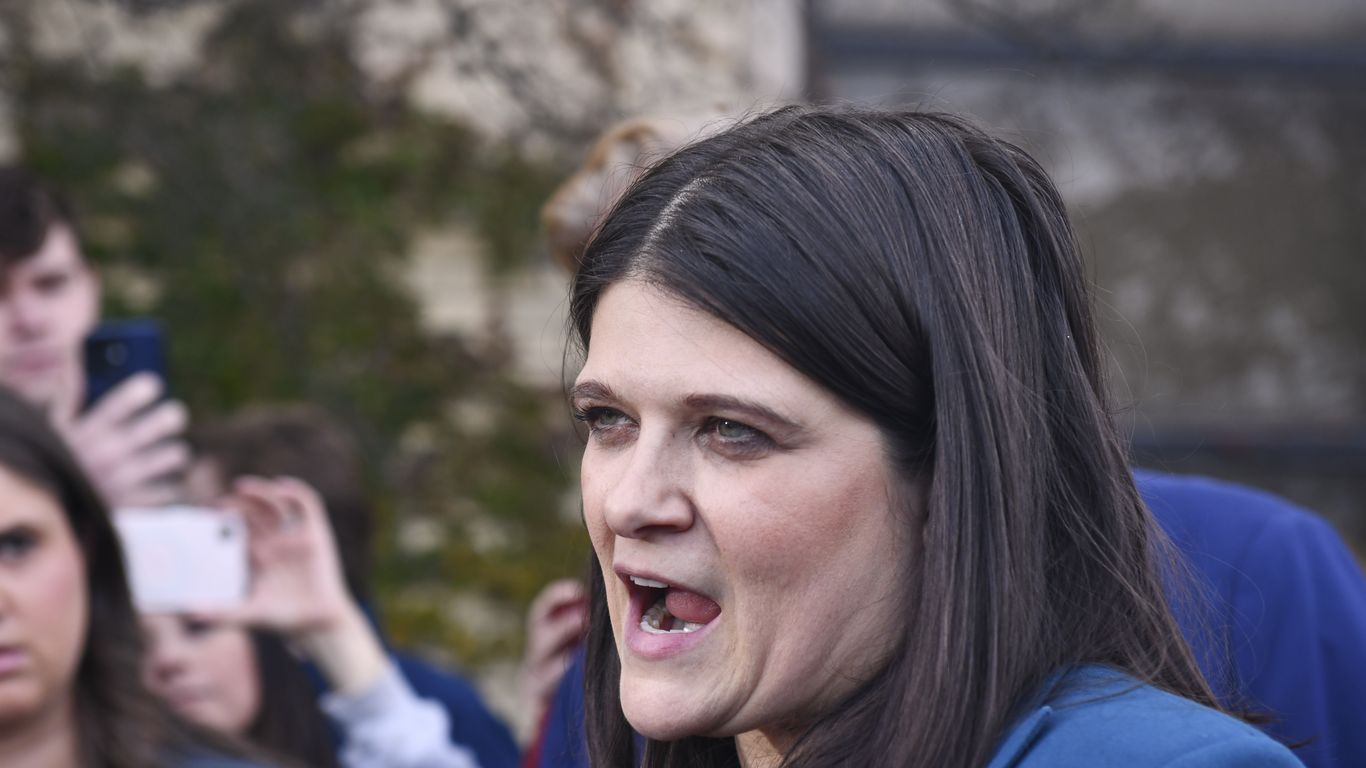
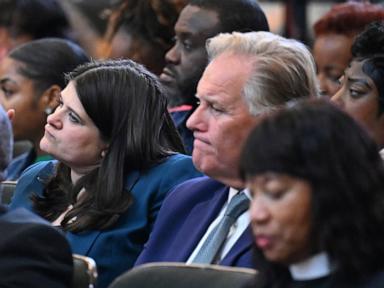
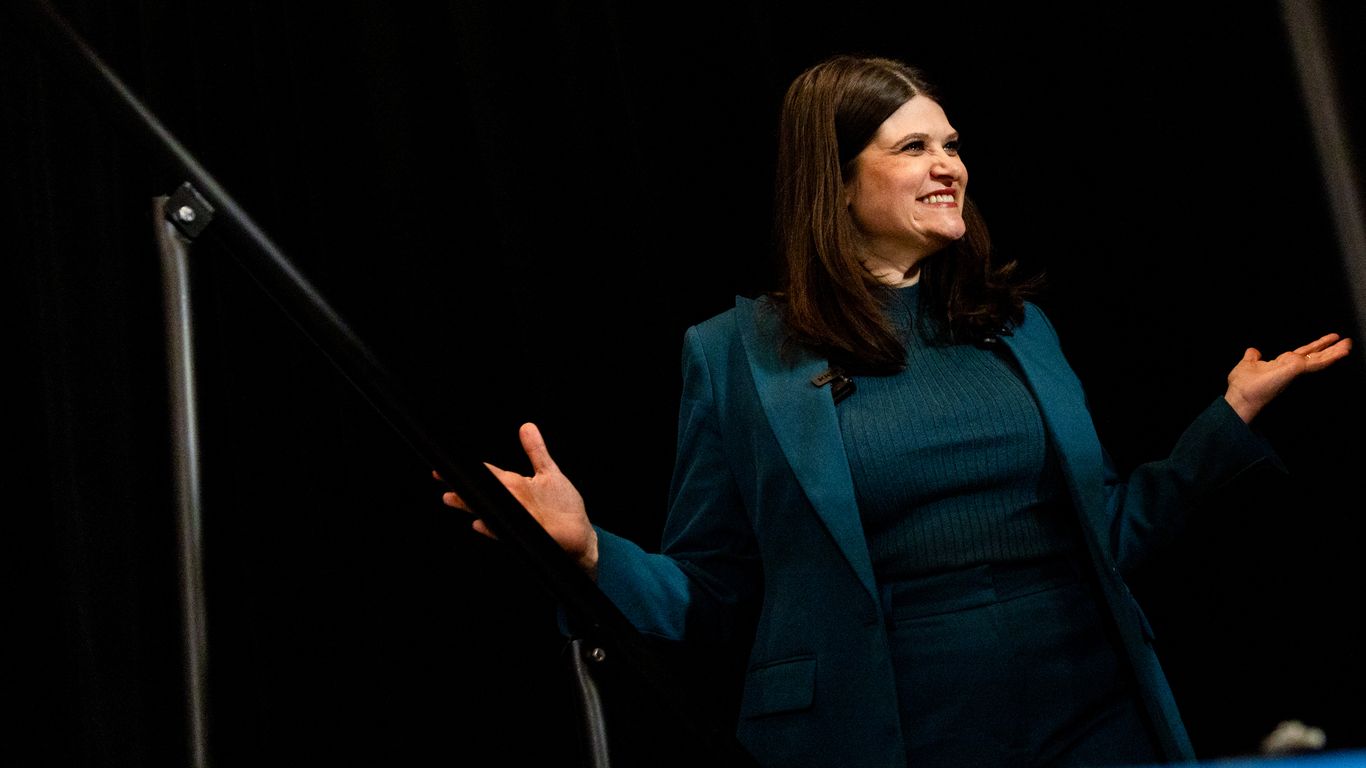
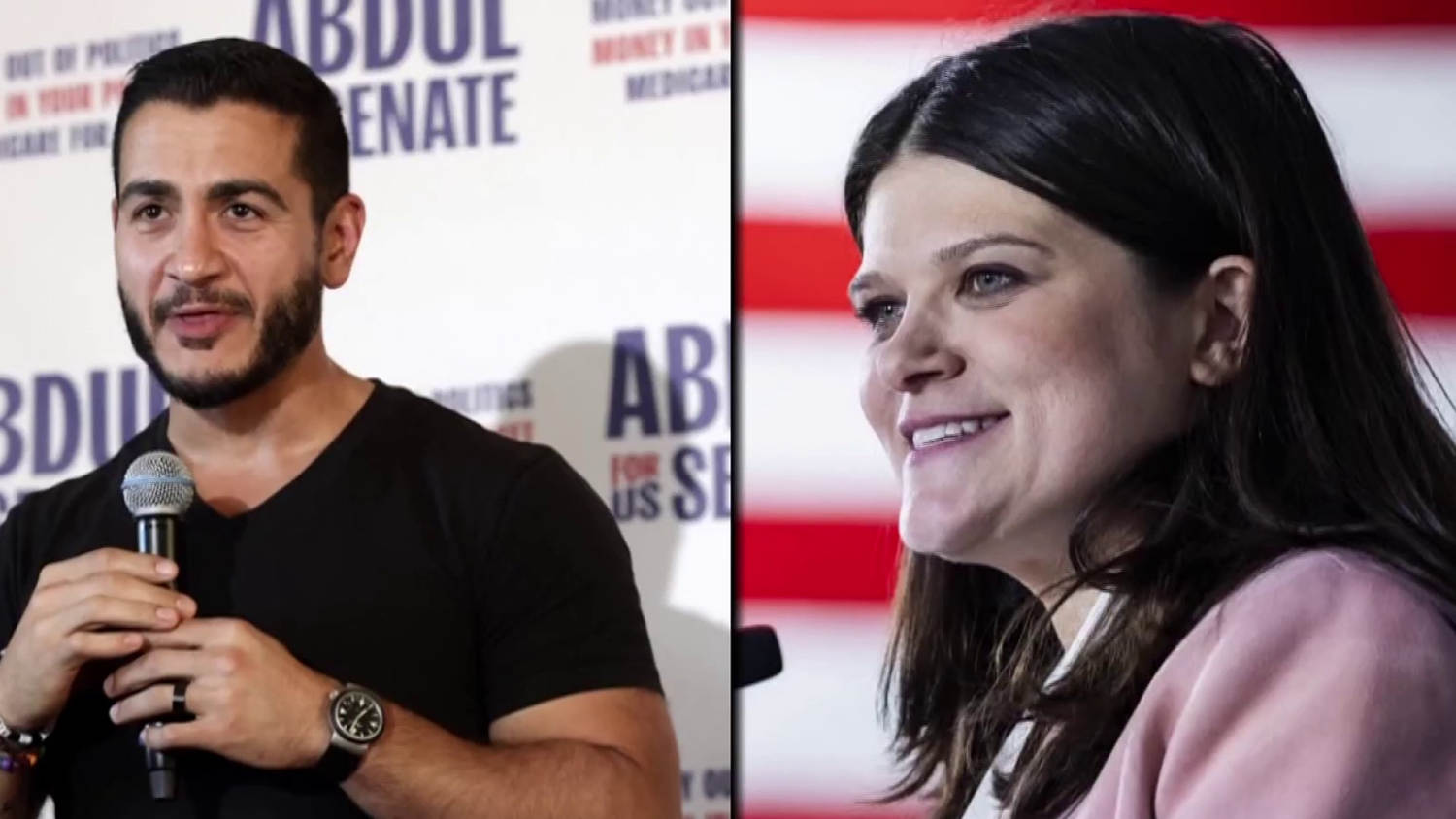
Michigan Rep. Haley Stevens has requested U.S. marshals' protection after the Democrat told authorities she had received death threats for endorsing Republican Mike Rogers in the swing state's hotly contested Senate race, two senior Trump administration officials tell Axios. Why it matters: Stevens' surprise decision Sunday to switch her endorsement to Rogers over Democratic Senate nominee Abdul El-Sayed was the biggest political story of the midterm campaign's final days. Stevens — who lost to El-Sayed in the Michigan Senate primary — was widely criticized by Democrats after siding with Rogers, and her top staff members resigned. "She has received death threats and reached out to the Marshals Service," one of the officials said. "There's a process to go through but she's a member of Congress and we expect her request will be fulfilled." Zoom in: Stevens' support for Israel and his criticism of the Jewish state was a major dividing line in their primary campaign. Stevens objected to El-Sayed's ties to controversial progressive streamer Hasan Piker and an ad by a PAC tied to Piker's uncle, Cenk Uygur, blaming Israel for rising grocery prices. El-Sayed disavowed the ad, but Stevens said she believed he hadn't done enough to address her concerns and didn't want her help on the campaign trail. The dispute came to a head when she was told she was no longer welcome at El-Sayed's campaign events. Stevens announced her endorsement of Rogers after appearing with him at a church service on Sunday. Stevens could not be reached for comment Tuesday. The big picture: The political environment in Michigan has been volatile this weekend. On Monday, the New York Post reported a former El-Sayed staffer was one of several anti-Zionist activists federally indicted for allegedly terrorizing members of Michigan's Jewish community. On Sunday, a conservative Jewish activist was attacked by a progressive activist at a University of Michigan event where organizers were criticizing Islam. On
US voters vote today in the midterm elections, which will decide whether Republicans retain control of the House and Senate. A Democratic victory in either chamber would significantly constrain Trump’s ability to advance his domestic agenda. Even if Republicans retain one or both chambers, a reduced majority could make passing legislation more difficult, and could pave the way for Democrats to launch investigations into the administration. US midterm elections 2026 live: Americans go to the polls to decide control of Congress What are the races to watch in the US midterm elections and why do they matter? Continue reading...
Voting is underway across the country Tuesday in a midterm election that could decide whether President Trump gets two more years of unified Republican rule — or faces a potential Democratic check on his power. Why it matters: The results will be the clearest national test of Trump's second presidency , following war abroad, economic anxiety at home and sweeping changes in Washington. Trump, facing all these challenges, has made himself the face of the Republican campaign for control. State of play: As voters head to the polls, the Trump administration is zeroing-in on the Alaska Senate race. The Department of Justice has sent more than a dozen target letters as part of its investigation into the Dan J. Sullivan campaign, which has been the subject of Trump's ire for several days. It's an escalation into the Trump administration's push for answers in the race where Democrats reportedly conducted an organized effort to recruit another "Dan Sullivan" to join Sen. Dan Sullivan (R) on the ballot. The Justice Department's move comes as the White House is circulating Election Day talking points across the administration, touting Trump's accomplishments as the GOP braces for a tough evening that could see them lose both the House and the Senate, according to some forecasters. Trump has been a massive force on the campaign trail, rallying in several states for his Republican picks. The president has claimed to voters that he is on the ballot this year, making the election about his policies and actions — despite his dismal polling ratings, plagued by the Iran war and economic anxiety. Trump spent the morning of Election Day criticizing Michigan Democratic Senate nominee Abdul El-Sayed, Rep. Ted Lieu (D-Calif.) and the Daily Mail in various social media posts. Zoom in: Voting machine glitches and hiccups popped up in various spots of the country Tuesday, including in the high-profile New York House race between Rep. Mike Lawler (R) and Democratic nominee Cait Conley. Otherwi
Control of the chamber is on the ballot on Election Day.
Endorsing his opponent while the US risks plummeting into fascism, she reveals the one issue that triggers her to take destructive action “Did you talk to anyone? Did you have a long night of the soul? Were you up all night? ... Did you have a dream?” Interviewing the Michigan US representative Haley Stevens on CNN on Sunday, Anderson Cooper was casting about for explanations. What caused the Democrat’s radical change of heart between a Saturday night promise to her House colleague Debbie Dingell that she would stand with the Democratic Senate candidate Abdul el-Sayed and a public endorsement Sunday morning of his Republican opponent, Mike Rogers? Continue reading...
Americans are voting in midterm elections with control of the House and the Senate at stake for the remainder of Donald Trump’s second term in office, while voters are also electing governors and other state and local officials Continue reading...
These graphics explain what the Democrats would need to do to flip the Senate and House of Representatives A turning point in Donald Trump’s second term has arrived. Voters across the US are deciding whether to keep the president’s Republican allies in control of Congress, or return Democrats to the majority. Many indicators of voter sentiment suggest the Democrats are favored to take back control of the House of Representatives, and potentially the Senate. Winning either would be a significant victory for the party and give it the power to block Trump’s legislative agenda and more aggressively investigate his administration. Continue reading...
There's a lot at stake for energy in the midterms, from the fate of the bipartisan permitting deal to the growing backlash against data centers and electricity prices. Why it matters: The results could spotlight which energy topics resonate with voters — and which have become political liabilities. Gasoline and diesel prices have been big on the campaign trail, offering a chance to see how much voter frustration over energy costs matters at the ballot box. Data center politics: There are sharp differences between the parties, even though data centers aren't especially popular with either party's slate of candidates. Why it matters: The pace of the AI buildout affects power demand and emissions. State of play: 32.4% of Democratic candidates support moratoriums at the federal, state, or local level, compared to just 3.4% of Republicans, per Data Center Watch, which tracked hundreds of races. Zoom in: Meanwhile, Ballotpedia is tracking dozens of ballot measures on data centers, many of which would impose new restrictions. Ohio is a hot spot. Control and permitting: The outcome will affect the politics of the lame-duck session — and that means the politics of the bipartisan permitting deal. What they're saying: If Democrats take both chambers, "leaders might opt to wait until they hold the gavels next year to renegotiate compromises," the research firm ClearView Energy Partners said in a note. Yes, but: A reminder that backers of the current bill think it's folly to expect political space to write a more liberal bill that President Trump would sign, or that could even pass the Senate. Threat level: What if the results are very close? ClearView notes that if Trump and allies contest the results, "weeks of post-election skirmishing could complicate passage of any bill." Political lessons: The results could offer clues about where energy and climate policy are headed. State of play: Exit polling is not famously precise, but it could provide a barometer of how much voters t
The US has been voting for senators, members of the House of Representatives and state governors in the midterm elections. Here are the results in full US midterm elections 2026 live: Americans go to the polls in referendum on Trump’s agenda The US legislature, Congress, has two chambers: the House of Representatives and the Senate. Continue reading...
Voters are about to decide whether public backlash against the health care industry translates into meaningful policy shifts. Why it matters: Health care has never been more expensive, and it's not going to get any cheaper without significant intervention. The big picture: It's hard to see Democrats not making health care affordability a top priority in the next Congress, regardless of whether they win only a narrow majority in the House or sweep both chambers in a blowout. But the party isn't aligned on an agenda, and a strong showing by progressives could drag things leftward. Reality check: Any Democratic victory — no matter the size — will be tempered by the realities of split government, with President Trump still in office for the next two years. Larger Democratic majorities may bring greater leverage in negotiations over spending packages or raising the debt limit. And the boldest changes will probably be reserved for the campaign trail, as 2028 presidential contenders begin to vie for the party's nomination. Here's what we're watching: Medicare for All vs. moderates: What happens in Michigan's Senate race — and Maine's, to some extent — will almost certainly shape how much sway progressives have in the next two years. Democrat Abdul El-Sayed has made Medicare for All central to his campaign, unabashedly supporting the idea in a race that could determine which party has control of the Senate next year. The same is true of Democrat Troy Jackson in Maine's Senate race, though Jackson has a lower national profile than El-Sayed. But Medicare for All supporters looking for a vote on the measure face an uphill battle : Despite the policy's growing popularity among the public, moderates unwilling to abolish private insurance will make up a sizable portion of any Democratic majority. The doctors-turned-politicians: Doctors are on the ballot in key races this year, and the question is how much public trust translates into votes. El-Sayed, an epidemiologist who went to
Data: AdImpact; Chart: Erin Davis/Axios Republicans on the ballot this cycle have all but stopped mentioning President Trump in their campaign ads , according to an Axios analysis of broadcast advertising data from AdImpact. Why it matters: Trump has tried to make the 2026 midterms a referendum on his presidency. His party has run the other way. The big picture: Ads from both parties in Senate, House and gubernatorial races have shifted from a heavy focus on Trump during the primaries to a much greater emphasis on the economy in the general election. Both parties have also leaned much more heavily into health care, with a noticeable increase among House Republicans. By the numbers: The drop-off is steepest among Republicans, and especially in House races. Trump appeared in 66% of House Republicans' primary ads but shows up in just 3% of their general election ads. In Senate races, Republican ads mentioning him fell from 77% to 22%. Governor's races saw the same shift: Republican ads mentioning Trump fell 34 percentage points. Democrats have also pulled back from Trump, though less dramatically. Trump appeared in 45% of Democratic primary ads, but just 18% of their general election ads. Zoom in: Republican candidates are mentioning some of Trump's signature issues less than during the primaries. The share of Republican ads mentioning immigration has dropped 20 percentage points in Senate races and 14 points in House races. Ads referencing law enforcement fell from 11% of Republican Senate primary ads to 6% in the general election, even as their mentions of crime increased. Data: AdImpact; Chart: Erin Davis/Axios Between the lines: Candidates often lean on the country's most prominent political figure in primaries, then pivot to policy issues in the general election. But this year's drop-off stands out given how hard Trump has pushed to tie himself to the midterms. He has urged voters to pretend he's on the ballot and essentially demanded ads running during the Republ
Our election data reporter Evan Reynolds looks at counties that could decide the Senate race in the diverse and rapidly growing southern states of Georgia and North Carolina.
Election results in states where voting ends early could indicate how each party will fare in House and Senate races elsewhere in the country.
Could Texas elect its first Democratic Senator in decades? Our election data reporter Christine Zhang tells us what counties to watch in the competitive Texas Senate race.
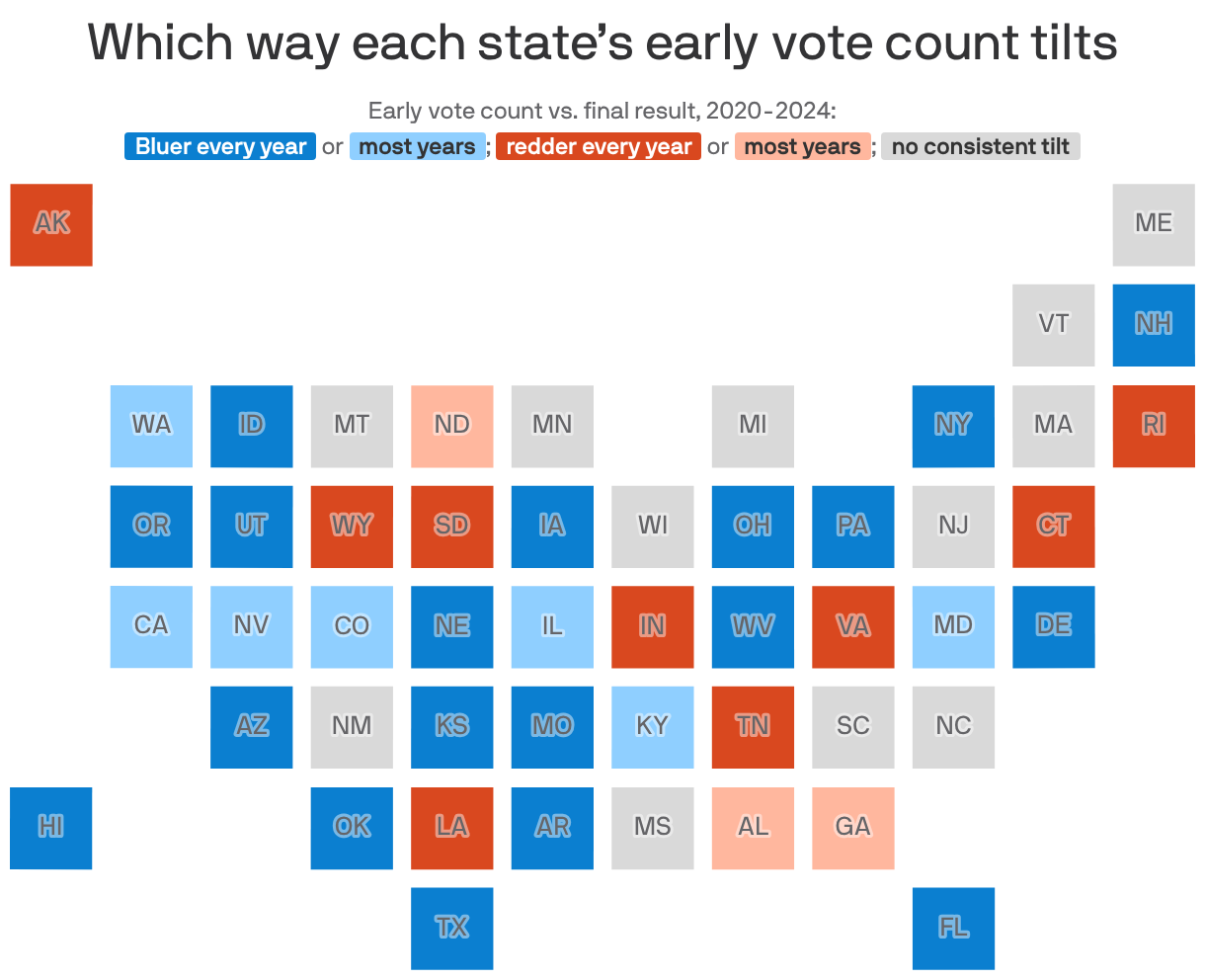
Data: AP via The New York Times and Axios research; Chart: Andrew Pantazi/Axios The first votes counted Tuesday night will almost certainly look redder than the final result, and control of the House and Senate could take days to settle. Why it matters: Early leads can create false impressions of who's winning and suspicion when those leads vanish. Election night is really election week. By the numbers: AP didn't call control of the House until seven or eight days after Election Day in each of the past three elections . The Senate was settled by 10:44pm on election night in 2018 and at 12:06am the next morning in 2024 . In 2022, it took four days , and in 2020, it wasn't called until Georgia's January runoffs , two months later. State of play: Republicans hold 53 Senate seats . Democrats need a net gain of four for a majority. The red head start: In every national election since 2018, the House and Senate votes counted by 9pm ET were 4 to 9 percentage points more Republican than the final result, an Axios analysis of AP and Edison Research vote counts found. It's mostly geography. Fast-counting Florida and other right-leaning states report first. At 9pm on election night 2022, Florida accounted for 40% of all Senate votes counted nationwide. By 11pm, more House races had been called for Republicans than Democrats in all four elections, including 2018 and 2020, when Democrats won the House. The tilt fades, slowly. At 6am Wednesday, the national House count was still 2 to 3 points more Republican than the final, largely because California, Washington and Oregon count for days. Data: Axios research; Chart: Andrew Pantazi/Axios Zoom in: Each state tilts its own way, depending on which ballots and which counties it counts first. States that count early and mail ballots first tend to start bluer than they finish. States that count Election Day votes first start redder. Ohio, Nebraska, Texas, Kansas and Iowa start blue. Sherrod Brown and Bernie Moreno were tied at 9pm in 2
Republicans see Michigan as a key Senate seat to flip. Our reporter Christine Zhang breaks down the race between Abdul El-Sayed and Mike Rogers.
Republicans are bracing for losses amid a backlash to the president’s economic leadership and the Iran war. Whether that means giving up control of the Senate is Tuesday’s biggest question.
The 2026 midterms will offer the first test of voter sentiment on the AI race, offering a window into how a niche policy debate is transforming into a wedge issue ahead of a presidential campaign cycle. Why it matters: The results will reveal whether explicitly campaigning on AI regulation—or aligning with tech moguls like Elon Musk—is a winning political strategy or a liability for 2028. One thing is already clear: Candidates increasingly can't afford to have half-baked AI agendas. Here are three major questions about the future of AI politics and policy and the races we're watching on Election Day for answers. 1. Did AI break through? A different kind of AI political spending has emerged in the midterms. Instead of supporting or opposing candidates based on their AI positions, some groups want to make AI policy itself a campaign issue. Guardrails Alliance, a pro-regulation advocacy group, recently launched ads targeting Republicans and Democrats over their positions on AI in Arizona, Montana, North Carolina and California. The organization backed Michigan Senate candidate Abdul El-Sayed, who said AI was the most important issue heading into Election Day, tying it explicitly to jobs and affordability. Democratic group Tomorrow Together also launched ads against Republicans' AI track record in Michigan, Wisconsin, Arizona and Pennsylvania. Meanwhile, competing AI groups Public First and Leading the Future spent more than $50 million through affiliated super PACs in nearly 50 races, but their TV and digital ads largely avoided the very issue they're trying to influence: AI. These races could offer an early test of whether explicitly campaigning on AI is a viable political strategy heading into 2028. 2. Did Elon Musk help or hurt candidates? Elon Musk's political spending, involvement in DOGE and ties to the Trump administration have made him both a powerful political backer and a target for Democratic attacks. He was the biggest donor in the midterms by far, contribu
Democrats are poised to romp in today's election — easily winning the House and, according to most forecasts, flipping the Senate too. Yet the party itself is less popular than the IRS . Even the GOP has a better brand. Why it matters: There's a difference between a blowout and a mandate. Confusing the two could tempt Democrats to overread the results and forget the serious credibility problem they still face heading into 2028. The big picture: Democrats have done a lot of things right to position themselves for a big night. They recruited candidates who've put red state Senate races that seemingly were beyond reach, within their grasp. Many of those candidates vastly outraised their Republican opponents. But polls across the board still show a lesser-of-two-evils election — or as one Republican tied to President Trump's political operation described it, a contest of which party voters hate more. Voters are more eager to disempower Trump than to empower Democrats. By the numbers: Just 29% of registered voters have a positive opinion of the Democratic Party vs. 38% who view the Republican Party positively, according to a pre-election NBC News poll . The same poll showed Democrats with a 7-point lead in the congressional generic ballot, 52 to 45. And nearly 6 in 10 voters who plan to back Democrats in the election said their vote is about stopping Trump and Republican policies — vs. 4 in 10 who said they were more motivated to help Democrats enact their policies, per an October CBS News/YouGov poll . Zoom in: Many Democrats say they're determined not to repeat the mistake they made after the last midterms in 2022. They defied predictions of a red wave and saw it as an endorsement of Joe Biden and their party — when voters actually were increasingly angry. The post-2022 takeaway ultimately laid the groundwork for Trump's return to the White House after the 2024 election. Democrats won the House in the 2018 midterms — and went on to impeach Trump the following year. Thi
Republicans don't know if they'll lose big or small on Tuesday, but they're already bracing for an epic blame game. Why it matters: Privately, Republicans acknowledge it's not a complicated version of Clue. The leading suspect: Mr. President, in the Oval Office, with an assortment of weapons — and one war. Returning Republican senators are unlikely to blame President Trump publicly. There's a price for that. And don't expect Trump to shoulder the responsibility. But do expect departing GOP lawmakers to take shots at Trump or his team, and Trump to fire back at Senate Republicans, whom he's never been shy about torching. The irony of Trump's second midterm: With Republicans privately resigned to losing the House, Trump can still credibly claim victory if they hold the Senate. "It's Donald Trump's midterms. He gets all the credit if we win. He gets all the credit if we lose," one national GOP strategist told Axios. The Iran war: From Alaska to Maine, Trump's decision to go to war with Iran — and the resulting spike in gas and diesel prices — has become a major political liability for Republican Senate nominees. "It's not tariffs … it's the war, it's gas prices, it's diesel," Texas Attorney General Ken Paxton said at a closed-door fundraiser in September, Axios reported last month . Tariffs: Trump's trade policies have compounded Republicans' affordability problems, particularly in farm country, where producers have faced higher costs and uncertainty over export markets. "We need to end this tariff war now," former Rep. Mike Rogers (R-Mich.) , the GOP Senate nominee, said in an October campaign ad, breaking with Trump over his tariffs on Canada. Bad candidates: Trump's preferred nominees are also drawing blame, GOP strategists tell Axios. Paxton in Texas and Sen. Darline Graham in South Carolina have forced Republicans to spend heavily defending races that should have been easier — and where the party had other options. Complacent incumbents: Sens. Roger Marshall (R-Ka
The threat of a blue tsunami is bearing down on President Trump's Washington, with virtually every major indicator forecasting a Democratic rout in Tuesday's elections. Why it matters: Expectations for the midterms have soared so high that some Democrats fear disappointment is inevitable, particularly if the party falls short of winning the Senate — a prize that seemed beyond reach just months ago. By the numbers: Five key metrics help distill the extraordinary consensus taking shape on the eve of the midterms. 🔮 95% and 80%: The probability of Democrats winning the House and Senate, respectively, according to election forecaster Nate Silver , whose model projects an average gain of 25 House seats. Silver says Democrats could now withstand a modest polling error and still capture the Senate — a remarkable cushion given the GOP's history of outperforming polls in the Trump era. 🗺️ 7 for 7: Democrats lead in every Senate battleground state surveyed in the final New York Times/Siena polls , including by 11 points in Michigan and seven in Texas. Trump carried six of those seven states in 2024, though five of the Democratic leads — Maine (+6), Kansas (+5), Ohio (+5), Alaska (+2) and Iowa (+1) — remain within the polls' margins of error. 🏛️ 240: The number of House seats Democrats could win under the upper end of Cook Political Report's forecast — potentially their largest majority since the first year of Barack Obama's presidency. Reaching that mark would require Democrats to sweep all 18 toss-up races. Cook already favors them in 222 districts, four more than needed for a majority. 🎲 73%: The probability of Democrats winning both chambers of Congress, according to Kalshi . After correctly favoring Trump in 2024, prediction markets have become a closely watched barometer of political expectations. Nearly $100 million in contracts have traded on Kalshi's congressional control market alone. 📊 +14: Democrats' lead on the generic congressional ballot in the final poll f
Democrat Mary Peltola’s campaign reportedly recruited a second Dan Sullivan in the race in what Republicans call a ploy to split votes Republican officials have called for an investigation into an alleged ballot-stacking scheme in Alaska’s competitive Senate race by Democrat Mary Peltola’s campaign. For months, Donald Trump and others accused Peltola and Democrats of recruiting candidates with the same name as her Republican opponent, Dan Sullivan, to purposefully confuse voters when they cast their ballots in November’s midterms. Continue reading...
The top Senate GOP super PAC has nearly tripled its spending on streaming and social media platforms this election cycle to more than $200 million, Axios has learned. Why it matters : In a record cycle for ad spending, more political money is shifting to streaming, where super PACs have greater freedom to target voters, bargain and experiment — but platforms have more power to set the rules. In some states, streaming and social media have swallowed half of the Senate Leadership Fund (SLF) budget, according to a source familiar with the group's spending. SLF's $200M+ total for the 2026 cycle (up from $71M in 2024) doesn't include tens of millions of dollars funneled through the SLF-linked Texas PAC. The other side: The top Senate Democratic super PAC declined to provide a dollar figure for their spending on streaming. "Senate Majority PAC invested more this cycle in digital communications than any previous cycle, running digital campaigns in 12 states," SMP communications director Lauren French told Axios. Zoom in : Streaming and social platforms offer campaigns the power to target more specific audiences compared to traditional broadcast, and make it easier to measure the impact. "Its way more surgical than a linear broadcast buy," Zack Roday, managing director at Think Big, told Axios. But platforms can also set their own rules around which types of ads they want to accept. Some, like Netflix and TikTok, don't allow any candidate or issue ads . Republicans have complained about restrictions on ads that include transgender issues on Disney-owned platforms. Between the lines: Super PACs often pay multiple times what a campaign pays for ads on broadcast TV and radio because of laws ensuring candidates get the lowest rates. Online, super PACs can negotiate directly — and use their fat budgets and sprawling election maps as leverage. SLF works with platforms like SiriusXM, Paramount, Hulu, YouTube and others to lock in discounts based on their overall spending plans, ac
Democratic congresswoman Haley Stevens has endorsed the Republican candidate for the Senate after a spat with her party’s own candidate in Michigan, Abdul El-Sayed. The endorsement stunned Stevens’s Democrat colleagues, with one calling it a ‘despicable betrayal’ on the eve of the midterm elections. So what will it mean for the race? Lucy Hough speaks to US southern bureau chief and host of Anywhere but Washington Oliver Laughland Continue reading...
Republican John Sununu tries to distance himself from unpopular president in race against Chris Pappas that has gone from ‘toss-up to ‘lean Democrat’ Chris Pappas is stopping himself from getting too excited ahead of Tuesday’s midterm election. “I take nothing for granted,” said the four-term US representative and Democratic nominee for New Hampshire’s open Senate seat. “This is a very purple, competitive state. Elections are never in the bag here.” Continue reading...
Young men’s dissatisfaction with Trump could be a critical factor in close midterm races. A jet crash in Florida kills everyone aboard. And a new study links energy drinks to cardiac arrest.
Republicans are focused on a race that could flip the Senate – and where an Alaska Native is favored Days before Alaskans get to vote, the federal government is already trying to overturn the result. Last week, at Donald Trump’s behest, the justice department sued to block the certification of Alaska’s US Senate race, if the Republican incumbent narrowly loses; a judge dismissed that suit on Sunday, though the administration said it planned to appeal . On Wednesday, Trump demanded that Mary Peltola, the Alaska Native Democrat whom polls favor to win , be removed from the ballot and prosecuted. Piling on, Alaska’s Republican governor has since ordered an investigation into Peltola’s campaign. Continue reading...
Stevens’ decision sparked fierce backlash from members of the party, while Donald Trump praised the sudden switch Michigan Democrat Haley Stevens’ shocking last-minute endorsement of Mike Rogers, a Republican Senate candidate, has sparked fierce backlash from members of her party. Stevens, who narrowly lost in the Democratic primary for Senate to Abdul El-Sayed, announced her support for Rogers after a feud with the El-Sayed campaign over an outside group’s campaign ad that blamed the high cost of living on US support for Israel. Continue reading...
Democrats are fighting to win control of the House and Senate in the midterms. Here’s what winning would mean for them – and Donald Trump If Democrats win back the US House of Representatives or the Senate in the midterm elections on Tuesday, the final two years of Donald Trump’s presidency will look markedly different from the first half. But what would the Democrats’ actually be able to do with either – or both – chambers of Congress in their control? Continue reading...
Republicans are burning tens of millions of last-minute ad dollars to try to rescue three red-state senators who they say ignored months of warnings that their campaigns were in danger. Why it matters: Senate races in Kansas, South Carolina and Mississippi are normally GOP layups. This year, Republicans have diverted resources from swing-state battles to defend them. The frustration with Sens. Roger Marshall (Kansas), Darline Graham (South Carolina) and Cindy Hyde-Smith (Mississippi) comes amid broader GOP finger-pointing as polls show a nationwide backlash against President Trump . "Democrats may win these seats in a wave ... but not a blue wave. It's the wave of arrogance [and] laziness ... that washed over these GOP incumbents and made them think they were invincible," said a national GOP operative involved in several key Senate races. By the numbers: National Republicans have spent $33 million in Kansas, $21 million in South Carolina and $2.4 million in Mississippi, according to data compiled by campaign finance expert Rob Pyers. Trump also has spent valuable campaign time in all three states. Behind the scenes: Republicans say the three senators ignored warnings to raise more money and build stronger campaign operations. National Republican Senatorial Committee chair Tim Scott warned all GOP senators in February 2025: "We do not need to spend time and money in places where races should not be competitive." Trump's political operation also warned Senate Republicans that they would need to pull their own weight. The most complaints center on Marshall, who has raised just $7.5 million compared with $19 million for his Democratic opponent, Adam Hamilton. Republicans blame his strained relationship with the banking and credit card industries — major GOP donors — and a lack of outreach to K Street. Republicans describe Marshall's campaign as overconfident. About a month ago, his team told aides to other GOP senators that the race would be effectively over within 10 d
Polls show some kind of “wave” seems likely for the Democrats in this midterm election. But will it translate into Democrats flipping the House and Senate? Nate Cohn, our chief political analyst, outlines four possible scenarios.
Facing an energized Democratic opponent, the Texas attorney general is testing whether party loyalty can overcome voters’ reservations about him.
Former vice-president has not yet ruled out another run for the Democratic nomination as she campaigns for others in the midterm elections Two years on from her devastating presidential election defeat, Kamala Harris was greeted like a rockstar as she took the stage before a rapt audience at Georgia’s Clark Atlanta University. When a politician is greeted by a friendly crowd, they often hear chants of their name. But at Clark, an historically-Black college (HBCU), students instead delivered a school spirit chant for the Atlanta University Center, celebrating an HBCU alumna – and the country’s first female and first Black vice-president – as one of their own. Continue reading...
Despite the US president’s ratings being at rock bottom, undoing his legacy will be difficult, not least because the Democrats are in disarray The stats and polling all suggest one thing: the Republicans are set for a hammering in the midterms. Donald Trump has the lowest approval rating of any US president going into a midterm election since Harry Truman. And it’s still dropping. The Democrats are projected to win by a margin of 11 percentage points , the largest swing by any party in almost 20 years. It is possible that the Democrats flip the Senate and secure a large majority in Congress. Those majorities would make a material difference, perhaps finally establishing oversight of the policies Trump has brought in during his second term: immigration enforcement, trade disputes, gutting the federal workforce, the Iran war, to say nothing of his own family’s corruption. The tide seems to be turning, and one question is on everyone’s mind: is the Trump era really ending? “Nobody wants to jinx it,” wrote David Wallace-Wells of the New York Times, but: “All the signs we have suggest that, historic or not, these midterms are likely to mark the end of a political era.” What that gives way to is a much more complicated picture in which the US will be delivered from Trump himself, but remains a country riven and undermined by what he has unleashed. By the time he is gone, Trump will have been president for eight years, and a toxic force for more than 12. That is a long time even for a normal politician. Under one who shatters norms and forces himself into the centre of everything, Trump’s effect is as if he were president for decades. Continue reading...
Michigan Democrat Abdul El-Sayed’s former opponent in the U.S. Senate primary, Haley Stevens, has stunned party officials by endorsing Republican Mike Rogers
Democrats have the lead in most of the seven tossup Senate races, according to the latest Times/Siena poll, though some contests remain close. Our polling reporter Ruth Igielnik breaks down what the numbers show.
Some House Democrats want Rep. Haley Stevens (D-Mich.) expelled from their caucus after she crossed party lines to endorse Republican Mike Rogers for Senate on Sunday. Why it matters: It would be an extraordinary step that reflects the deep internal resentment towards Stevens within her own party. "I hope she doesn't return to work on Tuesday," Rep. Lateefah Simon (D-Calif.) told Axios, saying Stevens should be removed from the caucus. "Agreed," Rep. Marc Veasey (D-Texas) told Axios, arguing the endorsement "doesn't accomplish anything except hurt[ing] Haley" and that "she got bad advice." "I'd support that," Rep. Emily Randall (D-Wash.) said of removing Stevens from the caucus. Driving the news: Stevens infuriated colleagues on Sunday by endorsing Rogers over Democratic candidate Abdul El-Sayed, who defeated Stevens in the Senate primary in August. Stevens, a pro-Israel moderate, had been urging the more left-leaning El-Sayed to more forcefully denounce a super PAC ad partially blaming U.S. aid to Israel for rising prices. Stevens said the ad claimed "Jews are responsible for America's economic woes." El-Sayed pushed back in a statement saying Stevens "seems intent on relitigating a primary that ended three months ago." Stevens attended church with Rogers on Sunday and released a video to social media endorsing him. The two also held a joint press conference. What we're hearing: There has been private discussion about moving to oust Stevens, a senior House Democrat said, telling Axios, "That's what people want." Stevens was also removed from several House Democratic text chains, the senior lawmaker said. A second House Democrat told Axios: "I've heard people invoking the rule about not endorsing against Democrats." "Endorsing a Republican in a tipping point state is ridiculous, especially from a Democrat ... She should be removed from our caucus altogether," a third House Democrat said. Yes, but: Not everyone is on board with the idea — even those frustrated at Ste
Rep. Haley Stevens has pulled her endorsement of her party’s nominee Abdul El-Sayed, and has announced she is now backing his Republican opponent Mike Rogers in the Michigan Senate race. NBC News’ Liz Kreutz reports.
Rep. Haley Stevens, D-Mich., endorsed Republican Senate candidate Mike Rogers on Sunday, a major shake-up in the final stages of a top battleground race that could determine which party controls the Senate.
Pennsylvania Gov. Josh Shapiro 's chances of being a presidential contender in 2028 are riding on his winning reelection in a landslide Tuesday. New York Rep. Alexandria Ocasio-Cortez 's future hinges on whether a fellow progressive can carry a swing state, for once. California Gov. Gavin Newsom has to show that his congressional redistricting gambit worked for Democrats — and he needs to beat back a state wealth tax proposal supported by Sen. Bernie Sanders (I-Vt.). Driving the news: Democrats eyeing White House runs have spent the past year preparing to emerge from Tuesday's midterms with momentum, and an argument for a 2028 candidacy. They want Democrats to do well — but to each, some races are especially important. Some have focused their time and money on particular contests for ideological reasons, or a desire to show strength in their home states. Others have hedged their bets across the nation, so that Tuesday is unlikely to be a huge victory or a significant defeat. Here's how the top potential Democratic contenders for president have placed their bets in this week's elections — and what success or failure will look like for them. Alexandria Ocasio-Cortez A great night: AOC has wagered just about everything on the Senate race in Michigan, where she's said that a win by progressive Abdul El-Sayed would "break open the entire political calculus in America" and show that "anybody can win anywhere." She's weighing whether to run for president or the Senate, and much of her electability argument for a national campaign hinges on an El-Sayed victory. Progressives are desperate to establish that one of their own can carry a presidential battleground state. Ocasio-Cortez has contributed $1 million to help El-Sayed and stumped for him at several events. An El-Sayed victory "would prove to the country, and the world, that competent, courageous progressive populists can win in the most competitive swing states in America," said Bhavik Lathia, a left-wing strategist fr