
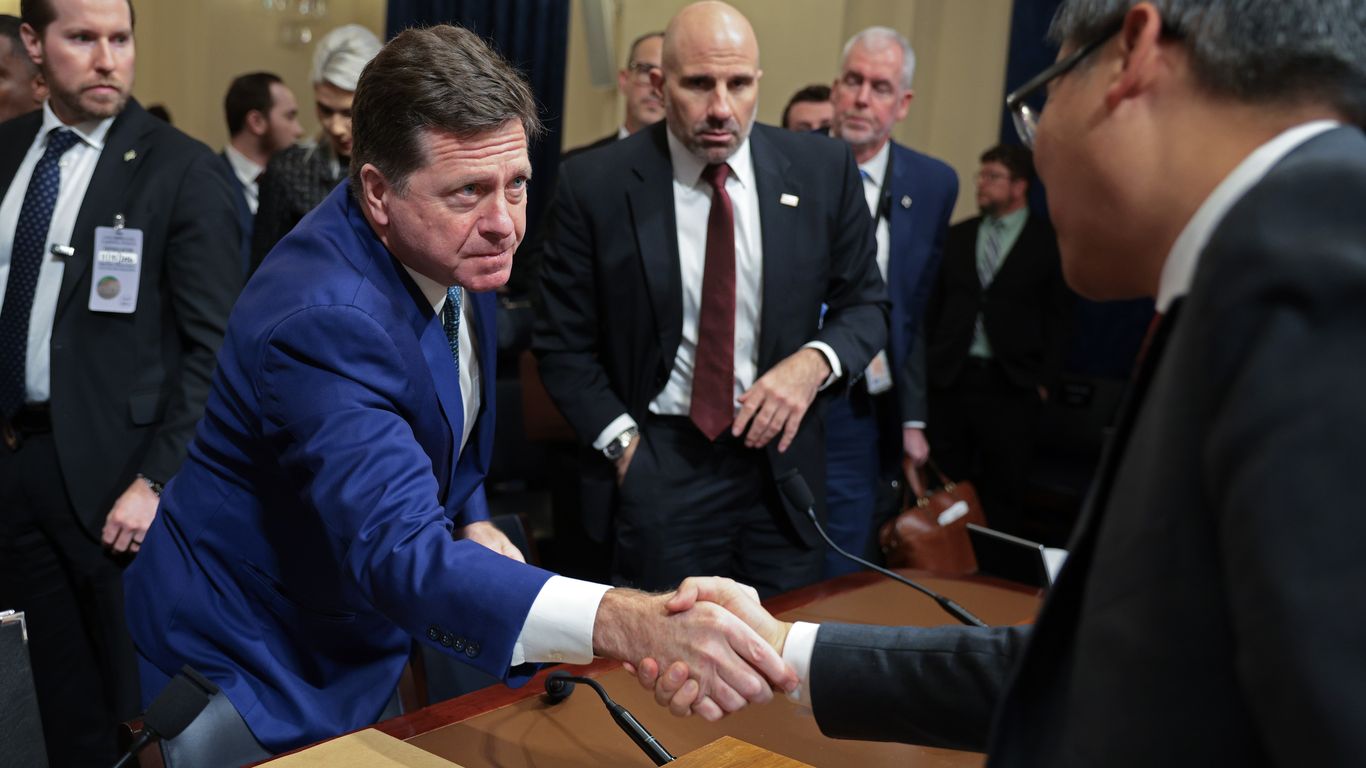
Director of National Intelligence Jay Clayton will also serve as acting national cyber director while Kirsten Davies awaits Senate confirmation to lead the office, Axios has learned. A White House official said the strong support Davies received convinced Trump to nominate her to lead the office permanently rather than keep her in an acting capacity. Why it matters: Clayton, the nation's top intelligence official, will now coordinate cybersecurity policy as outages and reported cyberattacks expose vulnerabilities in America's digital infrastructure. Catch up quick: President Trump announced Thursday he was tapping Davies, the Pentagon's chief information officer, to replace Sean Cairncross as national cyber director. Davies will assist Clayton as a senior adviser in the Office of the National Cyber Director until she is confirmed. Trump has increasingly turned to Clayton. He became director of national intelligence in August, and then Trump named him AI czar coordinating the government's approach to AI. Now he will temporarily lead the office responsible for coordinating cybersecurity policy. What they're saying: "I'm excited to work more with Kirsten, who has the experience and capabilities needed to help America navigate our increasingly complex and powerful digital infrastructure as our next National Cyber Director," Clayton said in a statement to Axios. "I look forward to working with the ONCD team to ensure Kirsten has a seamless transition into the role upon her confirmation by the Senate." The big picture: Two critical national security roles will temporarily fall under one official as President Trump shakes up his cybersecurity team amid the growing threat of AI-powered attacks. The disruptions have raised concerns about the vulnerability of the nation's digital infrastructure, although administration officials say there is no evidence they were caused by coordinated cyberattacks. Clayton himself has played a prominent role in the administration's response,
Results for “house majority”
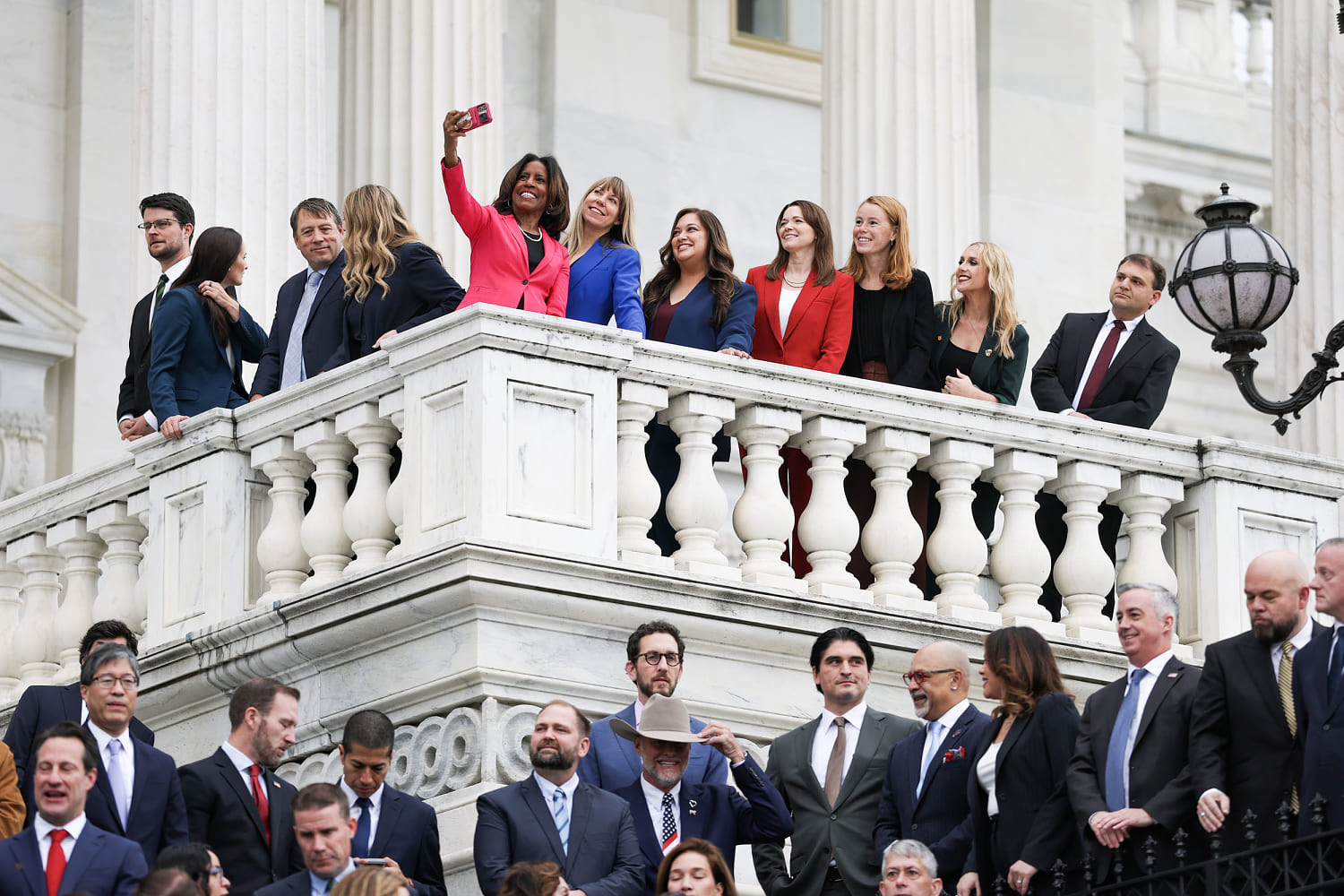
Democrat Chuck Hubbard has defeated GOP Rep. Virginia Foxx for a congressional seat in North Carolina, NBC News projects, adding to a Democratic wave that is projected to deliver the party at least 258 House seats.
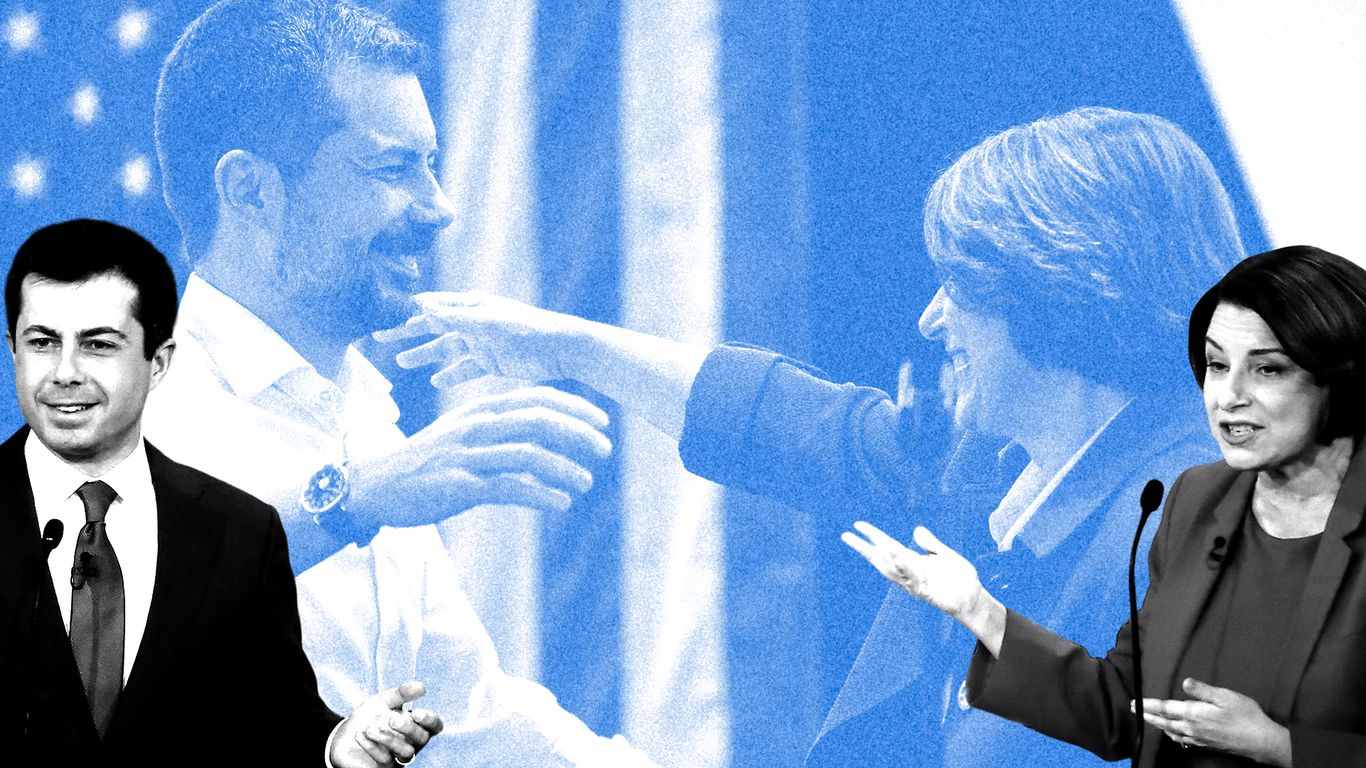
To the surprise of many Democrats and even some of their former aides, Pete Buttigieg and Amy Klobuchar now consider themselves friends after their bitter clashes during their campaigns for president in 2020. Their journey from snarky tension to "real respect and friendship," as Klobuchar describes it, is a story of how two ambitious Democrats came to appreciate each other once the heat of a presidential primary had subsided. Why it matters: It's also a reflection of how Buttigieg — who's weighing another run for president — has become a well-regarded Democratic stalwart after many in the party viewed him as a presumptuous lightweight when he ran six years ago as a little-known 37-year-old former mayor of South Bend, Ind. "I'm sincerely grateful for Amy's friendship," Buttigieg, who was President Biden's transportation secretary, told Axios. "My appreciation has continually grown for her substantive leadership and sense of humor alike." "I know there are people that run against each other for president and literally hate each other," Klobuchar, who's in her fourth term in the Senate but will leave in January to become Minnesota's governor, told Axios. "That was far from the case for us." Flashback: A casual observer might see that as a bit of revisionist history. The Buttigieg-Klobuchar spats during the 2020 Democratic primary were some of the most vicious of that campaign. Aides from both sides can still quote the barbs, word for word. "I wish everyone was as perfect as you, Pete," Klobuchar sniped at one debate in Las Vegas before saying "You've memorized a bunch of talking points and a bunch of things." She added after the debate that Buttigieg was "haughty" and that "given the guy [Trump] we have in the White House, maybe you need someone who's a little more humble." Buttigieg repeatedly mocked Klobuchar for not remembering the name of the president of Mexico in an interview. He said Klobuchar was "not able to speak to literally the first thing about the politic

Florida Gov. Ron DeSantis is quietly working on a book, two sources tell Axios — a project likely to fuel speculation about his making another run for the White House. Why it matters: DeSantis hasn't publicly acknowledged the book project or disclosed what it will be about. But writing a book is often the first step toward a presidential campaign, and it could give the term-limited governor a platform to lay out his vision for the Republican Party's future. DeSantis' state was a rare bright spot for Republicans in this month's midterms, as Democrats made historic gains across the nation. Driving the news: Word of DeSantis' book comes as he's become increasingly outspoken on a range of policy issues, particularly the economic and social impact of artificial intelligence — potentially offering clues about what the book might address. DeSantis has become a vocal critic of the potential dangers of AI, warning that it could eliminate jobs, threaten children's safety and privacy, and drive up electricity bills as data centers expand. DeSantis has pushed for an "AI Bill of Rights" and signed state legislation aimed at preventing tech companies from passing the costs of data centers on to residential consumers. His stance has put him at odds with the Trump administration's efforts to limit states' ability to regulate AI. DeSantis has emphasized affordability, immigration and education — issues likely to remain central to national politics long after he leaves office. Zoom out: DeSantis has made other moves that could keep him in the national spotlight after he leaves office in January. NBC News recently reported that DeSantis is preparing to launch a conservative think tank, which could enable him to retain a political and donor infrastructure. After the midterms, DeSantis embarked on a flurry of media appearances that resembled a victory tour, highlighting how Florida Republicans had largely escaped the Democratic wave. Yes, but: Some DeSantis allies are highly skeptical t
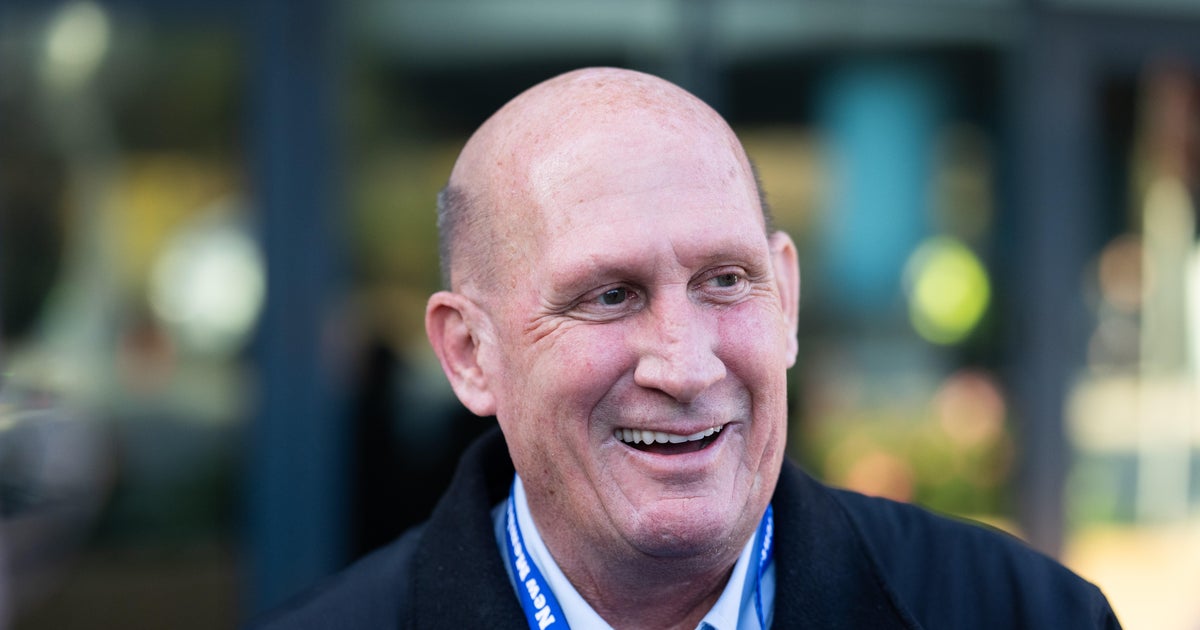
Chuck Hubbard defeated Rep. Virginia Foxx, CBS News projects, adding to Democrats' sizable majority in the House next year.

Republicans suffered sweeping losses across the US in the midterm elections, but perhaps nowhere as large as here Republicans suffered sweeping losses across the country in the midterm elections, but perhaps nowhere as large as North Carolina . Democrats flipped a US Senate seat for the first time since 2008, as well as five House seats, one of which Cook Political Report had rated “solid” Republican, and four others considered “likely” Republican. Democrats also held power in the state’s first district, which Republicans had targeted in a redistricting effort . Continue reading...

Europe’s future will be fought over at the ballot box and on Ukraine’s frontline. The danger is that the two strongmen ultimately reap the benefits On the facade of Stenbock House, the Estonian prime minister’s neoclassical office building on a hill in Tallinn, sits a plaque commemorating the murder of 10 heads of government. They were all killed by Soviet forces after the USSR’s invasion of Estonia in 1940. For 51 years, Estonia was occupied by its imperial neighbour; for the past 25 years it has lived independently in its shadow. For the politicians and government officials who work at Stenbock House, the plaque is a constant reminder of the risk the small Baltic nation (population 1.4 million) faces from a neighbour 100 times its size. Steve Bloomfield is a Guardian international affairs commentator Continue reading...
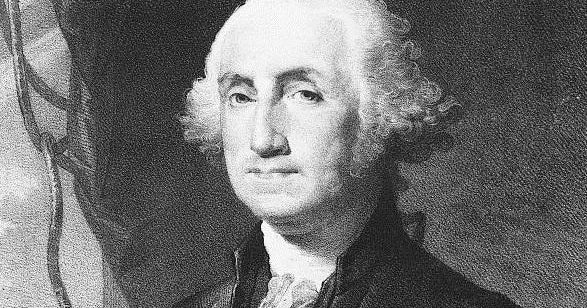
South Carolina-based auction house Richmond Auctions said George Washington's lock of hair was sold for $4,000.

The Guardian analyzed US Senate, House and governors’ races, showing Trump’s dwindling influence over the GOP Donald Trump often boasts about the power of his “Complete and Total Endorsement” of candidates, but in the 2026 midterms , his endorsements carried less weight than they did two years ago. Half of the Senate candidates Trump endorsed lost, and most of the governors the US president endorsed were defeated by Democratic candidates in this month’s blue wave midterm elections, according to an analysis by the Guardian. Continue reading...

Shari Franke revealed weekly nightmares of her mother's house as she urged the Utah Board of Pardons and Parole to keep Ruby Franke behind bars.
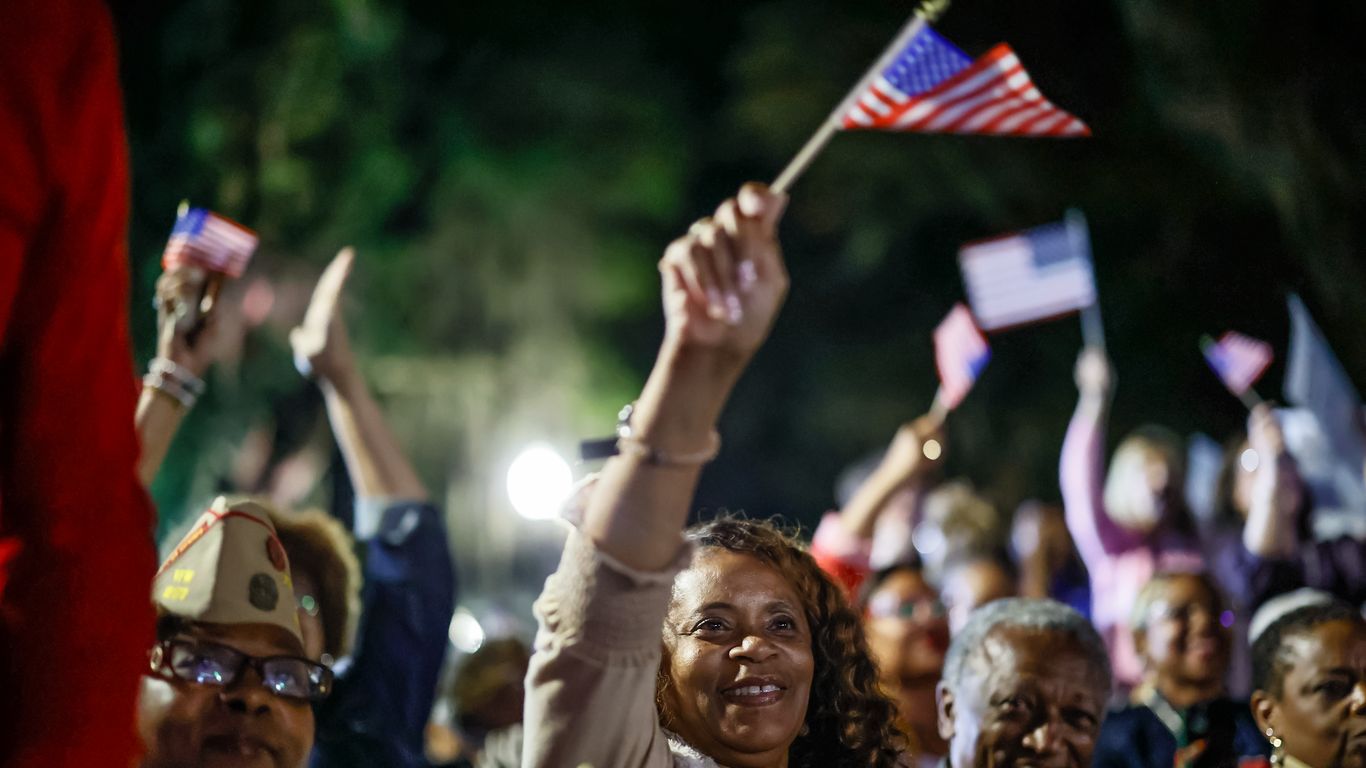
After years of being overlooked by national Democrats, Black organizers are using stunning Southern election upsets in the pursuit of something more lasting: a new generation of candidates who can win and govern. Why it matters: Activists say the 2026 midterms proved Southern races long dismissed as unwinnable could flip with grassroots organizing and investment. Now they're building a multiracial, working-class political bench — from school boards to statehouses. Organizers want to turn Black political gains into a durable Southern coalition united by economic interests, not just opposition to Republicans. By the numbers: The midterm election results gave organizers fresh ammunition. Roughly nine in 10 Black voters backed Democratic House candidates nationally, according to the AP Voter Poll . Democrats flipped 10 South Carolina House seats, seven won by Black candidates, ending the GOP supermajority, the South Carolina Daily Gazette reports. State of play: The Working Families Party plans candidate recruitment events in Georgia, Tennessee, South Carolina and Mississippi in early 2027, targeting community organizers, teachers, young activists and other political outsiders. It plans training, digital outreach and spending to support dozens of Southern candidates. Its Southern Made initiative aims to recruit and train 1,000 working-class candidates by 2030. Zoom in: South Carolina illustrates the opportunity. WFP-backed Jumelle Brooks , a home health care provider, lost a 2024 House race by roughly 700 votes before winning this year by nearly 10 percentage points. Another WFP-backed Democrat, Sonja Ogletree Satani , won a Charleston-area rematch. What they're saying: "We are building concentrated governing power," Britney Whaley, WFP's Southeast regional director, tells Axios. Whaley wants clusters of allies in elected bodies who can pass legislation, not isolated progressives powerless to advance an agenda. "Black people across the country voted for historic change,
The House of Representatives will soon consider a slightly tweaked version of a bill already passed in the Senate that needs to be signed by the end of the year to become law
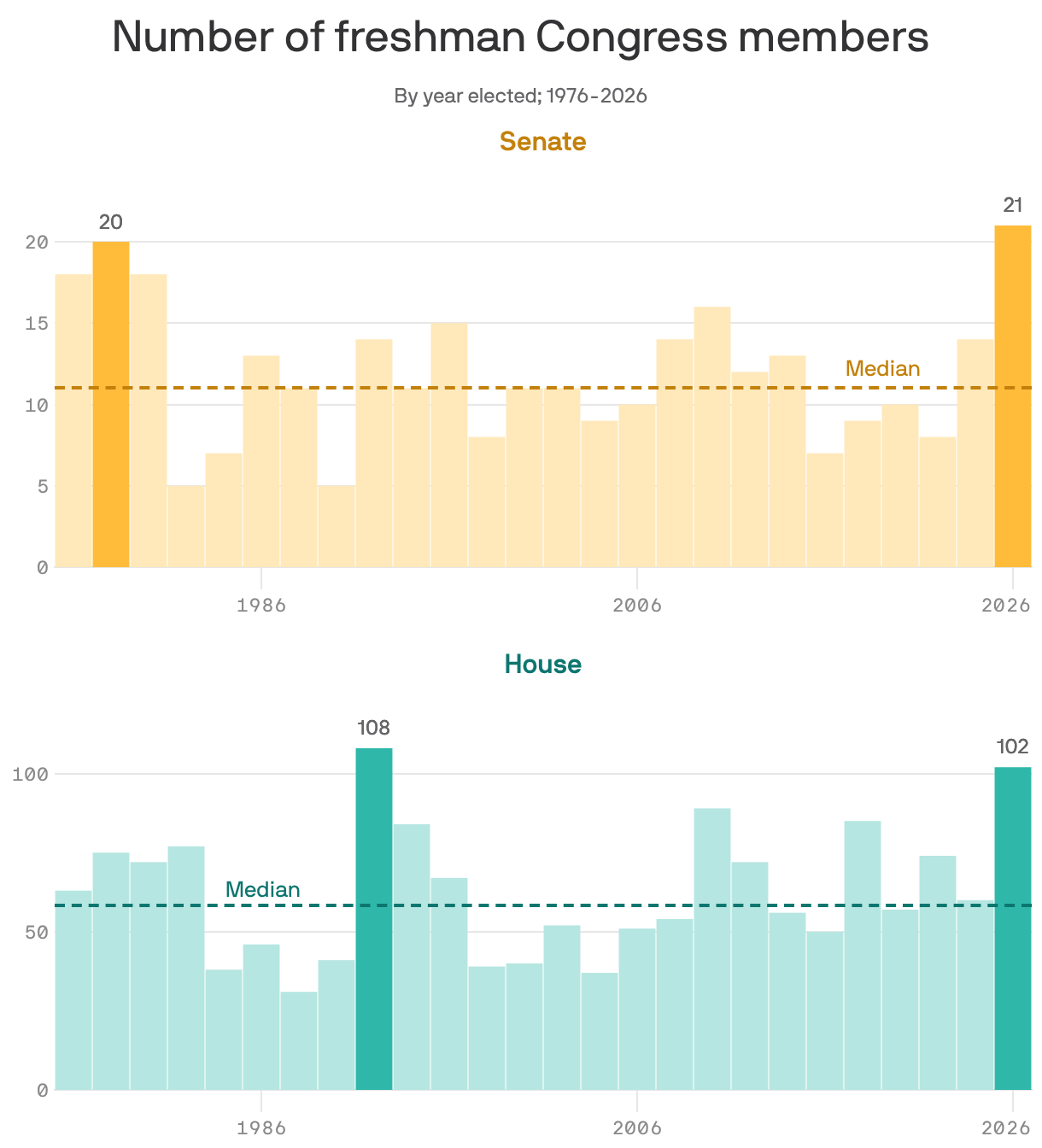
Senate data includes members who served nonconsecutive terms; House data does not. Data: House historian, U.S. Senate ; Chart: Erin Davis/Axios Americans want change , and they're about to get it: A perfect storm of congressional retirements, primary upsets, gerrymandering, flipped seats and lawmakers who died in office has created the biggest freshman class in decades. Why it matters : Congress had a 14% approval rating (not a typo) when Gallup polled registered voters in October. That's its lowest pre-midterm number since 1974. The big picture: The Senate is on track for its biggest freshman class since 1946. In the House, it's shaping up to be the biggest since 1992. Zoom in: The turnover featured data points that would be stunning on their own, let alone together. 28 House lawmakers chose to run for their next elected office outside the House, Pew noted in September. Six lawmakers died in office this Congress, the most in nearly 20 years. Thirteen House and Senate incumbents lost primary races. The bottom line: Congress is saying goodbye to former House Majority Leader Steny Hoyer (D-Md.), Senate Minority Whip Dick Durbin (D-Ill.), former Senate GOP leader Mitch McConnell (R-Ky.) and former Speaker Nancy Pelosi (D-Calif.). They've been in Congress since 1981, 1983, 1985 and 1987, respectively.

A second federal judge will block construction on President Trump 's embattled arch set to be erected near Arlington National Cemetery , multiple outlets reported Friday. Why it matters: It represents yet another barrier to the multi-year project to build a 250-foot arch that challengers said would obstruct the line of sight between the Lincoln Memorial and Arlington National Cemetery. Driving the news: U.S. District Judge Leonie Brinkema's preliminary injunction will indefinitely block the project, which she reportedly called a "rushed job" from the bench Friday. Zoom out: Brinkema's rebuke comes after D.C.-based District Judge Tanya Chutkan on Wednesday extended her separate order blocking construction on the arch for two weeks. Chutkan, who is overseeing consolidated challenges from military veterans and from the District of Columbia and Virginia, issued her initial temporary restraining order earlier this month. That order prohibited construction, excavation, land disturbance, utility installation and road closures related to the arch, Axios D.C.'s Mimi Montgomery reported. What they're saying: "The judiciary should not be abused to politicize a structure designed to unite our nation," White House spokesman Davis Ingle said in a statement. "We will continue making the case for this beautiful and fitting monument and are confident we will be fully vindicated as this litigation proceeds." The National Park Service did not immediately respond to Axios' request for comment. State of play: The legal hurdles came after the National Capital Planning Commission , which is stacked with Trump loyalists, gave its final approval for the project. Challengers, however, have argued the project requires congressional approval — and as Chutkan noted , "Congress has not enacted any statute authorizing construction of the Arch." Between the lines: The arch is one prime example of the president's quest to remake the nation's capital as he sees fit, from a sprawling White House ball

Environmental groups are aghast, but supporters say bill might be only chance to speed up clean energy projects The US Senate has passed a bill to fast-track energy and datacenter projects by removing environmental and legal guardrails. The legislation has caused a fraught divide among Democrats and green groups over whether this will help or hinder the effort to tackle the climate crisis. The sweeping bill, called the Bipartisan American Affordability and Jobs Act (or Baaja) , is now set for passage in the Republican-controlled House of Representatives before being signed by Donald Trump, who has claimed it will boost economic activity and lower energy costs. Continue reading...

Speaker Mike Johnson (R-La.) is warning House Republicans that their jobs aren't over yet after so many skipped town this week that GOP leaders had to call it quits. Why it matters: Republicans still have a month-plus left in the majority, but Johnson is struggling to get enough members to show up to make last-minute headway on the GOP's legislative agenda. GOP leaders were forced to cut the week short after 14 Republicans missed votes, leaving Johnson without the headcount needed to advance party-line legislation. Eleven of those 14 won't be returning next Congress. Driving the news: "To state the obvious, barring any serious medical issue, we need every Republican to be here to faithfully complete our full two-year term," Johnson wrote in a Friday letter to his colleagues . "The Twentieth Amendment to the U.S. Constitution specifies that our clock doesn't run out until noon on January 3rd," he added. Zoom in: The outgoing speaker pointed to government funding, the annual defense authorization bill and permitting reform as priorities for the final weeks of the Republican majority. He also said he wants to pass "every meaningful Republican bill that can garner 218 votes" and force Democrats to take politically difficult votes. "LET'S SCORE EVERY POINT WE CAN AND LEAVE IT ALL ON THE FIELD!" Johnson wrote.
A Democratic lawmaker is investigating the use of encrypted messaging apps by Justice Department employees for official business
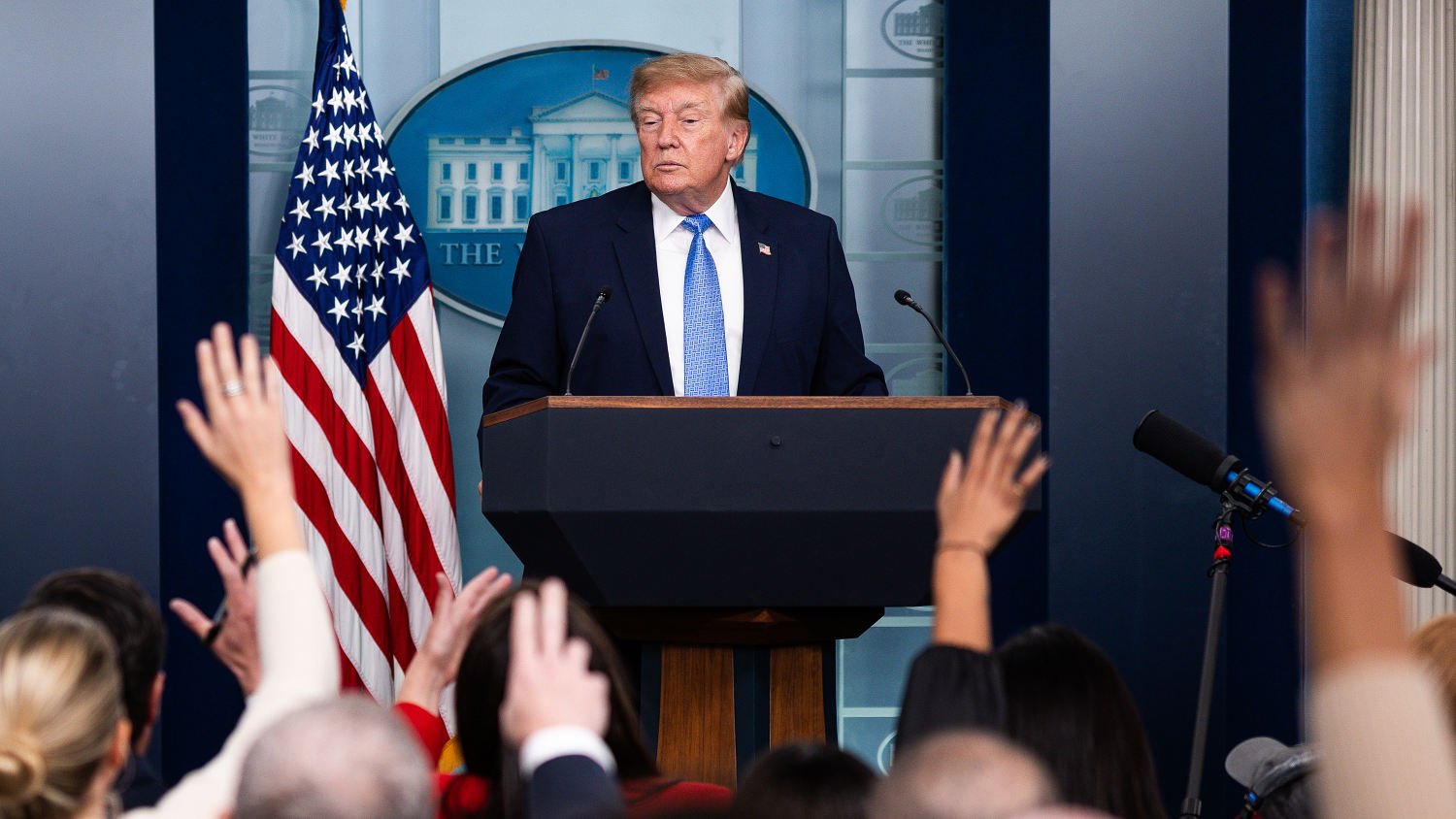
Watch live coverage as President Trump holds a press conference at the White House after three-way talks in China with the leaders of U.S. rivals, Russian President Vladimir Putin and Chinese President Xi Jinping.

Democrats who might be thinking of launching a presidential run in 2028 are starting to make moves. One such contender is Pete Buttigieg, the former transportation secretary under Joe Biden. Is he the candidate who can unite the broad church in his party? There’s also talk that a vote to elect the new Senate leader could be moved up, helping Chuck Schumer retain power, after Chris Van Hollen challenged him for the position. Jonathan Freedland speaks to Marianna Sotomayor of Puck News about the Democrats looking to shore up power on Capitol Hill and potentially head for the White House Continue reading...

For organizers who spent decades trying to mobilize voters against a Republican government, a blue Texas felt like a pipe dream Democratic victories in Texas came down like a deluge on election night after decades of drought. James Talarico defeated Texas attorney general Ken Paxton to become the state’s first elected Democratic US senator in nearly 30 years. Gina Hinojosa will soon be Texas’s first-ever Latina governor and its first Democratic governor since 1995. Texas Democrats also flipped 20 state House seats, three seats on the state Board of Education, all four Texas supreme court seats and all three Texas court of criminal appeals seats up for election. Continue reading...

America's religious "nones" have gained a visible foothold in Congress: Five lawmakers will claim no religious affiliation in January, up from a single member just two years ago. Why it matters: Washington remains far more religious than the nation it represents. But the last two election cycles have put a series of cracks in that political glass ceiling. By the numbers: Religiously unaffiliated voters made up 27% of the 2026 midterm electorate, up from 23% in 2024, according to preliminary Fox News voter polling . Just three of 532 lawmakers surveyed at the start of the 119th Congress claimed no religious affiliation, according to Pew Research Center . Pew counted one additional humanist. All three lawmakers who claimed no affiliation — Reps. Yassamin Ansari (D-Ariz.), Abraham Hamadeh (R-Ariz.) and Emily Randall (D-Wash.) — won reelection in November. State of play: They'll be joined in January by Democratic Reps.-elect Chris Rabb of Pennsylvania and Fred Wellman of Missouri — who publicly acknowledged their nonreligious identities before winning their Nov. 3 elections. Rabb, a five-term state lawmaker representing a majority-Black Philadelphia district, won the seat of retiring Democratic Rep. Dwight Evans. Wellman, a retired Army officer, ousted seven-term Republican Rep. Ann Wagner in suburban St. Louis, flipping a longtime GOP stronghold. Their wins mark a breakthrough for congressional candidates who openly embraced their nonreligious identities before Election Day, according to Secular Coalition for America. Zoom in: Rabb thanked atheists for supporting his campaign after winning his May Democratic primary. Wellman defeated Wagner roughly 51% to 46%, according to Ballotpedia . His pitch? Affordability, corruption and accountability — not his lack of faith. Zoom out: The nonreligious political bench stretches well beyond Capitol Hill. More than 100 openly nonreligious lawmakers are expected to serve in at least 38 state legislatures, up from 81 in 33 states, a

Democrats' sweeping electoral wins jump-started prospects for Medicaid expansion in red and purple states that rejected full expansions of the program under the Affordable Care Act. But budget realities could make newly elected Democratic governors pump the brakes. Why it matters: The changing of the guard sets up a test of whether states can expand coverage to more low-income residents right after Republicans in Congress weakened financial incentives for doing so. States that are facing serious budget shortfalls and daunting cost projections already are signaling they may defer until conditions are more favorable. State of play: Incoming Democratic governors in Wisconsin, Georgia, Texas and Kansas who campaigned on Medicaid expansion are now in a position to expand health coverage, and have more Democrats in their legislatures to help. Wisconsin Democrats have arguably the most leverage now that they've captured the state Senate and Assembly in addition to keeping control of the governor's office. Plus, the state already covers adults with incomes up to the federal poverty level. Expansion advocates in Georgia and Texas face a heavier lift, with Republicans still controlling at least one legislative chamber. And in Kansas, the GOP lost its supermajority in the House, a key obstacle in past Medicaid expansion fights, but still controls both chambers. Between the lines: Each state faces unique considerations. But one thing is true for all of the holdouts: The incentives for expanding aren't what they used to be. Though the federal government still would pay for 90% of the expansion cost, last year's GOP reconciliation law made major policy changes and cuts to the program. Expansion states now face stricter limits on provider taxes used to finance Medicaid, as well as on extra payments they make to hospitals and other providers to go beyond standard Medicaid rates. They've also lost an important bonus: A temporary 5% increase in federal assistance for newly expanding

The Senate passed a sweeping, bipartisan bill Thursday night that's designed to cut permitting timelines for energy and infrastructure projects. Why it matters: The eyes of the entire energy industry are on this bill. If it becomes law, it could transform how America builds energy infrastructure, with major implications for everything from electricity costs to data centers. Getting rid of bureaucratic hurdles and creating a more predictable process for energy projects is a top priority for the fossil fuels and renewables sectors. But critics argue the plan, which has White House support, would unacceptably weaken environmental protections and the rights of Native American tribes. Driving the news: The vote was 62-33. The bill would still have to pass the House before the end of the year, and any differences would have to be worked out by both chambers before President Trump could sign it into law. Catch up quick: It would make significant changes to federal permitting, including: New limits on the duration of lawsuits, and the scope and length of reviews under the Clean Water Act and National Environmental Policy Act. Language that would make it more difficult to revoke permits once they're issued, a priority for renewables groups and Democrats upset with Trump administration barriers. State of play: There are also provisions to ensure that data centers pay for needed grid upgrades, and expand federal authority over the siting and approval of certain interstate transmission projects. Friction point: Many environmental advocates argue that the bill would dangerously erode safeguards in the National Environmental Policy Act and other laws. Multiple tribal groups still oppose it despite changes aimed at easing concerns about consultation on historic preservation. Energy and business groups, ranging from renewables developers to manufacturers to the oil and gas industry, are lobbying for the measure. The AFL-CIO and many individual unions back it, too. What's next: The
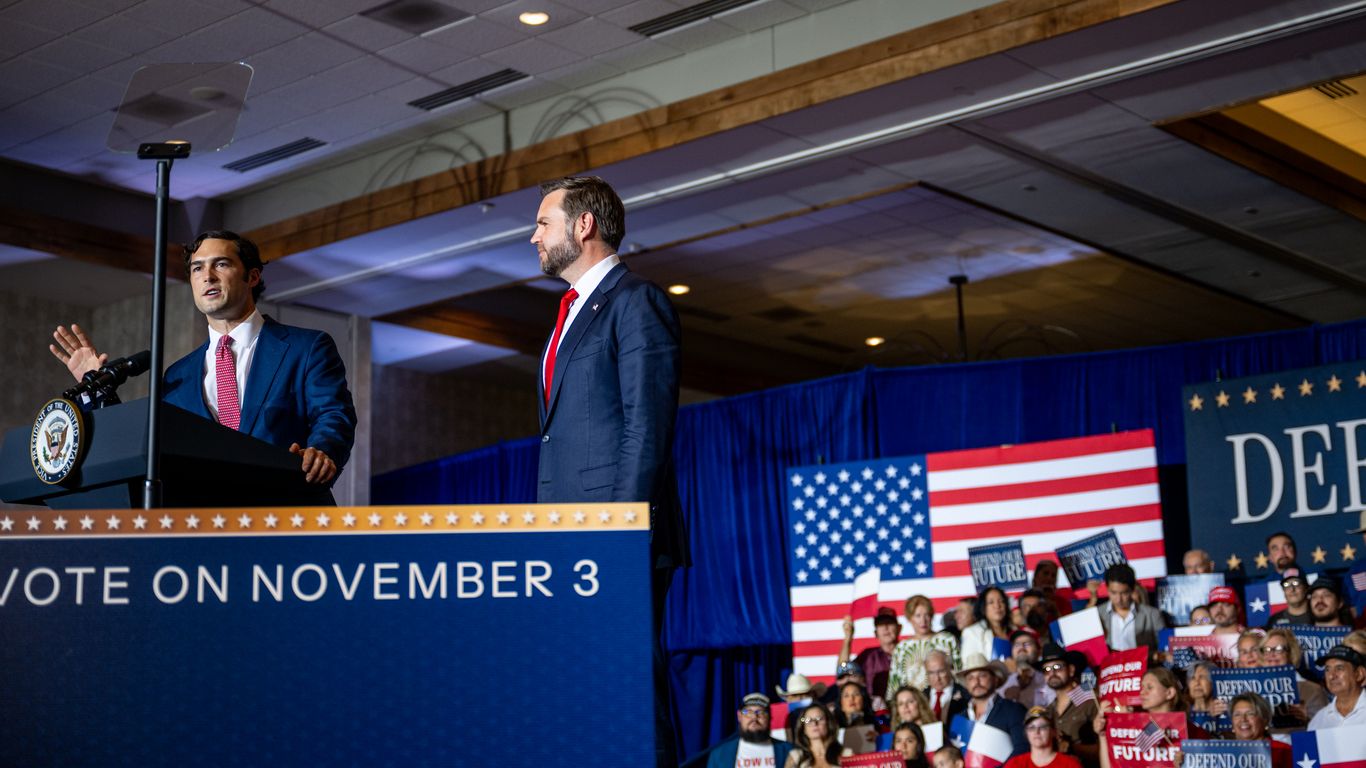
House Republicans chose fighter Jim Jordan over the more experienced Steve Scalise to lead them after taking a midterms beatdown. Now they're facing a similar choice over who should lead them on House Oversight. Why it matters: Whoever gets the top Republican spot on the Oversight Committee will be the first line of defense on some of the most deeply personal issues for President Trump and his inner circle. A pair of Texas House Republicans, freshman Rep. Brandon Gill, 32, and three-term Rep. Pat Fallon, 58, want the job that could make them a national star, or leave them taking the heat if Democrats land damaging revelations. Driving the news: Democrats are preparing a barrage of investigations , putting Trump's family, finances and closest advisers in their crosshairs. Rep. Robert Garcia (D-Calif.), who is running to chair House Oversight next year, sent a dozen letters Wednesday targeting figures including Donald Trump Jr., Eric Trump, Jared Kushner and Vice President Vance. Democratic allies want a plan "to compel disclosure and testimony," according to a Tuesday letter — led by Public Citizen and Indivisible — that was signed by 103 groups and obtained by Axios. The White House is pushing back on Hill Democrats, with its top lawyer warning that some Democratic investigative tactics could cross into criminality. Zoom in: Gill has made a name for himself with fiery committee confrontations and viral moments. He's also proven to be a prolific fundraiser. "Gill is the next Jim Jordan," a source close to Jordan told Axios. "He practices, he's smart." Fallon has served on Oversight since arriving in Congress in 2021. He previously chaired Oversight's subcommittee on economic growth, energy policy and regulatory affairs. "I've built great relationships and a clear resume of rigorous, result-oriented oversight that reflects what the committee has achieved on behalf of the American people," Fallon told the Texas Tribune in September. Between the lines: Gill's lack of se

House Democrats are largely steering clear of threats to shut the government down in December if Republicans put forward legislation that maintains funding for the war in Iran. Why it matters: Much of the party's left flank — including some members of Congress — think it's a fight they need to pick after their midterm landslide. "The American people were loud and clear on November 3rd: they want an immediate end to Donald Trump's reckless war in Iran," Reps. Yassamin Ansari (D-Ariz.) and Ro Khanna (D-Calif.) said in a joint statement on Wednesday. The pair said they will "oppose any funding package that does not explicitly prohibit funds from being used for offensive operations in Iran" because it would "defy the demands of Americans who want this war to end—now." State of play: The Democrats' majority doesn't officially begin until Jan. 3, while federal funding is set to run out on Dec. 11. Republican leaders are struggling to pass party-line procedural votes and will probably bring up their funding patch under a fast-track process that requires bills to pass with a two-thirds majority. In other words: The GOP will almost certainly need a large number of Democratic votes to pass any funding bill, especially if some of their own members defect. What they're saying: "Whatever they have to do to get it through they should do it, but I hope there's not a shutdown," said Rep. Brad Schneider (D-Ill.), the outgoing chair of the center-left New Democrat Coalition. "I don't think we should shut down the government, we take that way too casually as it is, so I'd be leaning into not doing it," said Rep. Scott Peters (D-Calif.). Said Rep. Greg Landsman (D-Ohio): "Everyone should do whatever they can to avoid a shutdown. The impact it has on the economy, but workers in particular, it's just not fair." Between the lines: Even some progressives acknowledged their imminent House majority takes a lot of the pressure off the December fiscal deadline. "If I can defund [the war] in De
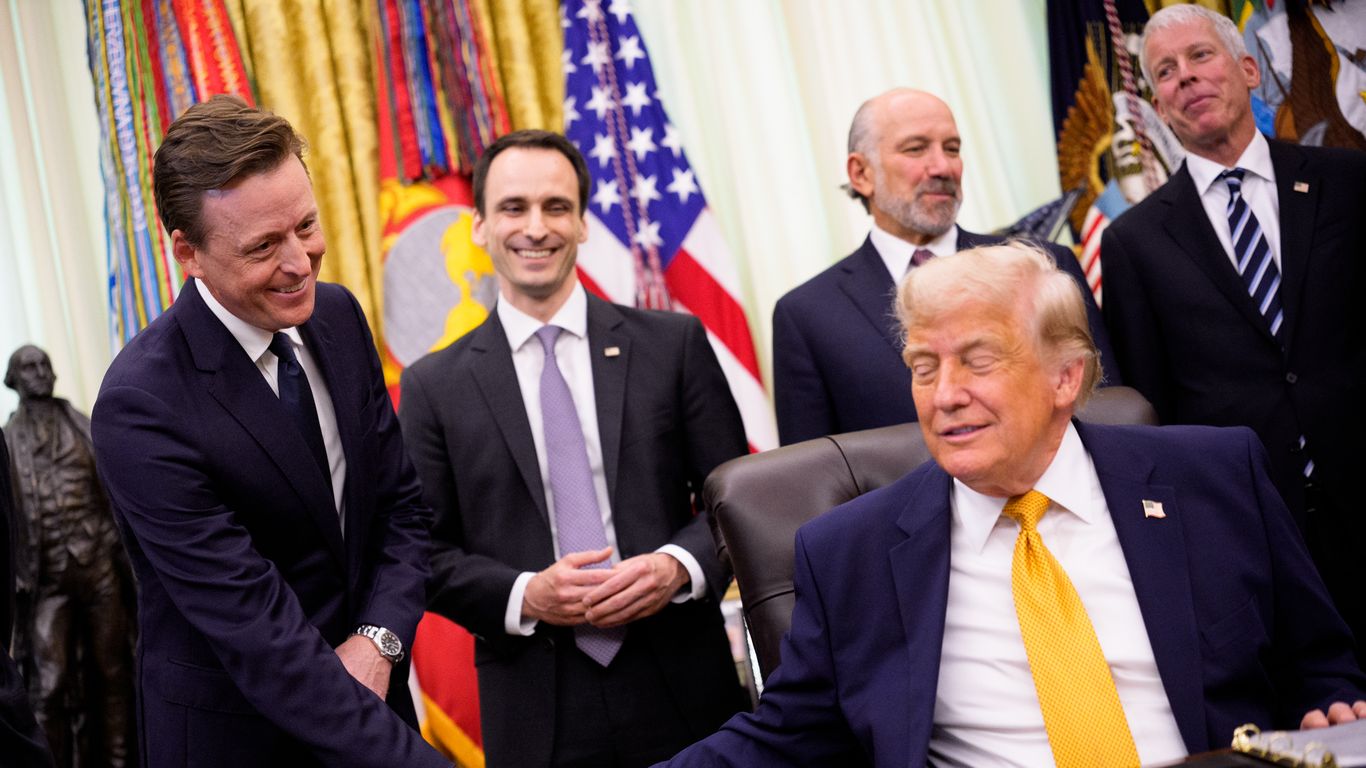
White House national cyber director Sean Cairncross is leaving his post, Axios has learned. Why it matters: Cairncross did not want to serve another two years and is leaving now to give the White House time to secure Senate confirmation before Democrats take control in January, two sources said. Cairncross' departure was described as amicable. The background: Cairncross leads the Office of the National Cyber Director, which coordinates cybersecurity policy and strategy across the federal government. The position requires Senate confirmation. The Trump administration's AI team has taken shape on the fly , but Cairncross was involved in key decisions. Case in point: He held technical meetings with Anthropic leaders over the summer after Commerce Department export controls effectively scrubbed the company's models from the internet. Catch up quick: Cairncross brought experience in Republican politics and national security, having worked with the intelligence community and dealt with cyber threats at the Republican National Committee. During Trump's first term, Cairncross represented the White House chief of staff on National Security Council committees before leading the Millennium Challenge Corporation, a federal foreign aid agency. Cairncross' head of policy and senior adviser Thomas Lind left in June and joined OpenAI in October, further depleting the Trump administration of technical expertise. The White House has not yet responded to Axios' request for comment. The big picture: The latest turnover in cyber personnel comes as the country grapples with critical infrastructure outages and increasingly powerful AI poised to empower cyber defenders and hackers alike. Democrats have criticized the administration's response to outages and warned that U.S. cyber defenses are falling behind AI-fueled threats. What we're watching: Trump is also filling other key cyber positions. His pick for the top job at the Cybersecurity and Infrastructure Security Agency, which helps de
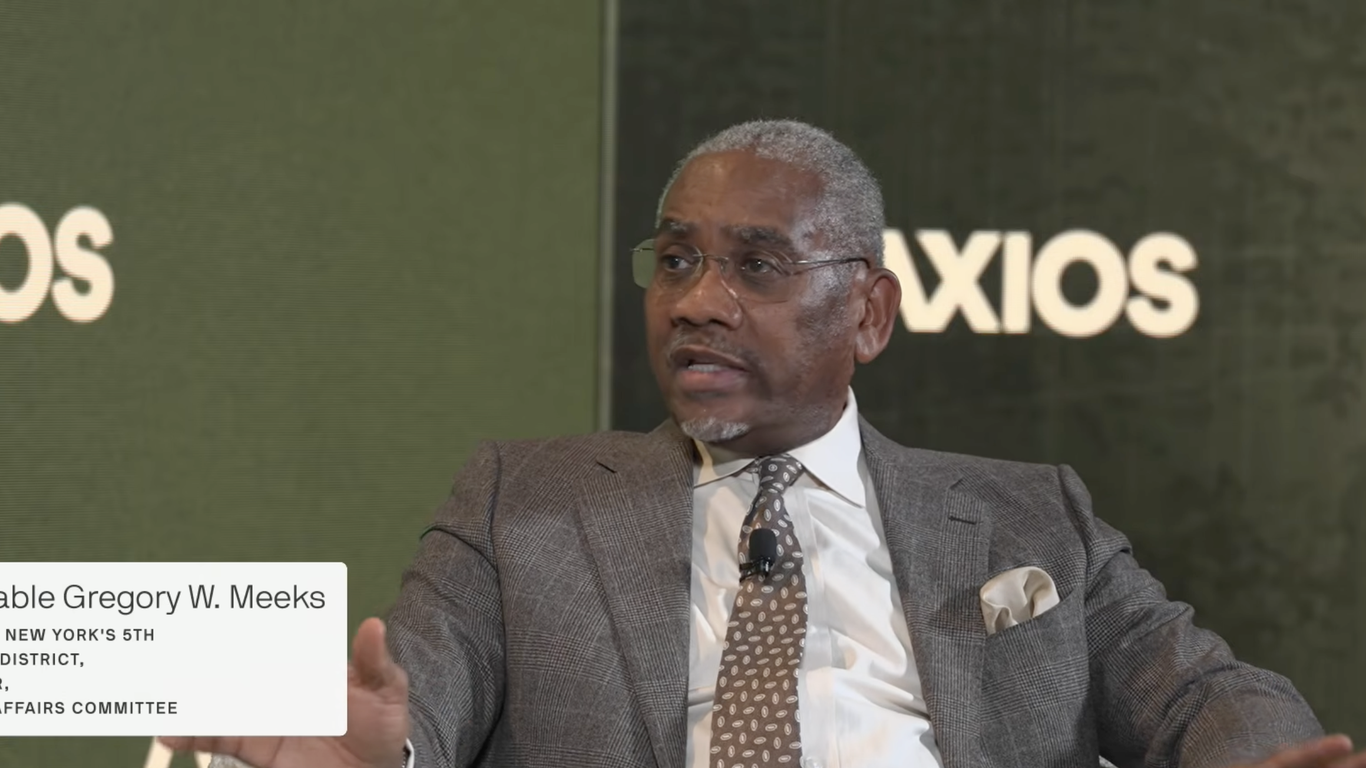
Rep. Gregory Meeks (D-N.Y.) said Thursday Congress is going to reclaim powers long ceded to the executive branch at the Axios Future of Defense summit. Why it matters: As the top Democrat on the House Foreign Affairs Committee, Meeks is putting the Trump administration on notice that it's foreign policy decisions are going to be challenged through legislation and oversight hearings. What they're saying: "Whether it's a Democratic president or Republican president, we've ceded too much and we've got to stand up and take it back," Meeks told Axios' Colin Demarest. "We do, at times, have to make some difficult decisions, and not just punt them away to the executive branch, because when you do that, it's hard to get them back." Catch up quick: Meeks will likely become Foreign Affairs committee chair in January, riding the blue wave that gave Democrats the ability to control Congress' legislative agenda. Zoom in: Meeks didn't rule out calling Secretary of State Marco Rubio to testify before the committee. "The jurisdiction of the House Foreign Affairs Committee is the State Department," Meeks said. "[Defense Secretary Pete] Hegseth is — that's the purview of the House Armed Services Committee. So we're going to be looking at and talking about the State Department." Zoom out: Meeks has already sent document-preservation letters to seven agencies, including the State Department, USAID and the U.S. International Development Finance Corporation, warning them to avoid destroying records that could be relevant to oversight efforts. He threatened the possibility of criminal referrals if someone is found to have done otherwise. Editor's note: This is a breaking news story and will be updated.
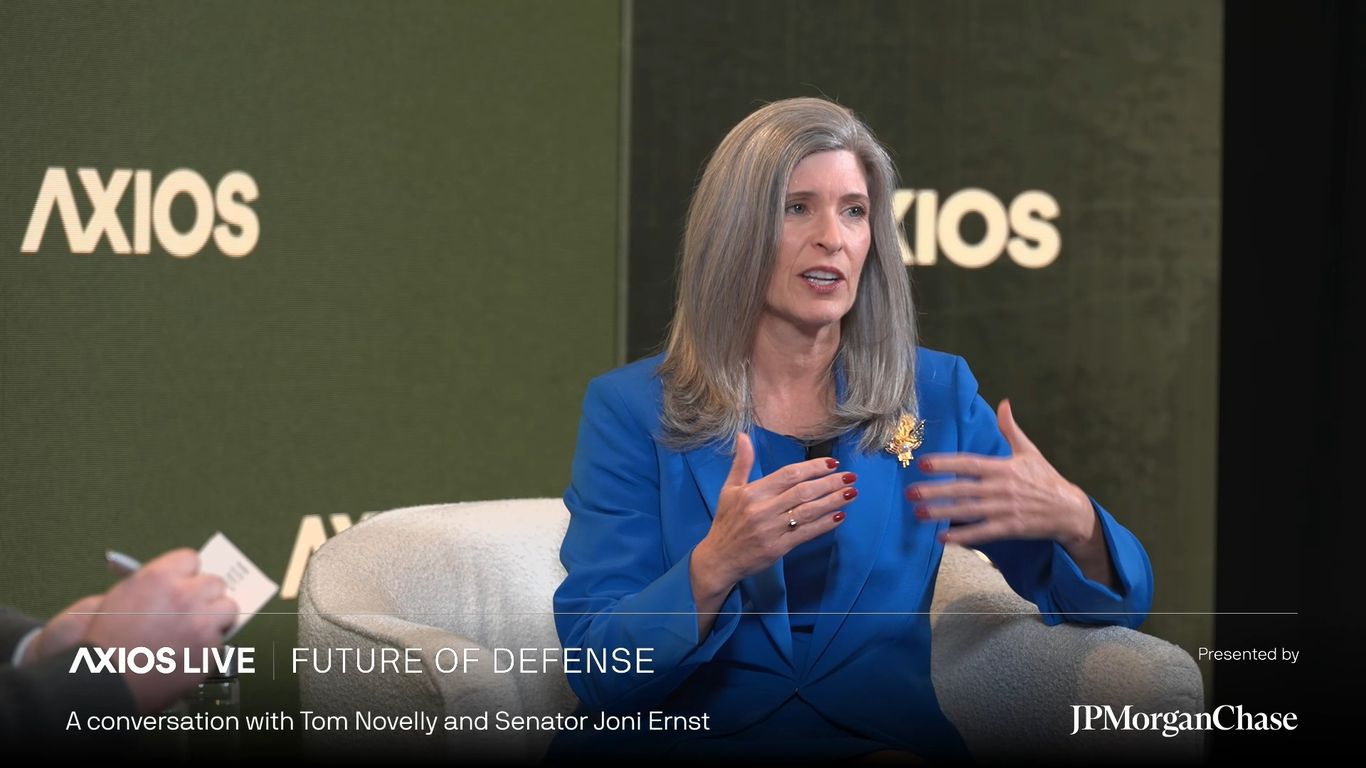
Sen. Joni Ernst (R-Iowa) said "a lot of people would be able to guess" if she regrets voting to confirm the embattled Defense Secretary Pete Hegseth, during Axios' Future of Defense Summit Thursday. Why it matters: The retiring Iowa senator, who served in the military for more than two decades, has been notably skeptical of Hegseth, and hasn't always been in lockstep with the Trump administration. Catch up quick: Despite her hesitancy over his nomination, Ernst ultimately voted to confirm Hegseth . However, she's continued to question him throughout his tenure. She recently questioned whether the embattled Pentagon leader has been "truthful" about the status of the Iran war, which she said Iowans rejected in the midterms. "If there is deception coming from our Pentagon and being transmitted to the president, I would want to know that," Ernst told reporters earlier this month. Driving the news: "There is very little transparency right now with what is being discussed between the White House and the Department of War," Ernst said of Pentagon communication over the war in Iran in a conversation with Axios' defense and space reporter Thomas Novelly. "As Congress, we would expect that we would be read into some of those conversations, and unfortunately, we have not been read into those conversations," she added. State of play: Ernst sits on the Senate Committee on Armed Services, where she chairs the Emerging Threats and Capabilities subcommittee. She predicted in her interview with Novelly that given the "not even hidden animosity" between Democrats and Hegseth, "it will be very difficult" for new Senate Armed Services Committee leadership to receive information. Editor's note: This is a breaking news story and will be updated.
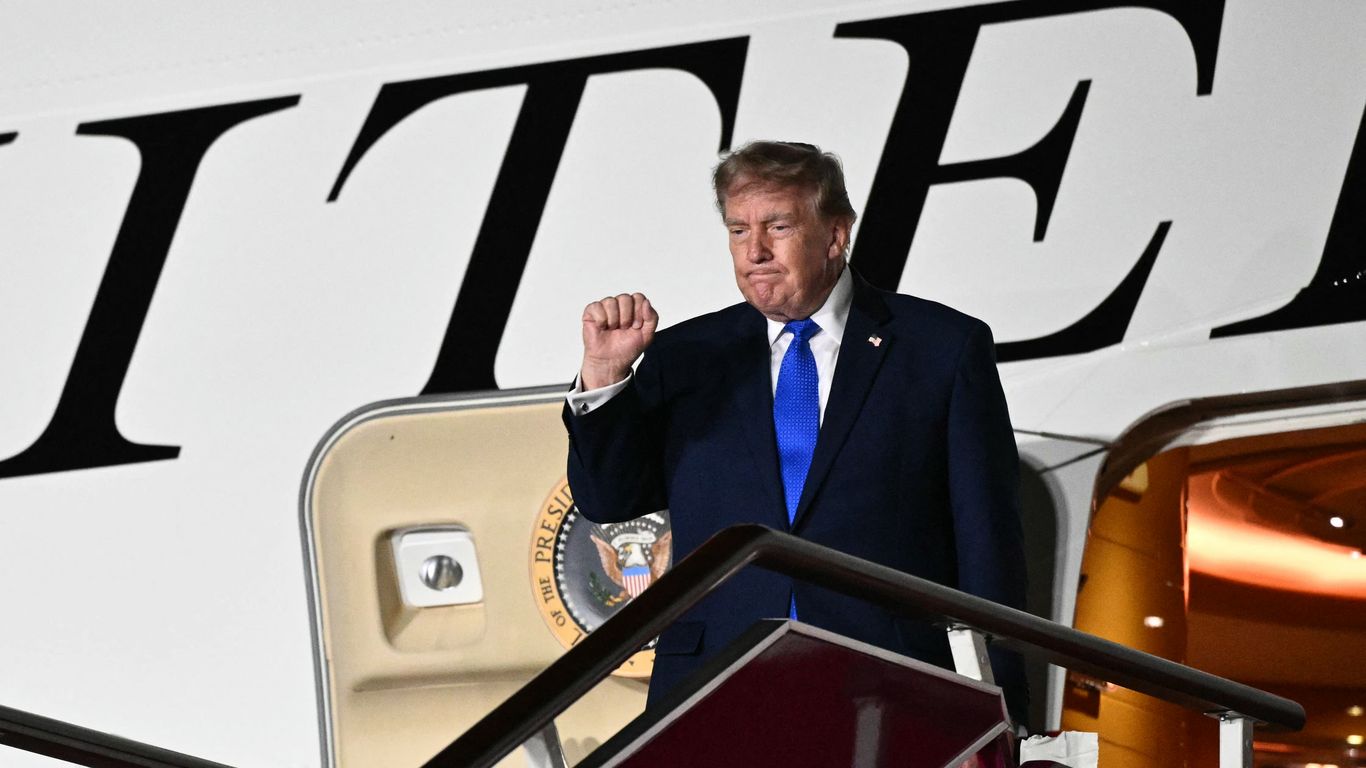
President Trump said in a brief phone interview Thursday that he won't make a determination on his next step in the Iran war until the new year. "I am not rushing into any decision [on Iran]. We will see what happens after the beginning of the year," Trump told Axios from Air Force One, on his way back to the U.S. from China. Why it matters: The president's comments come as he faces heavy pressure from Israeli Prime Minister Benjamin Netanyahu to unleash a decisive bombing campaign soon. Yes, but: Trump could change his mind at any moment. And he wouldn't telegraph plans for an imminent attack even if that's what he was intending to do. A day before the war began in February, Trump said he hadn't made a decision, when in fact he had already ordered strikes. Between the lines: Trump's stated timing could mean he's giving more time for the naval blockade and the economic pressure campaign to play out, as many of his advisers and leaders of Gulf countries are urging. But it could also indicate that if Iran doesn't make concessions by the end of the year, Trump wants to leave himself enough time for military action before the new Democratic-controlled Congress settles in. Driving the news: While stating last week that a major new round of strikes on Iran was " quite unlikely ," Trump is still considering a joint attack with Israel, Axios reported on Wednesday. The president's deliberations are likely to pick up when he returns from Asia. Any U.S. operation would involve Israel and could include strikes on suspected Iranian nuclear facilities such as Pickaxe Mountain. Bridges and power plants could also be targeted, as well as Iranian military and civilian leaders. Behind the scenes: The White House has asked the Pentagon and intelligence experts for their assessments of how Iran would respond to each of the strike scenarios the U.S. military has prepared, according to two sources with knowledge of the matter. The White House has asked whether any of the options would av

Party wins biggest majority since Obama and one unthinkable two years ago – now the hard work of investigating and lawmaking begins It’s official: when Democrats take control of the Senate next year, they’ll have 56 seats, their largest majority in nearly two decades and one that appeared unthinkable at the outset of Donald Trump’s return to power two years ago. The landslide victory was confirmed on Tuesday, when the lengthy ballot-counting process in Alaska ended with Democrat Mary Peltola defeating the incumbent Dan Sullivan, who became the ninth Republican to see their seat taken by the opposition in a midterm election that produced a political earthquake. Continue reading...

Anti-democratic behaviors won’t disappear overnight. The new Congress – and all of us – must rise to the occasion Americans just witnessed a blue tsunami in the midterm elections, with historic firsts across many US states: the country’s first female Black governor, first female Native American governor, first Muslim US senator, and more. And while the voters’ repudiation of Donald Trump’s agenda is clear, as Democrats seize the majority of both chambers of Congress, the work to defend our institutions from further democratic backsliding won’t ease up overnight. Continue reading...

If the sweeping Senate permitting bill becomes law, it will reflect a rare convergence of political and market forces strong enough to trump the Beltway aversion to big, bipartisan deals. Why it matters: The bill could transform how America builds energy infrastructure, with major implications for everything from electricity costs to data centers. Getting rid of bureaucratic hurdles for energy projects is a top priority for the fossil fuels and renewables sectors. But critics argue the plan would unacceptably weaken environmental protections and the rights of Native American tribes. The latest: A vote on final passage of the White House-backed bill could occur Thursday after the Senate plows through some more amendments. The big picture: Many industries — pipelines, transmission, housing, you name it — call permitting a long bureaucratic and judicial maze that stymies projects. Yes, but: That, on its own, isn't nearly enough to get this far. Here are other reasons the bill has a path to becoming law after years of failed efforts to upend permitting. 🗳️ The cost-of-living election. The midterms were soaked in affordability politics at a time of rising energy bills. While critics can call the projected savings modest, cost is politically front and center. The Rhodium Group estimates that big provisions it analyzed would cut average residential power prices by 3%-4% in 2035. Third Way, a group that favors the bill, supported the research firm's work. 📈 Rising electricity demand. U.S. power thirst has been rising in the last few years after staying largely flat for decades, driven partly by AI and wider electrification of the economy. 🦋 A maturing clean energy industry. As sectors like renewables and storage become more mainstream, " more developers and companies are seeing the real-world challenges" of doing projects, clean energy lobbyist Jeff Navin notes via email. That puts them in agreement with utilities and oil and gas companies. "They all run into problems ge

Residents and local groups band together after severe flooding submerged a New Mexico town in toxic water On the night of 23 October, Jimmie Goodman was trying to get some rest when his sister, who was recovering from back surgery and having trouble sleeping, woke him. Authorities in their home town of Shiprock, New Mexico , had warned that the nearby San Juan River was at risk of flooding as unprecedented rain fell across the Four Corners region of the south-west US – and so Goodman peeked outside. “That surge shot directly at us,” said Goodman, 67, describing how the river takes a sharp 90-degree turn near his and his sister’s house in one of the Navajo housing authority’s residential neighborhoods. It just missed the house by about 50ft, he said. Continue reading...
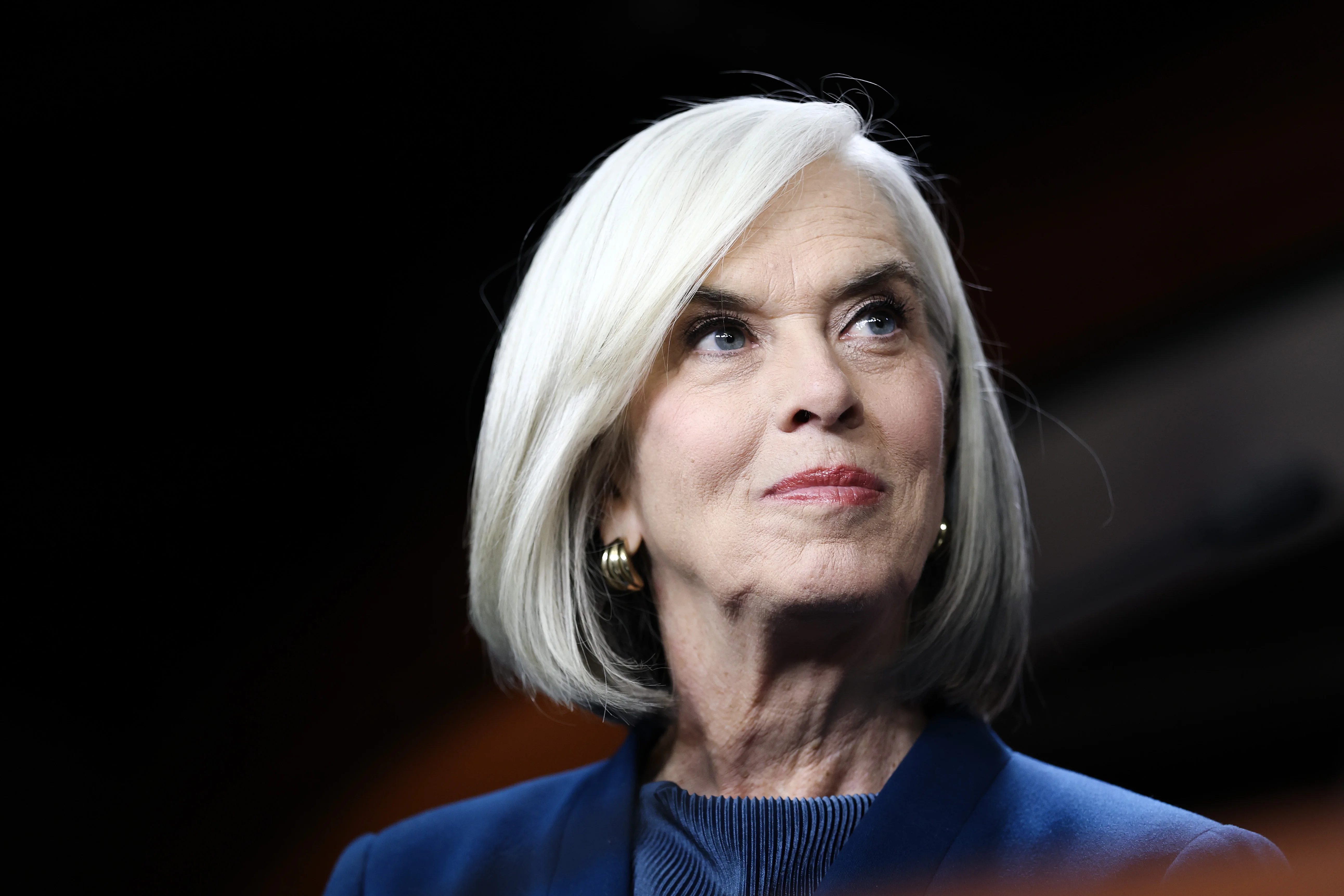
As Democrats prepare to take control of the House, incoming majority leader Katherine Clark discusses the party's ambitious agenda and divisions within its ranks.

The internet has caught the emergency preparation bug , fueled by fears of AI-led cyberattacks , power grid vulnerabilities, transportation standstills and international threats . The big picture: The "prepper" mindset is resonating with larger slices of society — who are packing emergency bags, stocking up on water and taking inventory of non-perishables. Michael Mills, a University of Greenwich senior lecturer who studies doomsday preparation, says some people are turning to "lightweight versions" of traditional prepping amid doubts about global stability. By the numbers: Sales at Survival Frog, a survival retailer that sells gear like emergency food and radios, saw sales jump 450% between Oct. 27 and Nov. 16, compared to prior weeks, CEO and founder Byron Walker tells Axios. Competitors saw similar trends, he says. And most recent buyers at Survival Frog were new customers. Food, including canned meats, leads demand, Walker says, followed by products like radios, solar generators, battery packs and water filters. State of play: Systems the world relies on for travel , communications , business , food, health care and more have been disrupted in recent weeks — whether because of tech shortfalls or malicious acts. While officials assure the incidents aren't broadly connected, fears of critical infrastructure failing are growing, and more people considering how to prepare for crises. "It does seem much more mainstream now," Walker says of preppers. "You can't turn on the news without hearing about a new cyber attack or a tech meltdown." Many of the emergency preparation skills people are using have long been observed in disaster-prone areas. And as many Americans learned during COVID, supply chain disruptions mean having extra water, radios and shelf-stable foods around the house isn't a bad thing. Krystal, known online as the "Queen of Doomsday," spends about five hours daily coaching new preppers and told Axios that recent online engagement with her content, which

The Texas electoral wave carried one Democrat to victory even after she had suspended her campaign. Republicans want her declared ineligible.

The Senate GOP's last-ditch effort to pass a defense-heavy, $350 billion reconciliation package is dead on arrival without accompanying spending cuts, House Republicans tell Axios. Why it matters: House Republicans have just 16 days left in session before Democrats take control in January. Many don't want to spend their final days in power adding to the national debt. "My concern is we squander these very few days we have left on something that won't get out of the House," outgoing House Budget Chair Jodey Arrington (R-Texas) told Axios of the Senate's emerging plan. Republicans have already passed two party-line reconciliation bills this Congress: The "one big, beautiful bill" in the summer of 2025, and nearly $70 billion for immigration enforcement in the summer of 2026. Zoom in: Finding spending offsets could reopen some of the most contentious fights from the GOP's first reconciliation package. Arrington told Axios that Senate Republicans worry that finding cost savings in health care spending could open the door to amendment votes that undo Medicaid cuts in the One Big, Beautiful Bill Act. But Arrington, who didn't run for reelection in 2026, told Axios he doesn't believe the Senate's proposal has the votes to pass the House without offsets. State of play: Arrington said he raised his concerns with Senate Budget Chair Ron Johnson (R-Wis.), and argued Republicans shouldn't let the risks deter them from pursuing additional spending cuts. "Some Republican members of the Senate might go rogue and might decide to, I don't know, repeal some of the reforms that we put in the 'big, beautiful bill.' Maybe they do it out of spite for President Trump," he said. "The midterms have passed us. We lost, but we still have this window to do what we think is right," he said. Between the lines: Senate Republicans haven't committed to moving forward with another reconciliation package. Leaving a Wednesday night meeting on reconciliation, Sen. Johnson told reporters the Senate "pro
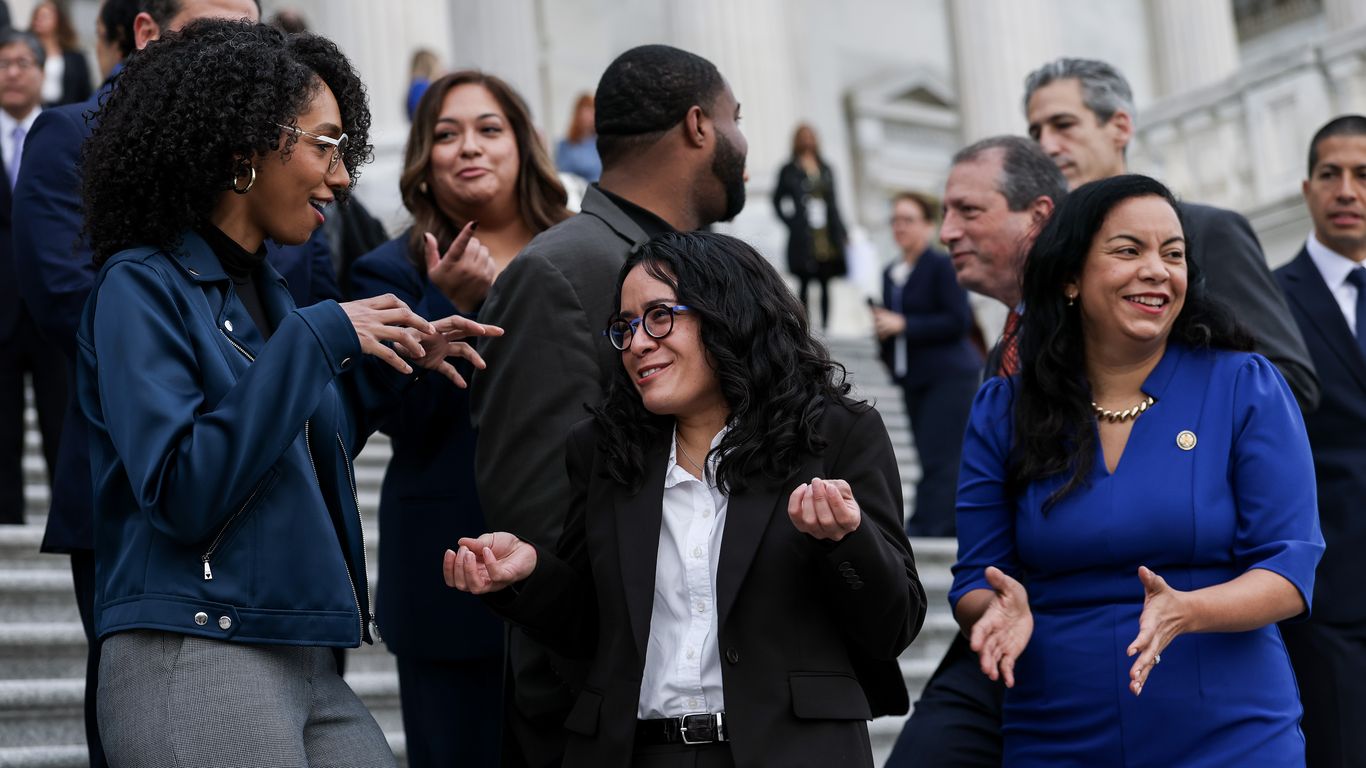
The left's campaign to whip up a groundswell of opposition to House Minority Leader Hakeem Jeffries (D-N.Y.) among his members failed in stunning fashion on Wednesday. Why it matters: Fewer than a dozen members voted against Jeffries' nomination for speaker. That bodes well for Jeffries' ability to manage the House going forward, his allies say. "There'll be no hostage taking," Rep. Troy Carter (D-La.) told Axios. Driving the news: Jeffries won a resounding victory Wednesday morning when House Democrats met behind closed doors to vote on their nominee for speaker of the House. Out of 264 Democratic House members and non-voting delegates, 251 voted to nominate him, 11 voted against and two did not vote. It was exactly the victory Jeffries' allies had hoped for after Tuesday's announcement that he planned to request a tallied vote rather than being nominated by acclamation. Reps.-elect Darializa Avila Chevalier (D-N.Y.), Adam Hamawy (D-N.J.), Melat Kiros (D-Colo.), Donavan McKinney (D-Mich.), Chris Rabb (D-Pa.) and Claire Valdez (D-N.Y.) put out a statement shortly after the vote confirming they voted against Jeffries. Rep.-elect Frederick Haynes III (D-Texas) also signed on to that statement, but a spokesperson said in a follow-up statement he "narrowly missed the vote" and that his "intended vote was no." Two other members-elect, Don Leonard (D-Ohio) and Angela Gonzales-Torres (D-Calif.), told Axios they also voted no. Rep.-elect Richard Ojeda (D-N.C.) missed the vote because he was in his district with family following the death of his father, but would have voted for Jeffries, a spokesperson told Axios. Zoom out: Many of the progressives who ultimately voted for Jeffries did so despite a torrent of phone calls and emails from constituents and grassroots activists urging them not to support him. Numerous high-profile progressives had said before the meeting they would vote for Jeffries, including Reps. Alexandria Ocasio-Cortez (D-N.Y.), Pramila Jayapal (D-Wash.) an

The likely next House speaker has a record of defending corporate interests. His fellow Democrats must fight for Medicare for All and the abolition of ICE On Wednesday, Democrats nominated Hakeem Jeffries to be the next House speaker when they take control of Congress. For progressives, that will mean dealing with a powerful leader who has a record of hostility toward the left. “There will never be a moment where I bend the knee to hard-left democratic socialism,” Jeffries vowed five years ago. Continue reading...

California Democrats flipped five seats and will send 48 representatives to DC after successful redistricting effort California Republicans have taken an extraordinary hit in the midterm elections, with only four of the state’s 52 congressional seats going to GOP representatives, leaving the party with its smallest delegation to Washington in decades. California Democrats flipped five seats and will be sending 48 representatives to Washington DC for the new term. The result stems from the successful redistricting effort spearheaded by the state’s Democratic governor, Gavin Newsom, as well as a seismic blue wave has knocked out Republicans across the country in districts that previously backed Donald Trump. Continue reading...

Jeffries is set to become one of Trump’s most prominent opponents for final two years of his presidency US politics live – latest updates Democrats on Wednesday nominated Hakeem Jeffries to serve as speaker of the House when the new Congress begins next year. A New York congressman who has served as the Democratic minority leader since 2023, Jeffries is set to become one of Donald Trump’s most prominent opponents for the final two years of his presidency, when Democrats will control both the Senate and House of Representatives and undertake aggressive efforts to check his powers. Continue reading...

Robert Garcia plans searches into Trump family finances, alleged DHS misconduct, and handling of Epstein files The incoming Democratic chair of the powerful oversight committee in the House of Represenatives, has ordered a dozen relatives and allies of Donald Trump to preserve records before investigations he plans to open. Robert Garcia sent 12 letters on Wednesday to prominent figures in the US president’s orbit, including his sons Donald Jr and Eric; son-in-law Jared Kushner; Vice-President JD Vance; and attorney general Todd Blanche. Continue reading...
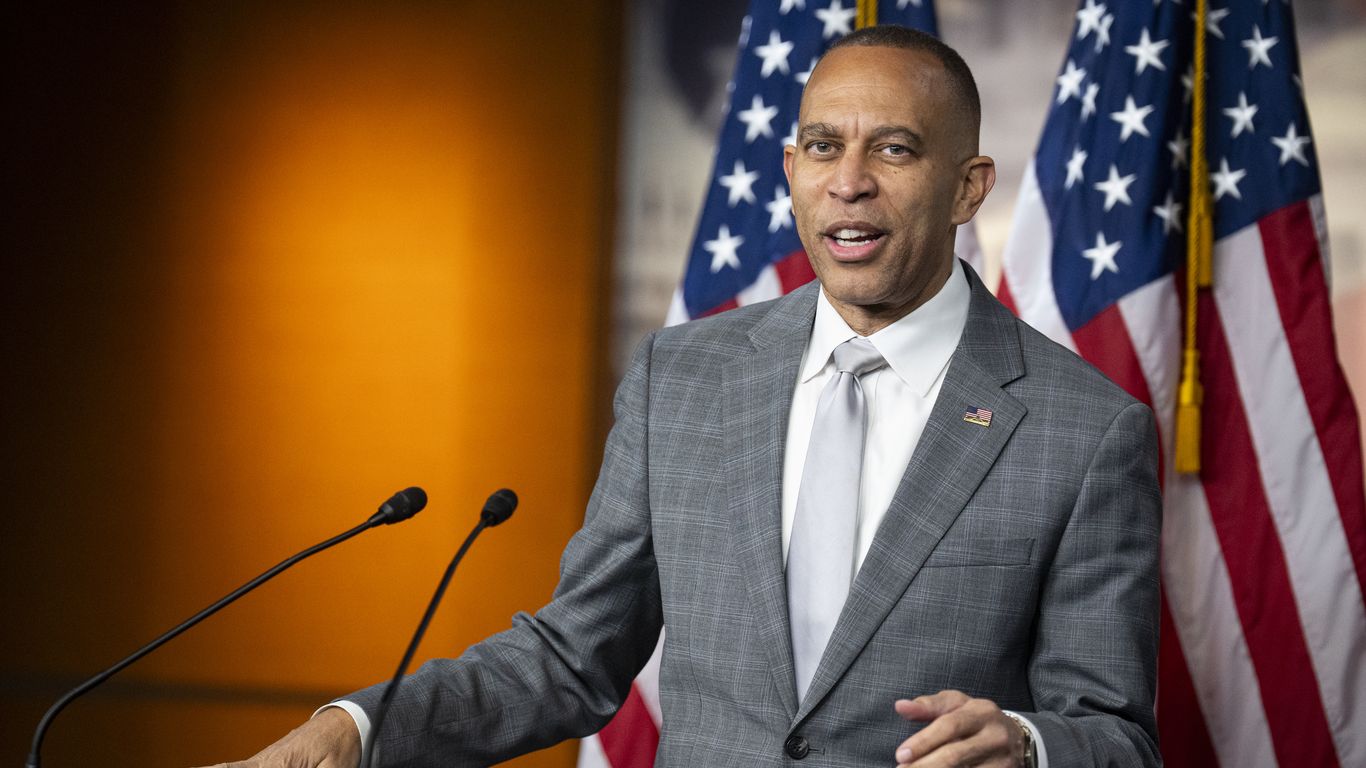
House Democrats voted at a closed-door caucus meeting Wednesday morning to nominate Minority Leader Hakeem Jeffries (D-N.Y.) as their candidate for speaker. Why it matters: It's a symbolic but significant step that suggests Jeffries has the votes he needs to be elected the first Black House speaker on Jan. 3. Jeffries won 251 of the 262 votes cast, putting him comfortably above the 218 votes he needs to win on the House floor in January. The vote was tallied at Jeffries' request . His allied had initially hoped he would be elected by acclamation, but the Democratic leader changed tack at the 11th hour and decided to call his detractors' bluff. Between the lines: Wednesday's caucus vote was a secret ballot. On Jan. 3, each House member will have to stand up during a televised proceeding and announce who they are voting for. That could be difficult for the members — particularly progressives — who have been flooded with calls and emails from constituents urging them not to vote for him. Only a handful of incoming House members, including Reps.-elect Angela Gonzales-Torres (D-Calif.) and Don Leonard (D-Ohio), have outright said they will oppose Jeffries thus far.
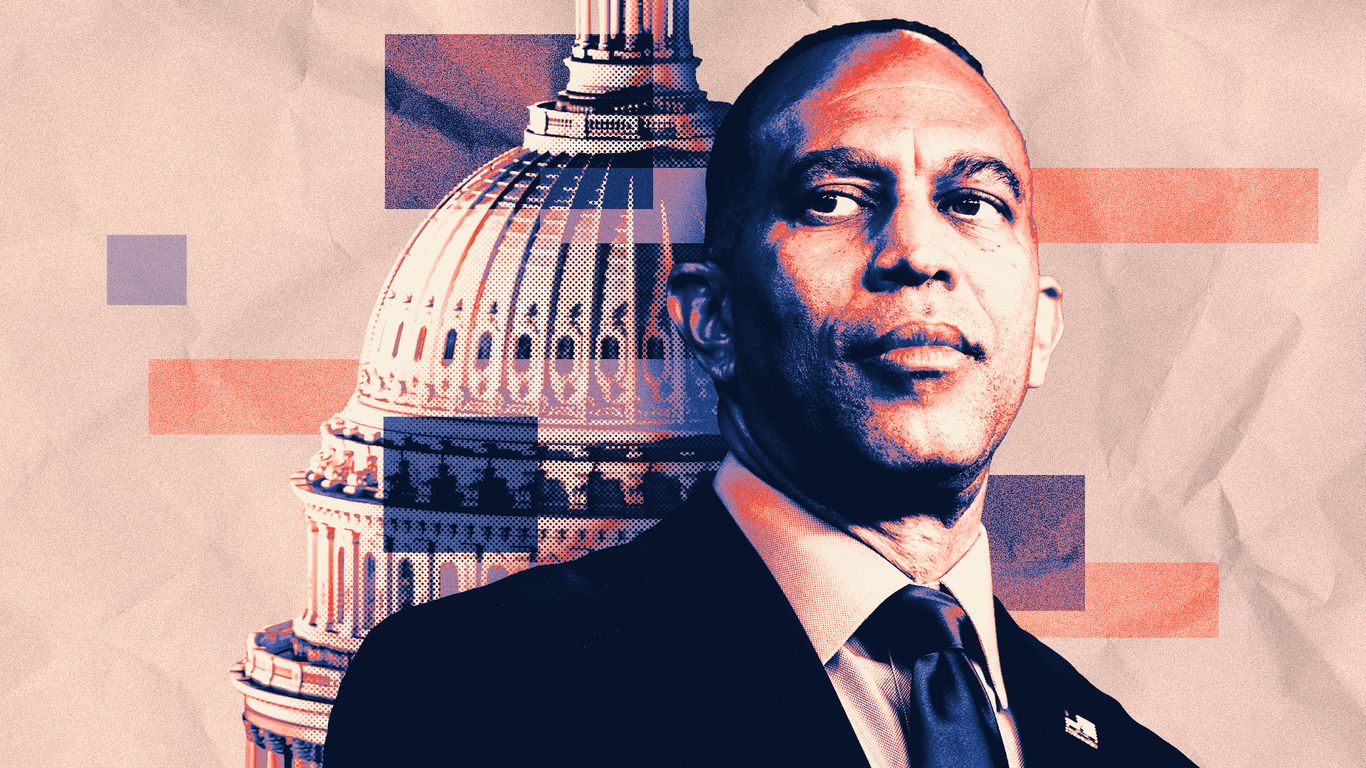
Hakeem Jeffries could soon become America's first Black House speaker, even as Black lawmakers confront rising threats to their power in D.C. Why it matters: Proposed committee term limits and another round of redistricting could weaken Black lawmakers' influence they spent decades building. By the numbers: The number of Black lawmakers in the 120th Congress will be stable from the 119th, based on results so far. The House will likely seat 59 Black voting members, down from 61, according to the Joint Center for Political and Economic Studies . All four Black House Republicans are departing, while Black Democrats have gained two seats. Black membership in the U.S. Senate will rise from five to a record seven, including Sens.-elect Scott Colom of Mississippi and Juliana Stratton of Illinois . Zoom in: Democrats are in the middle of a sometimes messy generational power transfer, with younger lawmakers challenging more senior members for committee chairmanships. Those chairmanships have long helped Congressional Black Caucus members exercise power beyond their numbers. "For CBC members, the power is seniority," Rep. Gregory Meeks (D-N.Y.) told Politico in 2014. "I've been around a while. ... Some wisdom, at least, is important to what we're going through right now," Rep. Bonnie Watson Coleman, 81, (D-N.J.) told Axios in 2025. Sticking point: Democrats are considering a four-term limit for committee leaders , starting after the 2028 elections, that could eventually force three veteran Black Democrats to step aside as committee leaders. Bennie Thompson, 78, of Mississippi, leads Democrats on Homeland Security. Bobby Scott, 79, of Virginia, leads Democrats on Education and Workforce. He faces a challenge from Connecticut Rep. Jahana Hayes, 53. Maxine Waters, 88, of California, leads Democrats on Financial Services. She faces a challenge from Illinois Rep. Sean Casten, 54. Zoom out: A Democratic wave helped Black incumbents survive redistricting this year, but that level of
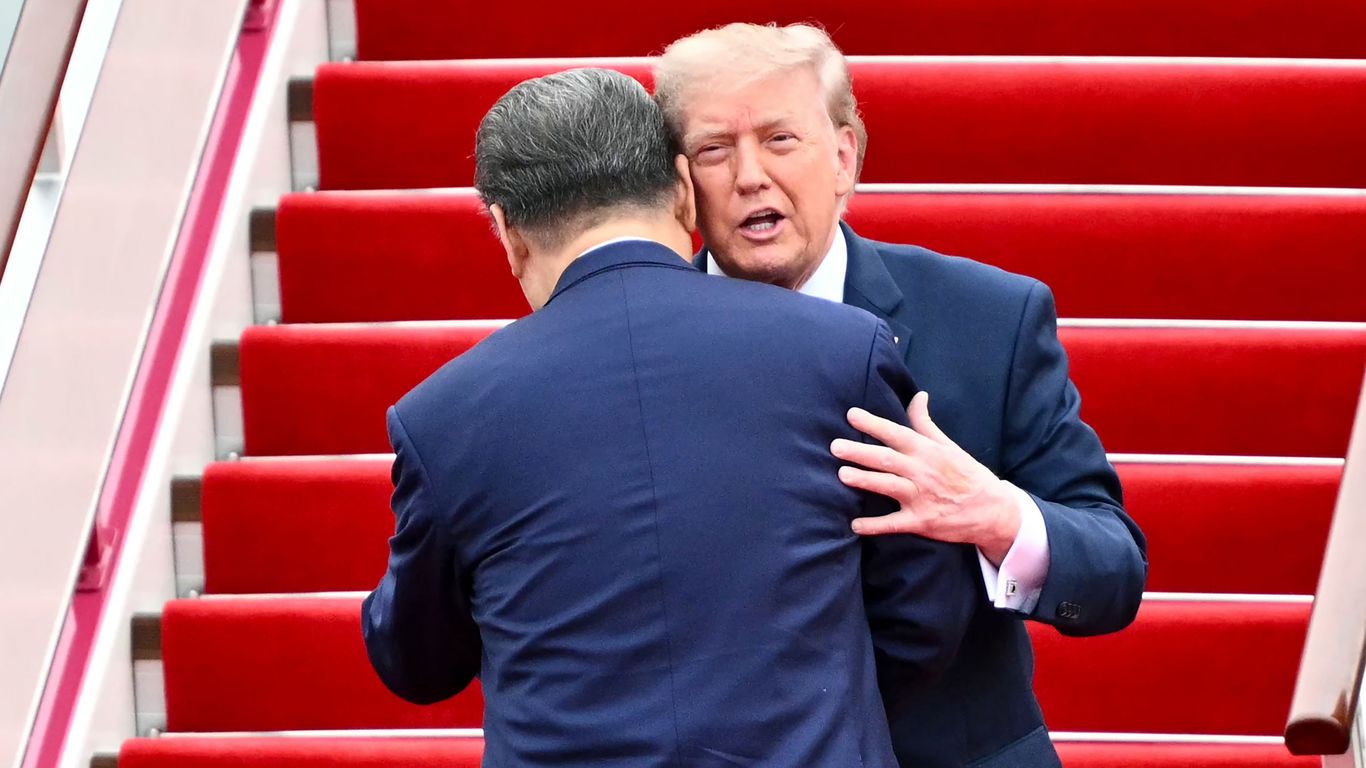
Chinese President Xi Jinping greeted President Trump in a surprise appearance on the tarmac in Shenzhen, China, Wednesday. Why it matters: Xi paid Trump a special honor by greeting him on the tarmac, reciprocating a gesture by Trump during Xi's state visit to Washington in September. The two are expected to hold a summit Thursday with Russian President Vladimir Putin, where the three are expected to talk about nuclear arms control, Iran, Ukraine, trade and AI chips. Driving the news: Trump arrived in China for the annual APEC conference just hours after spending time in the Philippines. Xi met Trump at the bottom of Air Force One's stairs. The two leaders shook hands and then embraced in a hug. Dozens of performers, waving pom-poms, stood on a red carpet outside the plane, chanting and cheering for Trump's arrival. Context: Xi's surprise appearance was an unusual diplomatic gesture, per multiple reports . The Chinese president did not personally greet Trump when he visited Beijing in May. Similarly, when Putin visited Shenzhen earlier today, he was greeted by Xi's chief of staff Cai Qi . Xi met former President Obama at the airport in 2009 when Xi was still vice-president. Flashback: In September 2025, Trump welcomed President Xi at Joint Base Andrews for the Chinese leader's state visit to Washington D.C.. U.S. presidents typically receive foreign leaders at the White House. Trump met Xi at the bottom of the stairs after Xi's jet landed at the U.S. military base. Go deeper: U.S. allies on edge as Trump heads to summit with Xi and Putin
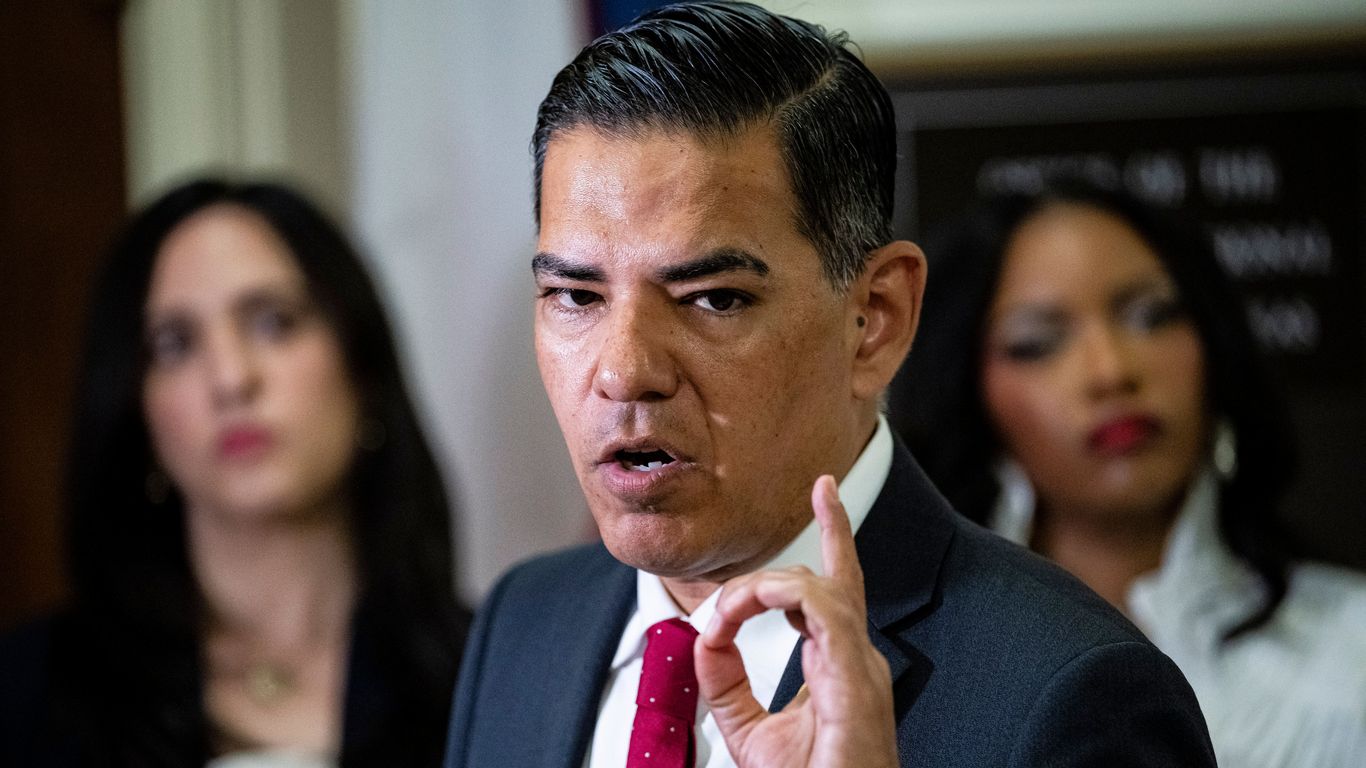
Rep. Robert Garcia (D-Calif.), incoming chair of the House Oversight Committee, is laying the groundwork for a wave of investigations into President Trump's inner circle. Why it matters: It's going to be a long two years in Washington, as Democrats emboldened by the blue wave step up their scrutiny of those closest to the president and the administration. Driving the news: Garcia is sending document-retention letters Wednesday to Vice President Vance , Don Jr. , Eric Trump , Jared Kushner , Kimberly Guilfoyle , Stephen Miller , Susie Wiles , Kristi Noem , Corey Lewandowski , Attorney General Todd Blanche and more. "This is just the beginning," Garcia said in a statement. What to watch: How the administration responds. Already, at least one U.S. Attorney is going after other Democrats who've promised oversight actions in the coming Congress. This is a developing story.

The loss of the United States' measles elimination status is a particularly worrisome sign for infants in hot spots who are too young to be vaccinated against the disease. Why it matters: Outbreaks still may be concentrated within certain parts of the country. But infants and other unvaccinated people are living with a continuous threat. Driving the news: The Pan American Health Organization announced on Tuesday that it revoked the U.S. status after 26 years, as expected . That's after state reports of 7,700 cases and 10 deaths since measles first began spreading in Texas early last year, according to the New York Times . (The Centers for Disease Control and Prevention currently reports only nine deaths.) Hundreds of people — often unvaccinated children — have been hospitalized. State of play: The measles-mumps-rubella vaccine is highly effective, meaning the vast majority of cases today occur in people who haven't received an immunization against the disease. Just over 1 in 10 of those infected this year were hospitalized, but that jumps to 17% among children under 5 years old, per the CDC . Between the lines: For most of the population, remaining unvaccinated against measles is a choice, albeit one parents make for their children. But for the youngest Americans, receiving a vaccine isn't an option for several months. The earliest an infant can receive an immunization against measles is at 6 months, with the official recommendation for most children being a first dose between 12 and 15 months. Though infants do receive protective antibodies against measles from their mothers, those gradually decline over their first months of life. What they're saying: "Most babies don't receive a first measles vaccine until age 1. With measles endemic again, parents can no longer assume grocery stores, airports, churches, or even pediatricians' offices are safe spaces," Jerome Adams, President Trump's first-term surgeon general, posted on X. "The community protection we took for g
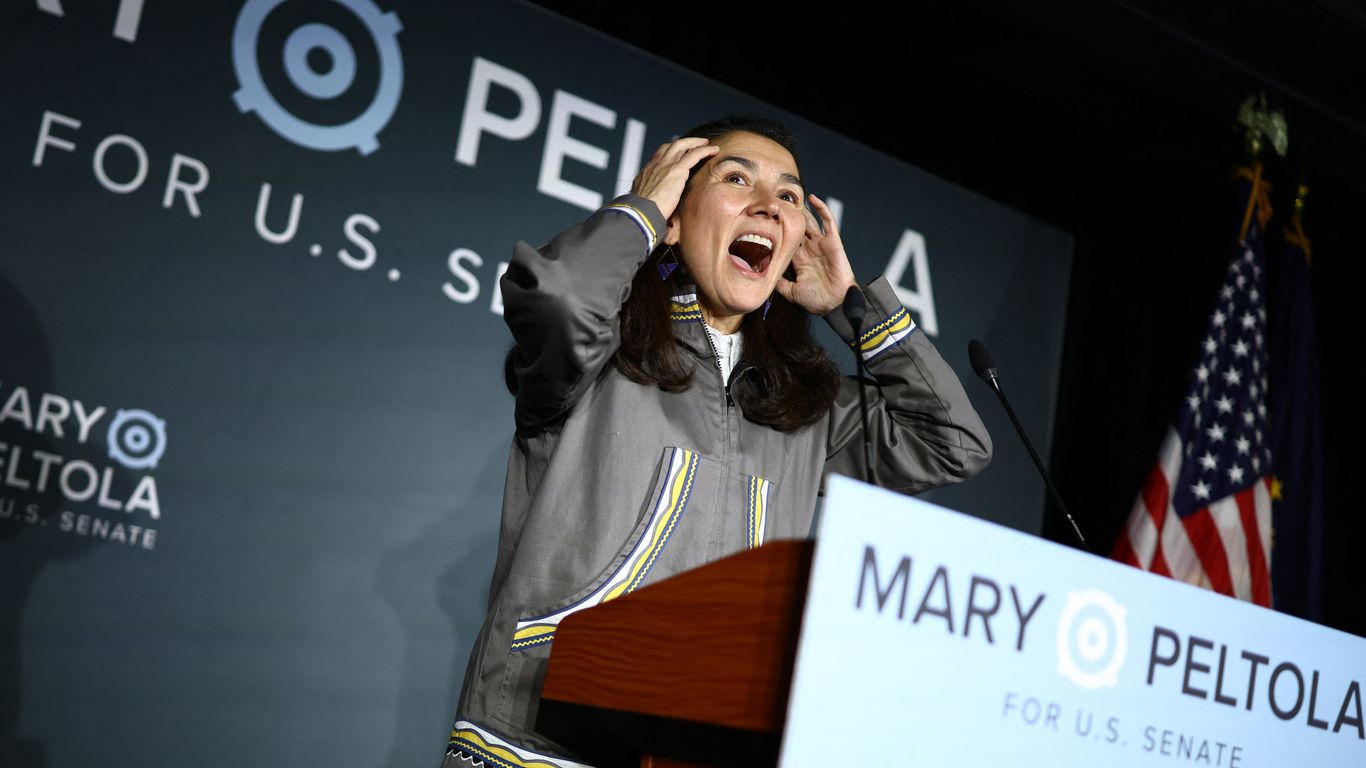
Mary Peltola's path to Senate history ran through four Alaska Native strongholds that delivered more than half of her statewide first-choice lead. Why it matters: The Yup'ik Democrat is the nation's first Alaska Native U.S. senator, powered by communities that endured disenfranchisement, forced displacement and federal violence. The win amplifies their voice on tribal sovereignty and subsistence rights after decades of neglect and discrimination — much as Mississippi Delta Black voters powered Democrat Scott Colom to his surprising Senate victory. By the numbers: Peltola led Republican Sen. Dan Sullivan by roughly 12,400 first-choice votes statewide in Alaska's Nov. 17 unofficial count . Four western and northern House districts delivered a combined margin of about 6,700 votes. In Bristol Bay/Aleutians , for example, Peltola led by roughly 1,150 votes. In Bethel/Yukon-Kuskokwim Delta and Western Alaska/Norton Sound , she led by roughly 2,300 votes. In North Slope/Northwest Arctic , she led by approximately 900 votes. Stunning stat: Those four districts accounted for just about 5% of Alaska's first-choice Senate votes, but roughly 55% of Peltola's statewide lead. Alaska's 2021 redistricting report identifies Districts 37–40 as Alaska Native-controlled. Alaska Natives, alone or in combination, accounted for 85.8% of the voting-age population in District 38, 85.1% in 39, 62% in 40 and 43.8% in 37, using 2020 census figures. About 22% of Alaska residents identified as American Indian or Alaska Native, alone or in combination with another race, according to the 2020 census . State of play: Peltola carried the 50% margin needed to avoid Alaska's ranked-choice tabulation , where lower-ranked preferences from other candidates' supporters could have tipped the race toward another candidate. Michelle Sparck of the nonpartisan Get Out the Native Vote effort told KNBA that Native groups mounted aggressive outreach, including in Native languages. Organizers saw gains in some rur
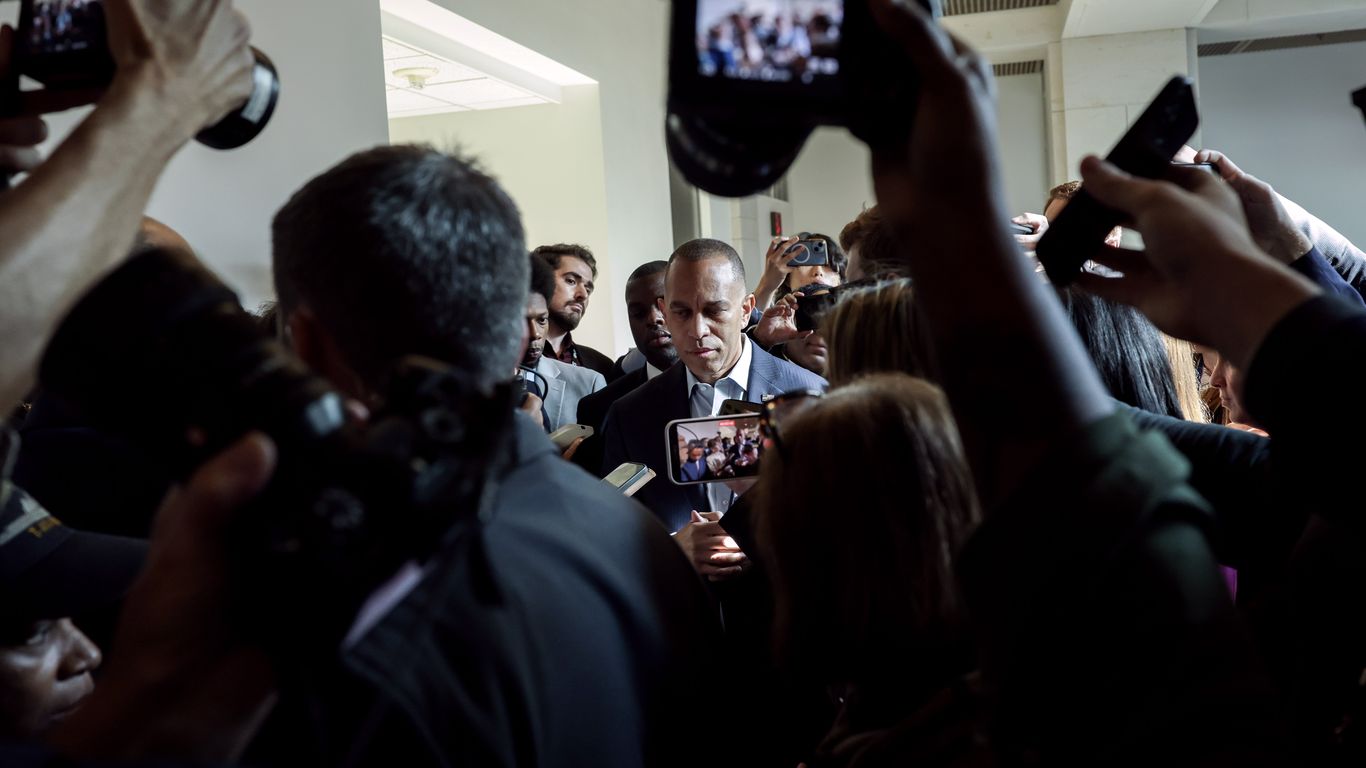
House Democrats aren't unanimous on whether House Minority Leader Hakeem Jeffries (D-N.Y.) should be speaker, but they pretty much all agree on two things: He probably will be speaker, and they just want this to be over. Why it matters: Their phones and emails are still being blown up by constituents and grassroots activists urging them to do what they can to block Jeffries from securing the speaker gavel. There isn't much Jeffries' skeptics and detractors on Capitol Hill can do: He is set to easily win his caucus' nomination on Wednesday and then be formally elected to the role on Jan. 3. Rep.-elect Jake Johnson (D-Minn.), who told Axios last week he was undecided, said Tuesday he met with Jeffries and was "assured" votes on his two key issues: Ending the Trump administration's tariffs and the war in Iran. "I'll be voting for Leader Jeffries," Johnson told Axios. State of play: The movement to deny Jeffries the speakership has proliferated online and among the progressive grassroots but has struggled to gain a foothold on Capitol Hill. A handful of members of the progressive "Bloc" — and some other newly elected members in deeply red district — have voiced skepticism of Jeffries, but only in a few cases has that evolved into outright opposition. "As of now, I'm a 'no,'" Rep.-elect Angela Gonzales-Torres (D-Calif.) told Axios on Wednesday. "The people are saying we deserve better, and better is possible." Reality check: Nobody is challenging Jeffries. Some people floated as potential potential challengers, such as Rep. Jamie Raskin (D-Md.), have firmly ruled it out . Rep. Ayanna Pressley (D-Mass.), the subject of an online petition urging her to seek the role, has privately told colleagues she is not running but been more equivocal in public. "I'm very humbled to even be in conversation," Pressley said at a town hall on Monday. She added that she was "making no declarations or announcements" at that event and does not "need to be the speaker of the House to speak fo
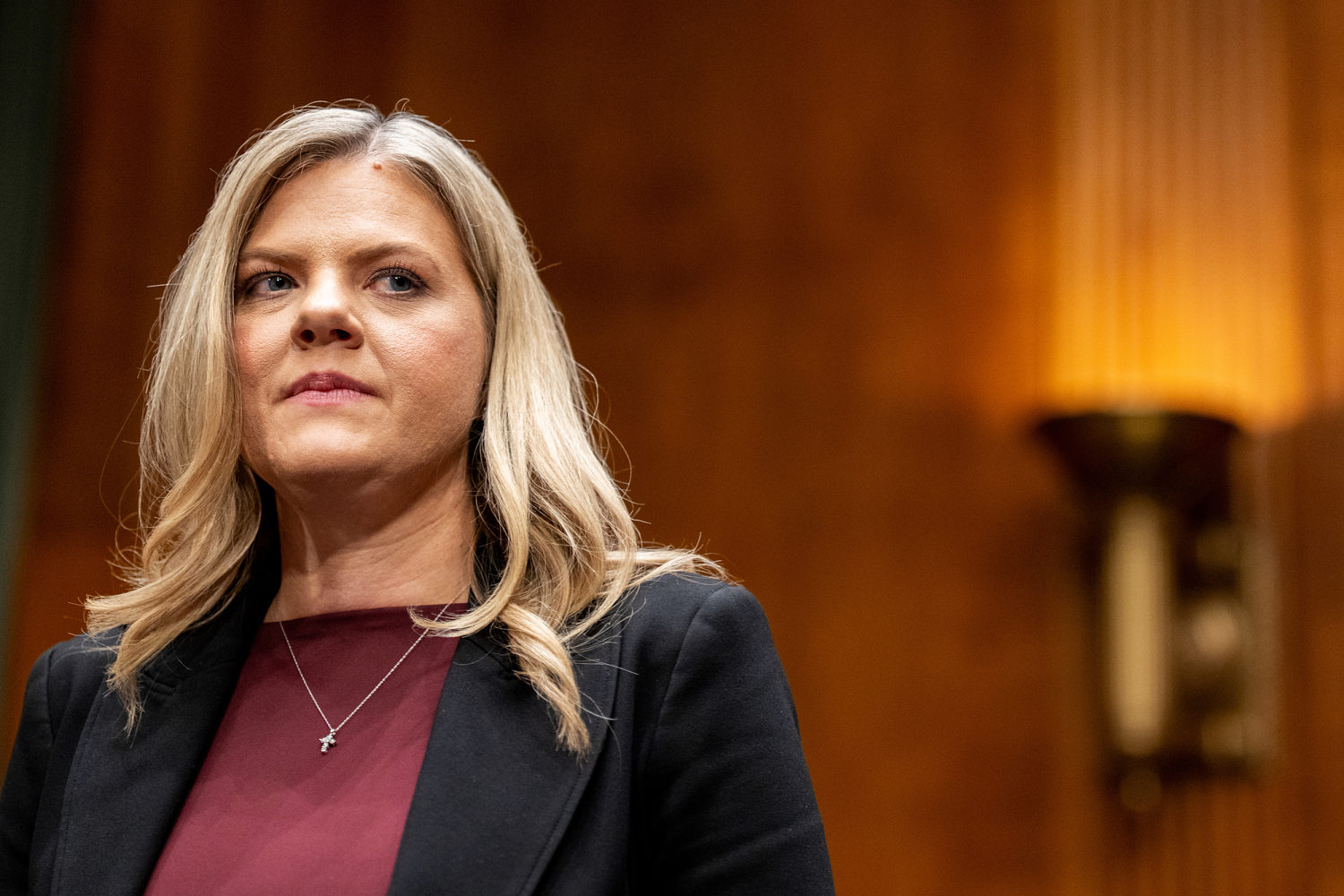
The White House is dropping Dr. Heidi Overton’s nomination to lead the Food and Drug Administration, a White House official confirmed Tuesday.