Trump backs Nvidia’s Jensen Huang and Republicans select new congressional leaders: Morning Rundown
Trump backs Nvidia’s Jensen Huang as the DOJ investigates his relationship with an alleged Chinese spy.
NBC News · 4h ago

Trump backs Nvidia’s Jensen Huang as the DOJ investigates his relationship with an alleged Chinese spy.
A political backlash against AI and data centers — now compounded by a crisis facing the technology's most influential champion — could help force a slowdown that industry leaders have struggled to achieve voluntarily. Why it matters: Tapping the brakes on AI development — which frontier AI developers claim to want but have so far failed to do given the risk of offering an advantage to a competitor — could give society more time to prepare for economic upheaval and the risks of superintelligent systems. A wave of Democratic victories and data center moratoriums are now joined by a potentially weakened Nvidia CEO Jensen Huang, who admitted to having a relationship with an alleged Chinese spy. Huang, who has led the industry in barreling through past resistance to AI acceleration, may be less able to do so while under a microscope. While both factors could stymie data center expansion in the U.S., it's far from clear that would slow AI's advance. Between the lines: Huang has been a powerful counterweight to calls for AI restraint, dismissing fears of an AI bubble or purported catastrophic risks to humanity from the technology. An investigation — by the board, an ascendant Democratic congress or federal authorities — could curb his ability to make the case for continued expansion, leaving an opening for those calling for more restrictions. Nvidia says Huang will remain CEO and the news won't slow the company, but the potential impact on his political influence is hard to measure. The potential impact extends beyond that as well. Nvidia is both the dominant supplier of AI chips and an investor in companies building AI infrastructure. A crisis that raises questions about its leadership, business practices or financial relationships could ripple through the industry's expansion plans. The intrigue: Anthropic CEO Dario Amodei, OpenAI CEO Sam Altman and Elon Musk have all warned about the potentially catastrophic risks of advanced AI, with all expressing, at times, the need
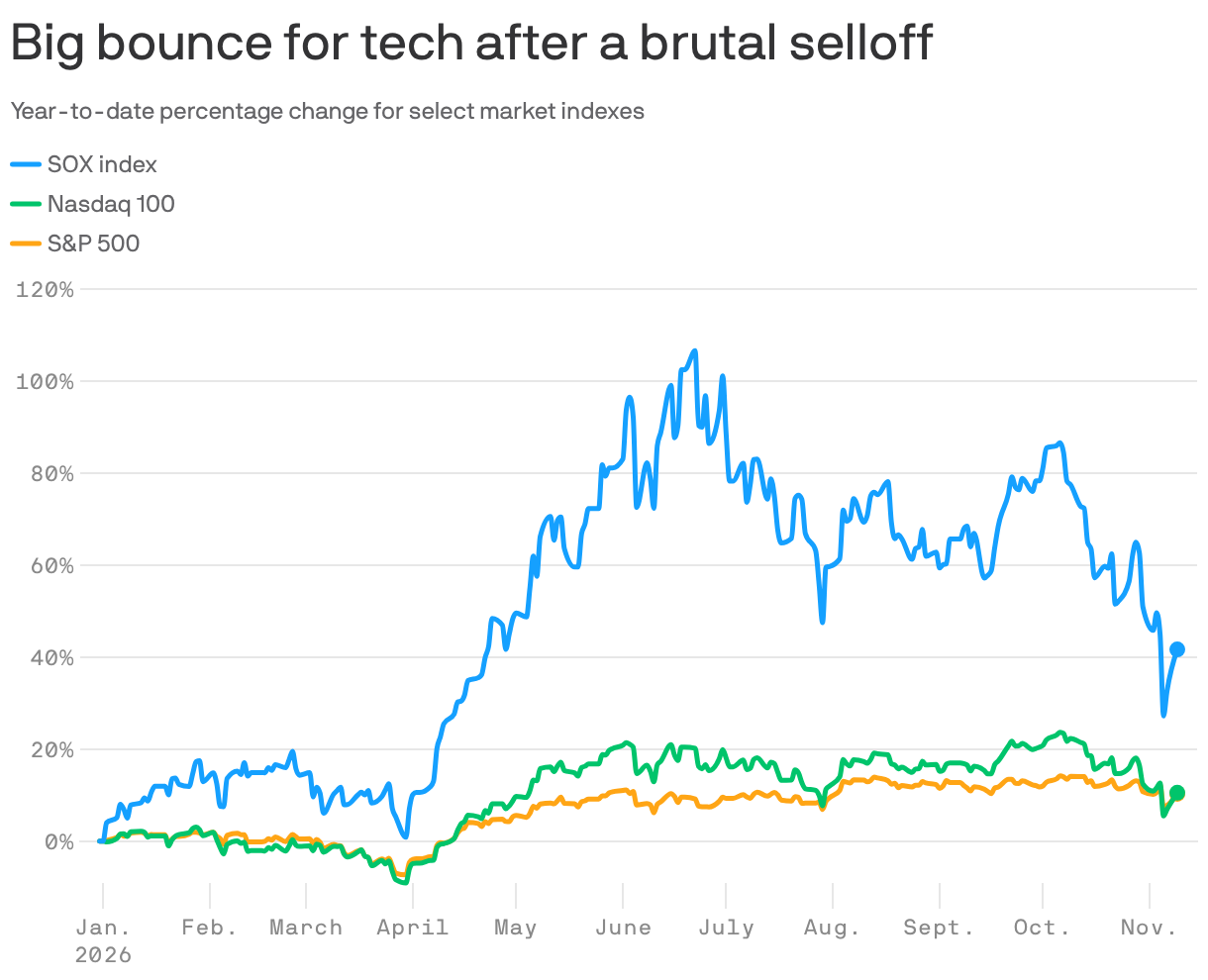
Data: FactSet; Chart: Matt Phillips/Axios The AI trade has regained momentum despite — or maybe because of — Nvidia's struggles following the weekend revelations from CEO Jensen Huang. The big picture: Monday's sudden burst of exuberance for AI was the latest wide swing for a market upended by last week's "blue tsunami" in the midterm elections and the threat they could pose to the data center boom. By the numbers: The Nasdaq 100 index of large-cap technology shares soared 3.4%, its biggest daily jump since late March and its second-best showing of the year. Zoom in: Stocks romped across the AI ecosystem — well, with one important exception. Pick-and-shovel plays such as engineering and construction companies, and makers of data center inputs like fiberoptic cables, servers and data storage devices soared. The companies that build and lease out data center computing power, known as neoclouds, also jumped. (Those companies had been at the epicenter of recent jitters about financing for the AI boom.) Hyperscalers rose, paced by Meta, which notched a gain of 5.1%. Semiconductors roared, with the SOX index posting its best gain — 6.9% — since late July. Yes, but: The glaring exception to the AI-palooza was its best-known player, Nvidia. Weekend revelations from CEO Jensen Huang — who acknowledged having an affair with a woman suspected of connections to Chinese intelligence — left investors grappling with uncertainty about the CEO's future. The intrigue: Some investors may see Nvidia's pain as potential gain for rivals. Broadcom jumped 8.8%, its best day in nearly a year. Advanced Micro Devices soared 13.3%, benefiting also from an upgrade to "Outperform" — effectively, a "buy" recommendation — from Oppenheimer analysts on Sunday. Context: Bullish commentary from Wall Street established the background music for Monday's big bounce, as analysts urged investors to buy into the market's recent soft patch. "We believe stocks are now clearly in oversold territory," Goldman S
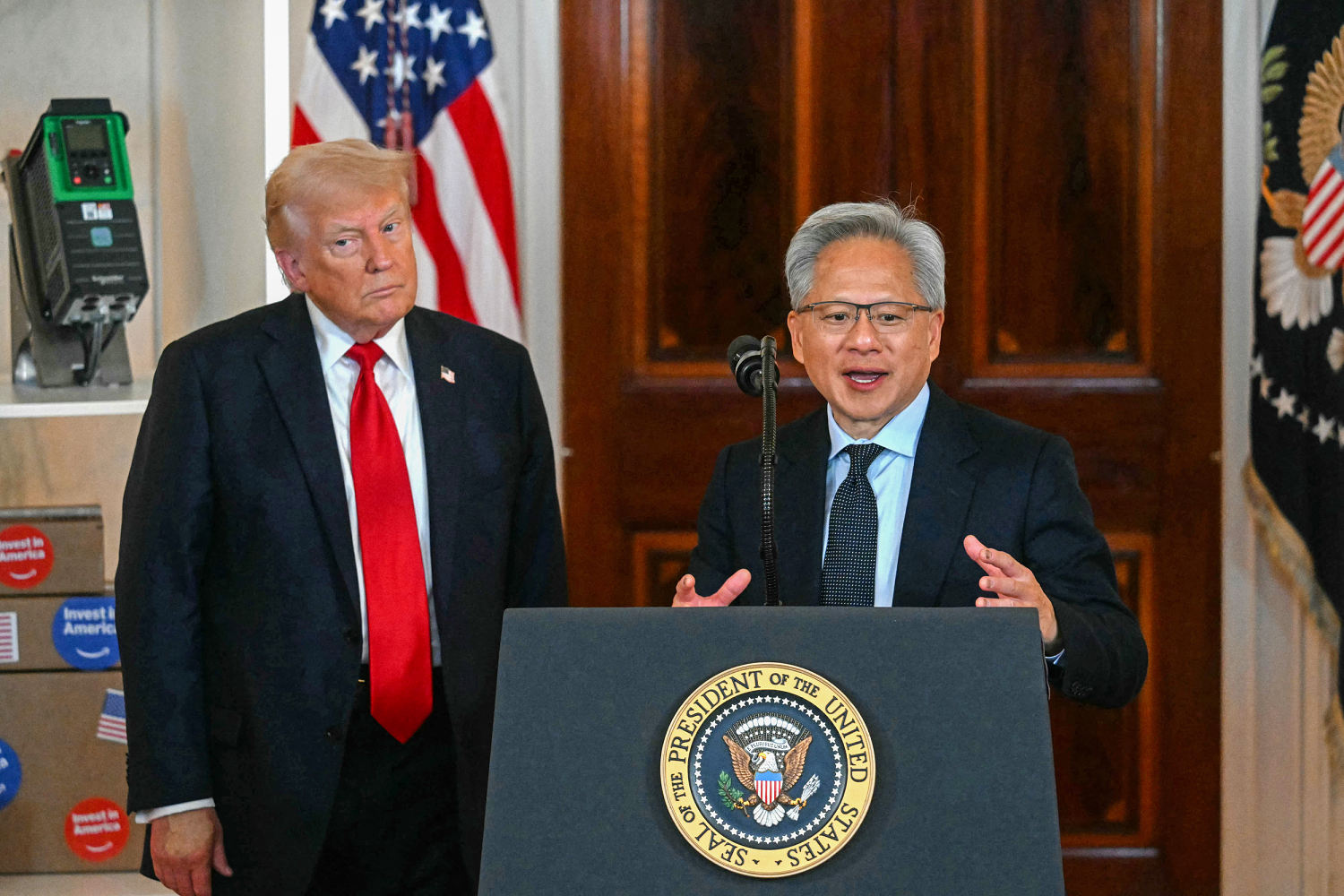
Donald Trump defended defense secretary Pete Hegseth, who is facing an impeachment resolution from Republican senator Thomas Massie, saying Hegseth 'won two wars'. The president, who said he had spoken to Nvidia CEO Jensen Huang, said he was 'amazed' by claims Huang conducted an affair with an alleged Chinese spy, and that the FBI was now looking into the issue Jensen Huang’s image has been shattered. Could he be pushed out at Nvidia? Republican Thomas Massie moves to force vote to impeach Pete Hegseth Continue reading...
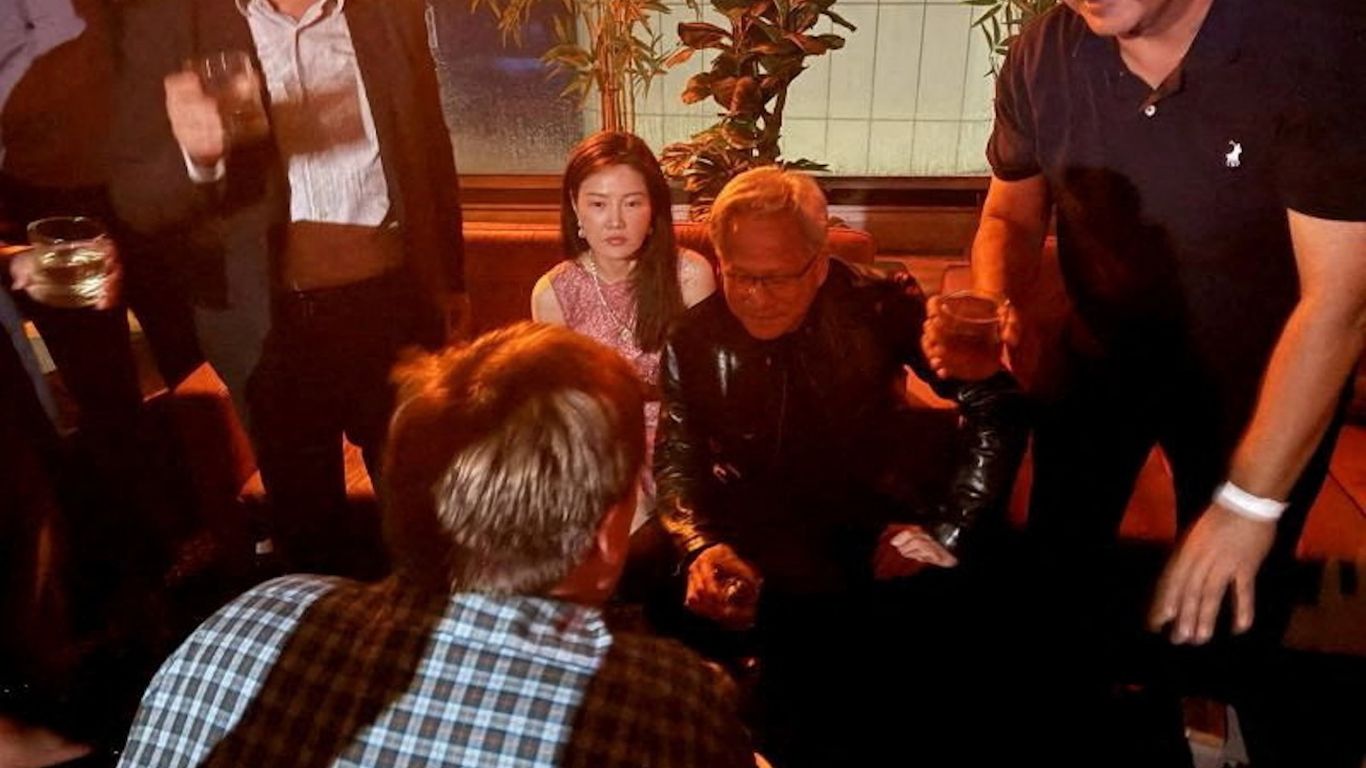
Nvidia CEO Jensen Huang's affair with a woman suspected of spying for China echoes past controversies involving prominent Americans whose romantic relationships raised national security concerns. Why it matters: Foreign intelligence operatives can use romantic relationships to gain access to political intelligence, corporate secrets and classified information — posing serious national security risks. Driving the news: Jensen Huang acknowledged an extramarital affair in a message to employees Sunday, following reports that he had a relationship with a suspected Chinese spy. Per The New York Times , U.S. authorities suspected China's Ministry of State Security of recruiting Alice Huang to seek information about Jensen Huang and influence his feelings about selling AI chips to Chinese firms. Nvidia's board says it has no reason to believe company secrets or national security were compromised. China has also denied the allegations. Zoom out: The evidence of foreign intelligence involvement varies, with some cases involving actual security breaches, while others raised concerns about possible foreign spying. Read more below. Jensen Huang State of play: Reports about Jensen Huang's relationship with Alice Huang have raised questions about whether Chinese intelligence gained access to Nvidia's secrets or sought to influence its business decisions. AFP and Reuters photos showed them together in 2024 and 2025. Employees reported seeing Jensen Huang at Megaspeed's offices, where Alice Huang worked as an executive, according to Culper Research, a short-seller that published a report on Nvidia's China business in May 2026. An employee told Culper that Jensen and Alice had a "very close" relationship. What's next: Three Republican House committee chairs have requested a briefing with Huang about his relationship with Alice Huang and Nvidia's safeguards against foreign threats. James J. Smith and Katrina Leung A 2006 DOJ report found that counterintelligence agent James J. Smith
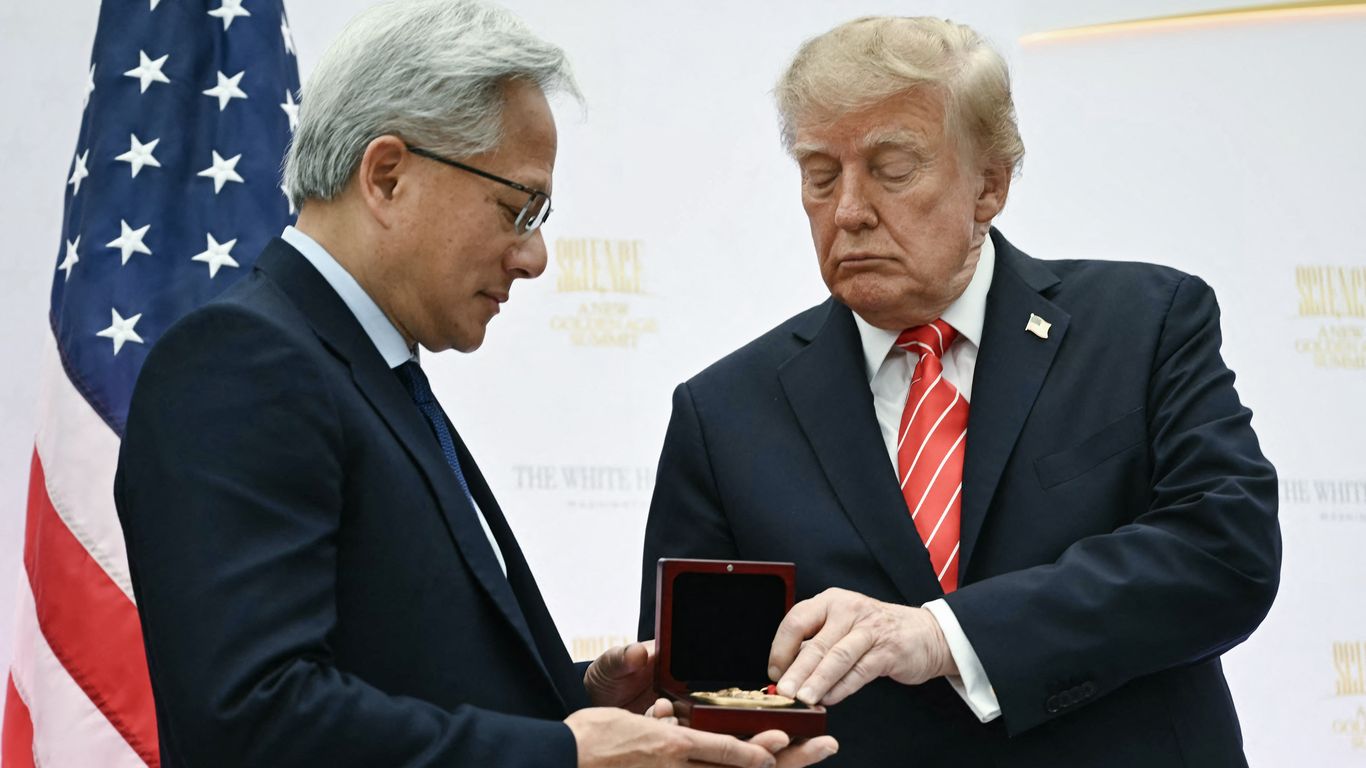
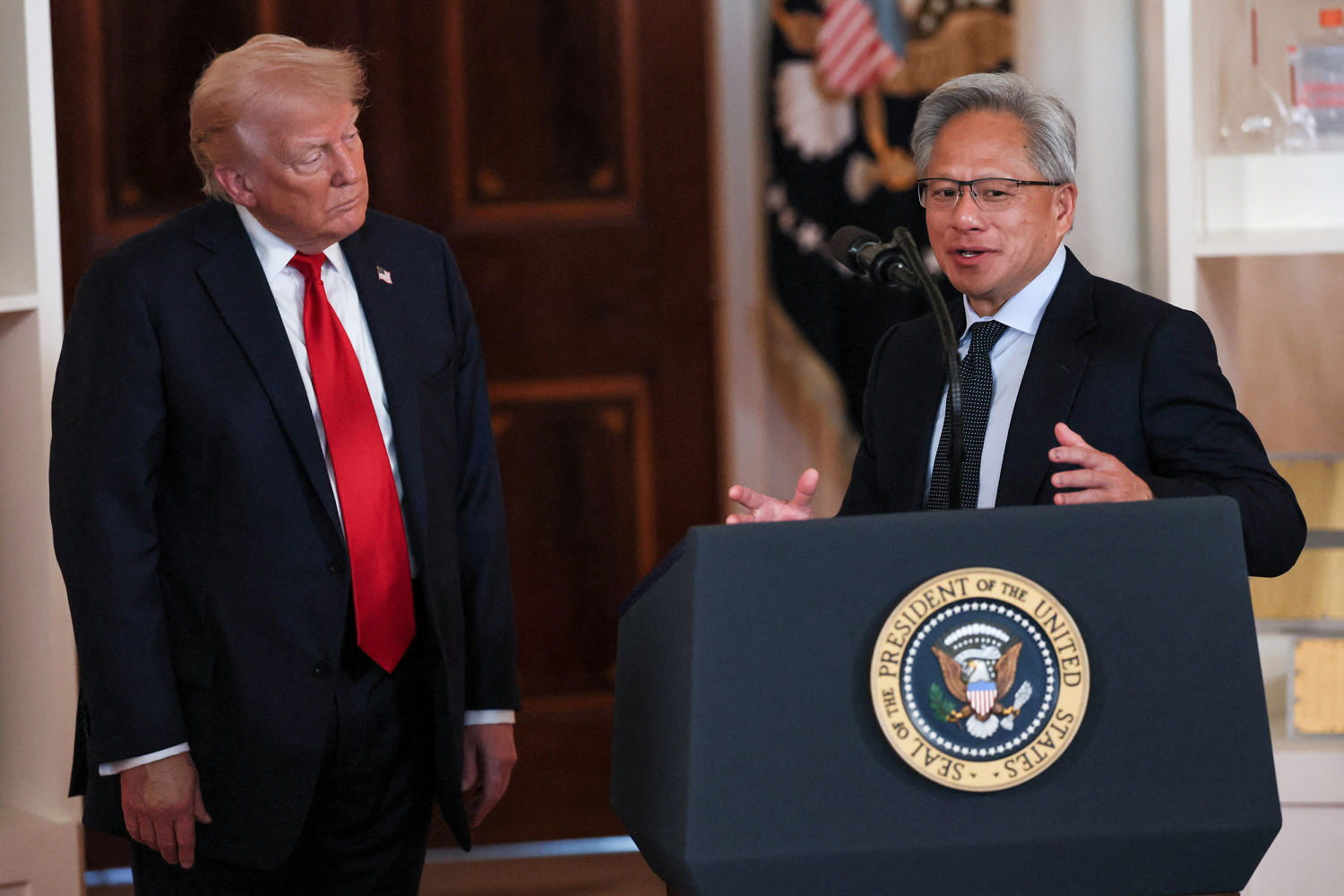
President Donald Trump said that he had spoken to Nvidia CEO Jensen Huang earlier in the day Monday, after Nvidia revealed late Sunday that it had launched an investigation into his extramarital affair with an alleged Chinese spy.
Alice Huang, a former executive of a Singapore-based AI computing company, is at the center of a suspected Chinese espionage scandal after Nvidia CEO Jensen Huang acknowledged an extramarital affair. Why it matters: The investigation raises questions about whether Chinese intelligence sought access to Nvidia's technology and CEO through Alice Huang as the U.S. and China compete in the AI race. Driving the news: Over the weekend, Jensen Huang admitted in a letter to Nvidia employees that he had a romantic relationship with a suspected Chinese spy. Though he did not name Alice Huang, the letter came after The New York Times first reported that U.S. authorities believed she was a Chinese spy in October. Photos captured Alice and Jensen Huan g together in 2024 and 2025. Though they have the same surname, Alice and Jensen Huang are not related or married. Jensen Huang has been married to Lori Huang for 40 years. Context: Little is known about Alice Huang. She has lead a Singapore-based company called Megaspeed International, a cloud computing and data center operator that became a multibillion-dollar Nvidia customer. The New York Times reported Monday that the Commerce Department was leading the investigation into Megaspeed before it was sent to the Justice Department after Nvidia reached out about the case. Read more about Alice Huang and Megaspeed below. Who is Alice Huang? Zoom in: Huang, also known as Huang Le, is a Chinese citizen with a reported background in journalism and finance. An AFP investigation found an online profile that said she previously worked at the financial services company HSBC and the broadcasters CCTV and Hunan TV. However, AFP said it couldn't independently verify the information. Zoom out: The New York Times reports that China's Ministry of State Security recruited Alice Huang to seek information about Jensen Huang and influence his feelings about selling AI chips to Chinese firms. But it's still unclear what information she provided to Beiji
Nvidia is coming under fire for having no clear succession plan to replace Jensen Huang in the event that something unexpected happens — like an international incident with him at the center . Why it matters: The spotlight on Huang shows the vulnerabilities of a large company being dependent on one executive — and the risks it poses to investors and customers, corporate governance experts tell Axios. Catch up quick: Huang — who founded the chips giant, serves as its all-powerful CEO and exerts significant influence over the global AI economy — admitted to having an affair with a woman suspected of being a Chinese spy. Nvidia's board announced an independent investigation Sunday, and experts say Huang's chances of keeping his job are a coin flip . The big picture: The company, by all accounts, has no clear bench of potential replacements. Huang famously has dozens of direct reports, ensuring that no single individual — other than him — has a wide-ranging purview at the company. "The biggest issue is no human goes on forever, and this is exactly why you want a good succession plan in place if something like this were to happen," says Charles Elson, a corporate governance expert and former University of Delaware professor. "You can't base a company that big around one person. You just can't," Elson added. "What if he gets hit by a bus?" CEO succession planning is a standard practice for big public companies, and it's not clear whether Nvidia has a confidential plan. State of play: The highest-profile member of Huang's executive team is Colette Kress, Nvidia's chief financial officer, who appears alongside him during the company's earnings calls. But analysts say Kress — who has spent her career in financial roles — isn't necessarily a natural successor to Huang in his role as an innovator and visionary for the AI age. What they're saying: "It's ridiculous that they have nobody in management identified," says Jeffrey Sonnenfeld, a professor at the Yale School of Managem
The AI chip boss’s actions raise urgent questions about corporate influence, national security and the US president’s willingness to listen to intelligence warnings It could be the plot of a spy thriller. One of the most powerful figures in the AI revolution admitted to having an affair with a Chinese businesswomen said to have passed intelligence to Beijing. When Donald Trump was briefed about the Nvidia co-founder Jensen Huang’s liaisons with Alice Huang, he took no action. Perhaps he thought only marriage vows had been broken. Or perhaps Mr Trump was willing to overlook the conduct of a friend who championed his unpopular datacentre expansion, whose company donated to his White House ballroom and who echoed his opposition to AI safeguards against expert advice. Nvidia became the cornerstone of AI by supplying brute computing power. As tech giants scrambled for the firm’s graphics processing units (GPUs), Mr Huang sold the picks and shovels for the AI gold rush – and amassed a $160bn fortune. When China joined the race for tech supremacy, Nvidia’s microchips became a national security issue. In October 2022, the US slapped export controls on GPU sales to China. Thirty months later, Nvidia was effectively banned from selling to Beijing. Mr Huang lobbied for looser controls. Such was his sway with Mr Trump that the White House scrapped Biden-era global AI chip restrictions and then permitted sales of Nvidia’s prized H200 processors to Chinese customers. Continue reading...
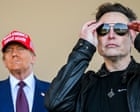
Democrats won seats on anti-datacentre tickets and Musk wasted nearly half a billion dollars. Big tech may be losing its grip, but it won’t go quietly Photos That Precede Unfortunate Events: a couple of months back, Donald Trump hosted some of the world’s most powerful tech executives at the White House for a “ Super Intelligence luncheon ”, which by coincidence is also how my mum described her tuna sandwiches in a forlorn attempt to get me to eat them. Sitting either side of the president were Elon Musk, making a rare offline appearance in daylight hours, and Jensen Huang, the Nvidia chief executive carving out a precious slot in what we now know was an extremely busy schedule. Over a delicious meal of microchips and rare-earth metals, the billionaires sketched out a utopian future of an AI industry unencumbered by regulation or safeguards, powered by their heroic strongman leader, a political genius effortlessly able to impose his will upon an entire nation. And perhaps it should have been apparent even at the time that these (mostly) men were putting their faith in a guy who had recently been defeated by pond algae . But as the drinks and the good times flowed, it was still possible to believe that the sun would never set on the thousand-year American superintelligence empire. Jonathan Liew is a Guardian columnist The Guardian’s year in review 2026 . On Tuesday 1 December 2026, join your favourite Guardian writers for an evening of candid conversations, witty remarks and surprises as we look back on the year-defining stories of 2026. With Zoe Williams, Lucy Mangan, Jonathan Liew, Heather Stewart, Pippa Crerar, John Crace and host, multi-award-winning comedian Suzi Ruffell. Book tickets here or at guardian.live Continue reading...
Nvidia’s stock slid after the company announced that it had opened an investigation into CEO Jensen Huang’s relationship with an alleged Chinese spy.
Investors are questioning whether Huang's future as Nvidia's CEO may be at risk amid allegations that he was targeted in a Chinese intelligence operation.
There is no Nvidia — nor an AI boom as we know it — without Jensen Huang. He has reassured jittery markets with his words, bankrolled a trillion-dollar buildout and put economies on his shoulders. Now, the world is wondering if he can save himself . Why it matters: Global markets must confront a terrifying reality: The AI ecosystem's first "too big to fail" executive is suddenly vulnerable, and there is no backup plan if he is forced to step down. Catch up quick : Huang apologized Sunday and Nvidia's board launched an independent probe after he admitted to having a relationship with a woman named Alice Huang, an alleged Chinese operative. Nvidia's board expressed confidence in his leadership and said it had no reason to believe national security or company secrets were compromised. President Trump stood by Huang, calling him "an honorable guy." The big picture: Keeping his job is one thing. Maintaining the ability to steady markets, finance customers and shape government policy is another. These are the five questions that now loom over the AI boom : 1. What happens to Nvidia? Forged 33 years ago (initially using a Denny's as an impromptu office), Nvidia is a uniquely founder-driven company, making any potential leadership transition incredibly perilous. Investors have little precedent for valuing the company without him. "It's very hard to envision Nvidia run by anybody else," said Dan Gallagher, an analyst with Washington Post Intelligence and long a keen observer of the chip titan. Huang has more than 60 direct reports, eschews traditional corporate layers and hasn't been publicly grooming a successor. "I don't know if anyone's going to know how to value Nvidia" without him, Gallagher told Axios. 2. What happens to the market? Huang has repeatedly rescued the AI trade from bearish sentiment. On multiple occasions, he has offered backstops to shore up growth plans for companies across the AI landscape, from CoreWeave to OpenAI. In July, he argued that cheaper open
The world's most powerful AI executive admitted Sunday to an affair with a suspected Chinese spy, sending shock waves through an industry built on his singular influence. Why it matters: Nvidia CEO Jensen Huang has fashioned himself as the indispensable leader of an indispensable company — a $4.5 trillion behemoth with unparalleled clout in Silicon Valley, on Wall Street and inside President Trump's White House. Trump stood by Huang on Sunday evening, telling reporters that the Nvidia CEO is "an honorable guy" and "probably has an excuse" for his infidelity. The big picture: Huang, who has led Nvidia since founding the chipmaker 33 years ago, has become the AI boom's chief evangelist and most authoritative voice. He has brushed aside fears of both a speculative bubble and technological catastrophe, joining forces with Trump to calm markets and the public as warnings of an AI apocalypse reached fever pitch. For almost any other CEO, an affair with a suspected foreign intelligence operative could be career-ending. Huang's grip on Nvidia — and the company's extraordinary importance to the AI economy — may insulate him from the same fate. Driving the news: Huang confessed to the affair in a letter to staff Sunday, apologizing to his family as Nvidia's board launched an independent probe into the suspected Chinese intelligence operation. U.S. officials believe Alice Huang, an executive at Nvidia customer Megaspeed, was recruited by Beijing's top spy agency to gather information and potentially influence Nvidia's campaign to expand advanced chip sales to China. Nvidia's board said it had no reason to believe national security or company secrets were compromised and expressed confidence in Jensen Huang, who intends to remain CEO during the investigation. Zoom in: The New York Times first exposed the suspected Chinese espionage operation on Oct. 29, reporting that a woman believed to be working for Beijing had developed a close relationship with Nvidia's CEO. The company po
The chipmaking giant says it is looking into reports by The New York Times that its CEO, Jensen Huang, was the target of a Chinese intelligence operation.
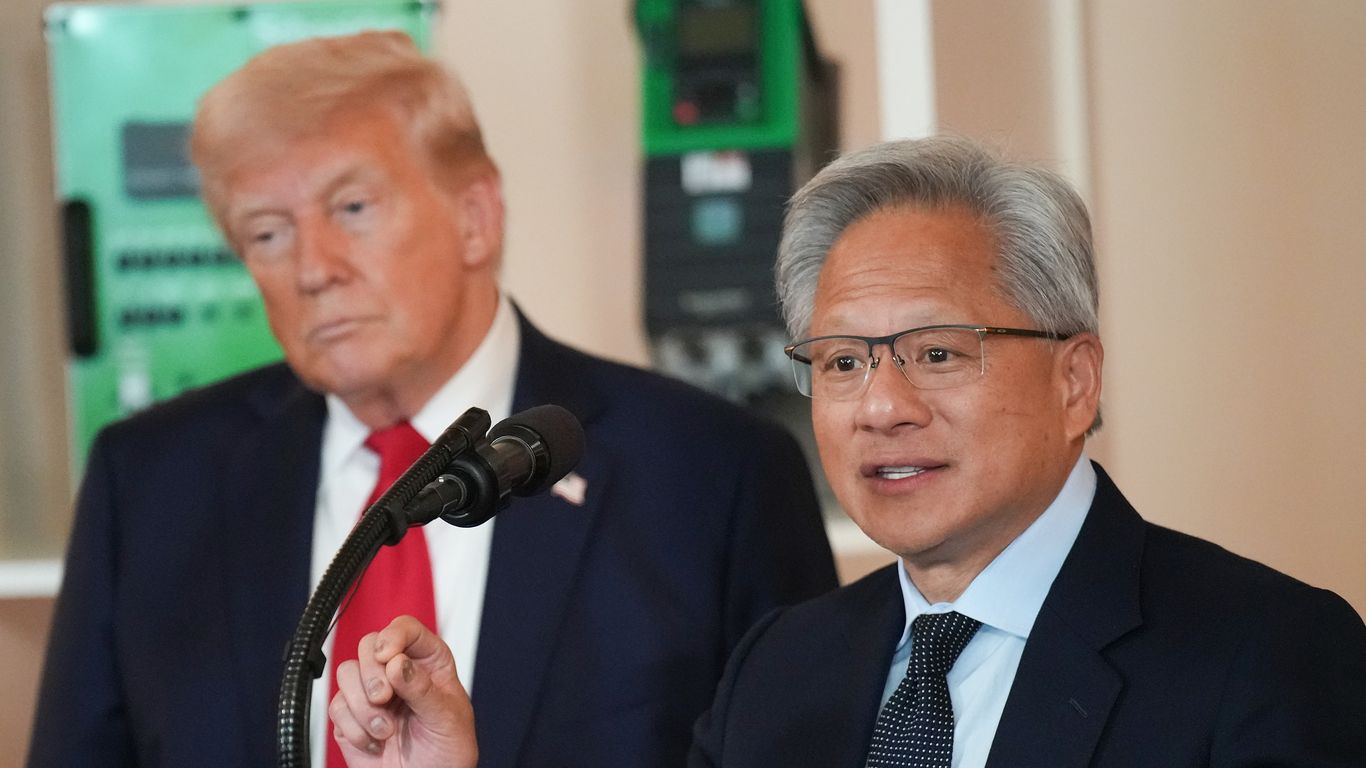
President Trump defended Nvidia CEO Jensen Huang on Sunday night, even as the company's board launched an investigation into his affair with a suspected Chinese spy. Why it matters: The blowback to Huang's relationship is only getting more intense by the hour, with multiple members of Congress calling for probes and investors saying the news could put a cloud over the entire AI trade. What they're saying: Trump was asked Sunday night if he's taking Huang with him on an Asia trip next week. "I don't know, but I'd certainly take him," the president told reporters. "I haven't heard that he's done anything wrong," Trump added. "He dealt with somebody but, you know, so does everybody else." The intrigue: The New York Times reported in late October that Trump was briefed earlier this year about Huang's relationship with the potential spy but chose not to act. Huang has been one of Trump's favorite corporate executives since his return to office, frequently appearing at White House events. He also traveled with Trump to China earlier this year, even after the reported memo warning the president of Huang's relationship. What's next: A group of House Republican committee chairs have asked Huang to agree by Nov. 11 to a date for a briefing on his relationship and Nvidia's national security controls.
The board of Nvidia said it had no reason to believe that the company's secrets or national security were compromised.
The board of Nvidia on Sunday said that it was opening an independent investigation following reports that CEO Jensen Huang had been targeted by a foreign intelligence effort.
Nvidia CEO Jensen Huang admitted to having a romantic relationship with a suspected Chinese spy in a message to his company. The big picture: The company's board launched an independent investigation into reports that he was targeted by Chinese intelligence. Driving the news: "I owe my family and all of you an apology," Huang wrote in a draft email to Nvidia employees obtained by Axios. "I was unfaithful to my wife. My actions hurt her and our children. There is no excuse for what I did." Huang said he took "full responsibility" for his actions, adding that he had fallen short of his responsibilities to Nvidia's employees, board and shareholders. "Leading NVIDIA is the privilege of my life," Huang wrote. "I am fully committed to NVIDIA and will work to earn back your confidence." Flashback: Secretary of State Marco Rubio warned top Trump officials about Huang's relationship with a woman U.S. intelligence officials believed was a Chinese spy, The New York Times reported Friday. The woman, Alice Huang, was recruited to seek information and potentially push for Nvidia's advanced chips to be made available in China, countering existing restrictions, the Times reported. What they're saying: "Today's news will not slow NVIDIA. Jensen is committed to continuing to lead NVIDIA as CEO without interruption," John Rizzo, head of public policy communications at Nvidia said in a statement.
Nvidia CEO Jensen Huang is facing increasing congressional scrutiny after multiple reports Friday night suggested he had a romantic relationship with a purported Chinese spy. Why it matters: Huang is arguably the world's most powerful CEO, the man who runs one of the world's largest companies and whose products are central to the world's most important technology. The mere suggestion that he was in some way compromised by a Chinese intelligence agent could quickly become a major, bipartisan focus of the incoming Congress. What they're saying : Sen. Chris Coons (D-Del.) promised a probe of the latest Times report and Huang's relationships. "The more I learn about the insane relationship between the Trump Administration, Chinese spies, and AI billionaires, the more I'm convinced there is nothing this administration does that isn't corrupt. Congress will investigate and get answers," Coons posted to X, linking in another post to the Times' story. Catch up quick: A series of reports over the last 10 days has raised concerns about an allegedly illicit relationship with an undercurrent of espionage. Oct. 29 : The New York Times reported that Jensen Huang and a tech executive named Alice Huang had a "close relationship," that U.S. authorities had concerns about her intelligence connections with China, and that President Trump had been briefed on the situation. Oct. 31 : The Wall Street Journal reported that intelligence authorities in the U.S., Singapore and Taiwan all had reason to believe that Alice Huang might be a Chinese spy. Nov. 5: A group of House Republican committee chairs asked Jensen Huang to give them a briefing on his relationship with Alice Huang and Nvidia's controls over sensitive information, saying they need to determine "the extent to which U.S. national security has been placed at risk." Nov. 6: Both the New York Times and Financial Times reported that Alice Huang was in fact a Chinese spy, recruited by top intelligence officials specifically to spy on
Nvidia CEO Jensen Huang has been asked by three House Republican committee chairs to brief Congress behind closed doors about his reported ties to a woman accused of spying for China. Why it matters: The request escalates the scrutiny of the Nvidia CEO over his alleged relationship with Alice Huang, a businesswoman accused of spying for China. Catch up quick: Jensen Huang and Alice Huang purportedly had a "close" relationship, per reporting from The New York Times . The Times also reported that President Trump was briefed by intelligence officials about their relationship and the allegations that Alice Huang was a spy, but chose not to act. The Wall Street Journal subsequently reported that officials in at least three countries had concerns that Alice Huang was passing information to the Chinese government, potentially including sensitive details on Nvidia chips. Nvidia has denied the allegations, saying Jensen Huang and Alice Huang's contacts were just routine business interactions. The Chinese government previously called the allegations it was spying on Nvidia "groundless speculation." Zoom out: Reps. Brian J. Mast (R-Fla.), John Moolenaar (R-Mich.) and Rick Crawford (R-Ark.) sent a letter to Jensen Huang Thursday, requesting he sit for a joint briefing with the respective House committees that they chair: Foreign Affairs, the Select Committee on the Chinese Communist Party and the Select Committee on Intelligence. They are seeking answers on Nvidia's protocols to protect itself from foreign adversaries and his interactions with Alice Huang, according to the letter. "Recent reports raise significant national security concerns regarding the [People's Republic of China] access to sensitive U.S. technology and information," the letter reads. "The issue of PRC infiltration and access to cutting-edge U.S. technology is core to the investigative work of our three committees this Congress. It is vital that Congress determines the extent to which U.S. national security h
An impeachment investigation would enhance transparency and allow Congress to reassert its authority In Tuesday’s midterm elections, voters sent the Republican party an unmistakable message: their love affair with Trumpism is coming to an end. The overwhelming victory for Democrats in both the US House of Representatives and the US Senate, was foreshadowed by a number of polls showing growing disenchantment with Donald Trump – and it was personal. Continue reading...