George and Laura Bush made their first public comment on the controversy roiling their usually decorous congregation, which is reverberating far outside Texas.
Results for “paraguay president”
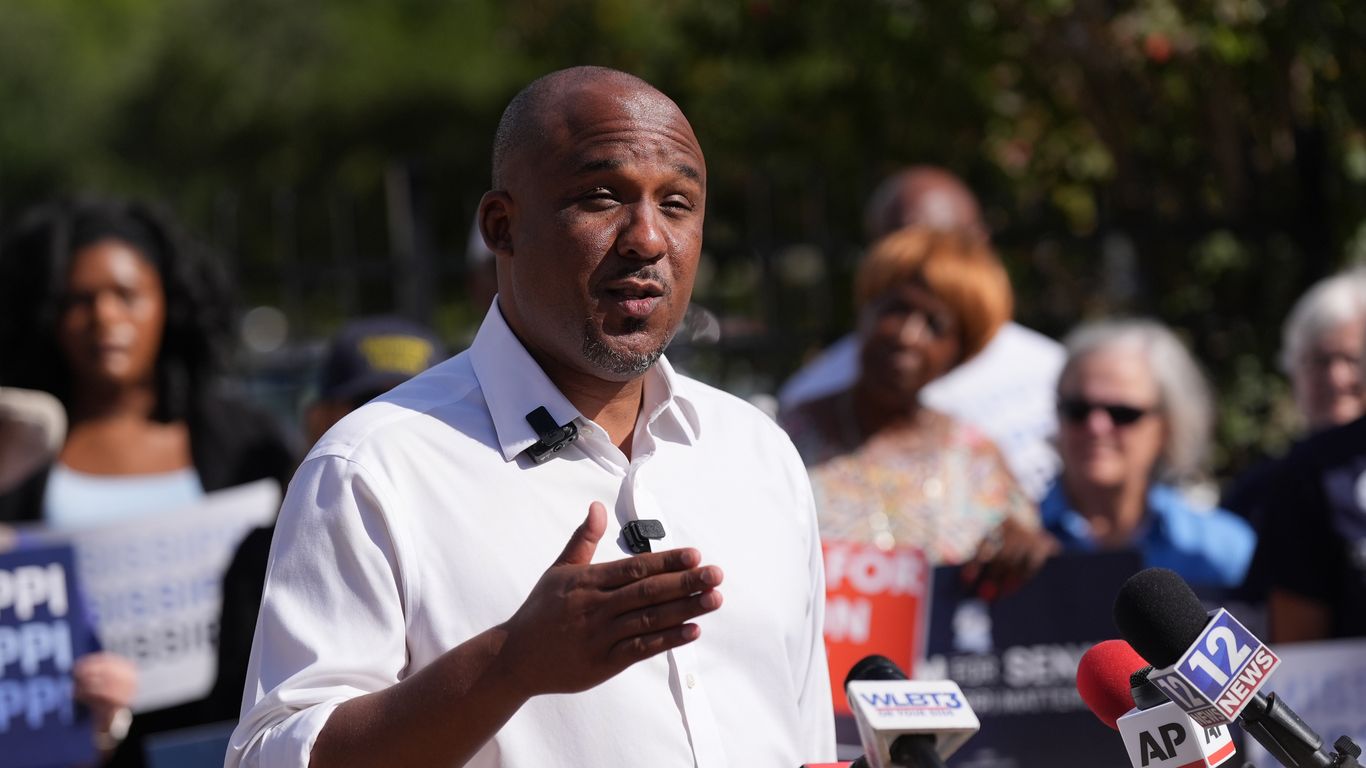
The successful Democratic contender for a Michigan Senate seat parried the many insinuations lobbed by Republicans Abdul El-Sayed said he did not expect to be “a main character of this midterms”, but the first Muslim elected to the US Senate in history will take his seat in January after a vitriolic campaign that cast him as the central villain of the president and his party. By October he told the Associated Press he was “not shying away” from those rightwing fixations. “What are you implying?” El-Sayed, the son of Egyptian immigrants, replied when a town hall attender asked if he would disavow the Muslim Brotherhood, in a now-viral exchange. Continue reading...
Yes, the Republicans suffered humiliating defeat. But the fact that a Trump presidency was even possible means something like it could happen again He’s down, but not quite out. Barring divine or other intervention, Donald Trump will remain in the Oval Office for a further two years and 10 weeks. Or, as the White House put it in a plaintive social media post brimming with neediness: “PSA [Public Service Announcement]: Trump is still your president.” But that’s not the only reason why the global celebrations that greeted the Democratic tidal wave that swept Republicans out of even their deepest heartlands should be tempered, if only a tad. Don’t get me wrong, the results of Tuesday’s midterm elections are cause for genuine international jubilation. The defeats of Trump allies in Serbia and Brazil were delicious appetisers, but this was the feast. No mere electoral setback in line with midterm tradition, this was a thorough repudiation of the second Trump presidency and of Trumpism. The 16% swing to Democrats in the popular vote for the House of Representatives was greater even than the 11.2% swing recorded in the Watergate midterms of November 1974, following the resignation in disgrace of Richard Nixon. Trump had worked hard for many months to undermine these elections , either by gerrymandering districts in his favour or preparing the ground for a later claim the vote was rigged, but to no avail: the democratic system proved too resilient, and the American public too determined to have their say. And have it they did, in a voice loud and clear. Jonathan Freedland is a Guardian columnist Continue reading...
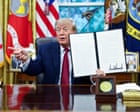
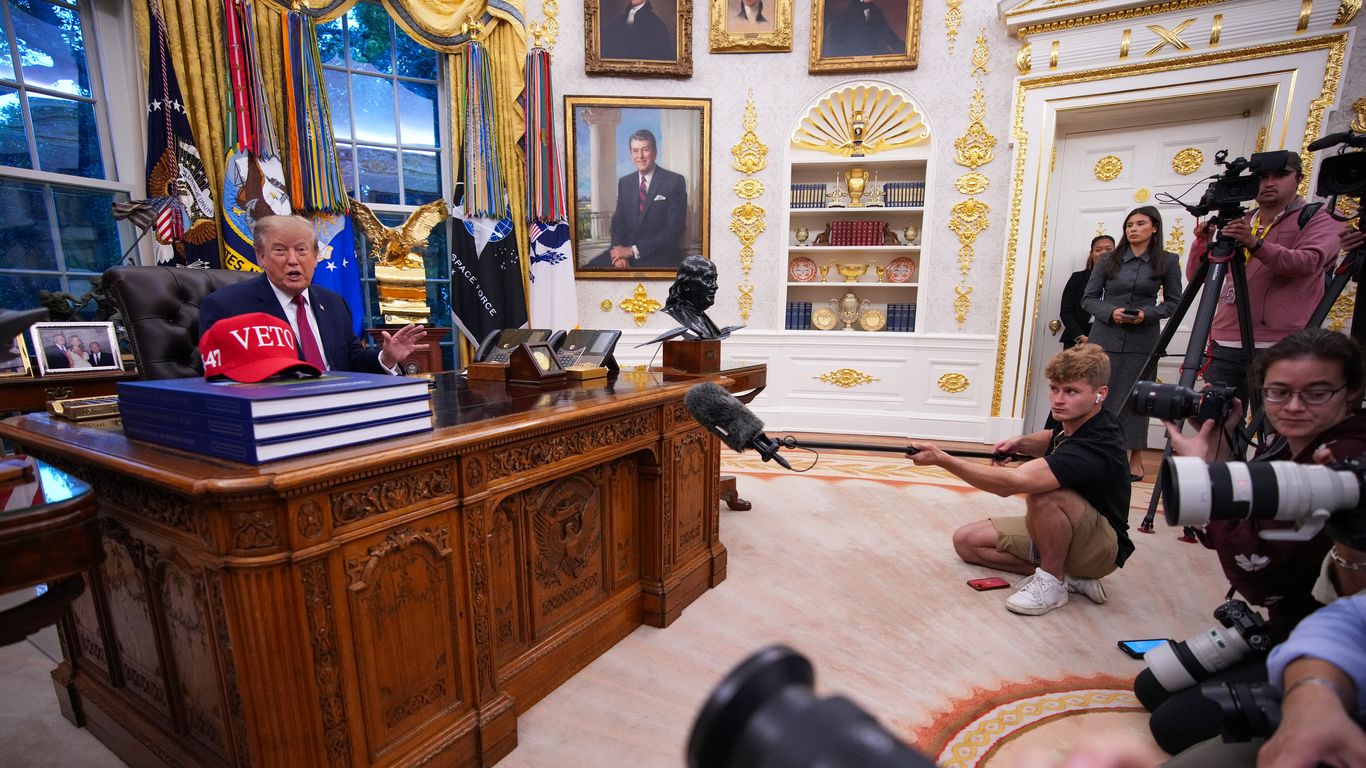
Donald Trump signed a proclamation on Thursday that he says will prevent future administrations from changing his design of the Oval Office and Cabinet Room, spaces he declared to be national monuments that should be preserved. Since returning to office, the US president has transformed the Oval Office with gold accents and statuettes, portraits of famous Americans pulled from storage and a copy of the Declaration of Independence that hangs on the wall. The redesign has drawn criticism, including from the former president Barack Obama, who recently joked that 'he’s got the White House looking like Saddam Hussein opened a Cheesecake Factory. Just gold everywhere.' Trump signs proclamation to try to prevent changes to gold-covered Oval Office Continue reading...
President Trump has told advisers that he plans to keep raising money for his political operation — a move aimed at salvaging his clout after the GOP's midterm debacle. Why it matters: Maintaining a political organization — either his existing MAGA Inc. super PAC or one to be created — would give Trump a vehicle to try to influence elections in 2028 and beyond, including the next presidential contest. It also would give Trump a way to pressure GOP lawmakers who consider breaking with him as the unpopular president enters his lame-duck era and Democrats prepare congressional investigations into his administration. Trump's MAGA Inc. enforced party discipline during the 2026 primary campaigns when it helped defeat Kentucky Rep. Thomas Massie (R), an outspoken Trump critic. Zoom in: MAGA Inc. has been the centerpiece of Trump's political operation during his second term, raising nearly $450 million since the beginning of 2025. The group received massive checks from cryptocurrency and AI industry donors, along with Republican megadonors such as Elon Musk and Miriam Adelson. Trump has hosted high-dollar fundraising dinners at Mar-a-Lago and his golf club in Sterling, Va., drawing business leaders eager to curry favor with the president. Some donors subsequently benefited from administration decisions. The New York Times reported that a medical products company whose executives and affiliates gave $5 million to MAGA Inc. benefited from an administration decision to delay Medicare reimbursement restrictions, for example. By the numbers: MAGA Inc. spent more than $400 million on the midterms, making it one of the election's biggest spending forces, according to a source familiar with the totals. The massive investment failed to prevent Republicans from losing control of Congress amid voter anger over Trump's war on Iran, high prices and corruption concerns. As of Oct. 14, MAGA Inc. had more than $164 million in the bank, though it spent tens of millions more on TV and digita
Democrats have made climate change a centerpiece of their campaigns for years — but this year they barely mentioned it. Why it matters: The midterms showed just how far the topic has fallen down the political priority list, even within the party most committed to addressing it — and suggest affordability will shape how Democrats govern next year. Driving the news: Democrats up and down the ballot campaigned overwhelmingly on affordability, including fuel prices surging amid President Trump's Iran war and rising electricity bills, accentuated by the AI boom. The big picture: The relative absence of climate change is striking considering that Democrats of all political stripes won big. Zoom in: Even some of the party's most prominent climate advocates emphasized affordability over climate change — or reconsidered ambitious climate policies in response to rising costs. New York Gov. Kathy Hochul, who previously championed the state's ambitious climate agenda, pushed to weaken parts of its landmark climate law this year, citing affordability concerns. Sen. Ed Markey (D-Mass.), who co-authored the Green New Deal, played down the proposal during his reelection campaign, emphasizing affordability and other priorities instead. Texas Sen.-elect James Talarico, who has previously warned about fossil fuels' impact on the planet, campaigned on protecting oil and gas jobs alongside expanding renewable energy and lowering electricity bills. Flashback: The political shift has been underway since the 2024 presidential election, when even climate-focused groups began de-emphasizing climate change in their political advertising, a trend that persisted through the midterms. State of play: On a call with reporters the day after the election, leading environmental groups celebrated Democrats' victories as a rejection of Trump's energy policies, arguing that his attacks on clean energy contributed to higher electricity bills. "Trump's energy agenda was an economic disaster for families a
Religious "nones" outnumbered white evangelicals by a stunning ten percentage points in the 2026 midterms electorate, up from just one point in 2024. Why it matters: The era of conservative white evangelicals dominating America's religious-political narrative faces a mathematical collapse. By the numbers: White evangelical or born-again Christians accounted for 17% of voters Tuesday, down from 23% in 2024 and 24% in 2022 , according to preliminary 2026 voter polling and earlier exit polls. Their Republican loyalty barely budged: 82% backed GOP House candidates, compared with 84% in 2024 and 83% in 2022. Religiously unaffiliated voters, known as "nones," accounted for 27% of the electorate Tuesday, compared with 24% in 2024. Their Democratic support climbed from 70% to 78%. What they're saying: "In most of those midwestern states, the white evangelicals are outnumbered in the population by the white mainline Protestants," Robert P. Jones, president and founder of the nonpartisan Public Religion Research Institute (PRRI), told Axios. Jones said their decline over roughly two decades extends beyond election results, with evangelical denominations losing millions of members. The big picture: White evangelical Protestants account for just 13% of American adults, down from 23% in 2006, according to PRRI's 2025 Census of American Religion . Yet they accounted for 17% of voters Tuesday, a larger share than their population footprint, though the surveys define the group differently. Religious "nones" now account for 28% of adults, up from 16% in 2006. Zoom in: Even Trump's most loyal religious supporters have cooled on his second term. His approval among white evangelical Protestants fell from 78% in early 2025 to 58% before the midterms, according to Pew Research Center . They remain the only major religious group Pew analyzed in which a majority approves of his performance. Between the lines: So far, the religious right's shrinking demographic footprint hasn't weakened its
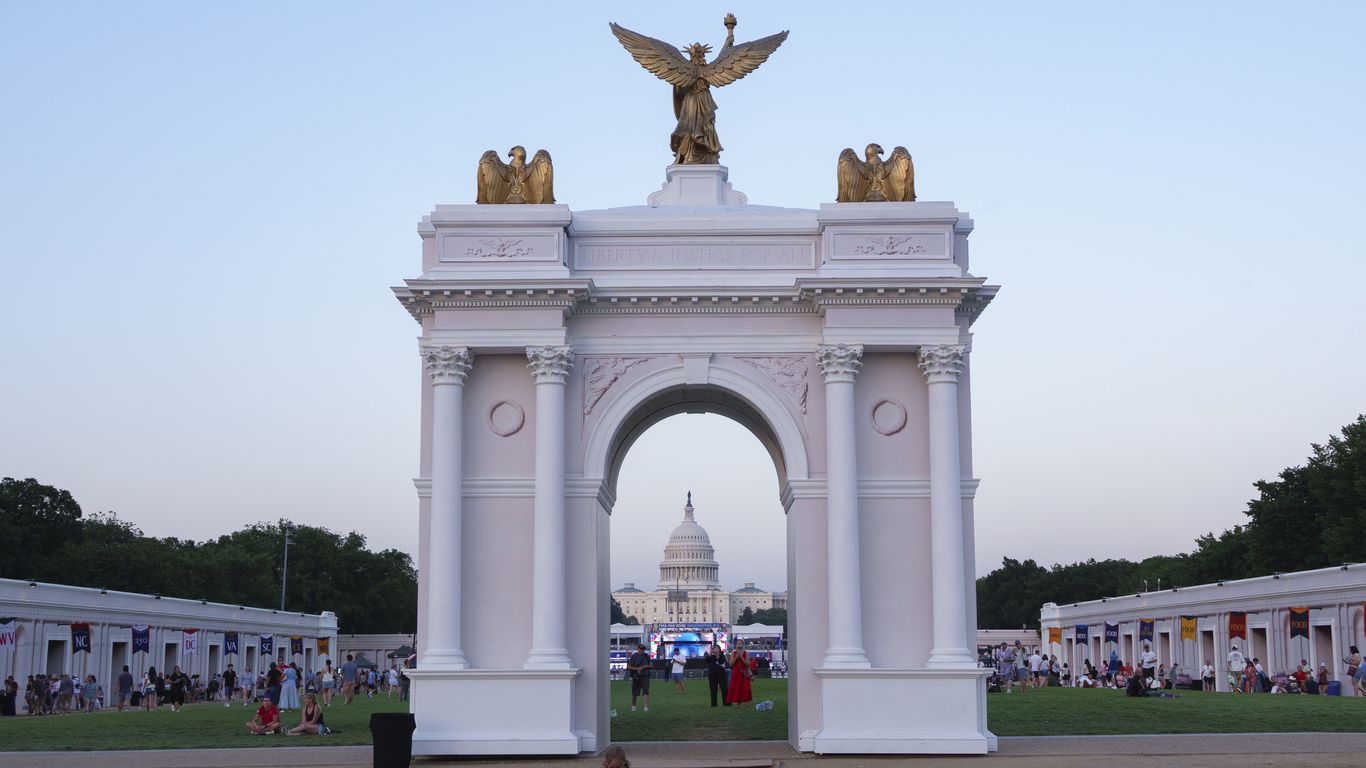
Federal judge issues 14-day restraining order on any construction work on Washington monument, hours after it was approved by planning commission A federal judge has halted construction work on Donald Trump’s towering triumphal arch for 14 days, a major setback for one of the president’s most prominent projects in his vision to remake Washington. The temporary restraining order was issued by US district judge Tanya Chutkan in the early hours of Friday. It followed a series of steps taken on Thursday by the government, including the final approval of the 250-foot-high (76-meter) arch by the National Capital Planning Commission in an 8-4 vote after a nine-hour hearing where dozens of witnesses opposed the construction. Continue reading...
President Trump's much-contested " triumphal arch " has received its final planning approval, but a federal judge could still block construction. Why it matters: The Trump administration has said that work on the 250-foot arch could start immediately, even as lawsuits challenge whether the project can move forward. Driving the news: The National Capital Planning Commission — stacked with Trump loyalists — gave the project final approval Thursday during a packed virtual hearing that saw over 100 people testify and stretched over nine hours. Opposing speakers included the D.C. Preservation League's executive director, military veterans and some of the family members of those buried at Arlington Cemetery. Yes, but: A District judge is considering combined lawsuits to block the arch: One from D.C. and Virginia , and another from veterans — meaning the project could still be paused. The same judge earlier this week ordered that the government must notify the court within 30 minutes of beginning any activity related to arch construction. The government has said that Maryland-based Grunley Construction Company might already be preparing to start construction in anticipation of sign-off. The big picture: The proposed 250-foot arch has also been the source of fierce public objection and protests . Critics have accused the administration of sidestepping necessary federal historic-preservation reviews and congressional sign-off, among other concerns. Meanwhile, some Democratic lawmakers have suggested they'll make it harder for Trump to push his D.C. projects through once they assume Congressional control come January. Between the lines: Critics of the project say it would overshadow and dishonor nearby Arlington Cemetery, snarl traffic during construction, hurt the local environment and create airspace safety issues at DCA, among other issues. Building the project would take two to three years, with crews working 20 hours a day, per the administration. What they're saying: Th
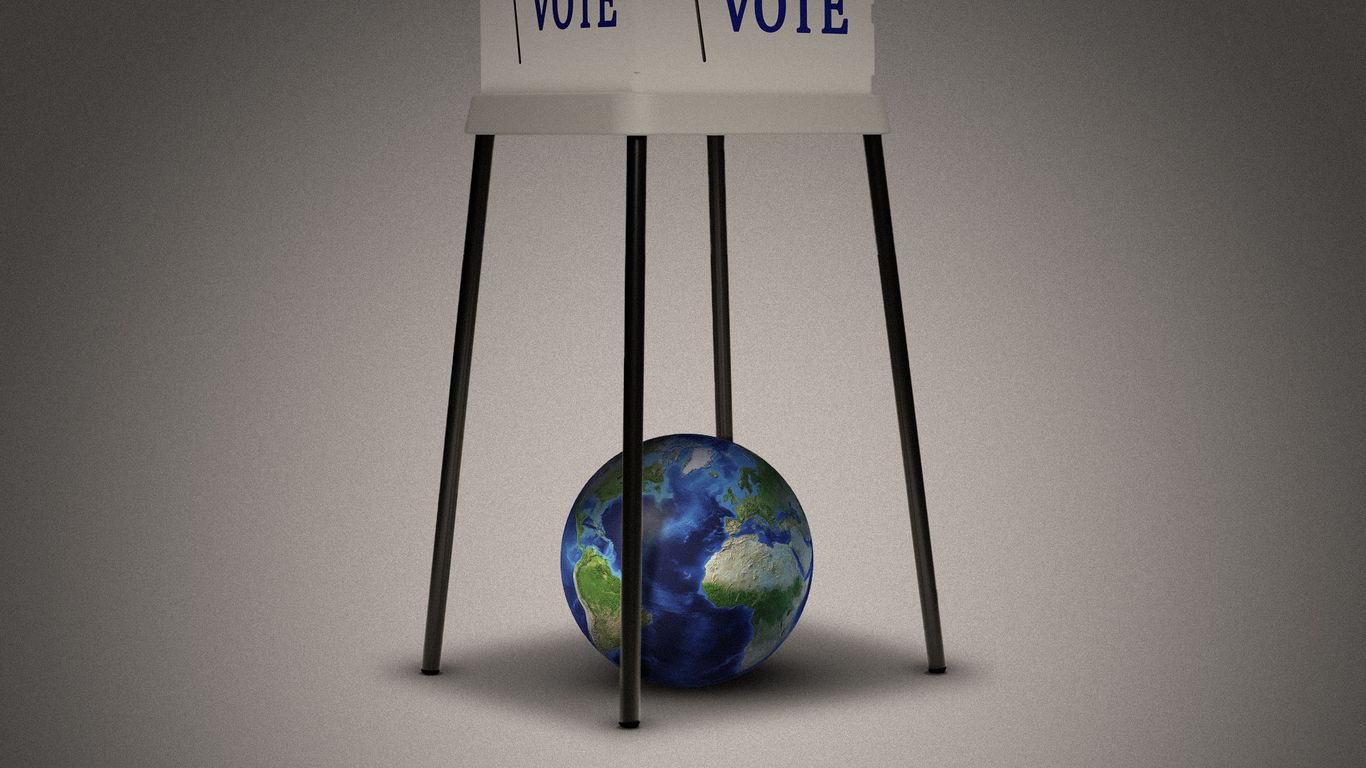
Lawmakers in states with new total Democratic control said they would try to join an effort to try to elect the next president effectively by popular vote. But momentum has stalled before.
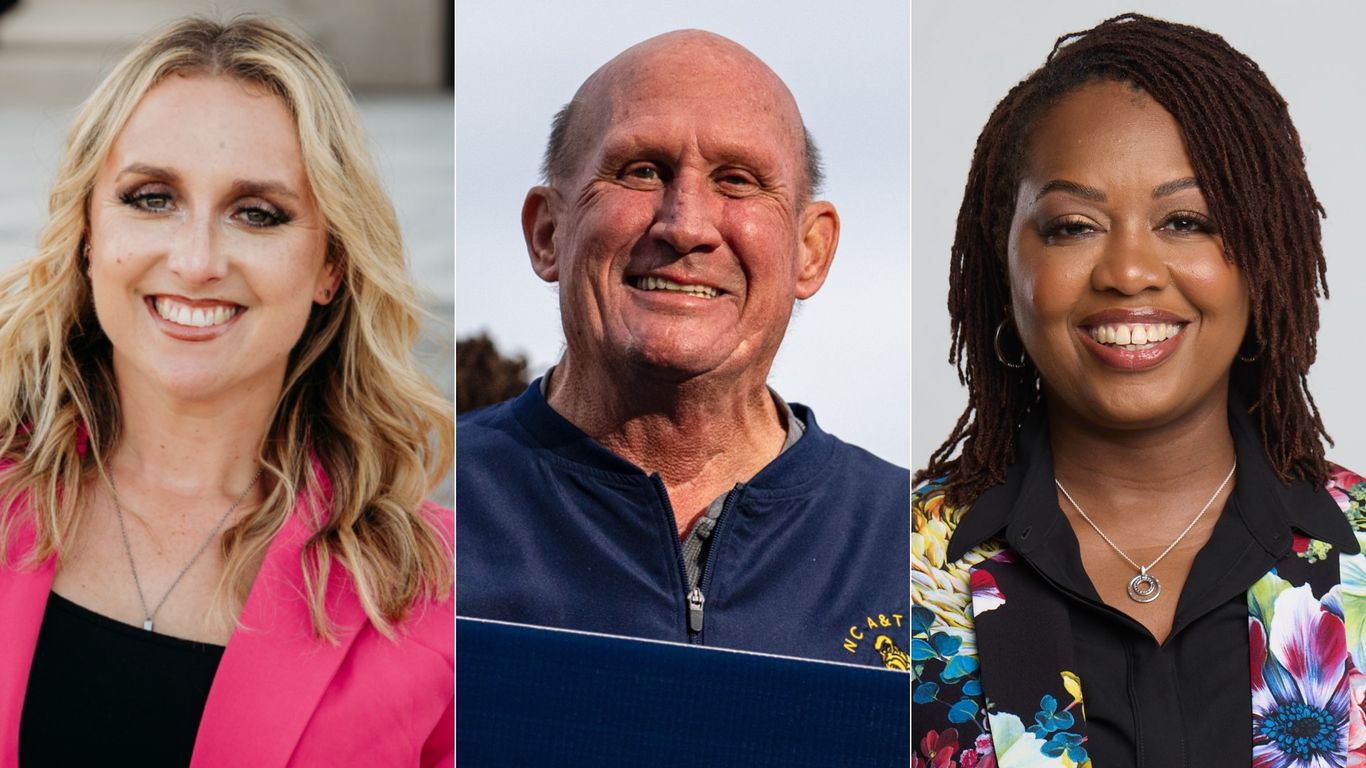
Tuesday's blue tsunami is poised to sweep an unusually large cohort of House Democrats into office who are virtually unknown outside of their districts. Why it matters: Obscure though these incoming lawmakers may be on Capitol Hill, they are poised to play a major role in determining the direction of the Democratic Party. House Democrats' progressive and centrist wings are both looking to recruit as many of these so-called "wave babies" as possible to grow their strength for the ideological fights ahead, Axios reported on Wednesday . Rep. Pramila Jayapal (D-Wash.), a co-chair of the Congressional Progressive Caucus' PAC, told Axios some of these candidates applied for her group's endorsement but didn't get it because "honestly.... the districts looked so tough." "We will definitely be reaching out to them," she said. What we're hearing: Several Democratic operatives told Axios they had to Google many of the candidates who won upset victories in North Carolina, Tennessee and elsewhere on Election Day. "Never heard of them," a senior House Democrat, who was involved in battleground House races, told Axios. Said another House Democrat: "I don't think they were on my radar, and they were not on any of the DCCC's targeted lists from what I am aware." Tennessee 4th: Victoria Broderick Photo courtesy of the Victoria Broderick campaign Perhaps the most stunning result of the night was Broderick's upset over longtime Rep. Scott DesJarlais in a seat President Trump carried by 24 percentage points in 2024. Broderick leads DesJarlais by just 280 votes but told Axios in an interview she is "100% confident" of victory and is "ready to be a representative." "There's a little shock, and there's almost a beauty in that. It's beautiful, it's poetic, for the district," said Broderick, a local activist and tech support worker. DesJarlais had regularly won in landslides since he was first elected in 2010, despite a history of scandals . GOP state legislators drew Republican voters out o
President Trump said Thursday night that voters had themselves to blame for the stock market's historic sell-off . Why it matters: Two days after Republicans lost the midterm elections in historic fashion, the president is lashing out at the voters who rejected his candidates and message. Driving the news: Stocks plunged Thursday, with the tech-heavy Nasdaq sinking more than 5% as AI-linked stocks sold off. Investors are skittish about the future for AI development — and the data centers that power the technology — after Tuesday's blue wave ushered in candidates who campaigned on restricting AI. What he's saying: " The Stock Market crashed today because the Dumocrats had a big Tuesday — So sad to see, you only have yourselves to blame!" Trump posted to Truth Social. The intrigue: Thursday's plunge was an unusually delayed reaction — the market actually had a massive rally Wednesday as the initial election results became apparent. Trump was quick to claim credit at the time for the conditions that led to those market highs. What to watch: Stock futures were down again in pre-market trading late Thursday, and Asian markets were broadly lower as well, pointing to the potential for another rough day Friday.
President Trump said the deal “might involve all of Europe.” He indicated he had met with a Kremlin envoy whom Melania Trump hosted at the White House on Thursday.
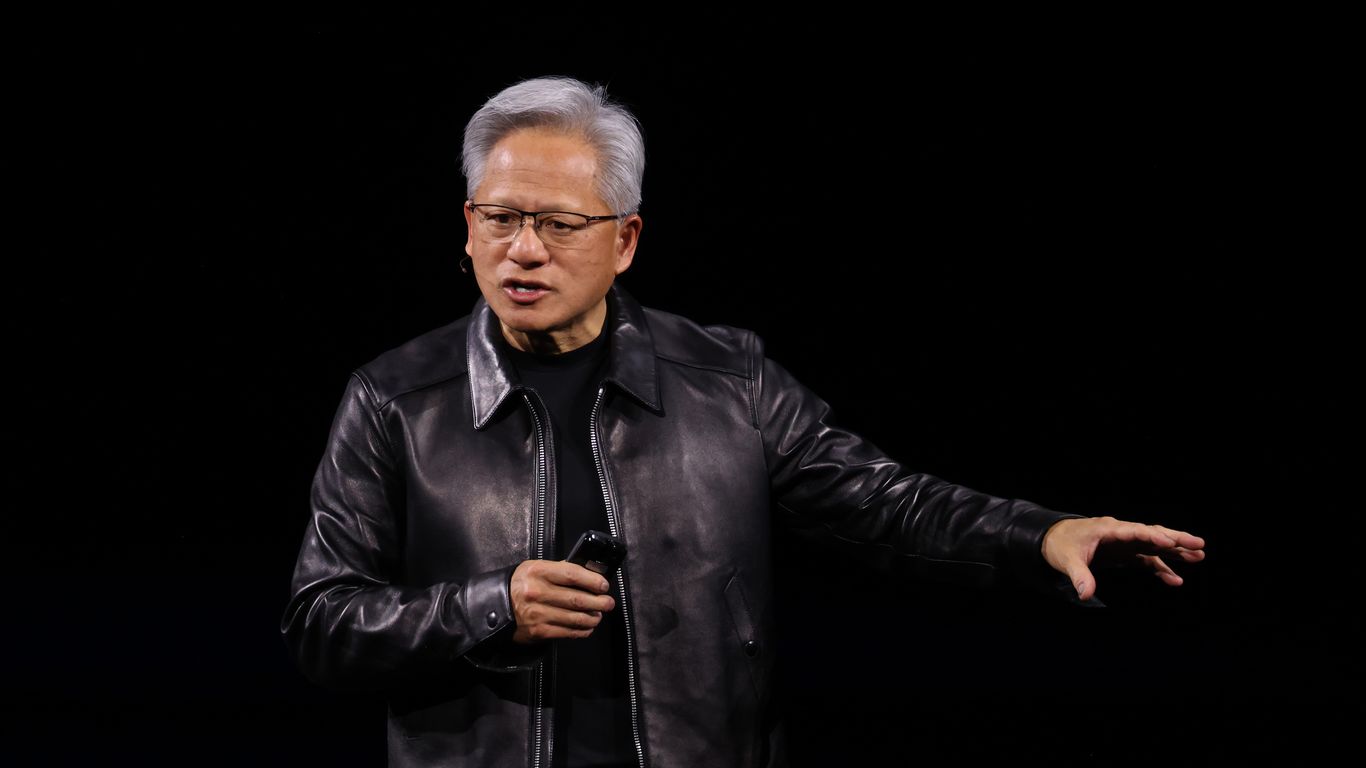
Nvidia CEO Jensen Huang has been asked by three House Republican committee chairs to brief Congress behind closed doors about his reported ties to a woman accused of spying for China. Why it matters: The request escalates the scrutiny of the Nvidia CEO over his alleged relationship with Alice Huang, a businesswoman accused of spying for China. Catch up quick: Jensen Huang and Alice Huang purportedly had a "close" relationship, per reporting from The New York Times . The Times also reported that President Trump was briefed by intelligence officials about their relationship and the allegations that Alice Huang was a spy, but chose not to act. The Wall Street Journal subsequently reported that officials in at least three countries had concerns that Alice Huang was passing information to the Chinese government, potentially including sensitive details on Nvidia chips. Nvidia has denied the allegations, saying Jensen Huang and Alice Huang's contacts were just routine business interactions. The Chinese government previously called the allegations it was spying on Nvidia "groundless speculation." Zoom out: Reps. Brian J. Mast (R-Fla.), John Moolenaar (R-Mich.) and Rick Crawford (R-Ark.) sent a letter to Jensen Huang Thursday, requesting he sit for a joint briefing with the respective House committees that they chair: Foreign Affairs, the Select Committee on the Chinese Communist Party and the Select Committee on Intelligence. They are seeking answers on Nvidia's protocols to protect itself from foreign adversaries and his interactions with Alice Huang, according to the letter. "Recent reports raise significant national security concerns regarding the [People's Republic of China] access to sensitive U.S. technology and information," the letter reads. "The issue of PRC infiltration and access to cutting-edge U.S. technology is core to the investigative work of our three committees this Congress. It is vital that Congress determines the extent to which U.S. national security h
President Trump said after meeting with his national security advisers Thursday that he'll soon decide whether to resume all-out war in Iran now that the midterms are over. Why it matters: The election was seen as an inflection point for Trump on whether to unleash a new wave of bombing to try to bring the war to an end. The president, at least for now, is considering three options: launch new strikes, continue to strangle Iran's regime economically or cut a deal that includes significant concessions to the Iranians. On Thursday, Trump and his top national security advisers met on Iran for the first time since the election, as part of his weekly intelligence briefing, two U.S. officials said. What he's saying: "Now we will make a decision," Trump told reporters in the Oval Office. "Do we want to go further" with strikes to ensure Iran's nuclear program is dead and that "it will never happen again?" he added. "I would rather not destroy the rest of the country if possible, but maybe I will have to. You'll know soon enough." State of play: As Trump weighs his next move, there was a flurry of diplomatic activity on Thursday, including multiple phone calls between Iran's Foreign Minister Abbas Araghchi and regional mediators from Qatar, Saudi Arabia, Turkey, the UAE, Oman and Egypt. The Qatari mediators continued discussions with the Iranians and the White House about a draft proposal calling for the two sides to take a series of steps over two days to build mutual confidence toward a broader deal. On the first day, the U.S. would lift its naval blockade and release some Iran's frozen funds. In return, Iran would issue an official invitation to the International Atomic Energy Agency to send inspectors to bombed nuclear sites, based on an agreement reached in Cairo a year ago, regional sources say. On the second day, the Strait of Hormuz would reopen, after which nuclear talks would resume, focusing on Iran's stockpile of highly enriched uranium. The big picture: The sec

Millions of Americans cast their ballots on Tuesday in an election that showed the resiliency of democracy. The president said he would accept the results.
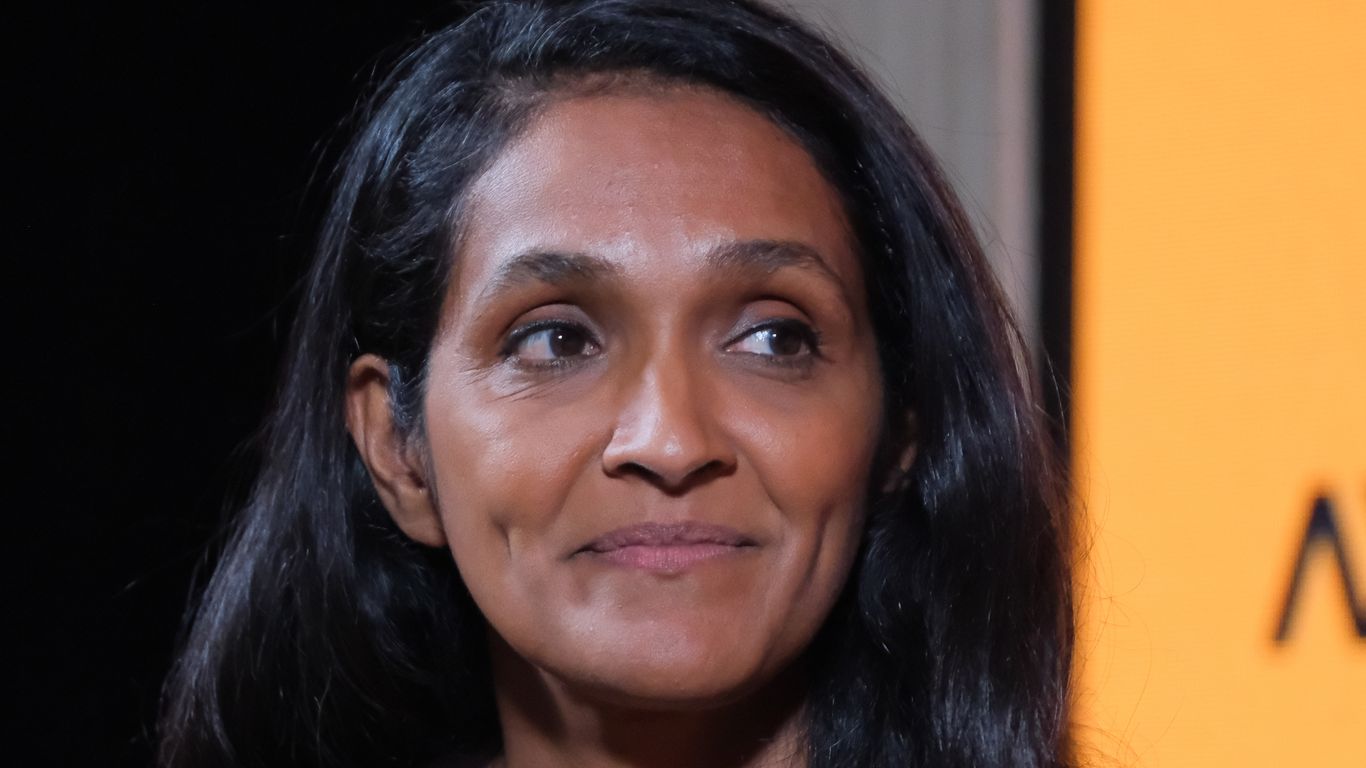
Democratic socialist Nithya Raman toppled embattled Los Angeles Mayor Karen Bass in a stunning upset, putting South Asian immigrants on course to lead America's two largest cities. Why it matters: With New York's Zohran Mamdani already in office, Raman's win puts democratic socialists on track to run two of America's most powerful city halls — testing whether their promises on affordable housing and better government can survive the pressures of governing. The big picture: Raman's victory marks a historic shift in urban American politics as voters embrace a new generation of immigrant leaders challenging the Democratic establishment. Raman, 45, immigrated from India as a child. Mamdani, New York's mayor, also has South Asian roots and immigrated to the U.S. Both built their political careers around affordability and inequality, giving democratic socialism a powerful foothold in America's largest cities. State of play: The Associated Press called the race for Raman Thursday, making Bass the first Los Angeles mayor in two decades to lose reelection. Raman led Bass 52.1% to 47.9% in unofficial results released Thursday. Ballot counting continues. Bass, who won in 2022, conceded and pledged a smooth transition. Raman takes office Dec. 14. Raman defeated a political heavyweight backed by California Gov. Gavin Newsom, former Vice President Kamala Harris, former House Speaker Nancy Pelosi and much of the City Council. Zoom in: Raman capitalized on growing frustration over homelessness, housing costs and Bass' handling of the deadly 2025 Palisades Fire. A September Berkeley IGS/L.A. Times poll showed Raman leading Bass 66%-4% among likely voters under 30 and 45%-21% among Latino likely voters. Bass narrowed the gap. The final Berkeley poll showed the candidates tied at 40%, with 19% undecided. Among Latino likely voters, Raman's lead shrank to 43%-40%. Raman launched her challenge in February after previously endorsing Bass, turning former allies into political rivals. Zoom
Congress returns next week facing a renewed push for transparency over the Jeffrey Epstein files, as a top House Democrat promises new investigations following the party's midterm victories. Why it matters: The Epstein files controversy has been a recurring political issue throughout President Trump's second term and featured prominently in the midterm campaigns . Democrats' incoming House majority could bring fresh scrutiny of his administration's handling of the files. Driving the news: Rep. Thomas Massie (R-Ky.) is harnessing that momentum as lawmakers return, ahead of his January departure from Congress . Massie said in a Thursday post that when the House returns, the effort to force a vote on a second Epstein Files Transparency Act would secure the necessary 218 signatures. Rep. Ro Khanna (D-Calif.) , who has led the bipartisan effort with Massie, announced in September that they had received sufficient signature commitments for the measure — but House Speaker Mike Johnson (R-La.) sent the House home early. What's inside: Massie and Khanna introduced the Epstein Files Transparency Act II in July, building on their initial legislation that Trump signed in November of last year after previously working to undercut the effort. The bill would allow state attorneys general, local prosecutors and victims to sue the U.S. attorney general over alleged unlawful withholdings, redactions or failure to produce records. It would also require the attorney general to provide certain unredacted documents to victims upon request. Zoom out: The momentum is unlikely to slow when Democrats take control of Congress in January. With corruption emerging as a top election concern, Democrats ran attack ads accusing the GOP of protecting powerful elites. Candidates from both parties and outside groups aired at least $70 million in TV ads mentioning Epstein, pedophilia and allegations of child sexual abuse between Sept. 1 and Oct. 21, according to AdImpact data reviewed by Axios' Alex Is
Kirill Dimitrov, envoy to Russian president Vladimir Putin, delivered a gift to Melania Trump at the White House on Thursday to thank her for brokering a ceasefire between Ukraine and Russian forces in Oleshky, Ukraine. During the same event, Ukraine's human rights ombudsman Dmytro Lubinets gifted the first lady with the Order of Princess Olga, 1st Degree award. Continue reading...
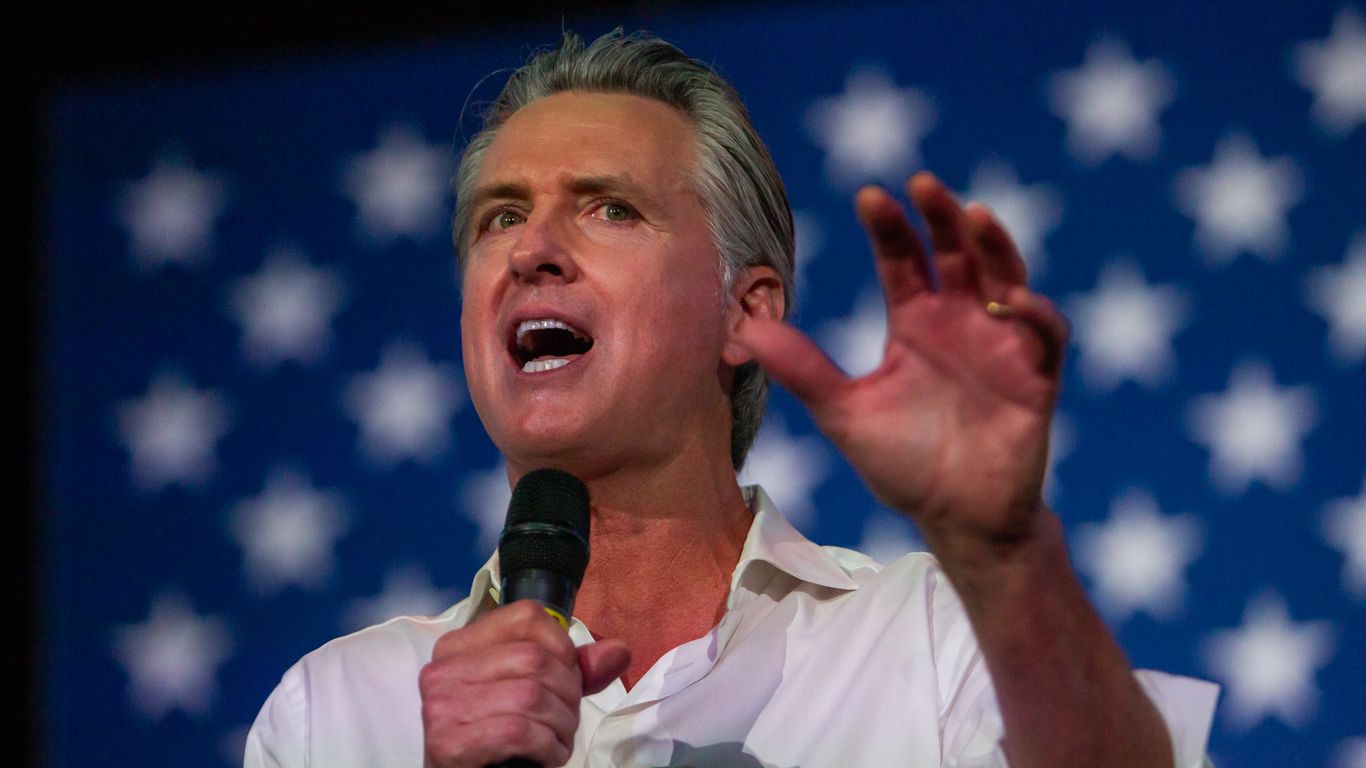
California Gov. Gavin Newsom announced Thursday he plans to commute all 548 of the state's death sentences to life without parole, a sweeping decision that could empty the nation's largest death row. Why it matters: If Newsom follows through, it will be the largest mass commutation of death sentences in U.S. history , reducing the national death-row population by more than a quarter. The move comes during Newsom's final months as governor and ahead of a potential 2028 bid for president. What he's saying: "I know we cannot execute people in our imperfect legal system and remain true to our core values, first among them justice and human decency," Newsom wrote in a letter to Californians. "Many Californians feel that those who commit brutal crimes deserve to die. But as Governor, I have concluded the state cannot morally kill them." "We can now let these offenders die in obscurity while we forever remember and honor their victims." "This decision is among the most difficult of my career," he wrote. Context: Newsom can commute some sentences on his own, but prisoners with multiple felony convictions need approval from the California Supreme Court before their sentences can be reduced, per the California Constitution . Yes, but: This won't end the death penalty in California. It remains legal even though the state hasn't performed one since 2006 . In fact, California voters rejected ballot measures in 2012 and 2016 to end capital punishment. Flashback: Shortly after taking office, Newsom instituted a moratorium on executions , reprieving 737 prisoners from death row. The ACLU has been pushing Newsom to commute death row sentences since former President Biden did so in 2024 for 37 federal prisoners. Other Democratic governors have similarly commuted death sentences, including North Carolina Gov. Roy Cooper , who commuted 15 in 2024. Zoom out: The death penalty faces heavy scrutiny nationwide after Tennessee's failed execution attempt of Christa Pike and Defense Secretary
The president seems to accept this is his last White House stint and is focused on renovating whatever he can get his little hands on As you’d expect, the right is in a shambles right now. Elon Musk is making jokes about his “election-interfering space lasers” and pretending that he really, really doesn’t care that he threw away nearly half a billion dollars trying to influence the midterms. JD Vance is writing long essays on social media about how he agrees the Iran war was a bit of an oopsie. Donald Trump, meanwhile, seems to be going through his own idiosyncratic grieving process about the Republicans’ historic midterm beating. The president has skipped all the way past shock, denial and anger and landed at the “admiring my beautiful renovations” stage of grief. Continue reading...
A note from our US editor: A reckoning is coming, but make no mistake: Trump is still president – we’ll need a free press in 2027 as much as we did in darker days. Please help today if you are able Betsy Reed is US editor of the Guardian Over the past two years, millions of people all over the world have watched Donald Trump’s destructive reign unfold with one question in their minds: Is there no check on his power? This week, voters deciding who controls Congress responded in a thunderous voice: there must be a check on the president’s power. From Texas to Ohio to South Carolina, Americans surged to the polls to register their opposition to Donald Trump – and to show their support for the kind of leaders who will look out for the interests of everyday people rather than those of a corrupt ruling elite. And now many people are looking at politics with a new and unfamiliar feeling of hope. Continue reading...
Power is draining away at home, but the US president will see a chance to make his mark through foreign policy Kim Darroch was Britain’s ambassador to the US between January 2016 and December 2019 Election nights are party time in Washington . The bars and restaurants fill up and the city rocks. For diplomats, it’s an opportunity – but it’s also a long night, as you trek across the party scene in search of insight and illumination. Invariably, it has its moments. I recall being at the Washington Post party on the night of the presidential election on 8 November 2016. Washington is an overwhelmingly Democrat city and the atmosphere was raucously optimistic, reflecting Hillary Clinton’s small but consistent lead in the polls. As the first results came in a shocked hush fell across the room. People gathered in small, murmuring groups. Within 30 minutes, half the guests had left. In contrast, I recall speaking to Nancy Pelosi, the queen of the Democrats, at a watch party on 6 November 2018, for the midterms during Trump’s first presidency. I asked her what I should put in my overnight report to London, given that most results wouldn’t be in. She said, with striking confidence, that I should predict that the Democrats would retake the House of Representatives. She was right: the Democrats flipped 41 Republican seats. It gave Pelosi a second term as speaker of the House and gave the world the enjoyable theatre of her sitting directly behind Trump at his State of the Union speeches, rolling her eyes at the bombast. Kim Darroch was British ambassador to the US from 2016 to 2019, and is author of Collateral Damage: Britain, America and Europe in the Age of Trump Do you have an opinion on the issues raised in this article? If you would like to submit a response of up to 300 words by email to be considered for publication in our letters section, please click here . Continue reading...
The Democrats have gained new powers to constrain Donald Trump. But the drubbing that Republicans received could yet prompt him to new excesses Donald Trump is a president without parallel, but history can still be instructive. Lame duck presidents often focus on foreign policy to escape domestic discontent and establish a legacy in an area where a hostile Congress offers less of an obstacle. Mr Trump, who was stunningly rebuffed by voters in Tuesday’s midterms , might seek satisfaction in construction projects, the 2028 presidential race and his family’s future. Or, amid the humiliation and with Republican critics growing louder, he could distract attention with fresh adventurism – perhaps escalating against Cuba – or more likely a vengeful new offensive against Iran. Mr Trump won’t put in the legwork or attention to detail demanded by, say, Bill Clinton’s push for lasting peace in the Middle East. But he loves the glitz of state visits, spectacular military action, hobnobbing with strongmen and (unearned) credit for dubious “peace deals”. With a potential three-way meeting with Vladimir Putin and Xi Jinping mooted for the Apec summit in China this month, Ukraine, Taiwan and others have reason to be nervous. Do you have an opinion on the issues raised in this article? If you would like to submit a response of up to 300 words by email to be considered for publication in our letters section, please click here . Continue reading...
Kirill Dimitrov, envoy to Russian president Vladimir Putin, delivered a gift to Melania Trump at the White House on Thursday to thank her for brokering a ceasefire between Ukraine and Russian forces in Oleshky, Ukraine. Russia first occupied the village during the full-scale invasion of Ukraine in 2022 Continue reading...
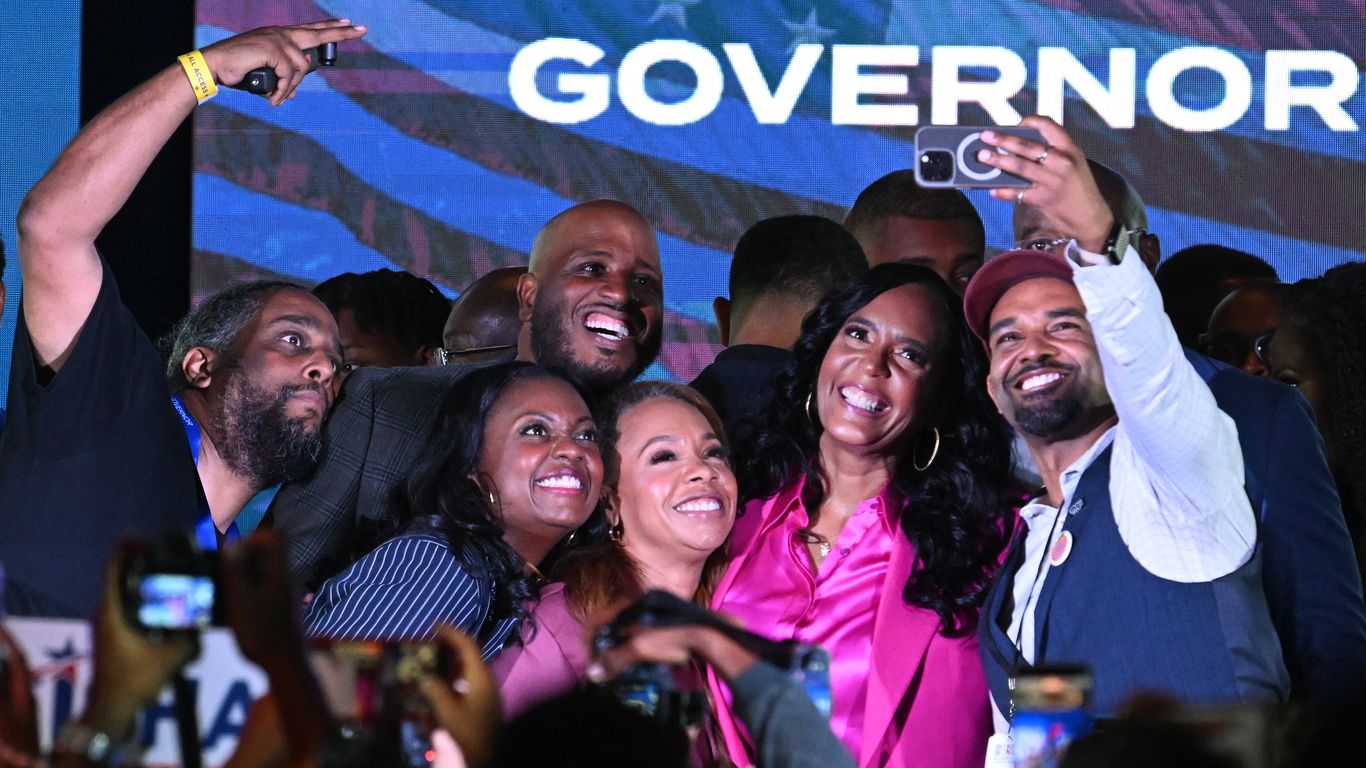
President Trump won historic levels of support from Black men in 2024. Two years later, those gains appeared to evaporate as Republicans suffered their worst midterm defeat in 50 years. Why it matters: Democrats feared the Supreme Court's decision weakening the Voting Rights Act would threaten their political future in the South. Instead, Black voters helped deliver historic Democratic victories in Texas and Georgia, with a potential upset brewing in Mississippi. By the numbers: Roughly nine in 10 Black voters backed Democratic House candidates Tuesday, according to the AP Voter Poll . Only about one in 10 Black men backed Republicans. Roughly one-quarter supported Trump in the 2024 presidential election, according to AP's analysis. For context, a separate 2024 national House exit poll found Black voters favored Democrats 84%–14%. Black men split 75%–24%, while Black women backed Democrats 90%–8%. State of play: Two Democrats who faced questions about their support among Black voters won crucial Senate races. Michigan: Progressive Democrat Abdul El-Sayed defeated Republican Mike Rogers , becoming the nation's first Muslim senator. A late-October poll showed El-Sayed drawing 87% support among likely Black voters. Texas: Democrat James Talarico defeated Republican Ken Paxton after courting Black voters who overwhelmingly backed Rep. Jasmine Crockett in the Democratic primary. An August Texas Southern University poll showed Talarico leading Paxton 79%–12% among likely Black voters. Zoom in: Talarico built commanding margins in Harris County, home to Houston, and Dallas County, both home to large Black electorates, according to AP county-level returns . Zoom out: Black voters helped elect former Atlanta Mayor Keisha Lance Bottoms as the first Black woman governor in U.S. history . About nine in 10 Black men voted for Bottoms, compared with roughly three-quarters who supported Kamala Harris in Georgia in 2024, according to the AP Voter Poll . Black women's support remain
One of the biggest nail-biters of the 2026 election isn't playing out in a purple state, but crimson Mississippi, where Democrat Scott Colom is trying to pull off a Magnolia State marvel. The big picture: It's one of the most remarkable currents of Tuesday's blue wave. The race pitted Colom, a Democratic district attorney powered by grassroots clout, against incumbent Republican Cindy Hyde-Smith in a state Trump won by some 23 points in 2024. The big picture: The coalition Colom built with his viral ads and the historic tenor of his candidacy faces the ultimate Deep South test. The race remains too close to call. "The flag has already been planted in Mississippi that a new day has arrived, and whether these final votes carry Scott Colom into that victory column, we will find out," says Nadine Smith, president and CEO of Color Of Change. "But … change has arrived." Follow the money: Colom's was one of the red-state races that drew the attention of Florida attorney Steve Pajcic, whose family-run super PAC New Deal for All sought to boost Dems in under-the-radar races. Mississippi, where they invested around $1.1 million, was ideal "in size and in potential," he tells Axios. That money went far on Mississippi's less-expensive airwaves. The most-aired ad in the closing week featured an Epstein survivor condemning Hyde-Smith, Axios' Donica Phifer reported. New Deal for All paid for the ad, which inundated Mississippi's TV markets. Catch up quick: In October, Axios reported that Senate Republicans were weighing a cash infusion into the race. The GOP Senate Leadership Fund eventually made an investment. Democrats ' Senate Majority PAC announced a $1.2 million ad campaign, and Colom also drew party heavy-hitters like former Vice President Kamala Harris and former President Clinton for appearances. Former President Obama also cut an ad. Zoom out: The race's seismic nature is also fueled by history. Colom would be Mississippi's first Black senator since Reconstruction, and it
Democrats won the midterms on voter frustration with high prices . Now they face the same problem that sank Republicans: Americans want lower prices, and there is little that policymakers can do to deliver them quickly. Why it matters: Prices for necessities like groceries and gas can fall in a healthy economy. But the kind of broad price declines that would reverse years of price gains would likely come with job losses and falling incomes, leaving households worse off than before. It sets up an early test for the incoming Democratic-controlled Congress and Democrats in statehouses across the country: delivering relief that voters can actually feel in their household budgets. What they're saying: "Can you bring prices back to 2019 levels? No," Brendan Duke, senior director for federal budget policy at the Center on Budget and Policy Priorities, tells Axios. "But a lot of the price shocks are policy-induced, so there are ways that policy can reverse them." Duke points to reversing food assistance cuts, restoring health insurance subsidies and ending the Iran war as possible sources of relief, with the "big, fat asterisk" that President Trump might not sign off. Other economic problems — a potential rise in unemployment or the AI bubble bursting — could overshadow affordability without solving it, Duke says. The big picture: Democrats have limited power over sources of pressure on household budgets. Their midterm sweep helped lower oil prices through market expectations. But Trump still controls the next steps in the war, and further relief heavily depends on his next moves. Congress could vote to repeal tariffs, potentially reducing costs for imported goods and American manufacturers. But Trump could simply veto that legislation (and more generally, there is no guarantee that businesses would pass all the savings on to consumers). Plans to restore expired Affordable Care Act subsidies or reverse Medicaid cuts could hit a wall because of internal divisions or Trump's
Paraguay President Santiago Peña resigns following bank collapse
An envoy to Russian President Vladimir Putin spoke at a White House event celebrating a temporary ceasefire in Oleshky brokered by Melania Trump
Trump is still president, and we don’t know where things will go from here – but sometimes it just feels good to see some terrible people have a terrible time The last couple of days have been very bad for Donald Trump. Of course, in Trump’s usual style, he is denying that the Republican loss at the midterms has anything to do with him – but we all know it does. While I fear the Democrats will not use this decisive moment to exercise some ambition and take meaningful action, the goings-on of the last couple of days have been undeniably fun to watch. Seeing so many conservatives lose in such a spectacular way has blessed millions across the globe with powerful schadenfreude. It is a much needed moment of relief, an experience of positivity to rejuvenate our ailing nervous systems (or whatever biology does). Sometimes you just need to see some terrible people have a terrible time. For me, it’s just been the icing on a cake I’ve been dining out on for the last couple of months: watching Trump supporters watch Trump describing other men’s bodies in detail. Continue reading...
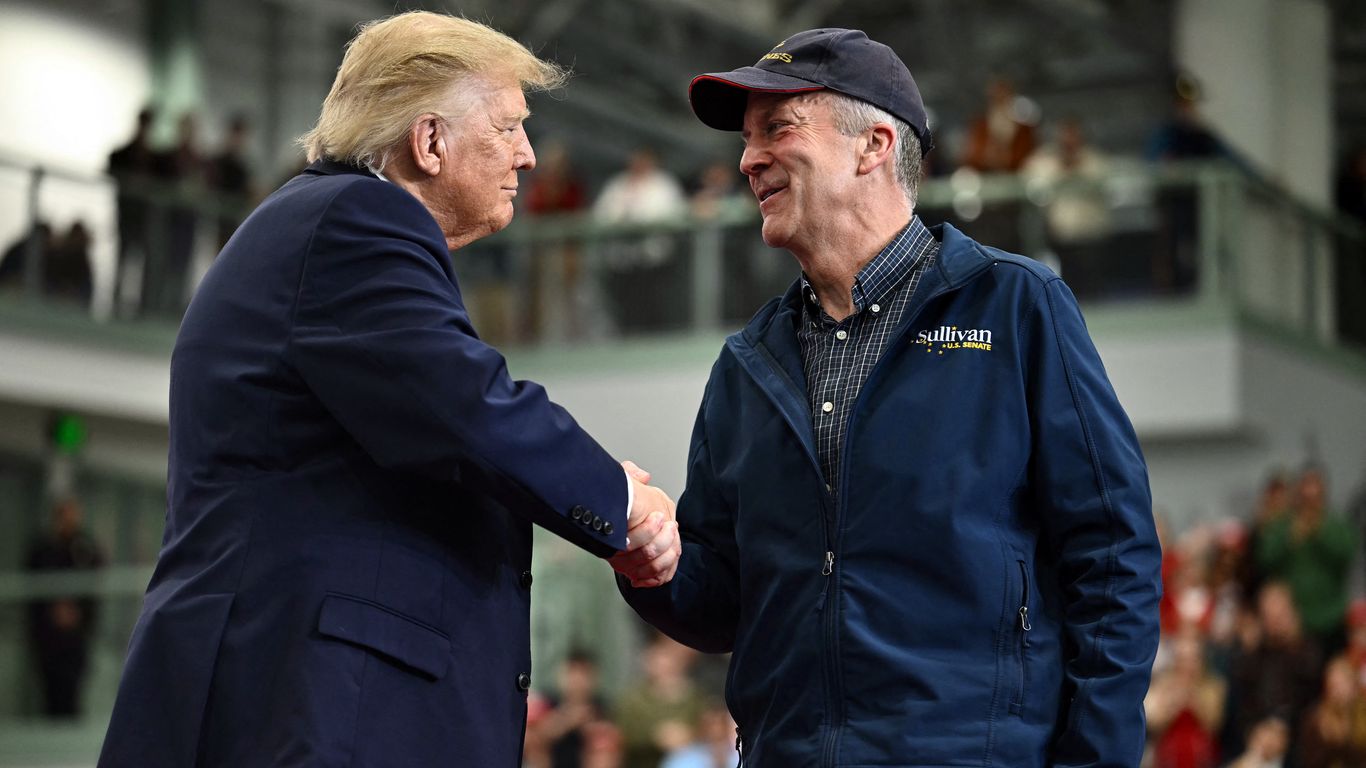
President Trump wrote Thursday that incumbent Alaska Sen. Dan Sullivan (R) should receive the vote totals for Dan J. Sullivan, a Senate candidate in Alaska's tumultuous race who has the same name as the incumbent lawmaker. The big picture: Trump's DOJ has sought to intervene in the race, citing voter confusion, and recently escalated its probes by sending target letters to Democratic operatives. This is a breaking news story and will be updated.
President’s lawyers will try to persuade appeals court to toss criminal trial verdict over $130,000 sent to Stormy Daniels Donald Trump’s legal team on Thursday plan to continue efforts to get his 2024 conviction in the hush money election corruption case thrown out. Attorneys for the US president will try to persuade a New York appeals court to toss the criminal trial verdict from May 2024, when Trump was found guilty on all charges of falsifying business records in the hush-money corruption scheme to influence his eventual victory in the 2016 presidential election . Continue reading...
Democrats' blowout win further complicates the fraught path to passing a permitting deal in the lame duck. Why it matters: Cutting hurdles for projects is a top priority for fossil fuels and renewables sectors. But critics argue the Senate plan unacceptably weakens environmental protections and tribal input. The big picture: Dems' looming control of Congress "worsens the outlook" for the bill this year, the advisory firm Capstone said in a note. The firm sees Democrats as "further emboldened" to punt the bill into 2027. President "Trump is likely to put pressure on House Republicans to support the package, but with his standing diminished in the wake of the midterms, his political capital may be limited," it states. Analysts with Jefferies also see reduced odds of lame duck support for a package that makes it easier to build gas pipelines. Yes, but: The bipartisan bill's Democratic co-authors argued on Wednesday that now remains the time, with Sen. Sheldon Whitehouse (D-R.I.) calling it a "bird in the hand" and saying "we'd be fools not to take it." "Democrats ran and won on affordability, and this bill lowers costs for families and will allow us to start delivering on our election promises," he said in a statement. State of play: Rapidan Energy Group now sees a 20%-25% chance in the lame duck, down from 30% pre-election. Yet Rapidan's rather bullish on a permitting deal with Trump in 2027-2028. That challenges the view of many bill supporters who see a fleeting opening right now. Rapidan's logic: Trump struck first-term deals with Dems on the debt limit, government funding and more — at times against the will of GOP congressional leaders. "Democrats need only five or six Republican votes to reach 60 on a bill Republicans helped write, and Trump's first-term precedent ... suggests he may be willing to make deals with Democrats to reduce the veto risk," their note states. Catch up quick: TD Cowen analysts quickly dropped their assessment of lame duck passage from 40%
European far-right leaders quick to distance themselves from Donald Trump and stress their own priorities Europe live – latest updates US midterms live – latest updates The historic Republican defeat in the US midterm elections has forcibly reminded Europe’s far-right leaders of their perennial Donald Trump dilemma: they may love his nativist agenda, but the man himself is a toxic electoral liability. Since his re-election in 2024, European populist leaders such as Marine Le Pen in France and Giorgia Meloni in Italy have carefully calibrated their public postures towards the US president, walking a delicate transatlantic tightrope. Continue reading...
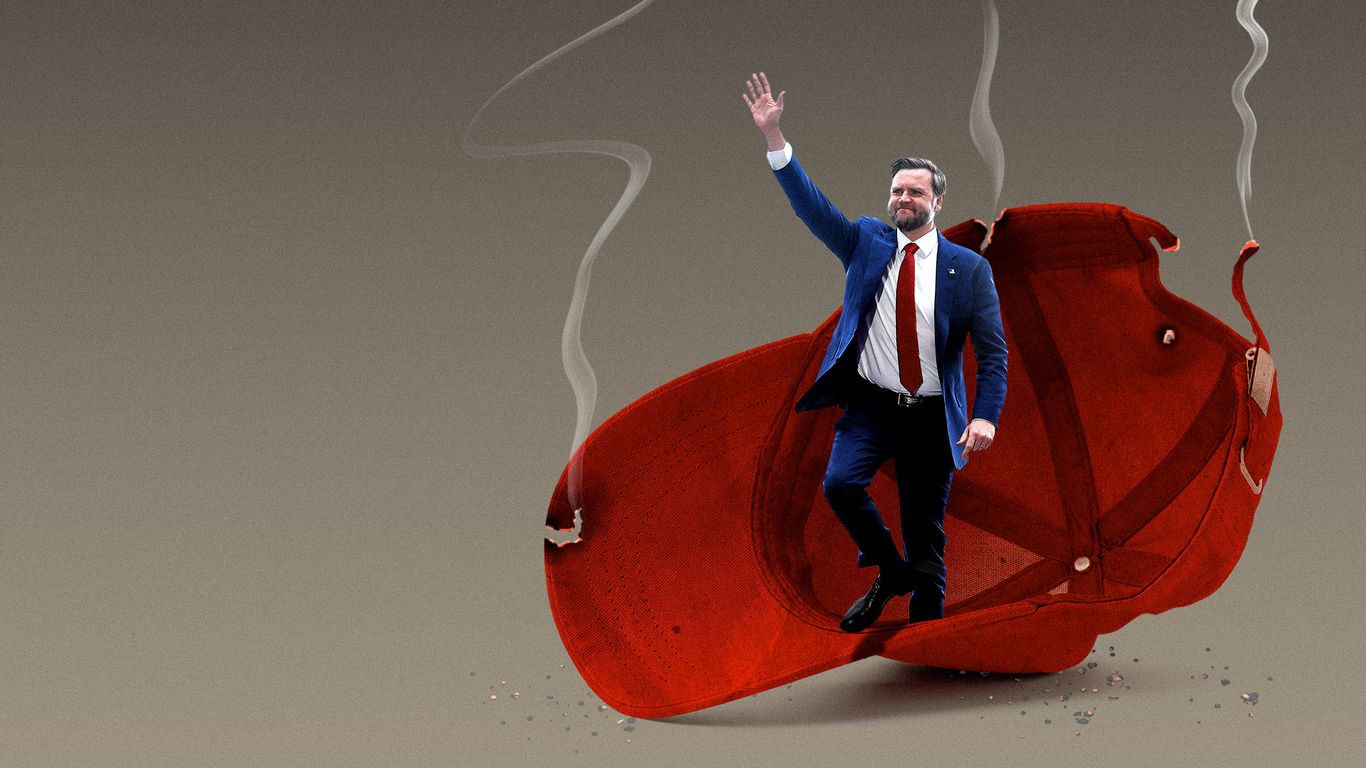
Vice President Vance stepped out of President Trump's shadow Wednesday, seizing on the GOP's midterm catastrophe to begin the explosive task of claiming MAGA as his own. "The reason we lost is the war," Vance wrote in an extraordinary 600-word postmortem on X , blaming Trump's Iran campaign for Republicans' historic collapse. Why it matters: Vance's presidential ambitions are entangled in the wreckage of a war he privately opposed but publicly defended. His path to 2028 demands a delicate political calculation. Vance must convince MAGA's disillusioned voters that he understands their sense of betrayal, even as he remains a central figure in the administration responsible for the Iran war. His maneuvering will take place under the gaze of a president who doesn't seem particularly eager to leave the stage — and who isn't shy about reining in those on his team who overstep. "Today, JD Vance became president — or acted like he wanted to become one," a source close to the administration told Axios. Zoom in: Vance argued that defections from Trump's 2024 coalition — not lack of turnout — drove the GOP's collapse in Tuesday's midterms. Citing polling of disaffected Trump voters, he identified four demands: "End the war." "Focus on cost of living/inflation." "Put America First." "Change our relationship to Israel." Those happen to be the four hottest topics among top MAGA podcasters and activists. So Vance is aligning with those leaders on topics where MAGA anger with Trump is raging. What they're saying: "If you'd like to argue [the war] was worth it, that losing the Senate for the next 6 years was worth it, then do so," Vance wrote. "Argue it was a worthwhile cost to pay. Agree or disagree, that's at least honest." Trump accepted that challenge Wednesday, acknowledging that the war had hurt Republicans but insisting it was worth the cost. "If I had to do it again, I'd have to do it again," he told reporters. "As far as that war is concerned, I would have done nothing diff
Americans made it very clear on Tuesday that health care is too expensive. The challenge for Democrats is to agree on the quickest way to deliver some relief. Why it matters: Voters can't wait until 2029 for life to get cheaper — but any short-term action to meaningfully lower health costs will require Democrats to make deals with President Trump. The big picture: There's already speculation about what a Democratic unity health care agenda would look like, and what progressives' midterms success means for Medicare for All. But that's largely geared toward the 2028 presidential race or a possible Democratic administration. The short-term reality is that any ambitious policies that significantly expand the government's role in health care are almost certain to collide with Trump's veto pen. Strategists say the Democrats' most realistic option is to find piecemeal affordability fixes next year and play the long game when it comes to reshaping the health system. "If you read history, people make the biggest mistakes when they win. That's when they take their eye off the ball and they don't do the right thing," said Zeke Emanuel, an adviser in the Obama White House and a professor of medical ethics and health policy at the University of Pennsylvania. "This is an affordability election. We need to do affordability, but I do agree with the idea that this is a two-step process," he added. "There's going to have to be longer-term reforms." "For those debating whether the new Congress should consider big and bold reforms or pass practical help for people right away, the answer is yes. Voters can and should expect action on multiple fronts," Families USA executive director Anthony Wright said in a statement. Between the lines: Democrats' top priorities for the next Congress are restoring enhanced Affordable Care Act subsidies and reversing the Medicaid funding cuts in last year's GOP reconciliation law. Their unexpectedly large majorities in each chamber will give them leverag
It's a de facto motto in the Trump White House: "Somebody's gotta take the fall." Lately, that person looks like Secretary of Defense Pete Hegseth. Why it matters: From the unpopular war in Iran to his bad bipartisan relations with members of Congress, Hegseth's record has made him the most vulnerable member of Trump's Cabinet after Tuesday night's midterm shellacking. "Hegseth is definitely on thin ice," a Trump adviser told Axios. "It doesn't mean the president forces him out. But there are complications." Driving the news: As early as next week, the House could impeach Hegseth for allegedly defying Congress and illegally continuing the U.S. war in Iran. The measure is sponsored by Rep. Thomas Massie (R-Ky.), a vociferous critic of Israel and foreign wars. Zoom in: Iran is at the center of both Hegseth's possible impeachment and Republicans' midterm collapse. Many voters oppose the war and its byproduct: higher gas prices that spiked after Iran closed the Strait of Hormuz. Before Trump attacked Iran on Feb. 28, Hegseth was the most gung-ho about the conflict, and he gave the rosiest projections about how quickly and easily it would be resolved, according to sources familiar with the discussions. By August, a senior administration official said, U.S. Central Command was reportedly soliciting new approaches to pressure Iran, suggesting that military leaders were still reassessing how to achieve strategic results. CentCom was also asking: "At what point did Hegseth recognize that our original strategy wasn't going to produce the outcome he expected and pitched?" Trump stood by Hegseth on Wednesday, telling reporters that the secretary is "doing a very good job." Between the lines: Trump has been known to praise an embattled Cabinet secretary, only to seek their ouster shortly thereafter. With Hegseth, four factors are weighing on Trump: 1. The impeachment threat. Democrats already have tried to impeach Hegseth, and with their new House majority in January, those effo
Democrats of all political stripes won so big on Tuesday that the party didn't settle its long-running civil war between moderates and progressives. Instead, the party's historic victories gave each faction some reasons to claim that its brand of Democrats can defeat the GOP in 2028. Driving the news: Democratic operatives are sure of one thing, though: Tuesday's blowout wins mean that more party leaders will be willing to run for the White House than if the midterms hadn't gone so well. Barack Obama's 2012 campaign manager, Jim Messina, told Bloomberg TV this week that he's already met with 29 potential candidates. Zoom in: On Tuesday, moderate Democrats won. Progressives won. Even one-time socialists won. In Michigan, for example, unapologetic progressive Senate nominee Abdul El-Sayed won by 7 points after running on Medicare for All. In the same state , William Lawrence, a member of the Democratic Socialists of America before he let his membership lapse recently, flipped a key swing district. Those results were good news for New York Rep. Alexandria Ocasio-Cortez, the democratic socialist with a national profile who went all-in on electing El-Sayed — and is considering a run for president in two years. More moderate Senate candidates who frequently talked about their faith on the campaign trail — such as Texas' James Talarico and Kansas' Adam Hamilton — pulled off huge upsets in deep-red states, and in the process created a model for some Democrats to follow. Their mild-mannered, religion-infused campaigns mirrored former Transportation Secretary Pete Buttigieg's 2020 presidential run. For the past year, AOC, Buttigieg and other Democrats eyeing the White House have been laying the groundwork to turn the 2026 elections into a springboard for their potential presidential campaigns. Some put their chips on specific candidates — and virtually all of them succeeded. Pennsylvania Gov. Josh Shapiro, a centrist technocrat who campaigned on "getting sh*t done," won reele
Guardian analysis shows how tumbling approval ratings may have hurt candidates backed by US president Track live results from all 50 states Send us your questions about the US midterms results and Democrats’ ‘blue wave’ Dozens of Republican candidates directly endorsed by Donald Trump lost their US midterm election races, according to analysis by the Guardian, raising questions over the power of the president’s support. In past elections, Trump’s endorsements have been coveted. In the final stages of this year’s campaign, he actively urged voters to act as though he were on the ballot. Continue reading...
President Trump has conceded that the Iran war cost Republicans dearly in the midterms. Now he must decide whether to cut his losses and reach a deal — or double down and go back to bombing. Why it matters: All of Trump's options are problematic: The first is to strike. But going back to war would be highly unpopular — keeping gas prices high and probably not yielding a better military result. Another is to negotiate. But if the Iranians refuse to make concessions — or, sensing weakness after the president's political loss, up their demands — Trump will have a hard time reaching a deal. The third is to "strangle," as aides put it. This would mean sticking with the status quo — the naval blockade coupled with crippling economic sanctions that leave the Iranian regime to "rot" — while continuing to test its appetite for a deal. This path, however, could take months to show progress. The big picture: The president has said for weeks he would end the war one way or another after the election. One of his former advisers told Axios: "It's one thing to lose the midterms. But Trump doesn't want to look like a loser twice." That's left even his closest aides unsure what he's going to do next. The intrigue: Vice President Vance, in an extraordinary statement Wednesday morning, bluntly blamed the war for the GOP's midterm drubbing. It added a new political calculation to Trump's decision. "The reason we lost is the war," Vance wrote on X . "The president himself said so last night. If you'd like to argue it was worth it, that losing the Senate for the next 6 years was worth it, then do so. ... But everyone knows why we lost. And any honest conversation about where we go from here must start there." Vance also cited the U.S. relationship with Israel as a serious liability for Republicans. Trump told reporters on Wednesday that Vance's analysis was "largely true" because the war drove gas prices up. But Trump said he'd do it again if he had to: "We had no choice. You can't let I
The president’s approval was essential to winning Republican Senate primaries. It became lethal in competitive general-election races.
A two-term Democratic governor and a suburban revolt against President Trump laid the groundwork for Adam Hamilton’s victory.
His party just suffered a drubbing unseen in decades. But the president, leading a tour of his ballroom project, was placid and eager to wax on about construction instead.
Efforts to keep the LIV Golf league alive have collapsed. Why it matters: LIV filed for Chapter 11 bankruptcy protection in September after its Saudi investors confirmed plans to withdraw funding after the 2026 season. Driving the news: BC Partners — which had tentatively agreed to invest in a "LIV 2.0" league — is walking away, a source familiar with the matter confirmed Wednesday. The investment was always predicated on an unspecified number of players signing on — and at least 30 ultimately indicated interest in doing so, the person said. But economic terms remained a sticking point with some of their representatives. But the league was unable to secure enough support in time to meet the deadlines set in the bankruptcy case. LIV had also lost several stars in recent weeks, including Jon Rahm and Sergio Garcia, compromising its commercial appeal. What's next: People involved in the case expect LIV to pivot to a liquidation. Spokespeople for LIV and BC Partners were not immediately available for comment. Catch up quick: The Public Investment Fund — Saudi Arabia's sovereign wealth fund — confirmed in April that it was withdrawing support for the league after the 2026 season. PIF — which ultimately plunged more than $5 billion into LIV, according to Money in Sport — decided to ditch LIV after President Trump's war in Iran scrambled geopolitics in the Middle East and jolted energy prices. The fund said in a statement that the "substantial investment required by LIV Golf over a longer term is no longer consistent with the current phase of PIF's investment strategy." Friction point: Critics of LIV and the players who joined it said the league amounted to " sportswashing " as the Saudis sought to redirect attention from allegations of human rights abuses. Defenders — including LIV member and former PGA superstar Phil Mickelson — said the league would help grow the game on a global scale. What to watch: What the league's biggest star, Bryson DeChambeau, does next.
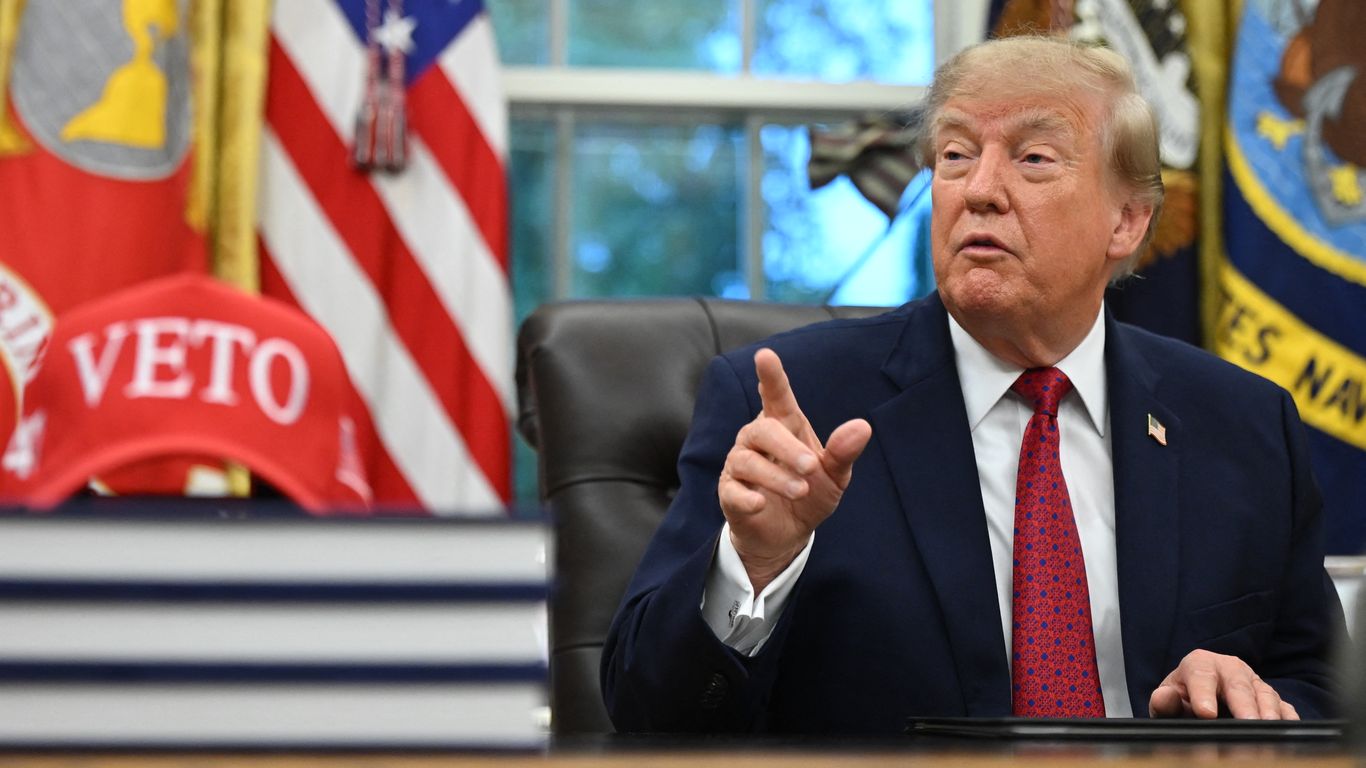
Republicans barely had time to absorb their sweeping midterm losses before President Trump returned to a familiar comfort zone: D.C. construction projects. Why it matters: Voters just delivered an overwhelming rebuke of the administration, demanding that politicians focus on the cost of living, yet the president remains fixed on remaking the nation's capital in his image. Driving the news: Trump hosted reporters at the White House on Wednesday for a previously unscheduled event to update them on the East Wing ballroom's construction, marking his first remarks to the White House press pool since the election. He spent the majority of his remarks discussing planned architectural changes around D.C., including a proposed Triumphal Arch, the National Garden of American Heroes and a planned expansion of a publicly owned golf course that would likely eliminate popular running and biking paths. His remarks came after a pre-election appearance Monday, during which he praised the new pipes installed at the Reflecting Pool and a proposed promenade from the Lincoln Memorial to the Potomac River. What they're saying: Trump addressed criticism he sometimes receives for working on his construction projects, saying he was "doing it because the White House is the ultimate symbol of America, and it's got to be pristine." "It's got to be perfect. And if you take a look at it, that's what it is right now. You have no idea how much work we had to do." He also noted that he spends "very little time" working on the White House, but said he does it because "it's relaxing …I love construction." Catch up quick: Democrats outperformed expectations in Tuesday's midterms, flipping the Senate before the night was over and then the House a few hours later, according to the AP. Democrats have gained complete control of at least five previously divided state governments while ending Republican trifectas in several other states. In ruby-red Texas, the white whale of potential pickups, Democrats fli
Data: Financial Modeling Prep ; Chart: Ben Geman/Axios Oil prices fell sharply Wednesday as traders weigh signs — including a widely circulated post by Vice President JD Vance — that the midterm election will add pressure on the White House to find an offramp from the Iran conflict. Why it matters: Elections have consequences. Wednesday's price drop — around $8 per barrel — deepened after Vance posted on X that "everyone knows" the war is why Republicans got pummeled and "any honest conversation about where we go from here must start there." Sen. Chuck Schumer (D), the likely Senate majority leader in the next Congress, vowed that Democrats will push to end the war. "This crude price drop is entirely about the U.S. election and the belief that Trump will de-escalate rather than escalate on Iran. JD Vance's statement amplified that sentiment," Ben Cahill, a nonresident senior fellow with the Atlantic Council, told Axios via email. What they're saying: Pavel Molchanov, an analyst with Raymond James, said in remarks circulated to reporters that Vance's post was a "key catalyst" for today's oil price plunge. "The market is saying that Congress and members of his own administration are likely to start acting as a constraint on President Trump's war in Iran," Seb Barker, a strategist with the hedge fund, Marshall Wace, tells the Financial Times. Catch up quick: Oil prices were already falling to start the week on signs of new U.S.-Iran diplomacy. What we're watching: "[I]t remains unclear whether Vance's comments signal a more dovish stance toward Iran," Molchanov said. "For oil prices to sustainably move lower, a durable off-ramp is needed," he added.
Democrats' sweeping statehouse gains Tuesday have opened a path to effectively replacing the Electoral College with a national popular vote in time for the 2028 presidential election — without needing to amend the Constitution. Why it matters: The results could give Democrats the legislative power to fundamentally change how America picks its president, potentially ending the possibility of winning the White House while losing the national popular vote. Driving the news: Democrats have won control of the governorship and both legislative chambers in Pennsylvania, Michigan, Arizona, Wisconsin and Nevada, enough to push an agreement called the National Popular Vote Interstate Compact beyond the 270-vote threshold required to take effect. The compact has been enacted by 18 states and Washington, D.C. since launching in 2006, representing 222 electoral votes so far. The agreement only kicks in when participating states collectively control at least 270 electoral votes. The five new Democratic trifectas could bring the total to 283. How it works: Americans don't directly elect the president. Instead, they actually cast ballots to choose electors, whose votes determine the winner every four years. Nearly every state awards all its electoral votes to the statewide winner. Maine and Nebraska also award electors based on congressional district results. But the Constitution explicitly gives states power to appoint electors "in such Manner as the Legislature thereof may direct." Under the compact, participating states would instead award their electoral votes to the national popular-vote winner once the agreement reaches 270 electoral votes. Yes, but: The five states would still need to enact the compact, and it's not clear if it will be a priority for the new Democratic states. The Electoral College would formally remain in place, and the compact could face constitutional challenges, including over whether congressional approval is required. Michigan failed to enact it during
Democrats have won a historic sweep in the US midterm elections, winning back control of Congress in a major setback for Donald Trump. Senate seats went blue in traditional Republican strongholds such as Texas, South Carolina and Kansas, where the Democrats had their first win since 1932. Voters have sent a strong message of discontent to the Trump administration over the economy, the cost of living and rising gas prices. Trump is now a lame-duck president for the rest of his term. Lucy Hough speaks to our Washington editor, Ankita Rao Continue reading...
Voters have delivered a damning verdict on Donald Trump’s presidency with this Congressional landslide Bitter experience made Democrats wary of believing that the blue wave predicted by polls would materialise. What arrived was not just victory but a rout: control of Congress and a Republican wipeout . It was an astounding humiliation for a president whose political brand is power. Donald Trump won it back in 2024 by promising voters lower prices and no foreign wars. He lost it by launching an illegal conflict that hit them in the pocket and imposing hefty tariffs too. He urged voters to pretend that he was on the ticket and they delivered a verdict that could not have been more damning. Two years ago, retaking the House looked like a genuine fight for Democrats, and the Senate a long shot. On Tuesday, they needed to flip four more seats to gain a 51-seat Senate majority. Within hours of polls closing, they had 54, with two more races in the balance, and had easily passed the 218 seats needed for a House majority. This appears to be the biggest congressional landslide since 1976 , in Watergate’s aftermath. Continue reading...