TopNewsOn

Results for “senate passes”

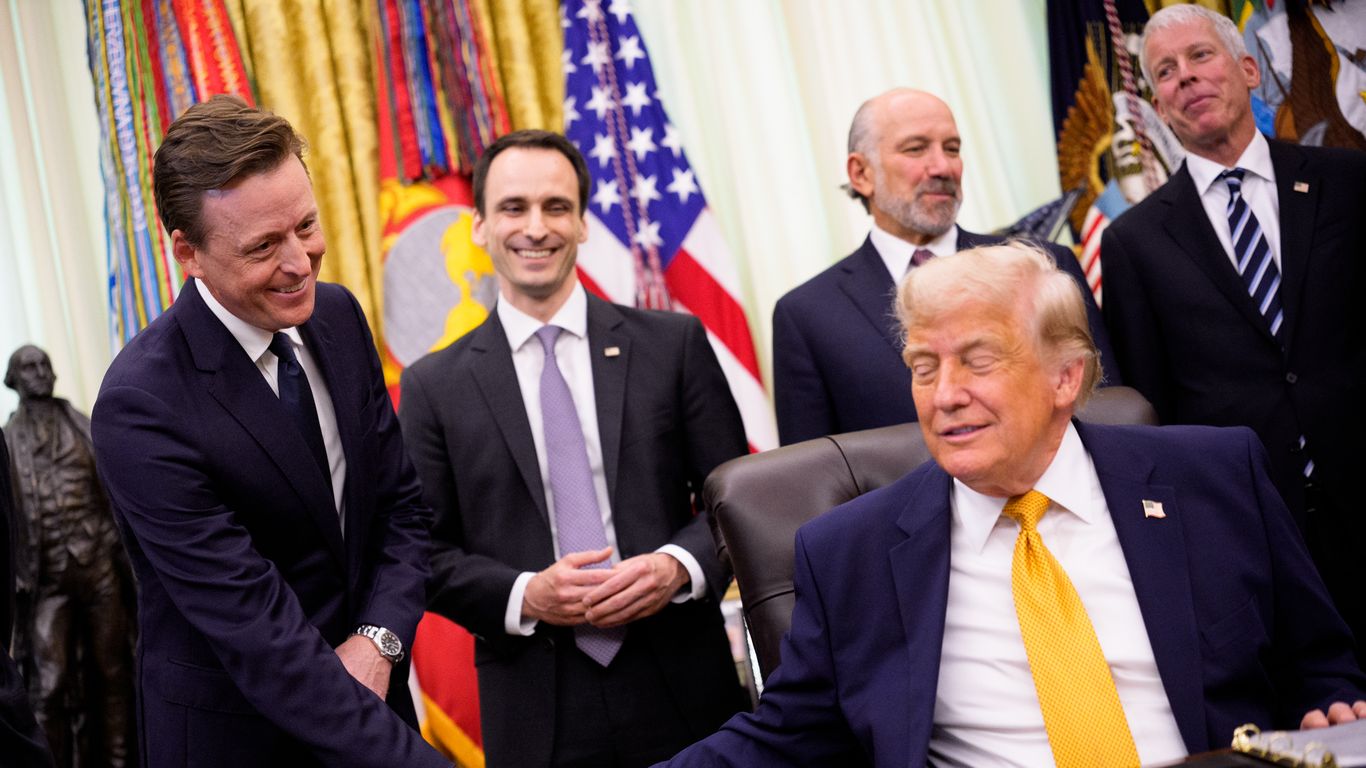
Justice Department Gives Up on Alaska Senate Lawsuit

The Trump administration had sought to block certification of election results if Senator Dan Sullivan, a Republican, lost narrowly in his bid for re-election. Critics had called the suit meritless.

The New York Times · 17h ago
Senate passes Trump-backed permitting bill

The Senate passed a sweeping, bipartisan bill Thursday night that's designed to cut permitting timelines for energy and infrastructure projects. Why it matters: The eyes of the entire energy industry are on this bill. If it becomes law, it could transform how America builds energy infrastructure, with major implications for everything from electricity costs to data centers. Getting rid of bureaucratic hurdles and creating a more predictable process for energy projects is a top priority for the fossil fuels and renewables sectors. But critics argue the plan, which has White House support, would unacceptably weaken environmental protections and the rights of Native American tribes. Driving the news: The vote was 62-33. The bill would still have to pass the House before the end of the year, and any differences would have to be worked out by both chambers before President Trump could sign it into law. Catch up quick: It would make significant changes to federal permitting, including: New limits on the duration of lawsuits, and the scope and length of reviews under the Clean Water Act and National Environmental Policy Act. Language that would make it more difficult to revoke permits once they're issued, a priority for renewables groups and Democrats upset with Trump administration barriers. State of play: There are also provisions to ensure that data centers pay for needed grid upgrades, and expand federal authority over the siting and approval of certain interstate transmission projects. Friction point: Many environmental advocates argue that the bill would dangerously erode safeguards in the National Environmental Policy Act and other laws. Multiple tribal groups still oppose it despite changes aimed at easing concerns about consultation on historic preservation. Energy and business groups, ranging from renewables developers to manufacturers to the oil and gas industry, are lobbying for the measure. The AFL-CIO and many individual unions back it, too. What's next: The

Axios · 18h ago
Scoop: Trump's cyber chief is leaving before Democrats take over the Senate

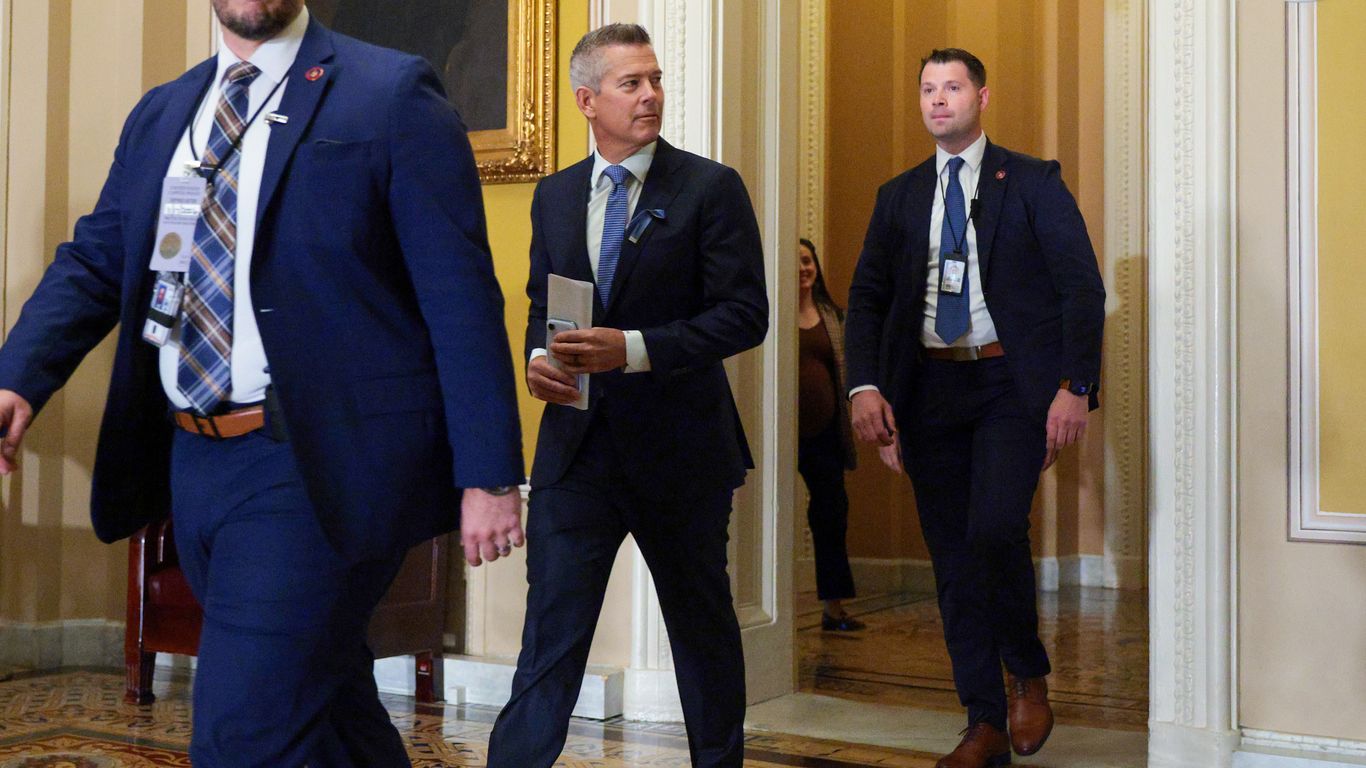
White House national cyber director Sean Cairncross is leaving his post, Axios has learned. Why it matters: Cairncross did not want to serve another two years and is leaving now to give the White House time to secure Senate confirmation before Democrats take control in January, two sources said. Cairncross' departure was described as amicable. The background: Cairncross leads the Office of the National Cyber Director, which coordinates cybersecurity policy and strategy across the federal government. The position requires Senate confirmation. The Trump administration's AI team has taken shape on the fly , but Cairncross was involved in key decisions. Case in point: He held technical meetings with Anthropic leaders over the summer after Commerce Department export controls effectively scrubbed the company's models from the internet. Catch up quick: Cairncross brought experience in Republican politics and national security, having worked with the intelligence community and dealt with cyber threats at the Republican National Committee. During Trump's first term, Cairncross represented the White House chief of staff on National Security Council committees before leading the Millennium Challenge Corporation, a federal foreign aid agency. Cairncross' head of policy and senior adviser Thomas Lind left in June and joined OpenAI in October, further depleting the Trump administration of technical expertise. The White House has not yet responded to Axios' request for comment. The big picture: The latest turnover in cyber personnel comes as the country grapples with critical infrastructure outages and increasingly powerful AI poised to empower cyber defenders and hackers alike. Democrats have criticized the administration's response to outages and warned that U.S. cyber defenses are falling behind AI-fueled threats. What we're watching: Trump is also filling other key cyber positions. His pick for the top job at the Cybersecurity and Infrastructure Security Agency, which helps de

Axios · 23h ago
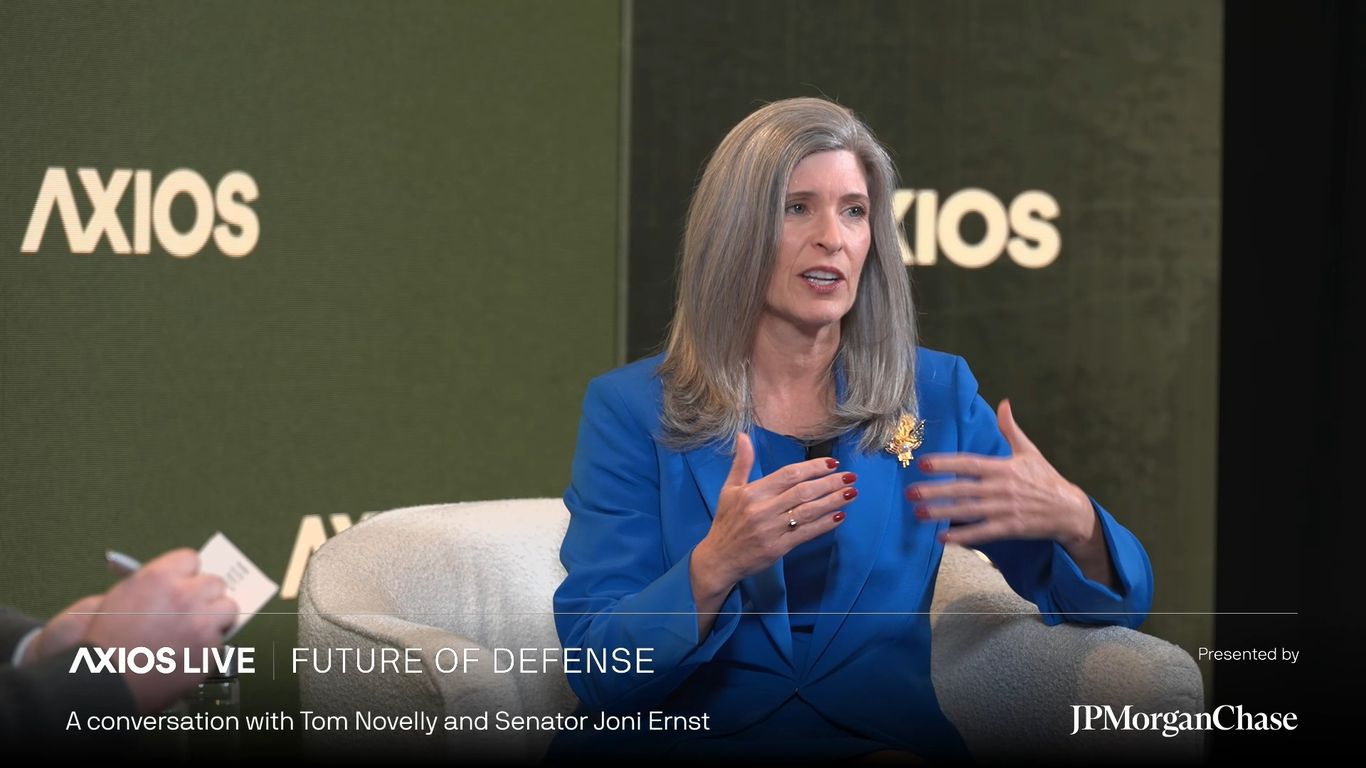
Exclusive: Sen. Ernst rebukes lack of "transparency" from Pentagon on Iran

Sen. Joni Ernst (R-Iowa) said "a lot of people would be able to guess" if she regrets voting to confirm the embattled Defense Secretary Pete Hegseth, during Axios' Future of Defense Summit Thursday. Why it matters: The retiring Iowa senator, who served in the military for more than two decades, has been notably skeptical of Hegseth, and hasn't always been in lockstep with the Trump administration. Catch up quick: Despite her hesitancy over his nomination, Ernst ultimately voted to confirm Hegseth . However, she's continued to question him throughout his tenure. She recently questioned whether the embattled Pentagon leader has been "truthful" about the status of the Iran war, which she said Iowans rejected in the midterms. "If there is deception coming from our Pentagon and being transmitted to the president, I would want to know that," Ernst told reporters earlier this month. Driving the news: "There is very little transparency right now with what is being discussed between the White House and the Department of War," Ernst said of Pentagon communication over the war in Iran in a conversation with Axios' defense and space reporter Thomas Novelly. "As Congress, we would expect that we would be read into some of those conversations, and unfortunately, we have not been read into those conversations," she added. State of play: Ernst sits on the Senate Committee on Armed Services, where she chairs the Emerging Threats and Capabilities subcommittee. She predicted in her interview with Novelly that given the "not even hidden animosity" between Democrats and Hegseth, "it will be very difficult" for new Senate Armed Services Committee leadership to receive information. Editor's note: This is a breaking news story and will be updated.

Axios · Nov 19
‘A new day in the Senate’: 56-seat majority gives Democrats fuel to take on Trump

Party wins biggest majority since Obama and one unthinkable two years ago – now the hard work of investigating and lawmaking begins It’s official: when Democrats take control of the Senate next year, they’ll have 56 seats, their largest majority in nearly two decades and one that appeared unthinkable at the outset of Donald Trump’s return to power two years ago. The landslide victory was confirmed on Tuesday, when the lengthy ballot-counting process in Alaska ended with Democrat Mary Peltola defeating the incumbent Dan Sullivan, who became the ninth Republican to see their seat taken by the opposition in a midterm election that produced a political earthquake. Continue reading...

The Guardian · Nov 19
Why the Senate energy permitting bill might become law

If the sweeping Senate permitting bill becomes law, it will reflect a rare convergence of political and market forces strong enough to trump the Beltway aversion to big, bipartisan deals. Why it matters: The bill could transform how America builds energy infrastructure, with major implications for everything from electricity costs to data centers. Getting rid of bureaucratic hurdles for energy projects is a top priority for the fossil fuels and renewables sectors. But critics argue the plan would unacceptably weaken environmental protections and the rights of Native American tribes. The latest: A vote on final passage of the White House-backed bill could occur Thursday after the Senate plows through some more amendments. The big picture: Many industries — pipelines, transmission, housing, you name it — call permitting a long bureaucratic and judicial maze that stymies projects. Yes, but: That, on its own, isn't nearly enough to get this far. Here are other reasons the bill has a path to becoming law after years of failed efforts to upend permitting. 🗳️ The cost-of-living election. The midterms were soaked in affordability politics at a time of rising energy bills. While critics can call the projected savings modest, cost is politically front and center. The Rhodium Group estimates that big provisions it analyzed would cut average residential power prices by 3%-4% in 2035. Third Way, a group that favors the bill, supported the research firm's work. 📈 Rising electricity demand. U.S. power thirst has been rising in the last few years after staying largely flat for decades, driven partly by AI and wider electrification of the economy. 🦋 A maturing clean energy industry. As sectors like renewables and storage become more mainstream, " more developers and companies are seeing the real-world challenges" of doing projects, clean energy lobbyist Jeff Navin notes via email. That puts them in agreement with utilities and oil and gas companies. "They all run into problems ge

Axios · Nov 19
Senator-elect Peggy Flanagan on her road to victory in Minnesota: ‘I have been underestimated my entire life’

Flanagan will become the first Native American woman to serve in the Senate, and hopes young Native people see themselves in her win Peggy Flanagan, the incoming progressive US senator from Minnesota who claimed her seat after polls showed her in two tight races that she went on to win by double digits, says she has been “underestimated my entire life”. She was supposedly in a close race during a primary against congresswoman Angie Craig earlier this year. Flanagan, the state’s lieutenant governor with roots in community organizing, won by nearly 20 points. Continue reading...

The Guardian · Nov 19
Republicans lost hope in Reconciliation 3.0

The Senate GOP's last-ditch effort to pass a defense-heavy, $350 billion reconciliation package is dead on arrival without accompanying spending cuts, House Republicans tell Axios. Why it matters: House Republicans have just 16 days left in session before Democrats take control in January. Many don't want to spend their final days in power adding to the national debt. "My concern is we squander these very few days we have left on something that won't get out of the House," outgoing House Budget Chair Jodey Arrington (R-Texas) told Axios of the Senate's emerging plan. Republicans have already passed two party-line reconciliation bills this Congress: The "one big, beautiful bill" in the summer of 2025, and nearly $70 billion for immigration enforcement in the summer of 2026. Zoom in: Finding spending offsets could reopen some of the most contentious fights from the GOP's first reconciliation package. Arrington told Axios that Senate Republicans worry that finding cost savings in health care spending could open the door to amendment votes that undo Medicaid cuts in the One Big, Beautiful Bill Act. But Arrington, who didn't run for reelection in 2026, told Axios he doesn't believe the Senate's proposal has the votes to pass the House without offsets. State of play: Arrington said he raised his concerns with Senate Budget Chair Ron Johnson (R-Wis.), and argued Republicans shouldn't let the risks deter them from pursuing additional spending cuts. "Some Republican members of the Senate might go rogue and might decide to, I don't know, repeal some of the reforms that we put in the 'big, beautiful bill.' Maybe they do it out of spite for President Trump," he said. "The midterms have passed us. We lost, but we still have this window to do what we think is right," he said. Between the lines: Senate Republicans haven't committed to moving forward with another reconciliation package. Leaving a Wednesday night meeting on reconciliation, Sen. Johnson told reporters the Senate "pro

Axios · Nov 19
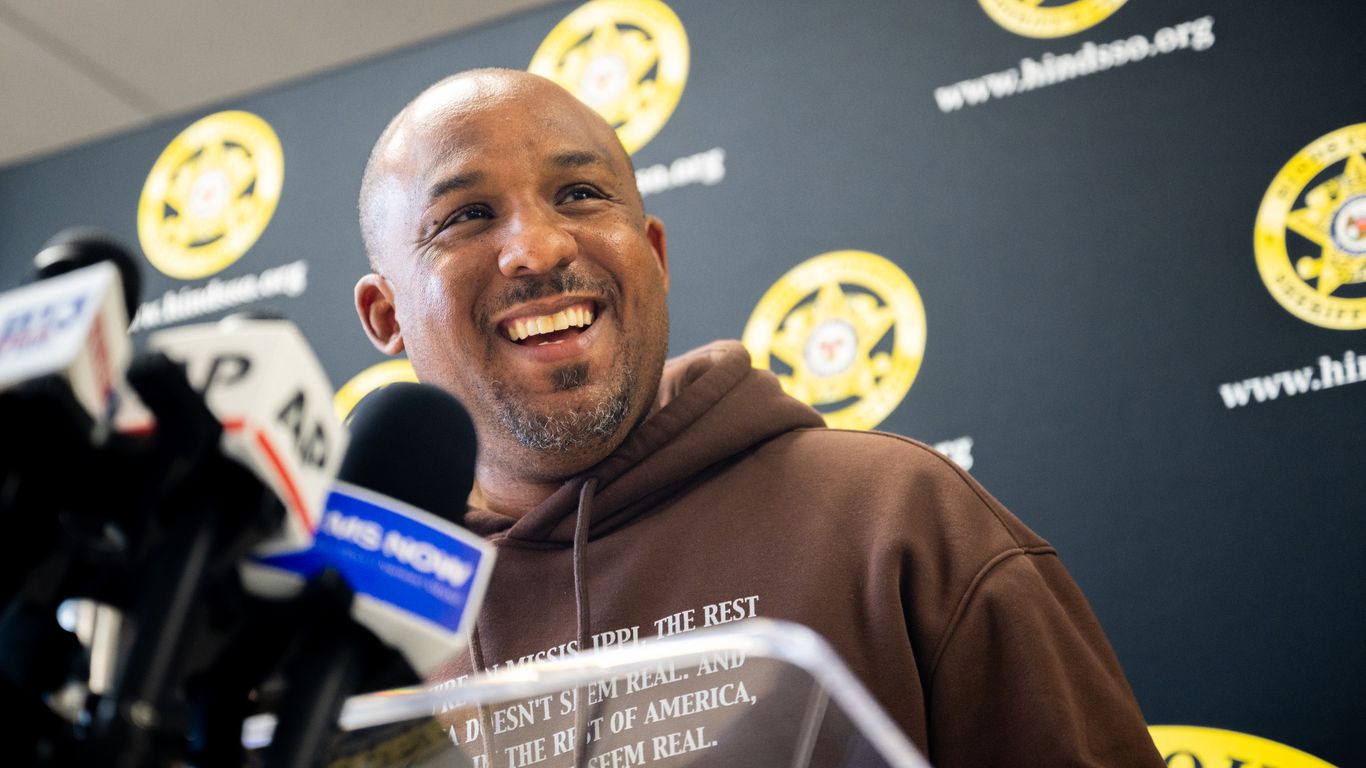
Mississippi Senate-elect turns historic win into nationwide Nike offer

High school students across the U.S. have a new reason to vie for the top spot in their class: a custom pair of Nike Air Force 1 sneakers, thanks to a request from Mississippi Sen.-elect Scott Colom . Why it matters: Colom is putting a fresh spin on academic achievement, turning his historic election into a nationwide incentive for students to hit the books — with a little help from Nike and no taxpayer dollars. What they're saying: Colom initially asked if Nike would celebrate the historic milestone by giving a custom-made version of his favorite sneakers to every Mississippi valedictorian for the 2026-2027 school year. "It would encourage MS students to hit the books the rest of the year! #justdoit," he wrote on X . Nike then upped the ante, extending the offer to valedictorians nationwide. "The athlete mindset makes things possible, including this idea," Nike said. Colom praised Nike for "stepping up to motivate students across the country in this historic moment," and suggested the design honor Hiram Revels, the first Black member of Congress who represented Mississippi. Context: There were more than 23,000 public high schools in the U.S. during the 2020-2021 school year and more than 3,600 private high schools during the 2019-2020 school year, according to the National Center for Education Statistics . A classic pair of Nike Air Force 1s retails for about $115 on Nike's website . Zoom in: In January, Colom will become Mississippi's first Democratic senator in nearly four decades and its first Black senator in almost 150 years. The senator-elect pulled off a stunning upset of Republican Sen. Cindy Hyde-Smith in the ruby-red state, which hadn't elected a Black senator since Reconstruction. His victory was fueled in part by voters in the Mississippi Delta, where Emmett Till was abducted, Fannie Lou Hamer fought for the ballot and the blues became an American art form. What we're watching: What Nike cooks up for the nation's brightest students.

Axios · Nov 18
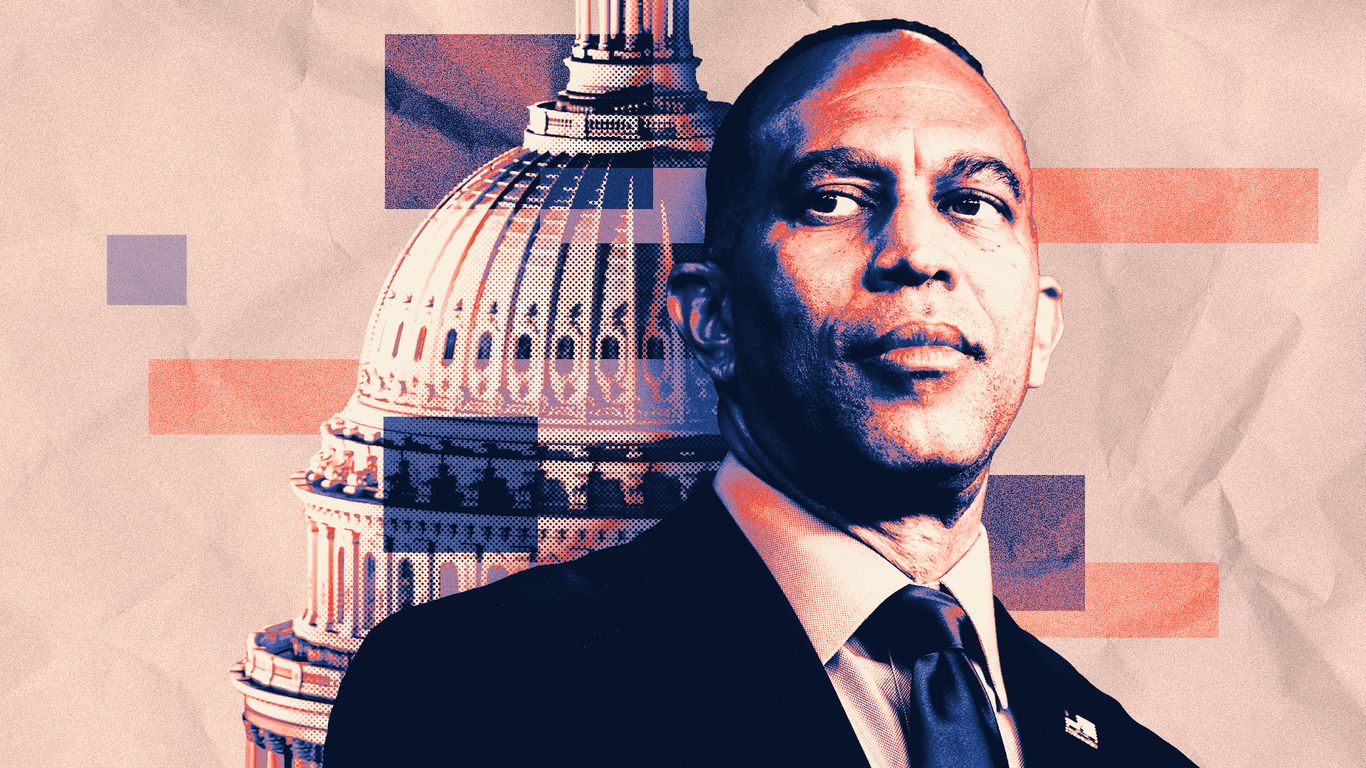
Democrats nominate Hakeem Jeffries as first Black House speaker despite progressives’ concerns

Jeffries is set to become one of Trump’s most prominent opponents for final two years of his presidency US politics live – latest updates Democrats on Wednesday nominated Hakeem Jeffries to serve as speaker of the House when the new Congress begins next year. A New York congressman who has served as the Democratic minority leader since 2023, Jeffries is set to become one of Donald Trump’s most prominent opponents for the final two years of his presidency, when Democrats will control both the Senate and House of Representatives and undertake aggressive efforts to check his powers. Continue reading...

The Guardian · Nov 18
Jeffries nears historic speakership as power shifts in Congress

Hakeem Jeffries could soon become America's first Black House speaker, even as Black lawmakers confront rising threats to their power in D.C. Why it matters: Proposed committee term limits and another round of redistricting could weaken Black lawmakers' influence they spent decades building. By the numbers: The number of Black lawmakers in the 120th Congress will be stable from the 119th, based on results so far. The House will likely seat 59 Black voting members, down from 61, according to the Joint Center for Political and Economic Studies . All four Black House Republicans are departing, while Black Democrats have gained two seats. Black membership in the U.S. Senate will rise from five to a record seven, including Sens.-elect Scott Colom of Mississippi and Juliana Stratton of Illinois . Zoom in: Democrats are in the middle of a sometimes messy generational power transfer, with younger lawmakers challenging more senior members for committee chairmanships. Those chairmanships have long helped Congressional Black Caucus members exercise power beyond their numbers. "For CBC members, the power is seniority," Rep. Gregory Meeks (D-N.Y.) told Politico in 2014. "I've been around a while. ... Some wisdom, at least, is important to what we're going through right now," Rep. Bonnie Watson Coleman, 81, (D-N.J.) told Axios in 2025. Sticking point: Democrats are considering a four-term limit for committee leaders , starting after the 2028 elections, that could eventually force three veteran Black Democrats to step aside as committee leaders. Bennie Thompson, 78, of Mississippi, leads Democrats on Homeland Security. Bobby Scott, 79, of Virginia, leads Democrats on Education and Workforce. He faces a challenge from Connecticut Rep. Jahana Hayes, 53. Maxine Waters, 88, of California, leads Democrats on Financial Services. She faces a challenge from Illinois Rep. Sean Casten, 54. Zoom out: A Democratic wave helped Black incumbents survive redistricting this year, but that level of

Axios · Nov 18

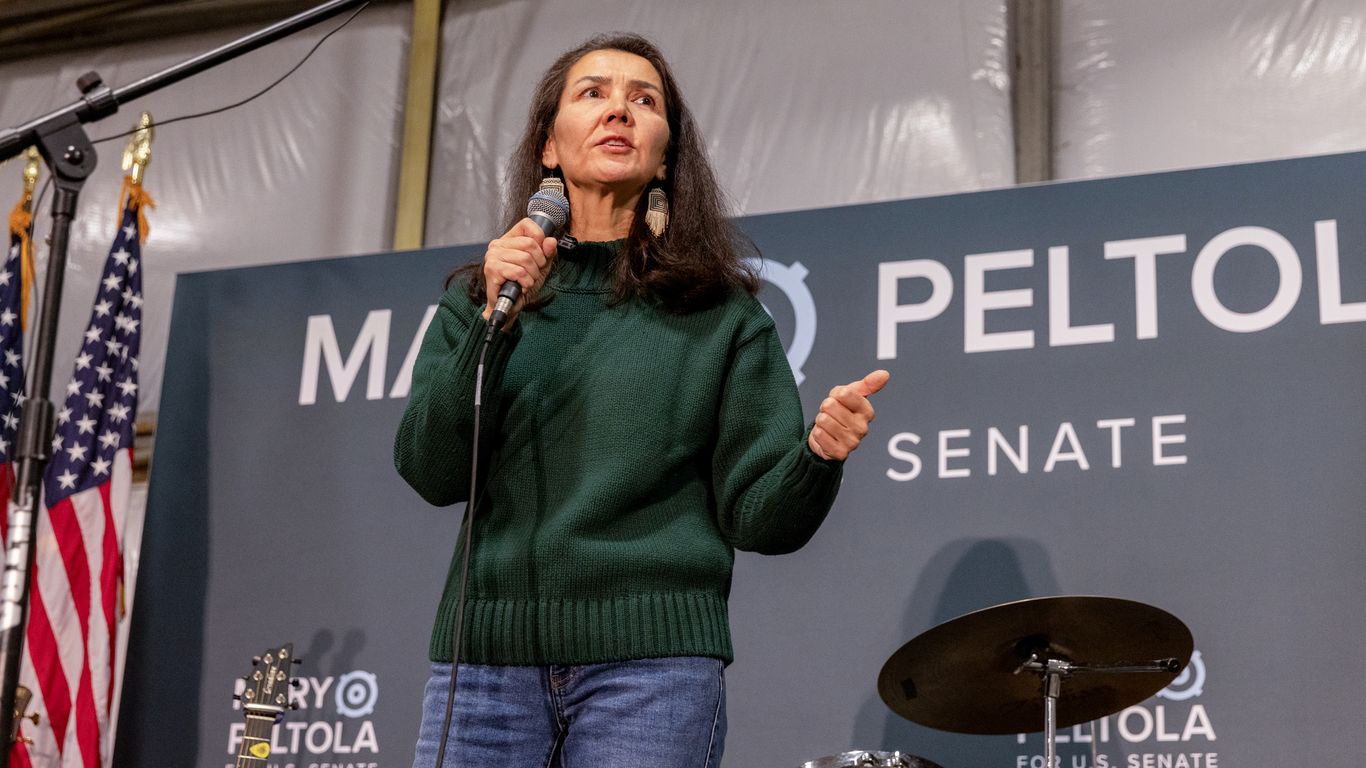
Alaska Native strongholds push Peltola into Senate history

Mary Peltola's path to Senate history ran through four Alaska Native strongholds that delivered more than half of her statewide first-choice lead. Why it matters: The Yup'ik Democrat is the nation's first Alaska Native U.S. senator, powered by communities that endured disenfranchisement, forced displacement and federal violence. The win amplifies their voice on tribal sovereignty and subsistence rights after decades of neglect and discrimination — much as Mississippi Delta Black voters powered Democrat Scott Colom to his surprising Senate victory. By the numbers: Peltola led Republican Sen. Dan Sullivan by roughly 12,400 first-choice votes statewide in Alaska's Nov. 17 unofficial count . Four western and northern House districts delivered a combined margin of about 6,700 votes. In Bristol Bay/Aleutians , for example, Peltola led by roughly 1,150 votes. In Bethel/Yukon-Kuskokwim Delta and Western Alaska/Norton Sound , she led by roughly 2,300 votes. In North Slope/Northwest Arctic , she led by approximately 900 votes. Stunning stat: Those four districts accounted for just about 5% of Alaska's first-choice Senate votes, but roughly 55% of Peltola's statewide lead. Alaska's 2021 redistricting report identifies Districts 37–40 as Alaska Native-controlled. Alaska Natives, alone or in combination, accounted for 85.8% of the voting-age population in District 38, 85.1% in 39, 62% in 40 and 43.8% in 37, using 2020 census figures. About 22% of Alaska residents identified as American Indian or Alaska Native, alone or in combination with another race, according to the 2020 census . State of play: Peltola carried the 50% margin needed to avoid Alaska's ranked-choice tabulation , where lower-ranked preferences from other candidates' supporters could have tipped the race toward another candidate. Michelle Sparck of the nonpartisan Get Out the Native Vote effort told KNBA that Native groups mounted aggressive outreach, including in Native languages. Organizers saw gains in some rur

Axios · Nov 18

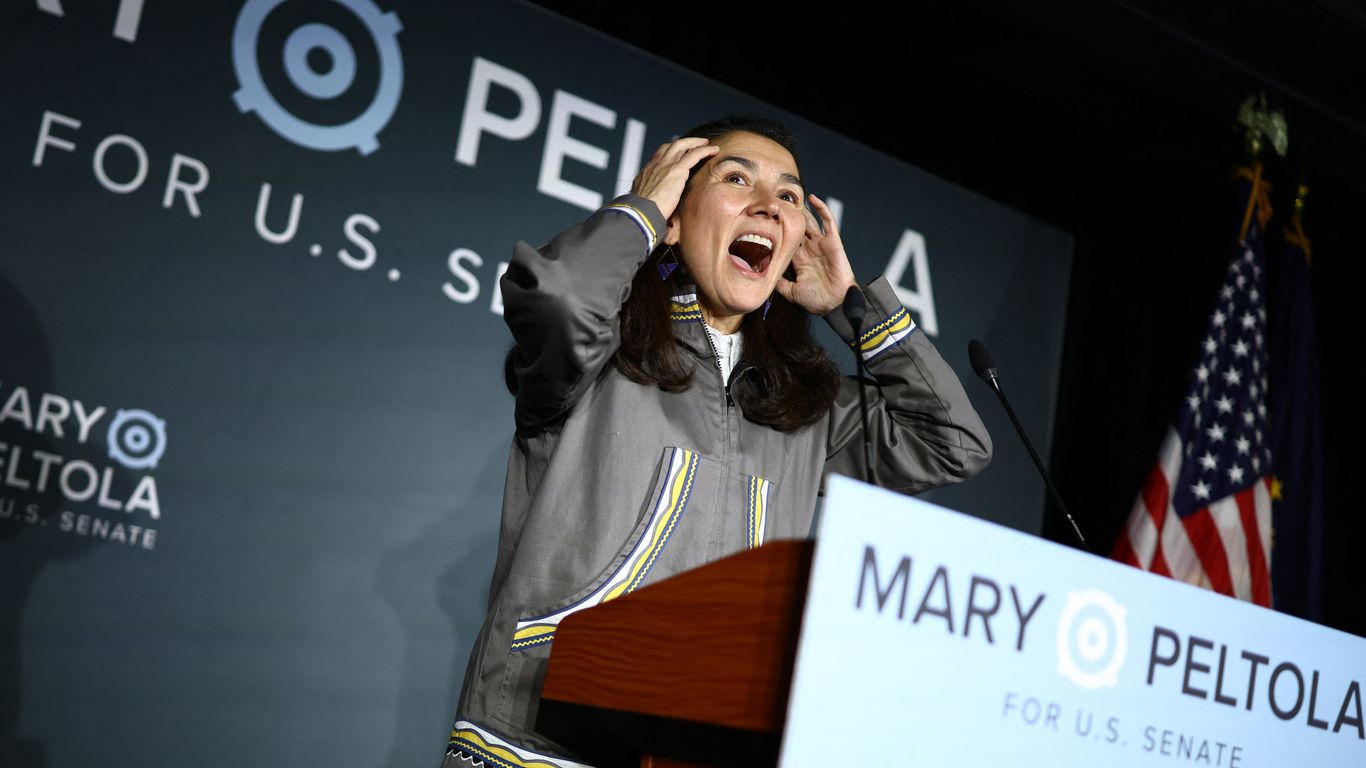
Mary Peltola unseats Republican Dan Sullivan in Alaska, extending Democratic wave

Former Democratic Rep. Mary Peltola has defeated two-term Republican Sen. Dan S. Sullivan , flipping another GOP-held seat in a state President Trump carried comfortably in 2024, the AP projects. Why it matters: Peltola becomes the first Democrat elected to the Senate from Alaska since 2008, extending a historic blue wave in a race marred by controversy. Her victory comes in a state Trump carried by 13 points in 2024, underscoring the extraordinary reach of the Democratic backlash against his second term. It also delivers another blow to Republicans after sweeping Democratic victories in states including Texas, Ohio, Iowa and South Carolina. State of play: The race drew scrutiny after The New York Times reported allegations that Democratic operatives recruited another candidate named Dan Sullivan to draw votes from the incumbent. It took a bizarre turn in its final days when the Times reported that people tied to Peltola's campaign were among those who allegedly helped draft the other Sullivan to run. Peltola's campaign denied involvement, but the reporting prompted Alaska's Republican governor, Mike Dunleavy, to order an investigation into whether state laws were broken. The Justice Department also launched a criminal investigation and subpoenaed people connected to the alleged effort. No one involved in the race has been charged with a crime. On the campaign trail, the candidates clashed over the cost of living, the Iran war and Alaska's energy industry, with Peltola challenging Sullivan's record in Washington. Peltola campaigned on her signature "fish, family and freedom" message, emphasizing affordability, protecting Alaska's fisheries and putting the state's interests ahead of party politics. Trump traveled to Alaska in October to rally support for Sullivan, whom he praised as one of Washington's most respected senators. Sullivan embraced the president's support , betting it would energize Republican voters despite their party's political headwinds. The big pic

Axios · Nov 18

Scoop: White House drops Heidi Overton's FDA nomination

The White House is dropping Heidi Overton 's nomination to lead the Food and Drug Administration because of a lack of congressional support, Axios has learned. Why it matters: The decision means the Trump administration will have to find a new candidate to lead the FDA as HHS Secretary Robert F. Kennedy Jr. looks to advance his Make America Healthy Again agenda. "FDA nominee Heidi Overton lacks the support on the Hill to move forward with her confirmation," a senior administration official told Axios late Tuesday. The backstory: Overton, a physician and deputy director of the White House Domestic Policy Council, was nominated by Trump in August. Her nomination faced opposition from Democrats and skepticism from some Republican senators, including Sen. Bill Cassidy (R-La.), chair of the Senate's Health, Education, Labor and Pensions (HELP) Committee. Cassidy said he had "strong concerns" about Overton's role in the administration's efforts to change childhood vaccine recommendations, which he called "almost disqualifying." What they're saying: "We need to go in a new direction at FDA, and everybody fully supports Secretary Kennedy's vision to Make America Healthy Again and get back to a more populist and common-sense approach to health in America," the senior administration official said. What's next: The HELP committee had been scheduled to vote on Overton's nomination on Wednesday. The FDA has been led by acting Commissioner Kyle Diamantas since Marty Makary resigned in May. This is a breaking story and will be updated.

Axios · Nov 17
Duffy's $50 billion request gets chilly reception from Senate GOP

Transportation Secretary Sean Duffy's $50 billion request to overhaul the nation's air traffic control system is getting a chilly reception from Senate Republicans, who are balking at the hefty price tag. Why it matters: The pushback from within President Trump's own party casts doubt on the administration's ability to secure the full $50 billion, even after Friday's historic nationwide groundstop . Sen. John Kennedy (R-La.) told reporters that Duffy "made a huge mistake" by originally requesting $30 billion for air traffic modernization, then later upping the ask to $50 billion following the groundstop. "Maybe he was taking orders, but he's smart enough to know better than to say, 'I need 30 billion. We have a catastrophe. I need 50 billion now.'" Kennedy said, adding, "We're not going to give them $50 billion." Both Duffy and Trump have urged Congress to move quickly on the funding, which the administration formally requested Tuesday. Driving the news: Duffy, along with FAA Administrator Bryan Bedford, pitched the funding — which include $10 billion specifically for air traffic equipment modernization — to Senate Republicans at their weekly lunch. "I don't think the full $50 billion will be funded. Some of that is not safety related," Commerce Chairman Ted Cruz (R-Texas) told reporters. Cruz floated using the fast-track reconciliation process to secure additional funding for upgrading the air traffic control system, but said the administration needs to show it can effectively spend the $12.5 billion Congress already provided in the " Big, Beautiful Bill " last year. "Demonstrate that you can actually modernize, and come back to Congress when you need additional funds," Cruz said. Zoom in: Senate Majority Leader John Thune (R-S.D.) has also raised concerns about the unspent funds. "There's some explanations that have to be given as to why that number is where it is," Thune told reporters Monday. Thune poured cold water on using reconciliation to pass the additional

Axios · Nov 17
Roblox hearings on sexual abuse to begin

Sexual abuse survivors are set to testify before a Senate committee over the safety of children's gaming platforms like Roblox. Jo Ling Kent reports.

CBS News · Nov 17
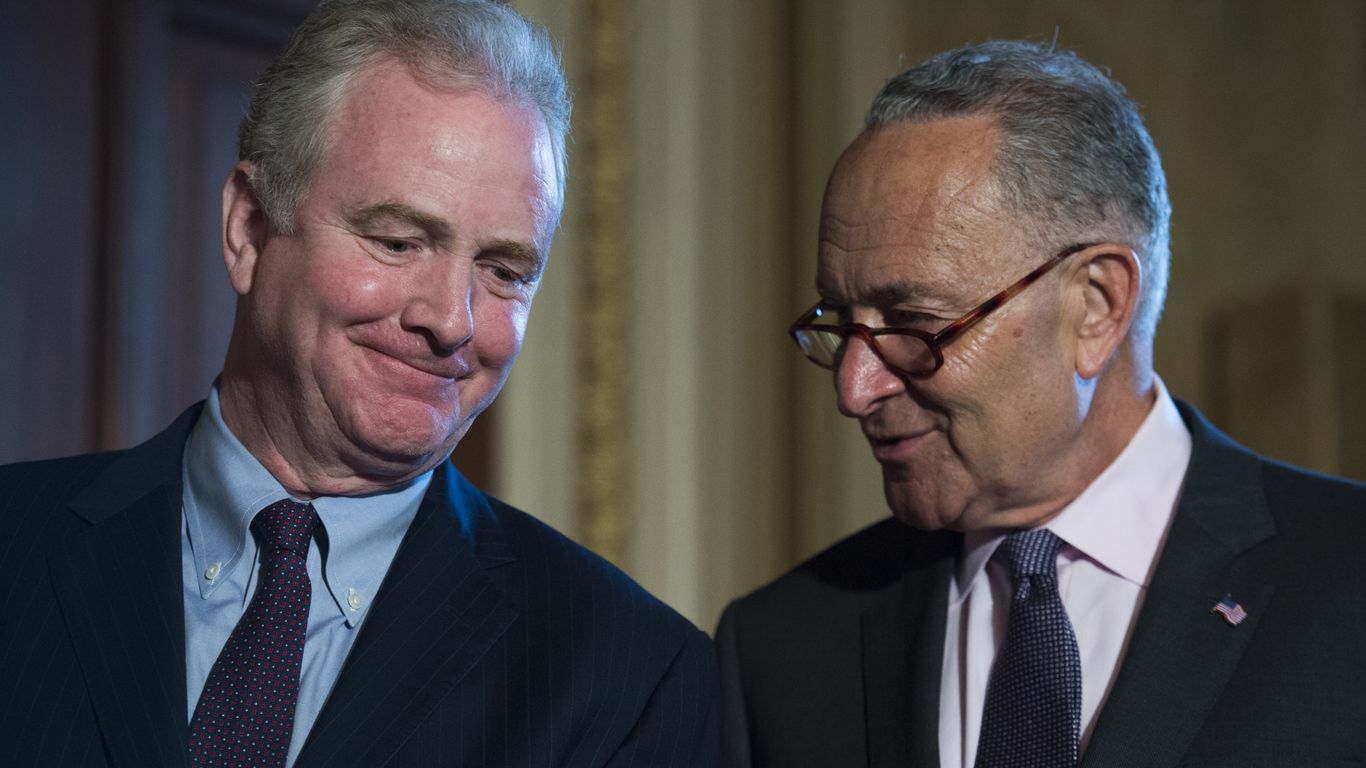
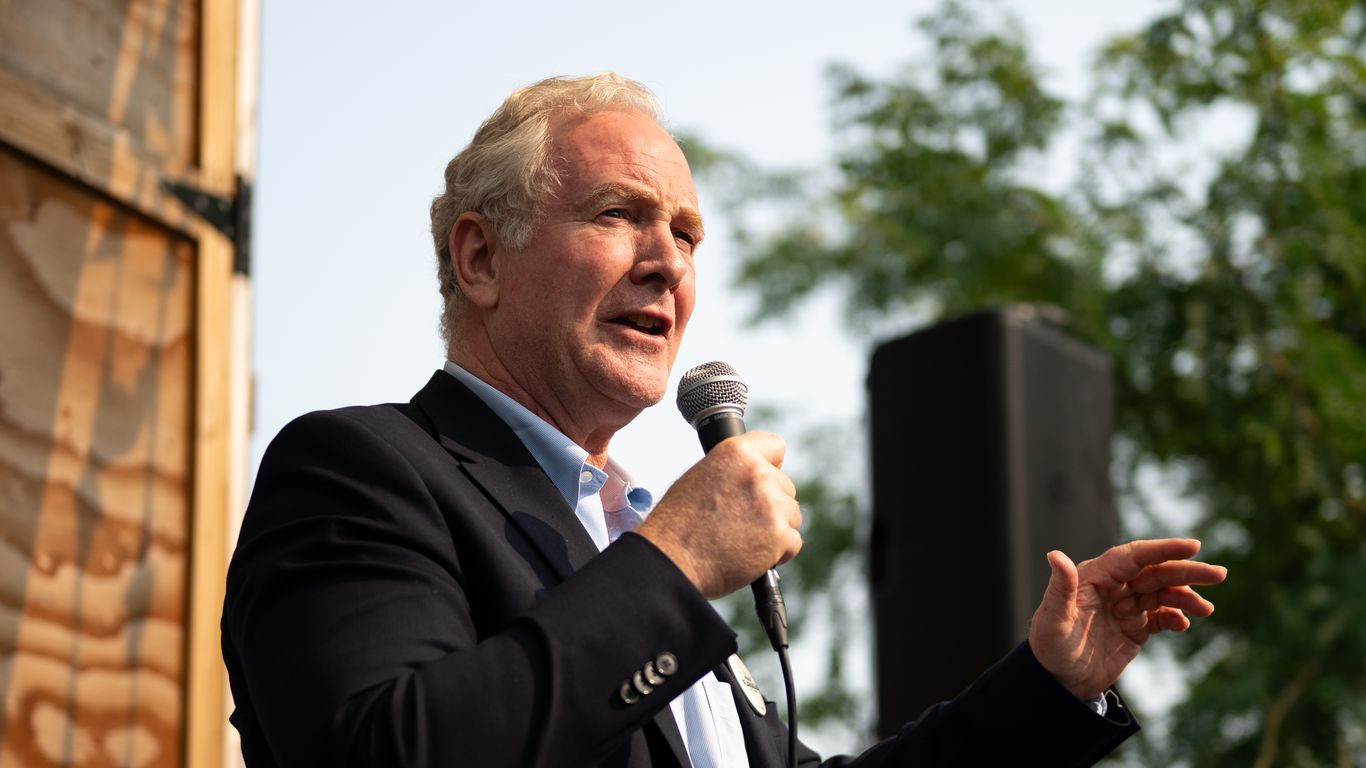
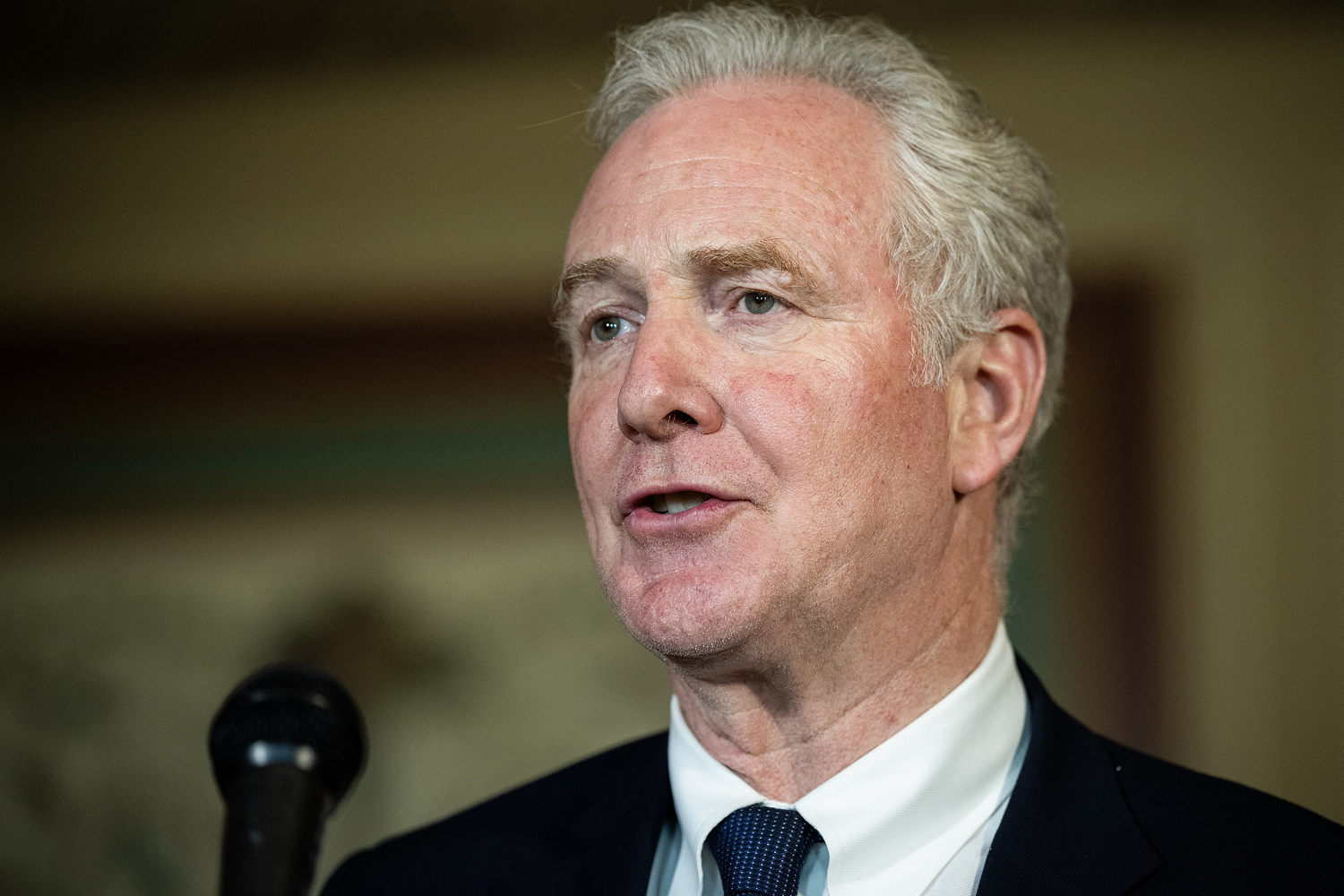
Can Chris Van Hollen really beat Chuck Schumer? – Stateside with Kai and Carter

The blue wave has hit Washington, and with the flood of new Democratic lawmakers comes a debate over who should lead the party. On Monday, Maryland senator Chris Van Hollen said his campaign to unseat Chuck Schumer as Senate majority leader is gathering momentum. He has painted himself as the underdog candidate to Schumer, who has led Senate Democrats for nearly a decade. What does this leadership battle tell us about the kind of party Democrats want to be? Kai Wright speaks to the Guardian’s senior politics reporter Chris Stein about Van Hollen's chances, and hears from the Guardian's midwest political correspondent Rachel Leingang about why new senators in her region are having doubts about Schumer Continue reading...

The Guardian · Nov 17
Florida stayed red in a blue wave. But look at what happened in Hispanic precincts.

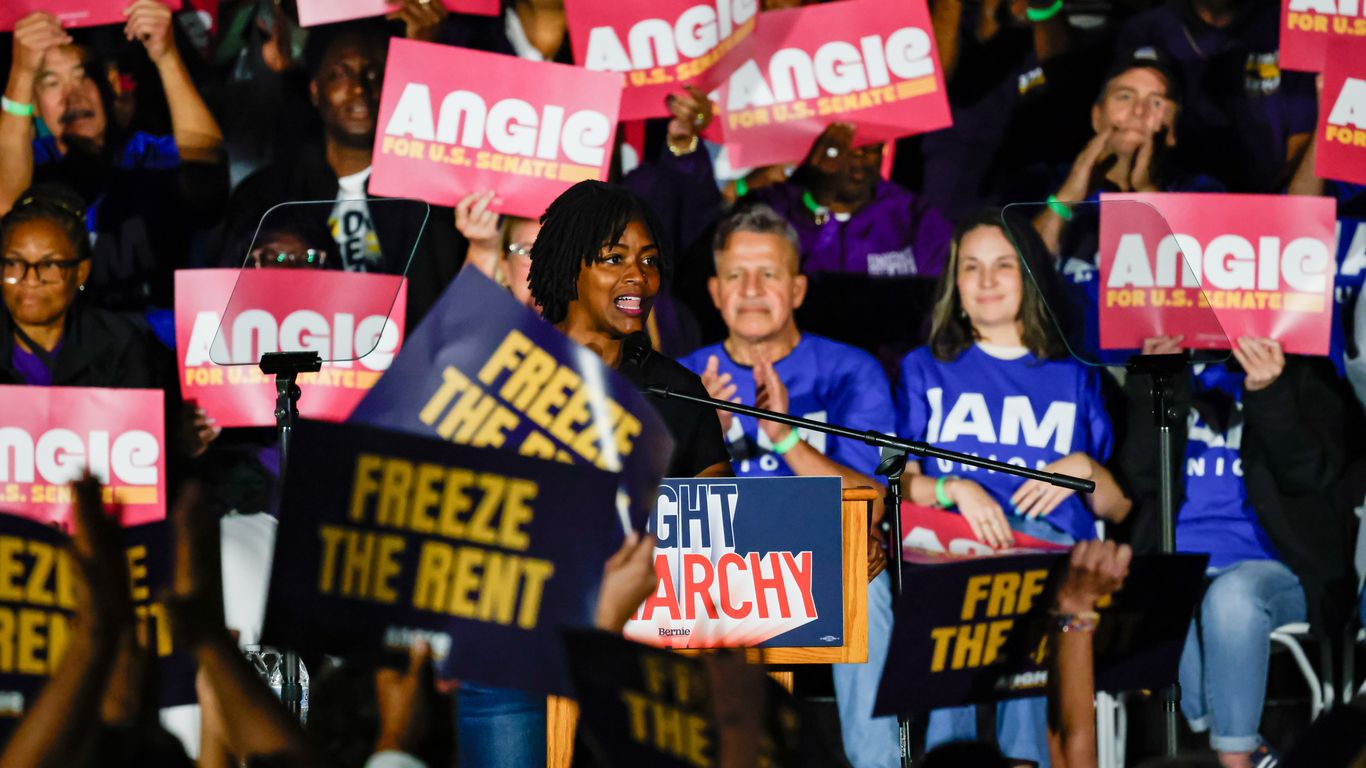
Some Democrats see Angie Nixon's Senate loss in Florida as a warning about running too far left. But her results with Hispanic voters challenge that idea, an Axios analysis found. Hispanic-majority precincts that some feared would reject her politics swung more than 21 points toward Democrats from 2024 and gave her a slight edge over moderate gubernatorial candidate David Jolly. Why it matters: Democrats gained more ground in Florida than in most states this year despite falling short in the two biggest races. Whether they can finish climbing out of their hole will shape the party's 2028 chances in a state seen as a Republican stronghold. " There definitely was a broad blue shift, it just wasn't deep enough," Daniel Smith, a University of Florida political science professor, tells Axios. "But you don't get to these close numbers without non-party affiliates and Republicans voting Democrat." The big picture: Florida swung further toward Democrats than Georgia's gubernatorial race or Ohio's Senate race, yet Florida Democrats had a bigger hole to climb out of. Governor: Democratic nominee David Jolly improved on the 2022 margin by more than 18 points, nearly 6 points above the median gain across 36 states, and 2 points more than neighboring Georgia, where Democrats took the office for the first time in decades. Senate: Nixon improved on the 2022 margin by nearly 14 points, more than a point above the national median, and 2.5 points above Ohio's Democratic gains. State of play: Florida's five statewide Democratic nominees finished within 1.6 points of one another in two-party margin, the least ticket splitting out of the 23 states with both a governor's race and a U.S. Senate race. Nixon's margin improved in Hispanic-majority precincts by 22 points over Val Demings in 2022 and 21 points better than Kamala Harris in 2024. The shift showed up regardless of where Hispanic voters came from, in mostly Cuban precincts (R+34 to R+14), mostly Puerto Rican ones (D+16 to D+35) an
Axios · Nov 17
DoJ warns Elizabeth Warren of ‘consequences’ unless she preserves Trump records

Letter to Warren, likely to chair Senate banking committee, echoes warnings to Democrats moving to investigate Trump The Trump administration has warned Elizabeth Warren , the senior Democratic senator expected to chair the powerful Senate banking committee, she could face potential “significant legal consequences” if she fails to preserve records related to investigations into Donald Trump . US attorney Aaron Reitz of the southern district of Texas sent Warren a warning letter, stating that she appears “eager to wield your future gavel like a tomahawk, hunting for the scalps of President Trump’s private associates”. Continue reading...

The Guardian · Nov 16
U.S. attorney targets another Democrat over congressional investigtions

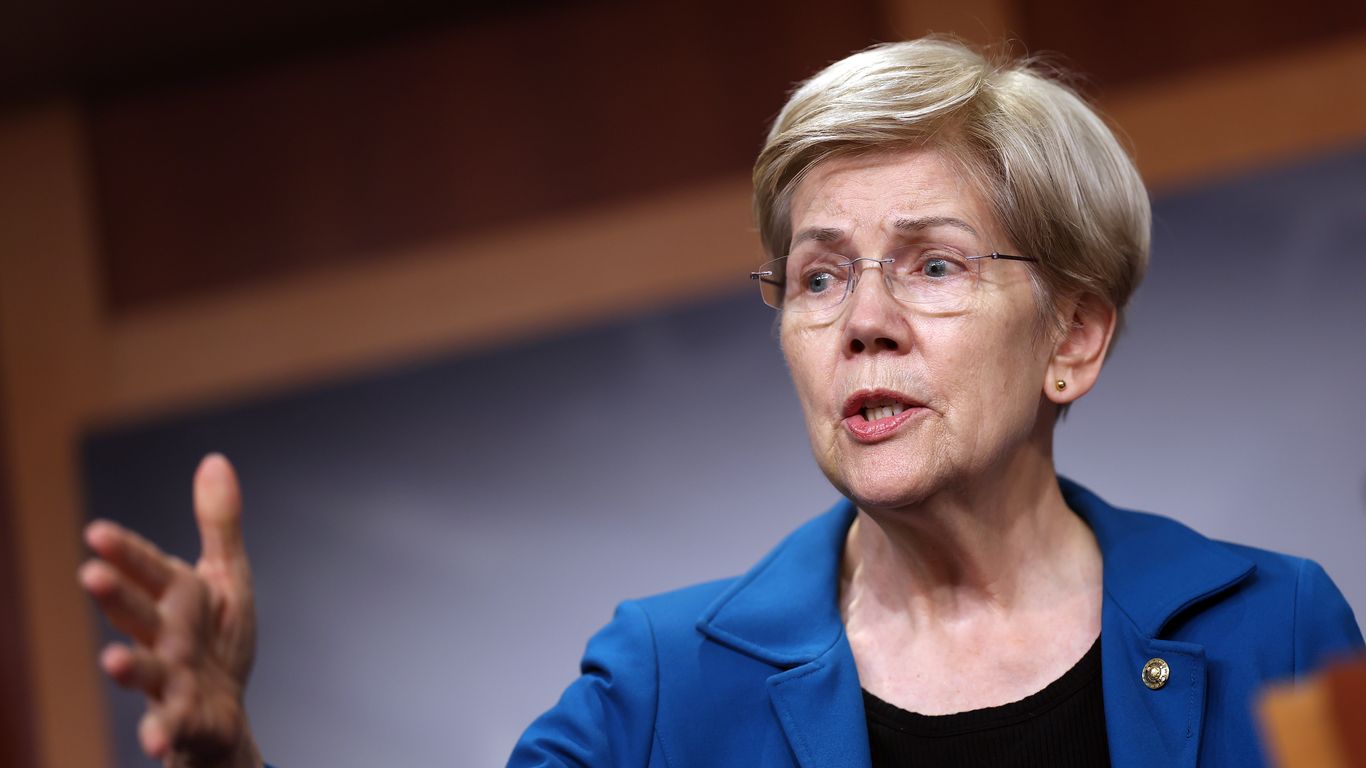
A U.S. attorney put likely incoming Senate Banking Committee Chair Sen. Elizabeth Warren (D-Mass.) on notice about her intent to investigate corporations and expected probes into the president's inner circle. Why it matters: The letter demanding Warren preserve documents related to her congressional oversight is the latest in a string of threats levied against congressional Democrats ahead of the party assuming the congressional majority — and gavels — next year. Congress' authority to investigate, hold hearings and gather testimony is a core legislative power. Analysts have long forecasted a Democratic subpoena storm into President Trump's lucrative presidency. But Democrats' plan to exercise that power and hone their focus on the administration's "cost, chaos and corruption," as reported by Axios' Hans Nichols, is already facing Justice Department pushback. Driving the news: U.S. Attorney Aaron Reitz of the Southern District of Texas contended in his Sunday letter that Warren appeared "eager to wield" her "gavel like a tomahawk," instructing her to preserve oversight records. In the strongly worded letter, he warned Warren about targeting private citizens close to the president and reiterated that any probes must serve a legislative purpose or risk violating those individuals' First Amendment rights. Those arguments echo his prior letters to Sens. Elissa Slotkin (D-Mich.) and Richard Blumenthal (D-Conn.). Trump's new chief of staff, Stephen Miller , shared Reitz's letter and referenced two civil rights statutes. Warren's office did not immediately respond to Axios' request for comment. Zoom in: Reitz's letter referenced Warren, Blumenthal and incoming Oversight chair Rep. Robert Garcia's (D-Calif.) recent inquiry into Trump fundraiser Meredith O'Rourke's role in coordinating contributions for the president's ballroom and other projects. It also referenced letters Warren, with Slotkin and other lawmakers, sent to tech CEOs probing the extent to which their AI inves

Axios · Nov 16
The Democratic party is at a critical crossroad. Can it do the right thing? | Osita Nwanevu

Americans are at a real point of decision – not election day, but this heady, uncertain moment after Until 2026, the most important midterm year of the last quarter-century was very probably 2010. Barack Obama famously called the elections a “shellacking” for the Democratic party and he was right. Thanks to a sluggish economic recovery from the Great Recession and backlash to the passage of the Affordable Care Act, Republicans took control of the House with a 63-seat gain – the largest House sweep since the 1940s – and won six seats in the Senate. But the 2010 midterms were significant well beyond those numbers. It was the first election shaped by the rise of the Tea Party and its blend of rightwing economic populism and xenophobia. Those aligned with the movement lost nearly twice the number of races they won, but the presence of an energized hard-right contingent among Republicans in Congress shaped legislative outcomes for the remainder of Obama’s term and beyond. Continue reading...

The Guardian · Nov 16
Lions beat Patriots as Aidan Hutchinson hurts knee celebrating sack on Drake Maye

Detroit triumph in Munich for fifth win in a row Maye and Hutchinson leave game with injuries Detroit Lions receiver Amon-Ra St Brown caught two touchdown passes in his German homecoming and Jahmyr Gibbs ran for 153 yards and two scores in a 35-10 win over the New England Patriots, who lost quarterback Drake Maye to an ankle injury on their opening drive Sunday. The Lions (7-2) have won five straight games but also lost edge rusher Aidan Hutchinson, who appeared to hurt his knee while celebrating the sack that knocked Maye out of the game. Continue reading...

The Guardian · Nov 15
‘We gotta do something’: the coalition that helped elect Scott Colom to Senate

Behind the Mississippi senator-elect’s victory is a coalition of groups that didn’t have a lot of money, but had collective power and post-Callais anger Long before national political leaders and media were paying any attention, long before the Louisiana v Callais supreme court decision gutted the Voting Rights Act, Mississippi organizers were working to grow political participation and improve quality of life in a state that often ranks low on its residents’ health and wellbeing. Activists’ momentum contributed to Democrat Scott Colom’s historic upset in the midterm elections. A loose coalition of about a dozen, mostly Black-led nonprofits or initiatives rallied residents after Callais, the April decision that set off a flurry of redistricting efforts across southern states. That case was not the sole impetus for organizing efforts across Mississippi, but it turned out thousands in the 20 May “Mississippi Fights Back” rally . Callais became the most recent opportunity to channel people’s frustrations and hopes into action – and to harness previous campaigns that go back years and even decades. Continue reading...

The Guardian · Nov 15
‘Were we too Maga or not Maga enough?’: Republicans reckon with Arizona wipeout

When Trump was first elected, Republicans held every lever in Arizona – now they’ve been swept in a blue tidal wave, and the road to rebuild could be fraught When Donald Trump was first elected to the White House in 2016, Republicans held every lever of statewide power in Arizona, from the governor’s office to both US Senate seats and majorities in the legislature. Over the next decade, as Trump tightened his grip on the party, Democrats began chipping away at that dominance, gradually turning the longtime GOP stronghold into a political battleground. Then came the November midterm elections. Democrats swept every statewide office on the ballot – from governor to the obscure post of mine inspector – and secured a lawmaking trifecta unseen since 1966. Continue reading...

The Guardian · Nov 15
What the choice between Chuck Schumer and Chris Van Hollen for Senate leader is all about | Bernie Sanders

This is not a personality contest. This is a debate about the future of the Democratic party The election for Democratic Senate leader between Chuck Schumer and Chris Van Hollen must be understood for what it is. This is not a personality contest. This is a debate about the future of the Democratic party. It is a debate about whether the Democratic party remains a top-down party dominated by billionaire campaign contributors, inside-the-beltway consultants and 30-second TV ads, or whether we can transform it into a grassroots party of, by and for the working families of our country. Continue reading...

The Guardian · Nov 13
Send us your questions about climate crisis and politics for the next Stateside guest: Bill McKibben

Kai Wright of the Guardian podcast Stateside will speak with author and environmentalist Bill McKibben – and we’d like to hear your questions Was the climate crisis one of your top political priorities during the midterm elections? We want to hear from you: what do you want political leaders to do about it in 2027? Democrats will control the House and Senate in the new year, and they have a long list of priorities ahead of them. But it remains to be seen just how much they will focus on one of the most pressing issues of our times: the climate crisis. The UN declared this summer that, despite some progress, it is now “unavoidable” that the globe will heat past the point that scientists say will threaten human health. Despite these terrifying predictions, the US remains absent from global efforts to limit the impacts of the climate crisis. Continue reading...

The Guardian · Nov 13
The senators who could join Van Hollen's insurgency against Schumer

Sen. Chris Van Hollen is picking up endorsements in his challenge to Chuck Schumer for Senate Democratic leader. Why it matters: The leadership fight exposes divisions within the Democratic Party days after its sweeping midterm victory , with some demanding a new direction and others crediting Schumer for the historic blue wave. Driving the news: Van Hollen (D-Md.), a senator since 2017, announced Thursday he's challenging Schumer because "we need new leadership." "This is not about any one person — it's about answering the call of the American people." The other side: Schumer has far more public endorsements than Van Hollen. "Why would you fire the manager when you just won the World Series?" Sen. Angus King (I-Maine) said in a statement of support for Schumer. Van Hollen has disputed Schumer's claim to credit for the party's midterm performance, arguing that the wave was powered by voters rather than leaders in Washington. By the numbers: Schumer has public support from 14 senators, including himself, compared with five for Van Hollen. A candidate will need 28 or 29 votes to win, depending on the outcome of Alaska's Senate race, where votes are still being counted. Senators backing Van Hollen State of play: Van Hollen told MS NOW he has "more than 10" senators on his side, though only four have publicly endorsed him. Sen. Bernie Sanders (I-Vt.) endorsed Van Hollen on Thursday night, saying he will fight for working families. Senator-elect Abdul El-Sayed (D-Mich.) threw his support behind Van Hollen when he announced his challenge Thursday. Sen. Jeff Merkley (D-Ore.) issued an endorsement for Van Hollen Friday afternoon. Incoming Sen. Peggy Flanagan (D-Minn.) endorsed Van Hollen Friday morning after previously calling for new leadership. Who wants new leadership? Some sitting senators have called for a leadership change without endorsing Van Hollen. Sen. Elissa Slotkin (D-Mich.) has called for change but hasn't endorsed either candidate. Before Van Hollen announced

Axios · Nov 13
Senate Dems break 32-year drought on leadership challenges

As House Democrats barrel toward a speakership coronation , Senate Dems are getting their first contested race for leader in over 30 years. Why it matters: Democrats have spent years tearing themselves apart over the party's direction — without forcing their leaders to win a head-to-head vote. Senate Democrats will get that fight this year for the first time since Tom Daschle vs. Chris Dodd in 1994 — courtesy of Chris Van Hollen (D-Md.) challenging Chuck Schumer (D-N.Y.). But no one's challenging Hakeem Jeffries (D-N.Y.) for speaker. The last contested Democratic House leader race was in 2016, when Tim Ryan failed to beat Nancy Pelosi for minority leader. Between the lines: House Democrats are being bombarded with calls and emails urging them to oppose Jeffries, but the two most frequently floated alternatives — Jamie Raskin (D-Md.) and Ayanna Pressley (D-Mass.) — don't appear to want the job. Raskin told Axios that chairing the Judiciary Committee is his "dream job" and that he's "absolutely ... not a candidate for speaker in any way." "I am supporting Hakeem and voting for Hakeem," Raskin added. Pressley has privately told colleagues she isn't interested, multiple House Democrats told Axios. "Congresswoman Pressley is in active conversations with Leader Jeffries about how to leverage this majority, meet the moment and deliver for the people," spokesperson Ricardo Sanchez said in a statement to Axios. "She is aware of and appreciates the groundswell of support from people in her district and across the country lifting up her leadership." The big picture: Since the last contested Democratic leadership election, Republicans have endured the rise of MAGA, former Senate GOP leader Mitch McConnell's fall from power and a revolving door of House GOP leaders. In 2018, Kevin McCarthy drubbed Jim Jordan 159–43 to become House minority leader. In 2022, McConnell had to beat Rick Scott after the Florida Republican challenged him for Senate GOP leader. In 2023, McCarthy needed

Axios · Nov 13
Across racial lines, Mississippians celebrate Scott Colom’s historic election: ‘The times they are a-changin’

Six Americans on their hopes for Colom, 43, Mississippi’s first Black senator since Reconstruction Democrat Scott Colom made history this month, becoming Mississippi’s first Black senator since the Reconstruction era after defeating incumbent Republican senator Cindy Hyde-Smith. The 43-year-old’s win also contributed to a Democratic majority of at least 55 seats in the Senate – the party’s largest midterm gains since 1986. Continue reading...

The Guardian · Nov 13
Nobody wants to run against Hakeem Jeffries for speaker

The movement to prevent House Democratic Leader Hakeem Jeffries (D-N.Y.) from becoming speaker is struggling to get off the ground due to a fatal flaw: Nobody else wants the job. Why it matters: Despite the phone calls and online petitions, the demands from progressive holdouts, Jeffries' ascent has become a self-fulfilling prophecy. The House Democrats most often floated as potential challengers don't appear to be interested: Rep. Jamie Raskin (D-Md.) told Axios on Thursday his "dream job" is to chair the House Judiciary Committee. "I am not a candidate for speaker in any way. ... I am supporting Hakeem and voting for Hakeem," said Raskin. Rep. Ayanna Pressley (D-Mass.) has privately told colleagues she doesn't want the role despite an online movement seeking to draft her, according to multiple House Democrats who have spoken directly with her. "Congresswoman Pressley is in active conversations with Leader Jeffries about how to leverage this majority, meet the moment, and deliver for the people," spokesperson Ricardo Sanchez said in a statement to Axios. "She is aware of and appreciates the groundswell of support from people in her district and across the country lifting up her leadership." "He's the only one running," Rep. Adelita Grijalva (D-Ariz.) told Axios on Thursday when asked if she plans to vote for Jeffries as speaker. Said Rep. Delia Ramirez (D-Ill.): "I am really encouraging our leadership to make it easy for me to vote for the one person that's running. But as of right now, there's ... no one else that has put their name forward." "As far as I've heard, Jeffries is the only person running," said Rep.-elect Randy Villegas (D-Calif.). Jeffries said in a NY1 interview : "Someone could always emerge in the next week or so, but right now there are no declared challengers, no indication that anyone may put themselves forward." The intrigue: For once it's the Senate, not the House, providing all the drama on Capitol Hill. Sen. Chris Van Hollen (D-Md.) launche

Axios · Nov 13
The global economy's Achilles' heels

A defining story of this decade has been a series of global economic shocks: pandemic, war and geopolitical shifts. New research quantifies a rising set of vulnerabilities for the global trade system . The big picture: Many crucial global goods are built on supply chains that have one or more Achilles' heels, a report from the consulting firm McKinsey finds — a critical input, concentrated suppliers and geopolitical strain. That manifests partly in physical chokepoints. The Strait of Hormuz is the one most in the news, but the McKinsey researchers identify a couple dozen others globally, through which 80% of maritime trade passes (although with varying levels of difficulty for shippers to route around). In effect, as the global economy has become more integrated over the last few decades, these vulnerabilities have become more pronounced — which in turn helps explain why the 2020s have brought an ongoing series of disruptive supply shocks. By the numbers: They find that the share of global imports that face at least two of three major vulnerabilities has risen to 23% in 2024 from 15% in 2000. The list of items with overlapping vulnerabilities includes basic materials like iron ore and more advanced items like lithium-ion batteries, smartphones and memory chips. What they're saying: "It's not necessarily that trade has gotten less reliable," Tiago Devesa, a co-author of the report, tells Axios. "I think it's more that we have the realization that we actually want to understand what are the potential points of failure, so we can anticipate them." "I think you could make a case that throughout all of these shocks, trade has continued to increase, and trade was actually a very important balancing mechanism," he adds. "It's been increasing precisely in part because we've integrated the fabric of the global economy much more, and in particular, we've led a specialization effort that led to more concentration around the world," says Devesa, a senior fellow at the McKinsey

Axios · Nov 13
‘We have to show what good governance looks like’: how organizers will hold new electeds accountable

After Tuesday’s election, ‘everyone must have a Wednesday agenda’, experts say – and movements must keep putting pressure on Democrats to get their demands met The bright blue map that emerged on election night in the US was unthinkable two years ago. When Donald Trump won the 2024 presidential election, many Democratic voters curled up in bed and doomscrolled, fatigued and fearful about the direction of the country. Any desire to fight back was dampened by the enormity of the loss. But the mood gradually shifted over the following two years, culminating in a generational shift on election day: Democrats flipped five governors’ seats and took control of the House and Senate by wide margins. Voters were angry about the rising cost of living, the war in Iran, masked immigration agents in their neighborhoods and datacenters rising in their backyards. Continue reading...

The Guardian · Nov 13
Democrats in power confront the social media trap

Chuck Schumer and Hakeem Jeffries are both cautious, calm, compromise-minded leaders fantasizing about a serious, sensible Democratic-run Congress. But social media is a temptress no party leader has tamed. The seduction of attention, likes and followers invariably proves too strong for the savviest, most self-promotional politicians to resist. Why it matters: That's the lesson of the Internet Era of American Politics — the algorithms always win. A few provocative members of Congress and online activists dominate the national conversation because they master the biggest social media platforms. That creates the impression that their views reflect a party, or a nation, when in reality they don't. And it shapes the party's image and agenda. Rep. Josh Gottheimer (D-N.J.), vice chair of the bipartisan Problem Solvers Caucus , told us: "Governing isn't about getting the most followers on X — it's about delivering actual results ... It's easy to scream and yell, and say no — it's much harder to figure out a way forward." By the numbers: Michigan Sen.-elect Abdul El-Sayed had 1.6 million Instagram followers as of Sept. 13. Today: 7.6 million and rising. One clip of him pulled an estimated 50 million-plus views across X, Instagram and TikTok. Schumer, who has led Senate Democrats since 2017, sits at 466,000 Instagram followers . A man who hasn't been sworn in has roughly 15x the leader's audience. El-Sayed telegraphed this in July: "If you're Chuck Schumer, I'm pretty damn dangerous!" True. Jeffries has nearly 1 million followers on Instagram. Rep. Alexandria Ocasio-Cortez has 9.8 million on her personal account alone. Yes, President Trump remade the GOP. But social media sucked in countless others to try to copy him, pushing rhetoric or ideas few politicians would've touched in the past. You see this in the rise of celebrity politicians who do little legislating but lots of instigating. You see this in the explosion of not just Instagram, X and YouTube followers by politici

Axios · Nov 13
Chris Van Hollen to challenge Chuck Schumer for Senate majority leader

Maryland Democrat challenges party leader after midterms sweep, saying: ‘The American people called for change’ Chris Van Hollen, the Democratic senator of Maryland, said Thursday that he will run for Senate majority leader in the next Congress, setting up a challenge to Democratic leader Chuck Schumer after the party swept to power in the midterm elections. Van Hollen said in a statement that “the American people called for change” and that is why he is running. Continue reading...

The Guardian · Nov 13
Chris Van Hollen to challenge Schumer for Senate majority leader

Sen. Chris Van Hollen announced Thursday that he'll challenge Chuck Schumer for majority leader. Why it matters: Van Hollen's bid gives grassroots activists nearly three weeks to pressure Senate Democrats before they cast secret ballots in the Dec. 1 leadership election. The attempt to oust Schumer (D-N.Y.) underscores that deep divisions are plaguing the Democratic Party despite their overwhelming midterm success . Van Hollen (D-Md.) has served in the Senate since 2017 and has been in Congress since 2003. Schumer has been the Senate Democratic leader since 2017 and has served in the Senate since 1999. Driving the news: "In this election, the American people called for change," Van Hollen said in a statement on Thursday. "They called for a change from Donald Trump's disastrous policies – but even bigger than that, a change from the status quo that isn't working for working people." "It's now on us to meet this moment, and to do that we need new leadership. This is not about any one person – it's about answering the call of the American people. That is why I'm running for Senate Majority Leader." Zoom in: Opposition to Schumer has been building: "[T]he time is now for change," Sen. Bernie Sanders (I-Vt.) said Tuesday. He appeared with Sen. Elissa Slotkin (D-Mich.), who demanded a plan for change from her party leadership. Progressives have accused Schumer of not fighting hard enough against President Trump and the MAGA agenda. Sen.-elect Abdul El-Sayed (D-Mich.) is a vocal backer of Van Hollen for majority leader. Van Hollen, who is also considering a 2028 presidential run, said he's been listening to calls for him to challenge Schumer and considering his options.

Axios · Nov 13
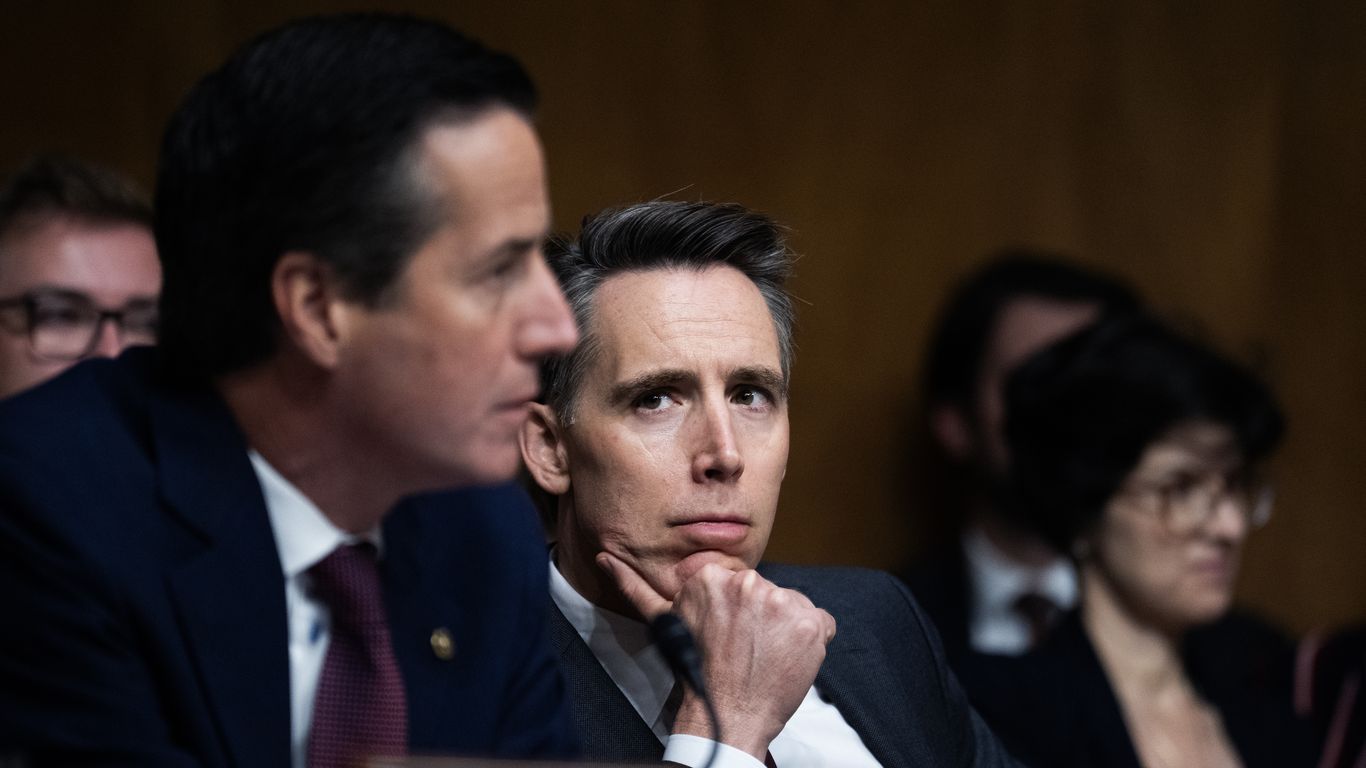
Senate Dems can look forward to unlikely MAGA allies

Senate Democrats could find some of their most surprising allies next Congress from the right wing of the Republican Party . Why it matters: Senate Democrats are on track to need only four GOP votes to break filibusters next Congress. They could find those votes from a bloc of GOP senators with a shared appetite for taking on corporate power. Enter Sens. Josh Hawley (R-Mo.), Jim Banks (R-Ind.), Bernie Moreno (R-Ohio) and Eric Schmitt (R-Mo.). Each has already worked with Democrats, and their votes could put legislation over the top. Who we're watching: Hawley has co-led multiple pieces of legislation with progressive star Sen. Elizabeth Warren (D-Mass.) this Congress. Hawley is often viewed as a loner in the GOP, pairing populist economics with hardcore culture war issues from abortion to transgender care to religious freedom. He's been scathing in his postelection critiques. "This Congress did not come and work for the people. This Congress came and worked for AI companies, and it worked for data centers, and it worked for big tech companies," he told reporters on Tuesday. He's scoping out areas for potential bipartisan deals: "You want to raise the minimum wage? I'm for that. You want to work to get gas prices down? I'm for that. I am open to anything to bring down the cost of health care," he said. Zoom in: Watch the health care space, specifically undoing cuts passed in the One Big Beautiful Bill Act and drug price controls. President Trump has specifically asked Congress to codify his most favored nations drug pricing deals, which could give Republicans an opening to work with Democrats. Hawley and moderate Sen. Lisa Murkowski (R-Alaska) were among the loudest GOP voices opposing the expiration of enhanced Affordable Care Act credits last year. Zoom out: Social Security and tech safety issues could also be huge areas of unexpected bipartisan work. Over the summer, Warren and Moreno released a sweeping plan to "save Social Security." Warren and Banks have tag-te

Axios · Nov 13
Mississippi makes history with Democrat Scott Colom’s Senate win - The Latest

Mississippi has elected the Democrat Scott Colom in a historic race in the traditionally deep-red state, making him its first Black senator since shortly after the US civil war. The closely contested race was called more than a week after the US midterms, with Colom running against the Republican incumbent, Cindy Hyde-Smith. How did Colom’s grassroots campaign win despite limited early backing from national Democrats? Lucy Hough speaks to politics and democracy reporter George Chidi Continue reading...

The Guardian · Nov 12
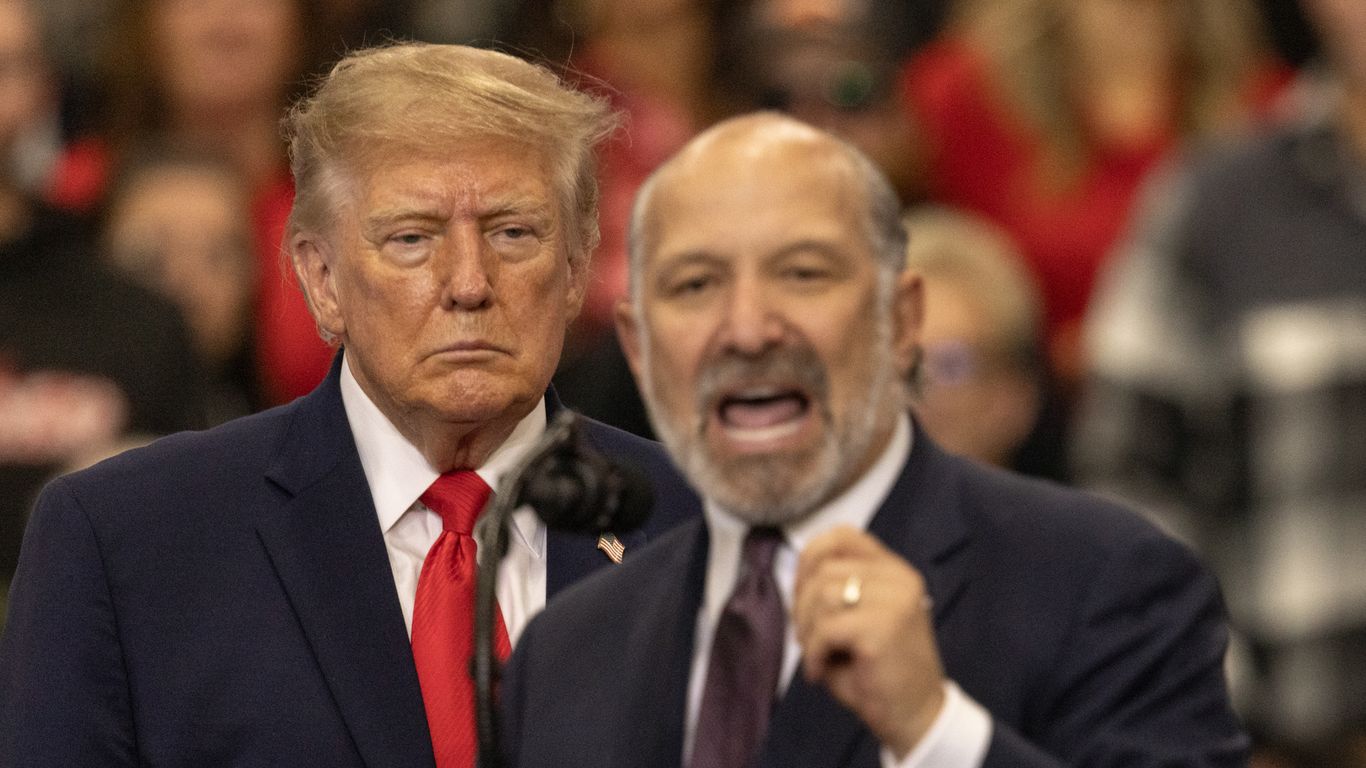
Trump sticks by Commerce Secretary Lutnick despite Nvidia inaction

The White House is standing by Commerce Secretary Howard Lutnick despite a view within the administration that Lutnick delayed action to address concerns over chip smuggling to China. Why it matters: Congress smells blood in the water following bombshell reports that U.S. national security may have been jeopardized by former Nvidia CEO Jensen Huang's relationship with a suspected Chinese spy. Lawmakers want to know what the Trump administration did or did not do in response to that intelligence — and Lutnick, the official in charge of the department at the center of export control policy, is squarely in their field of view. President Trump, however, is not distancing himself from the secretary. "Secretary Lutnick is a champion of President Trump's America First trade and tariff policies, which have secured almost 20 fair trade deals and trillions in manufacturing investments," a White House official tells Axios. "President Trump maintains complete confidence in the secretary and his ability to carry out the position as the most transformative Commerce Secretary in modern history." Catch up quick: Lutnick was sent intelligence about Jensen Huang's relationship with an alleged Chinese spy and repeatedly did not take export control action — despite pressure from the broader administration and the president himself, Axios first reported. Lutnick's role is prompting scrutiny on the Hill from members on both sides of the aisle. "Secretary Howard Lutnick and Under Secretary Jeffrey Kessler must explain why they have not closed export control loopholes and act today to ensure our advanced technology is not fueling China's military," Senate Banking Committee Chair Elizabeth Warren (D-Mass.) said in a statement. "The obvious question is why did he choose to sell advanced chips?," Sen. John Kennedy (R-La.) told Politico. "Secretary Lutnick needs to answer that in front of God and country," Kennedy added. "I mean, there will be a congressional investigation. But I don't think h

Axios · Nov 12
Share your reaction to Scott Colom’s Mississippi Senate win

We would like to hear your reaction to Colom’s election win and your hopes for his leadership Democrat Scott Colom has unseated Cindy Hyde-Smith , the incumbent Republican senator, to become the first Black senator in Mississippi elected since Reconstruction. Colom had been written off by pundits as having no chance of winning when he announced his campaign last year. But his viral campaign ads created memorable slogans, while he made efforts to engage Mississippians where they were – from driving a truck that offered free tacos, to talking to students and alums at college homecomings, to chatting with voters queued to see Donald Trump. Continue reading...

The Guardian · Nov 12
First Thing: Mississippi turns blue as Scott Colom unseats Republican Senate incumbent

Defeating Cindy Hyde-Smith makes the 43-year-old district attorney the first Black Mississippi senator elected since Reconstruction. Plus, the South Korean scarf vendor who has gone viral for telling people not to buy Good morning. In a stunning upset after more than a week of vote counting in one of the country’s most reliably red states, the Democrat Scott Colom has defeated Cindy Hyde-Smith , the incumbent Republican senator, in Mississippi. He becomes the first Black senator elected in the state since Reconstruction. Colom’s election capped a national wave of anger at Donald Trump’s administration, sweeping away Republicans in places where Democrats had not been competitive in decades. With the addition of Colom, Democrats will hold at least 55 seats in the Senate, the party’s largest midterm gain since 1986. What did Colom say about his victory? Colom, a 43-year-old district attorney, said there had been times when his long-shot campaign felt defeated but “I had to have faith”. He told supporters : “My commitment to you, each and every one of you, is that first I’m going to treat your children like I want my children to be treated. I’m going to treat your parents the way I want my parents to be treated. I’m gonna treat your future the way I want my future to be.” How have Democrats responded to a White House threat? Robert Garcia, the ranking member of the oversight committee in the House of Representatives said it appeared Donald Trump had “something to hide” after the White House threatened criminal investigations over the party’s planned scrutiny of the administration. Garcia said in a statement that Congress’s authority came from article I of the constitution, “not from the permission of the White House”. Continue reading...

The Guardian · Nov 12