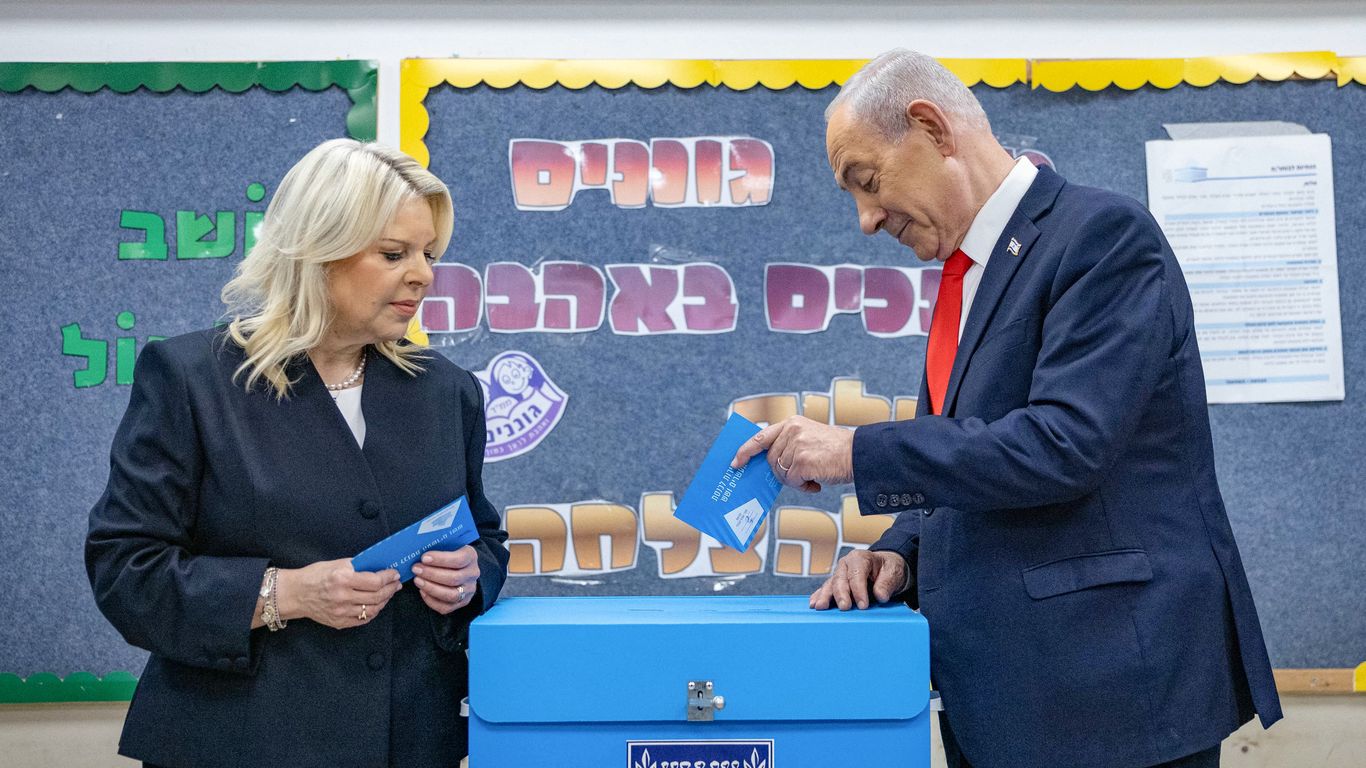
Here’s what to expect as votes are counted on election night.
The New York Times · 43m ago

Voters are turning against the Republicans. But the clearest possible message is needed to safeguard democracy The psychologist Jennifer Freyd identified a pattern often used by perpetrators: deny, accuse, and reverse victim and offender. More than one observer has noted that Donald Trump employs that pattern politically. With polls suggesting Republicans are likely to lose the House and perhaps the Senate too in the midterms, the man who refused to accept Americans’ democratic verdict in 2020 is hawking a narrative of cheating Democrats who will steal seats via illegitimate votes. The January 6 insurrection showed how acute the peril to American democracy had become. It is more so now. This time, Republican efforts to undermine the results began well in advance. In 2020, Mr Trump’s vice-president, Mike Pence, the attorney general, William Barr, and others refused his most outrageous demands; now the justice department is supine. And the supreme court’s gutting of the Voting Rights Act , which safeguarded against the worst kinds of racial discrimination, means that states no longer require pre-approval for decisions that could well tilt a race. Districts have already been redrawn. Continue reading...
US voters will decide whether Republicans will retain control of Congress or whether Democrats will rise up to stymie Trump’s agenda Donald Trump will still be US president on the morning of 4 November. But he could be facing a very different political landscape, depending on the results of the US midterm elections held the previous day. As the name implies, midterm elections fall nearly halfway through a president’s term. They are often a telling referendum on the sitting president’s performance, something Trump is actively encouraging by telling voters “pretend I’m on the ballot”. In this case, voters will decide whether Trump’s Republican party can retain its grip on Congress. All 435 seats in the House of Representatives. Republicans are defending a narrow majority, with Democrats needing a net gain of four seats to take control. 35 seats in the Senate. Thirty-three seats are up in regular elections, along with two special elections in Florida and Ohio to fill the remainder of terms that were vacated early. Republicans currently hold 53 seats, against 47 held by Democrats and independents who caucus with them. Democrats need to gain four seats to secure a majority. 39 governorships. Voters will choose governors in 36 states and three US territories. Thousands of state legislative seats , as well as local offices, judicial contests and ballot measures on issues including taxes, abortion rights and voting rules. Continue reading...
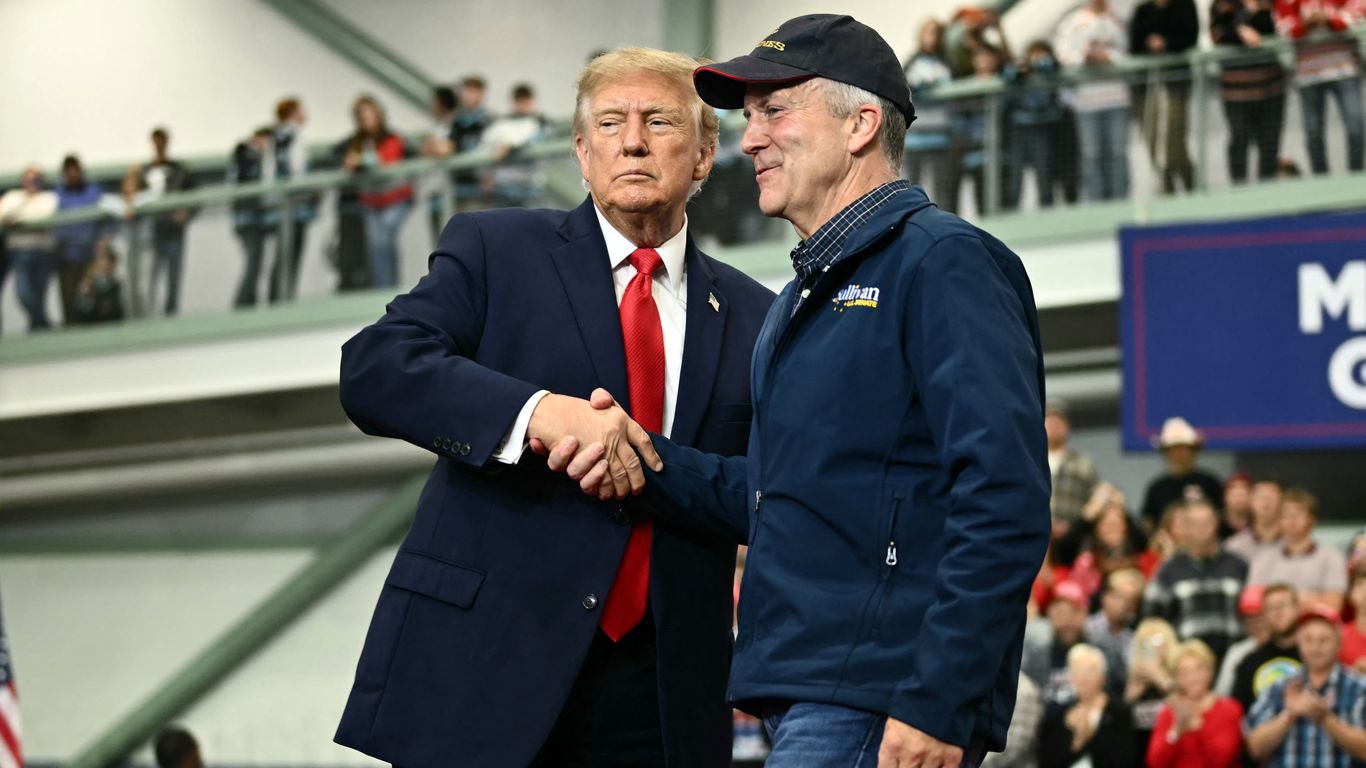
Senator was allegedly targeted in ballot-stacking ploy by his Democratic opponent to peel away votes from him Senator Dan Sullivan, the Alaska Republican allegedly targeted in a ballot-stacking ploy by his Democratic opponent, Mary Peltola, told CNN this morning that he would accept the results of his upcoming election. According to a recent New York Times investigation, aides from Peltola’s campaign recruited another man who shared Sullivan’s name to join the race in a ploy to peel away votes from the Republican incumbent. Continue reading...
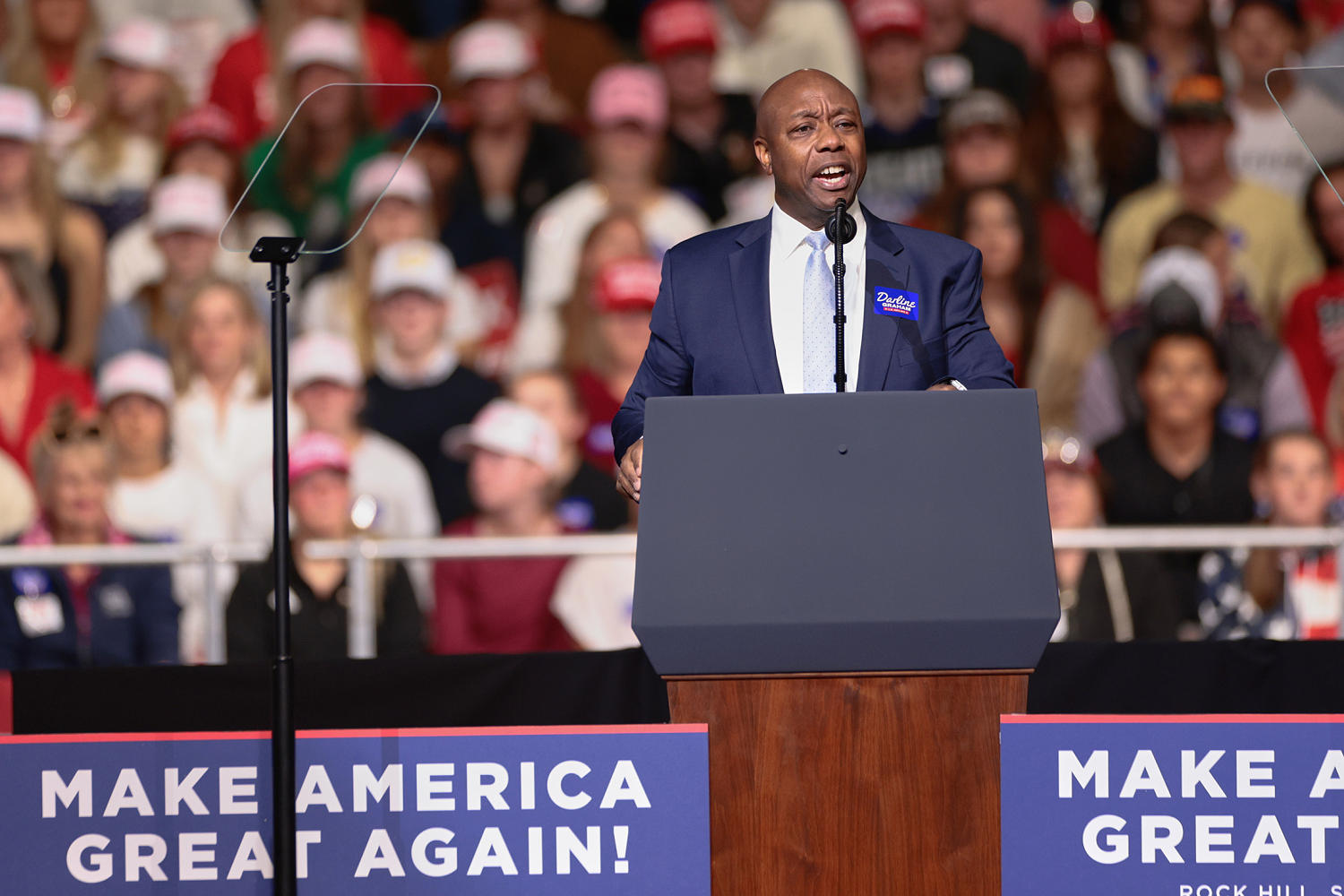
Sen. Tim Scott, R-S.C., declined to say whether he would accept the results of the Alaska Senate race if Democrat Mary Peltola wins the battleground seat
Right after Tuesday's midterms, OpenAI will unleash a policy and PR blitz to try to get in sync with the new Washington, including an effort to rebrand data centers as "AI compute campuses." Why it matters: After two years of a friendly White House, AI companies will face a harsher Washington after Tuesday, when Democrats will likely win the House. OpenAI also aims to help frame the AI debate for the big field of 2028 presidential contenders that'll start forming on Wednesday. "You can try to chase the moment, or seek to inform the moment via the power of ideas," OpenAI chief global affairs officer Chris Lehane tells us, calling Tuesday an "electoral portal from one era to the next." Since August, Lehane and his team have been stockpiling policy proposals, some new and some repackaged, to drive urgency and steer the AI debate. It'll all start during the lame-duck session of Congress — the awkward but often consequential weeks between the election and the swearing-in of new members and senators on Jan. 3. This year's lame duck opens Nov. 9. The big picture: Other tech companies are also positioning themselves for a potential blue wave. Meta is taking steps to strengthen its ties with Democrats, Axios' Sara Fischer scooped Saturday . Other big AI and tech players can be expected to do the same. Tech titans who enjoy close relationships with President Trump will be top targets for Democrats, who are eager to ramp up scrutiny and regulatory pressure on the industry. OpenAI's plans, being revealed here for the first time, all involve control — trying to send the message that AI is being built for people, not to displace people. The proposals include: Speed limits: Building on earlier proposals , OpenAI plans to unveil new ideas for mandatory safeguards for the most powerful AI systems — speed limits for AI that will allow humans to keep their hands on the wheel. This'll include a more aggressive congressional drive. "You're going to see us talk more and more about the co
One man’s campaign finance operation in Wisconsin exemplifies the opacity of the US political funding system In the summer of 2024, a non-profit called the Green Dragon Coalition wired the last $20,000 of a $445,000 grant to a Super Pac . Its tax return for that year would describe the purpose of the transfer as “educational”. The same day, according to Federal Election Commission (FEC) records, the Super Pac spent $8,000 attacking Celeste Maloy, the Republican congresswoman for Utah’s second district, four days before the primary that would decide whether she kept her seat. It had already spent more than $400,000 promoting her challenger, Colby Jenkins, who was running to her right with the endorsement of the rightwing Utah senator Mike Lee. Continue reading...
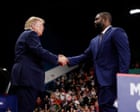
Florida Republicans aren't panicking about sluggish turnout for the midterms , but in the words of one GOP elder: "We're white-knuckled." Why it matters: Florida once looked like a much safer Republican bet for the midterms. Losing any statewide race would stun and embarrass its elite Republican residents, starting with President Trump . "I don't necessarily want to be the bearer of bad news, but I don't think the turnout is as strong as we would like to see," Florida Gov. Ron DeSantis fretted last week. The biggest GOP concern is U.S. Rep. Byron Donalds' campaign for governor, though most polls show him narrowly leading Democrat David Jolly. Donalds has raised $176 million; Jolly just $28 million. Zoom in : The GOP's jitters are rooted in early turnout data. Republicans led Democrats in early ballots cast by just 2.8 percentage points as of Saturday afternoon. That's much lower than in the past two general elections — and it's despite a much-bigger Republican registration advantage over Democrats: 11 points. Republican turnout is weakest in parts of the conservative Panhandle and rural North Florida, including many of the 17 counties Donalds lost in the Republican primary. In those 17 counties, GOP turnout is 3.2 points below 2022, compared with 1.1 points below in counties that Donalds won, University of Florida political scientist Michael McDonald found. Between the lines: Republican turnout is made up of more habitual voters, while Democrats and independents are banking ballots from people who don't always show up. That could benefit Jolly if polls underestimate those voters. Democrats already have surpassed their entire 2022 early and mail-in vote totals in 15 counties, compared with four counties for Republicans. Nearly every poll shows independent voters favoring Democrats by double digits, so Republicans need a heavy turnout advantage. About two-thirds of Florida voters typically cast ballots before Election Day, making the early and absentee margins critica
On the eve of midterms, President Trump is facing setbacks left and right in his push to investigate alleged election fraud . But in Georgia, he has an opening. Why it matters: Six years ago, Georgia was at the epicenter of Trump's efforts to overturn the 2020 presidential election. Now the state's own election board has invited his administration to investigate its voting system. Georgia features two high-stakes statewide campaigns: Sen. Jon Ossoff (D) against Rep. Mike Collins (R) for Senate, and former Atlanta Mayor Keisha Lance Bottoms (D) against businessman Rick Jackson (R) for governor. The big picture: The Justice Department disclosed in court on Friday that the administration has sent letters to officials in California, Washington, Pennsylvania, New Jersey and Nevada, asking some states to segregate mail-in ballots from suspected noncitizen voters. A federal judge on Friday issued an emergency order that blocks federal officials from threatening to charge election officials who count ballots from voters the DOJ claims are ineligible. In October, a federal judge restricted the Department of Homeland Security's investigations into suspected noncitizen voters. But Georgia is different . "We've managed with duct tape and bubble gum to be able to bootstrap our way through one last round, but that's not a way of running elections," a Georgia election official told Axios. Georgia's State Election Board asked the Justice and Homeland Security departments to review and potentially investigate the state's voting system and handling of election data. The Sept. 30 letter cited outdated software, threats to ballot secrecy and QR-code ballots it says may violate the Help America Vote Act. A DOJ spokesperson said in response to the letter: "We take seriously allegations that election officials have failed to adequately maintain election equipment and otherwise comply with federal law. We are evaluating the request and will investigate and, if appropriate, bring an enforce
More than 40 third-party candidates in pivotal House and Senate races across the country are receiving support from outside super PACs, many of which have ties to the two major parties, an Axios analysis has found. Why it matters: The sums being thrown around, which total more than $16.5 million, are far greater than virtually any of those candidates have raised or spent on their own. The super PACs have spent an average of $375,000 more than the third-party candidates they are supporting. More than half of the 43 candidates haven't filed any financial paperwork with the Federal Election Commission. While it is a comparative drop in the bucket for a midterm that has already seen billions in ad spending nationally, the money will likely play an outsized role in races that are set to be decided by razor-thin margins. Those races, in turn, will help decide the balance of power in Congress next year. Data: Federal Election Commission; Note: Heikes is a self-identified Republican, but Sen. Dan S. Sullivan is the Republican Party-endorsed candidate in the race; Table: Andrew Solender/Axios The top spenders nationwide have been a pair of obscure groups which, like many of the other "pop-up" super PACs in this story, were formed this month and therefore won't have to disclose their donors until after Election Day. Buckeye Freedom PAC has reported spending more than $3.8 million on ads in Ohio's U.S. Senate election supporting Libertarian Bill Redpath and opposing Republican Sen. John Husted, who is in a tight race with Democratic former Sen. Sherrod Brown. Alaska Values PAC has disclosed spending $3.8 million backing Gerald Heikes, a self-identified Republican running on Alaska's ranked-choice U.S. Senate ballot with Republican Sen. Dan S. Sullivan and Democrat Mary Peltola. Between the lines : Third-party candidates in Alaska are facing national scrutiny after the New York Times reported that Heikes and another self-proclaimed Republican on the ballot, Dan J. Sullivan, wer
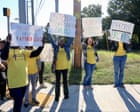
Cost of living has loomed over this election cycle as workers and unions champion candidates fighting for higher wages and tackling rising prices For millions of Americans heading to the polls on Tuesday, affordability is a constant and worsening issue, and it’s been a prevailing concern this election cycle. In Lorain county, Ohio, Gina Jones and her co-workers at the Lorain county job and family services have been on strike since February 2026, the longest public sector strike in Ohio history and on pace to break the US record for longest public sector strike. Continue reading...
From the cheesecake factory discourse to the double Dan Sullivans, campaign season has been ridiculous Chances are, as you’re reading this, your bunker is fully stocked, your doors are locked, and you’re peeking at your computer screen through gaps between your fingers. After all, it’s election day on Tuesday. Once again, democracy will be tested – like Beavis & Butthead taking the SATs. I’m not looking forward to it, and I’m sure you aren’t either. Dave Schilling is a Los Angeles-based writer and humorist Continue reading...
The Texas governor is locked in a tough re-election fight and, Republican consultants said, having Ken Paxton at the top of the ticket is not helping.
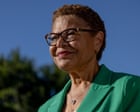
With affordability a major election issue, the incumbent is trying to ward off her democratic socialist challenger At the end of 2022, the four largest US cities – New York, Los Angeles, Chicago and Houston – all had Black mayors. It was a historic alignment made possible by the aftereffects of the Black Lives Matter civil rights movement and the unprecedented wave of protests following the killing of George Floyd in 2020. Six years on, only one of those mayors remains: the embattled Karen Bass of Los Angeles , who is facing a strong challenge from a younger, even more progressive challenger. Bass’s opponent is Nithya Raman, a member of the Democratic Socialists of America, although the group is considering rescinding its endorsement over her refusal to explicitly embrace the Boycott, Divestment and Sanctions movement against Israel. Continue reading...
The Broward County supervisor of elections said his office had received dozens of reports that ballots weren’t being delivered in a timely manner.
California Gov. Gavin Newsom warned judges that the Trump administration may seek subpoenas to seize ballots and voting machines.
The country’s biggest demographic group — women — is the main driver of voting and has grown ever more Democratic in this election cycle.
City Council candidates in ritzy Scottsdale disagree on whether recycling wastewater into drinking water is smart policy or a dangerous remedy.
The administration’s efforts have raised concerns among experts about potential disruptions after election day Donald Trump is waging a brazen effort to interfere with voting in this year’s midterm elections, escalating concerns that the federal government will try to slow down certification of election results – a strategy that could create chaos when the new Congress is seated next year. Experts are certain the administration’s efforts to subvert America’s elections will not work. And some have bemoaned “fearmongering” about far-fetched scenarios that are unlikely to go anywhere in court. Continue reading...
With control of Congress on the line, next week’s midterms amount to a referendum on Trump, who has urged voters to pretend he is on the ballot Sign up for the Breaking News US email Hello and welcome to the US politics live blog. Donald Trump is tele-rallying from Mar-a-Lago with just three days to go before the midterm elections. On Sunday, he will make appearances at rallies in Iowa in Kansas in a reversal after he initially backed out . The top federal prosecutor in Alaska confirmed on Friday the existence of a criminal and a civil investigation into an alleged scheme by Mary Peltola’s campaign and national Democrats to confuse voters in the closely watched Senate race by recruiting a spoiler candidate who shares a name with the Republican incumbent, Dan Sullivan . Michigan Democratic Senate candidate Abdul El-Sayed resisted a demand from his defeated primary rival, congresswoman Haley Stevens , that he apologize for criticism of US military aid to Israel on Friday – two days before they were scheduled to campaign together in Detroit. Early voting this cycle has set a record. More than 49 million Americans have already cast ballots, either in person or by mail, the Associated Press reported. Continue reading...
You won't need to stay up all night Tuesday to spot a big Democratic wave in the 2026 midterm elections . But it could take days — or even weeks — to know whether Republicans have survived a smaller one and held on to the House or Senate. Why it matters: A handful of early results in key states and congressional districts will tell us whether Democrats are headed for a landslide or disappointment. What we're watching: Florida, Florida, Florida. Most polls close at 7pm ET, and the state counts quickly — ready for release when the Panhandle finally calls it a night an hour later. At 8:01pm , refresh your browser and watch FL-14. The great mid-cycle redistricting wars transformed this Tampa-based district from Harris +8 to Trump +11. If Democratic Rep. Kathy Castor survives, Republicans can all but kiss their majority goodbye, according to party strategists. Next up is FL-25. The country's most expensive general election race is playing out in a district that went from Harris +4 to Trump +9. If Democratic Rep. Jared Moskowitz's race is close — or too close to call early in the night — House Republicans can keep hope alive. While you're at it, this is a good time to check on South Carolina's Senate race, where polls close at 7pm and the state counts relatively fast. If Sen. Darline Graham loses to Annie Andrews in the Trump +18 state, Senate Republicans can say goodbye to their majority. (And they'll be sweating if it's close.) "Underperformance is rarely isolated," said Jason Thielman, executive director of the National Republican Senatorial Committee in 2024. "If you see the GOP underperforming early in the East, it is likely going to continue as you move further West." At 9pm, check in on Virginia: The commonwealth's polls close at 7pm, but historically tight races often aren't called until the 9pm hour. If Democrats flip VA-01, a Trump +5 seat, they're in for a very good night. If they flip VA-05, a Trump +12 seat, they're in for a great night. Between the lines: VA
Days away from a national verdict on Trump 2.0, we check in with nine midterm voters across the US and the political spectrum US voters will soon deliver a national verdict on the second presidency of Donald Trump . On 3 November, millions of Americans will vote in midterm elections to decide control of the House of Representatives and Senate, as well as the governorships in 36 states and state legislatures across the country. The results could have a huge impact on Trump’s final two years in office. Our reporters have interviewed nine voters across the country and the political spectrum about extremism in US politics, their confidence in the US voting system, what they hope Congress will tackle first and their views of the president’s secretary of defense, Pete Hegseth. Continue reading...
The latest wave of hyperscaler earnings is spooking Wall Street. Bulls and bears alike have evidence to validate their wildest dreams — or their worst nightmares. Why it matters : The market's AI obsession has entered its Jekyll and Hyde era, with the latest earnings from tech giants offering contrary signals about the AI boom. Driving the news : The tech-heavy Nasdaq briefly sank into correction territory, falling 10% from its prior peak, losing $1.2 trillion in value for the month of October, after a slew of earnings reports pointed to AI's big risks. But it wasn't all horror: within the earnings statements, some investors found proof that the AI bet is going exactly as it should. Here are three examples of the AI trade's deepest contradictions — the good and the scary — from the earnings releases and calls of the Big Tech hyperscalers. Google: The scary: AI overviews are cannibalizing Google's core business: ad revenue from search. Yes, search queries are up, but results in AI mode have lower margins. The company has lost more than $500 billion in market value post-earnings, bringing the broader tech sector along with it. The good: Google Cloud is closing in on Microsoft's Azure cloud revenue, a stunning development given that Google was an also-ran in the cloud game only a few years ago. Much of Google's success is tied to demand for its TPU chips, which analysts expect to see massive growth in coming quarters. The takeaway: Google's predicament mirrors the problems of many tech giants, where AI represents a true threat to the golden goose but presents new opportunities if they can move fast enough. Microsoft and Amazon: The good: Both companies had explosive cloud growth, though the market was disappointed Amazon's wasn't higher. Microsoft touted its OpenAI investment and Amazon its Anthropic holdings. The iffy: Those private AI investments can help or hurt: Amazon's net income fell despite soaring operating profits, as it didn't repeat the pretax gain from its
The tech mogul’s midterm donations backing Republicans have made him the largest single-cycle political donor in modern US history Elon Musk has poured so much money into US politics this midterms election cycle that his donations could fund half a dozen SpaceX rocket launches or buy thousands of Tesla Cybertrucks. At the Tesla Diner in Los Angeles , Musk could order more than 31.9m cheeseburgers with the money he has spent on the midterms. Musk, the world’s richest person, has funnelled at least $445.77m into Republican-aligned political action committees (Pacs) and groups since last year, according to US Federal Election Commission data as of 29 October. The contributions have made him the Republicans’ most prominent financial backer and the largest single-cycle political donor in modern US history. Continue reading...
A federal judge Friday blocked the Trump administration from threatening election workers with criminal prosecution for counting ballots cast by registered voters the administration claims are ineligible. Why it matters: The emergency order, issued four days before the midterms , prohibits federal pressure to sideline ballots based solely on allegations of ineligibility and forces the Justice Department to walk back threats it already sent to election officials. The big picture: The ruling adds to a series of courtroom losses for the administration, as federal officials intensify election-related investigations and challenges across the country. Judges are warning that federal threats and investigations are driving citizens out of elections and putting lawful votes at risk. Driving the news: U.S. District Judge Trina Thompson found that the Justice and Homeland Security departments likely violated the Voting Rights Act's prohibition on voter intimidation and exceeded their constitutional authority over elections. Her temporary restraining order prohibits demands that states remove registered voters, withhold their ballots or stop counting votes solely because the administration claims the voters are ineligible. It also bars threats of criminal prosecution against election workers who refuse those demands or process ballots in accordance with election laws. The judge ordered prosecutors to disclose pending search warrant applications, grand jury subpoenas and other demands related to its lists of allegedly ineligible voters. What she's saying: Thompson found the administration's actions forced election workers to choose between complying with "Defendants' unlawful demands" or risk criminal prosecution for performing their jobs. "In the lead-up to the election," she wrote, "high-ranking DOJ and DHS officials have engaged in a campaign to intimidate, threaten, and coerce state and local officials and employees who are engaged in administering the ongoing midterm 2026 e
Order says local officials can’t be forced to separate or stop counting ballots that the government deems to be disputed A federal judge has barred the justice department from threatening or coercing election workers to stop processing ballots. The order issued late Friday also bars the justice department from demanding local election officials segregate or not count ballots that the federal government deems may have been cast by ineligible voters. Continue reading...
The Justice Department is investigating the Arizona voter registration efforts of three Democratic-aligned groups after an "undercover" video purported to show volunteers willing to register non-citizens. Why it matters: The Friday announcement comes four days before the Nov. 3 election, and nearly a month after Arizona's registration deadline passed, timing one Republican former elections official says could sow unnecessary doubt about the results. Driving the news: In a news release , the U.S. Attorney's Office for the District of Arizona announced it has "opened a case into recent reporting about three non-profit organizations registering non-citizens to vote in Arizona." The groups are nonprofits Worker Power and Stand Indivisible AZ, as well as When We Count, a voter-registration program of the Democratic National Committee. DNC spokesperson Angelo Fernández Hernández wrote to Axios, "We are not aware of any instances of our fellows … registering a noncitizen to vote." He called the allegations "fabricated" and "inspired by right-wing operatives." The other two groups did not immediately respond. State of play: The "recent reporting" appears to reference an Oct. 22 video by Muckraker , a right-wing media outlet with a marred past . The video shows a man posing as a felon or noncitizen and asking if he can register to vote. The U.S. attorney's office has "already referred the matter to the FBI," per the announcement. Between the lines: In letters to both Republican Maricopa County Recorder Justin Heap and Democratic Arizona Secretary of State Adrian Fontes, Courchaine wrote that it "appears these organizations … may have violated" a state law about knowingly registering ineligible persons. However, the video does not show them registering anyone, only discussing it. U.S. Attorney Timothy Courchaine asked both men for "a review of registrations submitted by these groups to ensure only United States Citizens were registered to vote." The U.S. Attorney's Office did
US attorney Michael Heyman cited reports that Mary Peltola’s Senate campaign and Democrats allegedly ‘orchestrated a sprawling conspiracy’ to recruit a sham candidate Sign up for the Breaking News US email James Talarico, the Democratic nominee in Texas, attacked his Republican opponent Ken Paxton for cancelling some of his final rallies before the midterm election. “No one’s going to Ken Paxton’s rallies, so he’s canceling them and hoping Elon Musk will buy his seat for him,” Talarico wrote, referencing the donations Paxton has received from the world’s richest man. Continue reading...
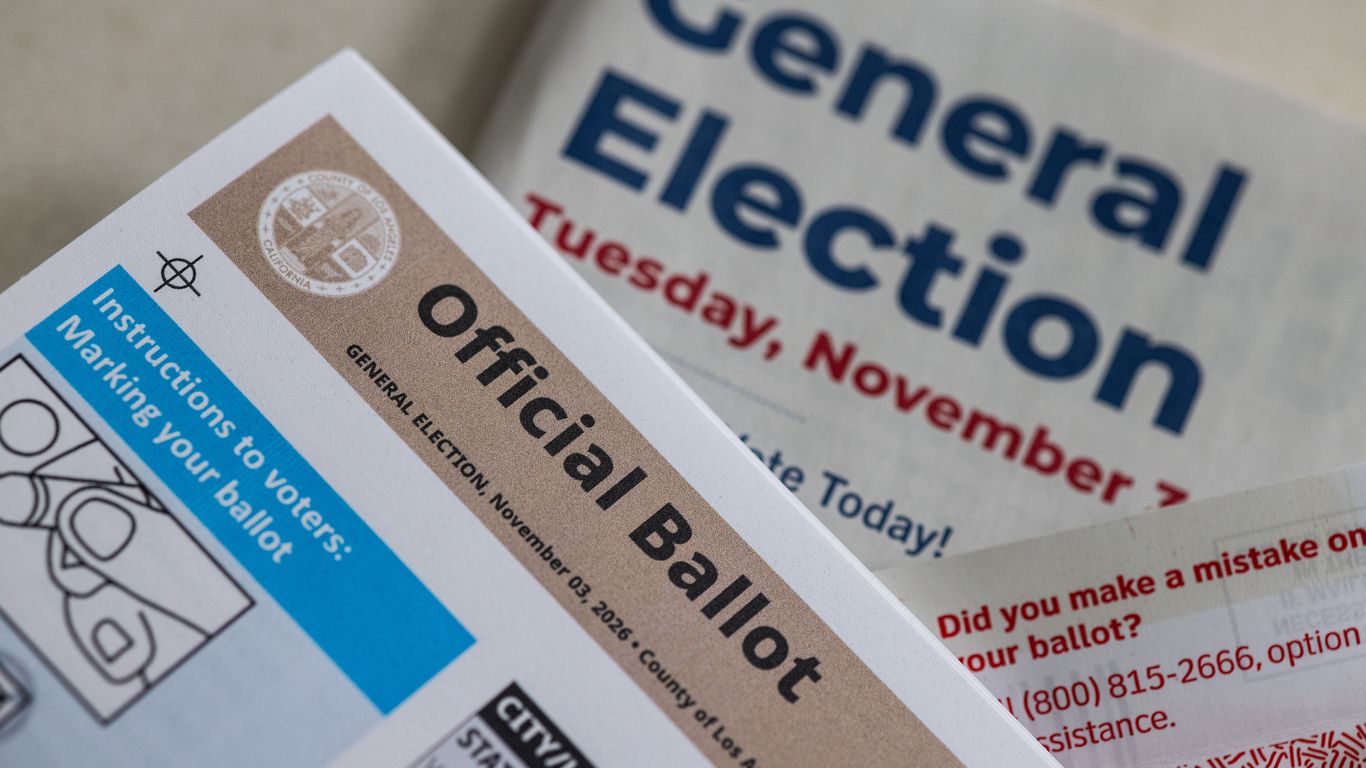
A federal appeals court rejected the Justice Department's emergency bid to set aside mail ballots tied to more than 20,000 California voters the Trump administration suspects are noncitizens. Why it matters: The 2–1 ruling leaves California's election procedures intact just days before the midterms, with the judges citing doubts about the DOJ's voter list and the risk of disenfranchising eligible voters. The ruling is a major setback for a DOJ that has doubled down on unsubstantiated claims of widespread voter fraud in the Golden State. What they're saying: The majority cited the lower court's finding that the DOJ's process for identifying suspected noncitizens was "not credible," undermining its claims. "Granting [the United States]'s request would provoke catastrophic change, upending the administration of the election," it wrote, quoting the district court's finding. "There is a material risk that granting the United States its requested relief would result in disenfranchisement and could jeopardize [Los Angeles] County's entire election." The other side: Ninth U.S. Circuit Judge Patrick Bumatay dissented, arguing that counting votes from noncitizens dilutes the power of citizens. "The federal government proposes a modest remedy—stopping California from mixing the ballots of citizens and suspected noncitizens. This solution would not cancel any vote but would allow time to verify the eligibility of suspected noncitizens." The White House and the Justice Department did not immediately respond to Axios' request for comment. Catch up quick: The DOJ sued California in mid October for refusing to segregate the ballots it asserted were sent to noncitizens. A district court denied the request for an injunction, deciding that the federal law the DOJ was relying on to bring the suit did not supersede existing state law. The Trump administration appealed, leading to Friday's decision. The administration can now appeal again to the Supreme Court. Zoom out: Trump has continu
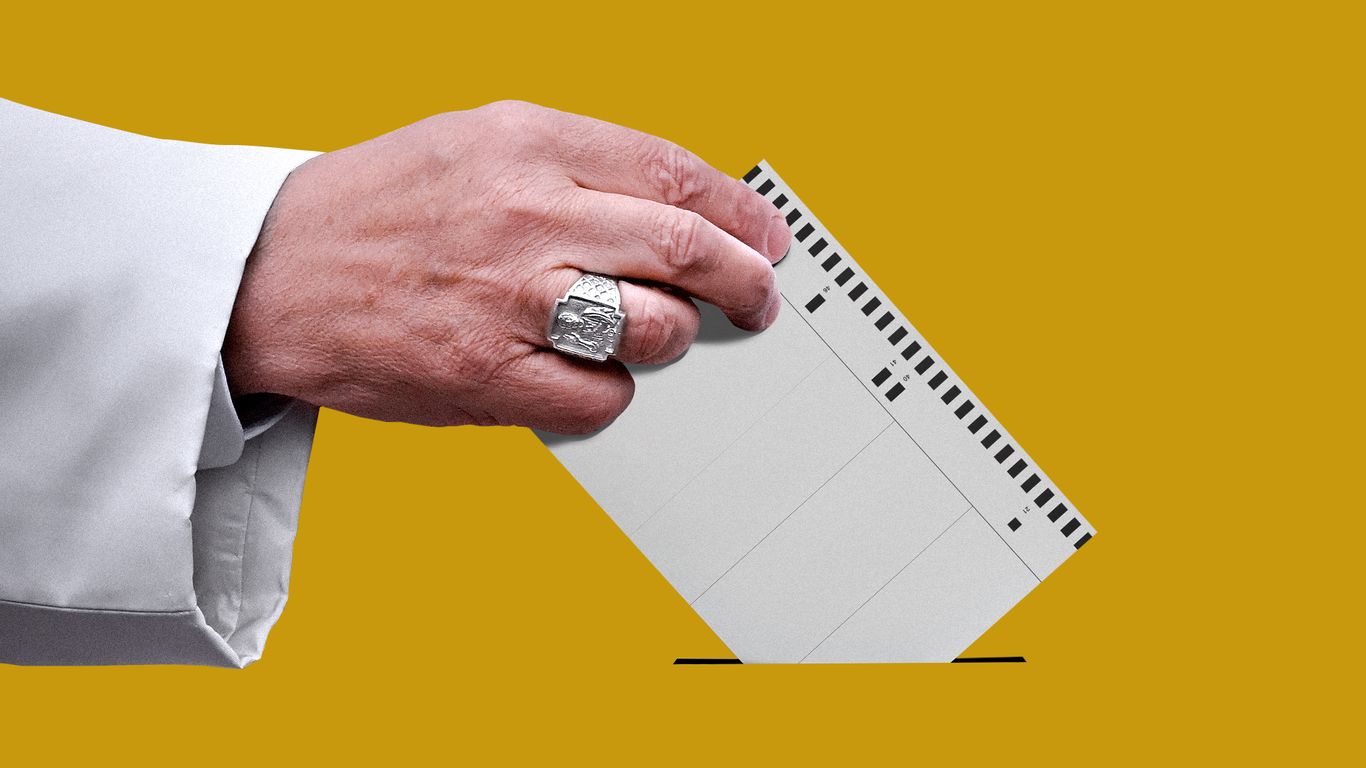
Pope Leo may be the first pope to vote in a national election, Vatican experts said.
Pope Leo XIV voted in the 2026 Illinois midterm elections using a mail-in ballot, the Vatican confirmed Friday, becoming the first sitting pope known to vote in an American election. Why it matters: The pontiff, an American citizen, may be the first to vote in any secular democratic election. Joliet radio station WJOL first reported Oct. 23 that Leo had requested a mail-in ballot. What they're saying: The pope believes "in the right and the duty of citizens to participate in democratic processes," the Holy See Press Office said in a statement . The Vatican said Leo "has exercised his right to vote as a United States citizen, whenever he was eligible to do so" and that "in keeping with this long-standing practice of civic participation, he has submitted his mail-in ballot in Chicago." Pope Leo also voted whenever eligible during his years living in Peru, the Vatican's statement said. Zoom in: The pope's ballot includes Illinois Gov. JB Pritzker 's reelection bid, the race to succeed Sen. Dick Durbin and a House contest between Democratic Rep. Jonathan Jackson and Republican Christian Maxwell. Jackson, the son of the late Rev. Jesse Jackson, won his district handily in 2024. The pontiff's ballot will have to travel from Vatican city to Joliet, Illinois. Worth noting : Leo has voted in both Democratic and Republican primaries in the last two decades. Leo requested Democratic primary ballots in 2008 and 2010 when he lived in heavily blue Cook County, per the AP. He then started voting in GOP primaries in subsequent elections when he moved to the more conservative Will County, where he is currently registered to vote. He's also voted as an undeclared voter off and on in recent elections, according to the Will County clerk's office. His party affiliation is currently undeclared. Zoom out: The pope, who has been recovering from lung cancer surgery , met with Chicago-area advocates Wednesday who are supporting immigrants at an ICE facility in Broadview , Illinois. He's also
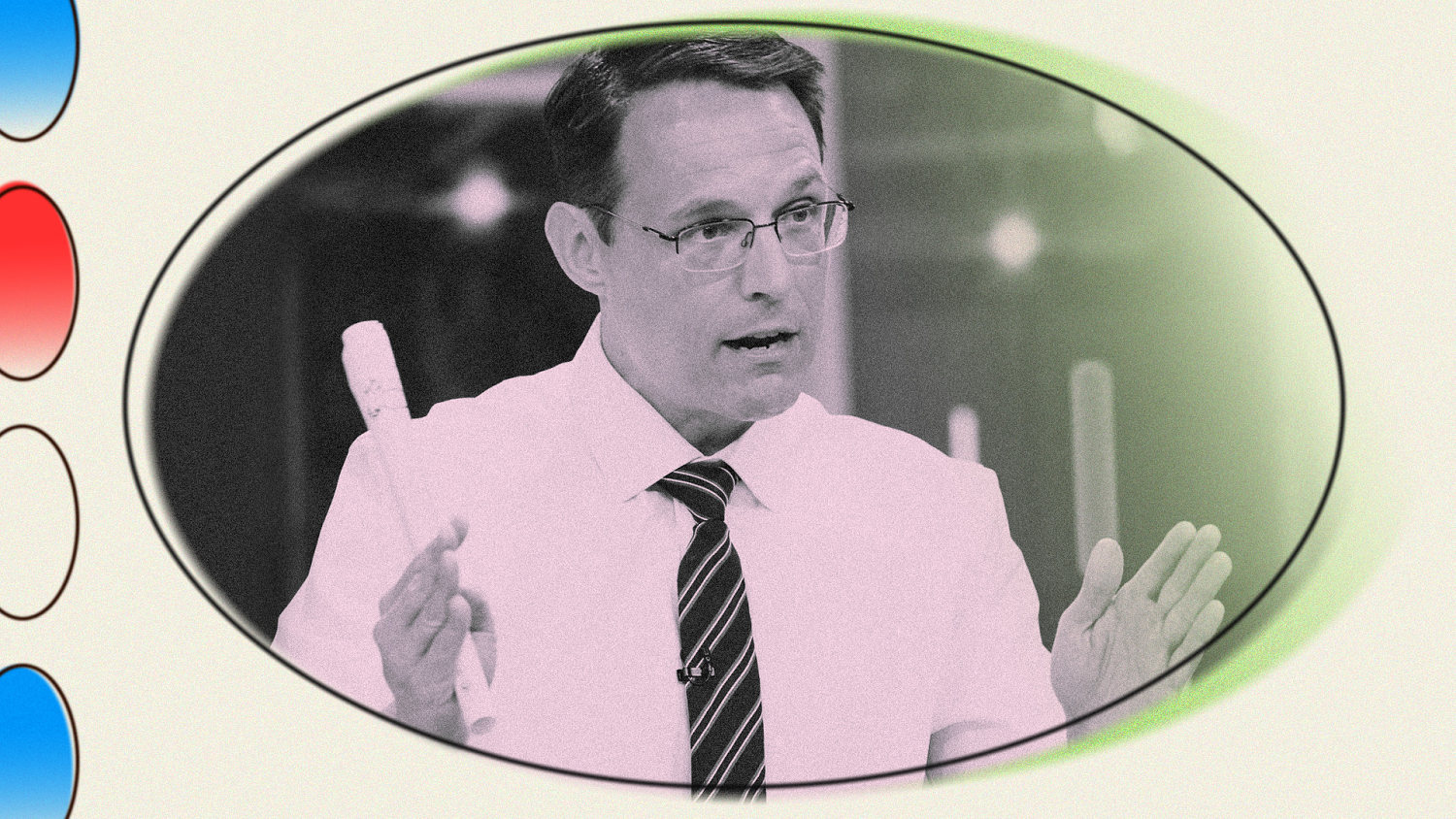
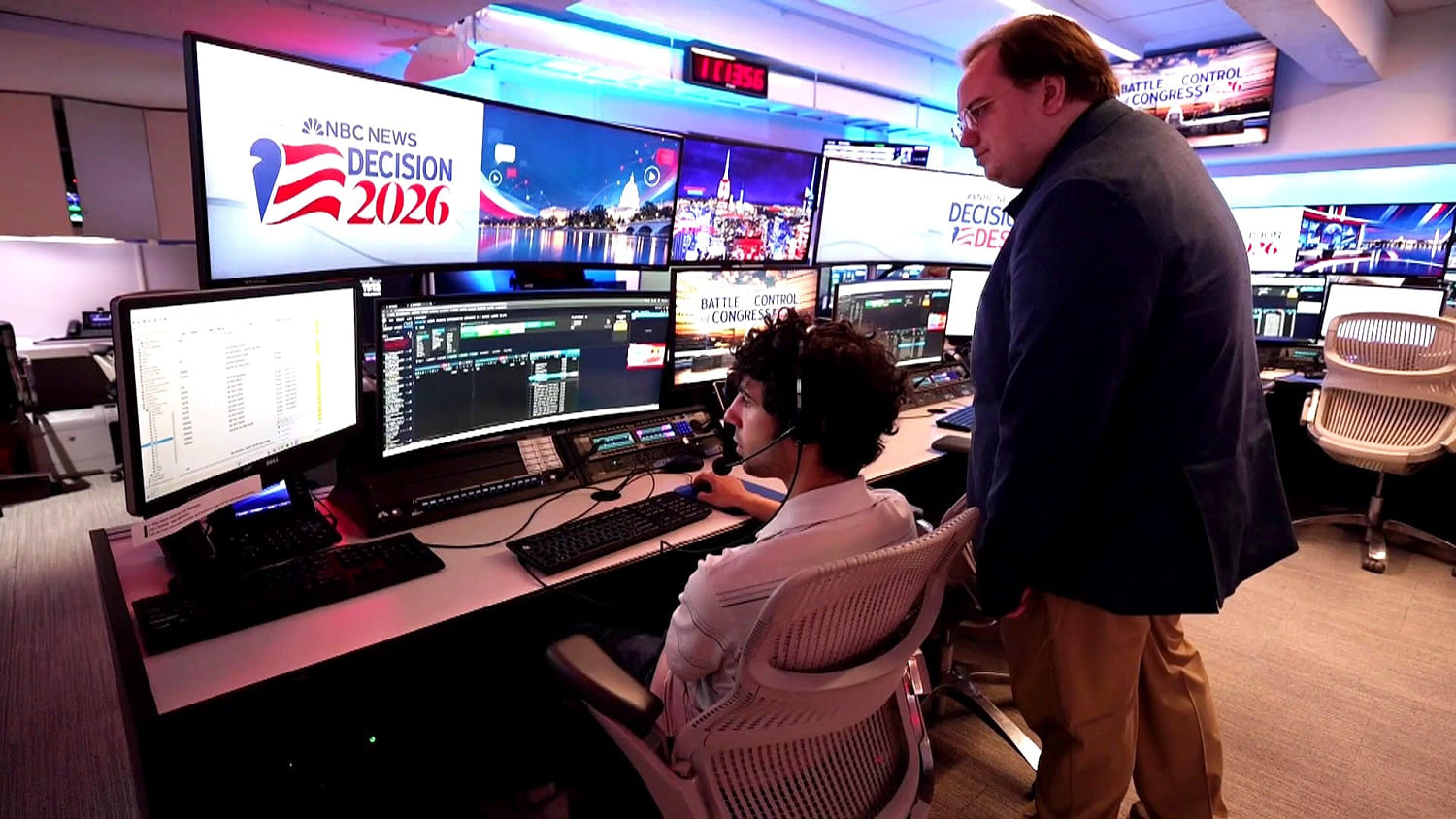
Follow NBC News Chief Data Analyst Steve Kornacki on camera and behind-the-scenes as he breaks down real-time vote tallies for the 2026 midterm elections.
The president cancelled the events in favor of tele-rallies, as Republicans face a fight to retain control of Congress Donald Trump cancelled, and then promptly uncancelled, two in-person rallies in Kansas and Iowa this weekend as polls suggest US midterm election races in the previous Republican strongholds could go down to the wire. On Thursday, just five days before election day, the Republican National Committee (RNC) announced the president would no longer host the Kansas and Iowa rallies and instead participate in “a large number of tele-rallies”. The RNC claimed it felt it was in a “strong position” in Kansas and Iowa. Continue reading...
Business is booming for two biggest US oil companies, with both benefiting from higher prices and record production ExxonMobil and Chevron both reported better than expected quarterly results on Friday as the oil majors benefited from higher prices and record production. The boon for oil companies has simultaneously been a major pain point for consumers, who say the higher cost of living, especially gas prices, will affect how they vote in the upcoming midterm elections that will determine control of Congress. Continue reading...
Federal prosecutors have targeted President Trump’s political opponents and sued states over election administration just before the midterms. Devlin Barrett, a reporter for The New York Times, explains how this activity is compared with the Justice Department’s usual election-year behavior.
America's corporate titans greeted President Trump's 2024 victory with open checkbooks , 12-figure investment pledges and fawning tributes to his coming "Golden Age." Two years later, on the eve of a potential blue wave, Democrats are preparing to greet those same executives with a stack of subpoenas . Why it matters: The CEOs who staked their reputations and fortunes on MAGA's staying power could spend the final two years of Trump's presidency defending their dealings under oath. The big picture: A Democratic House would carry its campaign against billionaire power and corruption deep into corporate America, scrutinizing the relationships between Trump's White House and the executives who courted him . Corporate leaders now face a delicate balancing act: rebuilding ties with Democrats while avoiding retaliation from a president who still controls federal contracts, tariffs and regulators. Already, companies that scrambled to dismantle DEI programs or fund Trump's ballroom are hiring Democratic lobbyists , pushing back against the administration and rediscovering the virtues of bipartisanship. Zoom in: Elon Musk is taking a more confrontational approach. The billionaire, who has poured $445 million into Republican super PACs this election cycle alone, has threatened retaliation against Democrats preparing to investigate his sprawling business empire and tenure in the White House. DOGE: As head of Trump's short-lived cost-cutting initiative, Musk gutted USAID, drove mass federal layoffs and gave his team access to sensitive government systems. Investigators want to know whether his companies benefited from contracts or regulatory decisions while he wielded power inside the White House. Ukraine: A fierce critic of President Volodymyr Zelensky, Musk ordered Starlink restrictions that disrupted Ukraine's military satellite communications. Democrats are now demanding records of his communications with Trump and Vladimir Putin . Musk responds to reports that Democrats pla
Early race counts on election night can sometimes differ sharply from the final outcome. Christine Zhang, our election data reporter, explains the reasons behind red and blue “mirages.”
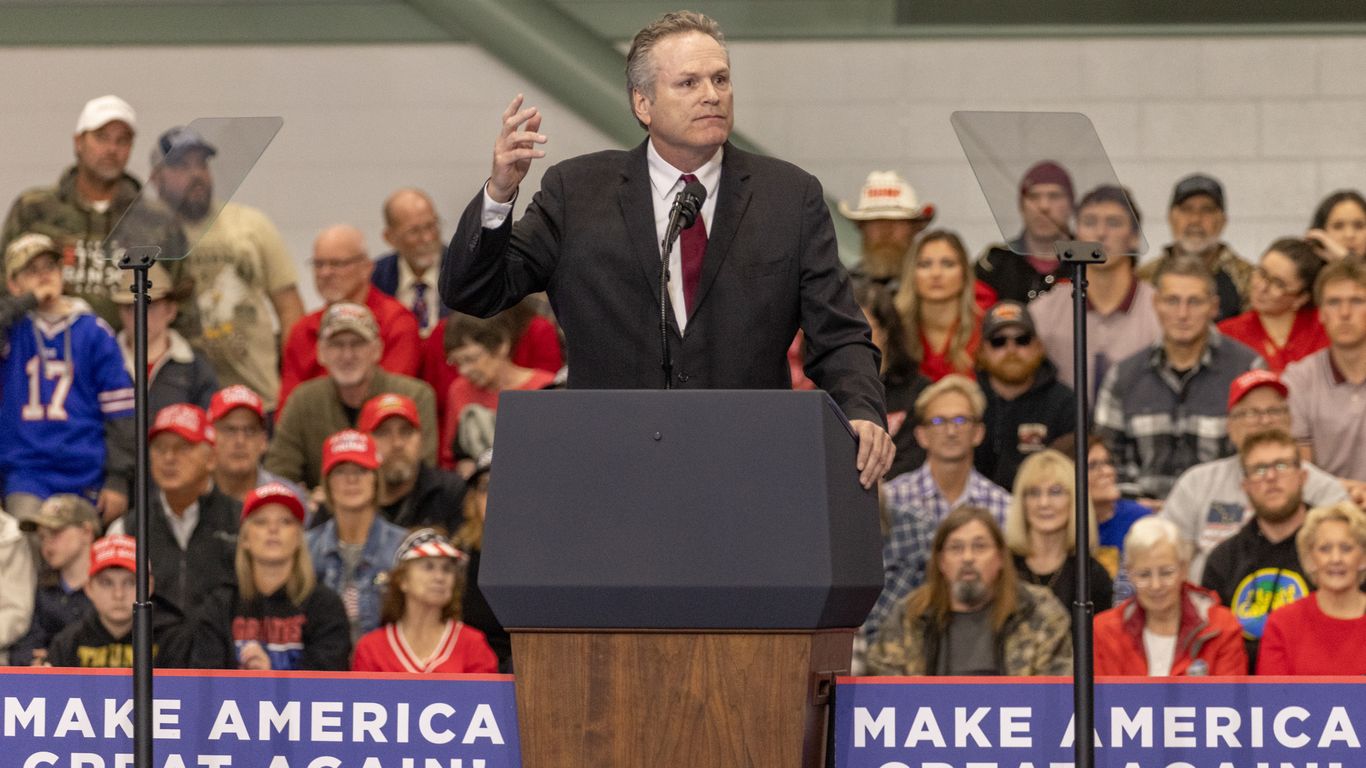
Alaska Gov. Mike Dunleavy (R) suggested Thursday the state could withhold certification of the U.S. Senate election results if Democrat Mary Peltola wins. Why it matters: Withholding certification could complicate Peltola's path to the Senate, as Republicans investigate allegations that Democrats recruited a candidate with the same name as GOP incumbent Dan Sullivan . Driving the news: Asked during an interview with NewsNation whether he would certify the election if Peltola wins while the matter remains under investigation, Dunleavy stopped short of committing to do so. "We're going to investigate it. We're going to follow the law," Dunleavy said, adding that any findings of illegal conduct "may in fact impact whether somebody is seated in the U.S. Senate." He said the matter would involve discussions with Senate leadership and that officials would need more information before determining "whether we send something down or not." Pressed on why he had not given an unequivocal yes, Dunleavy said: "We're going to ensure that we aren't going to send a scam to Washington." For the record: Peltola has denied any involvement in the alleged scheme. What they're saying: "Dunleavy's threat to overrule the will of Alaskan voters exemplifies what Alaskans hate about partisan politics and shows why he's the least popular governor in the country," a spokesperson for the "Alaskans for Mary" campaign said in an emailed statement Thursday night. "Mary won't be intimidated by Dunleavy, Sullivan, or any of their DC allies who are trying to steal this election from Alaskans before votes are counted — and she's going to win this race by focusing on solutions to Sullivan's price hiking policies and putting Alaska first." The big picture: House Oversight Committee Chair James Comer (R-Ky.) is investigating allegations that Democratic operatives recruited another candidate named Dan Sullivan to draw votes away from the Republican incumbent. President Trump accused Democrats and Peltola's
Democrats' main Senate super PAC is privately telling top donors that Texas offers their best shot at flipping a deep-red Senate seat, followed by Ohio, where the race remains close. Senate Majority PAC also sees victories in Iowa and Alaska as within reach, though the outcomes could take longer to become clear. Why it matters: Democrats are increasingly confident about Election Day on Tuesday — and sharing their qualified optimism with their biggest donors. To retake the Senate, Democrats need to win two of those four states — all of which Trump won by double digits in 2024 — flip North Carolina and Maine, and avoid an upset in Michigan. JB Poersch, president of Senate Majority PAC, projected confidence that Democrats will wrest control of the Senate from Republicans during a private donor briefing this week as he walked through the races state by state. He also reminded donors that Kansas, where even Republicans are deeply worried, is a state Trump won by roughly 16 points in 2024. But it's in play . What they're saying: "This matches what we've been saying publicly and privately for weeks. There are signs of optimism in Texas, but it remains a toss-up, as do Iowa, Ohio and Alaska," said Lauren French, a spokesperson for SMP. "There is positive movement for Democrats, but it is critical to remember that every seat on the battleground map voted for Donald Trump by double digits," she said. "These are deep red states and we're focused on bringing them over the finish line so the Senate can work to provide real relief to families who are being crushed by the cost-of-living crisis." The big picture: Texas hasn't elected a Democratic senator since Lloyd Bentsen in 1988. Democrats thought they'd end the drought in 2018 and let themselves fall for then-Rep. Beto O'Rourke, who lost to Sen. Ted Cruz by 2.6 percentage points. Four years later, O'Rourke tried again to prove a Democrat could win statewide in Texas. He lost the governor's race by nearly 11 percentage points. T
The 2026 midterms already face a messy pileup of lawsuits and ballot battles, raising fears about election confidence before voters even finish casting ballots . Why it matters: Election challenges aren't unusual, but as the Trump administration continues to make false claims about widespread voter fraud, officials are juggling fights over voter lists, mail-ballot rules and election certification challenges. What they're saying: "The types of challenges that we are seeing pre-election, this close to election day, are very unusual, and mostly because they are coming from the federal government," Jonathan Diaz of the Campaign Legal Center told Axios. "These lawsuits are frivolous," Diaz said, adding they could "create doubt in the minds of the public about the legitimacy of the election process." The other side: The White House referred Axios to comments President Trump made to the media. The Department of Justice did not respond to Axios' request for comment. Here's some of the ways chaos and uncertainty have shaped the 2026 midterms: California In the Golden State, the Trump administration asked state election officials to set aside ballots from roughly 20,000 registered voters whom the DOJ suspects are noncitizens. A federal judge rejected that push Wednesday night, warning that the administration lacked sufficient evidence to justify potentially disenfranchising eligible voters. The judge noted that the DOJ had made similar claims in neighboring Nevada, where election officials determined that 185 voters the DOJ had flagged as noncitizens were actually U.S. citizens. Diaz told Axios that, from his perspective as a voting-rights advocate, the California battle is "not a real lawsuit. It's a political press release that they just happened to submit to the court." The other side: The White House directed questions about the ruling to remarks Trump made Thursday, in which he said "California is very corrupt," and the state's elections are "extremely corrupt." He did n
Alaska's tight Senate race is facing a new controversy over two candidates named Dan Sullivan appearing on the ballot — a twist that's drawn attention from President Trump . The big picture: The controversy is adding uncertainty to one of the nation's most competitive Senate contests, with control of Congress on the line in next week's midterm elections. Catch up quick: The New York Times reported this week that Democratic operatives with ties to Mary Peltola's Senate campaign helped recruit a candidate named Dan J. Sullivan to challenge Republican incumbent Dan S. Sullivan. Trump accused Peltola and Democrats of election fraud and called for criminal prosecution, though the Times did not establish that any laws were broken. Alaska Gov. Mike Dunleavy ordered an investigation into Peltola's campaign over the NYT report. House Republicans are also launching an Alaska Senate race probe. Though the presence of two Sullivans in the Senate race has been known for months, the Times' report adds a new wrinkle to a dispute that's already reached the courts. Here's what to know about the controversy. The same-name Senate race controversy The controversy centers on two candidates with nearly identical names appearing on Alaska's Senate ballot: Republican incumbent Dan S. Sullivan and unaffiliated challenger Daniel J. Sullivan Jr. The ballot will show registered Republican "Sullivan, Dan S." and unaffiliated candidate "Sullivan, Daniel J. Jr." Peltola and Republican Gerald Heikes will also be on the ballot. The challenger initially filed as a Republican but later changed his registration to undeclared. He will appear on the ballot without a party label. Flashback: Concerns about the duplicate names have existed for months. In June, a top Alaskan election official ruled that candidate Daniel J. Sullivan was ineligible to run on the state's primary ballot. The official said she found the candidacy was "filed with a purpose to confuse or mislead and to thereby compromise the ballo
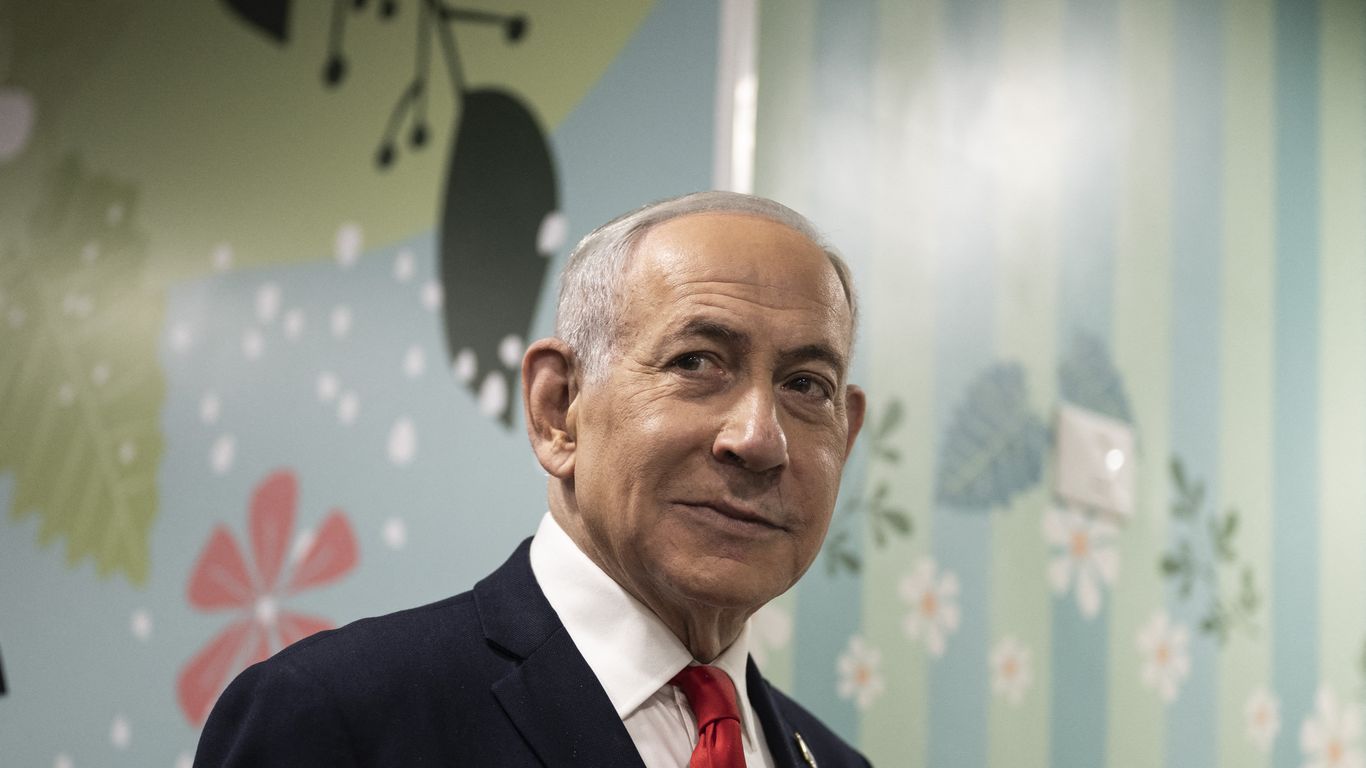
After his far-right coalition lost 11 seats in the election, Israeli Prime Minister Benjamin Netanyahu is trying to discredit the results by claiming there was mass voting fraud in Arab communities. Why it matters: Netanyahu appears to be trying to spook the opposition bloc out of cooperating with Arab parties to form a new government. But the opposition is concerned he has an even more ambitious goal: To prevent the results from being certified at all. That would block the swearing in of a new parliament, in which he would lose his majority. Driving the news: Netanyahu and his Likud party started the campaign to delegitimize the Arab vote days before the elections. Half of Netanyahu's social media posts on Election Day cast suspicion on the unprecedented turnout in Arab communities, an apparent attempt to drive his supporters to the polls. Arab voters cast ballots in historic numbers, winning 19 seats between their two parties. On Wednesday, Netanyahu's Likud party issued a statement claiming the "elections were stolen" by the Arab parties through bribes and fraud. Its claims were based on the arrest of three activists from the Arab Ra'am party who were suspected of paying a small number of voters in one of the Arab cities. The Israeli police said there was no evidence to support Likud's claims of a "stolen" election. Behind the scenes: The situation escalated dramatically on Thursday when a letter sent to the director of the Shin Bet domestic security agency was leaked to Israel's Channel 12. It was written by the supreme court judge who heads the Central Elections Committee. The judge ordered the Shin Bet director to immediately investigate suspicions of election interference by foreign countries and submit conclusions within a week. Shortly after the letter leaked, Israeli media outlets identified Qatar as the country in question. The allegation is that it funneled money to one of the Arab parties to propel turnout in their communities. Over the past year, sever
TODAY’s Savannah Guthrie goes behind-the-scenes with the NBC News team tasked with calling election night’s pivotal races from coast-to-coast.
President Trump seems to think he can save a vulnerable Ohio Republican senator's ass by talking about how strong it is. Why it matters: Republicans are getting hammered over the war in Iran, gas prices and data centers. But they're playing along with Trump's ogling of male candidates, which he's described as an election strategy. "I don't do this with men very often. I started examining his body because I didn't know he was a great athlete. And I looked and I watched up and down and I looked at his ass," Trump said of Sen. Jon Husted (R-Ohio) at an Ohio rally. "My wife and I have a good sense of humor, and we know he's doing all he can to help us win," Husted told Axios. "We have made sure to hit the gym during the busy campaign to uphold the high standards the president has set for us." Zoom in: In five rallies over three weeks across the country, Trump gave a head-to-toe appraisal of his most vulnerable Republican senator. "His ass was like a big piece of muscle," Trump said in Michigan last week. "Then I looked at his legs and I said, 'Man, his feet are big,' " Trump said in North Carolina. Polling has shown Husted narrowly behind or tied with former Sen. Sherrod Brown (D), and Republicans view him as the most vulnerable GOP incumbent. Zoom out: Husted is getting the most love, but he's not alone. "You know, he's a very handsome guy," Trump said about Sen. Tim Sheehy (R-Mont.) at a Montana rally earlier this month. "I like the white hair, I like the big, strong build. Big, strong guy." Trump said of Rep. Mike Collins (R-Ga.), who is running for Senate in Georgia. Trump called him "all man." "I actually think that Rick Jackson's a very handsome, distinguished, beautiful-looking guy," Trump said about the Republican gubernatorial candidate in Georgia. "Look at this beautiful guy," Trump said of House candidate Ed Gallrein (R-Ky.). Trump called him: "Central casting." Between the lines: Senate Majority Leader John Thune (R-S.D.) has also joined the fun: "I know tha
Democrats will happily tell you how good they feel about retaking the House on Tuesday — just as soon as they stop hyperventilating into a paper bag. Why it matters: They've been burned too many times on Election Day to feel anything more than "nauseously optimistic," as one House Democrat put it to Axios. The polls point to a decisive Democratic victory on Nov. 3, yet fears of a massive polling error or some other eleventh-hour disaster are giving party members sleepless nights. "One woman at a rally in New Jersey told me last week that she was 'nauseously optimistic,'" Rep. Jamie Raskin (D-Md.) told Axios. "That may capture a lot of people's last-minute jitters." A House Democrat who has spoken to leadership told Axios: "They feel optimistic. You know, guarded. Guarded optimism. Where we're going to end up, you never know." State of play: Democrats are targeting dozens of Republican-held seats they think could flip, some of which President Trump carried by 10, 15, even 20 percentage points in 2024. Democrats' House Majority PAC, for instance, went on the air Wednesday in retiring Rep. Elise Stefanik's (R-N.Y.) district, which Trump won by 21 points. They also began spending against Rep. Mike Flood (R-Neb.), who won his last reelection with 60% of the vote. HMP is so bullish it has moved money out of the races to replace retiring Reps. Don Bacon (R-Neb.), Chuck Edwards (R-N.C.) and Darrell Issa (R-Calif.), which they believe Democrats are on track to win handily. "I am cautiously optimistic we win between 20-25 seats," Rep. Ro Khanna (D-Calif.) told Axios. Democrats' landslide scenario puts them closer to 40 or 50 pickups, which would be a historic night for the party. Yes, but: Mid-decade redistricting in Republican-controlled Southern states is all but certain to cut into those gains. The GOP is expected to easily flip redrawn seats in Tennessee and Louisiana where the incumbent Democrats chose to retire rather than face uphill reelection battles. Democratic lead
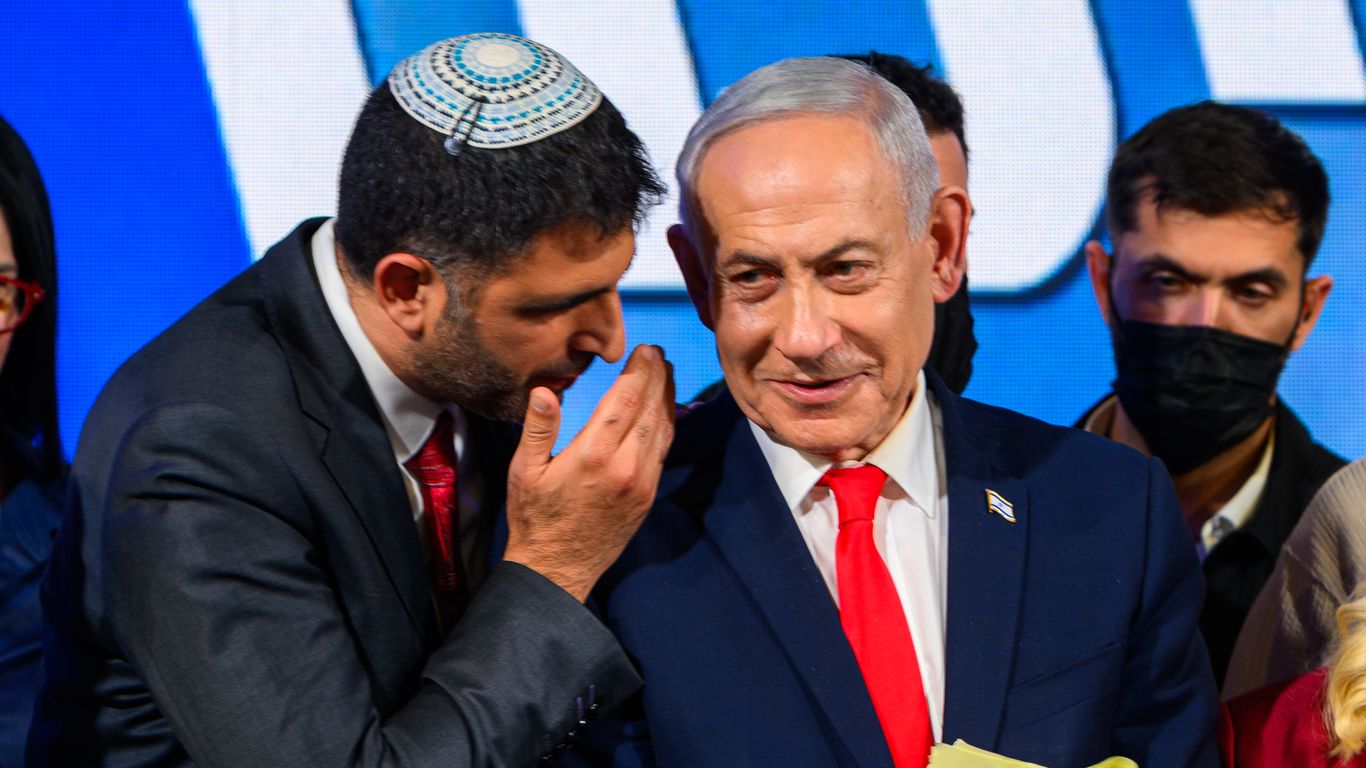
TEL AVIV, Israel — Israeli Prime Minister Benjamin Netanyahu's electoral coalition opened a sizable lead over Gadi Eisenkot's opposition bloc with 85 percent of the vote counted. But while Netanyahu outperformed exit polls, which had Eisenkot's opposition coalition ahead, neither bloc will clear a 61-seat majority. That sets the stage for weeks of wrangling over the country's next government. Why it matters: Netanyahu will emerge from the election down but not out. His bloc is on pace to secure 53 seats — 11 fewer than he currently commands. But Eisenkot's bloc trails with 48 seats, leaving both men without a clear mandate to lead a government. While Eisenkot could theoretically swear in a government with the support of Arab parties — which are on track to secure a record-breaking 19 seats — such a scenario is highly unlikely. The intrigue: The actual vote count significantly boosted Netanyahu's standing compared to initial exit polls, which showed Eisenkot's bloc ahead. President Trump told Axios in a brief interview Wednesday that at first he received "horror reports" about Netanyahu's prospects. But "he's in pretty good shape now," Trump said. "I heard my endorsement made a big difference for Bibi," he added. Asked whether he is going to get involved in an effort to form a Netanyahu-led unity government, Trump said he hadn't thought about it. "I will take a look," he said. State of play: There are 500,000 votes left to be counted, from soldiers, diplomats, prisoners and others who voted outside their designated area. These votes could slightly shift the blocs' seat totals or the allotment of seats within each bloc. But they are unlikely to change the overall balance of power. Driving the news: Israeli President Isaac Herzog will begin consulting next week with the different parties before issuing a mandate to either Netanyahu or Eisenkot to form a government. "We must do everything possible, especially after yesterday, to avoid another round of elections. So I ex
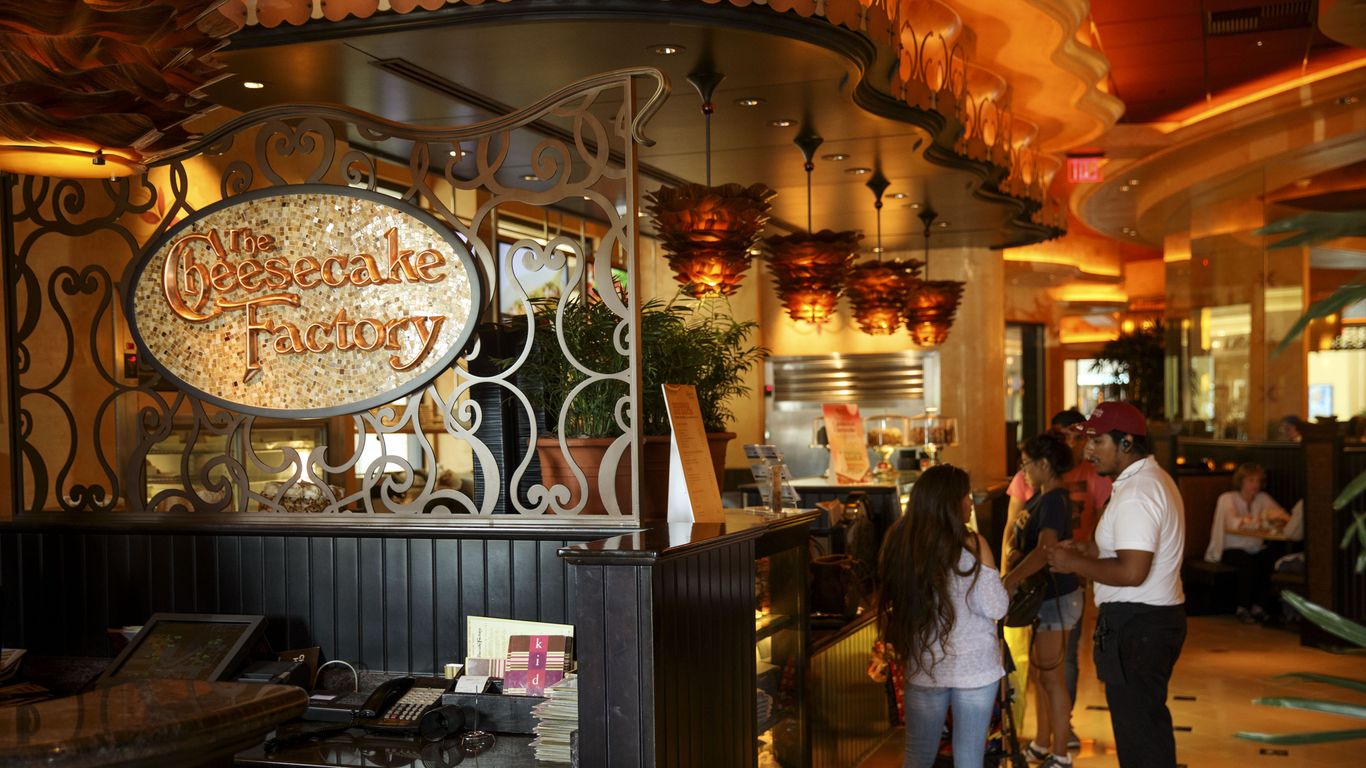
With less than a week until a potentially historic midterm election , the political discourse is being dominated not by war or seismic shifts in technology, but by the Cheesecake Factory . The big picture: Culture wars regularly swarm American political discussions, especially when the jibes are personal. Former President Obama's passing joke over the weekend about Cheesecake Factory decor did just that — by criticizing President Trump 's personal taste and style. "He's got the White House looking like Saddam Hussein opened a Cheesecake Factory," Obama said, poking fun at the president's controversial White House renovations . Zoom in: John Murphy, professor emeritus at the University of Illinois Urbana-Champaign who studies political rhetoric, tells Axios that the first time he heard Obama's comment, he "really did think, 'this is going to go somewhere.'" That's both because of the messenger and the butt of the joke: Obama "can get under Trump's skin like no one else in the world can," he says. Obama knows all too well how seemingly trivial moments can blow up; in 2014, he wore a tan suit instead of a black one to discuss foreign policy, and years later his sartorial choices remain a political talking point. The tan suit has its own Wikipedia page , and still nets pop culture references . State of play: Days after Obama's quip, the news cycle and social media are still serving up the joke, and the White House posted "Lo-fi" beats accompanied by a cartoon image of Trump in front of a Cheesecake Factory. Conservative critics used the jab to paint Obama as elitist. Treasury Secretary Scott Bessent , a multimillionaire, criticized Obama outside a Cheesecake Factory, saying he "had a great meal, and I would tell the Martha's Vineyard set to give it a try." Murphy notes that framing comes from a classic red v. blue playbook to paint Democrats as "elitist." "It's a conscious strategy, I think, on the part of conservative media to gin up culture-war arguments," he says. Th
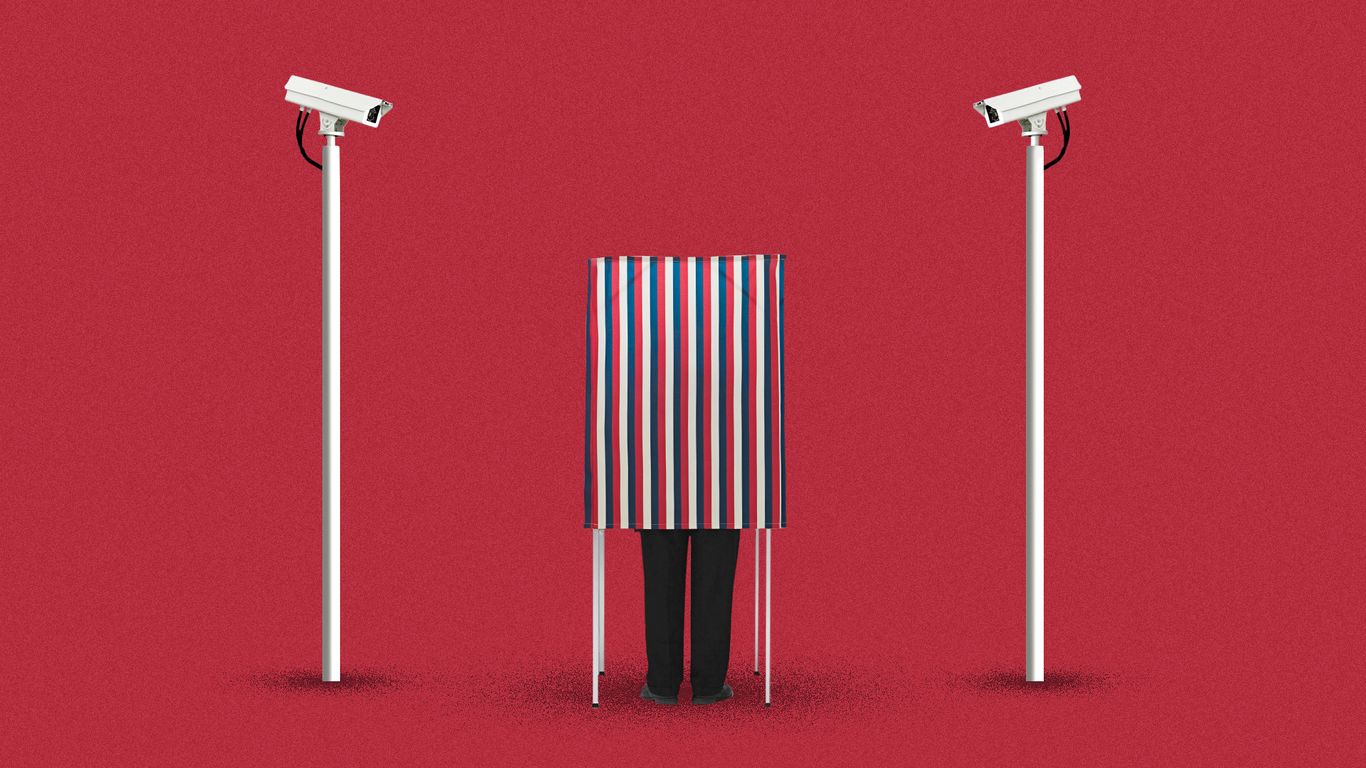
Some of the biggest vulnerabilities in election security are lying in plain sight. Why it matters: There's no credible evidence that voting-system vulnerabilities have been exploited to change election results. But researchers have found isolated flaws that threaten ballot secrecy, accurate vote recording and independent verification of results. The big picture: Voter-marked paper ballots and rigorous audits are the gold standard for trustworthy elections, election-security researchers and activists tell Axios. Researchers have challenged unfounded claims that elections were stolen through hacking while also warning against dismissing real vulnerabilities in voting systems. "A vulnerability is not an exploit," Philip Stark, a retired UC Berkeley statistics professor who developed an audit protocol for checking paper ballots, said at a recent conference. "You can leave a key under your doormat, and that doesn't mean someone takes the key and opens your door." Zoom in: Election security experts interviewed by Axios found these vulnerabilities in parts of the U.S.: 1. Paperless voting: Louisiana is the last remaining state to use paperless voting machines statewide on Election Day. Voters press buttons to select their candidates, and the machines record their votes electronically without producing a paper ballot. That leaves no independent record to check whether votes were counted correctly. Most other states retired the machines after researchers exposed their vulnerabilities to hacking and the inability to independently audit their results. Election security expert and computer scientist J. Alex Halderman, of the University of Michigan, called Louisiana "the dinosaur of American elections." Louisiana's secretary of state's office declined an interview request, but in a press release said the state is expected to award a new election equipment contract at the end of the year. 2. Ballot-marking devices (BMDs) let voters select candidates on a touchscreen before printi
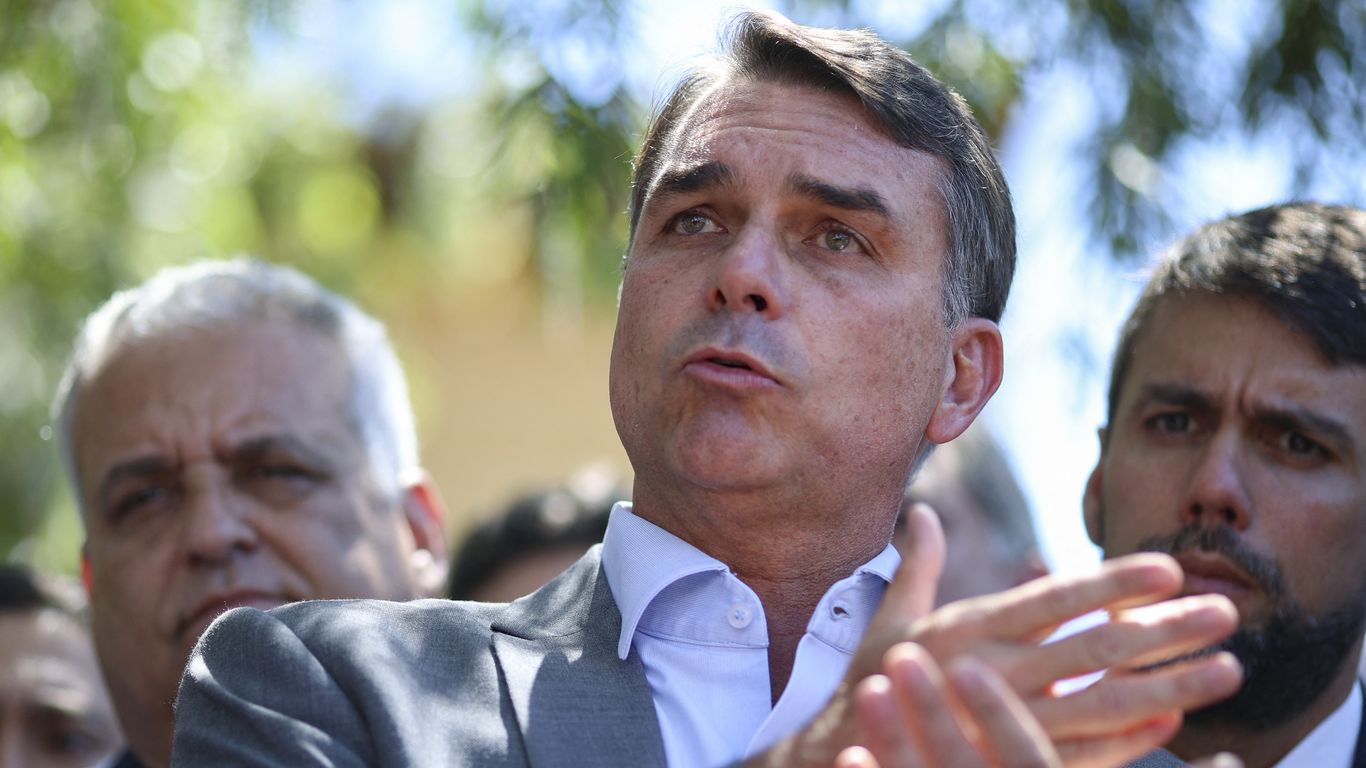
The U.S. government is granting visas to Flávio Bolsonaro and his family following his defeat in Brazil's presidential election , a senior Trump administration official tells Axios. Why it matters: The move comes days after Brazilian President Luiz Inácio Lula da Silva defeated Bolsonaro, the son of former President Jair Bolsonaro , in a closely watched election. The latest: Bolsonaro has arrived in Florida after leaving Brazil despite a court order requiring him to surrender his passports, according to multiple media reports . Driving the news: Following the election , Brazil's Supreme Court ordered Bolsonaro on Monday to surrender his passports and barred him from leaving the country. The order relates to an ongoing investigation into alleged money laundering. Bolsonaro has denied any wrongdoing. Trump administration officials said they would not comment further until the Bolsonaro family is safely in the U.S. The big picture: President Trump and his administration have repeatedly backed the Bolsonaro family, with the president denouncing the prosecution of the elder Bolsonaro as a " witch hunt ." Jair Bolsonaro was convicted last year by Brazil's Supreme Court of plotting a coup to overturn the 2022 election and was sentenced to 27 years in prison , though he remains under house arrest due to health problems. Trump's administration has targeted Brazilian Supreme Court Justice Alexandre de Moraes , who oversaw the prosecution, with visa restrictions and, separately, sanctions that were later lifted. The Trump administration also imposed steep tariffs on Brazilian imports in 2025, escalating tensions between Washington and Brasília. Go deeper: Brazil's election ignites MAGA's midterm warnings Editor's note: This story has been updated with additional information throughout.
TEL AVIV, Israel — Prime Minister Benjamin Netanyahu's far-right coalition is running nearly even with Gadi Eisenkot's opposition bloc in Tuesday's historic election — but both are short of a 61-seat majority, according to Israeli exit polls. Why it matters: Political stalemate is the most likely outcome of the election, with Netanyahu weakened but neither side having a clear path to forming a coalition government. Arab parties are poised to win 18 to 19 seats in what would be an unprecedented electoral achievement. While theoretically Eisenkot's bloc could try to swear in a minority government supported by the two Arab parties, that scenario looks unlikely. The numbers: Eisenkot's bloc emerged with a small lead in early exit polls, but Netanyahu's coalition closed the gap as the night wore on. The exit polls show Netanyahu's bloc with 51-52 seats and Eisenkot's bloc with 49-51 seats. Netanyahu's Likud party is projected to win 27 seats versus 21 seats for Eisenkot's Yashar party. State of play: A close outcome could leave the country in a state of limbo, with Netanyahu likely staying on as a caretaker prime minister at the helm of the executive branch and the opposition led by Eisenkot controlling the Knesset. That scenario could last until new elections are held as early as April. The two sides could try to break the deadlock by forming a unity government between Netanyahu and Eisenkot. But such a scenario is also improbable considering that none of the opposition parties will agree to sit in a Netanyahu-led government. What they're saying: Eisenkot claimed victory in a speech after midnight Israeli time. He said if Netanyahu was a "decent leader," he would exit the political stage after the public voted for change. During the speech, Eisenkot alluded to the possibility that the prime minister would launch military action before a new government is seated. "Netanyahu: don't dare use Israel's security for your political needs," Eisenkot said. He emphasized that the