

The US president sees Europeans as the mirror image of his ‘woke’ domestic foes. They should brace for further betrayal this winter Europeans have greeted the blue wave that crashed down on Donald Trump and his Republican party with jubilation and relief . Jubilation, because Trump’s second presidential administration has been the most destructive in the history of the transatlantic relationship. His disdain for Europe and his evident delight in attacking its governments – in particular that of Ukraine – have been hard to swallow. Relief, because the midterm election results confirm that Europeans are not unique in being appalled by Trump’s actions: a large majority of Americans are too. I was in Washington immediately after the vote, and the mood was one of excitement and a newfound confidence. And like many Americans, in these results Europeans see hope that US democracy can be saved, American foreign policy moderated and the transatlantic partnership revived. Nathalie Tocci is a professor of practice at the Johns Hopkins School of Advanced International Studies, Europe, and a senior fellow at Bocconi University’s Institute for European Policymaking Continue reading...
Results for “deportation policy”
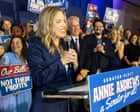
Election wins of Annie Andrews, Abdul El-Sayed and more who ran on healthcare issues are viewed as sign of home as Trump administration unravels US health policy Public health leaders and politicians who made healthcare a central part of their platforms swept into office in the US midterm elections last week, setting the stage for national, state and local changes. Voters, faced with an unprecedented rise in vaccine-preventable diseases such as measles, alongside devastating outbreaks of foodborne illnesses , chose national candidates who prioritized public health, healthcare affordability, reproductive health and the impeachment of Robert F Kennedy Jr , among other key issues. Continue reading...

There is no Nvidia — nor an AI boom as we know it — without Jensen Huang. He has reassured jittery markets with his words, bankrolled a trillion-dollar buildout and put economies on his shoulders. Now, the world is wondering if he can save himself . Why it matters: Global markets must confront a terrifying reality: The AI ecosystem's first "too big to fail" executive is suddenly vulnerable, and there is no backup plan if he is forced to step down. Catch up quick : Huang apologized Sunday and Nvidia's board launched an independent probe after he admitted to having a relationship with a woman named Alice Huang, an alleged Chinese operative. Nvidia's board expressed confidence in his leadership and said it had no reason to believe national security or company secrets were compromised. President Trump stood by Huang, calling him "an honorable guy." The big picture: Keeping his job is one thing. Maintaining the ability to steady markets, finance customers and shape government policy is another. These are the five questions that now loom over the AI boom : 1. What happens to Nvidia? Forged 33 years ago (initially using a Denny's as an impromptu office), Nvidia is a uniquely founder-driven company, making any potential leadership transition incredibly perilous. Investors have little precedent for valuing the company without him. "It's very hard to envision Nvidia run by anybody else," said Dan Gallagher, an analyst with Washington Post Intelligence and long a keen observer of the chip titan. Huang has more than 60 direct reports, eschews traditional corporate layers and hasn't been publicly grooming a successor. "I don't know if anyone's going to know how to value Nvidia" without him, Gallagher told Axios. 2. What happens to the market? Huang has repeatedly rescued the AI trade from bearish sentiment. On multiple occasions, he has offered backstops to shore up growth plans for companies across the AI landscape, from CoreWeave to OpenAI. In July, he argued that cheaper open
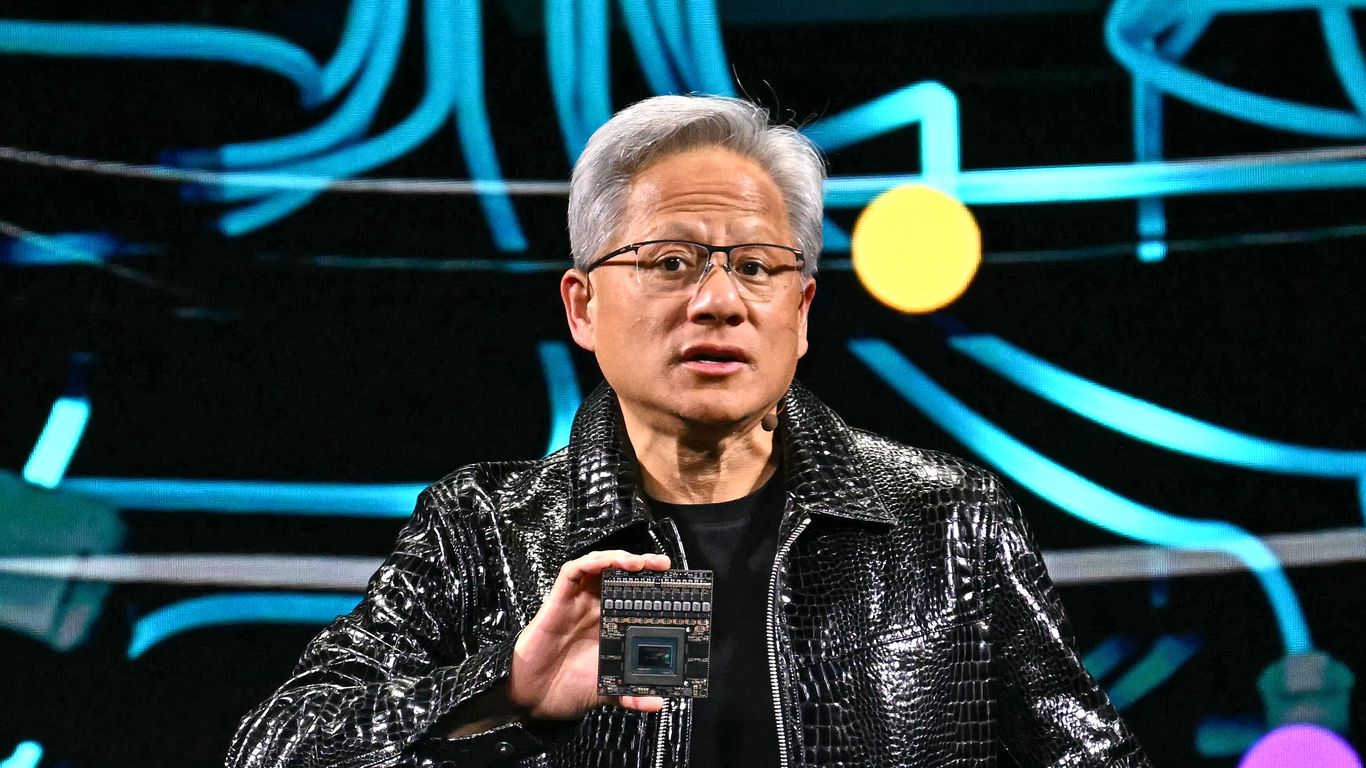
Nvidia CEO Jensen Huang admitted to having a romantic relationship with a suspected Chinese spy in a message to his company. The big picture: The company's board launched an independent investigation into reports that he was targeted by Chinese intelligence. Driving the news: "I owe my family and all of you an apology," Huang wrote in a draft email to Nvidia employees obtained by Axios. "I was unfaithful to my wife. My actions hurt her and our children. There is no excuse for what I did." Huang said he took "full responsibility" for his actions, adding that he had fallen short of his responsibilities to Nvidia's employees, board and shareholders. "Leading NVIDIA is the privilege of my life," Huang wrote. "I am fully committed to NVIDIA and will work to earn back your confidence." Flashback: Secretary of State Marco Rubio warned top Trump officials about Huang's relationship with a woman U.S. intelligence officials believed was a Chinese spy, The New York Times reported Friday. The woman, Alice Huang, was recruited to seek information and potentially push for Nvidia's advanced chips to be made available in China, countering existing restrictions, the Times reported. What they're saying: "Today's news will not slow NVIDIA. Jensen is committed to continuing to lead NVIDIA as CEO without interruption," John Rizzo, head of public policy communications at Nvidia said in a statement.

No state looms larger, more dominant or more instructive about the future of American politics, governance and AI than Texas . Why it matters: Texas is suddenly — and unexpectedly — the American story. It's the battleground and proving ground for immigration policy, AI, data center growth, Hispanic voting patterns, and the direction of the Democratic Party. Put simply, it seems nearly impossible for Republicans to retain the presidency in 2028 without the Lone Star State. And it seems nearly impossible for AI to keep growing so fast if Texas rejects or dramatically slows it. Texas is so populous, so wealthy, so Hispanic, so energy-rich — and now so top-to-bottom blue — that both parties see it as a de facto nation-state capable of reordering ... everything. "Texas is everything," Steve Bannon, one of the top voices of MAGA, told us. Bannon has been so Texas-obsessed all year that he took his influential podcast, " War Room, " on the road to the " forward lines " of Texas for months at a time. Bannon said Texas needs to be an early focus for Stephen Miller, the new White House chief of staff. Houston Mayor John Whitmire on Friday directed police to limit cooperation with ICE, saying : "Elections matter." Bannon said he expects many more such actions, with Texas becoming a sanctuary state "quickly unless dramatic action is taken." "Trump is going to be forced to federalize the border," Bannon said, either with National Guard troops or federal law-enforcement agents. The big picture: Texas was red as blood on Nov. 2, the day before midterms. Now it'll have a Democratic governor ... lieutenant governor ... attorney general ... comptroller ... land commissioner ... agriculture commissioner ... Texas House ... and U.S. senator, 37-year-old James Talarico. Talarico won by double digits over state Attorney General Ken Paxton, and Gina Hinojosa — who'll be Texas' first Latina governor — upset three-term Gov. Greg Abbott. Democrats won all four state Supreme Court seats on th
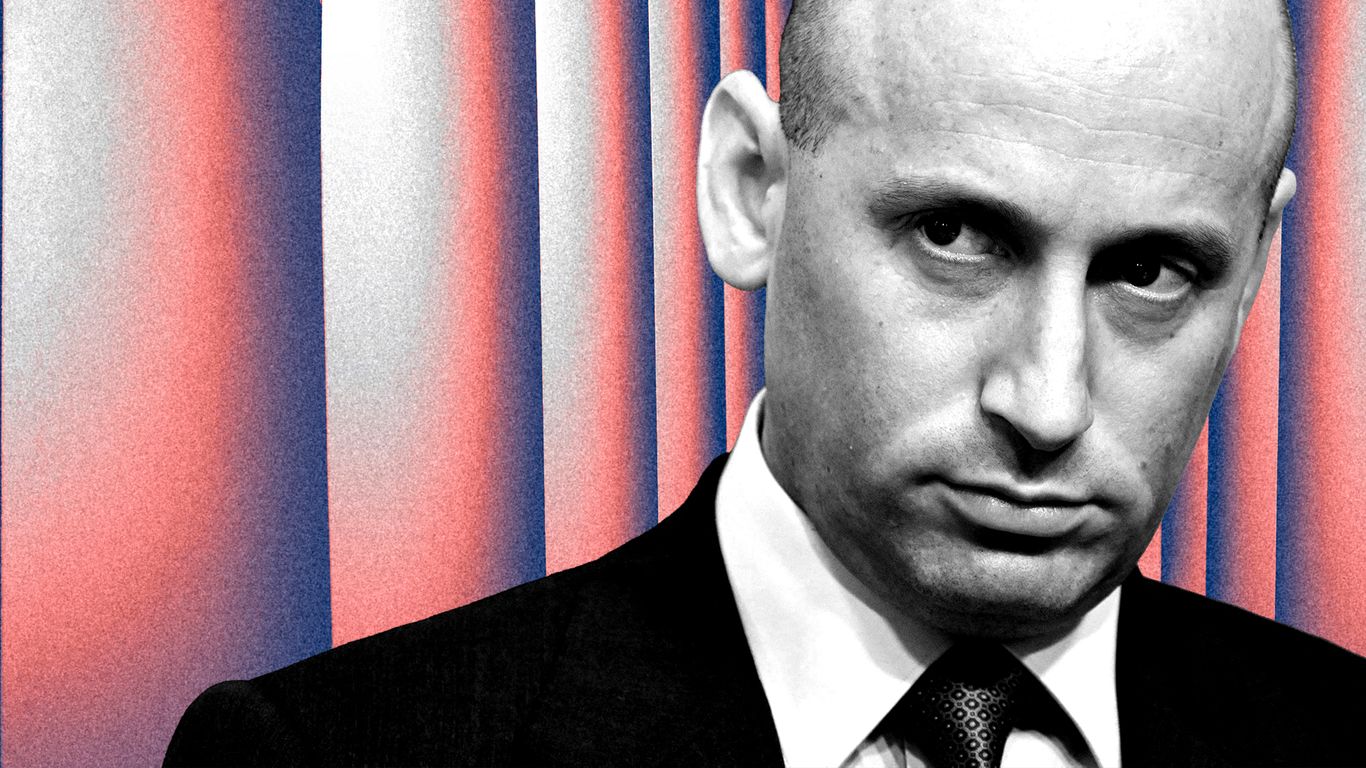
Stephen Miller is no Susie Wiles: He believes in almost limitless presidential power, considers the Democratic Party an extremist organization, and dreams of ruthless crackdowns on immigration and foreign adversaries. Why it matters: Miller, the new White House chief of staff, isn't just unlike anyone who's had the job under Trump — he's unlike any to occupy the powerful position in the modern era. He puts the hard in hard-liner and understands how to pull the levers of power to get his way and make the U.S. government a MAGA machine. Miller's appointment sets the stage for two years of partisan warfare with the new Democratic-led Congress, which is likely to launch investigations of Trump's administration, political committees and allies. "Stephen is Trump's wartime consigliere," Roger Stone, one of the president's oldest friends and advisers, told Axios. The big picture: Despite his post-midterm comments about finding ways to work with Democrats, Trump's choice of Miller signals that he's not looking for truces. He's prepping for war, and sees Miller as a brass-knuckle general and tactical expert impervious to criticism or traditional restraints. Trump's MAGA brain for a decade, the 41-year-old has detailed his Miller Doctrine in speeches, policies and press conferences: Presidential power is "very substantial and will not be questioned." Miller said those words about Trump's Muslim travel ban in 2017 on CBS's "Face the Nation," but to him they broadly apply to other areas of the executive's authority. Court authority is limited. In May 2025, when courts blocked aspects of Trump's deportation policies, Miller said the rulings were the work of "radical rogue judges" who were "at war" with the executive and legislative branches. The political opposition is a threat to America. "The Democrat Party is not a political party. It is a domestic extremist organization," Miller told Sean Hannity in August 2025. He also warned that if Democrats won Congress, "it's game over.


Power is draining away at home, but the US president will see a chance to make his mark through foreign policy Kim Darroch was Britain’s ambassador to the US between January 2016 and December 2019 Election nights are party time in Washington . The bars and restaurants fill up and the city rocks. For diplomats, it’s an opportunity – but it’s also a long night, as you trek across the party scene in search of insight and illumination. Invariably, it has its moments. I recall being at the Washington Post party on the night of the presidential election on 8 November 2016. Washington is an overwhelmingly Democrat city and the atmosphere was raucously optimistic, reflecting Hillary Clinton’s small but consistent lead in the polls. As the first results came in a shocked hush fell across the room. People gathered in small, murmuring groups. Within 30 minutes, half the guests had left. In contrast, I recall speaking to Nancy Pelosi, the queen of the Democrats, at a watch party on 6 November 2018, for the midterms during Trump’s first presidency. I asked her what I should put in my overnight report to London, given that most results wouldn’t be in. She said, with striking confidence, that I should predict that the Democrats would retake the House of Representatives. She was right: the Democrats flipped 41 Republican seats. It gave Pelosi a second term as speaker of the House and gave the world the enjoyable theatre of her sitting directly behind Trump at his State of the Union speeches, rolling her eyes at the bombast. Kim Darroch was British ambassador to the US from 2016 to 2019, and is author of Collateral Damage: Britain, America and Europe in the Age of Trump Do you have an opinion on the issues raised in this article? If you would like to submit a response of up to 300 words by email to be considered for publication in our letters section, please click here . Continue reading...
The Democrats have gained new powers to constrain Donald Trump. But the drubbing that Republicans received could yet prompt him to new excesses Donald Trump is a president without parallel, but history can still be instructive. Lame duck presidents often focus on foreign policy to escape domestic discontent and establish a legacy in an area where a hostile Congress offers less of an obstacle. Mr Trump, who was stunningly rebuffed by voters in Tuesday’s midterms , might seek satisfaction in construction projects, the 2028 presidential race and his family’s future. Or, amid the humiliation and with Republican critics growing louder, he could distract attention with fresh adventurism – perhaps escalating against Cuba – or more likely a vengeful new offensive against Iran. Mr Trump won’t put in the legwork or attention to detail demanded by, say, Bill Clinton’s push for lasting peace in the Middle East. But he loves the glitz of state visits, spectacular military action, hobnobbing with strongmen and (unearned) credit for dubious “peace deals”. With a potential three-way meeting with Vladimir Putin and Xi Jinping mooted for the Apec summit in China this month, Ukraine, Taiwan and others have reason to be nervous. Do you have an opinion on the issues raised in this article? If you would like to submit a response of up to 300 words by email to be considered for publication in our letters section, please click here . Continue reading...

Democrats won the midterms on voter frustration with high prices . Now they face the same problem that sank Republicans: Americans want lower prices, and there is little that policymakers can do to deliver them quickly. Why it matters: Prices for necessities like groceries and gas can fall in a healthy economy. But the kind of broad price declines that would reverse years of price gains would likely come with job losses and falling incomes, leaving households worse off than before. It sets up an early test for the incoming Democratic-controlled Congress and Democrats in statehouses across the country: delivering relief that voters can actually feel in their household budgets. What they're saying: "Can you bring prices back to 2019 levels? No," Brendan Duke, senior director for federal budget policy at the Center on Budget and Policy Priorities, tells Axios. "But a lot of the price shocks are policy-induced, so there are ways that policy can reverse them." Duke points to reversing food assistance cuts, restoring health insurance subsidies and ending the Iran war as possible sources of relief, with the "big, fat asterisk" that President Trump might not sign off. Other economic problems — a potential rise in unemployment or the AI bubble bursting — could overshadow affordability without solving it, Duke says. The big picture: Democrats have limited power over sources of pressure on household budgets. Their midterm sweep helped lower oil prices through market expectations. But Trump still controls the next steps in the war, and further relief heavily depends on his next moves. Congress could vote to repeal tariffs, potentially reducing costs for imported goods and American manufacturers. But Trump could simply veto that legislation (and more generally, there is no guarantee that businesses would pass all the savings on to consumers). Plans to restore expired Affordable Care Act subsidies or reverse Medicaid cuts could hit a wall because of internal divisions or Trump's

In Michigan, support for Israel was a kind of political hologram. But the media often made it seem real Among the things that Abdul El-Sayed’s victory last night in the Michigan Senate race revealed is this: the debate over US policy toward Israel does not primarily pit the left versus the right. It pits the top versus the bottom. There was no grassroots enthusiasm in the state for maintaining US military aid and weapons sales to Israel. That view no longer commands support even among ordinary Republicans . There was instead a massive infusion of pro-Israel money, mostly from extremely wealthy people. Peter Beinart is a contributing opinion writer at the New York Times , editor at large at Jewish Currents , a professor at the Newmark School of Journalism at the City University of New York , and the author of The Beinart Notebook , a weekly newsletter. His most recent book is Being Jewish After the Destruction of Gaza Continue reading...
Americans made it very clear on Tuesday that health care is too expensive. The challenge for Democrats is to agree on the quickest way to deliver some relief. Why it matters: Voters can't wait until 2029 for life to get cheaper — but any short-term action to meaningfully lower health costs will require Democrats to make deals with President Trump. The big picture: There's already speculation about what a Democratic unity health care agenda would look like, and what progressives' midterms success means for Medicare for All. But that's largely geared toward the 2028 presidential race or a possible Democratic administration. The short-term reality is that any ambitious policies that significantly expand the government's role in health care are almost certain to collide with Trump's veto pen. Strategists say the Democrats' most realistic option is to find piecemeal affordability fixes next year and play the long game when it comes to reshaping the health system. "If you read history, people make the biggest mistakes when they win. That's when they take their eye off the ball and they don't do the right thing," said Zeke Emanuel, an adviser in the Obama White House and a professor of medical ethics and health policy at the University of Pennsylvania. "This is an affordability election. We need to do affordability, but I do agree with the idea that this is a two-step process," he added. "There's going to have to be longer-term reforms." "For those debating whether the new Congress should consider big and bold reforms or pass practical help for people right away, the answer is yes. Voters can and should expect action on multiple fronts," Families USA executive director Anthony Wright said in a statement. Between the lines: Democrats' top priorities for the next Congress are restoring enhanced Affordable Care Act subsidies and reversing the Medicaid funding cuts in last year's GOP reconciliation law. Their unexpectedly large majorities in each chamber will give them leverag

Amendment 81 would have required law enforcement to notify federal agents if people accused of violent crimes were not lawfully present in US Colorado voters have spurned a conservative group’s effort to force police and prosecutors to aid the Trump administration’s mass deportation agenda. Amendment 81, which failed to receive 55% of the vote on Tuesday, would have required Colorado’s law enforcement agents to notify federal immigration authorities if individuals accused of violent crime were not lawfully present in the US or if their legal status was undetermined. Continue reading...

The real question in my mind is whether Democrats will take advantage of the new age of populism The great sleeping giant of the US has awakened, taken a hard look at what’s become of the nation, and roared a thunderous “NO!” What occurred on Tuesday was not – as some are saying – the inevitable midterm swing of the pendulum against the party in power. Texas hasn’t elected a Democratic senator since 1988. The last time Kansas elected a Democratic senator was 1932. Robert Reich, a former US secretary of labor, is a professor of public policy emeritus at the University of California, Berkeley. He is a Guardian US columnist and his newsletter is at robertreich.substack.com . His new book, Coming Up Short: A Memoir of My America, is out now in the US and in the UK Continue reading...

Democrats will be able to take plenty of messaging votes on health care after their blowout wins Tuesday — but they'll face too many limits and internal disagreements to force all of the big policy changes they want. Why it matters: They'll have a tough time repealing Medicaid cuts or restoring enhanced Affordable Care Act subsidies while President Trump is still in office, and their own divisions will hold them back on other issues. And Medicare for All ? Last night gave the idea a big boost, but don't hold your breath. Friction point: With control of both the Senate and House, Democrats will have powerful new leverage — but that leverage will also expose fault lines. Until now, progressives backing Medicare for All and centrists favoring more incremental changes were united in opposing Trump administration policies and blaming the president and the Republican Congress for the health affordability crisis. They'll try to use their power in the next Congress to promote sweeping changes with an eye toward the 2028 elections while also advancing more piecemeal policies, hoping to force some deals with Republicans. But they'll still face divisions over how to expand the federal government's role in the health system, or how to bend the steep health cost curve. Driving the news: House Democrats have already signaled their opening moves with a 100-hour/100-day agenda agenda that prominently features health policies like reinstating the enhanced ACA tax credits that expired at the end of 2025. There will also be votes to roll back the steep cuts to federal Medicaid spending that Republicans included in their "One Big Beautiful Bill," per an 84-page memo from a health care working group to Democratic Leader Hakeem Jeffries (D-N.Y.). Other near-term agenda items include expanding Medicare drug price negotiations to private insurance, restoring withheld National Institutes of Health research funding and ending the use of AI in authorizing certain services in traditional Medic

This election represents a wholesale rejection of Trump and the Republican party, by every single segment of American society In a few years, there’s a good chance we look at Tuesday night as the death knell of Trumpism and the Maga movement. He has indelibly changed the face of American politics, and the basic structure of American institutions. And people are sick of it. Fundamentally, nearly everyone’s lives are worse than they were a decade ago. People were willing to tolerate, or even welcome the coarseness, the attacks on American democratic norms, and the global foreign policy order. Ben Davis works in political data in Washington DC. He worked on the data team for the Bernie Sanders 2020 campaign Continue reading...

If you have questions about the midterm results, what they mean and what’s next, we’d like to hear from you Democrats win control of Senate as US voters reject Trump’s agenda The results of 2026 US midterm elections are rolling in, and Democrats are poised to retake control of Congress after flipping key swing states and congressional districts. We’ll be hosting a live Q&A on Friday 6 November at noon ET breaking down the results. The Guardian’s political reporters will take questions on everything from how key races shook out, surprising results, what power Democrats will have, and what this all means for Donald Trump. How will Trump’s mass deportation agenda shape the US midterm elections? Your questions answered Will Trump’s economy sink Republicans in the US midterm elections? Our reporters answered your questions Will the Iran war cost Trump in the US midterm elections? Your questions answered Who are the groups financially backing the candidates in the midterms? The makeup of the Democratic party, plus key races to watch Continue reading...
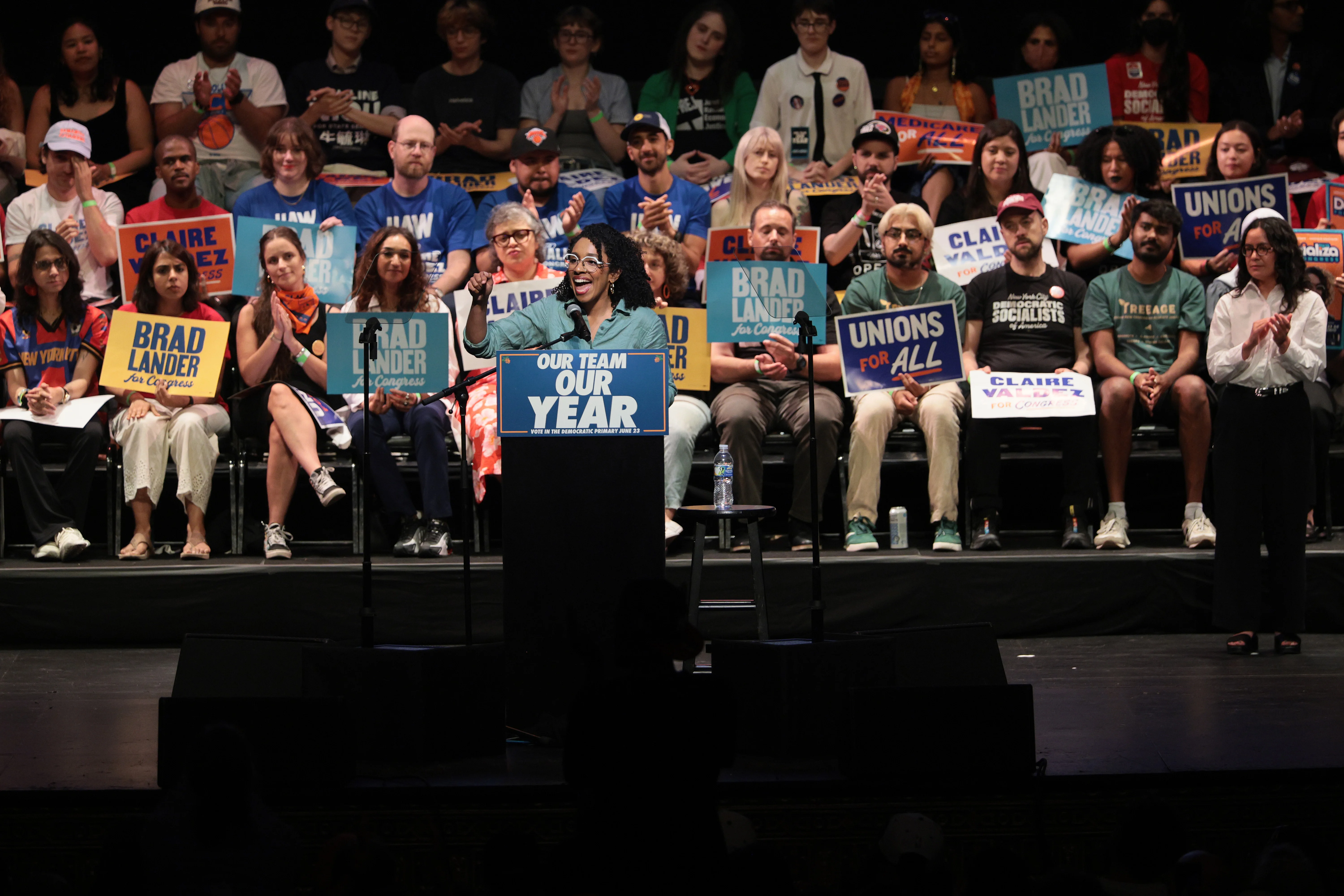
The candidates tapped into voter frustration with the political status quo and will now look to translate their success into policy wins that push Democrats further to the left.


As Americans went to the polls for an election widely seen as a referendum on his second term, President Trump again downplayed concerns over the cost of living and addressed unpopular foreign policy matters.
There's a lot at stake for energy in the midterms, from the fate of the bipartisan permitting deal to the growing backlash against data centers and electricity prices. Why it matters: The results could spotlight which energy topics resonate with voters — and which have become political liabilities. Gasoline and diesel prices have been big on the campaign trail, offering a chance to see how much voter frustration over energy costs matters at the ballot box. Data center politics: There are sharp differences between the parties, even though data centers aren't especially popular with either party's slate of candidates. Why it matters: The pace of the AI buildout affects power demand and emissions. State of play: 32.4% of Democratic candidates support moratoriums at the federal, state, or local level, compared to just 3.4% of Republicans, per Data Center Watch, which tracked hundreds of races. Zoom in: Meanwhile, Ballotpedia is tracking dozens of ballot measures on data centers, many of which would impose new restrictions. Ohio is a hot spot. Control and permitting: The outcome will affect the politics of the lame-duck session — and that means the politics of the bipartisan permitting deal. What they're saying: If Democrats take both chambers, "leaders might opt to wait until they hold the gavels next year to renegotiate compromises," the research firm ClearView Energy Partners said in a note. Yes, but: A reminder that backers of the current bill think it's folly to expect political space to write a more liberal bill that President Trump would sign, or that could even pass the Senate. Threat level: What if the results are very close? ClearView notes that if Trump and allies contest the results, "weeks of post-election skirmishing could complicate passage of any bill." Political lessons: The results could offer clues about where energy and climate policy are headed. State of play: Exit polling is not famously precise, but it could provide a barometer of how much voters t
Voters are about to decide whether public backlash against the health care industry translates into meaningful policy shifts. Why it matters: Health care has never been more expensive, and it's not going to get any cheaper without significant intervention. The big picture: It's hard to see Democrats not making health care affordability a top priority in the next Congress, regardless of whether they win only a narrow majority in the House or sweep both chambers in a blowout. But the party isn't aligned on an agenda, and a strong showing by progressives could drag things leftward. Reality check: Any Democratic victory — no matter the size — will be tempered by the realities of split government, with President Trump still in office for the next two years. Larger Democratic majorities may bring greater leverage in negotiations over spending packages or raising the debt limit. And the boldest changes will probably be reserved for the campaign trail, as 2028 presidential contenders begin to vie for the party's nomination. Here's what we're watching: Medicare for All vs. moderates: What happens in Michigan's Senate race — and Maine's, to some extent — will almost certainly shape how much sway progressives have in the next two years. Democrat Abdul El-Sayed has made Medicare for All central to his campaign, unabashedly supporting the idea in a race that could determine which party has control of the Senate next year. The same is true of Democrat Troy Jackson in Maine's Senate race, though Jackson has a lower national profile than El-Sayed. But Medicare for All supporters looking for a vote on the measure face an uphill battle : Despite the policy's growing popularity among the public, moderates unwilling to abolish private insurance will make up a sizable portion of any Democratic majority. The doctors-turned-politicians: Doctors are on the ballot in key races this year, and the question is how much public trust translates into votes. El-Sayed, an epidemiologist who went to

Data: AdImpact; Chart: Erin Davis/Axios Republicans on the ballot this cycle have all but stopped mentioning President Trump in their campaign ads , according to an Axios analysis of broadcast advertising data from AdImpact. Why it matters: Trump has tried to make the 2026 midterms a referendum on his presidency. His party has run the other way. The big picture: Ads from both parties in Senate, House and gubernatorial races have shifted from a heavy focus on Trump during the primaries to a much greater emphasis on the economy in the general election. Both parties have also leaned much more heavily into health care, with a noticeable increase among House Republicans. By the numbers: The drop-off is steepest among Republicans, and especially in House races. Trump appeared in 66% of House Republicans' primary ads but shows up in just 3% of their general election ads. In Senate races, Republican ads mentioning him fell from 77% to 22%. Governor's races saw the same shift: Republican ads mentioning Trump fell 34 percentage points. Democrats have also pulled back from Trump, though less dramatically. Trump appeared in 45% of Democratic primary ads, but just 18% of their general election ads. Zoom in: Republican candidates are mentioning some of Trump's signature issues less than during the primaries. The share of Republican ads mentioning immigration has dropped 20 percentage points in Senate races and 14 points in House races. Ads referencing law enforcement fell from 11% of Republican Senate primary ads to 6% in the general election, even as their mentions of crime increased. Data: AdImpact; Chart: Erin Davis/Axios Between the lines: Candidates often lean on the country's most prominent political figure in primaries, then pivot to policy issues in the general election. But this year's drop-off stands out given how hard Trump has pushed to tie himself to the midterms. He has urged voters to pretend he's on the ballot and essentially demanded ads running during the Republ
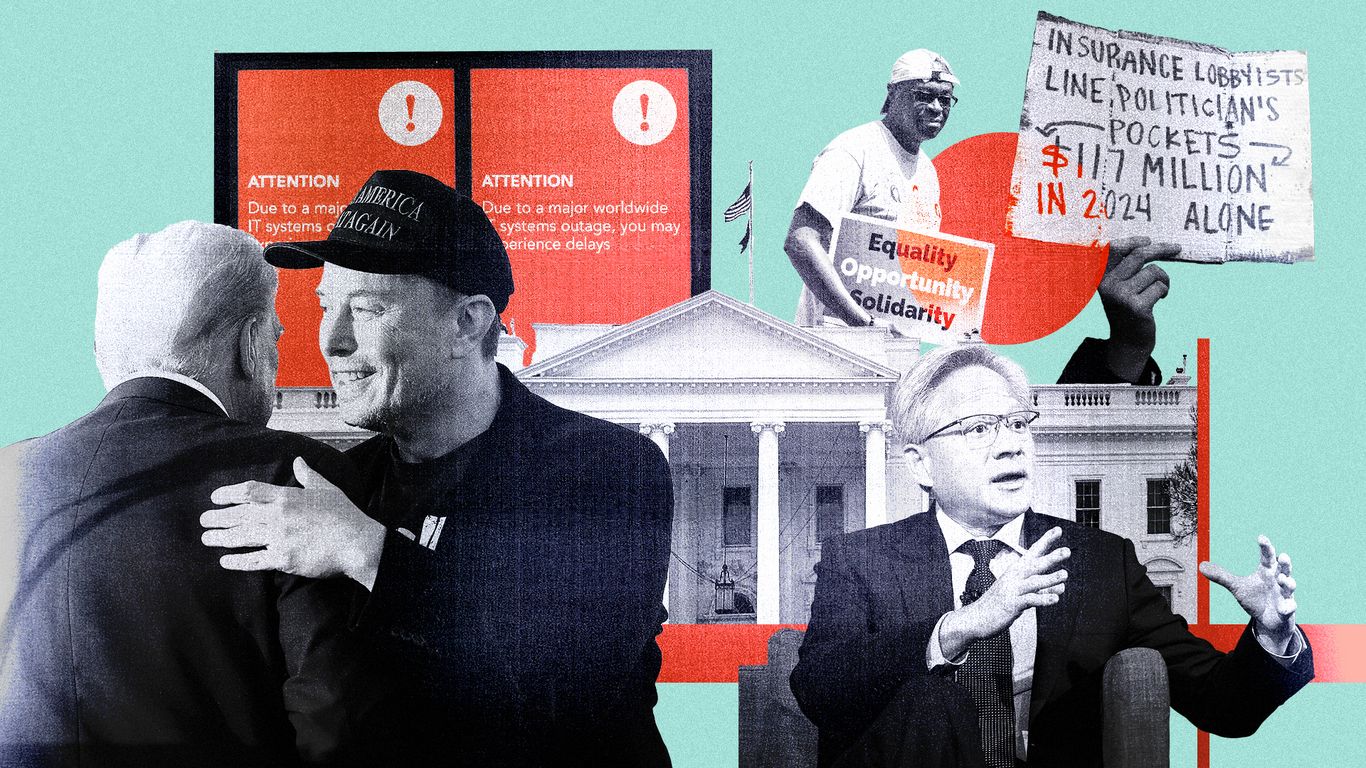
The 2026 midterms will offer the first test of voter sentiment on the AI race, offering a window into how a niche policy debate is transforming into a wedge issue ahead of a presidential campaign cycle. Why it matters: The results will reveal whether explicitly campaigning on AI regulation—or aligning with tech moguls like Elon Musk—is a winning political strategy or a liability for 2028. One thing is already clear: Candidates increasingly can't afford to have half-baked AI agendas. Here are three major questions about the future of AI politics and policy and the races we're watching on Election Day for answers. 1. Did AI break through? A different kind of AI political spending has emerged in the midterms. Instead of supporting or opposing candidates based on their AI positions, some groups want to make AI policy itself a campaign issue. Guardrails Alliance, a pro-regulation advocacy group, recently launched ads targeting Republicans and Democrats over their positions on AI in Arizona, Montana, North Carolina and California. The organization backed Michigan Senate candidate Abdul El-Sayed, who said AI was the most important issue heading into Election Day, tying it explicitly to jobs and affordability. Democratic group Tomorrow Together also launched ads against Republicans' AI track record in Michigan, Wisconsin, Arizona and Pennsylvania. Meanwhile, competing AI groups Public First and Leading the Future spent more than $50 million through affiliated super PACs in nearly 50 races, but their TV and digital ads largely avoided the very issue they're trying to influence: AI. These races could offer an early test of whether explicitly campaigning on AI is a viable political strategy heading into 2028. 2. Did Elon Musk help or hurt candidates? Elon Musk's political spending, involvement in DOGE and ties to the Trump administration have made him both a powerful political backer and a target for Democratic attacks. He was the biggest donor in the midterms by far, contribu

Elon Musk is looking to shake up America's wireless industry, potentially bringing the first major new competitive threat in years to a business dominated by three companies. Why it matters: The cellular industry has seen enormous technological change, but relatively little disruption to its competitive structure. Musk has the money, spectrum and satellite network to attempt something different — though he faces daunting obstacles. Driving the news: SpaceX is assembling the pieces to become a major U.S. wireless carrier, potentially building its own terrestrial network and buying available spectrum. The moves are meant either to build the capability to bypass existing carriers or to bring them to the table for a deal that would allow Musk to strike a deal for wholesale access to their networks. Musk may have reason to move quickly while the current administration and its regulatory appointees remain in place, a reason some analysts have cited in the context of proposals for a merger between Tesla and SpaceX . What they're saying: Blair Levin, a former FCC chief of staff who now heads policy at Optimal Advisory, says Musk's financial resources distinguish him from previous challengers. "For the first time, there is an entity capable of scaring investors in the traditional big three," Levin told Axios. Unlike Dish, which faced serious financing constraints, SpaceX can draw on capital markets that have rewarded Musk's ambitious plans. The latest : SpaceX has held talks with EchoStar about acquiring Boost Mobile or gaining access to its network arrangements, according to a Washington Post report Monday. That could provide a quick route to customers and infrastructure, although approval of such a deal is far from a foregone conclusion if Musk's businesses are drawn into a regulator quagmire after the midterm elections. The Post reported that Verizon, AT&T and T-Mobile have all rebuffed Musk's efforts to gain access to their networks. State of play: Musk also has a path t
A federal judge on the eve of Election Day barred the Trump administration from demanding California officials set aside ballots from registered voters it suspects are noncitizens, finding the effort likely violates the Constitution. Why it matters: Courts had already rejected the Justice Department's attempts to force California to separate the ballots. Monday's ruling goes a step further, directly barring federal officials from making those demands even as DOJ turns to the Supreme Court to compel the state to comply. Driving the news: Chief U.S. District Judge James Boasberg ruled Monday that the Trump administration likely violated the Constitution by pressuring California officials to change how they count ballots. His order prohibits the Justice Department and the Department of Homeland Security from demanding officials set aside ballots or depart from existing state election procedures based on federal lists of suspected noncitizens. Boasberg found that the Constitution gives states and Congress, but not the executive branch, authority over election rules. The federal ban on noncitizen voting does not mean the administration can rewrite those rules. By the numbers: The DOJ claims it identified more than 20,000 suspected noncitizens on California's voter rolls. After Boasberg ordered DOJ to turn over its list, an expert found that at least 22 members of the Coalition for Humane Immigrant Rights — all known U.S. citizens — were wrongly included. The expert found another 66 members were almost certainly on the list. Boasberg found the expert credible and concluded the list's errors posed a real threat to eligible voters. What he's saying: "The President evidently believes that it would be good public policy for more stringent procedures to be put in place," Boasberg wrote. "No matter how strong that policy case may be, however, it does not justify overstepping the bounds of the Executive Branch's limited constitutional authority in this domain." The White House r

Right after Tuesday's midterms, OpenAI will unleash a policy and PR blitz to try to get in sync with the new Washington, including an effort to rebrand data centers as "AI compute campuses." Why it matters: After two years of a friendly White House, AI companies will face a harsher Washington after Tuesday, when Democrats will likely win the House. OpenAI also aims to help frame the AI debate for the big field of 2028 presidential contenders that'll start forming on Wednesday. "You can try to chase the moment, or seek to inform the moment via the power of ideas," OpenAI chief global affairs officer Chris Lehane tells us, calling Tuesday an "electoral portal from one era to the next." Since August, Lehane and his team have been stockpiling policy proposals, some new and some repackaged, to drive urgency and steer the AI debate. It'll all start during the lame-duck session of Congress — the awkward but often consequential weeks between the election and the swearing-in of new members and senators on Jan. 3. This year's lame duck opens Nov. 9. The big picture: Other tech companies are also positioning themselves for a potential blue wave. Meta is taking steps to strengthen its ties with Democrats, Axios' Sara Fischer scooped Saturday . Other big AI and tech players can be expected to do the same. Tech titans who enjoy close relationships with President Trump will be top targets for Democrats, who are eager to ramp up scrutiny and regulatory pressure on the industry. OpenAI's plans, being revealed here for the first time, all involve control — trying to send the message that AI is being built for people, not to displace people. The proposals include: Speed limits: Building on earlier proposals , OpenAI plans to unveil new ideas for mandatory safeguards for the most powerful AI systems — speed limits for AI that will allow humans to keep their hands on the wheel. This'll include a more aggressive congressional drive. "You're going to see us talk more and more about the co

City Council candidates in ritzy Scottsdale disagree on whether recycling wastewater into drinking water is smart policy or a dangerous remedy.

The recent purchase of the prison to hold immigrants is among the acquisitions facing scrutiny in the Trump administration’s mass deportation push.
The U.S. naval blockade, sweeping economic sanctions and obstruction of overland export routes have crippled Iran's economy and intensified pressure on the regime, according to a new Treasury Department report obtained by Axios. Why it matters: Treasury Secretary Scott Bessent, who is leading an economic pressure campaign dubbed "Operation Economic Outcast," is one of Trump's closest aides urging him to let the initiative play out rather than rush back into combat. Though the report doesn't argue that the Iranian regime is close to collapsing, it does lay out the Treasury Department's view that its efforts have crippled Iran's economy and limited its ability to generate revenue. Driving the news: As he did before Operation Midnight Hammer in June 2025 and Operation Epic Fury in February, Trump is pursuing dual tracks — trying to reach a deal to restart peace talks while also preparing to possibly resume major combat operations after the midterms. The Treasury campaign, which launched in late August, is a third track. But U.S. officials say it needs more time to destabilize the regime and potentially convince the Iranian leadership to make concessions at the negotiations table. On Thursday, Trump met with his top national security and foreign policy aides to discuss the war. U.S. Central Command chief Adm. Brad Cooper, who commands forces in the Middle East, briefed Trump on the ongoing naval blockade . Bessent discussed the economic pressure campaign. "Bessent is telling the President the economic pressure campaign is working and that things are getting worse in Iran and that this could further destabilize the regime and push the Supreme Leader to agree to a deal," a U.S. official said. Zoom in: The Treasury report highlights several indicators of Iran's economic crisis: Currency collapse: The Iranian rial has lost roughly a quarter of its value since the operation began in August. In October, the unofficial exchange rate reached a record low of 2.687 million rials

A Texas grand jury indicted ICE officer Mario Alberto Morales with a charge of second-degree aggravated assault Friday after prosecutors said he deliberately drove his SUV into a fleeing immigrant in early October. Why it matters: This may be the first time an ICE agent has ever been indicted in Texas, making it a rare case of a federal immigration officer facing state charges. What they're saying: Harris County District Attorney Sean Teare announced the grand jury's charge of second-degree aggravated assault with a deadly weapon, namely a motor vehicle. Morales faces two to 20 years if convicted, Teare said. "Just because you have an ICE badge or any badge, if you are in Harris County and you are violating our community members' constitutional rights, there will be repercussions," he said. Catch up quick: Morales struck Miguel Parra Hernandez on Oct. 10 as Parra Hernandez fled on foot. Parra Hernandez, a Mexican national who has lived in Harris County for more than 30 years, had no criminal record and no pending immigration proceedings against him before the incident, Teare said. ICE has said Morales and other agents were looking for a different man identified as a deportation target, but that man's relatives say he died nearly a decade ago. Teare said Parra Hernandez is still rehabilitating from his injuries but is in ICE custody. The other side: An ICE spokesperson called the indictment "nothing more than a political stunt by Houston sanctuary politicians" in a statement to Axios. "Federal officers acting in the course of their duties can only be investigated by other Federal agencies. Local governments do not have the authority to run such an investigation." "Allegations that ICE struck Miguel Parra-Hernandez intentionally are RECKLESS and FALSE. The men and women of ICE are entrusted with upholding the rule of law and are held to the highest standards of professionalism, integrity, and ethical conduct." Zoom out: Teare said Morales was among the "surge hires" a

‘Even though economists warned that tariffs would be inflationary, Trump has enthusiastically embraced them’ Donald Trump successfully campaigned for his second term two years ago promising to reduce prices on day one , but ever since he returned to the White House, he has done little to fight inflation or reduce prices. Instead, some of his most important policy decisions – most notably his war against Iran and his tariff wars – have increased inflation instead of reducing it. This helps explain why more than one in five Americans who voted for Trump now disapprove of the job he’s doing. Even though economists warned that tariffs would be inflationary, Trump has enthusiastically embraced them during his second term. Indeed, the “ liberation day ” tariffs he imposed soon after returning to office increased the price of hundreds of goods, including citrus fruits , steel, bananas, beef and auto parts. When the supreme court overturned those tariffs as illegal, Trump immediately imposed new 10% across-the-board tariffs that again helped push up prices (a lower court found those tariffs unlawful, too ). Time and again, Trump has slapped on new tariffs even though they inherently push up prices because tariffs are a tax on imported goods. Little wonder that a Fox News poll this month found that 77% of Americans disapprove of how Trump has handled tariffs. Continue reading...

The post How a Secret Vote by U.N. Scientists Legitimized Carbon Capture and Skewed Decades of Climate Policy appeared first on ProPublica .
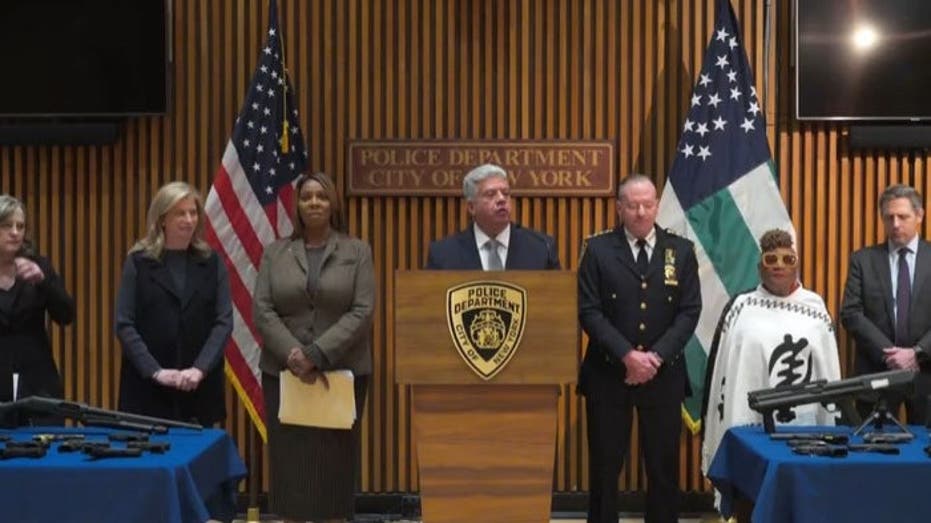
Letitia James, Melinda Katz and Eric Gonzalez faced pointed questions about a House Judiciary Committee report on immigration-safe plea deals.

Data: Resources for the Future; Note: Central RFF scenario ; Chart: Ben Geman/Axios The Senate permitting plan would cut emissions from power plants in the near term and help keep electricity prices down, a new analysis finds. Why it matters: The study from scholars at Resources for the Future, a nonpartisan think tank, offers some of the most detailed independent modeling yet of the bill 's effects. It will help inform lobbying and advocacy around the bill ahead of a test vote looming on Nov. 9. Driving the news: The analysis models how the bill would affect the power sector compared with current law and policies. Among the findings from its central scenario: It would drive "robust" transmission expansion ( see above ), enabling "use of additional clean energy and existing resources of all types." Overall electricity system costs are an estimated 3.5% to 7% lower each year through 2041 compared to a no-bill baseline, saving over $350 billion total through 2050 in present-value terms. That should translate into lower electricity bills for people, co-author Kevin Rennert tells Axios, though the study does not directly model retail prices. The bill would boost the build-out of renewables, partly enabled by expansion of transmission, with added clean energy displacing fossil fuels even though additions of gas-fired capacity still occur. CO2 from the power sector would initially drop as more coal is edged aside, and then climb over time — but remain below levels projected without the bill. By the numbers: In 2028, there's roughly 60 gigawatts more clean energy capacity on the grid in the study's central outlook compared to a baseline of current law and policy. Data: Resources for the Future; Chart: Ben Geman/Axios The intrigue: The RFF analysis shows how it sees the bill initially pushing power plant emissions downward. Even that eventual upward trend is hardly guaranteed. This kind of study is by definition packed with assumptions and variables that the authors acknowl

The post Top U.S. Health Official Backed a Medication Policy Shift That Benefited a Company She Has Stock In appeared first on ProPublica .

House progressives are planning to use their growing power to force votes next year on their most sweeping and divisive policies, including Medicare for All, abolishing ICE and cutting aid to Israel. Why it matters: The ultimate goal is to get these policies on the front burner for a Democratic president in 2029, even if that means forcing House Democrats into tough decisions. Rep. Pramila Jayapal (D-Wash.) told Axios the left wants mark-ups and votes on bills such as Medicare for All "so that we can prepare for when we have the trifecta and so that we can really build the support we need." "Forcing the vote is important so we can see where everyone is at, I think that's really key for 2028 and 2029," said Mai Vang, a progressive House candidate in California. The big picture: Here is what progressives most want to see go to a House vote in 2027, according to lawmakers, candidates and operatives who spoke to Axios: 1) Medicare for All The Medicare for All Act introduced by Rep. Pramila Jayapal (D-Wash.) has 118 co-sponsors — more than half the House Democratic caucus. The left wants to force the issue onto the floor and make their Democratic colleagues reckon with the policy's popularity in public opinion polls . Ultimately, they aim to ensure support for Medicare for All is a must-have for any 2028 presidential candidate to win the primary. "Years ago I negotiated with [former House Speaker Nancy] Pelosi to get the hearings , but we have not had a markup," Jayapal, a former Progressive Caucus chair, said in an interview with Axios. Jayapal pointed to the bill she and Rep. Pat Ryan (D-N.Y.) unveiled last week, which would lower the Medicare age from 65 to 50, as a potential compromise measure that could get caucus-wide support next year. Yes, but: A Democratic wave could bring in a bloc of members from red-leaning districts who could be sensitive to being tagged as wanting to end private insurance. Jayapal told Axios there's an "opening we've never seen before" with
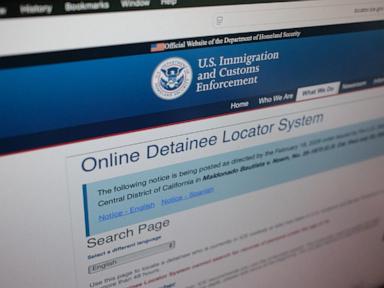
Legal groups have filed a lawsuit to stop the Trump administration's policy of hiding the locations of detainees with final deportation orders

With less than a week until a potentially historic midterm election , the political discourse is being dominated not by war or seismic shifts in technology, but by the Cheesecake Factory . The big picture: Culture wars regularly swarm American political discussions, especially when the jibes are personal. Former President Obama's passing joke over the weekend about Cheesecake Factory decor did just that — by criticizing President Trump 's personal taste and style. "He's got the White House looking like Saddam Hussein opened a Cheesecake Factory," Obama said, poking fun at the president's controversial White House renovations . Zoom in: John Murphy, professor emeritus at the University of Illinois Urbana-Champaign who studies political rhetoric, tells Axios that the first time he heard Obama's comment, he "really did think, 'this is going to go somewhere.'" That's both because of the messenger and the butt of the joke: Obama "can get under Trump's skin like no one else in the world can," he says. Obama knows all too well how seemingly trivial moments can blow up; in 2014, he wore a tan suit instead of a black one to discuss foreign policy, and years later his sartorial choices remain a political talking point. The tan suit has its own Wikipedia page , and still nets pop culture references . State of play: Days after Obama's quip, the news cycle and social media are still serving up the joke, and the White House posted "Lo-fi" beats accompanied by a cartoon image of Trump in front of a Cheesecake Factory. Conservative critics used the jab to paint Obama as elitist. Treasury Secretary Scott Bessent , a multimillionaire, criticized Obama outside a Cheesecake Factory, saying he "had a great meal, and I would tell the Martha's Vineyard set to give it a try." Murphy notes that framing comes from a classic red v. blue playbook to paint Democrats as "elitist." "It's a conscious strategy, I think, on the part of conservative media to gin up culture-war arguments," he says. Th

Some Democrats are making a play for segments of the "Make America Healthy Again" base, hoping pitches about food safety and environmental health will attract voters disillusioned with the Trump administration's lack of progress on those fronts. Why it matters: Policies around cleaning up the food supply and agricultural practices helped forge a coalition that's credited with helping President Trump win a second term. But disagreements over issues like pesticide use are fueling speculation that MAHA voters may not show up in force to help Republicans in the midterm elections — and may be persuaded to put their faith in Democrats instead. Driving the news: Some Democrats say they're the party better positioned to take on established interests through regulation and are honing messaging with an eye toward the 2028 presidential race. The Center for American Progress, an influential progressive think tank, recently released a proposal focused on healthier foods and reducing harmful chemicals alongside polling showing Democrats are poised to claim the agenda as their own. "I do think the MAHA grassroots movement has raised the salience of some issues where Democrats have an opportunity to align, particularly on chemicals and pesticides," said Topher Spiro, an author of the CAP report. "I think that these are issues that have been percolating for a long time, and that, frankly, Democrats haven't done a great job of prioritizing." "If you're looking at who are the swing voters in this electoral environment, they overlap very highly with voters who care about these issues," added Becca Siegel, chief insights officer at CAP. Though affordability concerns have dominated the midterm elections, some Democratic lawmakers and candidates have already backed legislation or policy agendas that overlap with MAHA themes. Michigan Senate candidate Abdul El-Sayed last month released a proposal titled "Building a Healthier America" that included calls for banning certain pesticides — a k

A day after Venezuela's exiled opposition leader returned to Caracas with great fanfare, U.S. Secretary of State Marco Rubio issued a veiled warning against interfering with the country's fragile democratic transition pushed by the Trump administration. "You're not going to street-protest your way into a democracy," Rubio told reporters Monday without explicitly mentioning María Corina Machado . Why it matters: Machado's demands for elections next year — and her criticism of a massive U.S. oil deal struck with the current Caracas regime — have put administration officials on edge after her surprise return. "Rubio is on a political edge," said a White House source familiar with his thinking. "Venezuela is the top foreign policy achievement of this administration, and if the progress we made gets undone and Machado is a spoiler, nobody wins." A Machado spokesperson didn't return messages seeking comment. Zoom in: Machado and U.S. officials agree that Venezuela needs to hold elections. But she has demanded they be held in 2027, while U.S. officials aren't sure. They want three things to happen first: Reform Venezuela's Supreme Court. It's stocked with loyalists of Nicolás Maduro , who was seized Jan. 3 by the U.S. and spirited to New York City to face narcotrafficking charges. The State Department hopes a new court is picked by year's end. Reform Venezuela's National Electoral Council. It's also filled with Maduro's people, and with the Supreme Court it helped him steal his last two elections as president. The State Department hopes a new council will be in place by early next year. Fix Venezuela's debt. Venezuela has one of the world's largest sovereign debt problems — $300 billion, more than its gross domestic product. The hoped-for timeline regarding this hurdle is less clear, and Rubio didn't explicitly discuss it Monday. Between the lines: As Axios first reported in September, Trump discussed all three of those issues with Rodriguez when he also told her privately

Harvard economist Jason Furman told Axios that if he were to return to his old job as chairman of the White House Council of Economic Advisers today, he would rely on AI tools over staff economists for much of the council's day-to-day analytical work. The big picture: Unsurprisingly, this made some waves in the online discourse, particularly the loose-knit community formerly known as Econ Twitter. Many veterans of the economic policy trenches see real risks in future policymakers becoming overly reliant on AI — or at a minimum think that Furman is underestimating the importance of human economists in advising the nation's leaders. What they're saying: "CEA work, at least in my experience, is highly bespoke as you're explaining the data flow (and much else) to very busy people who don't want only market-shop analysis," Jared Bernstein, the CEA chair under President Biden, wrote on Substack . "Yes, they want and need that — what will the markets make of this CPI, jobs, GDP, etc. report — but more so they want to know how this report fits into our narrative, our agenda, the president's trip today to Iowa." He adds that within a White House, "the human skill of reading-the-room is paramount. I'm far from an AI expert, but my sense is it sucks at that and probably always will, a conclusion that derives in no small part from listening to its creators!" Zoom in: Claudia Sahm, a former Federal Reserve economist, raised an issue that we've often heard from senior people in fields like consulting and investment banking: If you get rid of junior positions, where will future senior leaders come from? Furman's staff "went on to found the Yale Budget Lab, run Treasury economic policy and a Fed institute, serve in later [administrations], and publish research on trade, environment, and taxes. That's what '20 staff' become," she wrote on X . "No model does that." Bloomberg chief U.S. economist Anna Wong argues that the "ability to now not depend on anyone, as a senior person, is ve
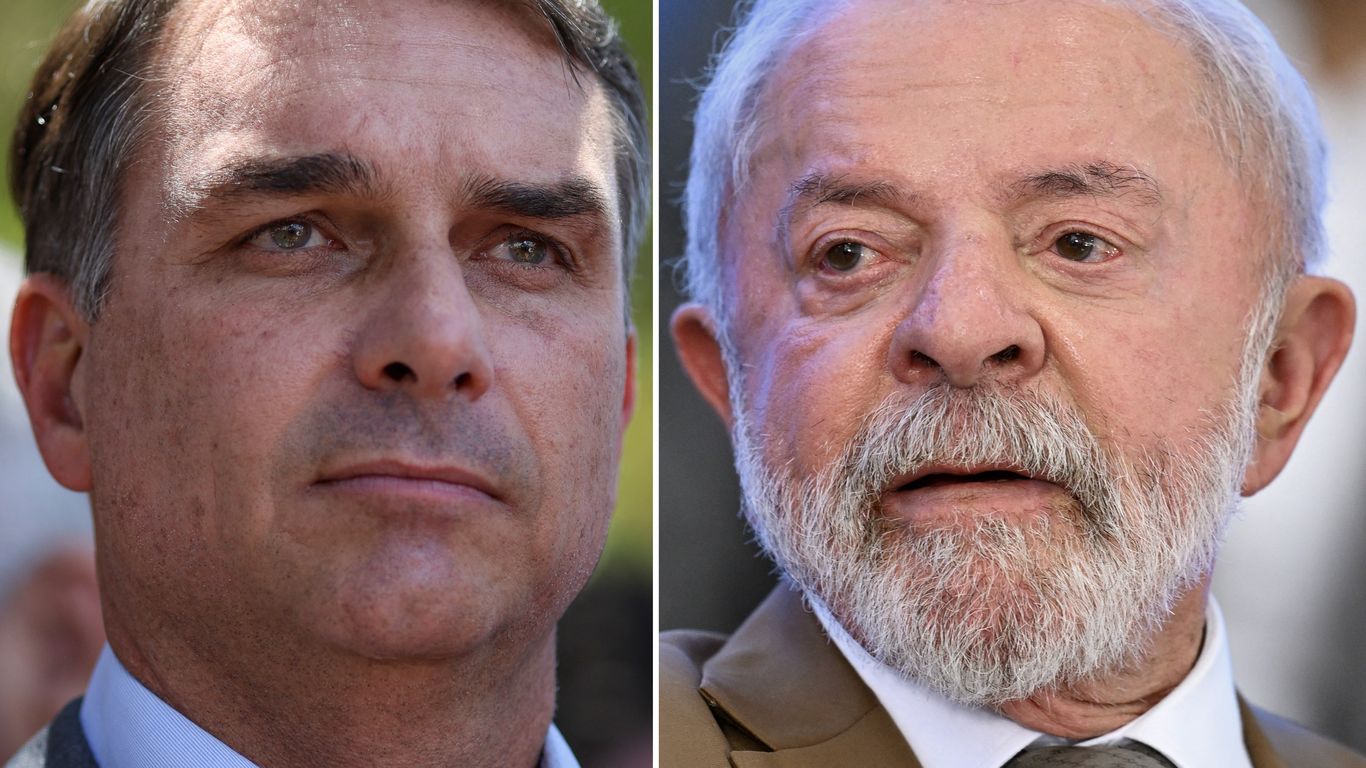
Brazil President Luiz Inácio Lula da Silva was elected to a fourth, nonconsecutive term in the nation's presidential election , according to early results released Sunday evening. Why it matters: Lula's victory deals a setback to Brazil's right-wing populist movement and preserves a major counterweight to President Trump 's influence in Latin America, with tensions over trade and tariffs threatening to persist. Lula, the incumbent candidate, was facing Flávio Bolsonaro, the son of former Brazilian President Jair Bolsonaro . Flávio was widely seen as the heir to the nation's right-wing populist movement. The latest: Lula thanked the Brazilian people after his election win, but Bolsonaro told reporters he would not accept the results and said they should be annulled, according to translations . The big picture: The election has been shaped by the impact of U.S. tariffs, climate change and the Amazon rainforest, 60% of which is in Brazil. Bolsonaro campaigned on public security and tackling corruption, presenting himself as a continuation of his father's political legacy, while Lula emphasized defending Brazilian sovereignty against U.S. pressure. Yet substantive policy debate was limited, with both candidates focusing instead on corruption allegations levied against the opposing camp, wrote Matthew Taylor, a Brazil politics expert at American University. Zoom in: After the U.S. imposed additional 25% tariffs on some Brazilian goods this summer, Lula accused Bolsonaro of being "Trump's candidate" and the U.S. president of wanting to "colonize" Brazil. Lula has enacted climate policies aimed at reversing environmental deregulation under the previous administration, while Bolsonaro denied climate change and pledged to continue his father's political legacy. Amazon deforestation has fallen 71% since 2022, the year before Lula returned to office, reaching its lowest annual level on record in 2026. Yet Lula's environmental record is complicated by his support for expanded o
A federal judge restricted Department of Homeland Security investigations into suspected noncitizen voting in nine states, citing concerns that the agency's tactics could intimidate eligible voters. Why it matters: With the midterms less than two weeks away, the ruling curtails a central part of the Trump administration's efforts to investigate suspected noncitizen voting. Driving the news: The ruling, issued late Wednesday, blocks election-related field operations and interviews under the government's Unlawful Voter Initiative that involve or are likely to involve U.S. citizens. California-based U.S. District Judge Araceli Martínez-Olguín also blocked the administration from conducting operations against likely citizens in states relying on records generated by its voter-matching policy. Zoom in: Martínez-Olguín wrote in her order that the groups that sued provided "substantial evidence" that the government's "intimidating conduct" was "directly interfering with their members' right to encourage voters to participate in the 2026 midterm elections." Her order stated that DHS had compiled a "target list" of individuals from a variety of sources, including state voter rolls and commercial data. But Martínez-Olguín cast doubt on the accuracy of the administration's data, warning of a "high likelihood of error in review because there is no federal database containing citizenship status of U.S. residents." Court filings indicated that officers were ordered to prioritize probes in California, Connecticut, Georgia, Missouri, Nevada, New York, Pennsylvania, Washington and Wisconsin. Catch up quick: Democratic Sens. Chuck Schumer (N.Y.) and Alex Padilla (Calif.) released a whistleblower report last month alleging that officials had diverted fraud and national security personnel to the Unlawful Voter Initiative using "highly questionable data" and methods. The whistleblower disclosure alleged that officers were directed, in violation of state law, to access sensitive voter in
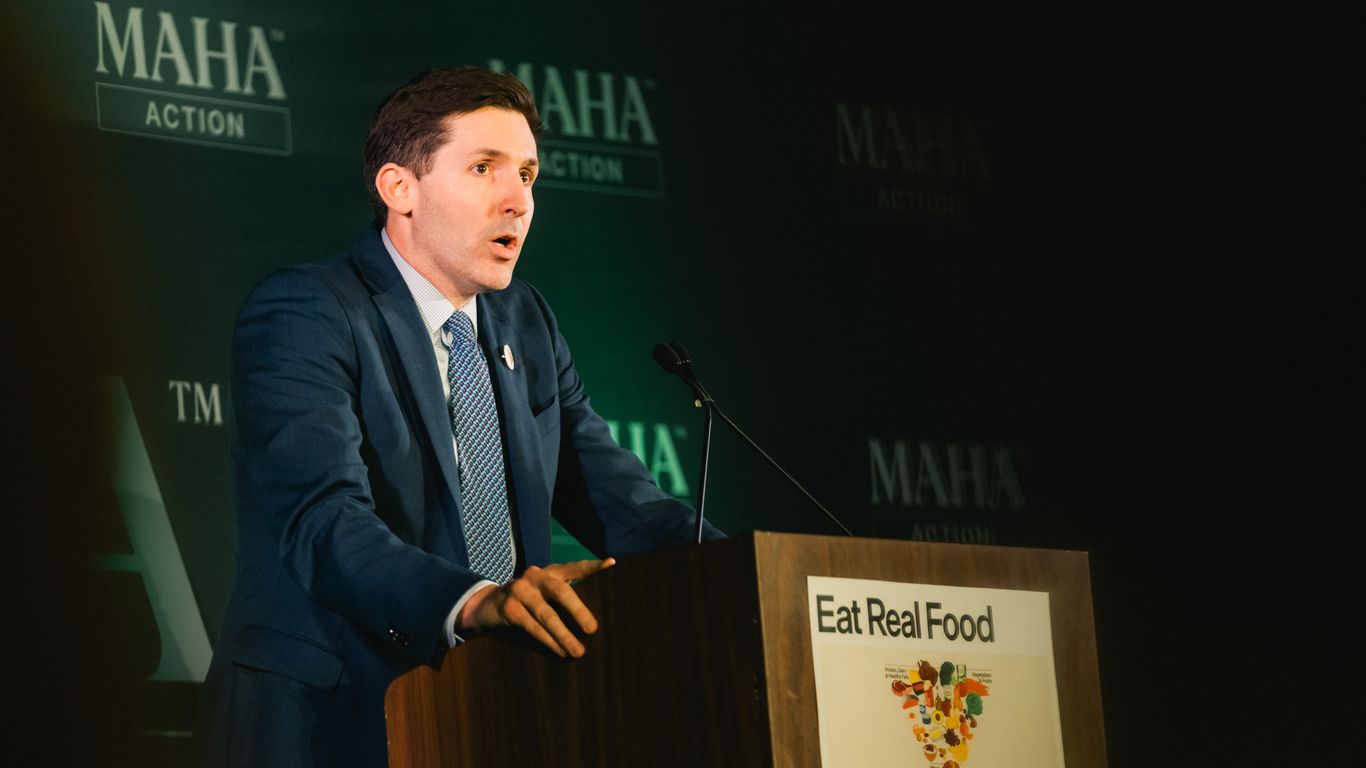
Calley Means , the health entrepreneur who became the Trump administration's most vocal advocate of the MAHA agenda, resigned from his senior adviser post on Thursday. Why it matters: Means' departure two weeks before the midterm elections underscores the MAHA base's discontent with the pace of change on food policy and the administration's stances on issues like pesticide use . Driving the news: Means expressed "tremendous respect" for President Trump and Health Secretary Robert F. Kennedy Jr. in a statement on X , praising their efforts to take on "entrenched, dark forces in DC" and advance the MAHA agenda. He cited the administration's work to overhaul dietary guidelines , advance psychedelic therapies , ban the use of Supplemental Nutrition Assistance Program (SNAP) benefits for sugary drinks, and get food companies to voluntarily remove artificial dyes and other additives from products. The Department of Health and Human Services didn't immediately respond to a request for comment. Between the lines: Tensions between the MAHA faithful and the administration peaked in February, after Trump issued an executive order to increase domestic production of glyphosate, a common weed killer. Kennedy and others close to the movement had argued pesticides are making Americans sick. But agriculture interests said restricting their use would raise food prices and cost farmers billions. Trump had tapped Means' sister, Casey , a nutrition influencer, for surgeon general last year but withdrew the nomination in April after her confirmation process stalled in the Senate.

Data: Harvard Youth Poll, Fall 2026; Chart: Emily Peck/Axios Nearly two in three U.S. adults younger than 30 who plan to vote in next month's congressional midterm elections say their main motivation is to oppose President Trump and his policies, according to a newly released Harvard Youth Poll . The big picture: Seventy-seven percent of respondents disapprove of the president's handling of the economy, including about half of young Republicans. And just 9% say the U.S. is headed in the right direction — the lowest in the survey's history. Why it matters: Economic populism is driving emotions, along with concerns about war, AI, billionaires, deportation tactics, social policies and corruption. Majorities of respondents support Medicare for All, a wealth tax and bans on congressional stock trading. What we're watching: Just one in three Americans ages 18-29 say they'll definitely vote — a substantial drop from 40% who said so in 2022. Notably, most of that drop is driven by Republicans. Only 34% of Republican respondents said they'll definitely vote, down from 46%; 50% of young Democrats say they'll definitely vote, essentially unchanged. Just 22% of independents they'll definitely vote, down from 26%. Data: Harvard Youth Poll; Chart: Emily Peck/Axios Zoom in: Topping the list of what young people consider serious threats to their long-term financial security: rising prices and the cost of living (79%), followed by the power of large corporations (68%) and trade wars (68%). Nearly half said their household is struggling to make ends meet or getting by with limited financial security. By the numbers: 63% say their votes for U.S. House or Senate will be cast in opposition to Trump, while 14% say they're motivated by support of the president and 17% say he's not a factor. Two-thirds disapprove of the job Democrats are doing in Congress; 74% disapprove of congressional Republicans' performance. Stunning stats: For the first time in the poll's history, the share of young

Senate Republicans are weighing three last-ditch spending moves that would have been unimaginable six months ago: a cash infusion for Mississippi and even more money for South Carolina and Kansas. Why it matters: It's been 94 years since Kansas elected a Democratic senator, 44 years for Mississippi and 28 for South Carolina. But panic is spreading through the Republican Party. "The wall has broken. The enemy is inside the fort," one national Republican political operative told Axios. "We are now fighting hand to hand." The Senate map, which once looked impregnable for Senate Majority Leader John Thune (R-S.D.), is now full of vulnerabilities. Democratic challengers are polling within the margin of error in more than half a dozen deep-red states, according to internal GOP polls. The other side: "We're nervous about Alaska. We're nervous about Michigan. We're still going to hold the Senate at the end," said another operative. Zoom in: Two weeks ago, when Senate Leadership Fund decided to take out a $5 million "insurance policy" in South Carolina, operatives took a hard look at Idaho, South Dakota and Mississippi. At the time, they concluded they didn't need to spend any money in those states, according to a person familiar with the matter. But Senate Republicans are now reviewing the Mississippi race and may need to spend there to protect Sen. Cindy Hyde-Smith from a surprisingly competitive bid by Democratic district attorney Scott Colom . Senate Majority PAC, the main super PAC for Senate Democrats, announced a $1.2 million investment in the race on Tuesday. Zoom out: In early June, SLF started to reinforce a Midwestern red wall to protect the GOP majority, reserving $28 million in TV advertising in Ohio and $11 million in Iowa . Those investments have ballooned to $93 million in Ohio and $53 million in Iowa. After an initial $5 million buy in South Carolina, SLF's spending has increased to $8.5 million, according to AdImpact. And a super PAC linked to Sen. John Bar