

If the sweeping Senate permitting bill becomes law, it will reflect a rare convergence of political and market forces strong enough to trump the Beltway aversion to big, bipartisan deals. Why it matters: The bill could transform how America builds energy infrastructure, with major implications for everything from electricity costs to data centers. Getting rid of bureaucratic hurdles for energy projects is a top priority for the fossil fuels and renewables sectors. But critics argue the plan would unacceptably weaken environmental protections and the rights of Native American tribes. The latest: A vote on final passage of the White House-backed bill could occur Thursday after the Senate plows through some more amendments. The big picture: Many industries — pipelines, transmission, housing, you name it — call permitting a long bureaucratic and judicial maze that stymies projects. Yes, but: That, on its own, isn't nearly enough to get this far. Here are other reasons the bill has a path to becoming law after years of failed efforts to upend permitting. 🗳️ The cost-of-living election. The midterms were soaked in affordability politics at a time of rising energy bills. While critics can call the projected savings modest, cost is politically front and center. The Rhodium Group estimates that big provisions it analyzed would cut average residential power prices by 3%-4% in 2035. Third Way, a group that favors the bill, supported the research firm's work. 📈 Rising electricity demand. U.S. power thirst has been rising in the last few years after staying largely flat for decades, driven partly by AI and wider electrification of the economy. 🦋 A maturing clean energy industry. As sectors like renewables and storage become more mainstream, " more developers and companies are seeing the real-world challenges" of doing projects, clean energy lobbyist Jeff Navin notes via email. That puts them in agreement with utilities and oil and gas companies. "They all run into problems ge
Results for “iraqi forces”

The party’s big-tent approach has caused post-election feuding in the past. But a pair of singular goals can prevent it Democrats usually suffer big tent disease. To win, they put together such large coalitions of voters – working class, middle class, Black people, Latinos, women, young people, moderates, liberals – that once they’re in office, intraparty feuds often threaten their agenda. Will it happen again when they take power in January? I don’t think so. Two outside forces will keep Democrats glued together. Continue reading...
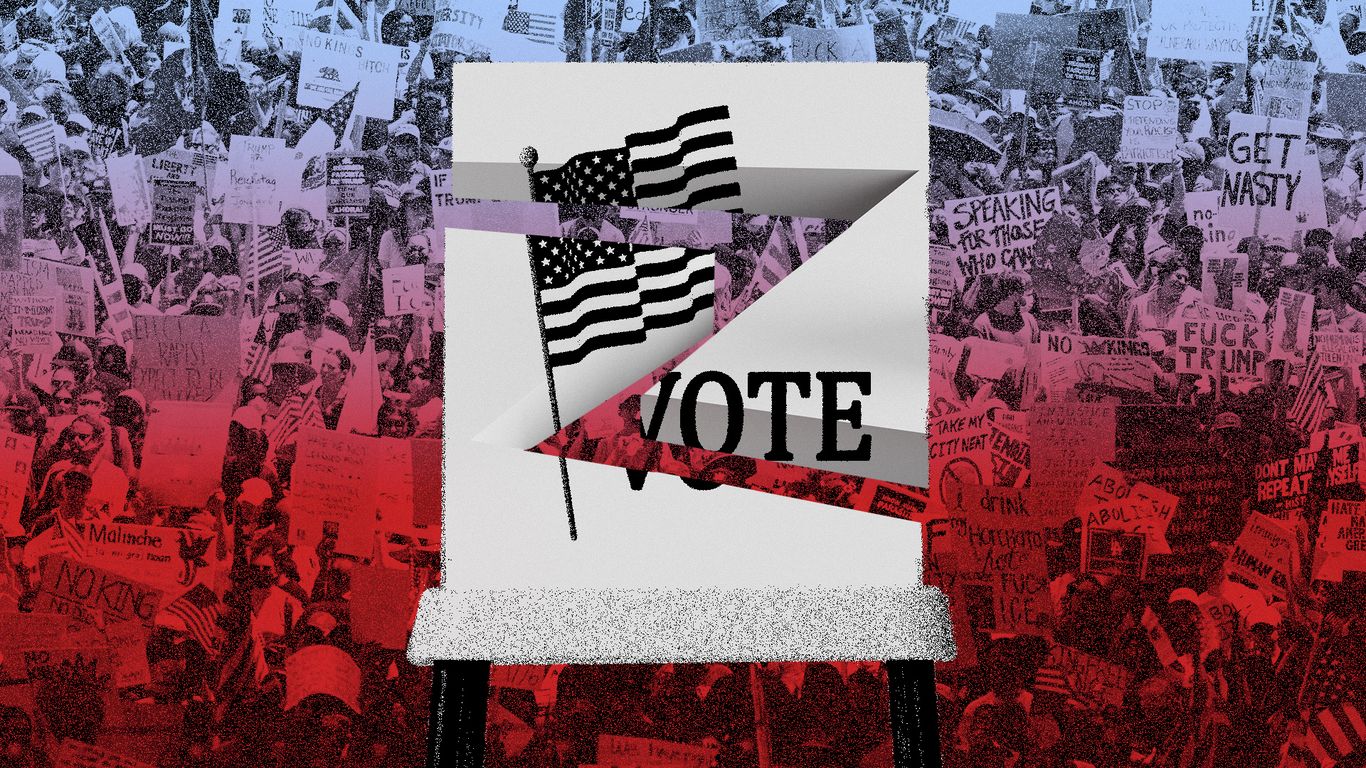
Young Americans are challenging beliefs their parents and grandparents once considered sacred — from socialism and Israel to Christianity . Why it matters: Neither party can count on old political loyalties to win over a generation increasingly willing to break with the past. Socialism: 35 years after the Soviet Union collapsed, some 57% of Americans ages 18–34 view socialism positively, compared with 43% for capitalism, according to a September 2026 Gallup poll . Among Americans 55 and older, 65% view capitalism positively, compared with 34% for socialism. Israel: Decades after Israel fought wars against neighboring Arab states, some 53% of Americans ages 18–34 sympathize more with Palestinians, compared with 23% who sympathize more with Israelis, according to Gallup's February 2026 survey . Christianity: After centuries as the overwhelming religious identity of Americans, only 54% of Americans ages 18–29 now identify as Christian, compared with 76% of those 65 and older, according to nonpartisan Public Religion Research Institute's 2025 Census of American Religion , released in April 2026. Between the lines : The return of forces that voters haven't felt in generations can scramble their priorities all over again. After decades of relatively low inflation, prices surged during the COVID era, with annual inflation hitting 9.1% in June 2022 — its highest rate since 1981. In 2024, young voters who ranked the economy and jobs as their top issue favored Trump by 24 points , according to CIRCLE's analysis of AP VoteCast. Two years later, 78% of financially struggling young students backed Democratic House candidates, compared with 16% for Republicans, according to a November 5 CIRCLE analysis . State of play: Young voters showed both parties how quickly their support can shift between elections in last week's midterms. Some 66% of voters ages 18–29 backed Democratic House candidates, compared with 31% for Republicans, according to Tufts University's CIRCLE , citing prel

The bomb was discovered Friday afternoon at the BioUrja Renewables plant in Peoria. Officials say the bomb has been "rendered safe," but called it a "credible threat." The FBI is investigating.

Courts and governments worldwide felt the impact of this week's Microsoft outage, which sidelined work and stymied communication. Why it matters: When Microsoft's popular workplace software went offline Thursday, it meant an extended lunch break for some offices — but for the courts and governments, it raised questions about the vulnerabilities of the technology underpinning justice and governance. Case in point: The state of Maine's judicial branch warned in a Thursday alert that requests for protection orders filed by email — urgent requests to keep parties safe from harm — may not have been received. Multiple court documents reviewed by Axios show lawyers requesting deadline extensions or alerting judges to the outage impacting their work. That includes DOJ lawyers: Government attorneys asked for an extension in the case brought by Rep. Joyce Beatty (D-Ohio) over President Trump 's Kennedy Center takeover , saying the outage prevented them from "completing the necessary coordination." In a separate filing, Beatty's team acknowledged they were impacted as well. Zoom out: The impacts were also felt in courtrooms and offices internationally. The AP reported that a U.K. criminal trial was delayed as a result, with a Manchester judge saying, per BBC's reporting , "We are learning of the dangers of relying on computers and data systems." U.K.-based police forces also urged the public Friday to call first responders for aid, rather than using online forms. The Supreme Court of the Philippines said it, too, was affected by the outage. What they're saying: "We obviously need backup methods to keep the wheels of justice turning," says Gissou Nia, the founder and director of the Atlantic Council's Strategic Litigation Project. She pointed to a prior incident that previewed international reliance on U.S. tech: Though not exposed by an outage, the Trump administration's sanctions on the International Criminal Court prompted the Netherlands-based court to move off of Microsoft

The AI boom without Jensen Huang will test a hard truth: Even if the tech world has grown somewhat less reliant on Nvidia's chips, it remains highly dependent on its checkbook. Why it matters : With rival chips maturing and recent software breakthroughs, the tech ecosystem has achieved what would've seemed impossible a year ago: a viable path around Nvidia. But replacing a CEO willing to bankroll startups, backstop billions in cloud debt and aggressively fund rivals to the AI giants will be much harder. The big picture : The next chapter without Huang will be more cautious, but the industry is capable of absorbing the change, for two key reasons: 1. New chips - Semiconductor competition has become harder to contain. At OpenAI and other startups, a longstanding joke was that the best way to get a discount on Nvidia chips was to openly talk to Google or others about alternatives. Huang would often swoop in enthusiastically, eager to lock in a customer. The progress of custom chips from Google, Amazon, Microsoft and OpenAI , as well as new deals with Broadcom and Nvidia rival AMD, gives those conversations more substance. Customers have options, and far more leverage than ever. AI itself has also made those offerings easier to use. Anthropic says its Mythos model helped run certain workloads on AMD chips in about three days , compared with six to 12 months in the past. 2. Washington - In DC, China hawks are ascendant. Huang's departure strengthens calls from administration forces, some lawmakers, and companies such as Anthropic that have pushed for tighter controls on chip sales. Legislation is rapidly advancing to cut off loopholes and strengthen export restrictions for advanced chip sales to China, and the Commerce Department is reportedly preparing additional ways to limit such access. Cutting off those routes could help protect America's lead and offer a major pre-IPO boost to Anthropic and OpenAI. Reality check : Alternative chips and leaps forward in software won
Outgoing Rep. Thomas Massie (R-Ky.) secured the 218 signatures needed to force another House showdown over the Jeffrey Epstein files Wednesday, just one day after fellow Republicans blocked his attempt to impeach Defense Secretary Pete Hegseth. Why it matters: Congress overwhelmingly voted last year to force the release of the Epstein files, but survivors and lawmakers say the Trump administration has still withheld records. The new bill would give them the power to sue the DOJ and help state prosecutors pursue investigations. Driving the news: Massie announced Wednesday afternoon that his discharge petition for the Epstein Files Transparency Act II had reached the required 218 signatures. Rep. John Garamendi (D-Calif.) provided the final signature Wednesday, according to the House clerk's records . Just four Republicans signed the petition: Massie, Nancy Mace of South Carolina, Ralph Norman of South Carolina and Brian Fitzpatrick of Pennsylvania. The other 214 signatures came from Democrats. What he's saying: "I'm working closely with @RepJayapal, @RepTeresaLF and @RepRoKhanna to get this to the floor for a vote soon," Massie wrote on X . The White House and Speaker Mike Johnson's offices have not yet provided comment. The intrigue: President Trump helped drive Massie out of Congress by backing a primary challenger, but the Kentucky Republican is using his final weeks in office to challenge the administration on some of its most politically sensitive topics. This latest effort could force Republicans to revisit a scandal that dogged the Trump administration for more than a year, even after Congress overwhelmingly voted to require the release of Epstein's files. This time, Massie wants to give Epstein survivors, state prosecutors and lawmakers the power to sue the Justice Department over records they believe it has unlawfully withheld. Catch up quick: Massie and Rep. Ro Khanna (D-Calif.) led the original push to force the release of the Epstein files. Their first bi
Defense secretary calls impeachment effort a ‘farce’ and praises president in press conference for audience of one There was no talk of “weirdos or beardos” – two among several categories whom Pete Hegseth has made it known are unwelcome in the US armed forces under his watch. But a man with a beard had to be uppermost in his mind for him to meet journalists in the Pentagon at the ungodly hour of 8am on Tuesday. Continue reading...
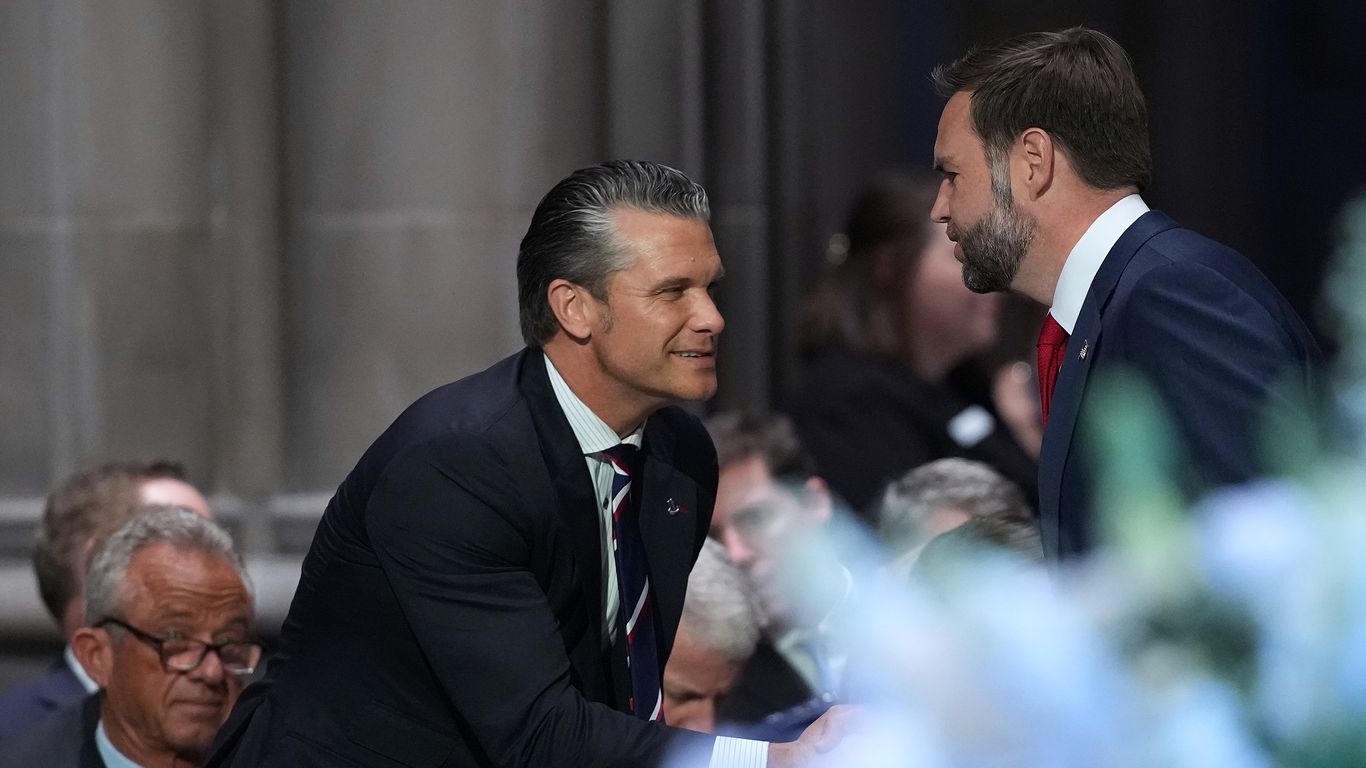
Vice President JD Vance on Tuesday said that the vote to impeach Defense Secretary Pete Hegseth "isn't about Iran," but rather his willingness to take on challenges at the Pentagon. Why it matters: It's the latest instance of the Trump administration backing the embattled Cabinet member, who is facing the possibility of enough GOP members defecting for the impeachment effort to succeed. The Iran war is at the center of the allegations against Hegseth, with three of the eight articles of impeachment specifically concerning the conflict. Other allegations include that Hegseth illegally initiated military conflict in Venezuela and Yemen. What they're saying: "Has Pete Hegseth committed impeachable crimes? The question is absurd and the answer is: obviously not," Vance said Tuesday on X . "Like so much of Congress, impeachment has become a ridiculous show that stands in for actual policymaking. Congress has so many tools for registering its policy disagreements." Vance added that Congress was choosing to impeach Hegseth as they did President Trump. "Legislation is hard. Impeachments are easy (and ultimately, inconsequential)." "The irony is that legislators are most angry at Pete on the issues where he's most correct: repositioning forces away from Europe/Ukraine and reorganizing the general officer corps," he continued. "This isn't about Iran, this is about the fact that Pete took on the bureaucracy at the Pentagon." Go deeper: Hegseth faces impeachment resolution from GOP member with little to lose Editor's note: This is a breaking news story and will be updated.
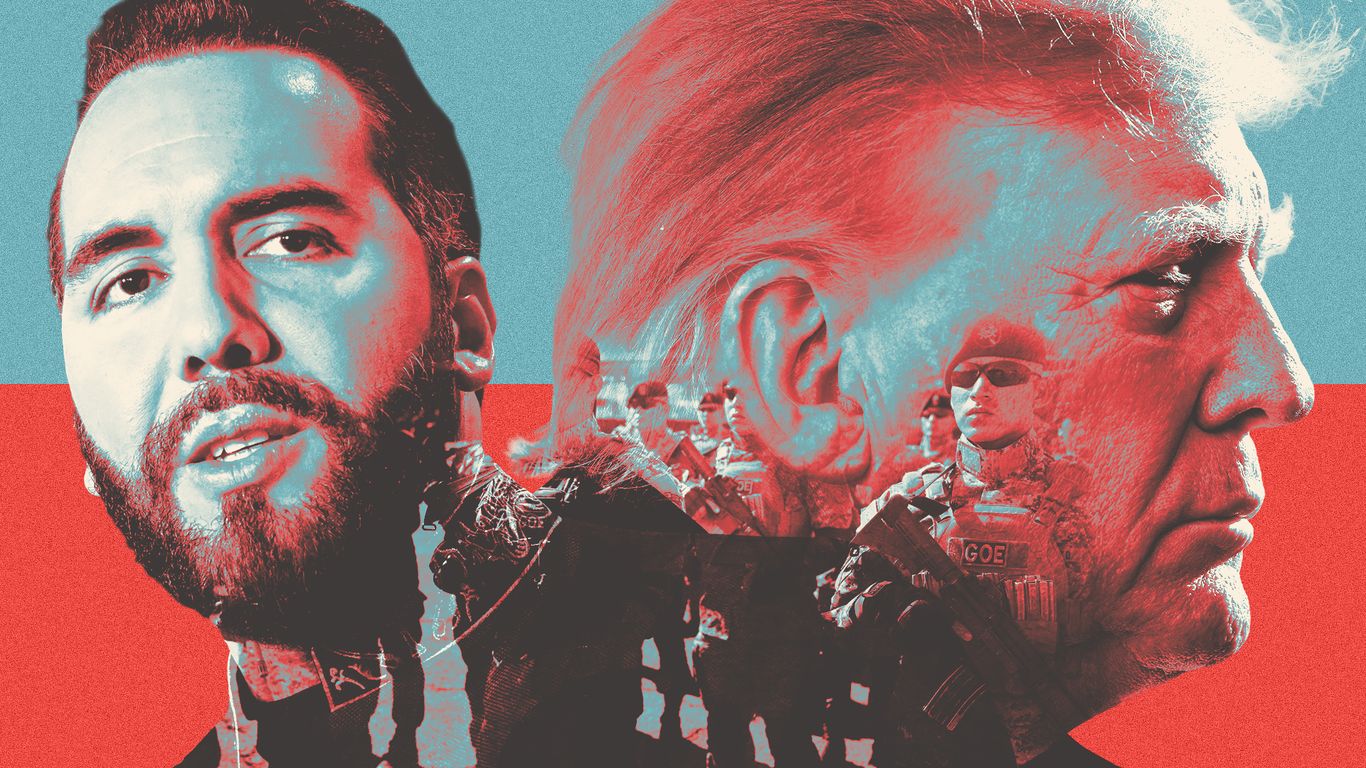
State Department officials have quietly raised objections to El Salvador's gang-fighting efforts in Haiti — even as President Trump has offered his full support, according to diplomatic notes and informed sources. On Monday, El Salvador issued a formal rebuke that questioned the "credibility" of the top U.S. diplomat in Haiti. Why it matters: The controversy exposes the tension between Trump's MAGA foreign policy objectives and the professional diplomatic establishment in the State Department. "There is a class of bureaucrats who don't want to see the change in the Western Hemisphere that POTUS wants," a U.S. official told Axios. Zoom in: Haiti is a failed state racked by extreme corruption and gang violence despite years of international efforts, including the UN-backed Gang Suppression Force (GSF) that El Salvador and other nations have backed. Four Salvadoran aviation technicians supporting medical evacuations were captured Oct. 18 by gangs that refused to heed the entreaties of El Salvador's President Nayib Bukele to return the men or their bodies. Bukele responded by surging special forces units to Haiti after receiving the blessing of Trump, an ally, on Oct. 27, Axios first reported . "You have to do what you have to do," Trump told Bukele, who proceeded to launch military operations that resulted in firefights with gangs in the streets of Port-Au-Prince. Friction point: Tensions between State Department officials and El Salvador erupted after an Oct. 31 gang attack on a Salvadoran convoy of five armored personnel carriers near the U.S. embassy, which was struck by gunfire. On Nov. 3, Salvadoran attack helicopters repelled gangs attacking GSF soldiers from Chad, Bukele posted on X . The next day, U.S. Chargé d'Affaires David Howell complained in a text message to Haitian Prime Minister Alix Didier Fils-Aimé that El Salvador wasn't "coordinating" with the GSF. "They took at least three casualties. They don't have a medical plan. They nearly killed GSF troops as

Elon Musk's sprawling empire — from rockets to robots, electric cars to AI — is facing a political onslaught with few parallels in modern corporate history. Why it matters: The world's richest man confronts a constellation of risks spanning the halls of Congress, his Texas industrial empire, Wall Street and his vision for AI supremacy. 💰 Political: To Democrats, Musk embodies corrosive forces of the MAGA era — extreme wealth, billionaire influence over government, the gutting of federal institutions, the poisoning of social media and the unchecked power of AI. Musk spent at least $475 million on the midterms, becoming the election's largest individual donor — only to see more than 99% of his traceable spending go to losing candidates, according to WIRED . Musk's most humiliating defeat came in Texas, where a $160 million bet on Ken Paxton ended in a Democratic sweep of the Senate seat, governorship and attorney general's office. In a hint of a possible détente, Sen.-elect James Talarico praised the billionaire as a "great business leader and entrepreneur," and offered to work with him on technology and innovation. Musk, who said last month that Talarico "hates Texas," responded : "Nice of him to say that." ⚖️ Congressional: Armed with subpoena power, Democrats are preparing to investigate Musk's DOGE operation, its access to sensitive government data and whether his companies benefited from his extraordinary influence over the Trump administration. Musk is already downplaying his dependence on Washington, claiming government contracts will account for less than 5% of SpaceX revenue a year from now. "Happy to cancel any that the government doesn't want," he posted Friday . The scrutiny also extends to national security: Lawmakers are demanding answers about Musk's reported communications with Vladimir Putin and his role in the October slowdown of Starshield that disrupted Ukraine's drone operations. Elon Musk responds to reporting about his vulnerabilities in Texas.
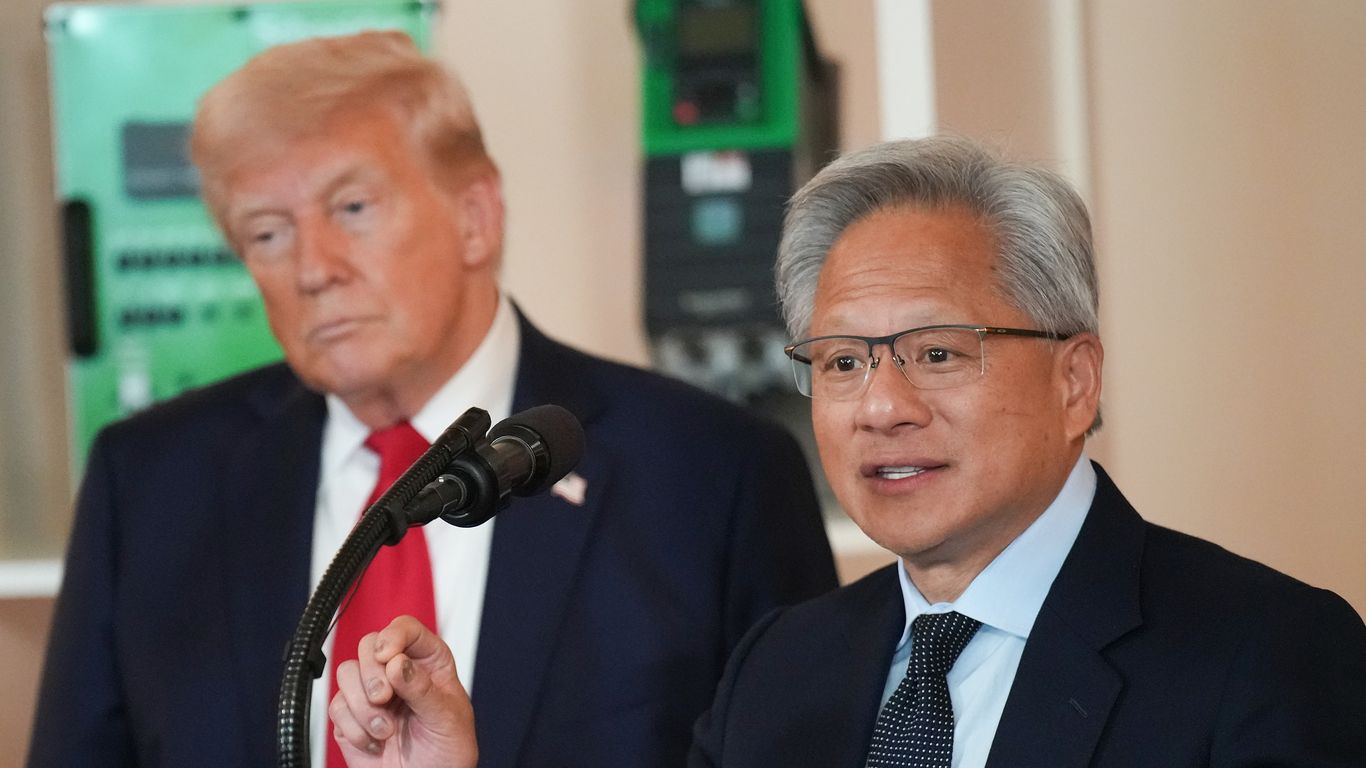
The world's most powerful AI executive admitted Sunday to an affair with a suspected Chinese spy, sending shock waves through an industry built on his singular influence. Why it matters: Nvidia CEO Jensen Huang has fashioned himself as the indispensable leader of an indispensable company — a $4.5 trillion behemoth with unparalleled clout in Silicon Valley, on Wall Street and inside President Trump's White House. Trump stood by Huang on Sunday evening, telling reporters that the Nvidia CEO is "an honorable guy" and "probably has an excuse" for his infidelity. The big picture: Huang, who has led Nvidia since founding the chipmaker 33 years ago, has become the AI boom's chief evangelist and most authoritative voice. He has brushed aside fears of both a speculative bubble and technological catastrophe, joining forces with Trump to calm markets and the public as warnings of an AI apocalypse reached fever pitch. For almost any other CEO, an affair with a suspected foreign intelligence operative could be career-ending. Huang's grip on Nvidia — and the company's extraordinary importance to the AI economy — may insulate him from the same fate. Driving the news: Huang confessed to the affair in a letter to staff Sunday, apologizing to his family as Nvidia's board launched an independent probe into the suspected Chinese intelligence operation. U.S. officials believe Alice Huang, an executive at Nvidia customer Megaspeed, was recruited by Beijing's top spy agency to gather information and potentially influence Nvidia's campaign to expand advanced chip sales to China. Nvidia's board said it had no reason to believe national security or company secrets were compromised and expressed confidence in Jensen Huang, who intends to remain CEO during the investigation. Zoom in: The New York Times first exposed the suspected Chinese espionage operation on Oct. 29, reporting that a woman believed to be working for Beijing had developed a close relationship with Nvidia's CEO. The company po

President Trump has told advisers that he plans to keep raising money for his political operation — a move aimed at salvaging his clout after the GOP's midterm debacle. Why it matters: Maintaining a political organization — either his existing MAGA Inc. super PAC or one to be created — would give Trump a vehicle to try to influence elections in 2028 and beyond, including the next presidential contest. It also would give Trump a way to pressure GOP lawmakers who consider breaking with him as the unpopular president enters his lame-duck era and Democrats prepare congressional investigations into his administration. Trump's MAGA Inc. enforced party discipline during the 2026 primary campaigns when it helped defeat Kentucky Rep. Thomas Massie (R), an outspoken Trump critic. Zoom in: MAGA Inc. has been the centerpiece of Trump's political operation during his second term, raising nearly $450 million since the beginning of 2025. The group received massive checks from cryptocurrency and AI industry donors, along with Republican megadonors such as Elon Musk and Miriam Adelson. Trump has hosted high-dollar fundraising dinners at Mar-a-Lago and his golf club in Sterling, Va., drawing business leaders eager to curry favor with the president. Some donors subsequently benefited from administration decisions. The New York Times reported that a medical products company whose executives and affiliates gave $5 million to MAGA Inc. benefited from an administration decision to delay Medicare reimbursement restrictions, for example. By the numbers: MAGA Inc. spent more than $400 million on the midterms, making it one of the election's biggest spending forces, according to a source familiar with the totals. The massive investment failed to prevent Republicans from losing control of Congress amid voter anger over Trump's war on Iran, high prices and corruption concerns. As of Oct. 14, MAGA Inc. had more than $164 million in the bank, though it spent tens of millions more on TV and digita

Kirill Dimitrov, envoy to Russian president Vladimir Putin, delivered a gift to Melania Trump at the White House on Thursday to thank her for brokering a ceasefire between Ukraine and Russian forces in Oleshky, Ukraine. During the same event, Ukraine's human rights ombudsman Dmytro Lubinets gifted the first lady with the Order of Princess Olga, 1st Degree award. Continue reading...

Kirill Dimitrov, envoy to Russian president Vladimir Putin, delivered a gift to Melania Trump at the White House on Thursday to thank her for brokering a ceasefire between Ukraine and Russian forces in Oleshky, Ukraine. Russia first occupied the village during the full-scale invasion of Ukraine in 2022 Continue reading...

It's a de facto motto in the Trump White House: "Somebody's gotta take the fall." Lately, that person looks like Secretary of Defense Pete Hegseth. Why it matters: From the unpopular war in Iran to his bad bipartisan relations with members of Congress, Hegseth's record has made him the most vulnerable member of Trump's Cabinet after Tuesday night's midterm shellacking. "Hegseth is definitely on thin ice," a Trump adviser told Axios. "It doesn't mean the president forces him out. But there are complications." Driving the news: As early as next week, the House could impeach Hegseth for allegedly defying Congress and illegally continuing the U.S. war in Iran. The measure is sponsored by Rep. Thomas Massie (R-Ky.), a vociferous critic of Israel and foreign wars. Zoom in: Iran is at the center of both Hegseth's possible impeachment and Republicans' midterm collapse. Many voters oppose the war and its byproduct: higher gas prices that spiked after Iran closed the Strait of Hormuz. Before Trump attacked Iran on Feb. 28, Hegseth was the most gung-ho about the conflict, and he gave the rosiest projections about how quickly and easily it would be resolved, according to sources familiar with the discussions. By August, a senior administration official said, U.S. Central Command was reportedly soliciting new approaches to pressure Iran, suggesting that military leaders were still reassessing how to achieve strategic results. CentCom was also asking: "At what point did Hegseth recognize that our original strategy wasn't going to produce the outcome he expected and pitched?" Trump stood by Hegseth on Wednesday, telling reporters that the secretary is "doing a very good job." Between the lines: Trump has been known to praise an embattled Cabinet secretary, only to seek their ouster shortly thereafter. With Hegseth, four factors are weighing on Trump: 1. The impeachment threat. Democrats already have tried to impeach Hegseth, and with their new House majority in January, those effo

Despite the US president’s ratings being at rock bottom, undoing his legacy will be difficult, not least because the Democrats are in disarray The stats and polling all suggest one thing: the Republicans are set for a hammering in the midterms. Donald Trump has the lowest approval rating of any US president going into a midterm election since Harry Truman. And it’s still dropping. The Democrats are projected to win by a margin of 11 percentage points , the largest swing by any party in almost 20 years. It is possible that the Democrats flip the Senate and secure a large majority in Congress. Those majorities would make a material difference, perhaps finally establishing oversight of the policies Trump has brought in during his second term: immigration enforcement, trade disputes, gutting the federal workforce, the Iran war, to say nothing of his own family’s corruption. The tide seems to be turning, and one question is on everyone’s mind: is the Trump era really ending? “Nobody wants to jinx it,” wrote David Wallace-Wells of the New York Times, but: “All the signs we have suggest that, historic or not, these midterms are likely to mark the end of a political era.” What that gives way to is a much more complicated picture in which the US will be delivered from Trump himself, but remains a country riven and undermined by what he has unleashed. By the time he is gone, Trump will have been president for eight years, and a toxic force for more than 12. That is a long time even for a normal politician. Under one who shatters norms and forces himself into the centre of everything, Trump’s effect is as if he were president for decades. Continue reading...
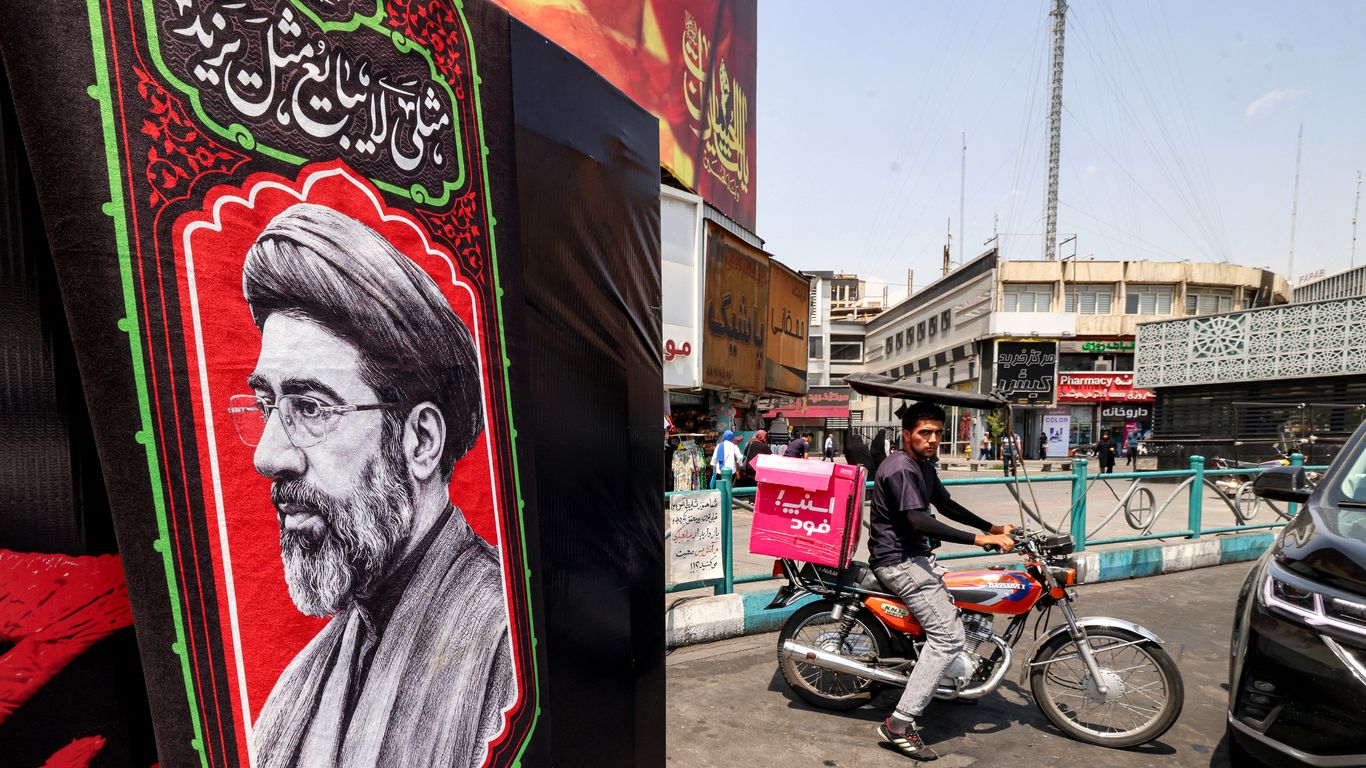
Iran's Supreme Leader Mojtaba Khamenei told the country's top three military commanders that a renewed attack by the U.S. and Israel ״must be met with an immediate and effective response, without geographical limitations״ in order to achieve "maximum deterrence," according to a statement from his office. Why it matters: This is the first publicly disclosed meeting between Khamenei and all the top commanders of Iran's armed forces since the war began. It comes as President Trump weighs major strikes on Iran after the midterm elections. Khamenei hasn't been seen or heard in public since he was wounded in an Israeli strike on the first day of the war. He has only issued written statements, which raised questions about his condition. The unusual apparent meeting took place a day after Qatari mediators held talks in Tehran for more than 12 hours in an effort to reach a deal to restart direct negotiations between the U.S. and Iran and avoid an outbreak of war after the midterms. The discussions continued in Doha, Qatar, on Saturday. What he's saying: "If the enemies once again launch military or terrorist attacks, it will be the Islamic Republic of Iran's Armed Forces and the Iranian nation that determine when and under what conditions those hostilities will end," Khamenei told the commanders, according to the statement. Zoom in: According to the statement, the meeting included armed forces chief of staff Gen. Ali Abdollahi, army commander Maj. Gen. Amir Hatami and Islamic Revolutionary Guard Corps commander Maj. Gen. Ahmad Vahidi. The commanders briefed Khamenei on the state of military readiness along the Gulf coastline and around the Strait of Hormuz, the Gulf of Oman, and Iran's northwestern and southeastern borders. They also reported "a several-fold increase" in production of various types of ammunition and reconnaissance, support, and combat weapons. Khamenei instructed the commanders that the "target bank" must be updated "so that all types of the American-Zionist

A federal judge Friday blocked the Trump administration from threatening election workers with criminal prosecution for counting ballots cast by registered voters the administration claims are ineligible. Why it matters: The emergency order, issued four days before the midterms , prohibits federal pressure to sideline ballots based solely on allegations of ineligibility and forces the Justice Department to walk back threats it already sent to election officials. The big picture: The ruling adds to a series of courtroom losses for the administration, as federal officials intensify election-related investigations and challenges across the country. Judges are warning that federal threats and investigations are driving citizens out of elections and putting lawful votes at risk. Driving the news: U.S. District Judge Trina Thompson found that the Justice and Homeland Security departments likely violated the Voting Rights Act's prohibition on voter intimidation and exceeded their constitutional authority over elections. Her temporary restraining order prohibits demands that states remove registered voters, withhold their ballots or stop counting votes solely because the administration claims the voters are ineligible. It also bars threats of criminal prosecution against election workers who refuse those demands or process ballots in accordance with election laws. The judge ordered prosecutors to disclose pending search warrant applications, grand jury subpoenas and other demands related to its lists of allegedly ineligible voters. What she's saying: Thompson found the administration's actions forced election workers to choose between complying with "Defendants' unlawful demands" or risk criminal prosecution for performing their jobs. "In the lead-up to the election," she wrote, "high-ranking DOJ and DHS officials have engaged in a campaign to intimidate, threaten, and coerce state and local officials and employees who are engaged in administering the ongoing midterm 2026 e
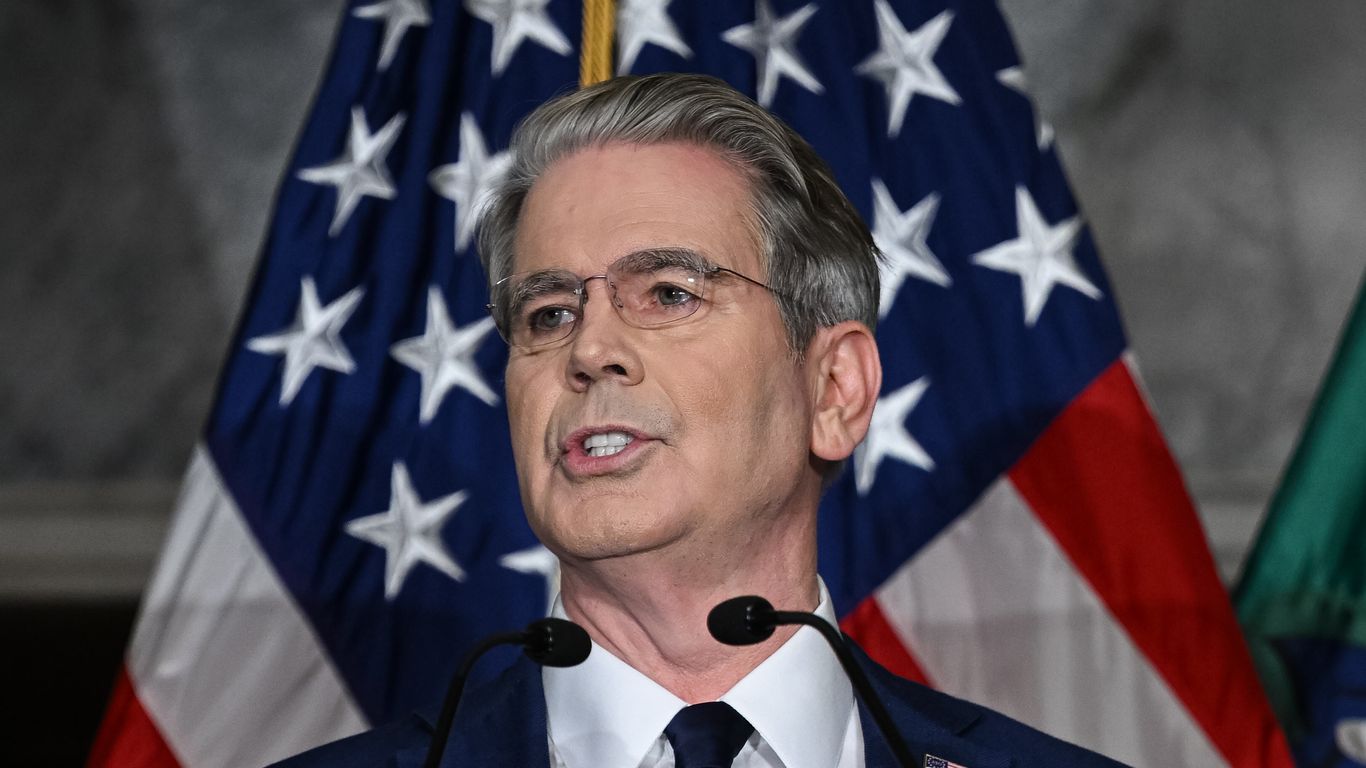
The U.S. naval blockade, sweeping economic sanctions and obstruction of overland export routes have crippled Iran's economy and intensified pressure on the regime, according to a new Treasury Department report obtained by Axios. Why it matters: Treasury Secretary Scott Bessent, who is leading an economic pressure campaign dubbed "Operation Economic Outcast," is one of Trump's closest aides urging him to let the initiative play out rather than rush back into combat. Though the report doesn't argue that the Iranian regime is close to collapsing, it does lay out the Treasury Department's view that its efforts have crippled Iran's economy and limited its ability to generate revenue. Driving the news: As he did before Operation Midnight Hammer in June 2025 and Operation Epic Fury in February, Trump is pursuing dual tracks — trying to reach a deal to restart peace talks while also preparing to possibly resume major combat operations after the midterms. The Treasury campaign, which launched in late August, is a third track. But U.S. officials say it needs more time to destabilize the regime and potentially convince the Iranian leadership to make concessions at the negotiations table. On Thursday, Trump met with his top national security and foreign policy aides to discuss the war. U.S. Central Command chief Adm. Brad Cooper, who commands forces in the Middle East, briefed Trump on the ongoing naval blockade . Bessent discussed the economic pressure campaign. "Bessent is telling the President the economic pressure campaign is working and that things are getting worse in Iran and that this could further destabilize the regime and push the Supreme Leader to agree to a deal," a U.S. official said. Zoom in: The Treasury report highlights several indicators of Iran's economic crisis: Currency collapse: The Iranian rial has lost roughly a quarter of its value since the operation began in August. In October, the unofficial exchange rate reached a record low of 2.687 million rials
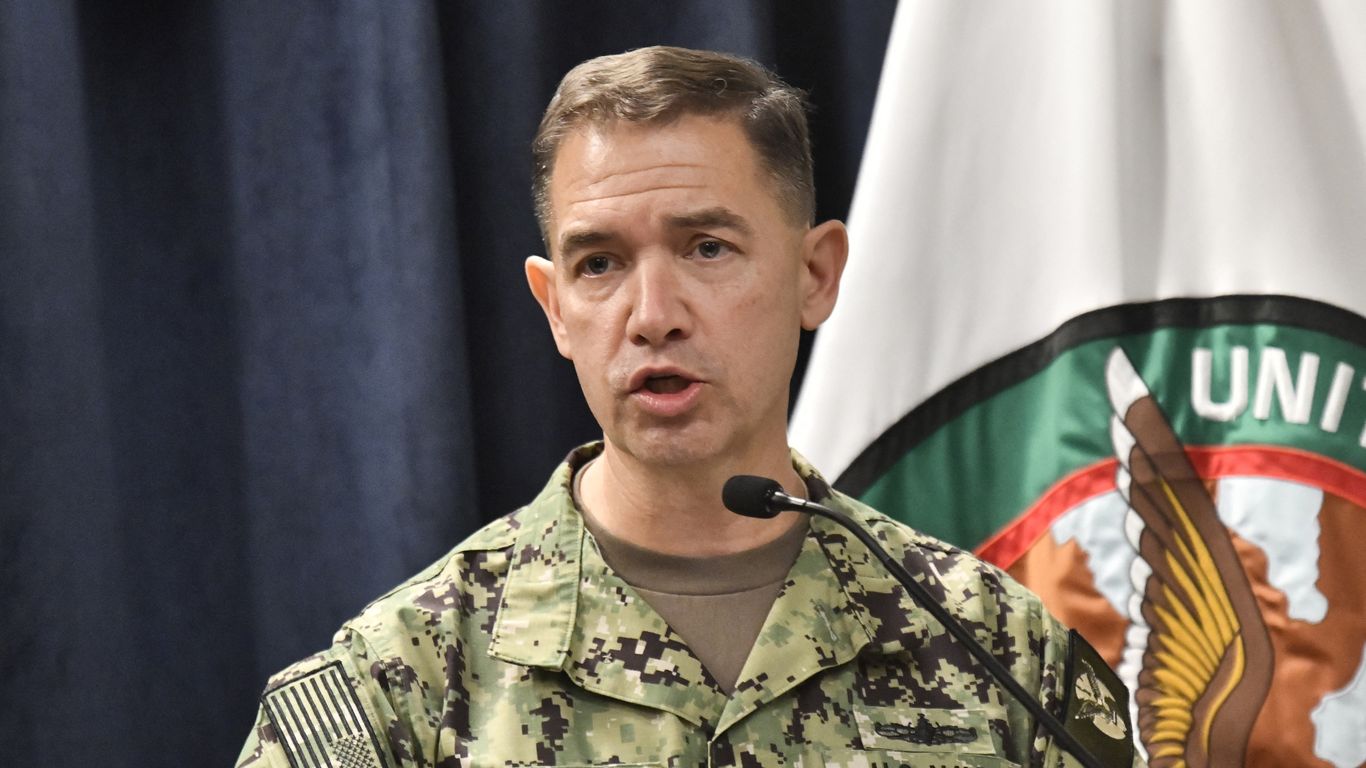
U.S. Central Command chief Adm. Brad Cooper, the commander of forces in the Middle East, briefed President Trump Thursday on the state of the Iran war, with a focus on the ongoing naval blockade , according to two U.S. officials. Why it matters: As he did before Operation Midnight Hammer in June 2025 and Operation Epic Fury in February, Trump is pursuing dual tracks — trying to reach a deal to restart peace talks while also preparing for a possible resumption of major combat operations after the midterms. Behind the scenes: Trump wanted to hear directly from the CENTCOM head on whether the naval blockade is working, the U.S. officials said. Cooper also briefed Trump on the military operation for guiding oil tankers out of the Strait of Hormuz to global energy markets. And he updated Trump on the economic pressure campaign the military is conducting in concert with the Treasury Department. Defense Secretary Pete Hegseth, Treasury Secretary Scott Bessent, Chairman of the Joint Chiefs of Staff Gen. Dan Caine, White House envoy Steve Witkoff and other senior officials also attended the meeting, the officials said. The White House and CENTCOM declined to comment. The Wall Street Journal first reported the meeting. Driving the news: A group of regional mediators led by Qatar is trying to get the U.S. and Iran to head off a resumption of war after the midterms in favor of negotiations. "The mediation is at a very sensitive stage," a regional source said. Qatari mediators recently delivered a letter from Vice President Vance to Iran's Secretary of the Supreme National Security Council, Gen. Mohsen Rezaei. Vance proposed restarting negotiations but stressed that any talks would have to address Iran's nuclear program. Trump and Vance met Wednesday to discuss a possible gesture of goodwill toward Iran, such as sending humanitarian goods like food and medicine, according to a source with knowledge. Later in the day, Trump publicly backed the idea. What they're saying: U.S. Amba
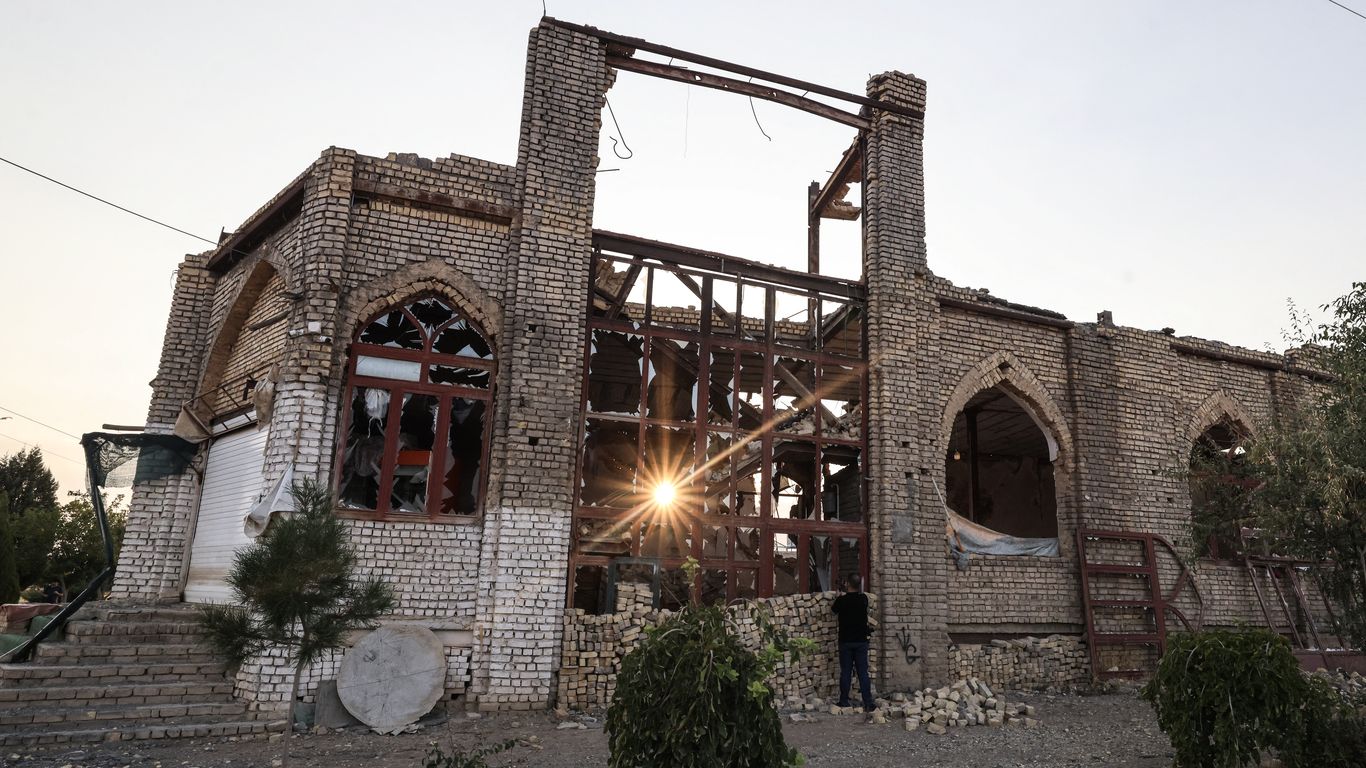
Regional mediators led by Qatar are trying to reach a diplomatic deal to restart negotiations between the U.S. and Iran and prevent the resumption of war after the midterm elections, three U.S., Israeli and regional sources say. The Qataris are working to convince Iran to allow UN inspectors to visit its bombed nuclear sites in return for some sanctions relief from the U.S. Why it matters: A renewed bombing offensive appears likely shortly after the midterms without a last-minute deal. IDF chief of staff Gen. Eyal Zamir spoke on Monday with CENTCOM commander Adm. Brad Cooper to coordinate ahead of potential attacks. Such an operation is expected to include a week of massive strikes on Iranian leadership, energy, nuclear and infrastructure targets, U.S. and Israeli officials say. What he's saying: President Trump told Axios in a brief interview Wednesday that negotiations with Iran are taking place through mediators but stressed that he doesn't know whether they'll bear fruit. "We need to finish the job — either through a deal or another way — we will find out if negotiations can succeed," he said. "While our Brave Armed Forces are fully prepared to defend the Homeland, Iran continues to give diplomacy a chance to succeed," Foreign Minister Abbas Araghchi said on X Wednesday. Behind the scenes: The mediation efforts are being led by Qatar, with the support of Pakistan, Saudi Arabia, Egypt and Turkey, sources say. Qatari negotiator Ali al-Thawadi visited Tehran earlier this week for talks with Iranian officials about a potential deal with the Trump administration. A regional source briefed on the talks said the Qataris presented ideas for how to bridge the gap between the U.S. demand that Iran give up its enriched uranium stockpile and Iran's insistence that the U.S. first lift its naval blockade and release Iran's frozen funds. The regional source and a U.S. official said the mediators are telling Iran that accepting the proposals may be the only way to avoid major a
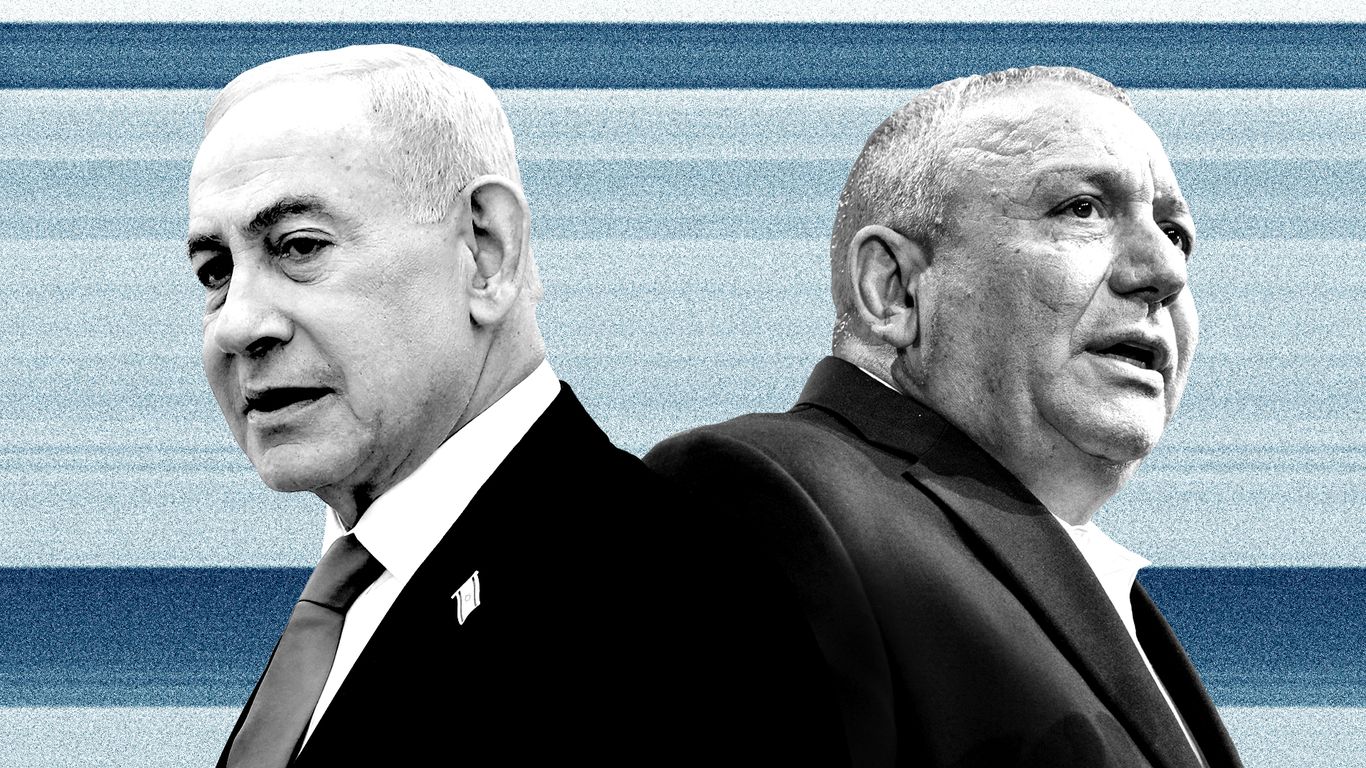
Israelis head to the polls today for one of the most consequential elections in the country's history — with rival camps warning that victory for the other would put Israel's future in jeopardy. Why it matters: The elections are yet another referendum on Benjamin Netanyahu's leadership and the path he's taken the country down over the past four years. It's Israeli voters' first chance to hold Netanyahu accountable for the security failures that led to the Hamas-led October 7 attacks — or to reward him for what he claims were unprecedented military successes in the three years of war since. If Netanyahu and his far-right coalition win, they're likely to renew the war with Iran in an effort to topple its regime, intensify their crackdown on Israel's democratic institutions and move to end Netanyahu's corruption trial. Driving the news: Netanyahu's campaign was totally focused on the war with Iran. After two military campaigns over the last 18 months in which he claimed that Israel destroyed Iran's nuclear program, Netanyahu's main talking point was that Iran is moving closer to a nuclear bomb. Earlier this week, Netanyahu went as far as posting an AI-generated image of Tel Aviv being destroyed by an Iranian nuclear bomb — implying that's what will happen if he loses. Behind the scenes: Netanyahu spent weeks trying to persuade President Trump to give him a green light to strike Iran ahead of the elections. Trump did not go along. In the 72 hours before the elections, Netanyahu tried to order the Israel Defense Forces to take steps to lay the ground for a potential new military strike or take actions short of an overt attack, Israeli officials say. IDF chief of staff General Eyal Zamir refused to abide. He warned that such a strike could lead to a miscalculation that quickly escalated hostilities and potentially forced the elections to be called off, the officials said. The Israeli officials said Zamir insisted there was no operational urgency in taking these steps ahea

A pair of Trump-friendly, right-wing populists took a one-two punch Sunday: Brazil rejected a Bolsonaro comeback, and Serbia toppled a strongman's ruling party. The big picture: Brazil denied Trump a close ally at the helm of Latin America's largest economy, snapping a streak of seven straight conservative wins in the region. In Europe, Serbia and Hungary toppled leaders with close Trump ties who had dominated their countries for years. Another massively pivotal election looms Tuesday, when Trump ally , Israeli Prime Minister Benjamin Netanyahu, will face a battle for political survival . On the eve of the election, Netanyahu touted Trump's endorsement and his "friendship" with the American president. But as the global right has made gains, opposition forces proved this weekend that they still have fuel. Driving the news: In Brazil, leftist President Luiz Inácio Lula da Silva staved off a challenge from Flávio Bolsonaro, the son of former President Jair Bolsonaro . The younger Bolsonaro, widely seen as the heir to his father's populist movement, refused to concede and called for the results to be annulled, according to translations . The elder Bolsonaro is serving a 27-year sentence after being convicted of plotting a coup to overturn his 2022 loss . Trump has called the prosecution a "WITCH HUNT." The White House pointed Axios to Trump's Monday comments , in which he said the election "looked like another rigged election," without providing evidence. Between the lines: Brazil's election emerged as a test of Trump's political influence in Latin America, where right-wing and Trump-backed candidates have celebrated an uninterrupted series of wins . Those victories include Trump-endorsed Abelardo de la Espriella in Colombia , Nasry "Tito" Asfura in Honduras and José Antonio Kast in Chile . Trump did not formally endorse Flávio Bolsonaro, but he met with him earlier this year and imposed significant tariffs on Brazil as he protested the charges against Bolsonaro's fathe

TEL AVIV, Israel — Gadi Eisenkot is as low-key as Benjamin Netanyahu is bombastic. He's a political novice up against the longest-serving, most politically savvy prime minister in Israel's history. And yet, on the eve of Tuesday's elections , Eisenkot poses the most serious threat to Netanyahu's hold on power in years. Why it matters: A victory by the Yashar party leader would upend Israeli politics and could reset the country's strained relationships abroad. The intrigue: The contrast between the two top contenders could hardly be sharper. Their roots: Eisenkot, the son of Moroccan Jewish immigrants, grew up in Eilat, Israel's southernmost city. If he wins, Eisenkot will be the first prime minister of Moroccan descent in Israel's history. Their military backgrounds: Netanyahu served in the Israel Defense Forces' elite special forces unit "Sayeret Matkal" and later went into business and politics. Eisenkot joined the IDF Golani infantry brigade and rose through its ranks as a combat commander until becoming IDF chief of staff. He arrived at his rally on Sunday to the tune of the Golani brigade song from 1974. Their ties to America: Netanyahu is better versed in American politics — and more articulate in English — than many American politicians. Eisenkot is not an "American" politician at all, let alone a professional one. He speaks English with a heavy Israeli accent and doesn't deliver catchy soundbites. He does not enjoy being on TV. At his final campaign rally Sunday before about 1,000 supporters, Eisenkot was visibly uncomfortable being in the spotlight, even when the crowd cheered him on. Their trustworthiness: Netanyahu's credibility with the Israeli public has been battered by his long-running corruption trial, his political tactics, his refusal to take responsibility for the failures that led to October 7 and accusations of duplicity in his handling of the Iran war. Eisenkot is seen as a straight shooter, even among many of his opponents. Zoom in: The failur
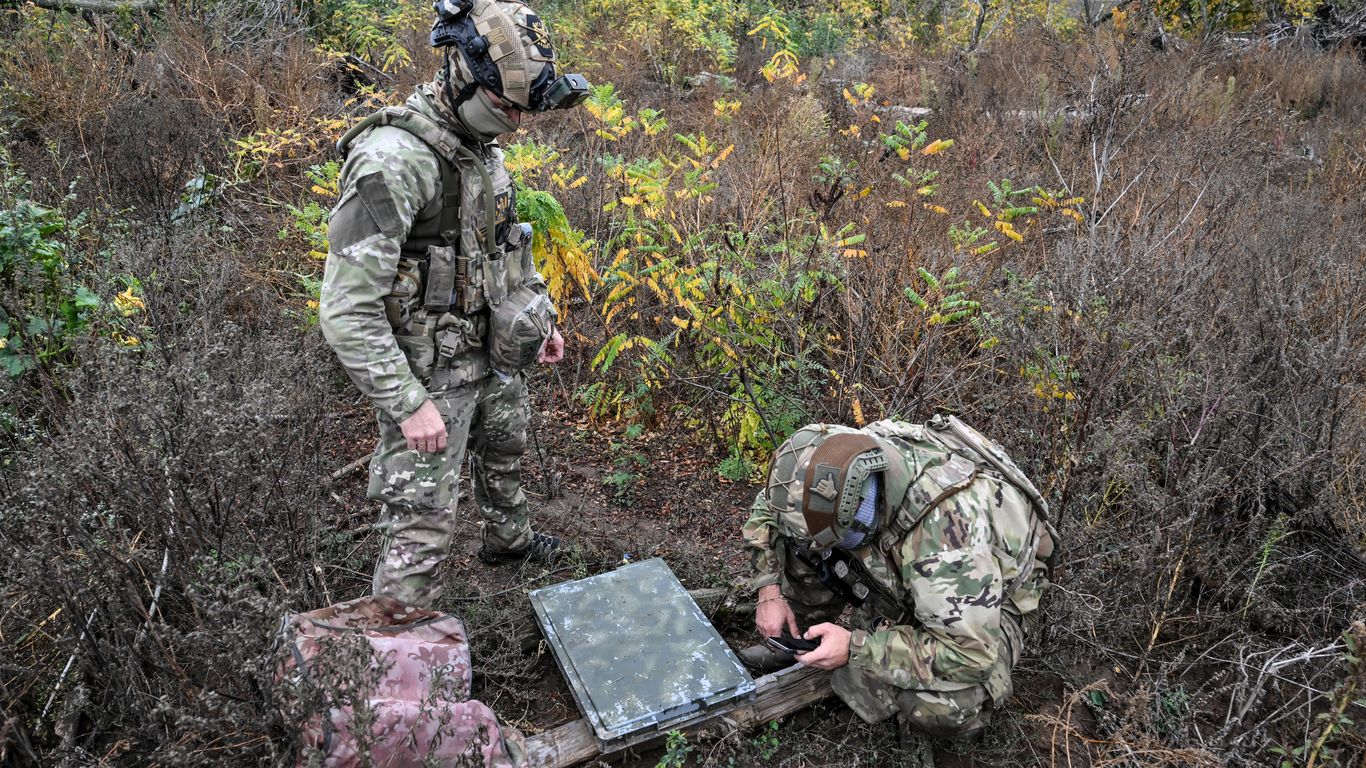
The speed of the Elon Musk-owned satellite system used by the Ukrainian military has been fully restored after two weeks of restrictions, the country's ministry of defense said in a statement on Saturday. Why it matters: The restrictions limited the Ukrainian military from using drones to intercept Russian attack drones, and from using its own drones to send supplies to soldiers on the front lines. The restrictions were at the center of the recent crisis between the Trump administration and the Ukrainian government. Ukrainian President Volodymyr Zelensky saw the restrictions as retaliation by President Trump and Musk for his refusal to halt strikes against Russian oil refineries. The crisis led to bipartisan criticism and pressure and generated a blame game between the White House and SpaceX founder and CEO Musk. Catch up quick: The Ukrainian military uses SpaceX's Starlink satellite communications system to control and operate its reconnaissance and intercept drones. When Starlink doesn't operate at full capacity, Ukraine's ability to gather intelligence, use interceptor drones and conduct long-range strikes against Russia is impeded. Ukraine relies on two satellite systems: One is SpaceX's Starlink, which it uses for communications, ground forces, logistics and defensive drones — ones that shoot down incoming drones. The other is Starshield, which is controlled by the U.S. government and used for offensive military purposes. President Trump denied that the White House was involved in restricting the system and for several days claimed it was fully back on. On Friday Trump denied reports that he spoke to Musk, but said that if the system was still restricted he would speak to Musk about it. What they are saying: "Our monitoring systems are detecting a restoration of Starlink/Starshield speeds. We are recording speeds exceeding 400 kilometers per hour, with stable connectivity," the Ukrainian ministry of defense said. The ministry said the restrictions were lifted a

That wince you just made while researching travel options? Get used to it. Why it matters: Soaring jet fuel prices are accelerating changes across the airline industry, seen in higher fares, premium-heavy cabins and fewer flight options for travelers. Airfares rose 22% year over year in September, marking a 10th straight monthly increase in the government's airfare price index , which hit an all-time high. State of play: All the major airlines are feeling the pain: American Airlines reported Thursday that its fuel bill jumped nearly 70% in the third quarter from a year ago, adding $1.9 billion in costs and undercutting its revenue growth. Southwest and United Airlines both slashed their profit forecasts this week on higher fuel costs. And Delta Air Lines expects its fuel bill this year to come in $6 billion above last year's. The impact: To protect their bottom lines, airlines are raising fares and turning to more premium seats to squeeze more revenue out of their flights. At Southwest, the average passenger fare rose 26.9% to $231.69 in the third quarter, compared with a year earlier — and that doesn't include fees. Delta's premium seating revenue jumped 18% in the third quarter, even though the number of premium seats rose only 6%. What they're saying: The airlines have few options to make up for extra fuel costs other than fare increases, said Scott Keyes, founder of flight-deal service Going.com. "None of them are hedging fuel the way they used to, in large part because they had a pretty terrible experience with it," Keyes said in an interview. The big picture: Airline executives, however, see these changes — many of which were already underway — as a necessary new normal. This year's fuel spike has only "accelerated" change, Delta CEO Ed Bastian said on the company's earnings call on Oct. 9. "Regardless of the next move in fuel prices, the forces reshaping the U.S. airline industry will continue with many carriers struggling to earn their cost of capital well b
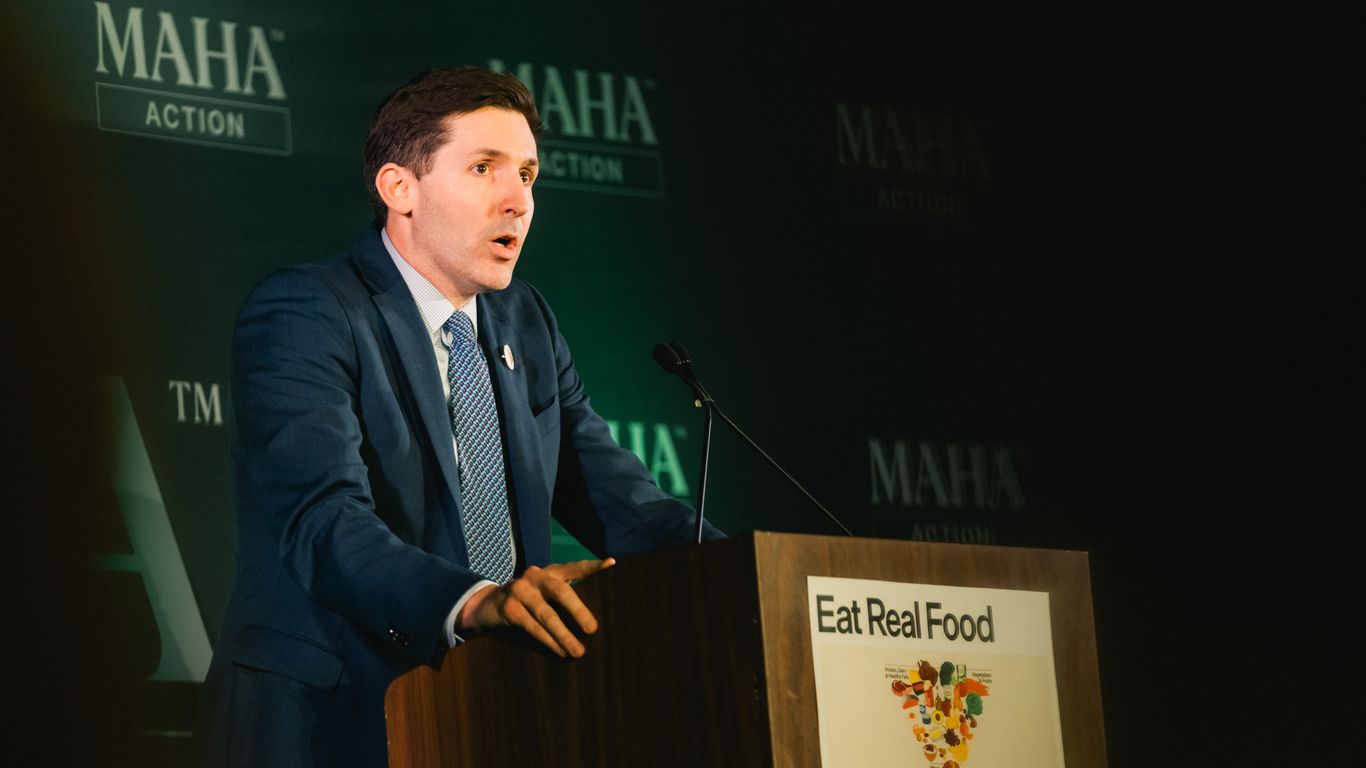
Calley Means , the health entrepreneur who became the Trump administration's most vocal advocate of the MAHA agenda, resigned from his senior adviser post on Thursday. Why it matters: Means' departure two weeks before the midterm elections underscores the MAHA base's discontent with the pace of change on food policy and the administration's stances on issues like pesticide use . Driving the news: Means expressed "tremendous respect" for President Trump and Health Secretary Robert F. Kennedy Jr. in a statement on X , praising their efforts to take on "entrenched, dark forces in DC" and advance the MAHA agenda. He cited the administration's work to overhaul dietary guidelines , advance psychedelic therapies , ban the use of Supplemental Nutrition Assistance Program (SNAP) benefits for sugary drinks, and get food companies to voluntarily remove artificial dyes and other additives from products. The Department of Health and Human Services didn't immediately respond to a request for comment. Between the lines: Tensions between the MAHA faithful and the administration peaked in February, after Trump issued an executive order to increase domestic production of glyphosate, a common weed killer. Kennedy and others close to the movement had argued pesticides are making Americans sick. But agriculture interests said restricting their use would raise food prices and cost farmers billions. Trump had tapped Means' sister, Casey , a nutrition influencer, for surgeon general last year but withdrew the nomination in April after her confirmation process stalled in the Senate.
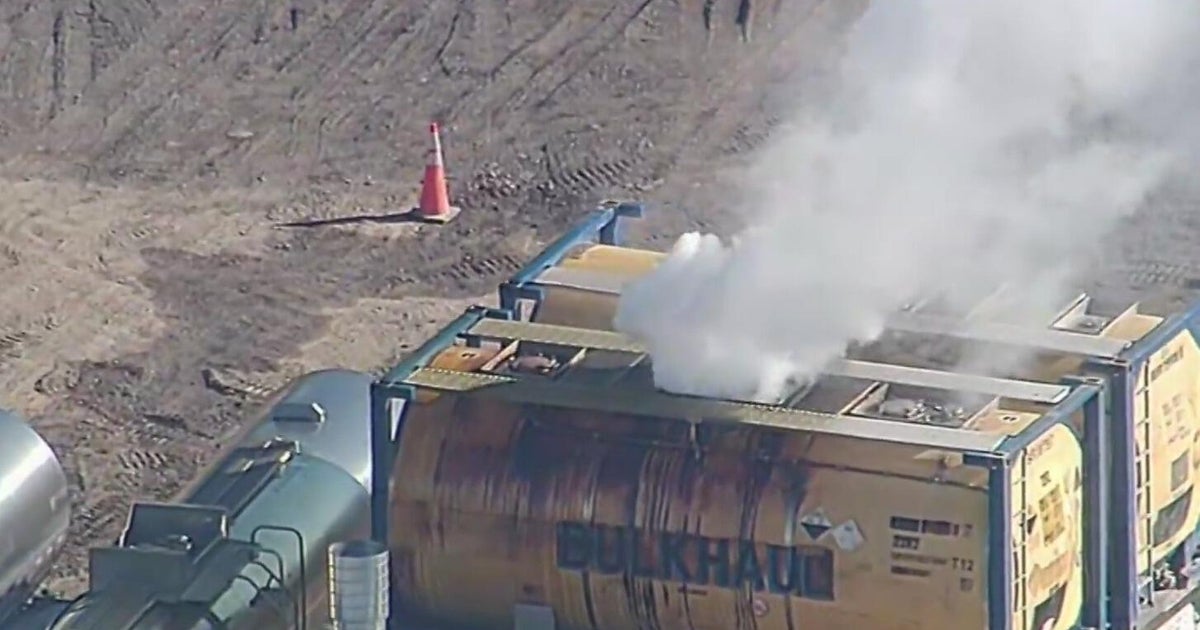
A massive chemical leak in Toledo, Ohio, is forcing some people out of their homes while others have been told to shelter in place.